
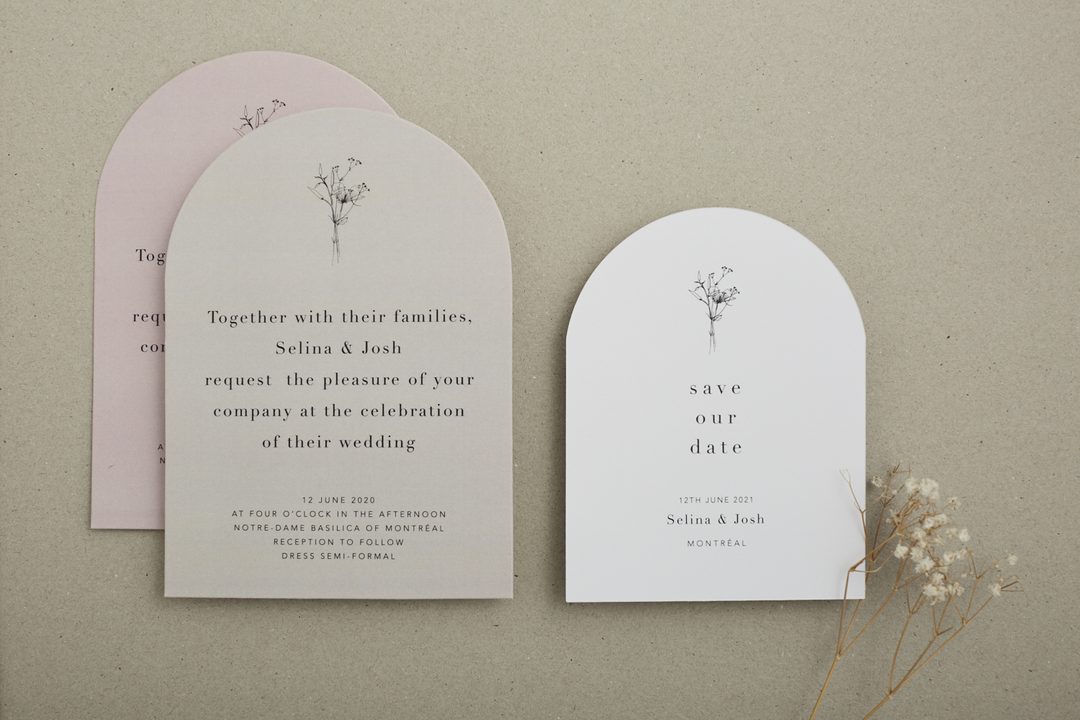
Your guests have dressed up, found their seats, and are quietly wondering what happens next. A wedding order-of-events sign answers that question before anyone has to ask. It is one of the simplest touches you can add to your day and one of the most appreciated, keeping the celebration flowing without you having to announce every transition over a microphone.
This guide covers what a wedding timeline sign actually is, where it belongs, what wording works, sample timelines for three different wedding formats, and how it compares to a printed ceremony program. By the end, you will know exactly what to put on yours.
- What it is: A display sign listing the main events of your wedding day in time order
- Best placement: Reception entrance, cocktail space, or near the seating chart
- What to include: 5 to 8 major anchor points, not every 10-minute detail
- Format options: Fabric banner, printed PVC board, or framed poster
- Sizes: 18×24 in (46×61 cm) for shorter timelines; 24×36 in (61×91 cm) for fuller schedules
- Sign vs. program: The sign shows the day’s flow; the program names the ceremony order and wedding party
What Is a Wedding Order-of-Events Sign?
A wedding order-of-events sign (also called a wedding timeline sign, wedding schedule sign, or order of the day sign) is a single display piece that lists the major anchor points of your wedding day in sequence. Unlike a printed program that each guest holds, the sign is a shared display, usually posted at an entrance or near the seating chart, so guests can glance at it as they arrive and orient themselves.
The goal is not to account for every 10-minute block. Guests do not need to know when the bouquets move from the ceremony to the reception or when the bar opens for sparkling wine pre-dinner. They need the five to eight moments that anchor the day: ceremony, cocktails, dinner, speeches, first dance, dancing, and send-off. That is enough to set expectations and stop the quiet anxiety of not knowing what comes next.
Where Does a Wedding Timeline Sign Go?
The most effective placement puts the sign where guests make a transition: the reception entrance, the cocktail space entrance, or a spot near the seating chart. For ceremonies and receptions at separate venues, a second sign at the ceremony can note arrival time and when guests should be seated.
- Reception entrance – Captures every guest on arrival before dinner
- Cocktail space – Confirms when dinner service starts so guests pace themselves
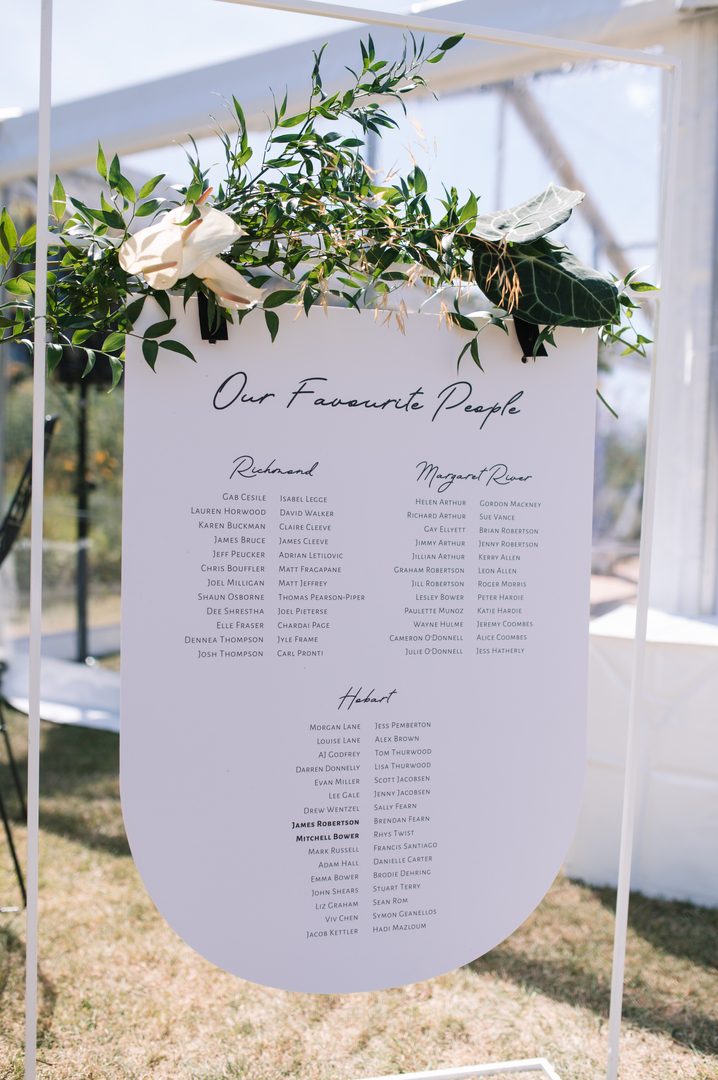
- Near the seating chart – Groups guests who are already stopping to find their table
- Ceremony space – Notes the ceremony start time and any unplugged-ceremony request
For outdoor ceremonies, placing the sign just inside a tent or under a shaded canopy protects it from wind and keeps the display clean throughout the day.

What to Include on Your Wedding Timeline Sign
Aim for 5 to 8 events. Anything shorter feels sparse; anything longer starts to read like a logistics document rather than a celebration sign.
The most common anchor points are:
| Event | Typical Duration | Notes |
|---|---|---|
| Ceremony | 30-60 minutes | Note location if different from reception |
| Cocktail Hour | 60 minutes | May overlap with photos |
| Guests Seated / Dinner | 90-120 minutes | Combine if seating and service run together |
| Welcome Speeches / Toasts | 20-30 minutes | List only if speeches are a key moment |
| First Dance | 5 minutes | Optional: add parent dances separately |
| Dance Floor Opens | 2-3 hours | Signals open celebration to guests |
| Last Dance / Send-Off | – | Alerts guests the evening is wrapping up |
One formatting rule that makes a real difference: pick a time format and use it consistently. Mixing “4 PM,” “4:30 p.m.,” and “16:30” on the same sign looks unedited. Standard 12-hour format with consistent AM/PM labeling reads cleanest on display signs at arm’s length.
Sample Wedding Timelines (Ready to Customize)
Here are three complete wording examples for different wedding structures. Each is written to work as display text, meaning the language is warm and scannable rather than logistical.
Church Ceremony + Separate Reception Venue
3:00 PM Welcome and Seating
3:30 PM Ceremony Begins
4:30 PM Make Your Way to Rosewood Estate
5:00 PM Cocktails on the Lawn
6:30 PM Dinner is Served
7:30 PM Speeches and Toasts
8:15 PM First Dance
8:30 PM Dancing
11:00 PM Last Song and Send-Off
All-in-One Venue (Ceremony and Reception on Same Site)
4:00 PM Guests Arrive
4:30 PM We Say I Do
5:00 PM Cocktail Hour
6:30 PM Dinner
7:15 PM Toasts
8:00 PM First Dance
8:15 PM Let’s Celebrate
11:30 PM Good Night and Thank You
Outdoor or Garden Wedding
3:30 PM Find Your Seat in the Garden
4:00 PM Ceremony Under the Oak Tree
5:00 PM Cocktails and Lawn Games
6:30 PM Dinner Under the Stars
7:30 PM Toasts to the Couple
8:00 PM First Dance
8:15 PM Dance Floor is Yours
10:30 PM Sparkler Send-Off
Wording Style Tips
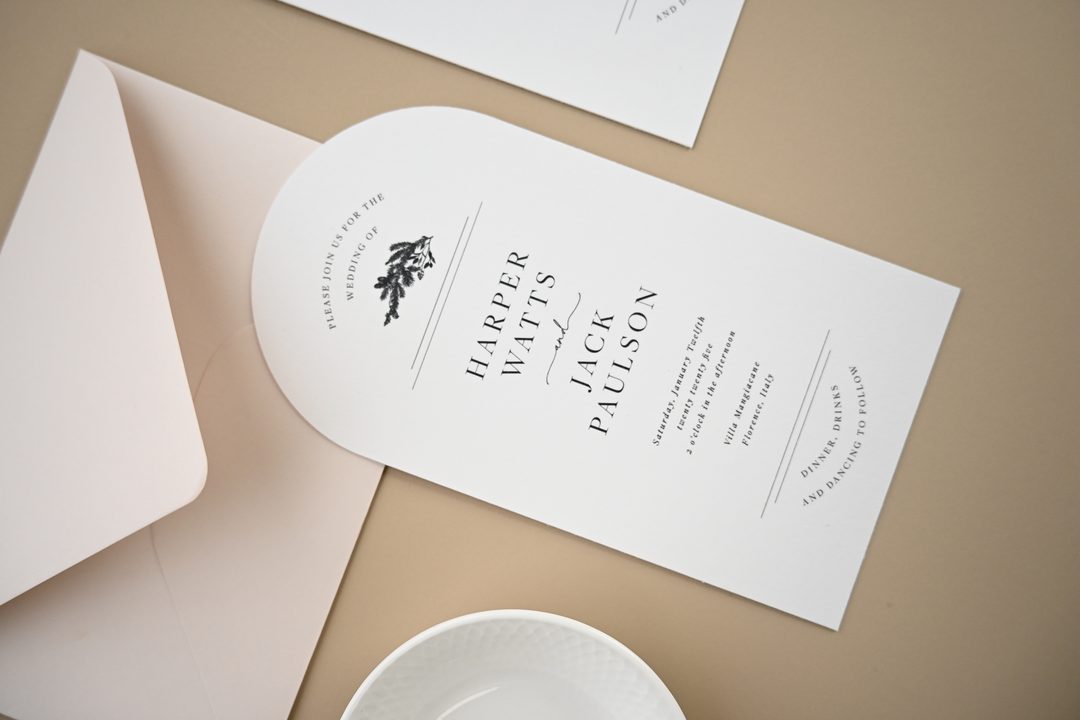
How you phrase each line shapes the tone of the sign as much as the design does. A formal black-tie wedding and a relaxed backyard celebration can use the exact same structure with different wording.
Formal Wording
Keep labels neutral and standard. “Ceremony Begins,” “Dinner is Served,” “Wedding Party Entrance,” and “Toast by the Best Man” all read as formal. Use full times with AM/PM and avoid contractions.
Casual and Warm Wording
Replace standard labels with phrases that sound like you. “We Say I Do” instead of “Ceremony.” “Good Food and Good Company” instead of “Dinner Service.” “Last Song” instead of “Reception Concludes.” Informal phrasing works especially well for outdoor, rustic, or non-traditional celebrations.
Mixed Register (Most Common)
Most couples use a mix: formal time labels on the left, warmer event phrases on the right. This keeps the sign easy to scan while still feeling personal. “5:00 PM – Cocktails on the Terrace” reads more warmly than “5:00 PM – Cocktail Hour” without crossing into overly casual territory.
One thing to avoid: location notes for every line. If the whole event is at one venue, you do not need to name it repeatedly. Reserve location notes for the moments where guests need to move (ceremony to reception venue) or find a specific space (cocktails in the garden, dinner in the main hall).
Wedding Day Sign vs. Printed Program: What Is the Difference?
These two items serve different purposes and most couples benefit from having both.
| Feature | Order-of-Events Sign | Printed Ceremony Program |
|---|---|---|
| Format | Display sign (shared) | Individual handout |
| What it covers | Full day from ceremony to send-off | Ceremony order of service only |
| Detail level | 5-8 anchor points | Every reading, song, and prayer |
| Names included | Rarely | Wedding party, officiant, readers |
| Kept as keepsake | No (display piece) | Often (guests take home) |
| When guests use it | On arrival; at each venue | During the ceremony |
If you have a religious or multi-part ceremony with readings, rituals, or a wedding party larger than six people, a printed program helps guests follow along in the moment. A wedding schedule sign cannot do that job. The two items work together: the sign handles the macro view of the day, the program handles the micro view of the ceremony. You can browse Paperlust’s wedding programs and order of service cards to coordinate both into a matching stationery suite.
Design and Format Options
The physical format of your sign affects how it reads in the space and how it photographs.
Fabric Signs
Fabric banners (printed linen or polyester fabric on a wooden or metal frame) are lightweight, wrinkle-resistant, and photograph beautifully in both natural and artificial light. They suit boho, garden, and coastal weddings and can be rolled up and stored after the day. Paperlust prints custom fabric wedding signs with precise color matching to coordinate with your invitation suite.
Printed PVC Board
A printed PVC board is rigid, flat, and weather-resistant, making it the practical choice for outdoor or venue weddings where the sign needs to stand alone without a frame. It can be trimmed to size and placed on an easel, propped against a surface, or mounted. This format works well for venues with existing acrylic or glass signage in the aesthetic.
Framed Poster Print
A framed print on premium paper suits formal venues and gallery-style spaces. The frame can double as decor for the home after the wedding. For poster format, 18×24 in (46×61 cm) fits shorter timelines comfortably; 24×36 in (61×91 cm) gives breathing room for a seven or eight-event day.
Vinyl Foil Signs
For weddings that want a metallic finish on a rigid substrate, Paperlust offers vinyl foil in gold, silver, and rose gold applied to fabric or PVC board. Foil lettering catches light well in both tent and indoor reception settings and photographs with a warmth that digital print alone cannot replicate.
You can browse the full range of custom wedding signs at Paperlust, including welcome signs, bar signs, seating charts, and order-of-events displays. Every design can be customized and coordinated with your invitation suite.
Ordering and Printing Your Wedding Timeline Sign
Order your wedding timeline sign at least three to four weeks before the wedding day. This gives time for the design proof, any revisions, production, and shipping without rushing.
When you place your order with Paperlust, a designer will deliver your proof within 1-2 business days. You get two rounds of revisions at no extra cost, so there is room to fine-tune the wording and layout before anything goes to print. Orders over $350 USD qualify for free DHL Express international shipping, with delivery in 2-4 business days after dispatch.
If you are finalizing your sign wording close to the day and the schedule is still settling, wait until your venue walkthrough and vendor timeline are confirmed before placing your order. Printing a sign with placeholder times is a common regret.
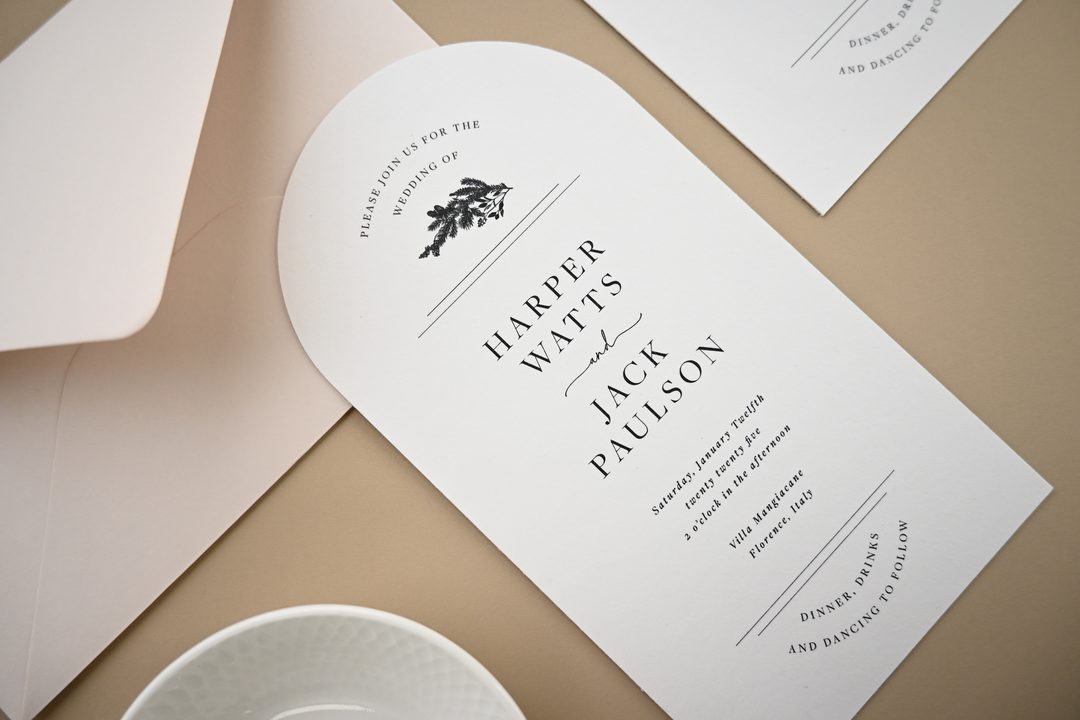
Paperlust’s $5 sample pack lets you compare paper stocks and print finishes in person, so you can commit to a full order with confidence.
Frequently Asked Questions
What size should a wedding timeline sign be?
18×24 in (46×61 cm) is the practical default for most timelines. If your schedule has seven or more events or you want larger text for outdoor viewing, 24×36 in (61×91 cm) gives more room. For intimate weddings where the sign sits at table height rather than easel height, a smaller 16×20 in (41×51 cm) can work well.
Does a wedding timeline sign need to include exact times?
It depends on the tone of your wedding. Including exact times (5:00 PM, 6:30 PM) helps guests plan around the schedule, especially if they need to step out, make calls, or coordinate with babysitters. Omitting times in favor of a flowing sequence (“Ceremony – Cocktails – Dinner – Dancing”) gives the sign a more relaxed, informal feel. Most couples include times for ceremony and dinner and leave dancing open-ended.
What is the difference between a wedding timeline sign and an order of service?
A wedding timeline sign covers the full wedding day from ceremony through to the final send-off, displayed as a shared sign for all guests. An order of service (or wedding program) is an individual handout given to each guest during the ceremony, covering just the ceremony itself in detail, including readings, music, and the wedding party’s names.
How many events should I list on a wedding timeline sign?
Five to eight anchor points is the right range. Fewer than five can feel sparse; more than eight can make the sign feel cluttered. Focus on the transitions guests need to anticipate: when the ceremony starts, when cocktails begin, when dinner is served, and when the dancing opens. You do not need to list every toast, every song change, or every canapé service.
Can I have matching programs and a timeline sign?
Yes, and it is one of the most cohesive things you can do for your stationery suite. Paperlust designs can be coordinated across signs and printed programs using the same typeface, color palette, and motif. Order both at the same time to guarantee the match. See the wedding programs collection to explore format options.
Where should I put my wedding order-of-events sign?
The most effective spots are the reception entrance (catches every guest as they arrive), the cocktail space entrance (confirms when dinner starts), or near the seating chart (where guests are already pausing). If your ceremony and reception are at different venues, consider a sign at each location.