

- Match your menu card tone to your invitation style: formal language for black-tie, relaxed for casual events.
- Capitalize only proper nouns on menu cards (e.g., “Caesar salad,” not “Caesar Salad”).
- Plated menus list courses in order of service; buffet menus use station headings or a combined list.
- Use standardized dietary symbols (V, VG, GF, N) with a key at the bottom of each card.
- Non-wedding events (rehearsal dinners, corporate, holiday parties) follow the same core conventions, with tone adjusted to the occasion.
- Browse Paperlust wedding menu cards with designer-assigned proofs in 1-2 business days.
The Basics
Menu titled: Mr and Mrs (optional)Date (optional)
Appetizers
Entree
Dessert
Beverages

Traditional Menu Card Wording
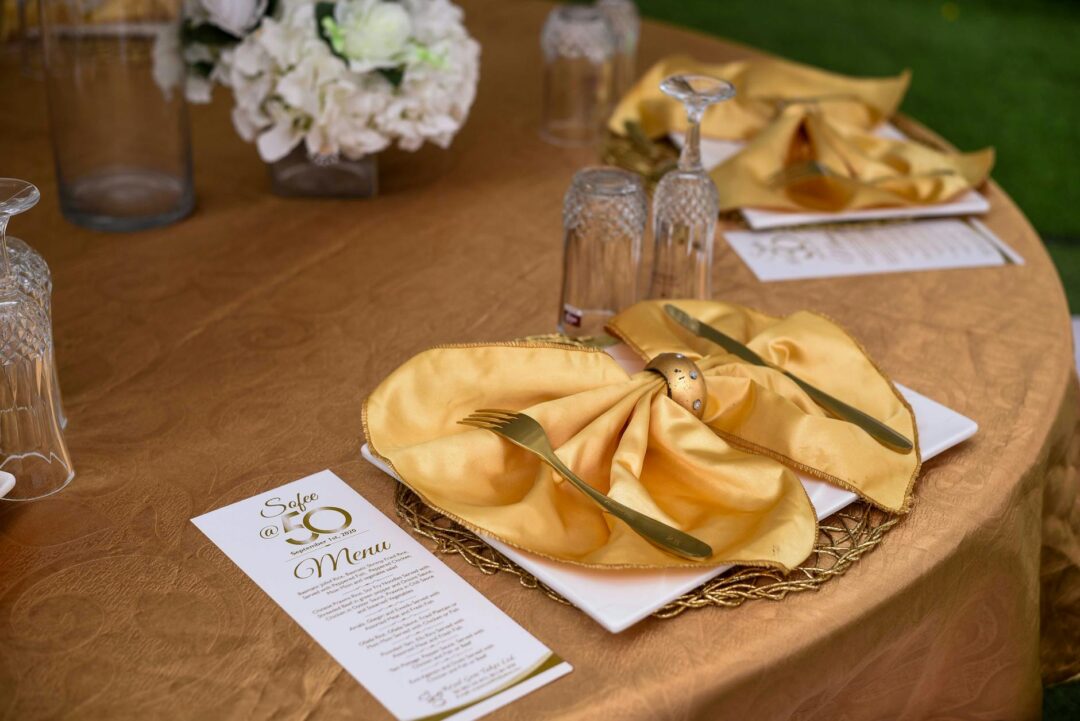
Traditionally a wedding menu card includes a title with the couple’s names and sometimes the date. What follows is a succinct list of the appetizers, entree, and desserts. At the bottom, a list of refreshments is available in case guests need a reminder of what’s on offer.June 14, 2026
Appetizer
Shaved fig and prosciutto with honey drizzle
Entree
Pan-seared chicken with lemon caper butter
or
Slow-braised beef short rib with truffle jus
Dessert
Vanilla panna cotta with berry compote
Beverages
House wines, sparkling water, soft drinks
Casual Menu Card Wording
Here is where things get fun with your menu card wording. Maybe you don’t need the full title – we all know whose wedding we’re at. Take a little of the descriptive language from a food poetry approach, or keep it simple.little gems with shaved radish and green goddess
the good part
braised lamb shoulder with herbed polenta
roasted eggplant with whipped feta (V)
sweet things
lemon tart, clotted cream, candied lemon zest
drinks all night
wines from our cellar, local beers, soft drinks
Formal Menu Card Wording Conventions: Capitalization, Punctuation, and Typography
Getting the small things right on a formal menu card shows attention to detail. These conventions apply whether you’re writing a wedding menu, rehearsal dinner menu, or gala dinner card.Capitalization rules
The most common mistake couples make is capitalizing every word in a dish name. Correct capitalization on a menu card follows the same rule as a sentence: only capitalize proper nouns and the first word of a line.| Correct | Incorrect | Why |
|---|---|---|
| Caesar salad | Caesar Salad | “salad” is a common noun; only “Caesar” is a proper noun |
| Beef stroganoff | Beef Stroganoff | “stroganoff” is now treated as a common noun in most style guides |
| Brussels sprouts | brussels sprouts | Named for the city Brussels; always capitalized |
| Boeuf bourguignon | Boeuf Bourguignon | French: only capitalize proper geographic names |
| Fettuccine alfredo | Fettuccine Alfredo | “alfredo” is now considered a common noun in American usage |
French course names and italics
On very formal menus, French course headings are sometimes used and traditionally italicized. Use these only if the overall tone of your event warrants them – they sit beautifully on letterpress or flat foil menus, less so on casual digital-print cards.| French Term | Meaning | When to Use |
|---|---|---|
| Amuse-bouche | Single-bite appetizer from the kitchen | Black-tie, tasting menus |
| Hors d’oeuvre | Pre-dinner canapes or cocktail bites | Cocktail hour section |
| Entree | Main course (American usage) | All formality levels |
| Plat principal | Main course (French/European usage) | Very formal or French-themed events |
| Mignardises | Petit fours or small sweet bites | Upscale tasting-style menus |
Punctuation on menu cards
Keep punctuation minimal and consistent:- No periods at the end of dish names or course headings.
- A comma may separate a dish name from its brief description: “Pan-seared halibut, lemon beurre blanc.”
- Parentheses or small superscript symbols work for dietary notation (see below).
- A centered dot or simple line may separate sections, but never overload with ornamental elements.
Font and print method pairing
Your wording choice should pair naturally with your print method. Highly descriptive, poetic wording reads best in a clean serif or script. Short, precise course listings suit both serif and modern sans-serif. For a black-tie or formal affair, letterpress menu cards on 300gsm Wild Cotton or flat foil menus on 380gsm Premium stock bring a tactile quality that digital print alone cannot match. Browse Paperlust wedding menu cards to see how different print methods complement each wording style.
Buffet Station Menu Card Wording vs. Plated Menu Card Wording
The format of service changes everything about how you write your menu card. Plated and buffet menus have different goals, different placements, and different reading experiences for guests.Plated menu card wording
For a plated sit-down reception, each guest typically has a menu card at their place setting. The card lists courses in the order they will arrive. For pre-selected meals, the card may indicate which option each guest has chosen (often color-coded or marked with a small symbol on the card at the time of seating).October 11, 2026
First course
Roasted heirloom tomato soup with basil cream
Main course
Herb-crusted lamb rack with rosemary jus (●)
or
Saffron risotto with grilled asparagus and truffle oil (V, GF) (●)
Dessert
Dark chocolate torte with vanilla bean ice cream
or
Seasonal fruit pavlova with chantilly cream (GF)
Key: V = Vegetarian, GF = Gluten-Free
Your entree selection is indicated by the dot on your card.
Buffet station menu card wording
For a buffet, you have two main approaches. The first is a central menu card or printed poster listing all stations and their key dishes. The second is a small card or tent sign at each individual station naming the items on offer. Central buffet menu card (one per table):Salad station
Mixed greens with sherry vinaigrette
Caprese salad with fresh basil (V, GF)
Carving station
Slow-roasted prime rib with au jus
Herb-crusted turkey breast
Mains
Roasted salmon with dill and capers (GF)
Three-cheese tortellini with marinara (V)
Sides
Roasted seasonal vegetables (V, GF)
Garlic mashed potatoes (V, GF)
Dessert table
Wedding cake, macarons, seasonal fruit platter
V = Vegetarian, GF = Gluten-Free
Penne arrabbiata (V, GF)
Fettuccine carbonara
Ricotta-stuffed shells with roasted tomato sauce (V)
Please let our staff know of any allergies.
Quick comparison
| Format | Quantity needed | Best placement | Wording approach |
|---|---|---|---|
| Plated (per-guest) | 1 per guest | Place setting | Courses in service order |
| Buffet (per-table) | 1-2 per table | Center of table | Stations, then items listed |
| Buffet station sign | 1 per station | At each food station | Station name, dish list, dietary symbols |
| Cocktail hour card | 1-2 per high table | Near food displays | Canape names, dietary icons |
Dietary Notation on Menu Cards: V, VG, GF, and Other Options
Dietary notation on a menu card is one of the most practical things you can include. Guests with dietary needs will quietly and gratefully scan for these symbols without having to ask. The key is consistency and a clearly printed key.Standard dietary symbols
| Symbol | Meaning | Notes |
|---|---|---|
| V | Vegetarian | May contain dairy and eggs |
| VG | Vegan | No animal products whatsoever |
| GF | Gluten-free | Note “prepared in a gluten-free kitchen” if applicable |
| N | Contains nuts | Important for allergy awareness |
| DF | Dairy-free | Useful when VG is not applicable |
| SF | Shellfish-free | Use when shellfish dishes are also on the menu |
How to format dietary notation on the card
Place symbols immediately after the dish name, in parentheses or as a small superscript. Include a key at the bottom of the card, below the final course or in a small-print footnote area.Wild mushroom risotto (V, GF)
Grilled barramundi with lemon salsa verde (GF, DF)
V = Vegetarian | VG = Vegan | GF = Gluten-Free | DF = Dairy-Free
Please advise your server of any allergies.
Color-coded dietary notation
Some couples prefer color-coded symbols or small icons over letter abbreviations. This works well on digital-print menu cards where color is inexpensive. Use a simple colored dot or leaf icon next to each dish, with a matching color key at the bottom. Keep to a maximum of three or four colors to avoid the card looking too busy.Spelled-out notation (formal menus)
For very formal events where symbols feel too casual, spell out the dietary description in parentheses at the end of the dish description:Butternut squash ravioli with sage brown butter (vegetarian)
Chocolate fondant with salted caramel ice cream (contains nuts)
Non-Wedding Menu Card Wording: Rehearsal Dinner, Corporate Dinner, Holiday Party
Menu card wording conventions apply well beyond weddings. The same rules of capitalization, dietary notation, and tone-matching hold for any formal dining event.Rehearsal dinner menu card wording
A rehearsal dinner menu card is typically warmer and less formal than a wedding menu. It often includes a brief note from the hosts and sets the tone for the evening as a celebration of the people and relationships behind the wedding day. If you are still planning the invitation side of the evening, our rehearsal dinner invitation wording guide covers templates, etiquette, and timing.Hosted by the Anderson and Chen Families
September 5, 2026
To start
Burrata with heirloom tomato and basil oil (V, GF)
Tuna tartare with sesame crisp and yuzu
Main
Braised short rib with creamy grits and gremolata
Pan-seared salmon with dill cream sauce (GF)
Roasted cauliflower steak with romesco (V, VG, GF)
Dessert
Mini pavlovas with fresh strawberries (GF)
Chocolate lava cake with vanilla cream
V = Vegetarian, VG = Vegan, GF = Gluten-Free
A rehearsal dinner for Mia & Caleb
Shared to start
Selection of charcuterie, olives, and grilled sourdough
Choose your main
Pan-seared chicken with lemon herb butter
Barramundi with tomato and caper dressing (GF, DF)
Beetroot and feta tart (V)
Something sweet to end
Warm brownie with caramel gelato
Fresh fruit sorbet (VG, GF)
Corporate dinner menu card wording
Corporate dinners call for a clean, professional tone. Keep dish descriptions precise and avoid overly poetic language. Many corporate clients include a company logo or event branding at the top.[Company Name]
November 12, 2026 | The Grand Ballroom
First course
Smoked salmon rillette with capers and rye crisp
Seasonal greens with champagne vinaigrette (V, GF)
Main course
Prime beef tenderloin with bordelaise sauce
Pan-roasted chicken supreme with wild mushroom cream
Roasted pumpkin and spinach gnocchi (V)
Dessert
Dark chocolate mousse with raspberry coulis
Cheese board with quince paste and crackers
Dietary key: V = Vegetarian, GF = Gluten-Free
Holiday party menu card wording
Holiday party menus get to be festive. Warmth and seasonal references are welcome. This is one context where a little alliteration or playful heading (“Merry Mains”, “Sweet Endings”) works in your favor.Christmas Eve Dinner, December 24, 2026
Starters
Prawn cocktail with cocktail sauce
Brie en croute with fig jam and walnuts (V)
The main event
Glazed honey ham with mustard cream
Herb-roasted turkey with pan gravy
Lentil Wellington with red wine reduction (V, VG)
Sides to share
Crispy roast potatoes (V, GF)
Green beans with toasted almonds and butter (V, GF)
Cauliflower gratin (V)
Desserts
Traditional plum pudding with brandy butter
Pavlova with cream and summer berries (V, GF)
Mince pies (V)
V = Vegetarian, VG = Vegan, GF = Gluten-Free
For more wedding-specific examples, including 20+ templates across cuisine styles and formats, see our companion guide: Wedding Menu Card Wording: 50+ Templates by Cuisine, Style, and Format.
Menu Card Wording FAQs
What wording goes on a wedding menu card?
A wedding menu card typically includes the couple’s names, the wedding date (optional), course headings, dish names with brief descriptions, and dietary symbols with a key. More formal menus include French course headings in italics; casual menus often skip the couple’s names and use playful section headings instead.
Should dish names be capitalized on a menu card?
Capitalize only proper nouns – named dishes, city names, or names derived from a person (Caesar salad, Brussels sprouts). Common nouns like “chicken,” “salad,” or “soup” should not be capitalized mid-sentence. Capitalizing every word makes a menu harder to read and looks informal despite its intention.
How do you indicate dietary options on a menu card?
Place standard symbols (V for vegetarian, VG for vegan, GF for gluten-free, N for nuts, DF for dairy-free) directly after the dish name in parentheses. Add a key at the bottom of the card. For very formal events, spell out the dietary description in full (e.g., “vegetarian” in parentheses) rather than using abbreviations.
What is the difference between plated and buffet menu card wording?
Plated menu cards list courses in the order they will be served, one card per guest at their place setting. Buffet menu cards are placed on tables (one to two per table) and list stations or categories of dishes. Individual buffet station signs use a simple heading with a brief list of items and dietary symbols.
Do you need a menu card at a buffet?
Yes – even for a buffet, a menu card helps guests plan their plates, identify dietary-friendly options, and understand what’s available before they approach the buffet line. One per table is standard. Station signs at each food station are an additional option, not a replacement for a central menu card.
What should a rehearsal dinner menu card include?
A rehearsal dinner menu card typically includes the event name or a warm greeting, the hosts’ names, the date, course listings with brief descriptions, and dietary symbols with a key. The tone is warmer and less formal than a wedding menu – a brief note of welcome from the hosts is a thoughtful addition.
Do French terms need to be italicized on a menu card?
Traditional typographic convention italicizes foreign-language words when used in an English text, so yes – French course headings like hors d’oeuvre, amuse-bouche, or entremets are italicized on formal menus. Whether you include them at all depends on the formality level of your event and the cuisine being served.
What is the correct format for a wedding buffet menu card?
List stations as bold or italicized headings, then list the dishes under each station with dietary symbols. Include a key at the bottom. For very casual buffets, a single combined list with a “buffet dinner” heading works well. One menu card per table is standard; for smaller or more intimate receptions, one per two guests is also acceptable.
How long should menu card descriptions be?
Keep descriptions concise – usually one short phrase after the dish name is sufficient (e.g., “pan-seared halibut, lemon beurre blanc”). Overly long descriptions crowd the card and are hard to read at a table setting. For cocktail hour cards and casual buffets, even the dish name alone with a dietary symbol is enough.
Can I use a menu card for a corporate event or holiday party?
Absolutely. Menu cards are a polished touch at any sit-down dinner. For corporate events, use a clean professional tone with precise dish names. For holiday parties, a warmer, festive tone with seasonal section headings is appropriate. The same core rules apply: capitalize only proper nouns, note dietary options, and keep descriptions brief and accurate.
Found your wording? See how it looks on a real menu card. Browse our designs, or order a $5 sample pack to feel the paper and foil before you commit.
Browse Menu CardsOrder $5 Sample PackReady to design your menu cards?
Browse hundreds of designer menu card styles – digital print, letterpress, and flat foil. Proofs delivered in 1-2 business days.
Browse Menu Cards50+ Wording Templates