
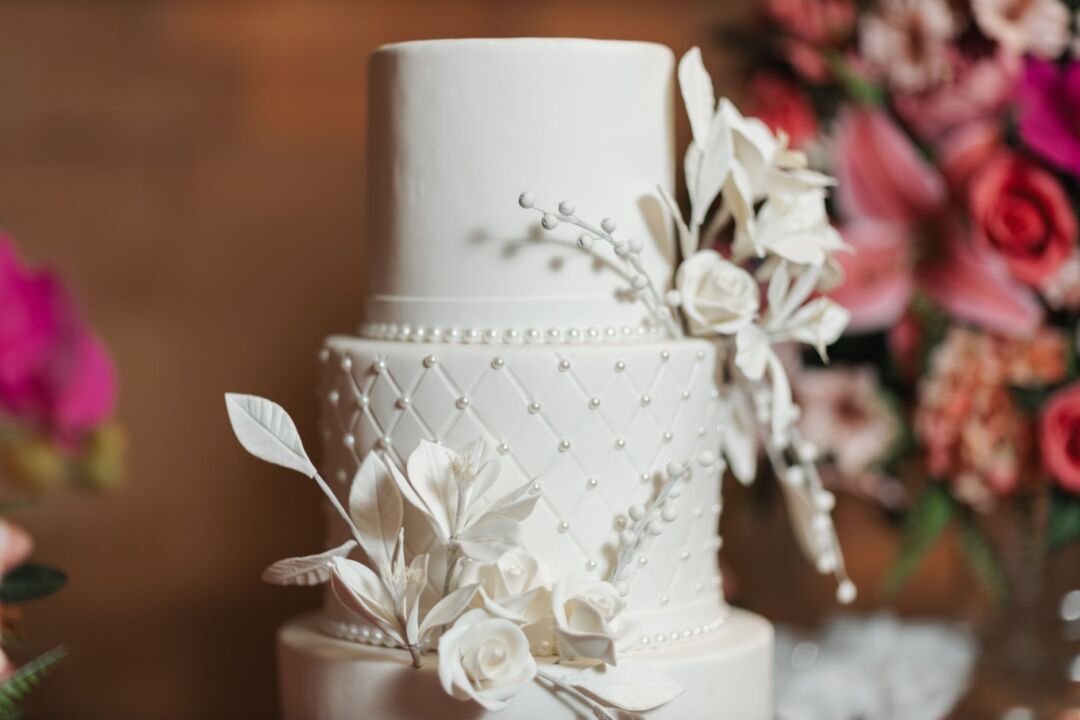
Choosing the right wedding cake size comes down to one practical question: how many servings does each tier produce, and how many tiers do you need to reach your guest count? The short answer: a 3-tier round cake with 6-inch, 8-inch, and 10-inch tiers yields approximately 74 wedding slices; a 3-tier with 8-inch, 10-inch, and 12-inch tiers covers around 118. Start from those benchmarks, then adjust for your actual headcount.
This guide gives you the complete servings-per-tier table for both round and square cakes, a tier-combination reference for guest counts from 50 to 200, and four practical considerations that change the math: the portion standard your baker uses, the shape of each tier, the sheet cake option, and how you handle the top tier. For what drives the price once the size is decided, the full picture is in our wedding cake cost guide.
The most common sizing mistake is planning against the invitation count rather than confirmed RSVPs. Your effective serving number is the people who will actually attend. Work from your headcount and add a 10 to 15 percent buffer to account for rounding in cuts and any last-minute additions.
- Wedding slice standard: 1 inch wide x 2 inches deep x full cake height
- Party slice standard: 1.5 inches wide x 2 inches deep (fewer servings from the same tier)
- Height does not add servings: a 4-layer 10-inch round and a 2-layer 10-inch round both yield the same number of slices
- Shape matters significantly: a 10-inch square yields 50 wedding slices; a 10-inch round yields 38
- Sheet cake option: a half-sheet kitchen cake adds roughly 54 servings at a fraction of the cost of an extra display tier
- Buffer rule: plan for your confirmed headcount plus 10 to 15 percent, not your invitation list
The two slice standards: wedding portions vs. party portions
Most sizing confusion traces back to two different slice standards, and different sources quoting different ones without making it clear which they mean.
A wedding slice is cut to approximately 1 inch wide and 2 inches deep, running the full height of the cake tier. This is the smaller of the two standards. It assumes guests are eating a full dinner and that cake is one of several dessert options on the table. The Wilton Cake Serving Chart, which is the reference most US bakeries use, quotes serving numbers using this standard by default.
A party slice is larger: about 1.5 inches wide and 2 inches deep. That extra half-inch of width reduces the total serving count for any given tier by roughly 20 to 30 percent. When comparing quotes from different bakeries, ask which standard their serving estimates use. Most wedding-focused bakeries default to the wedding-slice standard; some use party-slice numbers without specifying it.
One detail worth knowing: cake height does not change the serving count. A 10-inch round with four layers and a 10-inch round with two layers both yield the same number of slices, because the width of each cut determines the count rather than how tall each slice is. To add servings, you need more diameter or more tiers, not more layers in an existing tier.
Servings per tier: the complete size chart
The table below uses the Wilton Cake Serving Chart standard, the most widely referenced guide in US bakeries. All figures assume a tier height of 4 inches (two standard 2-inch layers).
| Tier diameter | Round: wedding slices | Round: party slices | Square: wedding slices | Square: party slices |
|---|---|---|---|---|
| 6 inch | 12 | 12 | 18 | 12 |
| 8 inch | 24 | 20 | 32 | 20 |
| 10 inch | 38 | 28 | 50 | 30 |
| 12 inch | 56 | 40 | 72 | 48 |
| 14 inch | 78 | 63 | 98 | 63 |
| 16 inch | 100 | 77 | 128 | 80 |
Source: Wilton Cake Serving Chart (wilton.com). Actual servings may vary based on how cuts are executed and the height of individual tiers.
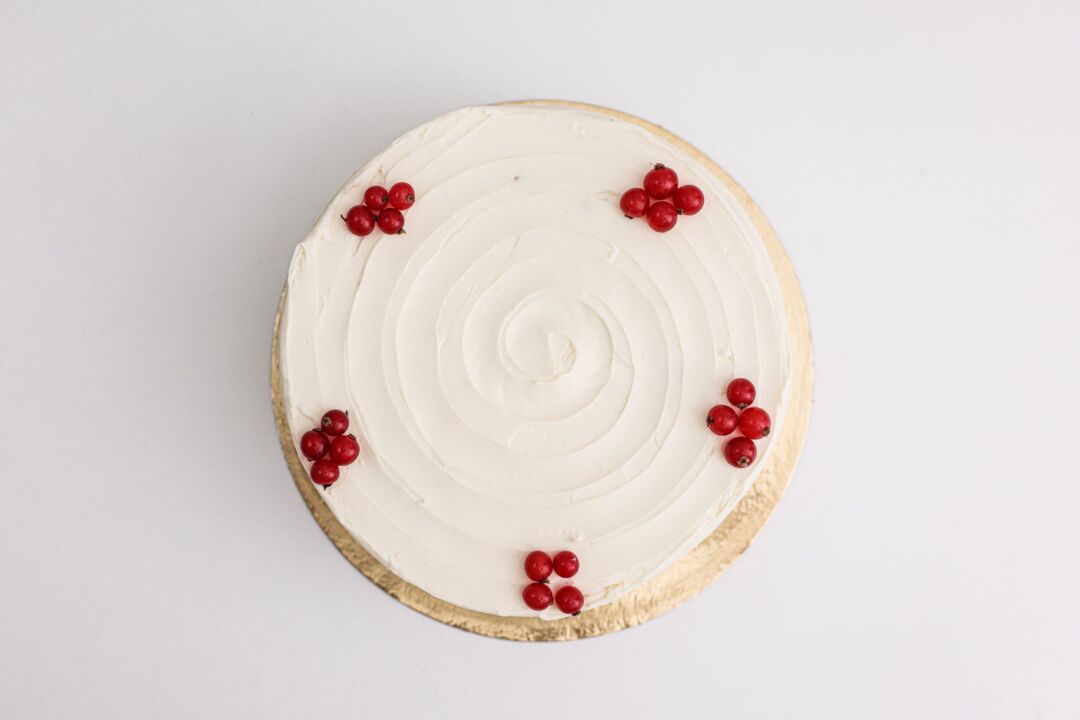

The gap between round and square tiers is consistent and meaningful. A 10-inch square yields 12 more wedding slices than a 10-inch round of the same diameter. At 12 inches, the gap widens to 16 extra slices. Square tiers produce more servings because there is no curve waste at the perimeter when cuts run parallel to the edges. Most couples choose round tiers for the classic visual proportion of a stacked display cake; if maximizing servings is the priority, square tiers deliver more.
How tiers combine: reaching your guest count
A tiered wedding cake is simply the sum of its tiers. Add the wedding-slice count from each tier diameter in the chart above and you have your total. The table below builds out common configurations for round tiers.
| Tier configuration (round) | Wedding slices | Best for |
|---|---|---|
| 6 + 8 inch (2-tier) | 36 | Up to 35 guests |
| 8 + 10 inch (2-tier) | 62 | 50 to 58 guests |
| 6 + 8 + 10 inch (3-tier) | 74 | 65 to 72 guests |
| 6 + 8 + 12 inch (3-tier) | 92 | 80 to 88 guests |
| 8 + 10 + 12 inch (3-tier) | 118 | 100 to 115 guests |
| 6 + 10 + 14 inch (3-tier) | 128 | 115 to 124 guests |
| 6 + 8 + 10 + 12 inch (4-tier) | 130 | 120 to 128 guests |
| 6 + 8 + 12 + 16 inch (4-tier) | 192 | 175 to 188 guests |
The “best for” figures sit below the mathematical total to allow for cutting imprecision and a few extra slices for guests who want seconds. Use your confirmed headcount as the input, not your invitation list.
Two situations come up often. For 75 guests, a 6+8+10 (74 slices) is essentially one-for-one with no margin. Most bakers recommend stepping up to a 6+8+12 (92 slices) for that headcount and letting catering staff serve the remaining slices to anyone who wants a second piece. For 100 guests, the 8+10+12 (118 slices) is comfortable with real headroom; the 6+8+12 (92 slices) works cleanly when paired with a kitchen sheet cake.
Round vs. square: how shape changes the math
The serving difference between round and square tiers is a geometry question with a practical consequence.
A round tier has a curved perimeter. When cuts are made parallel to each other across the cake, the end slices at the curve are slightly narrower than the interior slices. That partial-slice effect accumulates across the full circumference and reduces the total serving count compared to a square tier of the same width.
A square tier has no curve. Every row of cuts yields full-width slices from one edge to the other. At 10 inches, this adds 12 servings over the equivalent round. At 12 inches, it adds 16.
The visual implication: round tiers at multiple heights create the proportioned silhouette most associated with traditional tiered cakes, and they work naturally in most reception settings. Square tiers can feel more architectural and modern. A practical middle path is a round display stack at the tiered levels the wedding photos will show, with rectangular sheet cake tiers handled out of sight in the kitchen.
The sheet cake option: stretching servings without scaling up
Adding a kitchen sheet cake is the most cost-effective way to bridge the gap when your confirmed headcount falls between two natural tier configurations.
A half-sheet cake (approximately 11 x 15 inches) yields roughly 54 wedding-size servings. Your baker cuts and portions it in the kitchen, and catering staff serve slices to guests the same way they handle any other cake. Nothing visible at the reception signals that guests are receiving a different cake.
The numbers make this approach attractive. A 6+8+10 display cake (74 slices) paired with a half-sheet kitchen cake (54 slices) gives you 128 total servings, at a considerably lower price than adding a 12-inch fourth tier to the full display cake. The display stays at the visual scale that photographs cleanly at a 3-tier height; the kitchen cake handles the volume.
Ask your baker to quote this arrangement if your confirmed guest count is above 100 or falls between two tier configurations. It is a standard practice. Most experienced wedding bakers will propose it before you ask, and it represents genuine value compared to scaling the display tiers for volume alone. We have a full comparison of sheet cake and tiered cake approaches coming in this series.
The cutting tier and the anniversary tier
Two separate decisions directly affect how many servings your display cake actually produces for guests.
The cutting tier
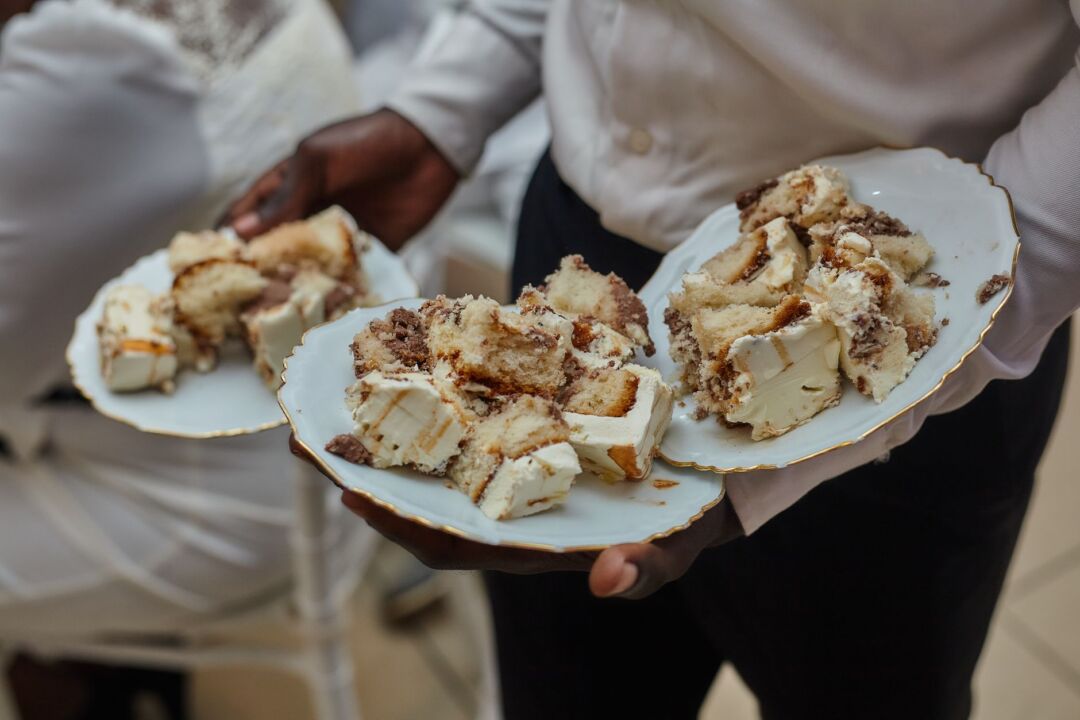
Most wedding cakes have a designated cutting tier, typically the largest tier, that catering staff begin slicing once the couple has made the ceremonial first cut. If your cake has four tiers, it is common for the bottom one or two tiers to be the serving tiers while the top tier or tiers remain as visual display through the service period.
Confirm with your baker and caterer before the day which tiers will be cut for guests. This determines how many servings are actually in play on the night.
The anniversary tier
The tradition of freezing the top tier for your first anniversary is widely followed but not universal. If you plan to observe it, the top tier is removed and wrapped before cutting begins and is not available to serve guests.
A standard 6-inch round top tier represents 12 wedding slices. If your total count is already close to your headcount, remove those 12 slices from your planning number. If you would rather not deal with a year-old frozen tier, ask your baker to produce a separate 6-inch anniversary cake alongside the wedding order. This is a common, low-cost request, and it keeps your serving total accurate without requiring any adjustment to your planning math.
Your quick reference: what size cake for your wedding
| Guest count | Recommended round configuration | Total wedding slices | Notes |
|---|---|---|---|
| Up to 50 | 8 + 10 (2-tier) | 62 | Comfortable buffer; no supplement needed |
| 75 | 6 + 8 + 12 (3-tier) | 92 | Buffer of ~17 for seconds and cutting variance |
| 100 | 8 + 10 + 12 (3-tier) | 118 | Strong headroom; no supplement needed |
| 125 | 6 + 8 + 10 + 12 (4-tier) | 130 | Tight; add a half-sheet kitchen cake for buffer |
| 150 | 6 + 10 + 14 (3-tier) + half-sheet | 182 | Display (128) plus kitchen cake (54) = solid buffer |
| 200 | 6 + 8 + 12 + 16 (4-tier) + half-sheet | 246 | Display (192) plus kitchen cake (54) = generous coverage |
These figures use the wedding-slice standard. If your baker quotes in party-slice numbers, add approximately 25 to 30 percent to the tier count you would otherwise select.
For design inspiration before or alongside your sizing conversation with a baker, our wedding cake trends guide covers the shapes, tiers, and finishes couples are choosing in 2026. Once you know the style you want, a baker can match the tier configuration to both the look and the guest count in a single planning conversation.
FAQ
How many servings does a 3-tier wedding cake yield?
It depends on the tier diameters. A 6+8+10 inch round 3-tier yields approximately 74 wedding slices. A 6+8+12 round yields 92 slices, and an 8+10+12 gives 118. Use the servings-per-tier table above to add up any combination.
What is the difference between a wedding slice and a party slice?
A wedding slice is cut to 1 inch wide by 2 inches deep at the full height of the cake. A party slice is 1.5 inches wide by 2 inches deep. That extra half-inch of width reduces the serving count for any given tier by roughly 20 to 30 percent. Most US wedding bakeries quote in the wedding-slice standard; it is worth confirming with your baker which one their estimates use.
Does cake height affect the number of servings?
No. Adding layers increases the visual height of the tier but does not change the number of slices. A 4-layer 10-inch round and a 2-layer 10-inch round both yield 38 wedding slices. To increase servings, increase the diameter or add another tier.
When does a sheet cake make more sense than adding a tier?
When the confirmed guest count falls between two natural tier configurations, a half-sheet kitchen cake (approximately 54 wedding servings) is almost always more cost-effective than scaling up the entire display cake. Catering staff portion it in the kitchen and serve slices normally; nothing visible to guests distinguishes them from the display cake servings. Ask your baker to quote both options if your guest count is above 100.
How do I account for the anniversary tier in my serving count?
If you plan to freeze the top tier, subtract its serving count from your planning total. A 6-inch round top tier represents 12 wedding slices. Alternatively, ask your baker to produce a separate 6-inch anniversary cake at the time of the wedding. It is a common, affordable request and keeps your serving count accurate without any adjustment.
Do square wedding cakes yield more servings than round cakes?
Yes. A 10-inch square tier yields 50 wedding slices versus 38 from a 10-inch round, and a 12-inch square yields 72 versus 56. The difference comes from geometry: square tiers have no perimeter curve waste, so every row of cuts produces full-width slices. If maximizing servings from each tier is a priority, square configurations are more efficient. The visual tradeoff is a more architectural look compared to the classic round-tier silhouette.
Once the size is set
Locking your cake size is one of the early vendor milestones that clears the path for the rest of the planning timeline. The next step is making sure the people you want there know about your date far enough in advance to attend.
Save-the-dates go out 6 to 8 months before the wedding, or 8 to 12 months for a destination event or any date near a major holiday. Once every ceremony detail is confirmed, wedding invitations carry the full picture: venue, time, dress code, and RSVP instructions. Paperlust carries hundreds of designs across foil, letterpress, and digital print so the stationery matches the aesthetic of your day exactly. Order a sample pack at paperlust.co/get-samples to feel the paper and print quality before you commit to a design.
For the full breakdown of what a wedding cake costs by tier configuration, style, and baker experience level, see our wedding cake cost guide. And if you are still building the wider wedding budget, our average wedding cost in 2026 and wedding budget breakdown give you the full national picture across every vendor category.