
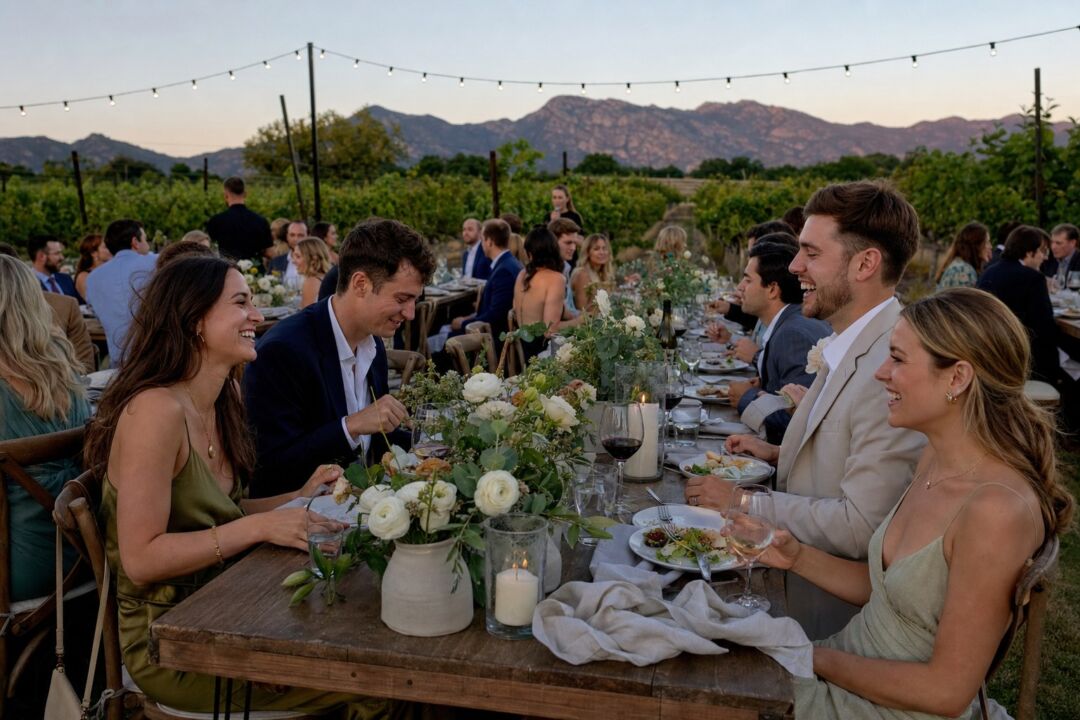
Rustic weddings are the most searched theme in wedding planning, and also the most imitated. The name has come to describe a specific collection of props: mason jars, burlap runners, chalkboard signs, galvanized buckets, and distressed wooden crates. Those props are not the theme. They are what happened when the theme got simplified into a checklist and reproduced until the shorthand replaced the original idea.
The original idea is worth recovering. A rustic wedding is one that feels warm, unhurried, and connected to its setting. Natural materials over manufactured ones. Florals that look cut from a garden rather than assembled in a studio. A room where the architecture carries the atmosphere and the decor supports it rather than competes with it. That lasting aesthetic can be executed in a barn, a winery, a heritage garden, or a suburban hall if you understand what changes between those settings.
Rustic wedding: what matters
- The venue carries most of the atmosphere. Spaces with exposed timber, stone, or mature gardens need less decor, not more.
- Three elements that reliably date a rustic wedding: mason jars as the only vessel, burlap as the primary textile, and chalkboard signs at every station.
- The approach changes significantly by venue type. A real barn, a winery, a heritage garden, and a suburban hall each need different treatment.
- Invitations set the tone before guests arrive. The paper stock and print method communicate as much as the design itself.
- Wildflower arrangements belong in ceramics or simple glass cylinders, not crammed into jars tied with twine.
The invitation sets the tone months before the venue does.
What makes a rustic wedding read as considered, not dated
The theme is not about objects. It is about an atmosphere: warm, relaxed, and honest in its materials. Everything in the room should feel like it belongs rather than completing a look.
The clearest test is whether the decor would make sense in the setting without any other context. A ceramic vase with eucalyptus and seasonal blooms on a wooden table passes. A galvanized bucket filled with sunflowers next to a chalkboard quote board next to a mason jar lantern fails: the accumulation signals theming rather than intention.
Invitations are where the theme starts, from the guest’s perspective. Before they see the venue, meet the celebrant, or sit down to eat, they read the card you sent them. A suite printed on cotton or textured paper, with a clean botanical illustration and restrained typography, signals a considered day. A barn silhouette on glossy cardstock signals the costume version. If you are putting real effort into the day, let the stationery reflect it. Browse rustic and nature-inspired wedding invitations before other styling decisions lock in the color direction.
Which elements have aged badly, and what to use instead
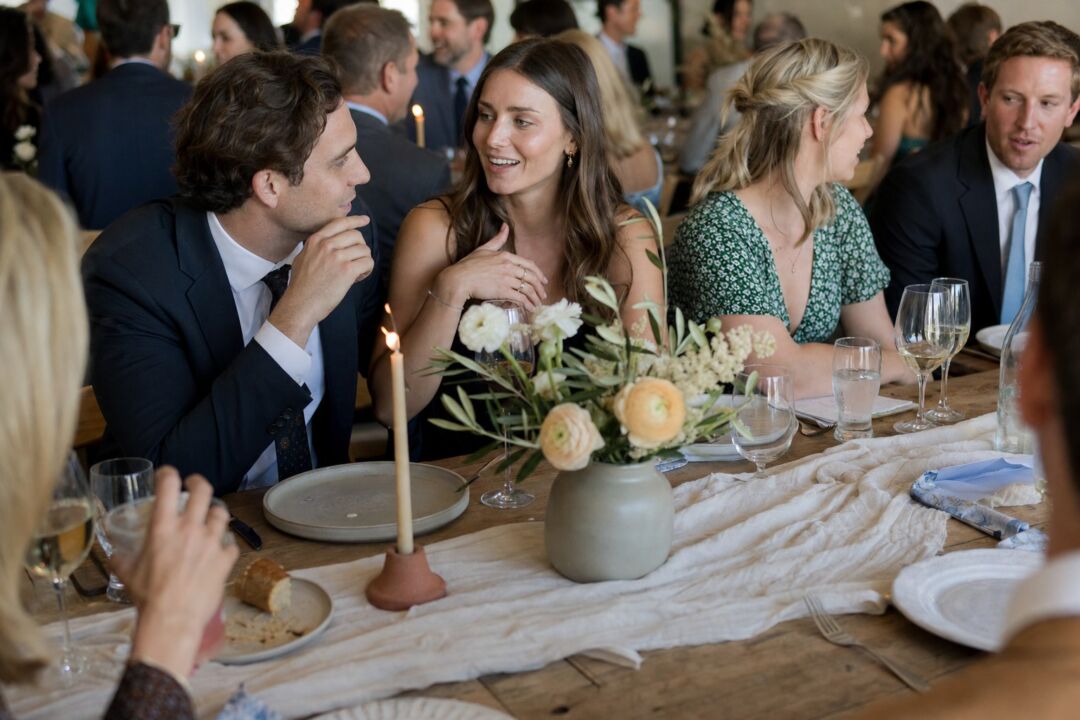
The mason jar is the most identifiable problem. It is a food storage container, and using it as the primary vessel at wedding tables for more than a decade has made it synonymous with a specific era of event styling rather than with anything genuinely rustic. A few jars mixed into a varied tablescape with ceramics and glass cylinders are unremarkable. Every table fitted with the same jars as the vase, the candle holder, and the drinking glass announces the decade more than the theme. Replace with ceramics, simple glass cylinders, or mismatched vintage bottles for the same informality without the association.
Burlap has the same problem through overuse rather than inherent fault. Using it as the table runner, chair sash, ceremony backdrop, boutonniere wrap, and napkin ring simultaneously reads as a craft fair. Linen in earth tones (oat, stone, warm white) has the same organic quality without the dated connotation. Pick one natural textile and let it carry the surface.
Chalkboard signage peaked around 2014 and has not recovered. One functional sign for directions or a seating chart is still useful and legible. Six boards with the couple’s love story scattered across the ceremony and reception signal the old-school package. Keep signage useful and minimal.
Galvanized buckets, wooden barrels as cocktail tables, old doors as photo backdrops, hay bales as ceremony seating: none is individually wrong, but assembling them all creates a props catalogue. Pick one and skip the rest.

How the venue type changes the approach
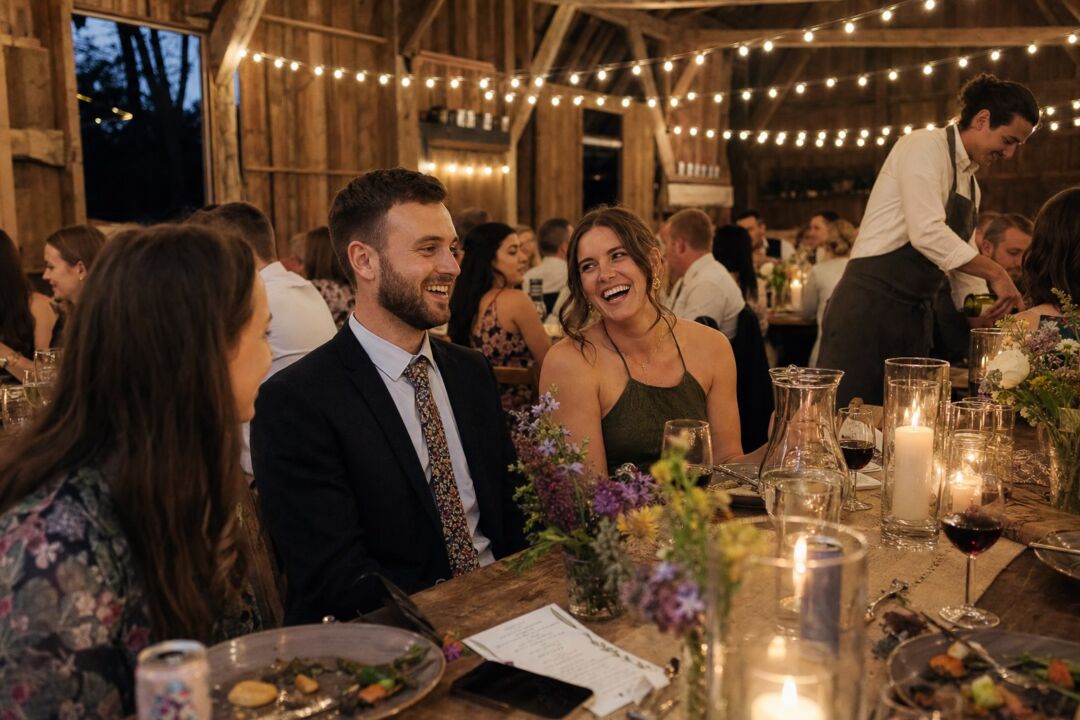
A real barn already is the texture. Exposed timber joinery, aged hardware, and uneven surfaces give you the rustic quality before you add anything. The risk is overcrowding: too many props and the architecture disappears. A barn ceiling with festoon lights along the beam lines is transformed. Add hanging lanterns, draped fabric, and a statement chandelier to the same space and it becomes a styling conflict.
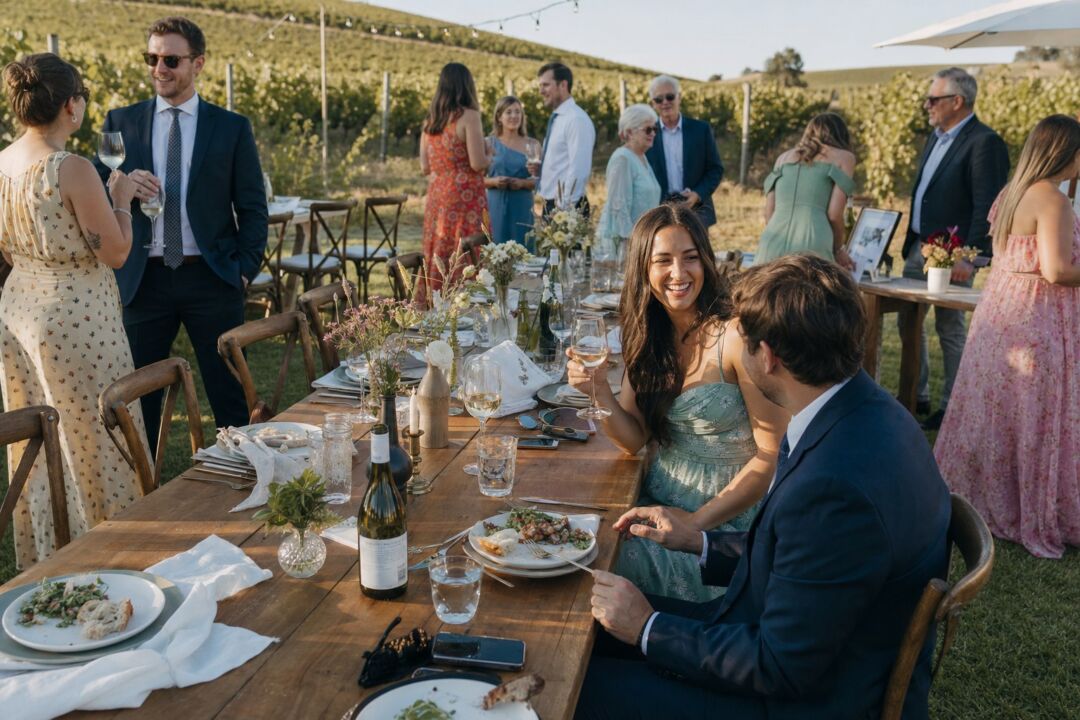
A winery or vineyard gives you the landscape. Vine rows, natural stone, and outdoor light at golden hour provide a rustic quality that interior decor rarely matches. The key question is which spaces you are using. Outside among the vines, decorate minimally and the setting provides everything. Inside, you face the same challenge as a suburban hall.
A heritage garden or botanical venue is the softest rustic. The atmosphere comes from mature planting, stone paths, and natural light rather than from structural rawness. Contrast is what keeps it from reading as a generic garden party: slightly rougher textiles such as raw linen or undyed cotton against manicured greenery, and florals that look wild rather than arranged. The styling needs more edge than the setting, or the result reads as a general outdoor wedding.
A suburban hall or function center is the hardest venue for this theme. The architecture works against you: drop ceilings, flat walls, neutral carpet. You can build the atmosphere, but you are constructing a set rather than decorating a space. The highest-return investment is overhead lighting: rigged string lights that replace the venue’s standard fixtures establish the atmosphere before guests notice anything else. That investment is meaningfully larger than what a barn requires. Calculate the full lighting and fabric budget before comparing venue hire fees.
Charts and signs in the same palette are what make a theme read as deliberate.
Which colors and lighting choices work
Warm neutrals form the most versatile base: oat, stone, wheat, and warm white. They read as natural, work in both daylight and candlelight, and do not commit to a specific season or landscape. Build from a neutral base and add one accent color rather than trying to balance three.
Sage green, dusty terracotta, and muted burgundy are all reliable accents when kept desaturated. The same colors at full saturation read as deliberately bright and decorative rather than organic. Avoid barn red paired with sunflowers and burlap: that combination is inseparable from a specific trend era.
Lighting is the single highest-return investment in a rustic wedding and the most commonly under-budgeted line item. Candles on tables, pillar styles in hurricane glasses or tapers in simple ceramic holders, transform the quality of light in a room for a fraction of the cost of other decor interventions. Overhead string lights add warmth but work best when they follow architectural lines (parallel rows along ceiling beams, or framing a defined space overhead) rather than strung at random angles.
Warm amber uplighting standard in hotel function rooms should be avoided: it flattens the space and reads as a corporate event. If the venue offers it as part of the package, ask whether it can be turned off.
How to avoid the craft-store effect
For signage: one welcome sign, one functional sign. Both should have clean, legible typography rather than ornate chalk script. Resist adding signs with quotes or the couple’s origin story. Guests came because they already know it.
For florals: loose arrangements in varied vessels at varied heights read as a deliberate choice. Identical vases at the same height across every table read as a hire package. Give your florist a brief that emphasizes natural, seasonal, and varied, and ask them to prioritize availability over a fixed bloom list. That brief produces better results and often costs less than specifying particular flowers that are out of season.
Rustic invitations, signs and charts from one family. The $5 sample pack puts seven designs and an envelope in your hands, including real foil and letterpress, so you judge paper and finish off a screen.
Frequently asked questions
Is a rustic wedding theme still popular?
Rustic remains one of the most-searched wedding themes. What has lost appeal is the early-2010s prop package: mason jars, burlap, and chalkboard signs assembled together. The underlying aesthetic, natural materials, warm atmosphere, and settings that feel connected to the landscape, is not dated. The key is executing the atmosphere rather than reproducing the object list.
What is the difference between rustic and boho wedding styles?
Rustic emphasizes natural, earthen materials and an honest connection to the setting. Boho adds an overtly decorative layer: macrame, dreamcatchers, feathers, and heavily layered textiles. The two overlap in informality and in loose, organic florals. The distinction is that a rustic wedding aspires to authenticity of material and setting, while boho prioritizes a visually layered, curated look. A rustic wedding removes things; a boho wedding adds them.
How do I do a rustic wedding at a non-rural venue?
A suburban hall or function center requires building the atmosphere rather than decorating a space that already has it. The highest-return investment is overhead lighting: string lights that replace standard fixtures set the tone before guests notice anything else. Add candles and fabric to soften bare walls, and keep the prop list short.
What flowers work best for a rustic wedding?
Ranunculus, cosmos, dahlias in season, sweet peas, eucalyptus, and seasonal wildflowers all work well. Style matters more than specific blooms: loose and asymmetric, in varied vessels at varied heights. Ask your florist to work with what is seasonal and available rather than a fixed list.
What color palette suits a rustic wedding?
Warm neutrals (oat, stone, wheat, warm white) are the most flexible base. Sage green, dusty terracotta, and muted burgundy work well desaturated. Build from one neutral and add one accent. Avoid barn red, sunflowers, and burlap together: that combination reads as a trend era, not a personal choice.
How do rustic wedding invitations set the tone for the day?
Guests form an expectation of the day from the invitation they receive weeks before it. A suite on cotton or textured paper, with a botanical illustration and clean typography, signals a considered approach. A glossy cardstock design with clip-art barn imagery signals themed. The paper stock and print method communicate tone as much as the design itself does.