
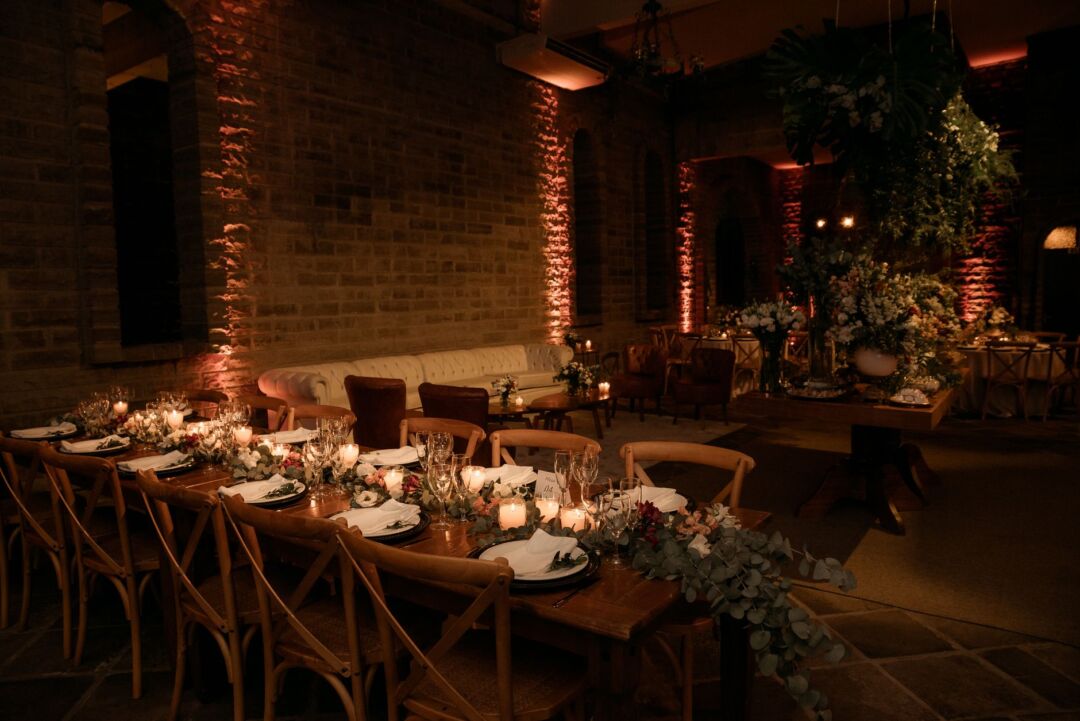
Wedding lighting costs $300 to $5,000 in the US in 2026, with most couples spending $1,500 to $2,500 for a professionally installed setup at a medium-sized venue. The difference between those numbers comes down to three things: which lighting types you choose, how large your venue is, and whether you hire a dedicated event lighting company or add lighting as a bundle through your DJ.
At the low end, a few strands of DIY string lights and a rented uplighting kit can transform a barn or backyard for a few hundred dollars. At the high end, a full-service design covering uplighting, pin spots, a custom gobo, chandeliers, and a programmed lighting console at a large ballroom can push well past $5,000 before delivery and a late-night extension fee. Most professional packages for a venue of 100 to 150 guests sit somewhere in between, in the $1,200 to $3,000 range, depending on the market.
Below is what each line item actually costs in 2026, what drives the price, and how to spend less without making your reception photos look flat.
- National average (professional setup): $1,500 to $2,500 for a medium venue
- Typical full range: $300 to $5,000+
- What’s usually included: equipment, delivery to the venue, setup before guests arrive, programming, and teardown after the reception
- Biggest cost drivers: lighting type chosen, venue size, and whether you book a dedicated lighting specialist vs. bundling through your DJ or venue
- One money-saving tip: prioritize uplighting and a few pin spots for photography impact; skip intelligent moving heads unless your venue specifically benefits from them

How much does wedding lighting cost? (the average)
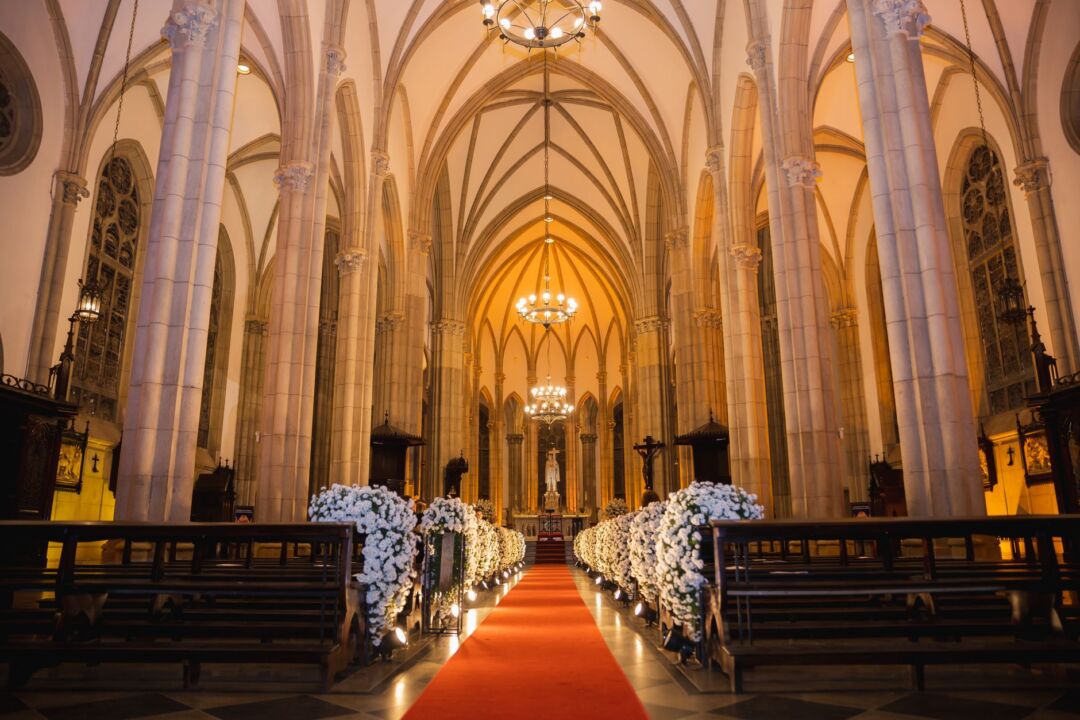
For a professionally installed setup at a typical US wedding venue in 2026, couples spend between $300 and $5,000, according to data from Zola and event-lighting professionals across the country. Most mid-range packages, covering uplighting plus one or two accent elements for a venue of 100 to 150 guests, land in the $1,200 to $3,000 range. Simple DIY string light installations can come in under $500, while full-service custom designs at large or multi-room venues regularly exceed $5,000.
To put lighting in context, The Knot’s Real Weddings research puts the average US wedding in the low $30,000s. Lighting usually accounts for 3 to 8 percent of the total budget, making it one of the smaller line items but one of the most visually transformative. To see how it fits against every other vendor category, our average wedding cost in 2026 guide has the full picture, and the wedding budget breakdown shows exactly how those dollars typically get allocated across each vendor.
Wedding lighting cost breakdown
Here is what each type of wedding lighting costs in 2026. The first block covers the most common professional options; the second block covers add-ons and delivery.
| Lighting type | Typical 2026 cost | Notes |
|---|---|---|
| Uplighting (full venue) | $600 to $2,000 | Price scales with number of fixtures and room size |
| Bistro / string lights | $300 to $1,500 installed | $3 to $5 per linear foot; labor and rigging add to cost |
| Chandeliers (rental) | $150 to $500 each | Rigging adds $100 to $300 per fixture |
| Gobo / monogram light | $150 to $500 | Projects initials or date; custom die adds a one-time fee |
| Pin spot lighting | $20 to $75 per table | Illuminates centerpieces and cake; photographs well |
| Custom neon sign (LED) | $200 to $600 | A purchase, not a rental; price scales with length |
| Dance floor wash / spotlights | $300 to $800 | General illumination; intelligent moving heads cost more |
| Cake or sweetheart table spotlight | $30 to $100 | Single focused beam on a focal point |
| Labor and installation | $300 to $800 | Dedicated companies charge separately; DJs sometimes bundle |
| Delivery and travel | $50 to $250 | Local venues run $50 to $150; 100 to 200 miles adds roughly $200 to $250 |
| Professional package (mid-range) | $1,200 to $3,000 | Uplighting plus one or two add-ons, labor and delivery included |
| Full custom design | $3,000 to $6,000+ | Multiple fixture types, programming, large or multi-space venue |
Dedicated lighting companies typically quote a fixed package price covering everything. DJs offer uplighting as an add-on at a bundled rate that tends to run $200 to $600 lower, though the equipment is usually consumer-grade.
What drives the cost
Six factors move a wedding lighting budget more than anything else.
1. Lighting type chosen. Uplighting is the most widely quoted element and the most photogenic. Add a gobo or monogram light and a set of pin spots and you have a complete, polished look for $1,500 to $2,500. Layer in chandeliers, intelligent moving heads, or full pipe-and-drape and the number climbs quickly.
2. Venue size and ceiling height. A small barn might need 10 to 12 uplights to cover its perimeter. A large hotel ballroom might need 30 or more. Per-fixture rental costs the same either way, so a bigger room means a higher total. Ceiling height also matters: rigging fixtures above 15 feet often requires a lift rental that can add $500 to $600 on its own.
3. Dedicated lighting company vs. DJ add-on. A wedding lighting specialist brings professional-grade fixtures, color calibration expertise, and a dedicated operator. Your DJ’s bundled uplighting package costs less and handles the basics, but the equipment is typically consumer-grade. For most couples, the DJ bundle is sufficient for perimeter uplighting; specialty fixtures like gobos and chandeliers are worth hiring a dedicated company for.
4. Venue-sourced lighting. Some venues offer in-house lighting packages. Convenient, but industry professionals note that venue-sourced lighting can run 30 to 40 percent higher than independent vendors once service charges and gratuity are applied. Ask what is included in your venue rental fee before adding their lighting package.
5. Season and day of the week. Saturday evenings in peak season (May through October) command the highest demand and the highest quotes. Off-peak dates, Fridays, and Sundays regularly come in lower for the same scope of work.
6. Region. Northeast and West Coast labor rates and delivery logistics push quotes higher than comparable scopes in the Midwest and South.
What’s included vs. what costs extra
Knowing what a quote covers prevents day-of surprises.
What’s typically included:
- Equipment rental for the duration of the event
- Delivery to your venue and pickup after the reception
- Setup during the venue’s load-in window (usually 2 to 4 hours before guests arrive)
- Color programming and calibration
- An operator on call during the reception, or a pre-programmed sequence that runs automatically
- Teardown and strike after the reception ends
What almost always costs extra:
- Custom gobo or monogram die fabrication (a one-time fee of $30 to $75 on top of the projector rental)
- Venue-required permits for ceiling rigging or truss
- Power tie-in to the venue’s electrical panel, if required by venue insurance
- A late-night extension fee if the reception runs past the agreed end time
- Travel surcharges for venues outside the standard service radius
Wedding lighting cost by region and venue type
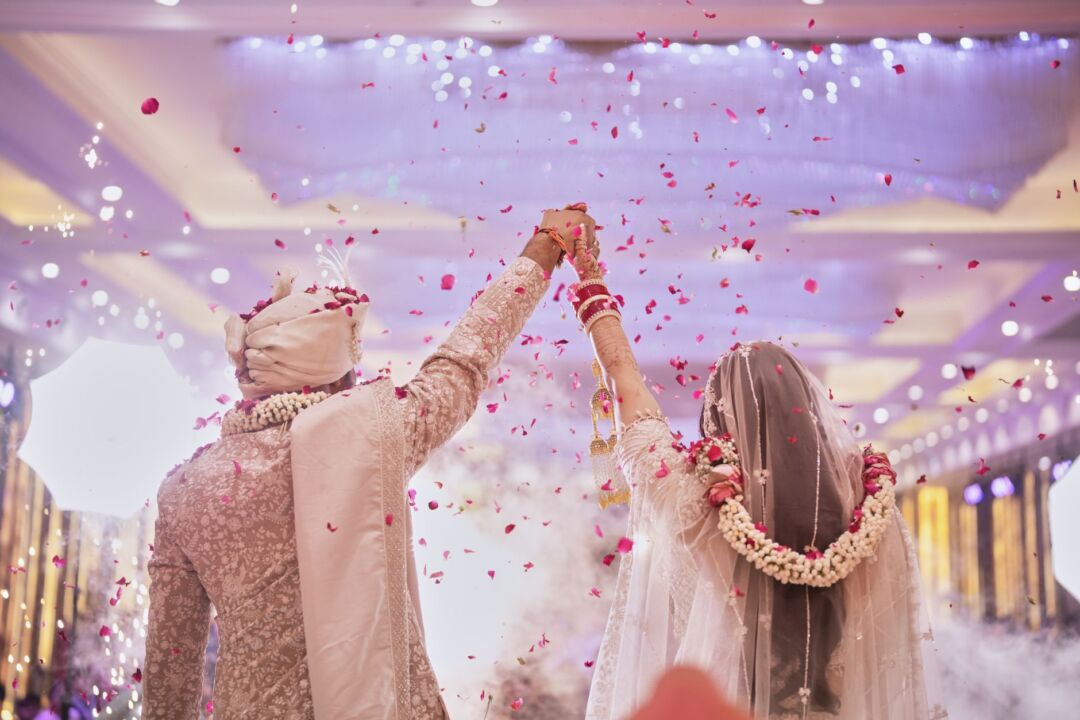
Regional labor costs are the primary geographic variable. A full uplighting package that runs $1,500 in the Midwest might cost $2,000 to $2,500 for the same scope in New York City, Los Angeles, or Boston, driven by higher labor rates and urban delivery logistics. Southern and Midwest markets generally run 10 to 20 percent below the national midpoint.
Venue type also reshapes the budget significantly.
- Hotel ballrooms often have serviceable house lighting already in place. You may only need uplighting and pin spots rather than a full rig, which keeps costs lower.
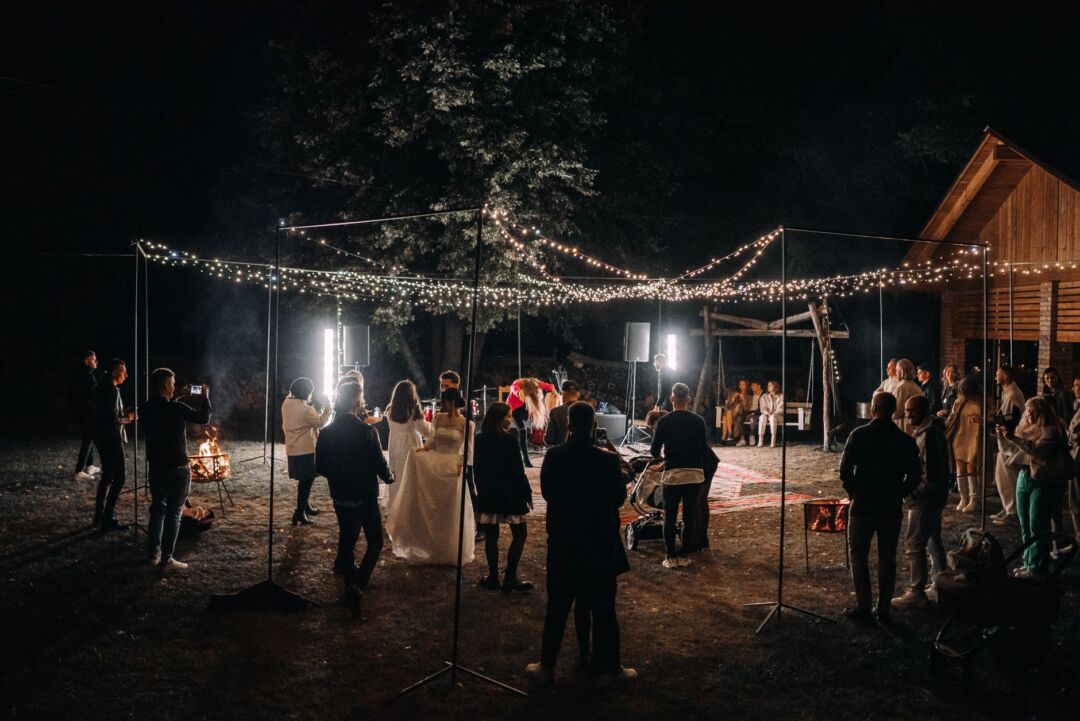
- Barn and rustic venues benefit most from string and bistro lights combined with warm uplighting. The DIY option is also most viable here, since barn beams are easy to string.
- Outdoor tent weddings require the most investment because the venue provides no existing lighting infrastructure. Bistro lights, uplighting, chandeliers, and generator power can combine to push totals above $3,000 before other add-ons.
- Rooftop and non-traditional spaces fall in between, depending on existing ambient light and rigging options.
How to save on wedding lighting
Wedding lighting rewards smart prioritization more than almost any other vendor category.
- Lead with uplighting. It delivers the single biggest visual upgrade per dollar and photographs better than almost any other enhancement. Warm perimeter uplighting alone transforms a plain room and is the most impactful place to start your lighting budget.
- Bundle with your DJ. Most DJs offer uplighting packages for $200 to $600 less than a dedicated company. If you only want perimeter uplighting and no specialty fixtures, the DJ bundle is often the right call.
- DIY string lights. Bistro lights on a covered patio, tent perimeter, or barn beam are one of the easier DIY wins. String light kits run $50 to $150 for 100 feet at home improvement stores and look indistinguishable from a professional installation when strung carefully.
- Skip intelligent moving heads. Moving-head fixtures add $150 to $300 per unit and fit a club environment more than most weddings. Pin spots and uplighting serve photography far better for the money.
- Rent a DIY gobo projector. If you want a monogram light, DIY rental services ship projector kits with custom gobos for $100 to $200, compared to $300 to $500 from a full-service company.
- Ask what the venue already has. Some hotel and country club venues include programmable LED uplighting in the room rental fee. If so, you can skip or reduce that line item.
Questions to ask before you book
Running through this checklist with a lighting vendor before signing prevents day-of surprises.
- What does the base quote include: equipment, delivery, setup, teardown, and an on-site operator?
- What is the load-in window, and is there a surcharge if the venue limits your time?
- How many fixtures does the quote cover, and is that enough for my venue’s square footage?
- Are there surcharges for ceiling rigging, power tie-in, or travel beyond a set radius?
- What is the late-night extension fee if the reception runs long?
- Can you share photos or video from a recent wedding at a similar venue type?
FAQ
How much does uplighting cost for a wedding?
Uplighting for a full venue typically costs $600 to $2,000, depending on the size of the space and the number of fixtures needed. A small venue might need 10 to 12 units in the $600 to $900 range; a large hotel ballroom covering the full perimeter runs $1,200 to $2,000. DJ-bundled uplighting packages run $400 to $800 but use consumer-grade equipment.
Is wedding lighting worth the cost?
For most venues, yes. Uplighting is the highest-impact-per-dollar upgrade available, particularly in hotel ballrooms and barn venues with flat or harsh ambient light. The difference is most visible in evening reception photos, where warm perimeter lighting separates professional-quality images from flat snapshots.
Can you do wedding lighting yourself?
For string and bistro lights, absolutely. DIY string light installations cost $100 to $500 in materials and work well in barns, outdoor tents with existing power, and covered patios. Professional-grade uplighting is harder to DIY because color calibration and even coverage require quality fixtures, though rental kits are available in some markets for $200 to $400 for a basic set.
What is a gobo light at a wedding?
A gobo is a metal template inserted inside a spotlight to project a shape, pattern, or custom monogram onto a wall, floor, or ceiling. At weddings, projecting the couple’s initials and wedding date onto the dance floor is the most popular use. A full-service company charges $150 to $500 for the projector and custom gobo; DIY rental kits run $100 to $200.
Does wedding lighting include teardown?
Yes, in most professional quotes. A full-service lighting company typically includes delivery, setup, and teardown in the package price. Always confirm the strike time in writing, as some venues charge penalties if vendors load out past a hard cutoff.
How far in advance should you book a wedding lighting company?
For peak-season Saturdays (May through October), book 8 to 12 months out, the same timeline as other in-demand vendors. Off-peak dates and Fridays typically allow 3 to 6 months. If bundling lighting with your DJ, it books on the DJ’s timeline.
The right light changes the room
Lighting is one of the few wedding investments guests feel without consciously noticing, and it is the difference between photos you print and frame versus photos that stay on your phone. Once your venue, date, and lighting vendor are confirmed, the next step is getting the word out.
Save-the-dates give guests enough runway to make travel plans, and matching wedding invitations carry the visual mood of your celebration into their hands before they walk through the door. The same warm, intentional aesthetic you are investing in for your lighting translates beautifully to stationery. Paperlust’s sample pack is a low-commitment way to see and feel the papers before committing to a full suite.