


As your big day closes in and the bells are starting to ring, recheck your wedding to-do list and make sure wedding signage is on there! A wedding welcome sign is the first piece of decor your guest will see and it should offer a taste of what your guests expect from your big day. While Paperlust is taking care of the design and the printing on your signage, the final look is yours to decide. Here are some ideas on how to decorate your wedding sign to tie it all together.
Add flowers



Get your florist or get crafty and make a flower arrangement to adorn your wedding sign with. If you are making your own arrangement, the key is getting a stable oasis or bouquet holder and a lot of cable ties!
Antique frame


What’s old is new again with a modern wedding that reuses antique decor! Frame your welcome sign or seating chart in an antique frame with gold or copper finishes to bedazzle your guest back to an era of glamour and elegance. An important note: make sure you measure the inside area of your frame precisely.
Hang in there!

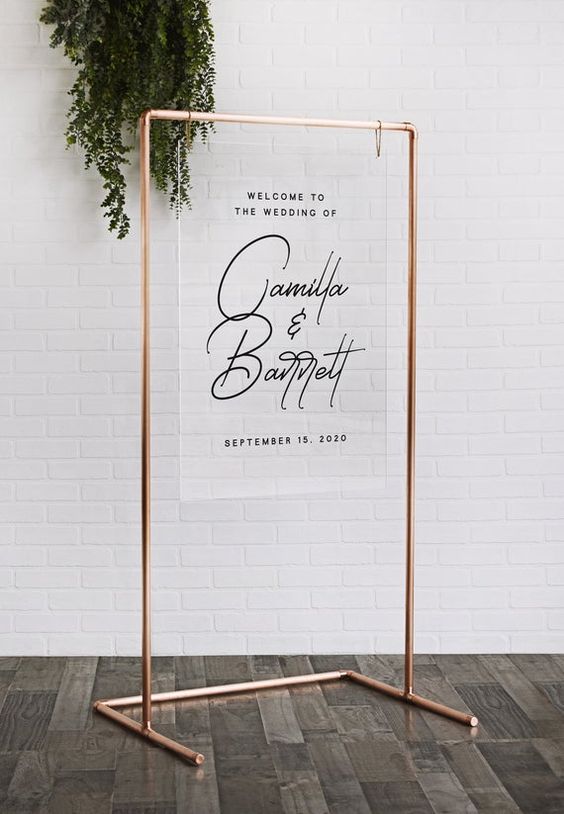
Another creative way to display your signage is by hanging them with a hanging stand instead of the classic easel. It’s modern, minimal and coming into trend. This sign can be easily built by using a narrow cheap clothes rack as the base (be sure that it’s not too big or your sign may look small overall), painting it to your desired color and source matching ties to hang your sign with. If DIY is not your thing, you could easily buy a hanging stand online. The other thing to note with the hanging frame is if you are placing the sign out doors, be sure that it’s idea heavy enough or has the option of being tied down so that the wind does not blow it away.
Wedding Seating Arrangement cards


Wedding seating arrangement cards sometimes referred to as escort cards or seating chart cards, are a fun way to get your guest mingling while finding their seating placement. These cards are either printed by table number or in alphabetical order and can be flexible to suit any decoration. You can string them up and peg them to any board, frame each card or even hang them!

Need custom signage for your wedding? Corflute signs, banners, and A-frames available at Paperlust Print Shop.
Types of Wedding Signs You Need
Most couples underestimate how many signs a wedding actually needs – and then scramble in the final week. Here’s the complete list to plan ahead with.
Welcome sign: The centerpiece of your wedding signage. Usually the largest sign – set on an easel at the venue entrance to greet guests as they arrive. It sets the visual tone for everything that follows and is one of the most photographed elements of the day.
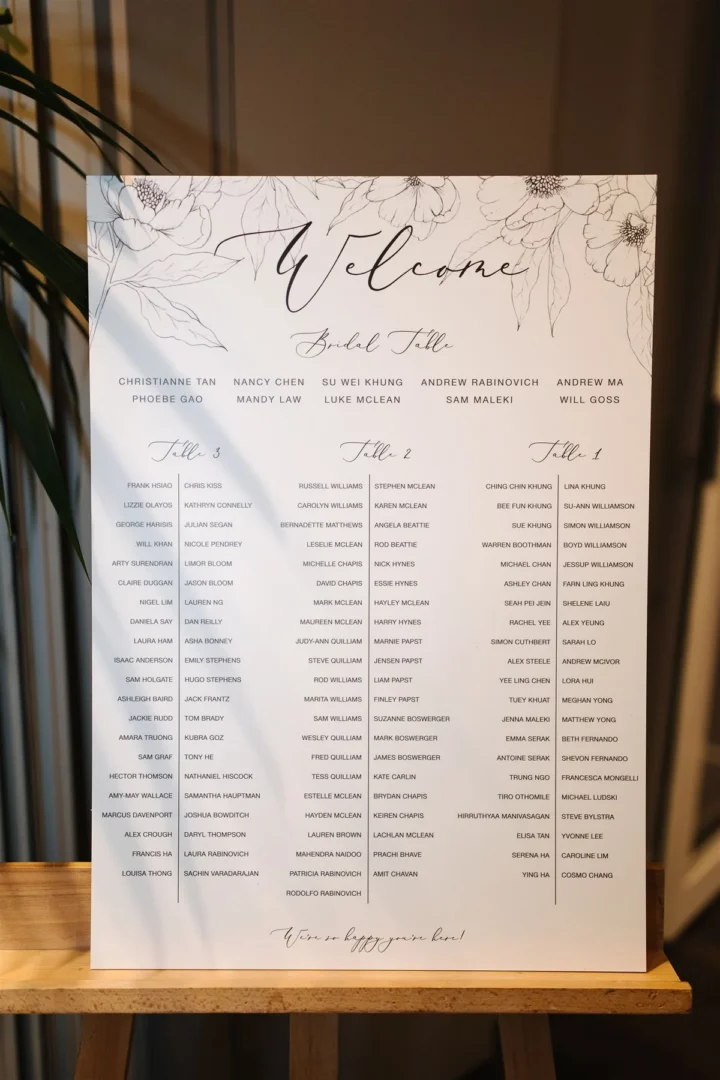
Seating chart: For seated receptions, a seating chart is essential. It can be a single large sign on a Printed PVC Board or Fabric panel in a frame, a series of individual escort cards, or even a digital display. Whichever format you choose, position it near the reception entrance so guests can find their table before they sit down.
Table numbers: Simple, elegant, and genuinely useful. Table number cards can match your invitation suite or stand alone as small printed cards in frames. Paperlust’s wedding signs collection includes table number designs that coordinate with invitation suites for a seamless look.
Bar and menu signs: A signature cocktail menu, wine list, or full dinner menu on a chalkboard, printed card, or framed sign adds a personal and practical touch to the reception. Guests appreciate knowing what’s available without having to ask staff.
Ceremony signs: Reserved seating signs (“Reserved for Family of the Bride”), an unplugged ceremony sign (“Please put your phones away and be present”), and an order of service board if you’re not using printed programs.
Directional signs: Essential for outdoor venues, multi-building properties, or anywhere guests might not know where to go. Arrow signs pointing to the ceremony, reception, parking, or restrooms prevent confusion and keep your timeline on track.
Photo booth sign: If you have a photo booth or designated photo moment area, a fun sign – listing props available, hashtags, or just a bold “Photo Booth” header – helps guests engage. Browse our full range of wedding sign designs to find options that suit your theme and venue.
Choosing the Right Material for Your Wedding Signs
The material your signs are printed on affects how they look, how they’re displayed, and how much they cost. Here’s an honest rundown of the main options.
Printed PVC Board: Paperlust’s primary material for wedding signs and seating charts. Printed PVC Board is rigid, lightweight, and produces sharp, vibrant colors that photograph beautifully. It suits modern, minimal, and classic wedding aesthetics and works equally well on an easel, in a frame, or displayed on a hanging stand. It’s durable enough for outdoor use and arrives ready to display with no assembly required.
Fabric signs: Paperlust’s fabric signs are a genuine differentiator – soft, textured, and completely free of light reflection, which means they photograph cleanly in every lighting condition from harsh midday sun to candlelit reception rooms. Fabric signs can be suspended from a frame or arch, rolled for transport, and paired with floral arrangements without any risk of glare. They’re an especially popular choice for welcome signs, seating chart displays, and ceremony backdrops. Browse our fabric and printed wedding sign designs to see the full range.
Printed card or foam board: The most budget-friendly option and perfectly suitable when finished well. A well-designed large-format printed card in a quality frame photographs beautifully and is a great option for couples who want a polished look without the premium price of a large board sign. This is Paperlust’s specialty – our design team handles typography, color accuracy, and layout with the same care as your invitation suite.
Timber or wood: Solid timber or plywood panels suit rustic, outdoor, and boho aesthetics. They can be painted, engraved, or printed on, and they make beautiful keepsakes. For timber and non-standard formats, Paperlust Print Shop offers large-format signage options including corflute panels and custom signs.
Typography and Color Tips for Wedding Signs
Your signs should look like they belong together and like they belong at your wedding. Here are the principles that keep signage cohesive.
Match your invitation typography: If your invitations use a specific script font for your names and a clean serif for the body text, carry those through to your signs. Font consistency across all your printed materials creates a polished, designer-level aesthetic that most guests won’t consciously notice – but everyone will feel.
Limit your typefaces: Two typefaces maximum – one display or script font for headings, one body font for details. More than two starts to look unintentional.
Consider contrast for readability: Dark text on a light background or white text on a dark background. Pale gold text on ivory is beautiful in person but nearly impossible to read from 10 feet away. Err on the side of contrast, especially for directional signs and seating charts.
Coordinate with your florals: If you’re decorating signs with flowers (as covered in the tips above), factor the flower colors into your color scheme. A sign with a deep green background looks stunning with white and blush florals – and clashes with orange and red. Brief your florist with your sign design so they can plan accordingly.
Displaying Your Signs on the Day
Even a beautifully designed and printed sign can fall flat if it’s displayed badly. Here’s how to get the display right.
Easels: The most versatile and widely used option. Wooden A-frame easels suit rustic and garden aesthetics; thin gold or copper metal easels suit modern and luxe styles. Match the easel finish to your other metallic accents (hardware, candle holders, cutlery).
Hanging stands: As described earlier in this article, hanging stands create a modern, minimal look that’s become increasingly popular. The key is weight – your sign needs to be substantial enough not to spin in light air movement, or you’ll need to weight the bottom.
Floral arch integration: A welcome sign wired into or leaned against a floral arch creates one of the most impactful ceremony backdrops in contemporary weddings. The sign, the arch, and the florals work together as a single installation rather than three separate elements.
Outdoor tips: Wind is the enemy of large signs. Use sandbags, cable ties, or tent pegs to secure easels if your venue is exposed. Check the weather forecast the week before and have a backup plan – a sign lying face-down is worse than no sign at all. Add custom stickers to seating chart envelopes or favor bags to tie your sign design into the smaller details around the reception.
Frequently Asked Questions
What wedding signs do I need?
Essential signs: welcome sign, seating chart, table numbers, bar or menu sign, ceremony reserved seating signs, and directional signs. Optional: photo booth sign, unplugged ceremony notice, order of service board.
What is the best material for wedding signs?
Paperlust produces wedding signs and seating charts on Printed PVC Board and Fabric – both photograph beautifully and hold up at outdoor venues. For a budget-friendly option, a well-designed printed card in a quality frame works great. Timber suits rustic aesthetics. For large-scale or non-standard formats, Paperlust Print Shop offers corflute panels and custom signs.
How do you decorate a wedding welcome sign?
Add a flower arrangement using a foam oasis or bouquet holder, frame the sign in an antique or metallic frame, hang it from a floral arch or hanging stand, or surround it with candles. Ensure floral additions don’t cover the text.
Can Paperlust design and print my wedding signs?
Yes – Paperlust designs and prints wedding signs as part of a coordinated stationery suite. Designer proofs in 1 to 2 business days, two rounds of edits included. For larger outdoor signage, visit Paperlust Print Shop for corflute signs and panels.
Shop Wedding Signs at Paperlust
Custom wedding signage you can personalize online, printed and shipped fast.
Shop Wedding Signs at Paperlust
Custom wedding signage you can personalize online, printed and shipped fast.
Pretty! This has been an extremely wonderful article. Thank you for providing these details.