

Barn and rustic venues consistently top searches and Pinterest boards for good reason: the combination of raw timber, natural light, and open land is genuinely hard to replicate anywhere else. But a barn is not a hotel ballroom with better wallpaper. The infrastructure that a managed venue handles quietly behind the scenes, things like power, plumbing, catering, and wet-weather cover, often falls to you at a barn. This guide covers the questions that change your budget and your evening, so you can walk into a venue tour knowing what to ask.
The pretty roundups rank well for “barn wedding venues.” They will not tell you that you might need to hire a generator, that the noise curfew applies indoors as well as outdoors, or that the bathroom situation matters more than the decor when you have 120 guests. That is what this is for.
Barn venue checklist: what to confirm before you sign
- Dry hire or wet hire? Know which before you compare costs.
- Power: is the supply adequate for catering, sound, lighting, and heating or cooling?
- Bathrooms: how many stalls, and can they handle your guest count?
- Kitchen: commercial kitchen, prep space, or none?
- Noise curfew: what is the hard stop, and does it apply indoors?
- Weather backup: where do guests go if it rains or the heat is extreme?
- Transport: how do guests arrive and leave after dark from a rural location?
- Accommodation: what is on-site or within practical distance?
Barns and paddocks have no wayfinding, and guests arrive in the dark.
Dry hire vs wet hire: know what you are buying
A dry hire venue sells you the space. Tables, chairs, bar setup, catering staff, lighting, sound, and sometimes toilets and generators: all of that comes from your own suppliers. A wet hire or all-inclusive venue bundles at least some of those services into the hire fee.
Neither is automatically better. Dry hire can work out cheaper if you have a trusted vendor network and are prepared to project-manage the day. It almost always involves more work and more logistics than the sticker price suggests. If the generator, the portable toilets, the kitchen setup, and the outdoor furniture each need a separate booking, quote, and delivery window, you are running a small event production company on your wedding day.
Wet hire venues have already solved most of these problems, often with suppliers they use every week. The coordinator knows where to put the generator so the noise stays away from guests. The caterer knows the kitchen layout. The band knows when the sound curfew kicks in. That existing knowledge has real value, particularly at a venue with specific quirks around power, noise rules, or access.
The question to ask every venue: “What does the hire fee include, and what will we need to source ourselves?” Get the answer in writing, then cost it up before comparing prices between venues.

Power and the generator question
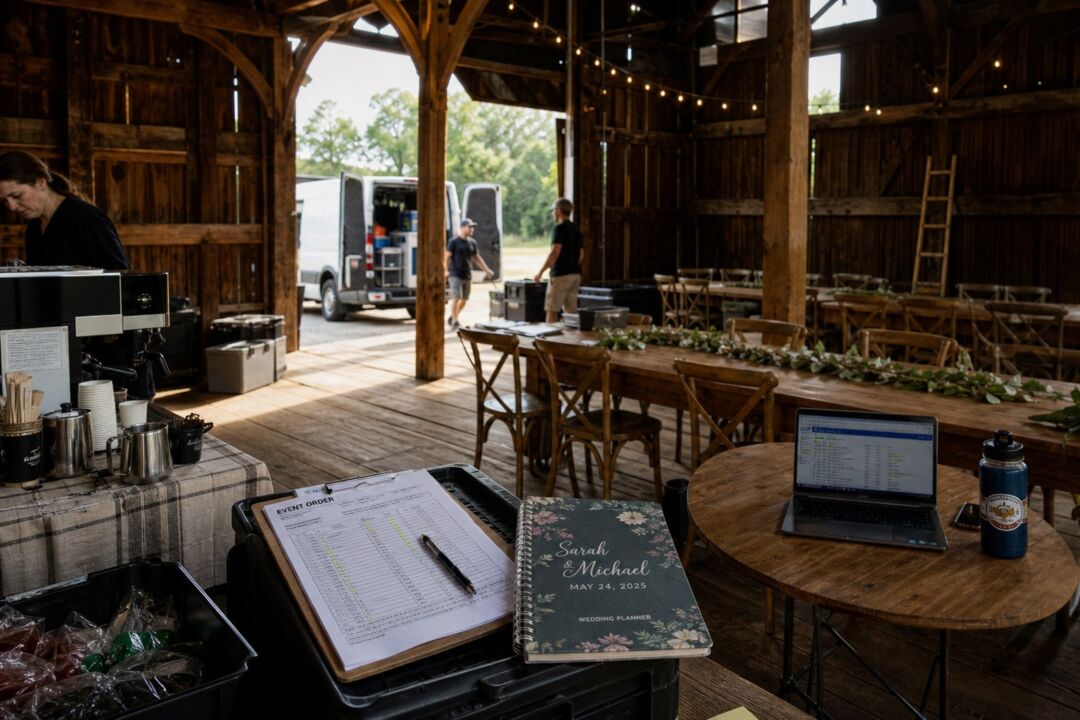
Older barns run on agricultural electrical circuits that were not designed for a DJ, a full catering kitchen, festoon lighting across the rafters, and a fleet of phone chargers running simultaneously. Find out early whether the venue’s power supply can handle the event load, or whether a generator is needed.
If a generator is required, find out who arranges it. In a dry hire situation, that responsibility often falls to the couple, the caterer, or whoever is coordinating production. A generator sized for half the load, or positioned where exhaust fumes drift toward the marquee, is a genuine problem. Ask the venue whether they have a generator specification they recommend for events of your size, and ask where it typically sits on the property.
If the venue provides a house generator, ask whether it has ever failed during a wedding and what the contingency was.
Lighting is the other power question. Barns look magical in photographs because of string and festoon lights. Those photographs do not show the rigging time, the cabling, or the electrical load. Confirm what lighting is included in the hire, what you can add, and what is restricted. Open-flame candles are often prohibited at barn venues for fire safety reasons, so if candlelight is important to you, ask early.
Kitchen and catering: the question that gets forgotten
A prep kitchen and a commercial kitchen are not the same thing. A prep kitchen has bench space and perhaps a domestic oven. A commercial kitchen has industrial refrigeration, multiple ovens, adequate sink space, and room for a full catering crew to work a plated dinner for 100 people.
If you are planning a sit-down meal, ask your preferred caterer to visit the venue before you finalize the booking. Their assessment of whether the kitchen works for their service style matters more than anything in the venue brochure.
Also ask whether the venue has an approved-caterer list or requires in-house catering. Some venues allow any licensed caterer. Others maintain a short list of approved suppliers. If you have a caterer you want to use, confirm they are eligible before you sign a contract.
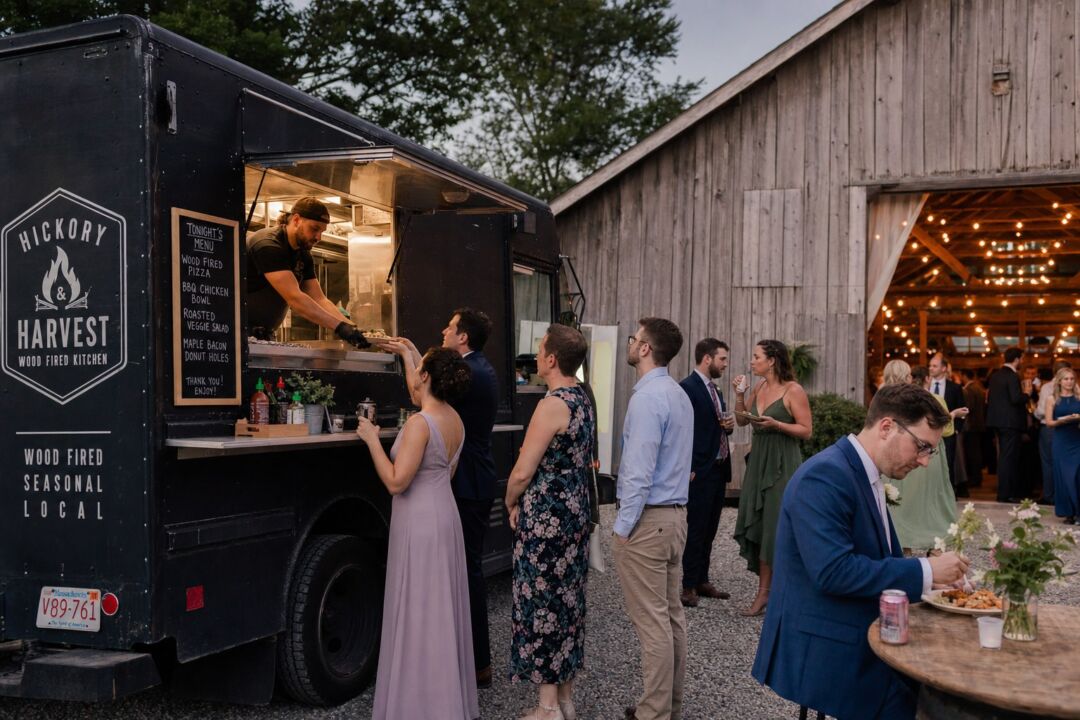
Food trucks and grazing-table formats have become a genuine choice at barn venues precisely because they sidestep the kitchen question entirely. A food truck is self-contained. If the venue has a wide gate and firm ground for vehicle access, ask whether they have hosted food trucks before and whether the access route holds up in wet weather.
Bathrooms
The bathroom situation at barn venues ranges from excellent modern facilities to a handful of stalls built for an equestrian club that cannot handle 150 wedding guests. Visit in person and count the stalls. Do not rely on the brochure description.
A working guideline: one toilet per 25 to 35 guests is a reasonable minimum for a multi-hour event with alcohol service. If permanent facilities fall short, ask whether portable restrooms can be brought in. Venues experienced with weddings usually know where to position them so they are accessible without being visible from the ceremony.
Accessible facilities are a separate question from quantity. If any of your guests use a wheelchair or have limited mobility, confirm that restrooms are accessible and that the path from the parking area through the ceremony to the reception involves no steps, loose gravel, or boggy ground.
Country and barn invitation designs that match the place you just booked.
Noise curfews and what they mean for your night
Rural properties are often subject to local council or county noise ordinances, and the venue’s own operating license may be more restrictive than the local law. A music cutoff for amplified outdoor sound somewhere in the 10 pm to 11 pm range is a common planning assumption at barn venues in both the US and Australia, but the specific rules depend on the venue’s jurisdiction, their license conditions, and how close the nearest neighbor is. Assume nothing; ask for the exact rules in writing.
The questions to put to any venue before you book:
- What is the hard cutoff time for amplified music, and does it apply indoors as well as outdoors?
- Is the limit set by a local council or county ordinance, or by the venue’s own operating license?
- Does the venue have a sound limiter installed?
- If the music exceeds the limit, is there a warning process, or does someone cut the power?
- Is there a separate time by which all guests must leave the site?
Knowing the curfew before you book lets you plan your run sheet backward. If music ends at 10 pm, your band’s last set ends at 9:55 pm. Some venues allow extensions arranged in advance; ask what that involves before you assume it is an option.
Weather: heat, dust, and the rain contingency
A barn is not weatherproof in the same way a hotel ballroom is. The romantic gaps in the weatherboards that look beautiful in photographs also let in wind and cold. If large doors are open for the ceremony, they may need to close if rain arrives. If any part of the reception extends outdoors, a wet-weather plan is not optional.
Ask specifically: if it rains on the day, where do all your guests go? How much covered indoor space is available? Can a marquee be added to the property, and if so, must it be pre-booked or is it an on-the-day decision? A contingency that requires a separate booking is only useful if you arrange it in advance.
Heat matters as much as rain. At Australian venues, outdoor temperatures on a January or February afternoon can reach 38 to 40 degrees Celsius (approximately 100 to 104 degrees Fahrenheit), and US summer barn weddings can be comparable. Shade for the ceremony, adequate airflow or cooling inside the barn, and cold water available from the moment guests arrive are safety considerations, not stylistic ones.
Dust is a less obvious hazard. If the driveway and car park are unsealed, a convoy of cars arriving 20 minutes before the ceremony raises a real dust cloud that settles on florals, dresses, and people. Ask the venue how they handle it, whether water trucks or sealed access is possible, and build extra buffer into your ceremony start time.
Getting guests there and back
Barn venues are almost always rural. That creates two distinct problems: guests arriving, and guests leaving after dark.
On arrival, a map link in the directions card is not enough for a property with an unsigned gate at the end of an unmarked road. Build precise, turn-by-turn directions into your wedding stationery from the start. Confirm that the venue address resolves correctly in GPS navigation apps before you print anything. Some rural properties register under the nearest town name rather than the road address. A waypoint sign at the main road turnoff is more reliable than any app for guests who lose cell signal in the country.
On departure, a noise curfew combined with a rural location and alcohol service means you need a confirmed transport plan. The most reliable solution is a pre-booked shuttle bus from the nearest town center or the hotel block where most guests are staying. Include the schedule in your invitations. Provide GPS coordinates alongside the postal address.
Confirm on-site accommodation capacity early and include it in your invitations. Rural venue accommodation books out quickly once save the dates arrive.
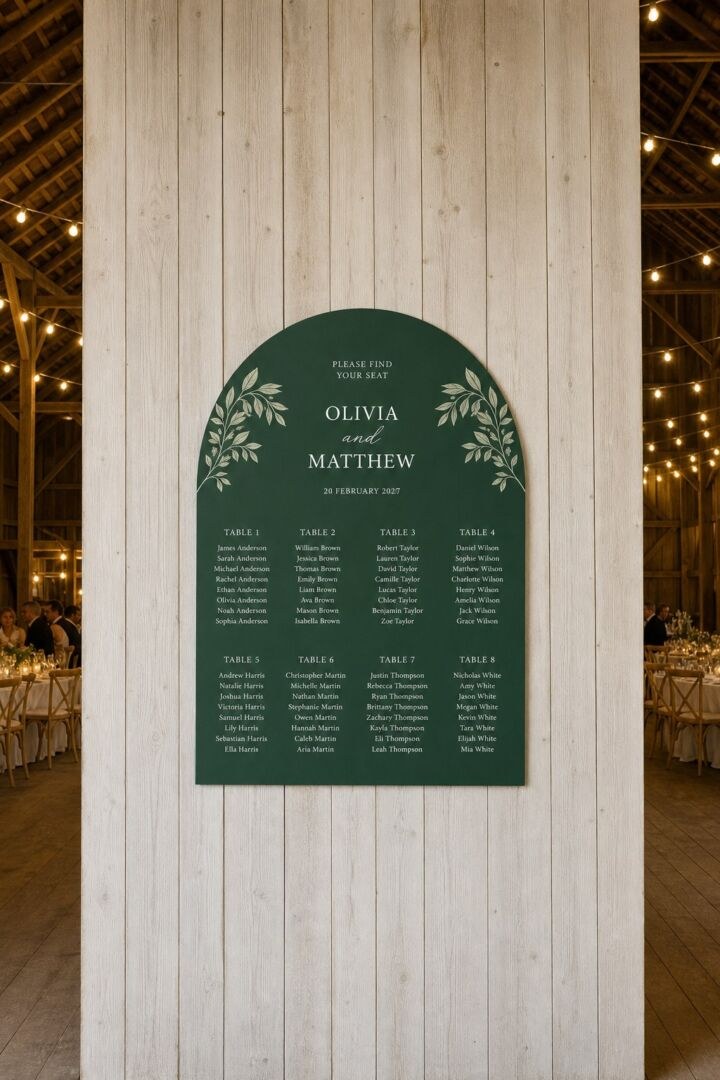
Clear wedding signs at the entrance, at the ceremony space, at the bar, and at the exit carry more weight at a rural barn than at a managed hotel. Browse wedding signs at Paperlust for designs that work across rustic and contemporary aesthetics. For a barn or paddock setting, country wedding invitations set the expectation before anyone drives out, from the paper stock through to the illustration.
Rustic invitation designs, signs and charts from one family. The $5 sample pack puts seven designs and an envelope in your hands, including real foil and letterpress, so you judge paper and finish off a screen.
Frequently asked questions
What is the difference between dry hire and wet hire at a barn venue?
Dry hire means you rent the space only: you source and coordinate catering, bar, furniture, lighting, sound, power, and sometimes bathroom facilities yourself. Wet hire includes at least some of those services in the venue fee. Dry hire can be cheaper on paper, but the total budget often looks different once all the pieces are priced individually.
How far in advance should I book a barn wedding venue?
Popular barn venues in both the US and Australia typically fill peak-season Saturdays 12 to 18 months in advance. Start your search 15 to 18 months out if you have a specific date in mind. Midweek dates and low-season periods are easier to secure on shorter notice.
Do barn wedding venues have kitchens?
Many do not have a commercial kitchen. Some have a prep area; others have nothing suitable for full meal service. This matters significantly if you are planning a plated dinner for a large group. Ask your preferred caterer to visit the venue and confirm the facilities meet their needs before you sign a hire contract.
What is a typical noise curfew at a barn wedding?
This varies by location and the venue’s operating license. In rural areas of both the US and Australia, a cutoff for amplified outdoor music somewhere around 10 pm to 11 pm is a common planning assumption. The venue’s specific rules and their local council or county ordinance govern what actually applies. Confirm the exact curfew in writing and ask whether it covers indoor music as well.
What wet-weather plan should I ask a barn venue about?
Ask how many guests the covered indoor space can hold if the outdoor areas are unusable. Ask whether an on-site marquee is possible and whether it must be pre-booked. A contingency that relies on a separate booking is only useful if you arrange it before the day. Get the plan in writing.
How do guests travel to and from a remote barn venue?
A pre-booked shuttle bus from the nearest town center or hotel is the most reliable solution for guests who are not driving or staying overnight on-site. Include transport options clearly in your invitations. Provide GPS coordinates alongside the postal address, and specify the last shuttle departure time so guests can plan their night accordingly.
Make sure the venue is permitted for business. There are barn operators out there “going rogue.” This could be a big problem if local law enforcement shows up and asks for the permit. You could get shut down earlier than you expect and get no refund.