
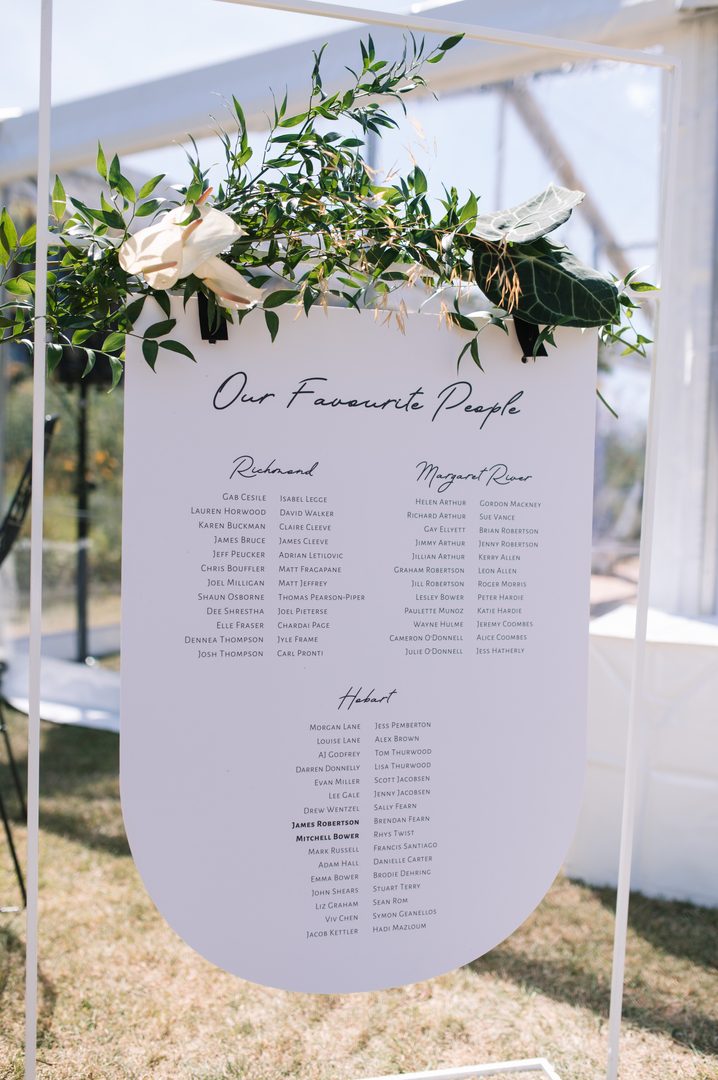
Choosing between alphabetical order and a by-table layout is the single biggest wording decision your seating chart will ask you to make. Get it right and guests flow from the entrance to their chairs in under two minutes. Get it wrong and you create a bottleneck at the display, with couples scanning the wrong column while the line behind them grows. This guide covers every wording and organization decision your chart needs, from the header line to how you handle a guest with a hyphenated last name.
- Alphabetical by last name is the standard for 80+ guests. Guests find their name fast and move on.
- By table number works well for 60 or fewer guests or when guests arrive as groups who already know their section.
- Header wording: “Find Your Seat” for warm and relaxed; “Seating Chart” for formal; no title at all suits minimal modern designs.
- Name format: First + Last is friendliest. Last, First is fastest to scan alphabetically. Courtesy titles are optional and best reserved for formal weddings only.
- Plus-ones: list them by name if you have it; use “and Guest” only if the name was never shared.
- Hyphenated and changed names: file under whichever name the guest actively uses today.
- Cross-reference your place cards: the name format on the seating chart should match the place card exactly to avoid confusion at the table.
The Core Decision: Alphabetical vs by Table
These two systems solve the same problem from opposite directions. Alphabetical order prioritizes finding individual names quickly. A by-table layout prioritizes showing who is sitting together. The right choice depends mostly on guest count and how people will physically move through your venue.
| Alphabetical by last name | By table number | |
|---|---|---|
| Best for | 80+ guests | 60 or fewer guests |
| How guests use it | Scan for their own name, read off the table number | Scan for their table header, find their name in the list underneath |
| Guest experience | Faster for individuals; requires them to hold the table number in their head | Slower for individuals; easier for groups arriving together |
| Pros | Handles large lists cleanly; reduces bottlenecks at one column | Guests can confirm tablemates before sitting; friendlier for social groups |
| Cons | Guests must remember their table number across a crowded room | Long name lists per table slow scanning; poorly suited to 20+ tables |
| Works poorly when | Table names (not numbers) are used without alphabetical backup | The venue has a long winding entrance where guest groups separate |
Why Alphabetical Is the Default
For most American receptions with round tables and a guest list over 80, alphabetical order wins on function. Guests approach, scan one list, find one name, read one table number, and walk. The bottleneck risk drops because every guest appears in exactly one spot. For very large receptions of 150 or more, split the chart into two panels, “A-M” and “N-Z,” and space them apart so guests don’t all converge on a single display at once.
When By-Table Makes Sense
By-table layouts work well at seated dinners of 60 or fewer guests where most people have a rough sense of their section, at family dinners where guests travel in clusters, or at receptions with long banquet tables where the table itself is the organizing logic. If guests are moving from a ceremony at a different location to a reception venue, a by-table chart also gives groups a shared reference point they can find together on arrival.
When Each Approach Works Best
Two additional factors beyond guest count should shape your decision: whether you are assigning tables only or assigning specific seats, and whether you are using table numbers or table names.
Assigned tables only (escort-card style): Alphabetical is the stronger choice. Guests are finding their table, not their seat, so the chart works as a quick lookup tool. Alphabetical lookup is faster.
Assigned seats (place-card style): Either system works, but alphabetical is still more intuitive. Guests who know they are at Table 7 still need to locate their specific chair using the place card, so the seating chart is still a single-query lookup for the table number only.
Table names instead of numbers: Alphabetical becomes nearly required. A guest cannot reliably hold “Santorini” or “The Loire Valley” in their head the way they hold “Table 4” while walking across a reception room. Alphabetical listing gives them one scan and one name to carry with them.
How to Word Your Header and Title
The header sits at the top of the chart and frames everything guests see before they read a single name. There are three main approaches.
Warm and welcoming: “Find Your Seat” or “Please Find Your Seat.” These read approachable and suit garden parties, outdoor receptions, and casual barn weddings where tone matters as much as function.
Formal: “Seating Chart” or “Seating Assignments.” Clean, neutral, and appropriate at black-tie events where guests expect traditional cues without flourish.
No title: On minimal modern designs, the chart is self-explanatory, and a header adds visual noise. If your designer’s typography makes the purpose clear at a glance, you can leave the header off entirely.
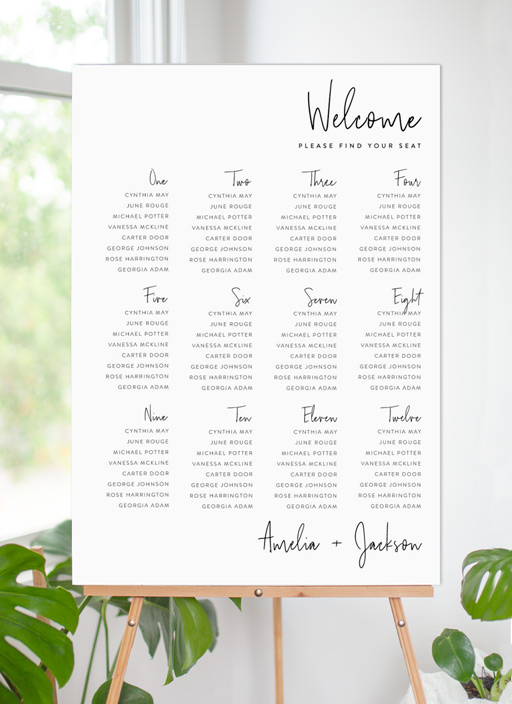
A couple’s names, a shared monogram, or a short phrase (“Together at Last,” “Love Is Seated”) can serve as a decorative element above the functional title. These work best when the chart is a framed focal display rather than a working reference document. If you are printing on fabric or PVC board from Paperlust’s wedding seating chart collection, your designer can incorporate the header into the overall layout proof so you can see exactly how it reads before production.

How to List Names
This section covers every edge case you are likely to encounter. Decide on your format before you start building the chart and apply it without exception.
First + Last vs Last, First
- First Last (Sarah Mitchell): Friendlier and warmer. Suits casual, garden, and barn weddings. Requires slightly more horizontal space per entry.
- Last, First (Mitchell, Sarah): Faster to scan alphabetically because the eye lands directly on the sort key. Professional and efficient for large lists. Suits formal receptions where function matters over warmth.
Choose one and apply it to every name. Mixing formats across different family groups looks like an error, even when it was intentional.
Courtesy Titles (Mr., Mrs., Dr., Rev.)
Courtesy titles are optional. The practical advice: include them only if your wedding is formally styled or if there are guests (doctors, clergy, professors) for whom the title carries genuine professional meaning.
If you include titles, apply them to every guest on the chart. Selective use reads as a typographical mistake. For couples where one person holds a professional title, the title holder goes first: “Dr. and Mr. James Harrington” or “Dr. Sofia and Mr. Harrington” if you prefer given names.
For most modern receptions, first and last name without titles is simpler, cleaner, and just as respectful.
Couples and Families
List couples on one line wherever possible to save space and keep the chart readable.
- Same last name: “James and Sarah Mitchell” or “The Mitchell Family” if children are included.
- Different last names: “James Mitchell and Sarah Chen” (or “Mitchell, James and Chen, Sarah” in Last-First format).
- Children included: Either add “and Family” to the couple’s line or list children as separate entries directly below the parents’ line.
For large families occupying a full table, a single family entry keeps the chart from becoming unwieldy. Use your judgment based on how prominently each name needs to appear.
Plus-Ones
Always use the guest’s actual name if you have it. Guests can see every other name on the chart, and “+1” or “Unknown” reads as an oversight to the person themselves.
If the name genuinely was never shared, “Sarah Mitchell and Guest” is the accepted convention. Do not use “Plus One” or “Unknown Guest.” Following up with the inviting party before you finalize the chart is worth a single message.
Name Changes and Hyphenated Names
File guests under the last name they actively use today, regardless of when a change occurred. For recently married guests who have changed their name, use the current name and note the former name on your internal working document so staff can assist family members who search under the old name.
For hyphenated last names, file under the first element of the hyphen. “Martinez-Webb” files under M, not W. This matches the convention guests will expect from how directories, libraries, and databases handle hyphenated surnames.
Example Layouts Side by Side
The examples below show the same guest list formatted in each system. Neither is definitively correct. Choose based on your guest count and the logic your venue layout calls for.
A–D
Chen, Michael and Lily …………. Table 3
Davies, Robert ………………… Table 5
E–M
Harrington, Dr. and Mr. ………… Table 1
Martinez-Webb, Sofia and Guest ….. Table 7
Mitchell, Sarah ……………….. Table 3
N–Z
Park, Daniel and Ji-Yeon ……….. Table 4
Williams, Thomas ………………. Table 2
Table 1
Dr. and Mr. Harrington
Table 2
Thomas Williams
Table 3
Michael and Lily Chen
Sarah Mitchell
Table 4
Daniel and Ji-Yeon Park
Table 5
Robert Davies
Table 7
Sofia Martinez-Webb and Guest
The gap between Tables 5 and 7 in the by-table example above is intentional. If you are skipping Table 6 (common at venues where Table 13 is also skipped for superstition), list the actual assigned tables in sequence without forcing consecutive numbers.

Moody TropicsVinyl foil

Burnt Butter CakesDigital printing
Garden WindowDigital printing
LinearDigital printing
Whether to Include Table Numbers or Table Names
On an alphabetical chart, the table identifier is the only operational information the chart delivers. Every name entry needs it, listed to the right of the guest name in a slightly lighter weight or contrasting color to help the eye separate it visually from the name.
On a by-table chart, the identifier is the section header. The names beneath it are the operational content.
When you use table names rather than numbers: An alphabetical chart lists the table name, not a number. The challenge is that names are harder to hold in memory across a reception room than single digits. “Tuscany” is easy in context but becomes “was it Tuscany or Umbria?” by the time a guest reaches the table area. This is one reason many couples who use table names pair their seating chart with a separate room map or table diagram showing which name corresponds to which physical location in the room.
For guidance on choosing between table numbers and table names as a system, and how to handle the numbering sequence itself, the sibling spoke “Table Numbers vs Table Names: How to Decide” covers that decision in full. For the physical display formats (fabric panels, PVC board, framed prints), see our guide on large-format seating chart displays. The earlier guide on how to make a wedding seating chart covers building and finalizing your chart from scratch, including how to handle late RSVP changes without reprinting.


Consistency with Place Cards and Escort Cards
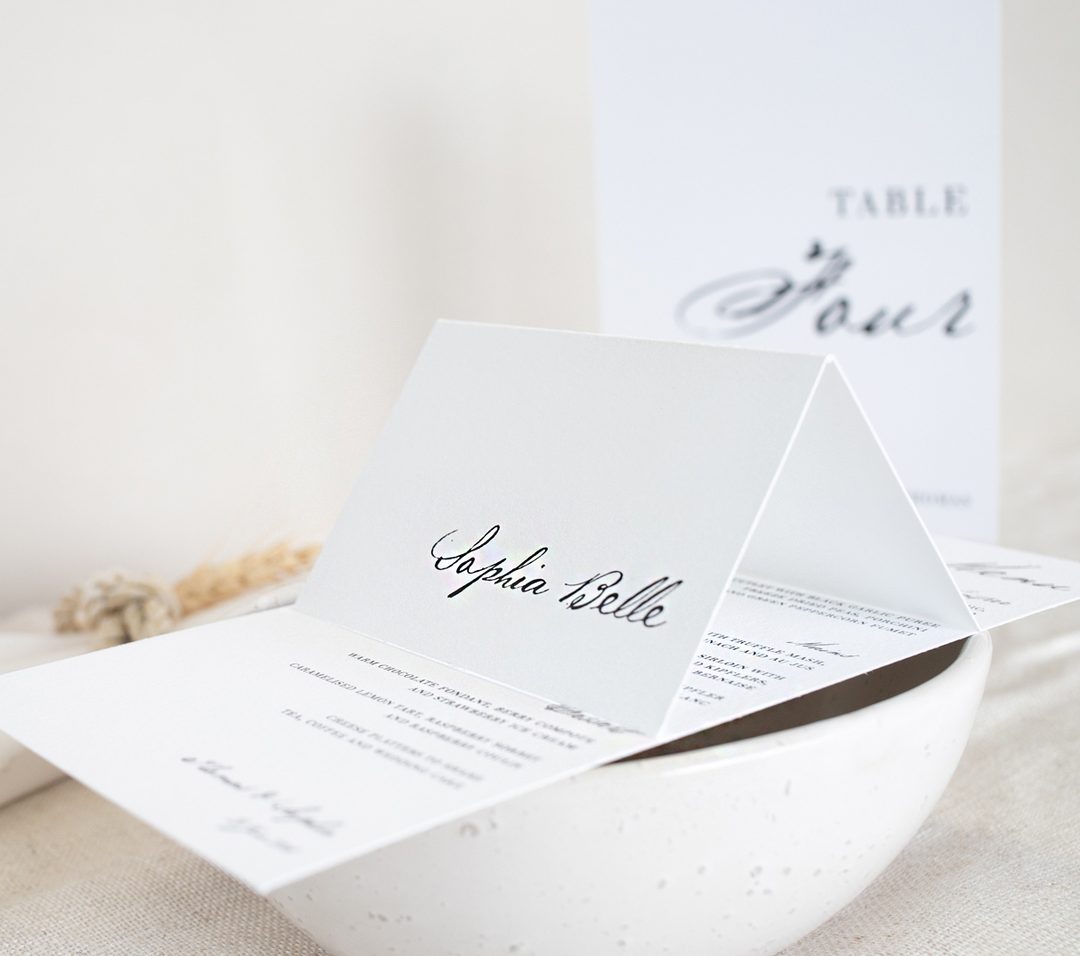
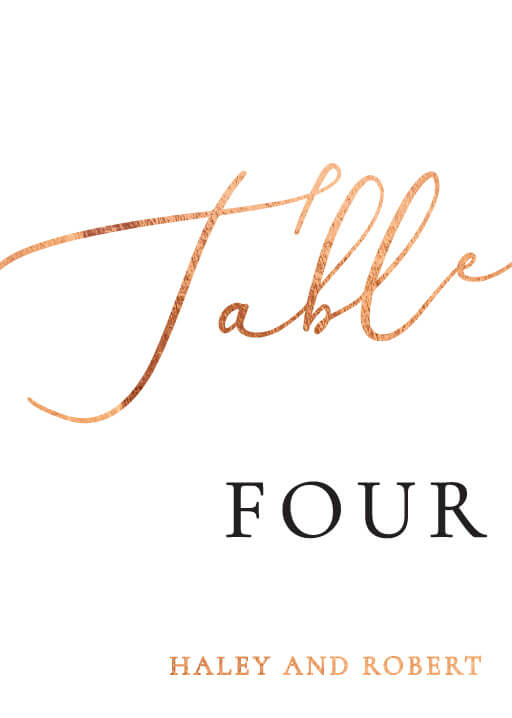
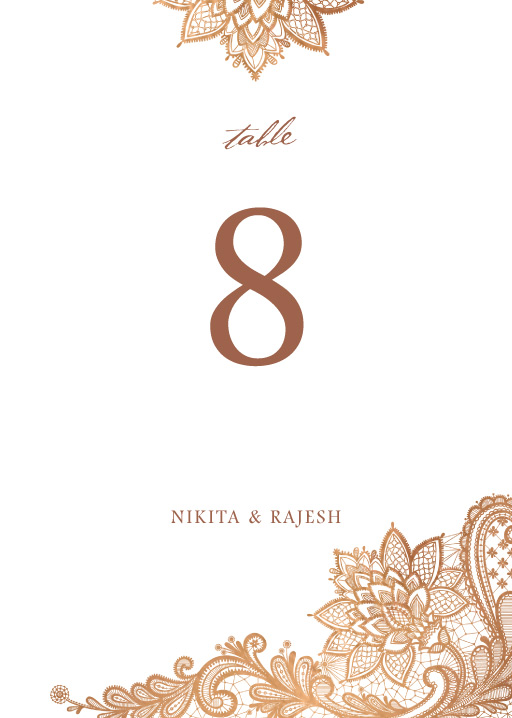
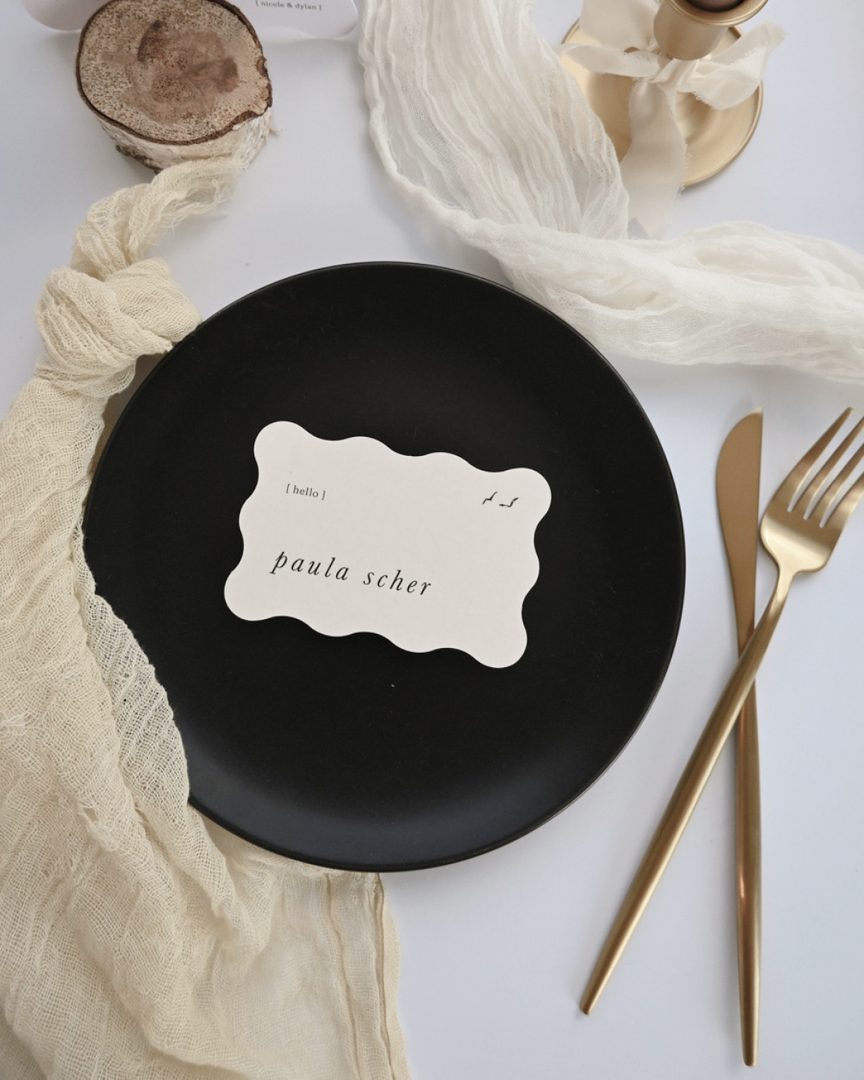
Seating chart wording and place card wording need to mirror each other. If your chart lists “Mitchell, Sarah,” the place card at the table should read “Sarah Mitchell,” not “Sara M.” A mismatch, even a minor spelling variation, creates a moment of doubt at the table that slows seating and puts a small, unnecessary crack in the guest experience.
Three checkpoints for consistency:
1. Name spelling: verify every name against your RSVP list before sending either piece to print. A quick pass against the original source catches transpositions and typos that eye-read as correct. 2. Format match: if you use courtesy titles on the chart, use them on the place cards. If you drop titles on the chart, drop them at the table too. The two pieces will be seen at different moments by the same guest. 3. Couple and family grouping: if you listed a couple as a single entry on the seating chart, there should be two separate place cards at the table, one per seat. The chart tells guests where to go; the place card tells them which chair.
Ordering your wedding place cards and seating chart from the same stationery suite ensures the typography, color palette, and print finish match without any guesswork. Paperlust carries both, along with table number cards to tie the full table system together. All three connect visually when ordered as part of a coordinated wedding invitation suite.
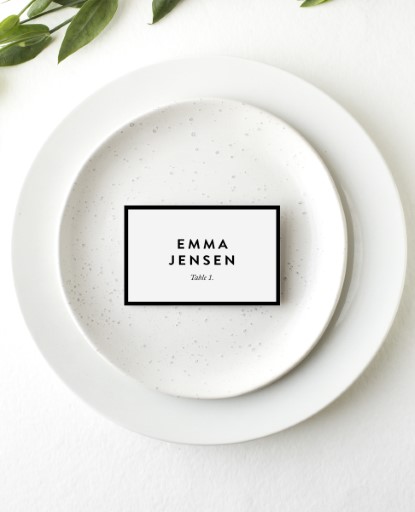
MinimalDigital printing
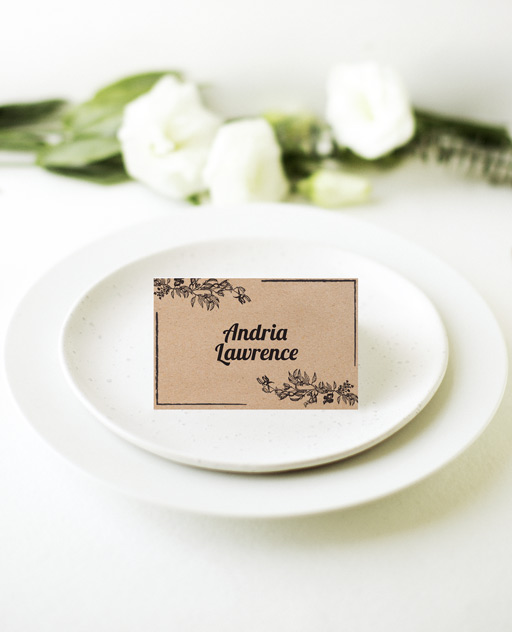
RusticDigital printing

Rustic GardenDigital printing
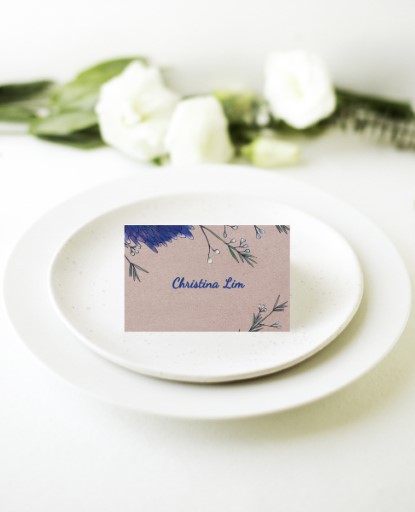
Rustic Mason Jar FlowersDigital printing
Frequently Asked Questions
Should a wedding seating chart be alphabetical or by table number?
For most receptions, alphabetical by last name is the more functional choice. Guests find their name faster than scanning every table’s list. By-table organization works well for smaller receptions of 60 or fewer guests, or when guests arrive as social groups who already have a rough sense of where they are sitting.
What should the header of a wedding seating chart say?
Common options are “Find Your Seat,” “Please Find Your Seat,” “Seating Chart,” and “Seating Assignments.” For formal weddings, “Seating Chart” is traditional. For relaxed or outdoor receptions, “Find Your Seat” reads warmer. If the chart design makes its purpose visually obvious, you can skip a header entirely.
Should you use first name or last name first on a seating chart?
Either works. First-Last (Sarah Mitchell) is friendlier and reads warmer. Last-First (Mitchell, Sarah) is faster to scan alphabetically because the sort key appears first. Choose one format and apply it to every name on the chart without exception.
Do you use courtesy titles on a wedding seating chart?
Courtesy titles (Mr., Mrs., Ms., Dr.) are optional. Use them if your wedding is formally styled or if specific guests hold professional titles that matter to them. If you include titles, apply them consistently across every guest entry. Selective use looks like an omission error rather than a stylistic decision.
How do you list couples on a seating chart?
List couples on a single line wherever possible. For the same last name: “James and Sarah Mitchell.” For different last names: “James Mitchell and Sarah Chen.” If children are included, add “and Family” to the couple’s line or list children separately beneath the parents’ entry. Keeping couples together saves space and makes the chart easier to read at a glance.
How do you list a plus-one on a seating chart?
Use the guest’s actual name whenever you have it. If you do not have their name, “Sarah Mitchell and Guest” is the accepted convention. Avoid “+1” or “Plus One.” A brief follow-up with the inviting party before you finalize the chart is worth the effort to avoid a guest seeing themselves listed as an unnamed addition.
How do you file hyphenated last names on an alphabetical seating chart?
File under the first element of the hyphenated surname. “Martinez-Webb” files under M, not W. This is the standard convention guests will expect, consistent with how libraries, directories, and most databases organize hyphenated names.
What do you do when a guest recently changed their last name?
Use the name they actively go by today. Note the former name on your working document so staff can help any family members who search the chart under the old name. If you are uncertain which name a guest is currently using, a quick message to confirm is always worth it before you finalize the design.
Should table numbers or table names appear on the seating chart?
Yes, every guest entry on an alphabetical chart needs a table identifier because that is the only functional information the chart delivers beyond the name. The number or name appears to the right of each guest’s name. On a by-table chart, the identifier is the section header rather than a per-row detail.
How does seating chart wording connect to place cards?
The name format on your seating chart should match your place cards. If the chart uses courtesy titles, the place cards should too. If the chart uses First-Last format, so should the cards. Mismatches create a moment of doubt at the seat that chips away at the overall guest experience. Order both pieces from the same stationery suite to keep formatting aligned without extra effort.
How far in advance should you finalize seating chart wording?
Finalize your guest list and seating assignments at least 2-3 weeks before the wedding so the chart can be designed, proofed, and printed with time to review. Your designer proof from Paperlust arrives within 1-2 business days of placing your order, with two rounds of edits included at no extra cost.
Do I need both a seating chart and place cards?
They serve different functions. The seating chart tells guests which table; place cards tell them which specific chair. At a formal dinner with fully assigned seats, both are standard etiquette. At a reception with assigned tables but open seating within each table, the seating chart alone is enough. For details on how the physical format of the chart (fabric panel, PVC board, framed print) affects how guests interact with it on the night, see the full guide to large-format seating chart displays.