

An engagement party is the first real celebration after your proposal: a relaxed, joyful gathering where you share the good news with the people closest to you. It is not a full-scale event production. Most US couples and their hosts pull one together in six to eight weeks with a guest list of 20 to 50 people, and many come in well under $5,000 total.
This guide covers everything specific to the engagement party, who hosts, when to schedule it, how to set a budget, how to build the guest list without stepping on anyone’s feelings, and a week-by-week planning checklist that takes you from “we just got engaged” to a genuinely great party. If you are looking for help planning the full wedding that comes after, our complete wedding planning guide covers that separately.
- Who hosts: Anyone close to the couple, traditionally the bride’s parents, but today it is just as often close friends, family on either side, or the couple themselves.
- When to hold it: 1-3 months after the proposal, while excitement is fresh and guests have time to plan.
- Planning window: Start at least 6-8 weeks before the party date.
- Typical budget: $1,000-$5,000 for most US parties; small at-home gatherings run $200-$800.
- The golden rule: Every person invited to the engagement party must also be invited to the wedding.
- Invitations: Send 3-6 weeks before the party; 4-6 weeks if guests need to travel.
Who hosts an engagement party?
Traditionally, the bride’s parents hosted the engagement party as a formal way to welcome the groom’s family and introduce both sides. That norm has softened significantly. In 2026, the answer is: whoever loves the couple and wants to organize it.
Common hosting arrangements include:
- The bride’s or groom’s parents (still the most frequent)
- A sibling or the maid of honor
- Close friends, either solo or as a co-hosting group
- The couple themselves, especially for a casual or destination celebration
- A combination of families splitting the hosting duties
One thing that has not changed with tradition: the host pays. Guests should never be expected to contribute to the cost of the event itself. If a group of friends wants to co-host, they split costs among themselves. The point of the party is to celebrate the couple, not to organize a Dutch-treat dinner.
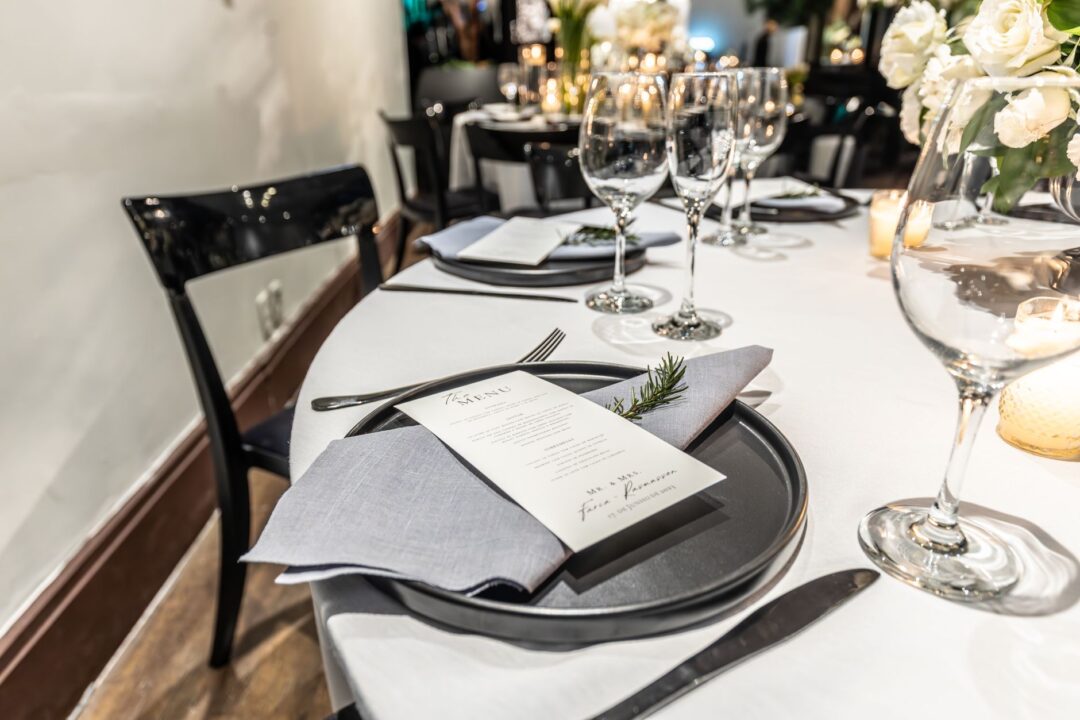

When should you hold your engagement party?
Most engagement parties take place 1-3 months after the proposal. Earlier than that and you may not have enough lead time to organize it well; later than three months and some of the celebratory momentum fades.
Within that window, consider:
- Within the first month: Works well for a casual home gathering with local family and friends. Less planning time means keeping the format simple.
- 2-3 months post-proposal: The most common and comfortable window. Gives guests who are traveling time to plan, and gives the host time to organize the details properly.
- Beyond 3 months: Perfectly fine if the timeline calls for it, but send a warm invitation that makes clear this is a celebration, not a formality.
Engagement parties usually last 2-4 hours. A Sunday brunch, an afternoon cocktail gathering, or an early dinner all work well, long enough for guests to connect and celebrate, short enough that it stays energetic from start to finish.
Building your guest list (and the rule you cannot skip)
The golden rule: every person invited to your engagement party must also be invited to your wedding.
WeddingWire and The Knot both describe this as the single most important engagement party etiquette rule. Inviting someone to the engagement party carries an implicit promise that they are important enough to attend your wedding. If they later don’t receive a wedding invitation, it causes genuine hurt, and the kind that is hard to walk back.
How to build your list in practice:
- Start from your draft wedding guest list.
- Circle the people who would be genuinely hurt not to be at the engagement party.
- That inner circle is your engagement party list.
For most couples, this means immediate family on both sides, the wedding party, and closest friends who are already unquestionably on the wedding list. Typical engagement parties range from 20-50 guests. You do not need to invite every wedding guest, only the inner circle.
Be careful with:
- Extended family: invite only if they will also be at the wedding
- Coworkers and neighbors: same rule applies, wedding guest list first
- Out-of-town friends: include them if they are on the wedding list, and give extra notice so travel is manageable
One exception: If you are eloping or having a micro-wedding, some etiquette guides allow inviting people to the engagement party who will not attend the ceremony, as long as you are upfront about your plans from the start. Transparency avoids the sting of feeling “good enough for the party but not for the wedding.”
Engagement party budget: what to expect in 2026
Budget ranges vary widely because formats vary widely. Here is what US hosts are spending in 2026, based on guidance from The Knot and WeddingWire:
| Format | Guest count | Typical total cost |
|---|---|---|
| Small at-home or DIY | 10-25 guests | $200-$800 |
| Restaurant private dining room | 20-50 guests | $800-$4,000 |
| Catered backyard or venue | 50-100 guests | $2,000-$8,000 |
| Formal event space | 100+ guests | $5,000-$15,000+ |
Where the money goes:
- Venue rental: $0 (home) to $1,200 (event space)
- Catering and drinks: $20-$25 per person for light refreshments; $40-$100 per person for full catering with an open bar
- Decor and florals: $100-$500
- Entertainment: $200-$800 (or free, if you use a curated playlist)
- Invitations and stationery: roughly 2-5% of the total budget
Ways to keep costs down:
- Daytime brunch and cocktail parties cost less than an evening seated dinner
- Hosting at home eliminates venue costs entirely
- Light appetizers and a simple drink setup rather than full catering
- DIY decor using seasonally available florals and candles
For context on how the engagement party fits within your total wedding spend, see our guides to the average wedding cost in 2026 and the full wedding budget breakdown by category.
Your engagement party planning checklist
An engagement party is a 6-8 week project. Here is how to pace it:
8 weeks before
- Confirm who is hosting and who is co-hosting, if responsibilities are shared
- Set a total budget and agree on who covers what before any spending begins
- Draft the guest list starting from the wedding guest list
- Identify 2-3 possible dates and check with key guests (especially family traveling from out of town)
6 weeks before
- Lock in the venue: a home, a restaurant private room, a rented event space, or a backyard
- Book catering, confirm your caterer, or finalize the menu if you are cooking at home
- Decide on the format: brunch, afternoon cocktails, casual backyard, or seated dinner
- Order or send engagement party invitations (3-4 weeks to delivery is common for printed cards)
4 weeks before
- Finalize the menu and the drinks setup
- Order decor, florals, and any rentals (tables, chairs, linens) needed
- Book any entertainment, a curated playlist is perfectly fine; a live musician is a nice touch for larger gatherings
- Set up RSVP tracking so you know where you stand on headcount
2 weeks before
- Follow up on any outstanding RSVPs
- Give the caterer an updated headcount
- Confirm any vendors: florist, rental company, or photographer if you hired one
1 week before
- Place final food and drink orders based on confirmed numbers
- Buy any backup drinks and snacks
- Prepare printed items if you want them: menus, name cards, a small welcome sign
Day of
- Set up 2-3 hours before guests arrive
- Ask a trusted friend (not the couple) to manage logistics and greet guests
- Have someone take photos throughout
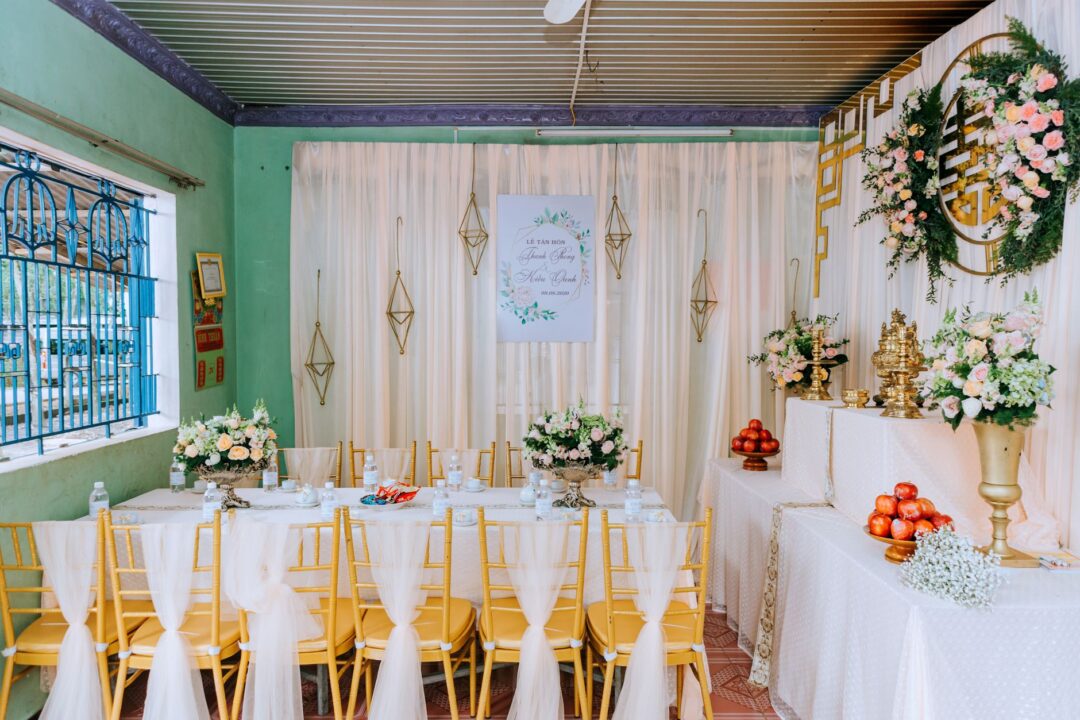
Venues and formats that work
The best format fits the couple’s personality and the host’s budget. Some popular choices for 2026:
- Backyard or garden party: Low venue cost, personal atmosphere, works well in warmer months
- Restaurant private dining room: Simple to organize, catering is handled, good for city couples without large home spaces
- Brunch at home: One of the most budget-friendly formats; natural flow, usually wraps up by early afternoon
- Rooftop or terrace: Good for urban areas; easy to decorate, strong atmosphere
- Wine or cocktail tasting event: Works well for couples who entertain regularly; keeps the guest list manageable and the format casual
One conversation worth having before invitations go out: the couple and the host should briefly align on the atmosphere they want. A low-key gathering signals one thing; a formal sit-down dinner signals another. Neither is wrong, but starting from a shared understanding avoids surprises on the day.
Engagement party invitations: what to include
Invitations go out 3-6 weeks before the party, or 4-6 weeks if guests need to travel. A printed engagement party invitation should include:
- The couple’s names
- The host’s name or a “Hosted by” line
- Date, time, and venue address
- Dress code, if applicable (casual, cocktail attire, garden party)
- RSVP details and a deadline
- Your wedding website URL if you have one
What to leave off the invitation:
- Registry information. Engagement parties are not gift events, and listing a registry on the invitation implies otherwise. Guests who ask can be privately directed to your wedding website.
- Specific gift suggestions or requests of any kind.
If you want printed invitations with real design quality, browse Paperlust’s engagement party invitations, designed and printed in Melbourne with a 1-2 business day proof turnaround. Once the party is behind you and your date is locked in, the next stationery step is your save-the-dates. Browse the full save-the-date collection when you’re ready to start on those.
Engagement party etiquette: the full summary
Is the engagement party a gift event? No. Gifts are not required or expected. Many guests bring a small token by choice (a bottle of wine, a candle, a modest registry item), but the party is a celebration, not a gift exchange. Do not register specifically for the engagement party and do not suggest gifts on the invitation.
Does the couple’s family have to host? No. Friends can host, the couple can host, or multiple people can co-host. The traditional “bride’s parents host” norm is still common but not obligatory.
Can the couple host their own engagement party? Yes. Couples who are older, who live far from family, or who simply want to control the planning regularly host their own party. It is not a faux pas.
Who pays for the engagement party? The host pays. This applies whether the host is a parent, a group of friends, or the couple themselves. Guests are there to celebrate, not to fund the event.
Do all engagement party guests have to attend the wedding? They must be invited to the wedding. Whether they ultimately attend is up to them. The rule is about the invitation list, not about physical presence on the day.
FAQ
Who traditionally hosts an engagement party?
Traditionally, the bride’s parents hosted the engagement party as a formal introduction of the two families. Today, the host is typically whoever is most enthusiastic about organizing it, this might be a parent, a sibling, the maid of honor, a close friend, or the couple themselves.
How much does an engagement party cost?
Most US engagement parties run $1,000-$5,000 total, depending on guest count, venue, and food and drink style. Small at-home gatherings can come in at $200-$800, while larger, catered events at formal venues can run $5,000 or more. According to The Knot and WeddingWire, the $1,000-$5,000 range covers the vast majority of US celebrations.
How long after the proposal should you have an engagement party?
Most engagement parties take place 1-3 months after the proposal. This window keeps excitement fresh while giving guests enough notice to arrange their schedules, especially if family members are traveling from out of town.
Do you have to invite everyone at the engagement party to the wedding?
Yes. The most fundamental engagement party etiquette rule is that everyone on the engagement party guest list must also be invited to the wedding. Inviting someone to the party implies they are close enough to be at the wedding. Leaving them off the wedding invitation later is widely treated as a social slight.
Are gifts expected at an engagement party?
No. Gifts are not required and should not be listed on the invitation. Many guests bring a small token by choice, but the engagement party is a celebration of the couple, not a gift exchange.
When should engagement party invitations be sent?
Send invitations 3-6 weeks before the party. If guests need to travel, move that to 4-6 weeks to give them enough lead time to book travel.
What should be on an engagement party invitation?
Include the couple’s names, date, time, venue, host’s name, dress code if relevant, and RSVP details. Leave off registry information, guests who want to bring a gift can be privately directed to your wedding website.
Sorting your wedding stationery?
Before you commit to a look, order a $5 sample pack from Paperlust and see the paper stocks, foil, and print finishes in your own hands. It is the surest way to lock in invitations you love without guessing from a screen.