
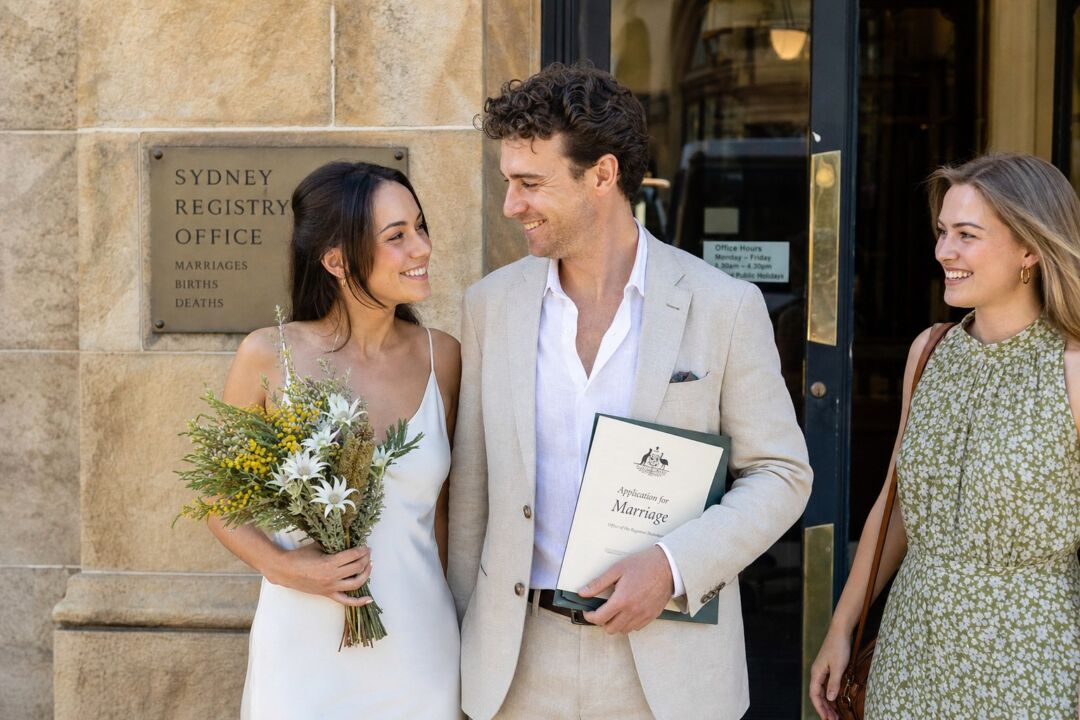
Two Australians who want to get married have two legal paths: a registry office ceremony conducted by a Births, Deaths and Marriages officer, or a ceremony conducted by a Commonwealth-registered civil celebrant. Both produce exactly the same marriage certificate. The difference is everything else.
This article makes the comparison concrete, gives you four “choose this if you are” profiles, covers the hybrid that some couples actually choose, and tells you plainly who should spend the money on a celebrant and who should not.
Celebrant vs registry office: at a glance
| Registry office | Civil celebrant | |
|---|---|---|
| Cost | Varies by state; check your state’s BDM website for the current fee schedule | A$1,031 national average (Easy Weddings 2026 report) |
| Book ahead | Often available 4-8 weeks out | 12-18 months for peak Saturdays |
| Location | Government registry or approved room | Virtually anywhere in Australia |
| Ceremony length | 5-15 minutes | 20-45 minutes |
| Guest limit | Typically 10-30 people | Limited only by venue capacity |
| Personalization | Fixed legal script, minimal changes | Fully written around your story |
| Your own vows | No | Yes |
| Rain plan | Indoors: not your concern | Your venue’s responsibility to arrange |
| Paperwork | Handled by the registry officer | Celebrant lodges the NOIM and registers the marriage |
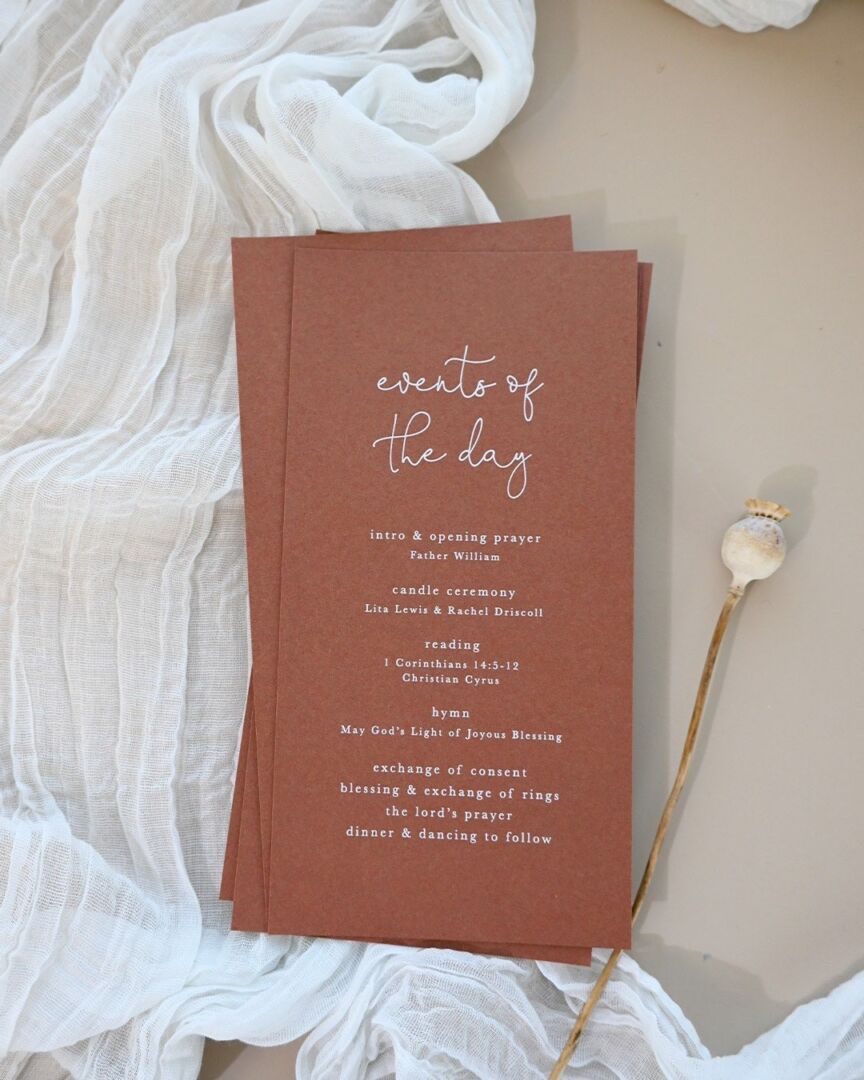
A program is the difference between guests watching and guests following.
What Each Option Actually Is
A registry office wedding is conducted by an authorized officer employed by your state or territory’s Births, Deaths and Marriages (BDM) registry. The ceremony takes place in a government building or approved room, follows a standard legal script, and runs on fixed timeslots during business hours. You typically do not choose which officer conducts the ceremony: they are rostered by the department.
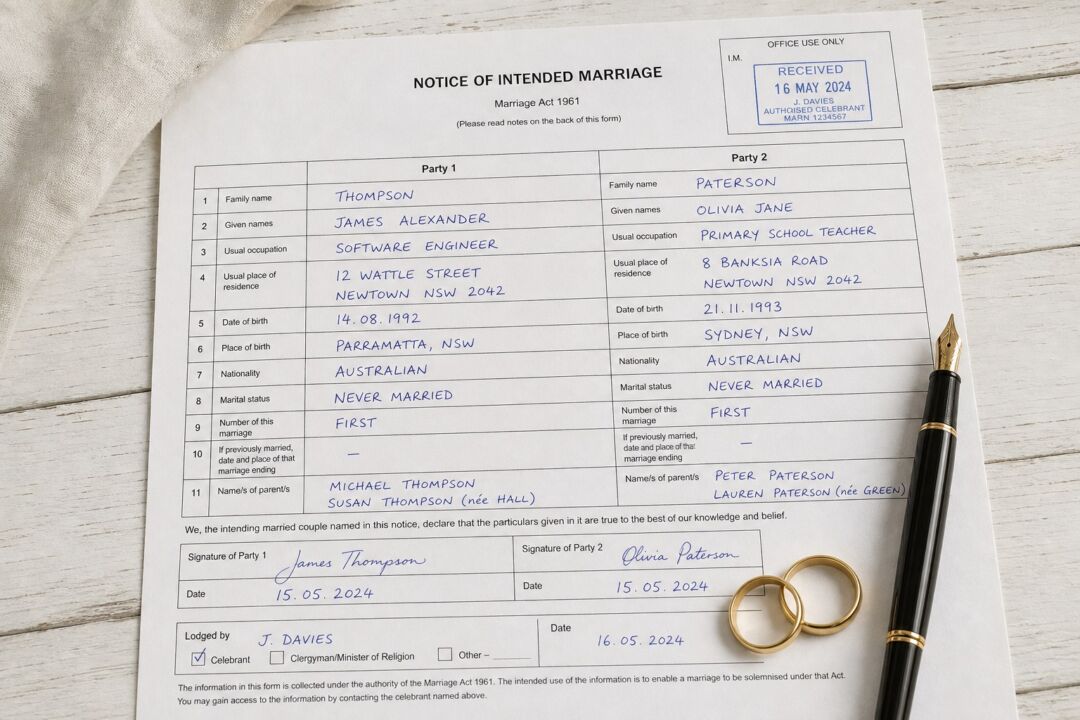
A civil celebrant is a Commonwealth-registered individual authorized to legally solemnize marriages. They work independently, set their own fees and inclusions, meet with you before the ceremony, write a ceremony around your story, and can marry you anywhere in Australia on any day of the year, including public holidays. The paperwork sits with them: they lodge the Notice of Intended Marriage (NOIM) at least one calendar month before the ceremony date and register the marriage afterward.
Lodging a NOIM with a private celebrant carries no government fee. Registry offices charge separately for the ceremony and, depending on the state, may itemize additional paperwork fees. South Australia, for example, includes a $138 NOIM charge within its registry service cost. Both paths involve a NOIM; what changes is who handles it, who charges for it, and what the fee structure looks like.
Both routes require a NOIM lodged at least one calendar month before the ceremony. A notice lodged on 3 March, for example, allows a ceremony on or after 3 April. Both produce a legally registered Australian marriage. Neither is more official than the other.
For a step-by-step look at the NOIM process and how to find a registered celebrant, read our guide to choosing a marriage celebrant in Australia.

Who Should Choose a Celebrant
You want the ceremony to sound like you. If you have attended enough weddings to know what a generic script sounds like, a celebrant is probably where you spend the money. A civil celebrant will get to know you over several planning meetings, write a ceremony built around your specific relationship, and run it on the day. The result is a ceremony that could only have been yours.
You have more than 30 guests. Registry offices typically cap their ceremony rooms at 10 to 30 people, including witnesses and children. A civil celebrant is limited only by your venue.
You want to write your own vows. Registry ceremonies use the legal vowing formula required under the Marriage Act 1961. That is the wording. A civil celebrant weaves your written vows into a ceremony that also satisfies the legal declarations. You can write every word of what you say to each other.
Your venue is not a government office. The beach, the winery, the backyard: none of these are available at a registry. Civil celebrants can marry you at any location in Australia that the venue allows.
If you can stretch the budget beyond the lowest-cost option, a celebrant is worth the difference. The ceremony is the one part of the day that every guest experiences together. A personalized 30-minute ceremony written for your relationship is a different experience from a 10-minute legal formality in a government building. If you are planning a celebration with guests, the ceremony should be worth attending.
Who Should Choose the Registry Office
You want to be legally married, not hold a wedding. For couples who see the ceremony as a legal step and have no interest in a curated experience, the registry delivers exactly that: sign the documents, meet the requirements, done.
Your budget is tight. Registry ceremony fees vary by state; check your state’s Births, Deaths and Marriages website for the current fee schedule before you budget. A civil celebrant costs more: the Easy Weddings 2026 Australian Wedding Industry Report puts the Australian national average at $1,031. If the gap is material to your budget, it is a legitimate reason to choose the registry.
You are on a short timeline. Registry offices can often accommodate bookings on a few weeks’ notice. Sought-after celebrants in major cities are often fully booked 12 to 18 months ahead for peak-season Saturdays. If you need to marry quickly because of a visa timeline or a family situation, the registry is the more reliable option.
You are planning the hybrid. Covered in the next section.
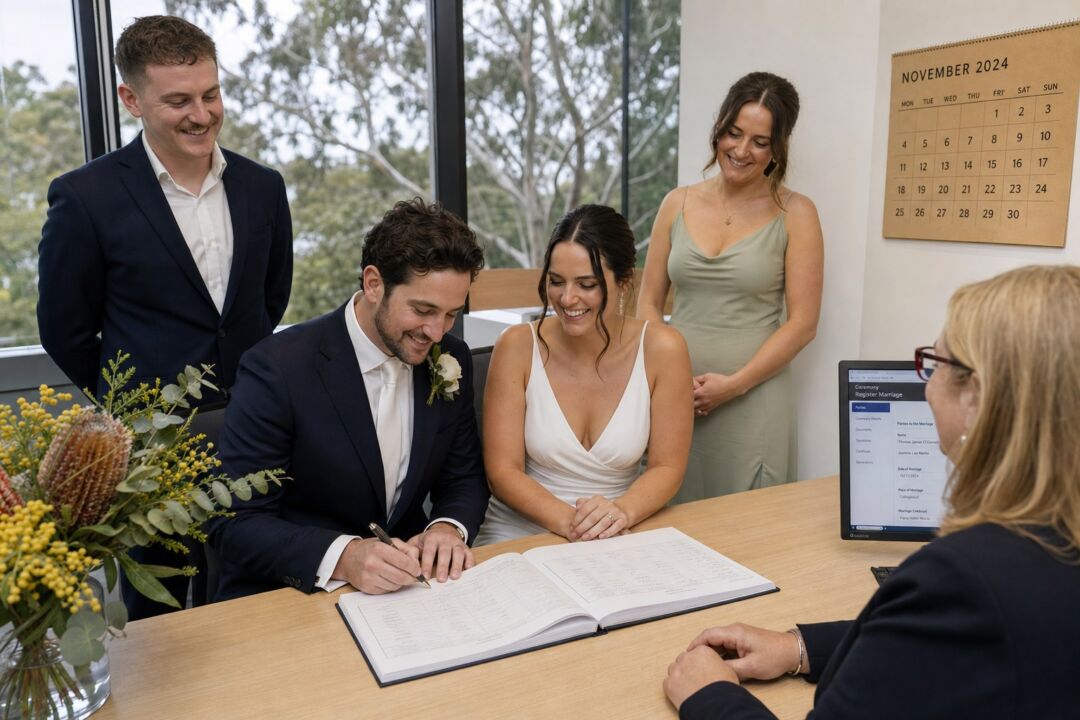
Most couples invite people to the celebration, not the legal signing.
The Hybrid Most Articles Don’t Explain
Some Australian couples get legally married at the registry office on a quiet weekday with two witnesses, then hold a celebration ceremony in front of family and friends weeks or months later conducted by a civil celebrant. The legal ceremony is administrative. The celebration ceremony is the event everyone attends.
Wedding guides rarely cover this arrangement, but it is a practical option worth considering. Here is exactly what it does to your paperwork and your invitations.
On the paperwork side: The NOIM is lodged and the marriage is registered after the registry ceremony. By the time you celebrate with guests, you are already legally married. The celebrant who runs the celebration ceremony does not perform any legal function. The celebration ceremony is entirely ceremonial, which means it can focus completely on story, meaning, and the people in the room rather than splitting time between legal declarations and personal content. Some couples find this liberating. Others feel it removes something from the main day. Know which camp you are in before committing to this approach.
On the invitations side: A two-event wedding creates two paper moments. The legal ceremony is typically small, usually four to eight people, and does not require a formal invitation. Many couples send a photo or a note to the witnesses afterward.
The celebration ceremony is where formal invitations go. Some couples acknowledge the earlier legal ceremony in their invitation copy, something like:
“We made it official on 14 March and are celebrating with everyone who matters to us on 28 June.”
This framing is honest, often warmly received, and sets expectations clearly. Guests know they are coming to a celebration, not a formal legal ceremony.
For a full picture of how a registry office ceremony works in practice, including what to expect in each state, read our registry office wedding guide for Australia.
The Paper Moment That Belongs to the Celebration Ceremony
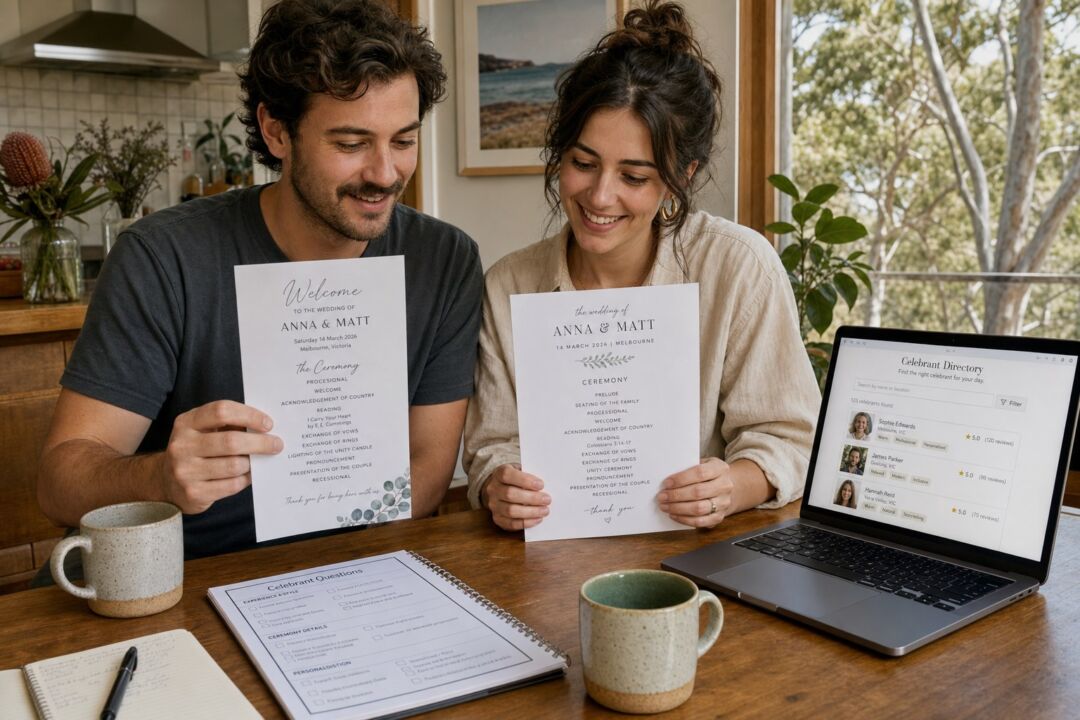
Programs matter more, not less, when the ceremony has been written specifically for you. A personalized civil ceremony typically includes a welcome, readings, rituals, the legal declarations, the vows the couple wrote, and a closing. Guests who do not know both partners well appreciate having the running order in their hands. For a long personalized ceremony, it also helps guests follow readings and rituals they may not have seen before.
For the hybrid couple, programs belong at the celebration ceremony, not the registry. The registry ceremony runs for 10 to 15 minutes on a standard script. The celebration ceremony, written around your story by a celebrant who knows you, is exactly where a program earns its place and becomes a keepsake.
Browse wedding programs at Paperlust to see formats from single-fold order-of-service cards to multi-page booklets. If you want programs that match the rest of your stationery suite, the full range of designs starts at wedding invitations.
Program designs from single card to booklet, personalized online. The $5 sample pack puts seven designs and an envelope in your hands, including real foil and letterpress, so you judge paper and finish off a screen.
Frequently Asked Questions
How much does a wedding celebrant cost in Australia?
Civil celebrant fees average $1,031 nationally, according to the Easy Weddings 2026 Australian Wedding Industry Report. Fees vary by celebrant experience, inclusions, and location. Lower-end packages cover the legal ceremony with one or two planning meetings. Higher-end packages include multiple consultations, fully custom ceremony writing, a rehearsal, PA equipment, and travel. Always request a written quote that specifies exactly what is included before you book.
What is the legal difference between a registry office wedding and a civil celebrant?
There is no legal difference in outcome. Both registry officers and Commonwealth-registered civil celebrants are authorized under the Marriage Act 1961 to solemnize marriages. Both paths require a NOIM lodged at least one calendar month before the ceremony. Both result in a legal Australian marriage certificate. The difference is the experience: a registry office uses a standard government setting and script, while a civil celebrant writes a ceremony around your relationship and can marry you almost anywhere.
Can a civil celebrant marry you anywhere in Australia?
Yes, with very few practical limits. Civil celebrants are authorized to conduct ceremonies at any location in Australia, at any time of day, on any day of the year including public holidays and weekends. The location needs to be accessible and have a weather backup if it is outdoors. The celebrant cannot marry you outside Australian territory.
How far in advance should you book a wedding celebrant?
In major cities, 12 to 18 months ahead for peak-season Saturdays (October through April). Weekdays, Sundays, and off-peak dates are generally easier to secure with 6 to 12 months’ notice. Availability tightens for particularly sought-after celebrants regardless of date. If you have a specific person in mind, book as soon as your date is confirmed.
Do you have to write your own vows with a civil celebrant?
No, but you can. Civil celebrants are required to include the legal declaration of marriage wording under the Marriage Act. Beyond those required words, your vows are entirely up to you: write them yourself, adapt the celebrant’s suggestions, or use a traditional format. Most celebrants offer options at multiple levels of involvement. If personal vows matter to you, confirm the celebrant’s approach to this before you book.
What happens if it rains at an outdoor ceremony?
Rain is the main practical risk of any outdoor ceremony, and it is your venue’s responsibility to solve, not the celebrant’s. You need a confirmed wet-weather option: a covered area at the venue, a marquee, or a nearby indoor space. Confirm the backup plan with your venue before signing the contract. Most experienced celebrants will ask about this during the planning process and can conduct a ceremony in almost any sheltered outdoor setting.