
An intimate wedding is not a smaller version of a bigger plan. It is a different plan entirely, built around the people who matter most and a day that actually sounds like you. In Australia, the landscape and the vendor market are unusually well suited to it. Coastal headlands, fern gullies, vineyard cellar doors, and private farm properties all scale down in ways that a ballroom never could.
The practical challenge is knowing what to look for. “Intimate venue” is a marketing phrase that some operators apply to anything with a bridal suite. What you actually need is a venue designed for small numbers rather than one that tolerates them. Finding that distinction requires knowing the right questions.
This guide covers the five location types that work best for small weddings in Australia, how to match the right type to your situation, and what to confirm before you book.
Intimate wedding locations in Australia: at a glance
| Location type | Typical guest range | What is usually included |
|---|---|---|
| National park or botanic garden | 10 to 80 (varies by site) | Permit, ceremony space; catering arranged separately |
| Private property or farm stay | 10 to 80 | Exclusive use; catering bring-your-own or external |
| Restaurant or winery buyout | 20 to 60 | Food and drink; ceremony often on site or in adjoining garden |
| Dedicated micro-wedding venue | 2 to 50 | Ceremony and reception space; packages vary widely |
| Urban heritage room or rooftop | 20 to 60 | Venue hire; catering via in-house kitchen or preferred list |
Quick priorities:
- Book venue and photographer before anything else. Both fill faster than expected for small weddings.
- Lodge your Notice of Intended Marriage with your celebrant at least one calendar month before the ceremony.
- A short guest list shifts budget toward quality rather than quantity. Use that leverage.
Thirty people still need date, place and dress code in writing.
What “Intimate” Actually Means for Your Guest Count
There is no official threshold in Australia, but the term clusters around a clear zone. In practice, “micro wedding” tends to cluster around 10 to 40 guests, with “intimate wedding” used more loosely, sometimes stretching to around 50. The Easy Weddings 2026 Australian Wedding Industry Report found that couples invite an average of 23 fewer guests than originally planned, arriving at 85 on the day against an expectation of 108. A deliberately intimate wedding often formalises what many couples end up doing anyway. The working definition, for practical planning purposes, is a guest count where the couple knows every face personally.
That ceiling matters. Most of the best small-wedding venues impose firm capacity limits. A list that exceeds the venue’s upper limit is not a venue problem; it is a guest-list problem. Set your cap first, then shortlist venues that genuinely operate at that scale.
The distinction worth drawing is between a venue designed for small numbers and one that is simply available when not booked for something larger. A venue calibrated for 20 people feels right at 20. One built for 100 and hosting 20 will feel empty regardless of the styling.
Five Location Types That Work Best for Small Weddings
National parks and botanic gardens
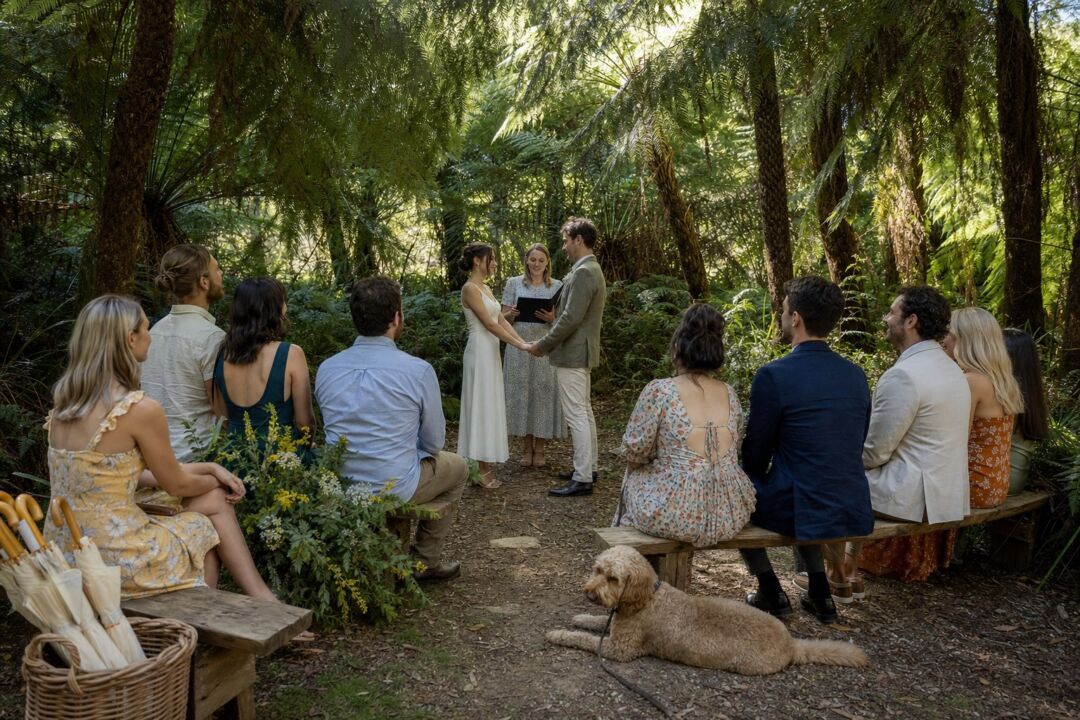
Australia’s national parks and managed gardens sit at one end of the intimacy spectrum. They require a ceremony permit through the relevant state parks authority or Parks Australia, and in most cases they cover ceremony space only. Catering and reception must be arranged separately at a nearby venue.
The practical benefit is the setting itself. A coastal headland, a grove of old-growth trees, or a heritage rose garden provides a backdrop that would cost substantially more to replicate through hired styling at a conventional venue. The trade-off is logistics: there are usually no permanent amenities on site, weather contingency matters more, and vendors must carry all equipment in. Botanic gardens add some infrastructure, with designated ceremony lawns and on-site staff, but permit fees and availability rules vary by site. Check directly with the relevant garden or parks authority for current requirements.

Private properties and farm stays
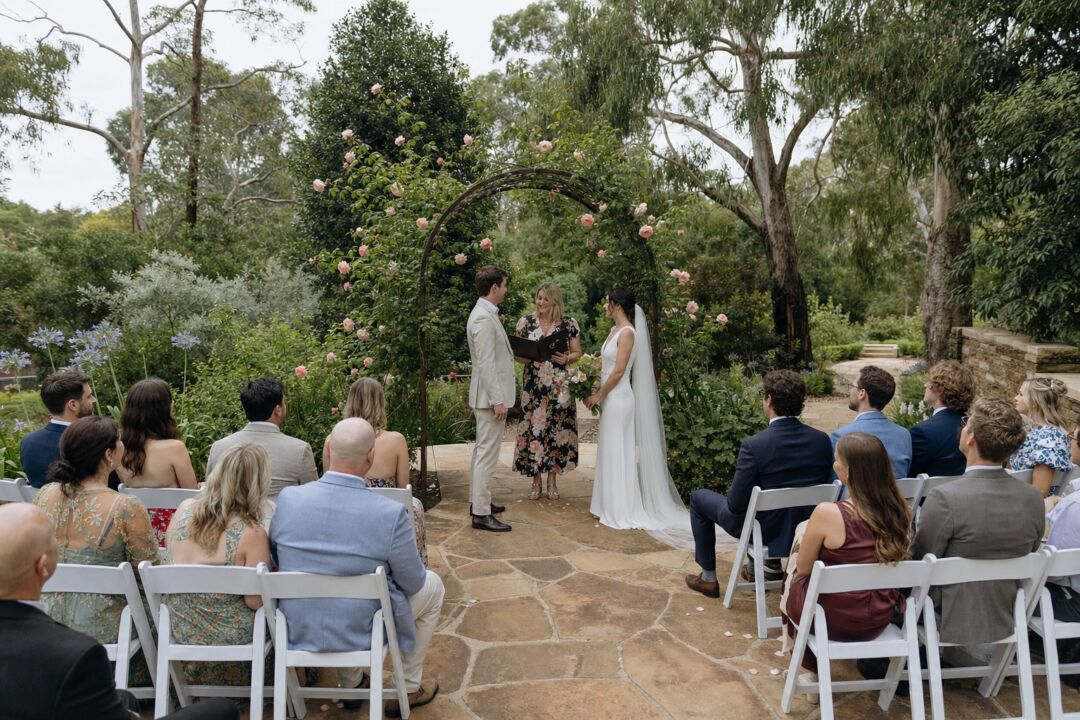
A privately managed property booked exclusively for the event is the most flexible of the five types. You are not sharing the space with other events, the day runs to your schedule, and the setting, whether a stone farmhouse in the Southern Highlands, a coastal cottage near the Great Ocean Road, or a converted barn in the Yarra Valley, does most of the aesthetic work.
Venue hire on private properties is usually a flat fee for exclusive use over a set period, sometimes including on-site accommodation for the night before and after. Catering is typically bring-your-own or arranged through your own caterer rather than an in-house kitchen. That gives you more control over food quality and cost but also means more coordination on your side.
When evaluating a private property, the practical questions are: Is there a genuine indoor backup if the weather turns? Does the hire period cover bump-in and bump-out time for vendors? Is the property permitted for events under local council rules, and is verifying that the venue’s responsibility or yours?
Restaurant and winery buyouts
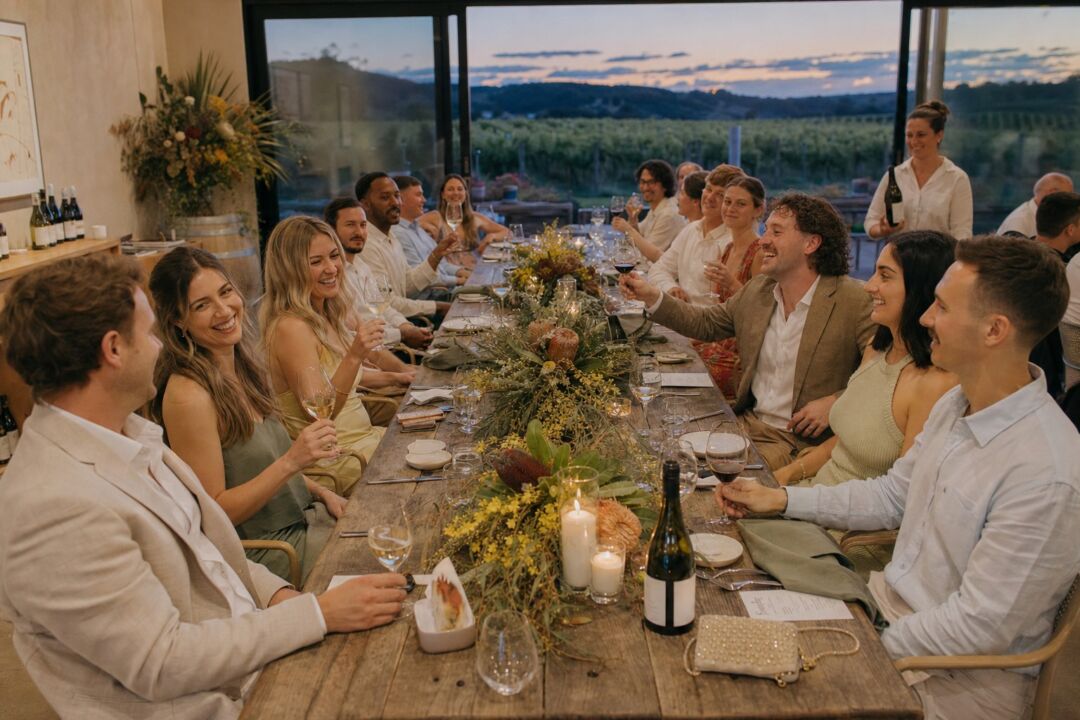
A restaurant or cellar-door buyout is the simplest structure for a small wedding. The venue provides ceremony space or a garden nearby, handles food and service, and you typically pay a minimum spend on food and drink rather than a separate room hire fee.
This model works especially well for couples who want a high-quality dining experience at the center of the day rather than a traditional reception hall. Australian wine regions, including the Hunter Valley, Yarra Valley, Barossa, and Margaret River, have cellar-door restaurants built specifically for small gatherings, with vineyard or garden ceremony settings attached.
The detail to check is whether the minimum spend is achievable for your guest count without inflating the bill. Ask the venue what the per-head food and beverage cost has run for groups your size, then work backward from your number.
Dedicated micro-wedding venues
A growing number of Australian properties now market directly to couples planning weddings under 50 guests. These venues are set up operationally for small weddings, with ceremony lawns, reception rooms, and catering options scaled to the guest count rather than sized for a hundred and cut back.
Packages vary widely. Some include a celebrant and a photography session. Others are venue hire only. What distinguishes these venues is that minimum spend or hire fees are calibrated to a small event, so you are not paying a large-venue rate for a small group.
Dedicated micro-wedding venues operate across most states, with strong concentrations in coastal NSW, the Mornington Peninsula and Yarra Valley in Victoria, and hinterland regions near Brisbane and Byron Bay.
Urban heritage rooms and rooftops
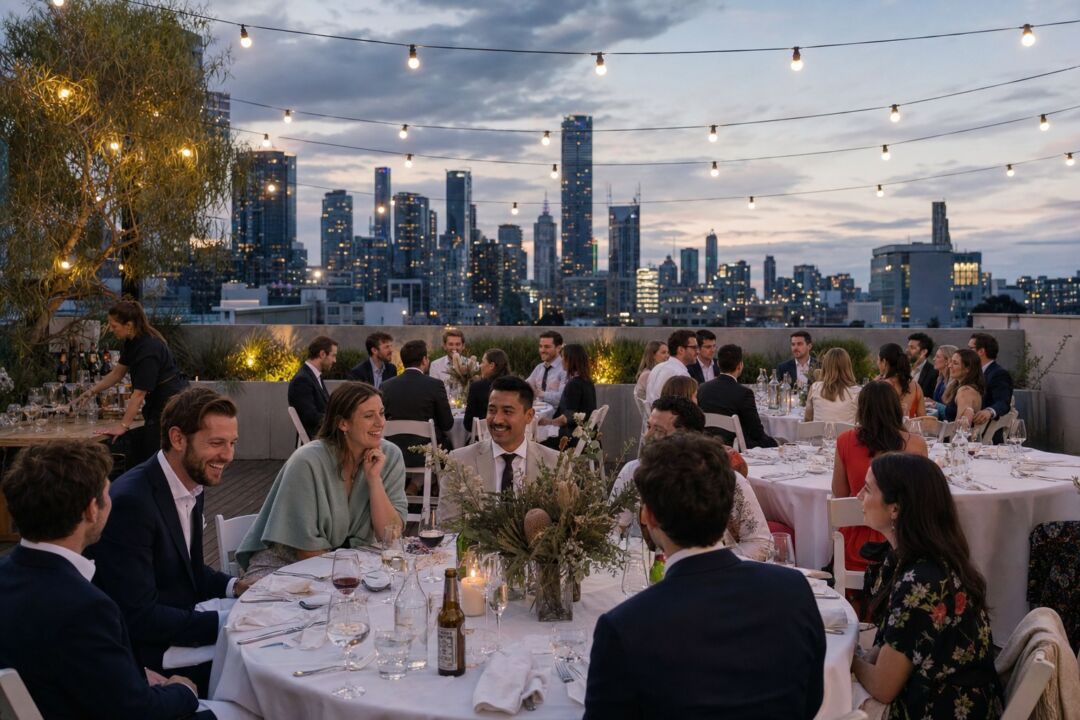
For couples who want a city setting, privately hired rooms inside heritage buildings, converted warehouses, and hotel rooftops can hold small weddings well. These venues work for the combined ceremony-and-dinner format where the entire day unfolds in one space, simplifying guest logistics and removing any transport gap between ceremony and reception.
Urban intimate venues tend to have the most structured catering requirements. In most cases you use the in-house kitchen or a preferred caterer list, which affects how much flexibility you have on menu design and outside vendors.
The per-guest maths that frees up your venue budget frees up the stationery budget too.
How to Match Venue Type to Your Situation
The fastest way to shortlist is to answer three questions before you open a single venue directory.
What is the weather contingency? If an outdoor ceremony matters to you but you do not want to spend the morning watching a forecast, the right answer is a venue with a genuine indoor backup inside the property boundary. Fully outdoor settings like national parks and some private properties need an explicit, pre-arranged plan B.
Who is handling logistics? Restaurant and dedicated micro-wedding venues handle most of the operational detail. National parks, private properties, and some heritage venues hand the logistics back to you or your vendor team. Neither is wrong, but the effort and coordination involved are very different.
Does your guest count fit the venue’s actual operating range? Ask for examples of events the venue has hosted at your specific headcount, not just the maximum capacity. A venue designed for 80 that is hosting 20 will feel awkward. A venue that regularly hosts 20 will feel right.
The NOIM and Your Booking Sequence
One legal step needs to happen early in your timeline. Under the Marriage Act 1961, you must lodge a Notice of Intended Marriage with an authorized celebrant at least one calendar month before the ceremony date. The notice is valid for 18 months, so you can lodge it ahead of your confirmed venue booking if you already know your celebrant. As a worked example: a notice lodged on 1 September allows a ceremony on or after 1 October.
Lodge the NOIM as soon as your date and celebrant are confirmed. In practice this means locking in your venue and celebrant before your NOIM, because the celebrant holds the form and the date drives every other booking downstream.
Private celebrants charge their own fees, which vary by experience and what is included in the package. Registry offices charge their own fees for ceremonies and associated paperwork. The two paths are structurally different. If you are considering a legal registry ceremony followed by a private celebration venue, treat them as two separate bookings with two separate coordinator relationships.
What a Short Guest List Frees Up Budget For
The Easy Weddings 2026 Australian Wedding Industry Report puts the national average wedding cost at $38,252. An intimate wedding with a fraction of that guest count will not cost a fraction of that total, but the categories that scale with headcount, specifically venue hire, catering, and florals, all compress meaningfully.
The shift is from spend-per-event to spend-per-experience. A budget spread across 25 guests often allows a higher per-head food and beverage spend, a more experienced photographer, and better-quality stationery than the same budget spread across 100.
For printed stationery, a short guest list has a direct upside: print runs under 50 open access to methods that carry a higher per-unit cost but produce a noticeably different result. Letterpress on cotton paper and foil-stamped suites both reward small runs, because the investment per card is easier to justify when the quantity is genuinely small. You can browse designs and available print methods at the Paperlust wedding invitations collection. This is the guest count where luxury wedding invitations stop being an indulgence, because the per-card cost sits against fifty envelopes rather than two hundred.
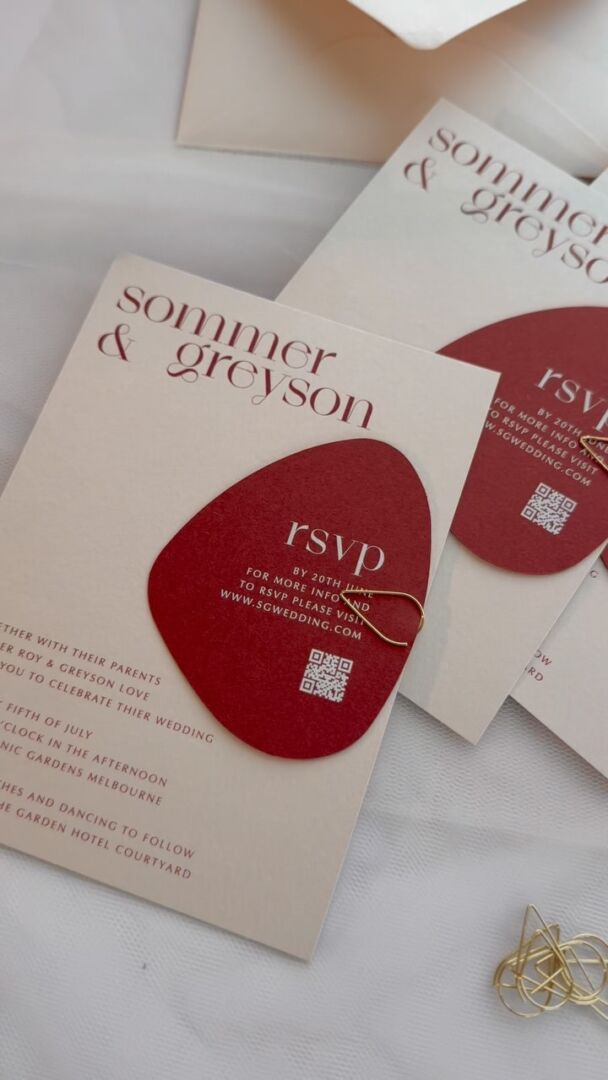
Luxury invitation designs in foil and letterpress, personalized online. The $5 sample pack puts seven designs and an envelope in your hands, including real foil and letterpress, so you judge paper and finish off a screen.
FAQ
What is the difference between a micro wedding and an intimate wedding?
The terms overlap. In Australian wedding planning usage, “micro wedding” tends to mean 10 to 40 guests and implies a full ceremony and reception in one event. “Intimate wedding” is used more loosely for any deliberately small guest count, sometimes up to 50 or 60. Neither term has a legal definition. What matters is whether your venue and vendors are set up for small numbers rather than simply available at small numbers.
Do you still need to lodge a Notice of Intended Marriage for a small wedding?
Yes. The NOIM requirement applies to all marriages in Australia regardless of size. You must lodge the form with an authorized celebrant at least one calendar month before the ceremony. The form is valid for 18 months from the date it is lodged.
Are national parks a practical choice for a wedding ceremony in Australia?
Yes, for ceremony-only events. You will need a permit from the relevant state parks authority or Parks Australia, and most natural park sites have no permanent infrastructure. You will also need a separate reception venue. The reward is a setting that is difficult to replicate anywhere else. Confirm permit availability, approved ceremony sites, and any restrictions on vendors or temporary structures before committing to a date.
Can you buy out a restaurant for a wedding of 20 people?
Many Australian restaurants offer private dining room or full-restaurant buyouts for small groups. The typical structure is a minimum spend on food and drink rather than a room hire fee. At 20 guests, the per-head cost of reaching that minimum can be significant, so ask the venue what per-head spend has typically looked like for groups of your size before you commit.
How far in advance should you book an intimate wedding venue?
Sought-after intimate venues and private properties book 12 to 18 months ahead for spring (September to November) and autumn (March to April) Saturdays. Weekday and winter dates have more availability. Book venue and photographer first; both fill faster than other vendors.
What stationery do you actually need for an intimate wedding?
At minimum: invitations, envelopes, and one on-the-day piece such as an order of service or place cards. Many couples with small guest lists also add menus because the per-unit cost is manageable at low quantities. With a guest list under 50, letterpress and foil-stamped suites become more practical than at large print runs, because the per-card investment is easier to spread across a smaller order.