
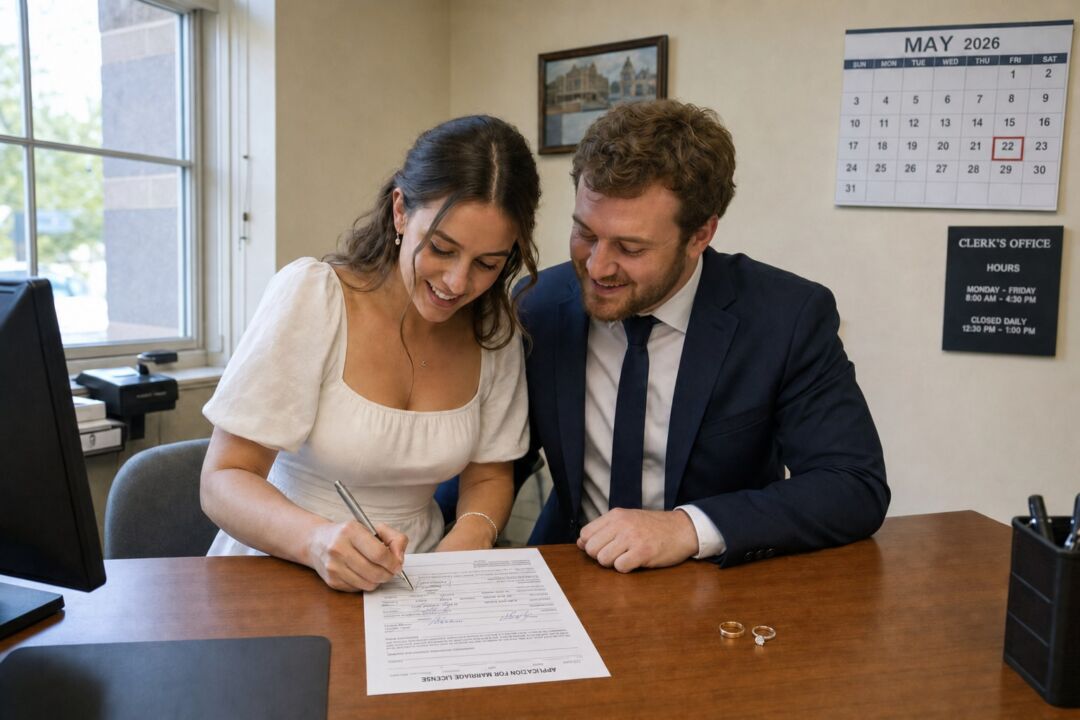
Eloping used to mean sneaking off in secret. Today it more often means choosing a smaller, more intentional wedding over a large traditional one. Couples who elope still want the ceremony to be legal, the day to feel meaningful, and the experience to be theirs rather than anyone else’s idea of what a wedding should look like.
This guide covers the step-by-step process for US couples: the legal requirements, the planning sequence, what to book, what to bring, and what to do after. If you are still deciding whether eloping is right for you, that broader question belongs to the overview guide in this cluster. This one is for couples who have decided and want to know how to make it happen.
Eloping in the US is legally straightforward, but the details vary enough by state and county that you need to verify specifics before you book flights or set a date.
How to elope in the US: the short version
- Get a marriage license from the county clerk where your ceremony will take place
- Many states have no waiting period; some require three to six days, so confirm before you set a date
- You need a legally recognized officiant and, depending on your state, one or two witnesses
- National and state park ceremonies usually require a permit, often applied for months in advance
- Hire a photographer if photos matter to you; it is the vendor couples most often say they are glad they prioritized
- Your officiant must file the signed license with the county clerk after the ceremony, typically within 30 to 60 days
- Order certified copies of your marriage certificate for name changes and legal paperwork
Once the date is real, a save the date is what stops your few guests double-booking.
What makes a US elopement legally valid
A legal elopement requires three things: a valid marriage license, an authorized officiant, and, depending on your state, one or two witnesses. That is the entire legal framework.
The marriage license is issued by the county clerk, and this matters: you usually need to apply in the county where your ceremony will take place, not where you live. Most states let you begin the process online, but both partners typically need to appear in person to sign. Bring a government-issued photo ID (driver’s license or passport), your Social Security numbers, and, if either of you has been married before, proof of the prior marriage’s end (a divorce decree or death certificate).
License fees are set at the county level, so the cost varies. Check your county clerk’s website for the current fee before you go.
Many states issue the license the same day you apply. Some require a waiting period before the ceremony can take place. Minnesota requires five days. Wisconsin requires six days, one of the longer waits in the country. Texas requires 72 hours. If you are planning a destination elopement, confirm your target state’s rules before you lock in a date.
The license also has an expiration window. Most counties give you 30 to 90 days to use it after issuance, so time your application accordingly.
The officiant must be legally recognized in the state where you marry. Your options include a judge or magistrate, a religious clergy member, or a friend who has been ordained through an organization the state accepts. The Universal Life Church and American Marriage Ministries are widely recognized, but not in every state, and some states have additional registration requirements for online ordinations. Verify the rules in your specific state before your friend applies for ordination.
Witnesses are required in some states and not others. California typically requires one. Washington and Oregon require two. Florida requires none. Check the rules for your specific state. Your photographer can serve as a witness in most cases.

The planning sequence
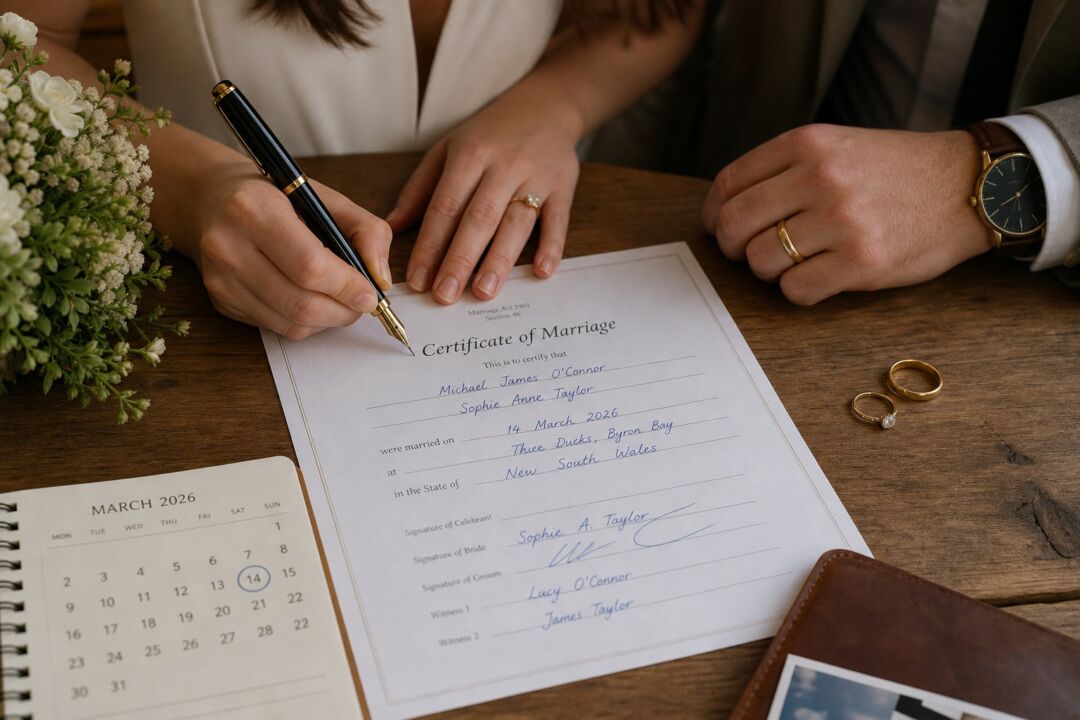
Most elopements come together in four to twelve weeks for a local ceremony, or three to nine months for a destination one. The sequence below starts from scratch.
Start with the legal research. Before you choose a date, confirm: does your state or county have a waiting period? How long is the license valid? Who is eligible to officiate? These facts constrain everything else, so know them first.
Choose your location and date together. Location and date are linked because permit availability, seasonal conditions, and license waiting periods all interact. If you want to elope in a national park, the permit process is likely the longest lead-time item in your plan. The next section covers permits in detail.
Book your photographer early if photos matter to you. Elopement photographers who specialize in adventure and outdoor ceremonies are in high demand, particularly in September. If photography is a priority, and it is commonly the one thing couples are most glad they invested in, book this vendor before you finalize other details. Many elopement photographers are also familiar with permit processes, local requirements, and backup locations for common destination spots.
Apply for the license at the right time. Too early and it may expire before your ceremony. Too late and a waiting period could push your date back. For states with no waiting period, applying one to two weeks before the ceremony gives enough buffer without risking expiration. For states with a waiting period, add those days to your timeline.
A printed invitation is often the only physical record of a US elopement.
Permits and location rules
If your ceremony will be in a public space, a permit is almost always required. This is the most common source of last-minute stress for couples who assumed they could simply show up.
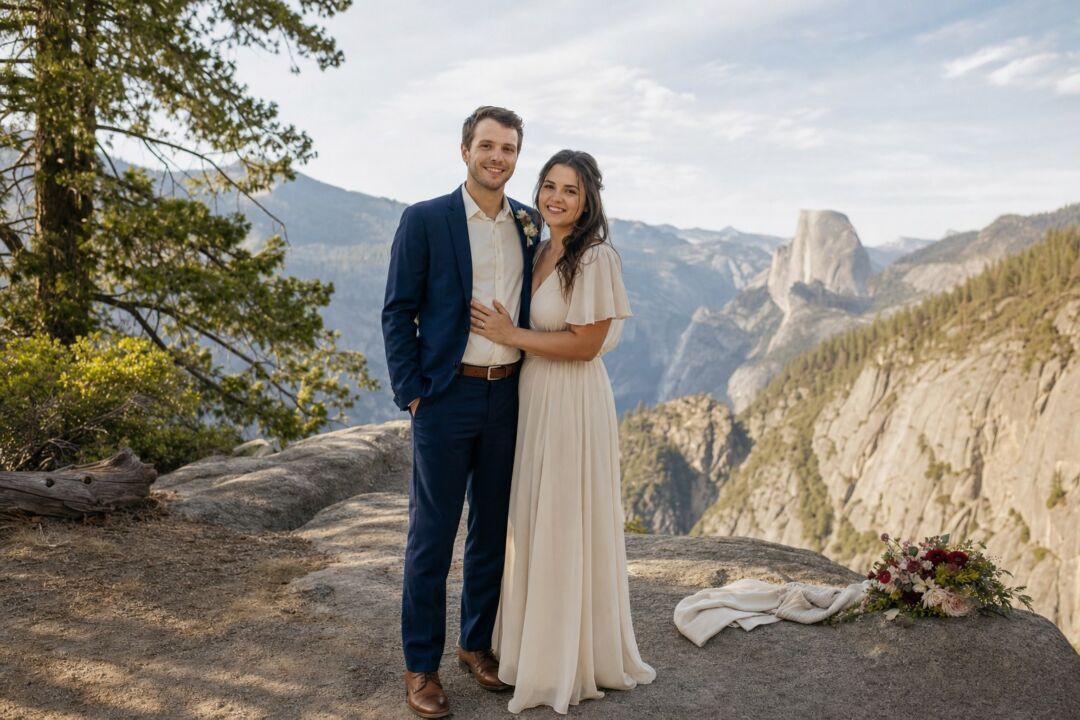
National park ceremonies require a Special Use Permit from the specific park where you plan to marry. Fees and lead times vary by park; popular locations fill months in advance. Apply through the individual park’s website, not a central NPS portal, and confirm whether a professional photographer counts toward the group size threshold in your permit type.
City parks and public plazas often have their own permit requirements for gatherings that include a ceremony and a professional photographer. The local parks department is the right first contact.
Private venues, restaurants, and vacation rentals need explicit confirmation that they allow wedding ceremonies on the property. Ask in writing and keep the response on file.
What to book and what you can skip
Beyond the photographer and officiant, the vendor list for an elopement is short.
What you likely need:
- A photographer, or videographer if you want footage of the ceremony
- An officiant, unless you are doing a courthouse ceremony where one is provided
- Hair and makeup, if that matters to you; not every couple books this, especially for outdoor or adventurous elopements
What you can skip:
- A full-service planner, for a local elopement with a straightforward venue. For a complex destination elopement, a local elopement planner can be worth the investment because they know the permit systems, vendor networks, and contingency options
- Elaborate florals beyond a single bouquet
- A reception on the day itself. Many couples celebrate separately, later, with a dinner or gathering for family and friends, which removes the cost and scheduling pressure from the elopement day itself
The elopement cost guide in this cluster covers the structure of a typical US elopement budget in more detail if you want to work through the numbers before committing to a plan.
The day itself
Bring: your marriage license, your IDs, any required permits, rings, your written vows if you are using them, and snacks and water if the location involves a hike or a long drive.
Arrive earlier than you think you need to. Allow extra time for travel to the ceremony spot, especially if it involves a trail, a timed access window, or unpredictable weather. Your photographer will help you build a timeline, but protect the buffer yourself.
The ceremony is brief. Your officiant will lead you through the vows and the signing. If witnesses are required in your state, confirm they know what they need to sign and are present at the right moment.
After the ceremony, your officiant is responsible for returning the signed license to the county clerk. Confirm this handoff before the day. Do not leave the signed license in your travel luggage or hand it to someone who might forget.
After the ceremony: filing, certificates, and what comes next
Your officiant must return the signed license to the county clerk within your state’s required window, often 30 to 60 days. Once the county records the license, your marriage is legally recognized. You can then request certified copies of your marriage certificate.
Order more copies than you think you need. You will want them for name changes, insurance updates, spousal visa applications, and other administrative tasks. Running short is inconvenient and replacing them takes time.
If you want to share the news with family and friends who were not there, or if you are planning a celebration party, the elopement announcement wording guide in this cluster covers what to say and how to frame it. If you are planning a later reception and want formal invitations for that event, browse the full range at Paperlust’s US wedding invitations collection. Where a reception follows months later, save the date cards do the early work and keep the invitation itself for the detail.
Announcement cards you personalize online and mail from anywhere. The $5 sample pack puts seven designs and an envelope in your hands, including real foil and letterpress, so you judge paper and finish off a screen.
Frequently asked questions
Do I need witnesses to elope in the US?
It depends on your state. Some states require no witnesses at all. Others require one or two. Your photographer and officiant can each serve as a witness in most states. Check the rules for the specific county where you will be married, not just the state, because some counties have their own requirements on top of state law.
Can a friend officiate our elopement?
In many states, yes, if they are ordained through an organization the state recognizes. The Universal Life Church and American Marriage Ministries are accepted in most states, but a handful have stricter rules or require additional registration steps. Verify the requirements in your specific state before your friend applies for ordination, and confirm there is no courthouse registration step needed before the ceremony.
Do we get married where we live or where we elope?
You apply for the marriage license in the county where your ceremony will take place, not where you live. You can live in one state and elope in another. This is common with destination elopements. Just be sure you apply in the right county.
How far in advance do we need to plan?
For a local elopement at a private venue, four to eight weeks is often enough. For a national park elopement in peak season, six to twelve months is more realistic because the Special Use Permit waitlist is the limiting factor. For a destination elopement that involves significant travel, add the time you need to sort flights, accommodation, and local legal requirements.
What happens if we lose the marriage license before the ceremony?
Contact the county clerk immediately. A replacement may be available, but there could be a fee and a processing delay. Store the license somewhere you will not forget, separate from your travel luggage, and keep a photo of it on your phone as a backup reference.
Can we have a symbolic ceremony now and the legal ceremony separately?
Yes. Many couples do a legal ceremony at the courthouse with just an officiant and witnesses, and a separate symbolic or celebration ceremony later. Both are valid. If you choose this path, be clear in any communications about which ceremony family and friends are being invited to attend.