
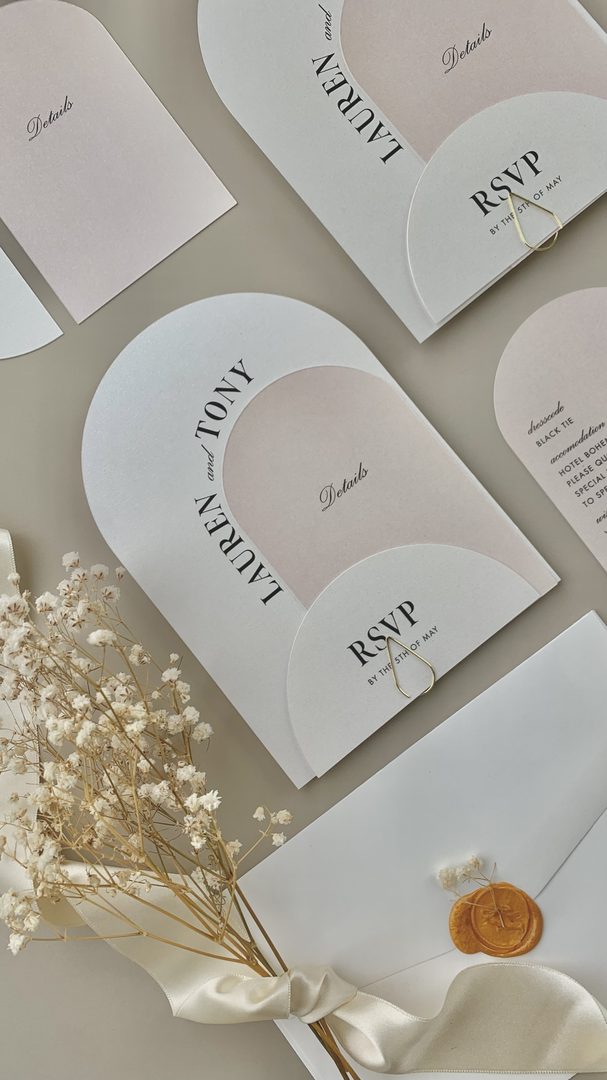
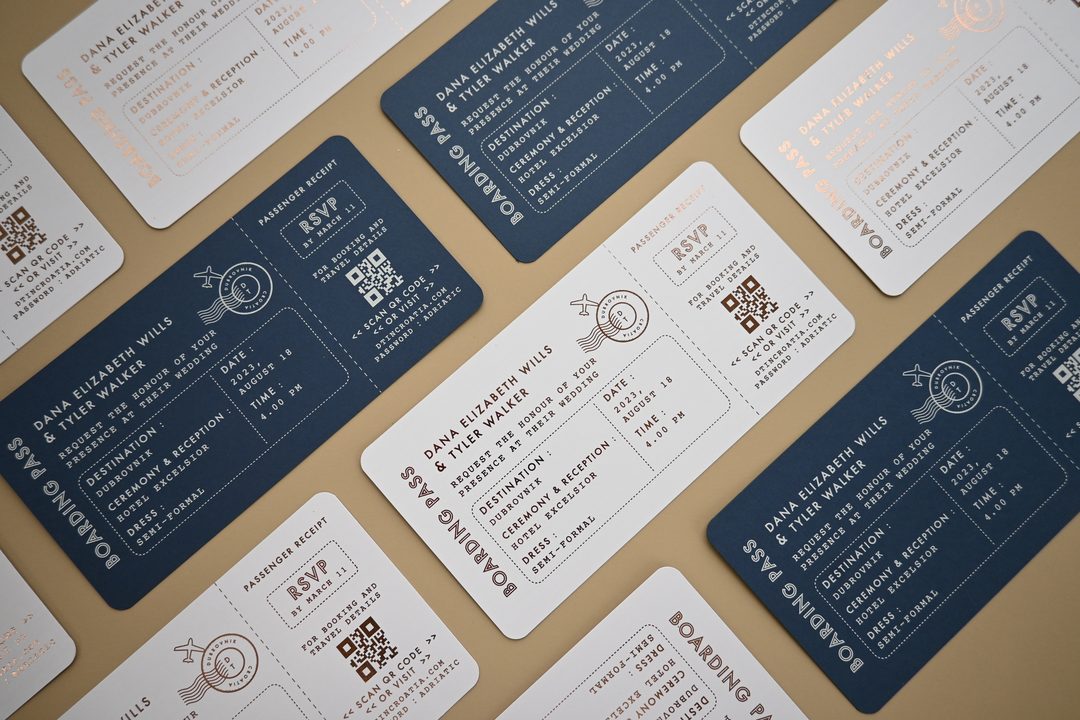

Getting your wedding RSVP card wording right means guests know exactly what you need from them, when you need it, and how to respond. This guide covers the five building blocks of a great RSVP card, plus a wording library of 30+ ready-to-use examples spanning formal, casual, funny, meal-choice, dietary, digital, and plus-one scenarios.
- Formal: “Accepts with pleasure / Declines with regret” + full name line + RSVP by [date]
- Casual: “Wouldn’t miss it! / Sorry, can’t make it” + first names OK
- Funny: “Deal us in! / Sitting this round out” or mad-lib style prompts
- Meal choice: Checkbox options (Beef / Chicken / Fish / Vegetarian) per person
- Dietary: Open-text line: “Dietary needs or allergies:”
- Digital RSVP: QR code or URL on a printed insert card, not the main RSVP card
- Plus-one: “___ of ___ attending” or a separate name line for the guest’s plus-one
- Deadline: Set 4-6 weeks before the wedding; 2 weeks is the minimum
RSVP cards are a crucial part of the wedding invitation package, but choosing your wording can be difficult. Most importantly, your RSVP card should match the tone of your invitation. If you’re still stuck on that, check out our article on Finding Your Wedding Invitation Wording Style. If your invitation is casual, you want to make sure your RSVP card reflects that. If it is formal, you want to stick to the traditional wording. So what are the basic ingredients of a good RSVP card?
- WHO – You should make clear who is invited. Adults only? Plus ones allowed? Communicate clearly to avoid potentially awkward confusion.
- WHAT – Are your invitees accepting or declining the invitation? All those included on their invitation, or can only some of them make it?
- WHEN – When do you need a response by?
- HOW – How would you like your guests to respond? Should they send the RSVP card back with their response included? Should they email you? Call? If you see them often, is it acceptable for them to just mention it in person? Perhaps you have a website they can reply through?
- DIETARY REQUIREMENTS – Usually it’s a good idea to use the RSVP card to collect details about allergies, dietary restrictions, and other food-related information, so that you can cater appropriately. For a sit-down meal, some people also opt to include the basic options so their guests can indicate their preference.
- OTHER DETAILS – You may be offering other services such as accommodation, transport or babysitting. You can use your RSVP card as a way to determine the number of people intending to make use of such an offer. Some people also opt for a fun collaboration on wedding entertainment choices, asking guests to request a song to be played at the reception.
Now, it’s best to accept from the outset that some of your guests will not RSVP, no matter how hard you try to make it easy for them. In the US and Australia today, we’re just not used to having to give a firm answer weeks out from an event. We’re even less accustomed to sending a physical response to an invitation. Most people know not to show up to a wedding reception unannounced, although it can happen if communication isn’t clear. If your wedding is more of a relaxed backyard celebration, this might not matter too much. If you’re paying per head and planning seating layouts, though, this can be a nightmare. Ideally your communication with your guests will be clear, concise and straightforward. If you make it as easy as possible for your guests to respond, most of your guests will reply without you having to track them down individually.
Why include a separate RSVP card?
An RSVP card can seem like a needless extra, but you definitely need one, regardless of whether or not your guests are asked to physically return the card. But why not simply include this information on the invitation? Traditionally, this is just a question of etiquette. It was (and still is, for most people) considered rude or tacky to include RSVP details on the invitation itself. Regardless of the etiquette, which you may or may not care about, the separate card serves several purposes. It is a tangible, firm reminder of the importance of your guest’s reply. It is also an opportunity to gather information that can help you plan your wedding, beyond just who is and is not attending.
Who is invited?
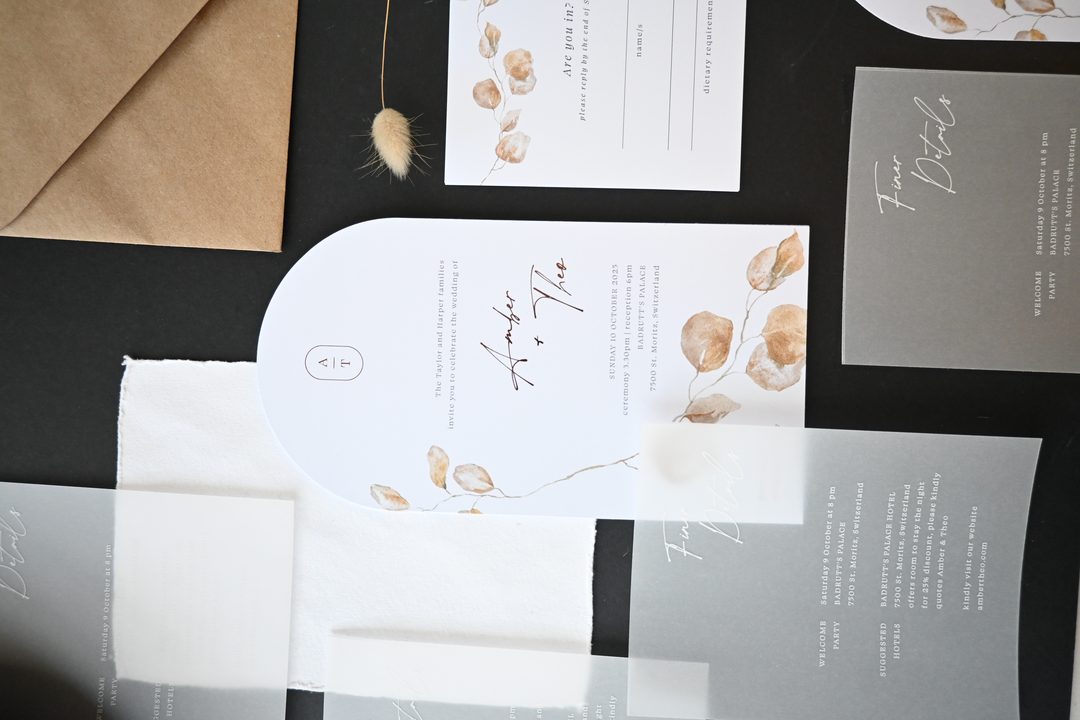
Your invitation should make clear who is being invited, and your RSVP card should reinforce this. Depending on the style of wedding, it may be important to specify whether children are also invited. Typically, the names of those whose presence is being invited are included on the invitation. If children are welcome, you can list their names or write “and family” after the names of the adults. If the event is more casual, the invitation could just read “name family”. Of course, you can keep this information off the invitation or RSVP card and make it available on your wedding website, on the envelope, or by word-of-mouth if preferred. It is recommended that you avoid writing “no children” or “adults only” on the invitation or RSVP card, as it can easily be interpreted as rude or passive-aggressive. It is also best to specify if a guest is invited to bring along a date, or a “plus one.” If plus ones are allowed, you should write “friend’s name and guest” on the invitation. If the person you are inviting is in a serious relationship it is considered rude to simply label them a plus one. This is tricky, and you need to tread carefully. How to define a “serious relationship” is up to you. On the RSVP card, you need to make sure all the information you will need is included. Think ahead. If they are sending the physical card back to you, ask yourself how you will know who the reply is from. There should be a line on the card for names. You can write this on the card before you send the invitations out, or this can be made clear with either just a blank space, “Names,” or an “M” (so that people can fill in Mr/Mrs/Ms). There is often also a space for “number of guests attending,” to remove any confusion.
What to say?
Your RSVP card needs to make it easy for your guests to communicate clearly whether or not they are attending. After all, that’s the point of the card. Other than that, your options here are limited only by your imagination. Examples of traditional wording:
- “Accepts with pleasure / Declines with regret”
- “Delighted to accept / Regretfully cannot join you”
- “Joyfully accepts / Unfortunately unable to attend”
Examples of casual wording:
- “Can’t wait! / Can’t come”
- “Deal me in! / Sitting this one out”
- “Happily accepts / Sadly declines”
- “Yay! / Nay”
- “Wouldn’t miss it! / We’ll miss you”
Examples of funny invitation wording:
- A mad-libs style RSVP card, such as “We are [adjective] to be invited to your [adjective] wedding, and we [accept or decline]. We are particularly looking forward to [blank] and [blank]. We wish you a marriage filled with [blank] and [blank], and wish you every happiness for the next [blank] years.”
- Instead of the usual “yes” and “no” options, many people are offering many more options to add humor to their RSVP cards. There are endless variations of these, including, “Joyfully accept / Regretfully decline / Joyfully decline / Regretfully accept,” or “Will be there with bells on / Will be there, no bells / Will be there, not sure yet about the bells / I’ll be ringing bells from afar / Not coming, I hate bells.”
When to RSVP?
The time frame in which you need to know for certain who is and is not attending is different depending on what sort of wedding you are holding, and who is involved. For a full sit-down meal it will be much more important to have exact numbers well prior to the wedding so you can confirm with caterers. Find out what date they need final numbers, and allow yourself about two weeks before that date so you have plenty of time to chase up those missing replies. In general 4-6 weeks prior to the wedding is best. How to word that request? You don’t want to sound too much like you’re ordering your guests around, but you don’t want them thinking the date is merely a suggestion. Examples of traditional wording:
- “The favour of your reply is requested by…”
- “Please RSVP by…”
- “Please respond by…”
Examples of casual wording:
- “Reply by…”
- “RSVP by…”
- “Please let us know by…”
Examples of funny wording:
- “Respond by date, or we will be forced to use at least four forms of communication to hassle you.”
- “If you don’t respond, please remember to bring a chair and a sandwich.”
A word of warning: be careful with the “funny” wording here. It can work fine if you’re jokers, and all your guests are close friends who understand your sense of humor. If your guests don’t know you very well, however, you run the risk of them misunderstanding your humor as hostility. Not the best first impression, to be sure.
How to RSVP?
How would you like to receive responses from your guests? While RSVP cards are traditionally written on and physically returned, the options are now vast. You can include an email address, phone number, or a link to your wedding website and ask your guests to reply through these means. There’s no right or wrong when it comes to this decision. Think about what works best for you. If time is of the essence, it can be frustrating to factor mail delays into the wait for replies. If emails get lost in your inbox, then email is not going to be a good way to collect responses. It’s also good to consider who your guests are. Online RSVPs may be fine for your friends, but what about some of your older relatives? Are they going to be confused and frustrated by that? If so, that certainly doesn’t mean you can’t use online responses. Consider having a family member speak with those who may have a problem with it and get their responses verbally. Whatever you decide on these questions, just remember to make it perfectly clear to your guests on the RSVP card itself. They need to be able to understand what you are asking of them without giving it too much thought.
RSVPs and dietary requirements
How many of us could confidently say exactly how many of our friends are vegan, vegetarian, or have some kind of food allergy? It’s much harder than it sounds, especially when you’re talking about cooking large amounts of food to serve to a large number of people. What sort of allergies do they have? It’s quite possible to have among your wedding guests allergies to gluten, dairy, fructose, nuts, eggs, fish, and any number of other things. Some of these allergies can be life-threatening, so you must be certain on these things. You do need to have this information, but it doesn’t necessarily have to be included on the RSVP card. You could include a separate card, or have a form on your wedding website where people can submit these details. The RSVP card, however, is a convenient way to do it while you are collecting their other information. Wording this is as simple as having a line titled “dietary requirements,” or having a note such as “please email emailaddress@gmail.com with any dietary requirements” included somewhere on the card.
Other RSVP details
Your RSVP card can be as simple or as complex as you like. You can leave it at “attending/not attending,” or include any information you could possibly wish to know. Are you offering any services that guests may wish to take advantage of? Babysitters? Transport to the wedding venue? Accommodation? These are offers you can make on your RSVP card if you wish. This simplifies the process: when guests let you know they are attending, they can also let you know at the same time if they need any of these services. You can also use your RSVP cards to ask for fun information. Many people ask for a song recommendation for the reception, as a fun way of involving the guests in the day.
Standard RSVP Card Wording Examples: Formal and Casual
Whether your wedding is a black-tie evening affair or a relaxed garden party, your RSVP card wording should mirror that tone. Below are copy-ready examples across the full formality range. Each block shows a complete card layout you can adapt for your stationery.
Formal RSVP wording examples
M_________________________
Number attending: ____
__ Accepts with pleasure
__ Declines with regret
Please reply by [Month Day, Year]
Name(s): _________________________
__ Joyfully accepts
__ Regretfully declines
Kindly reply by [Month Day, Year]
The favour of your reply is requested by [Date]
Name(s): _________________________
Number of seats reserved: __ of __
__ Delighted to accept
__ Regretfully unable to attend
Semi-formal RSVP wording examples
Name(s): _________________________
Number attending: ____
__ Happily accepts
__ Sadly declines
Please RSVP by [Date]
__ of __ guests will be attending
Name(s): _________________________
RSVP by [Date]
Casual RSVP wording examples
Name(s): _________________________
__ Wouldn’t miss it!
__ So sorry, can’t make it
Reply by [Date]
Name: _________________________
__ Count us in!
__ We’ll be there in spirit
RSVP by [Date]
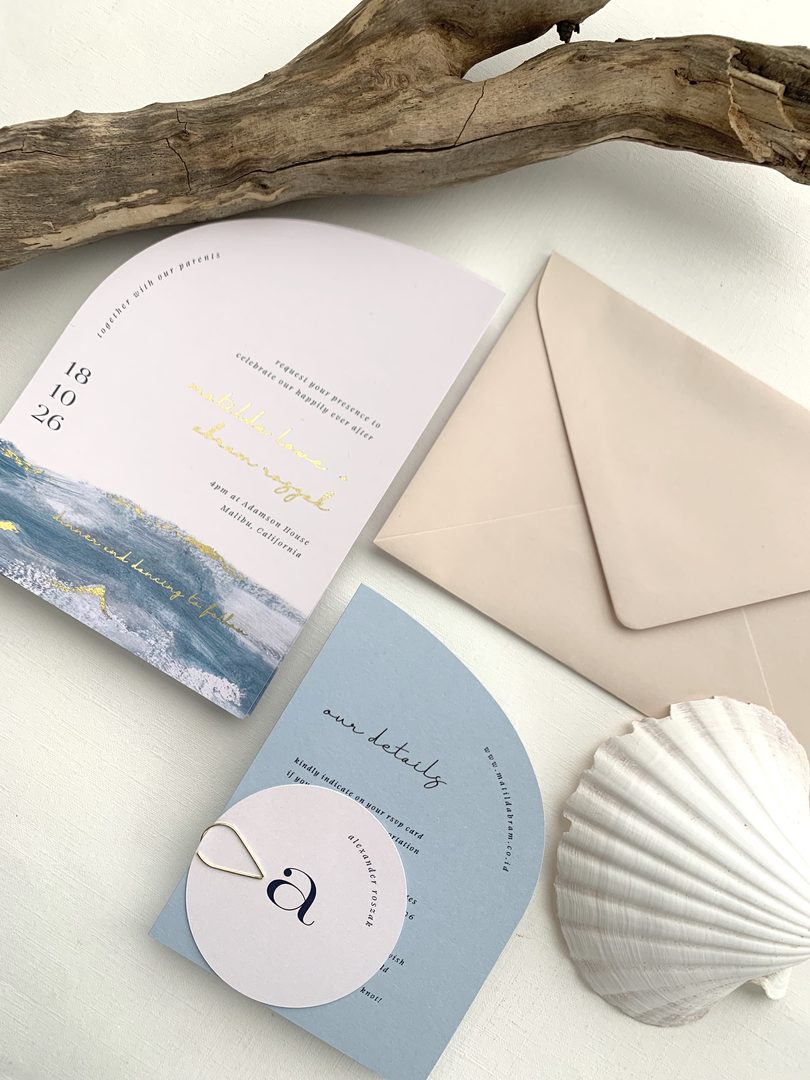
Funny and Creative RSVP Card Wording: 10 Ready-to-Use Options
Playful RSVP wording works best when the tone already runs through the rest of your invitation suite. If your invitation is formal, a sudden joke on the response card can feel jarring. But if your suite is casual or quirky, creative RSVP wording adds personality and gets guests excited to reply. Here are 10 options ranging from mildly cheeky to fully comedic.
Name(s): _________________________
__ Happily accepts (finally, an open bar)
__ Regretfully declines (so sorry, it’s complicated)
RSVP by [Date]
Name(s): _________________________
__ Deal us in!
__ Sitting this round out
Please let us know by [Date]
Name(s): _________________________
Circle one:
__ Joyfully accepts
__ Regretfully declines
__ Joyfully declines
__ Regretfully accepts
RSVP by [Date]
We are [adjective] _______ to be invited!
We [will / will not] _______ be attending.
We are most looking forward to [blank] _______.
We wish you a lifetime of [blank] _______.
Names: _________________________
Please return by [Date]
Name(s): _________________________
__ Can’t wait to celebrate with you!
__ I’ll be celebrating from afar
Reply by [Date] – or else we’ll assume you’re bringing everyone you know.
Name(s): _________________________
__ Will be there with bells on
__ Will be there (no bells)
__ Still deciding about the bells
__ Ringing bells from afar – can’t make it
Please reply by [Date]
Name: _________________________
__ Yay! / __ Nay!
RSVP by [Date]
Name(s): _________________________
__ I’m hungry – count me in!
__ I’ll eat at home – so sorry
Reply by [Date]
Name: _________________________
__ Absolutely yes!
__ Absolutely not (tears)
Song request for the dance floor: _________________________
Reply by [Date]
Name(s): _________________________
I plan to: __ Dance the night away / __ Toast and be gone by 10 / __ Cause a scene / __ Just be there for the food
Attending? __ Yes / __ No
RSVP by [Date]
RSVP Wording With Meal Choice and Dietary Fields
If you’re hosting a seated dinner with multiple entree options, you need your RSVP card to collect meal selections per guest. This section covers how to structure meal-choice fields on the card, including how to handle tables of two where only one person chooses each option.
Single guest, single meal selection
Name: _________________________
__ Attending / __ Unable to attend
Meal selection:
__ Beef tenderloin
__ Pan-roasted chicken
__ Grilled salmon
__ Vegetarian (mushroom risotto)
Dietary needs or allergies: _________________________
RSVP by [Date]
Names: _________________________ and _________________________
__ Will attend / __ Cannot attend
Guest 1 meal: __ Beef / __ Chicken / __ Vegetarian
Guest 2 meal: __ Beef / __ Chicken / __ Vegetarian
Dietary restrictions: _________________________
Please reply by [Date]
Names attending: _________________________
Total guests: __
Meal selections (please initial beside each):
__ Beef short rib (B)
__ Herb chicken breast (C)
__ Salmon fillet (S)
__ Vegetarian (V)
__ Children’s meal (K)
Allergies: _________________________
RSVP by [Date]
Dietary-only field (no pre-set meal choice)
Name(s): _________________________
Number attending: __
__ Accepts with pleasure / __ Declines with regret
Dietary requirements (allergies, restrictions, preferences):
_________________________
Kindly reply by [Date]
Name(s): _________________________
__ Attending / __ Not attending
Dietary needs (check all that apply):
__ Gluten-free __ Dairy-free __ Nut allergy __ Vegan __ Vegetarian
Other: _________________________
Please reply by [Date]
| Format | When to use meal choices | When to skip them |
|---|---|---|
| Plated dinner (sit-down) | Always – caterer needs counts per entree | N/A |
| Cocktail reception | Not needed | Passed appetizers don’t need pre-counts |
| Buffet | Only if caterer requires it | Usually skip – guests choose at the buffet |
| Food truck / stations | Not needed | Dietary note is still useful |
Digital RSVP Wording: QR Code Cards and URL Options
More couples in 2026 are directing guests to respond online, whether via a wedding website RSVP form, a Google Form, or a dedicated RSVP platform. The physical RSVP card doesn’t disappear entirely in this scenario – it’s replaced by a printed direction card (an insert in the invitation envelope) that carries the QR code or URL and tells guests where to respond. Here is how to word both formats.
QR code RSVP card wording
The printed direction card with a QR code typically includes: a short instruction line, the QR code graphic (inserted during design), a deadline, and a URL fallback for guests who can’t scan.
Kindly reply by [Month Day, Year]
[QR CODE]
Scan to RSVP
Or visit: YourWeddingWebsite.com/rsvp
We’d love to know if you’ll be joining us!
Please RSVP by [Date]
[QR CODE]
Scan the code above or visit
[yourname]and[partnername].com/rsvp
The honour of your reply is requested by [Date]
Please scan to respond:
[QR CODE]
For assistance: [emailaddress@email.com]
URL-only RSVP wording (no QR code)
RSVP online at:
[YourWeddingWebsite.com/rsvp]
Please respond by [Date]
Prefer to respond online? Visit [YourWebsite.com/rsvp]
Or return this card by [Date] to:
[Your Name]
[Your Address]
What to include on a physical RSVP envelope
If you’re using physical RSVP cards that guests mail back to you, the envelope matters. Here’s what goes on it and how to word the inner address label:
- Return address: Pre-print your address on the outer flap so guests don’t have to think about it. Use the address where you want cards delivered – usually your home, a parent’s address, or your wedding planner.
- Pre-stamp the envelope: This dramatically improves your reply rate. A blank envelope with no stamp creates friction; many guests will set it aside “to deal with later.”
- Inner address wording: Keep it simple. Print your name and return address on the front: “[Your Name] / [Street Address] / [City, State ZIP]”. No salutation needed.
- Numbered envelopes: If you’re concerned about guests forgetting to write their names on the card, number the envelopes (in pencil on the back flap) and keep a corresponding list. When a card arrives without a name, you’ll know who sent it by the number.
For couples who want to skip physical response cards entirely, we cover this option in detail in our guide to wedding invitation insert cards.
RSVP Card Wording FAQs
What is the standard RSVP deadline for a wedding?
Four to six weeks before your wedding date is the standard. This gives you enough time to chase non-responders and confirm final headcount with your caterer. For destination weddings, extend this to eight to twelve weeks before the event so guests can book travel with enough lead time.
Should the RSVP card match the invitation exactly?
It should match in tone and style, but it doesn’t need to be identical. Use the same paper type and print method if you can – your invitation suite will feel cohesive. A formal invitation printed on cotton letterpress stock pairs naturally with a letterpress RSVP card. A casual invitation with digital print works perfectly with a simple digital reply card in a matching color palette.
Can I use funny wording on a formal wedding RSVP card?
Generally no. Funny RSVP wording works best when the rest of your invitation suite already has a playful tone. On a formal invitation with elegant typography and traditional wording, a joke on the response card feels jarring. Keep the formality consistent throughout the suite, then inject personality in the day-of paper (menus, programs, place cards).
How many meal options should I offer on the RSVP card?
Two to four options is the sweet spot. More than four creates decision fatigue for guests and complexity for your caterer. A standard pairing is: one beef, one chicken or fish, and one vegetarian option. Always include a dietary notes field regardless of whether you offer meal pre-selection.
Do I need to include a meal choice field if I’m having a buffet?
Not usually. Buffets are self-serve, so guests choose on the day. The exception is if your caterer requires pre-counts for certain dishes (such as a carved station or a specific protein). In that case, add a note: “Will you be having the roast? __ Yes / __ No” to capture the count they need. Always include a dietary needs or allergy field regardless of catering format.
What should I put on the RSVP card for a plus-one?
Include a line for the plus-one’s name and a “number attending” field. Something like: “Name(s): _________________ | Number attending: __ of __ seats reserved.” Pre-filling the seats reserved number (e.g., “__ of 2 seats reserved”) lets the guest know exactly how many people are included in their invitation without any ambiguity.
Can I direct guests to RSVP online instead of returning a card?
Yes, and it’s increasingly common for 2026 weddings. Replace the traditional RSVP card with a small printed direction card in the envelope – include the QR code or URL, a brief instruction line, and your deadline. Keep a backup email address or phone number on the card for guests who struggle with technology. Older relatives especially appreciate having an alternative contact option.
What is “M” at the top of some RSVP cards?
The “M” is a traditional prompt that signals the start of an honorific – Mr., Mrs., Ms., or Miss. Guests write their title and name on the line that follows. It’s a formal convention borrowed from 19th-century etiquette. Modern couples often replace it with a simple “Name(s):” line, which is clearer and more inclusive.
How formal should the RSVP card be compared to the invitation?
Match the invitation’s formality level. If your invitation uses third-person formal phrasing (“Mr. and Mrs. Smith request the honour of your presence”), your RSVP card should use similar elevated language (“Accepts with pleasure / Declines with regret”). Casual invitations work with casual response cards. The only exception is tone-for-tone consistency; do not bump the formality up or down on the reply card versus the invitation.
Should I include a song request on the RSVP card?
It’s a fun optional addition that doubles as a guest engagement touchpoint before the event. Include a simple prompt: “Song request for the dance floor: _________________________.” Your DJ or band will appreciate having requests in advance. Note that this adds to card length – if space is tight, skip it and gather requests via your wedding website instead.
How do I handle guests who don’t return their RSVP?
Allow one week past your printed deadline, then follow up by phone or text – not by email or social media, which are easy to ignore. Assign follow-up to one person (you, your partner, or a parent) to avoid double-contacting the same guest. For couples using a wedding website, a digital RSVP form makes tracking much easier since you see responses in real time rather than waiting for cards to arrive by mail.
Is it rude to put “no children” on an RSVP card?
It can come across as blunt or even hostile in print. The better approach is to address children’s attendance before the invitations go out: leave children’s names off the inner envelope, specify the number of seats reserved on the reply card, and communicate the adults-only policy verbally or through your wedding website. If you need to address it on the card, a neutral phrasing like “We have reserved __ seats in your honour” implicitly communicates the guest count without stating what isn’t included.
For a full breakdown of RSVP timing, envelope addressing, and digital RSVP tools, see our complete wedding RSVP planning guide.
Ready to design your RSVP cards? Browse the full range of wedding invitations and matching RSVP suites at Paperlust, with 500+ designs available in digital print, letterpress, flat foil, and more. Proofs are delivered within 1-2 business days and free white envelopes are included with every order.
Design your RSVP cards at Paperlust
500+ designs in digital print, letterpress, and flat foil. Free white envelopes included. Proofs in 1-2 business days.