

Most Australian couples do not spend long on this decision. They ask a few friends, read two articles that say the same thing, and go with whatever feels less awkward to mention on their invitations. That works for the simple cases. The trouble starts in the middle: couples who already share a home, weddings where guests are flying in from interstate, and families where a cash ask feels wrong no matter how politely it is phrased.
This article makes the call for each of those situations. The broad overview of what registries and wishing wells are lives elsewhere in this planning guide. Here we go straight to the decision.
One thing this article does not cover: how to word the ask itself. Phrasing a wishing well is its own skill, and the wishing well wording guide handles that in full.
- You already live together: wishing well
- Setting up your first home together: registry
- Destination wedding or guests traveling far: wishing well
- Guests who need to buy a physical gift: registry, or run both
- Mixed-age guest list: run both, short registry plus a cash fund
- Family culture where a cash ask reads badly: small curated registry plus a honeymoon fund
- One clear financial goal (house deposit, honeymoon): wishing well, name the goal
Registry or wishing well, the ask goes on a separate card, never in the invitation.
What each one is, briefly
A registry is a curated list of specific items guests can purchase. When someone buys an item it is marked as taken, so you do not receive duplicates. Modern Australian registries let you pull items from multiple stores, and many platforms now include cash funds alongside physical gifts on the same page.
A wishing well is a request for cash. The traditional form was an envelope dropped into a decorated box at the reception. Today it just as often means a direct bank transfer before the day, a contribution through an online gifting platform, or a link on your wedding website. The physical box and the digital fund do the same thing: guests give money, and you use it how you choose.
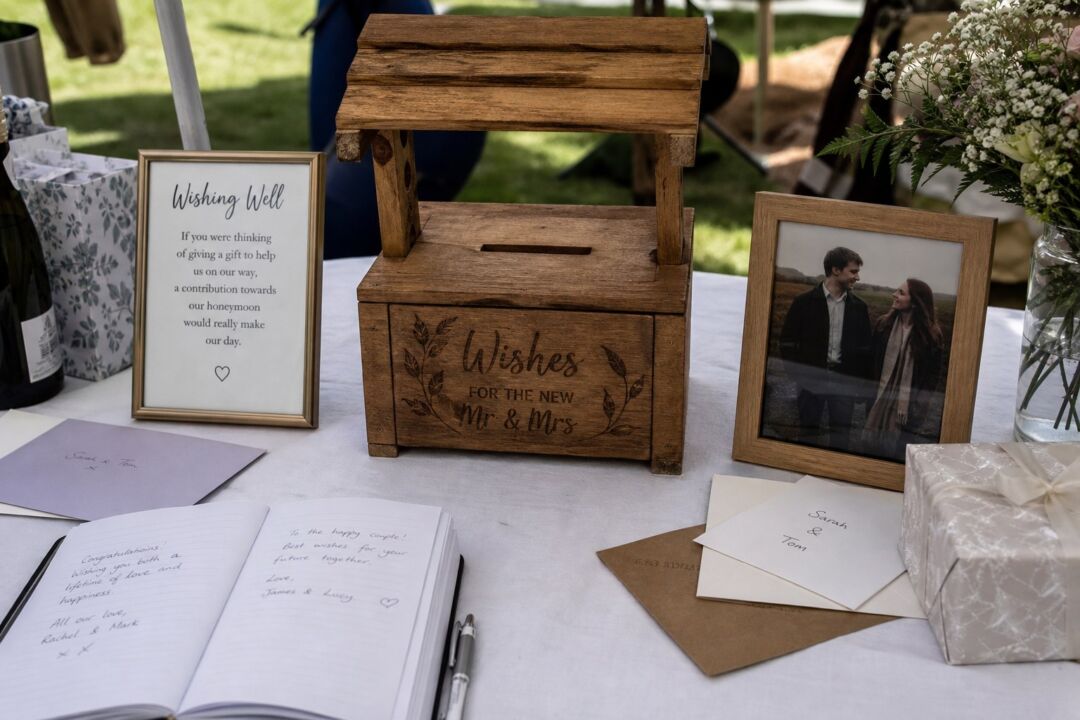

Choose a registry when you genuinely need the items
The registry is most useful when there is a real gap between what you own and what you want. Setting up a first home together, replacing rental furniture with things you actually chose, building out a kitchen: these are situations where a list of specific items lets guests give you something genuinely helpful.
The registry also suits guests who want a task with a price attached. Older relatives, family friends from outside your usual social circle, anyone who feels uncomfortable handing over cash: a registry gives them a clear choice at a clear price point. They know exactly what they bought, they can picture you using it, and the whole interaction has a shape that works for them.
If you create a registry, keep it honest. If you do not need or want the items on it, do not populate it just to have something to show. A registry full of things you will never use is less useful than no registry at all.
Choose a wishing well in three situations
You already live together. This covers the majority of Australian couples, and it is the situation where a wishing well is the clear answer. You already have a toaster, sheets, and several cutting boards. A cash gift toward a honeymoon, a house deposit, or a shared experience is more useful than another set of wine glasses. Australian guests expect this. There is no social awkwardness about a wishing well for a couple in this position.
Your wedding involves significant travel for guests. When guests are flying from Melbourne to attend your Noosa wedding, or driving four hours to a country property, they cannot carry a large physical gift home. Expecting them to manage that is unreasonable. A wishing well removes the problem entirely: guests contribute what they can, knowing that attending has already cost them real time and money. The funds arrive in your account rather than as boxes you need to transport on the same trip home.
You have one clear financial goal. House deposit. Honeymoon. A specific renovation. A wishing well framed around a concrete purpose lands differently than an open cash request. Guests feel like they are contributing to something named and real. The clearer your goal, the easier it is for guests to give toward it.
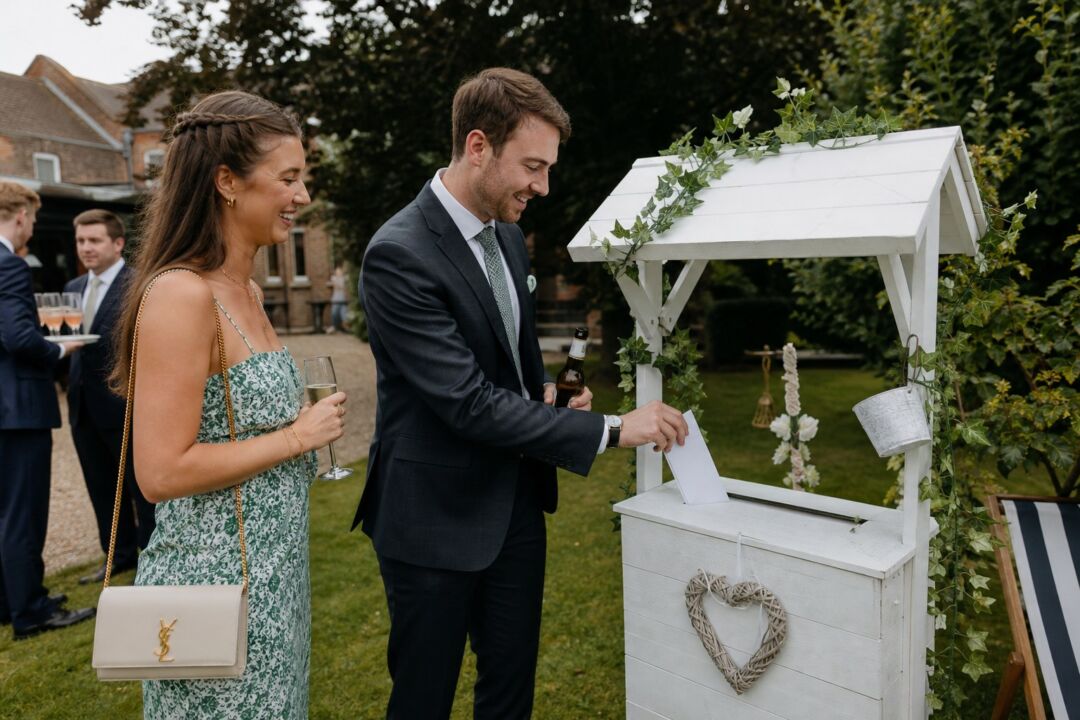
An information card carries the registry link and the wishing well wording together.
Why running both usually beats choosing one
The mixed approach gets dismissed as wanting everything. In practice it resolves several real problems at once.
A short registry, somewhere between eight and fifteen items at a spread of price points, gives guests who want to buy a physical gift a clear path. Older relatives, family members who feel uncomfortable with cash, anyone who enjoys wrapping something: they use the registry.
Everyone else uses the wishing well. Friends, younger relatives, people contributing online before the day, guests who traveled interstate.
The key word is short. A registry with eighty items alongside a wishing well looks like you want everything available to you. A registry with twelve thoughtful things alongside a honeymoon fund reads as considerate. Guests have genuine choice, and neither option overshadows the other.
If you run both, put the details together on the same information card or the same page of your wedding website. Making guests hunt for one or the other adds unnecessary friction and invites the guests who most need guidance to give up and buy something random.
What to do if your family finds a cash ask rude
Some families have strong feelings about cash requests. This is real, more common in certain cultural backgrounds and in older generations, and pretending it does not exist does not help you plan around it.
The most effective response is not to hide the wishing well. It is to give those guests a genuine alternative. A small, thoughtful registry, maybe five to eight items, gives family members who need to buy something a path they are comfortable with. They use the registry and never have to engage with the cash request at all.
The framing of the cash ask matters here too. “Honeymoon fund” or “experience fund” lands better with this group than “wishing well” or a generic cash request, because it connects the money to something specific and experiential. You are not asking for money; you are inviting guests to contribute to a named experience. That distinction matters to the guests it matters to.
The actual wording for this ask is where language does its quiet work. The wishing well wording and poems guide covers the options Australian couples use most.
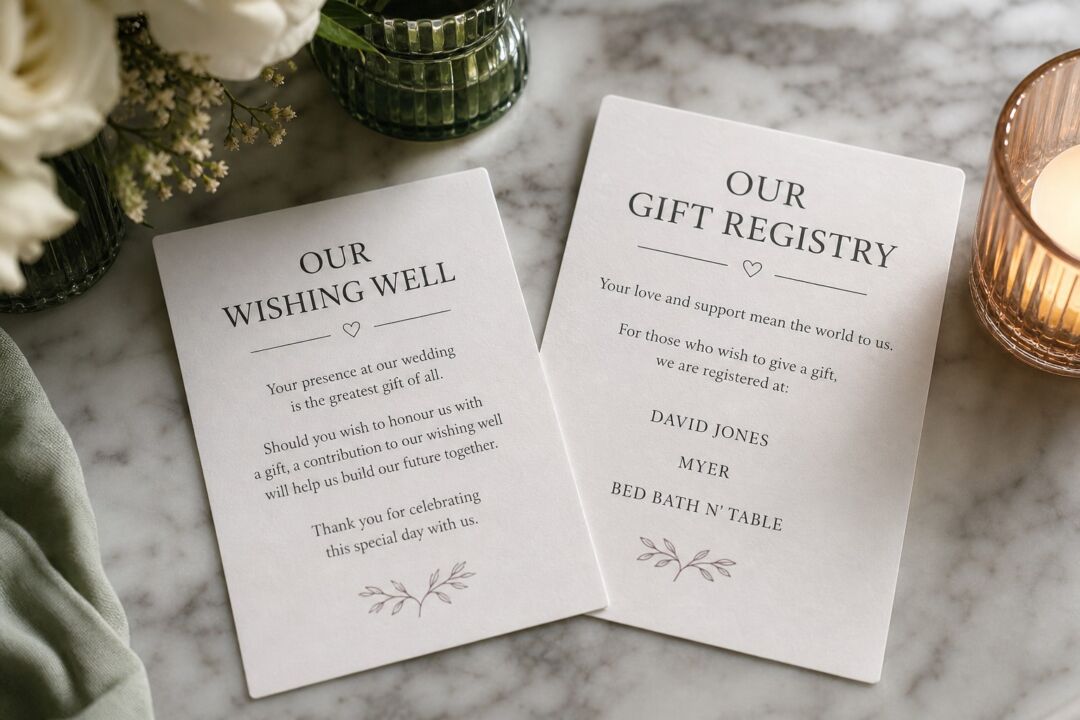
What goes on the information card
Gift preferences belong on an information card, not on the invitation itself. The invitation carries the event details. The information card is where guests look for the practical logistics: venue directions, accommodation, RSVP details, and gift information.
A few things to get right:
Include a direct URL, not just the name of a platform. People search, land on the wrong page, and give up. If your registry or wishing well has a dedicated link, print it on the card.
Include both options if you are running both. Do not bury the wishing well at the bottom in smaller text, and do not omit the registry. Give each option equal weight so guests feel genuinely free to choose either one.
Keep the gift language brief. One or two lines is enough. The tone should match the rest of your stationery suite.
Paperlust’s information cards include designs with enough space for registry and wishing well details alongside the rest of your practical information, without crowding the card. An online wishing well can also sit behind a short link on the card, which keeps the wording brief while the detail lives elsewhere.
Wishing well and information cards personalized online. The $5 sample pack puts seven designs and an envelope in your hands, including real foil and letterpress, so you judge paper and finish off a screen.
Frequently asked questions
Is it rude to ask for cash at an Australian wedding?
No. Cash gifts, including wishing wells and honeymoon funds, are widely understood and expected across Australia, particularly for couples who already share a home. The framing matters more than the request itself. Connecting the money to a specific goal, such as a honeymoon or a house deposit, tends to land more warmly than a generic cash ask.
Should wishing well details go on the invitation or on a separate card?
On a separate card. Most Australian couples include gift preferences on an information card alongside venue directions and other practical details, rather than on the invitation itself. The invitation is for the event; the information card is for logistics.
Can we run a registry and a wishing well at the same time?
Yes, and many Australian couples do. A short registry for guests who prefer a physical gift, plus a wishing well for everyone else, gives guests genuine choice. Keep the registry concise. A long list alongside a cash request can read as excessive.
We already live together and have most things. Is a wishing well still appropriate?
It is the obvious choice. Australian guests widely expect a wishing well from couples who already share a home. There is no awkwardness in it, and a cash gift toward a honeymoon or house deposit is more useful to you than items you do not need.
What if some guests buy a physical gift even though we have a wishing well?
Accept the gift with genuine warmth. Some guests will always prefer to give a physical present regardless of what you request, and this is fine. The wishing well is an invitation, not a mandate.
How much wording do we need on the information card about gifts?
One to two lines is enough. State your preference clearly, include a URL if there is one, and match the tone of your invitations. For specific phrasing and poem-style wording options, the wishing well wording guide covers the approaches Australian couples use most.