
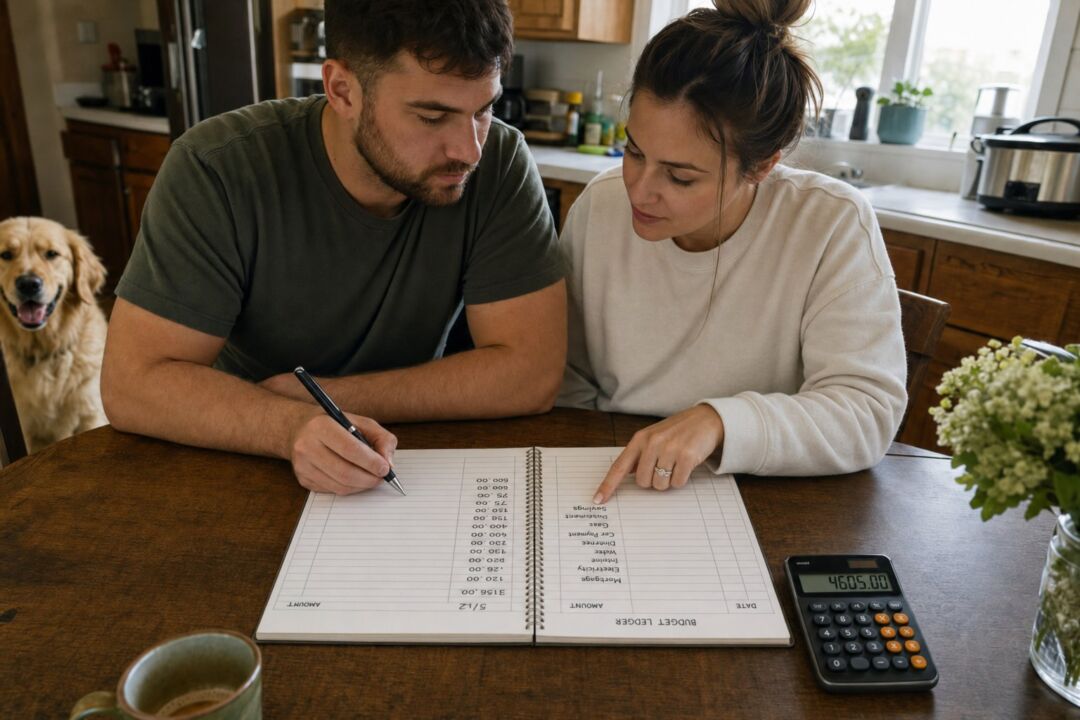
The per-guest problem usually shows up with the first catering quote. The estimate is not “$X for the event.” It is “$Y per head,” and suddenly the question of whether to invite your second cousins has a dollar value attached to it.
That per-head catering number is real and useful, but it is not the same as what each guest actually adds to your total budget. Photography, the celebrant, the DJ, and the venue room rental stay mostly fixed whether you host 60 people or 160. The figure that actually changes when you trim the list is made up only of costs that genuinely scale with headcount.
This article breaks down which wedding expenses belong in which bucket, shows you how to calculate your own per-guest number from the quotes in front of you, and explains where stationery fits into the math. It covers both Australian and US weddings; any figure tied to a specific country is labeled.
| Category | Scales with guest count? | Notes |
|---|---|---|
| Catering (food) | Yes | Quoted per head by most caterers and venues |
| Bar and beverages | Yes | Per-head packages or consumption-based |
| Chair, table, and linen rental | Yes | Priced per seat at most hire companies |
| Favors / bomboniere | Yes | One per guest or household |
| Stationery | Partly | Billed per household, not per person |
| Florals | Partly | Reception centerpieces scale; bridal flowers don’t |
| Cake or dessert | Partly | Servings priced by headcount |
| Photography | No | Day rate or package, not per head |
| Videography | No | Same structure as photography |
| Celebrant or officiant | No | Per ceremony, regardless of attendance |
| DJ or band | No | Hourly or package rate; not per head |
| Venue room rental | No | Usually a flat site fee |
| Wedding dress | No | One purchase regardless of guest count |
| Hair and makeup (couple) | No | Fixed for the couple |
Per-guest maths starts at the envelope, which is the cheapest place to feel it.
Costs that go up with every guest you add
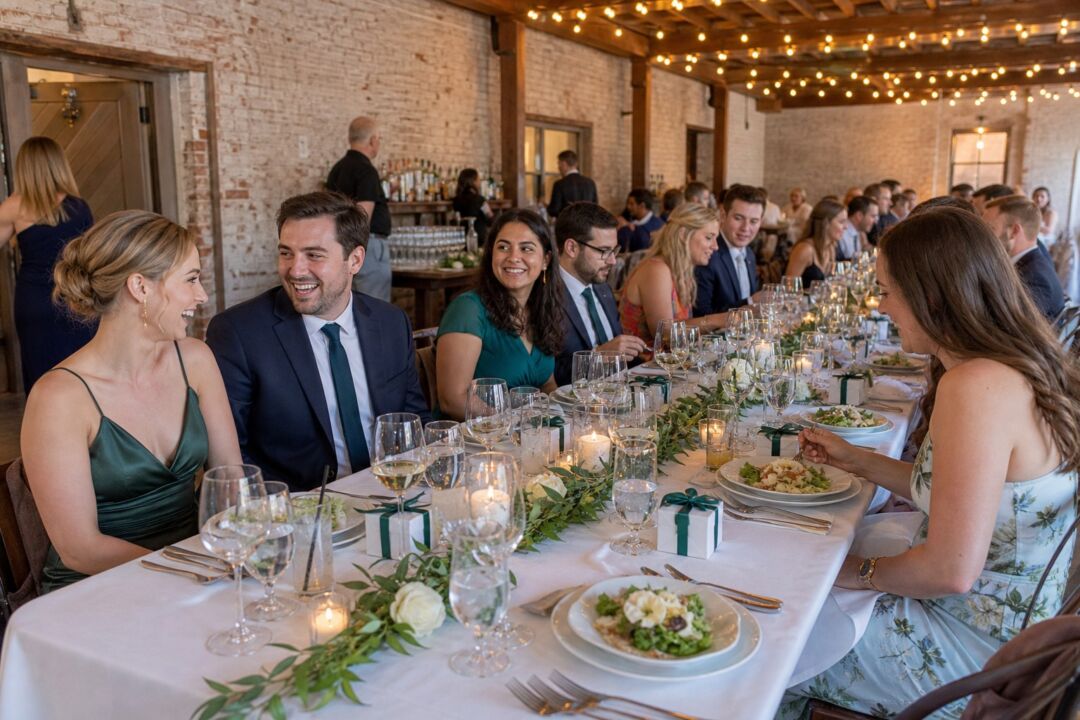
The clearest scaling costs are the ones caterers put on a price sheet: food per head, beverages per head, cake servings, and chair rental per seat.
Catering. Most venues and independent caterers quote a per-head rate for food. In Australia, the Easy Weddings 2026 Australian Wedding Industry Report records a national average catering spend of $6,177 AUD. That figure covers couples who contract catering separately from their venue; many Australian venues bundle food and beverage into a per-head reception package, in which case the catering component sits inside the average venue spend of $17,518 AUD (also Easy Weddings 2026). In both Australia and the US, caterers will give you a per-head rate for your specific date, format, and location, and that is the only figure worth using for your own budget.
Beverages. Open bar packages are almost always priced per head or per hour per person. Budget for this separately if your venue does not include it in the catering quote.
Table, chair, and linen rental. Any rental company pricing per seat makes these directly variable. Going from 80 guests to 120 means more tables, more chairs, more place settings, and more centerpiece vases. Couples focused on catering costs sometimes underestimate how quickly this category scales.
Favors. Every favor is a per-guest cost. The Easy Weddings 2026 Australian Wedding Industry Report puts the average spend on wedding favors (called bomboniere in Australia) at $678 AUD total. Spread across the same report’s average guest count of 85, that is just under $8 a guest. Per-guest rates vary considerably: 44 percent of Australian couples in the 2026 survey spend under $5 per guest, while 26 percent spend $11 to $15.

Costs that stay fixed regardless of how many people attend
These are the expenses that couples often divide by guest count to get an “all-in per-guest” figure, but they do not actually shift when the list shrinks or grows.
Photography. Photographers charge for their time and creative work, not for the number of faces in the crowd. The Easy Weddings 2026 Australian Wedding Industry Report puts the national average at $3,657 AUD. Whether you have 50 or 150 guests, the photographer’s fee stays the same.
Celebrant or officiant. The ceremony fee is set by the ceremony, not the guest count. Easy Weddings 2026 records an average celebrant fee of $1,031 AUD in Australia. In the US, fees vary by state and by officiant type; check with local officiants for current rates.
Venue room rental. Many venues charge a flat fee for the space itself, separate from catering. If your venue bundles catering and room rental into one per-head package, the room component has been absorbed into a variable rate, but the underlying cost is still structural. A venue with a high minimum spend can dominate your total budget regardless of how many guests you invite.
Music. DJ and band packages are priced by hours and ensemble size, not by attendance. You pay the same whether 80 or 180 guests take to the dance floor.
Wedding dress. Bridal attire is a single purchase. Easy Weddings 2026 records an average dress cost of $2,591 AUD, with designer gowns averaging around $4,475 AUD. Guest count has no bearing on this figure.
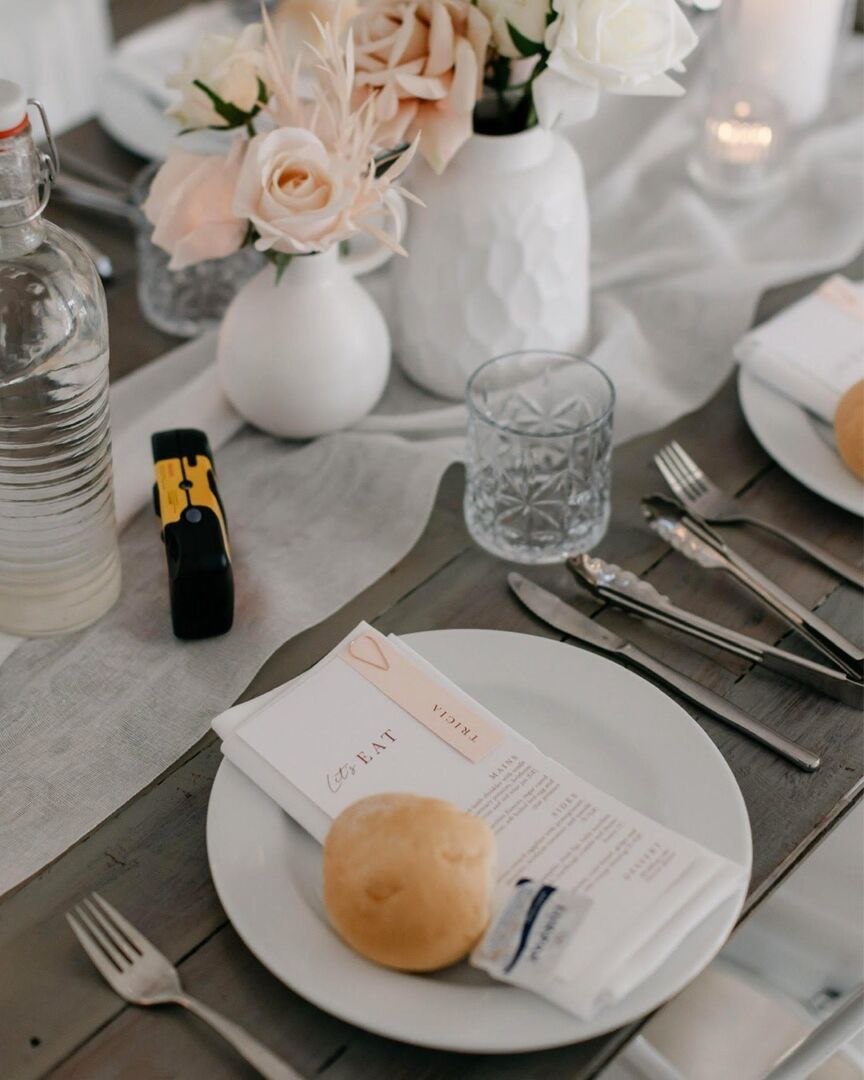
Place cards and menus scale with the guest count, and both are ordered late once numbers are final.
The costs that sit in the middle
A handful of categories partially scale with guest count and are worth tracking on their own.
Florals. Your bouquet, boutonniere, and ceremony arch are fixed costs. Reception centerpieces are not. Each additional table adds another centerpiece, and a larger guest list generally means more tables. The Easy Weddings 2026 report records an average floral spend of $2,639 AUD; in a typical setup, roughly half of that total goes to reception centerpieces.
Cake or dessert. Most bakers price by the slice, so a larger guest list means a larger cake or additional dessert options.
Wedding party attire. If you cover attendants’ outfits, this scales with the wedding party size rather than the guest list directly, but it grows alongside the overall scope of the event.
How to calculate your own per-guest figure
Total budget divided by guest count gives you an average-per-guest number, but it blends fixed and variable costs together. That figure is not particularly useful when you are deciding whether to cut 10 people from the list.
The more useful calculation has three steps:
- List every cost that scales with headcount: catering, bar, chair and linen rental, favors, stationery, any per-head transportation charges.
- Add those up to get your variable subtotal.
- Divide that subtotal by your expected guest count.
That result is your true per-guest rate, the amount by which your total actually decreases for each guest you remove.
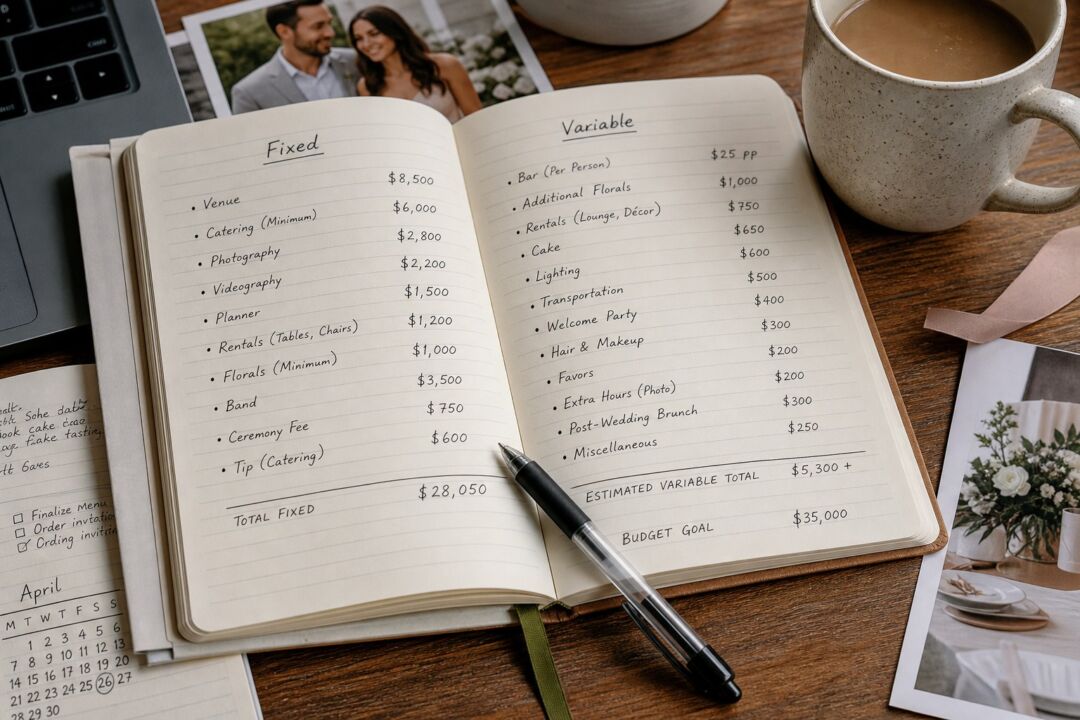
For an Australian couple, the 2026 Easy Weddings report gives catering at $6,177 AUD and favors at $678 AUD. Those two lines add to $6,855 AUD. The same report records an average of 85 guests actually invited, against the 108 couples expect when they start planning. Spread across 85 guests, those two categories alone come to roughly $81 per guest, before beverages and rental are added. Run the same addition using your own vendor quotes and you will have a number specific to your wedding.
The same method works in any market. Build the two columns from your actual quotes, and the variable column divided by your guest count becomes a reliable figure for scenario planning.
Where stationery fits into the per-guest math
Stationery scales with your guest list, but not on a one-to-one basis. Invitations are sent per household, not per person. A couple attending together receives one invitation suite. A family of four receives one. A solo guest receives one.
An 85-guest wedding typically requires somewhere between 35 and 47 invitation suites, depending on how many guests are solo attendees versus couples or families. When you cut 20 guests who happen to share a household with other invited guests, your stationery count does not change at all. When you cut 20 solo guests from different households, you save 20 suites.
This makes stationery a compressed version of the variable-cost calculation. More guests generally means more suites, but the scaling slope is flatter than catering or chair rental. If you are planning your invitation suite now or comparing print methods, the wedding invitations browse page shows current designs across all print styles. If the per-guest number is the constraint, cheap wedding invitations hold the suite cost down while the guest count moves.
What your per-guest figure should and should not tell you
The per-guest number is a planning tool, not a general benchmark. Saying your wedding costs $350 per guest means very little without knowing how much of that figure is fixed (photography, venue room fee, dress) versus truly variable (food, bar, rental).
Two weddings with identical per-guest averages can respond very differently to headcount changes. A wedding with a high flat venue fee and premium photography has a low variable cost per guest; cutting 10 people off the list saves almost nothing. A wedding with a high per-head catering and beverage package and low fixed costs saves considerably more per cut.
Separating costs into those two columns is the only way to know which situation you are in before the difficult guest-list conversations begin.
Budget invitation designs on real stock. The $5 sample pack puts seven designs and an envelope in your hands, including real foil and letterpress, so you judge paper and finish off a screen.
Frequently asked questions
How much does each extra guest actually add to a wedding budget?
Only the variable portion of your budget rises with each guest. For an Australian couple using 2026 industry figures, catering and favors alone add roughly $73 to $81 per additional guest, working from the 2026 Easy Weddings category averages spread across that report’s average guest count of 85. Adding beverages and table and chair rental brings the true per-guest variable cost higher. The exact figure depends on your vendor quotes, your menu format, and your bar arrangements. Get a per-head quote from your caterer and rental company, then add those two numbers together for a reliable working figure.
What is the difference between average cost per guest and true cost per guest?
The average cost per guest is total wedding budget divided by guest count. It blends fixed and variable costs, so it does not shift meaningfully when you add or remove 10 people. The true cost per guest is the sum of only your variable costs (catering, bar, rental, favors, stationery) divided by guest count. That is the number that falls when the list shrinks.
Does a smaller guest list always lead to a lower total cost?
Not automatically. Your fixed costs, including photography, the venue room fee, the celebrant, music, and attire, stay the same regardless of attendance. A 40-guest wedding with expensive photography and a premium venue can cost more in total than a 120-guest wedding with mid-range vendors across the board. Guest count directly affects only the variable portion of the budget.
How much do wedding planners and coordinators charge?
Fees vary significantly by market and scope. Most planners charge either a flat project fee or a percentage of the total wedding budget, commonly 10 to 20 percent. In both Australia and the US, three local quotes from planners working at your scale and venue type give you a far more reliable range than any national average.
What does the average wedding dress cost?
The Easy Weddings 2026 Australian Wedding Industry Report records an average dress cost of $2,591 AUD, with designer gowns averaging around $4,475 AUD. Wedding dress cost is a fixed budget item: it does not change based on how many guests attend.
How does trimming the guest list actually reduce the total cost?
When you remove guests, only your variable costs decrease. Photography, the celebrant, music, venue room rental, and attire stay the same. For every person cut, you save the per-head catering and bar rate, the per-seat rental charge, and a proportional share of favor spend. You may also save one invitation suite per household no longer on the list. Total your variable costs from vendor quotes, divide by current guest count, and multiply by the number you plan to cut to get a concrete saving estimate.