
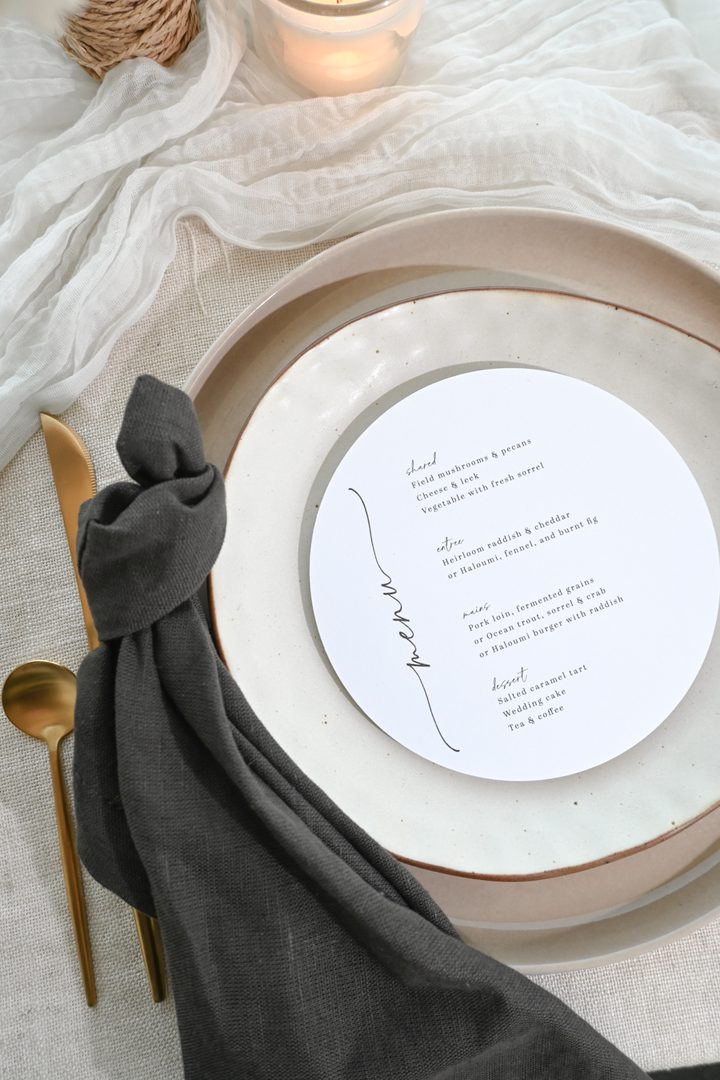
- Your service style (plated, family-style, buffet) directly shapes how much text goes on your menu card.
- Plated menus need choice language; family-style menus need category headers; buffets often skip a menu card entirely.
- Cocktail hour menus are a separate print piece and work best as a small insert or display card.
- Dietary icons or short parenthetical notes (GF, V, N) keep allergen information clean without cluttering the design.
- Elegant dish descriptions follow a simple rule: lead with the protein or centrepiece ingredient, then add two or three supporting details.
- Format choices (A5, DL, arch) and print finish (digital, flat foil, letterpress) should match your overall stationery suite.
How Service Style Affects Your Printed Menu Card
The first thing your menu card needs to communicate is what guests can expect from the meal. That job changes completely depending on how the food is being served.Plated dinners
A plated dinner is the most formal service style, where each course is brought to guests individually. If guests pre-select their entree, your menu card needs to reflect their choice or remind them what is coming. If the kitchen is preparing a single plated option for everyone, the card lists the full progression of courses. Plated menus are the most text-heavy format. A typical three-course plated card includes a header (“Dinner”), the starter, the entree (with one or two alternatives listed), dessert, and sometimes a note about dietary options.Family-style service
Family-style brings dishes to the table in shared platters for guests to pass around. Because everyone eats the same food, your menu card lists the dishes by category rather than by course. This style suits rustic, relaxed, or Mediterranean-inspired receptions. Family-style cards are often shorter and can feel more relaxed in tone. You might list dishes under headings like “Sides,” “Mains,” and “Desserts” rather than formal course names.Buffet service
Buffet receptions sometimes skip a printed menu card at each place setting altogether, relying instead on signage at the buffet station. If you do want a printed card, it works best as a short highlight list of the main dishes rather than a complete inventory of every item on the table.Cocktail reception and grazing tables
Some receptions are styled around a cocktail or grazing format with no sit-down dinner. If this is your format, a small cocktail menu card or a display card at the grazing table is the right choice, and a per-guest printed card is optional.| Service Style | Menu Card Format | Typical Length |
|---|---|---|
| Plated (pre-selected) | Per-guest, shows their selection | 3-5 lines |
| Plated (single option) | Per-guest, full course list | 4-8 lines |
| Family-style | Per-guest or table card | 4-10 lines with category headers |
| Buffet | Optional; display card or station signage | Short highlight list |
| Cocktail/grazing | Display card at table; per-guest optional | 3-6 lines |
Plated Dinner Menu Wording and Layout
Plated dinners give you the most structured framework for a printed menu card. Each course has a name, and the card walks guests through the meal from beginning to end.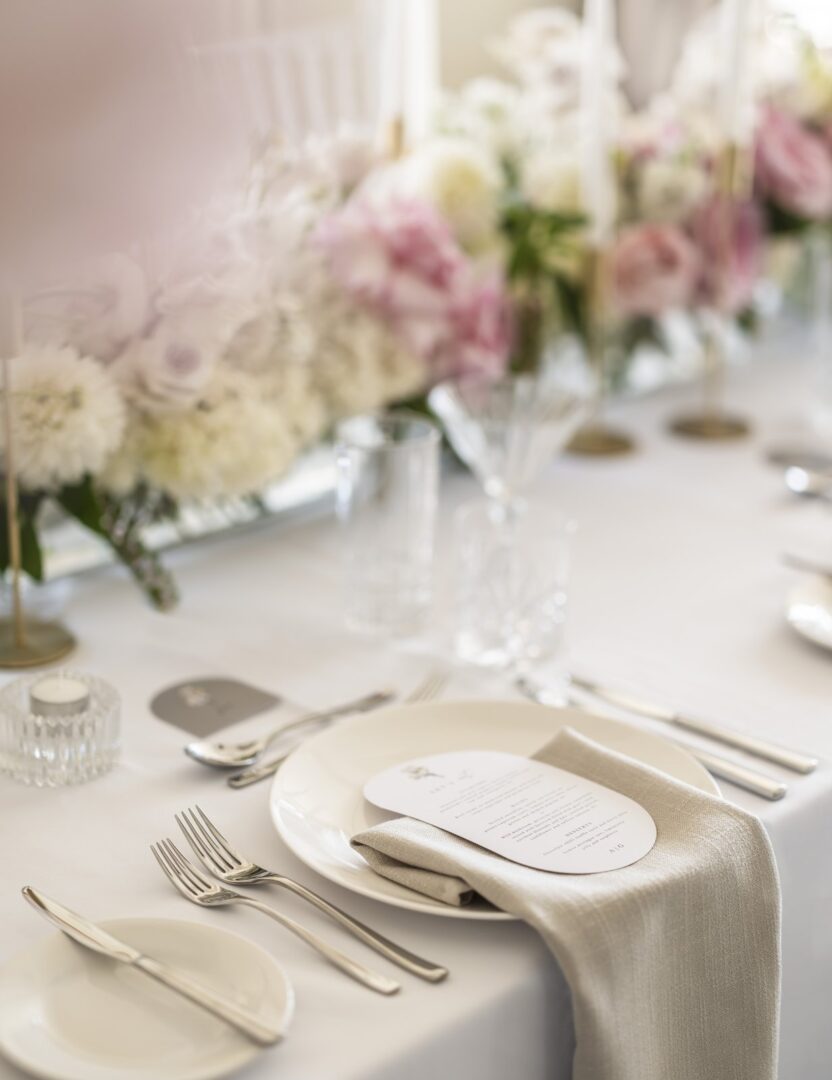

Standard plated menu card structure
A well-laid-out plated dinner menu follows this order from top to bottom:1. Header
A single word works best: “Dinner,” “Menu,” or “Reception Dinner.” Some couples add the wedding date below the header for a keepsake quality.2. First course / starter
One or two lines describing the dish. If there is an amuse-bouche or pre-starter, list it here with a lighter visual weight (a smaller font size or italics).3. Second course (if applicable)
A soup or salad course, described in one line.4. Entree
This is the longest section on most cards. If guests pre-selected their entree, consider printing individual cards with only their choice marked or listed. If the meal offers a choice on the night, list all options with a brief description and a checkbox or circle for guests to mark.5. Dessert
One line is usually enough. If you have a dessert bar or multiple options, list them briefly.6. Dietary note
A short line at the bottom: “Please inform your server of any dietary requirements” or a small key for dietary icons. Here are three sample wording structures for a plated menu card:Starter
Heirloom tomato bruschetta, whipped ricotta, micro basil
Entree
Herb-crusted chicken breast, roasted garlic mash, broccolini, jus
or
Seared Atlantic salmon, lemon caper butter, charred asparagus
Dessert
Warm chocolate fondant, vanilla bean ice cream
GF and VG options available. Please speak with your server.
Saturday, June 14, 2026
Amuse-bouche
Cucumber gazpacho, dill cream
Entree
Pan-seared duck breast, cherry jus, celery root puree, seasonal greens
Dessert
Lemon tart, candied zest, Chantilly cream
Family-Style Menu Cards
Family-style menus have a looser, more generous feel on the card. Rather than listing a single protein per guest, you are describing a spread. Headers by dish category work better than course numbers.To Share
Roasted broccolini, almonds, lemon
Charred corn salad, cotija, lime crema
Focaccia, whipped cultured butter
Mains
Slow-roasted lamb shoulder, salsa verde
Whole roasted cauliflower, tahini, pomegranate
Dessert
Pavlova, summer berries, whipped cream
Petit fours
Salads
Tuscan bread salad
Grilled peach, prosciutto, balsamic
From the Kitchen
Beef short rib, gremolata
Crispy skin snapper, herb oil
Roasted sweet potato, brown butter, sage
Sweets
Sticky date pudding
Seasonal fruit platter
Cocktail Hour Menu Card Ideas
Cocktail hour runs for 30-60 minutes while the wedding party completes photos. Guests are grazing, not seated, so the food is passed around or displayed on stations. Your cocktail hour menu card plays a supporting role: it tells guests what is on offer without demanding much attention.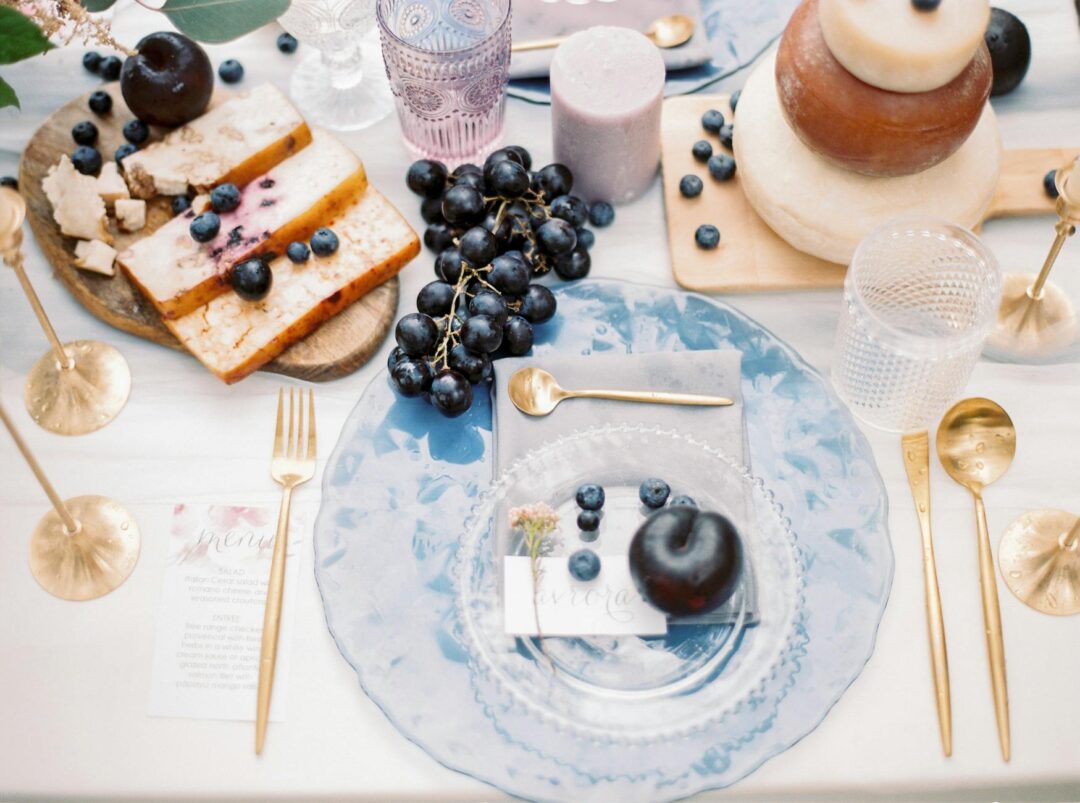
Formats that work for cocktail hour
Small insert card
A DL or half-A5 insert tucked into the place setting envelope, or placed on the table when guests are seated for dinner. Lists 3-6 canapes in brief.Display card at the station
A small standing card or flat card at each canape station naming the item. These are typically printed on thicker stock so they stand up.Combined cocktail and dinner menu
Some couples prefer a single card that covers both the cocktail hour and the reception dinner, with a dividing line or typographic break between the two sections. Sample cocktail hour wording:Passed Canapes
Smoked salmon blini, creme fraiche, chives
Prosciutto crostini, fig jam, pecorino
Mushroom arancini, truffle aioli
Caprese skewers, basil oil
On Arrival
Selection of house wines, craft beer, sparkling water
Signature cocktail: Elderflower Spritz
How to List Dietary Options and Allergens on a Menu Card
Dietary requirements are one of the most common last-minute stresses in wedding planning. Deciding upfront how your printed card handles them saves confusion on the day.Three approaches
1. Icon or abbreviation key
List a small key at the bottom of the card: GF (gluten free), V (vegetarian), VG (vegan), N (contains nuts), DF (dairy free). Then mark each dish with the relevant symbol. This approach keeps the card clean and requires no extra explanation.2. Parenthetical inline notes
Add brief parenthetical notes after each dish name: “Herb-crusted chicken (GF, DF).” Clean and self-explanatory without a separate key.3. Single footer note
Skip dish-by-dish labeling and add a footer: “Gluten-free and vegan options are available for all courses. Please inform your server.” This is the simplest approach and works well when the caterer can adapt almost any dish on request.| Approach | Best For | Visual Impact |
|---|---|---|
| Icon/abbreviation key | Multiple dishes with varying restrictions | Low clutter if key is small |
| Inline parenthetical | Short menus with a few flagged dishes | Inline, no extra block |
| Footer note | Flexible caterers; shorter menus | Cleanest design overall |
Elegant Dish Description Tips (How Restaurants Do It)
Fine-dining menus follow a consistent formula for describing dishes, and it translates well to wedding menu cards. The goal is to sound considered and appetizing without becoming a wall of adjectives.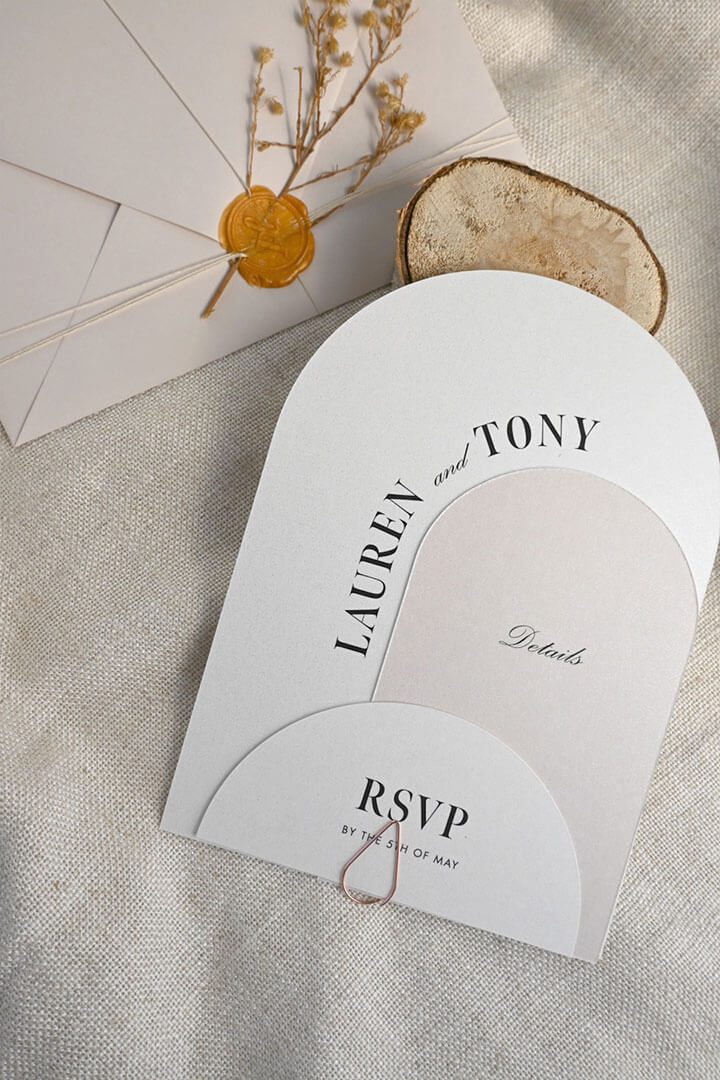
The rule: lead with the main ingredient, then add two or three supporting details
Rather than describing every element on the plate, pick the two or three that define the dish. Think of the protein or the centerpiece vegetable first, then the sauce or preparation method, then one textural or aromatic detail. Flat description: “Chicken served with potato and vegetables” Elevated version: “Free-range chicken breast, roasted garlic mash, broccolini, tarragon jus”Technique over adjective
Words like “pan-seared,” “slow-braised,” “charred,” and “whipped” do more work than “delicious,” “fresh,” or “tender.” They describe how the food was prepared, which is more informative and more elegant.Avoid overloading
A dish description on a menu card should be one line, two at most. If you need more words than that, simplify the dish description rather than expanding it.Capitalize consistently
Pick one convention and stick to it: either capitalize all dish names (Pan-Seared Salmon) or use sentence case for everything (Pan-seared salmon). Mixing conventions looks inconsistent in print.Skip the origin story
Save the “locally sourced from our family farm” copy for the venue website. On the card itself, ingredient provenance rarely fits cleanly and can feel out of place. For a detailed walkthrough of writing every section of your menu card, including fonts, line breaks, and what to do if your caterer changes the menu last minute, see our guide on how to write a wedding menu card.Menu Card Design: Font, Paper, and Format Choices
Once you have your menu wording locked in, the printed card itself needs to match the rest of your stationery suite in format, paper weight, and finish.Choosing a format
A5 (5.8″ x 8.3″ / 148mm x 210mm)
The most common format for full sit-down dinner menus. Enough space for three courses plus a dietary note without crowding. Works well as a standalone card placed on a charger plate or tucked inside a napkin fold.DL (3.9″ x 8.3″ / 99mm x 210mm)
A taller, narrower card. Suits menus with fewer courses or a minimalist layout where white space is part of the design. Often used for cocktail hour inserts.Arch or custom die-cut
Arch-shaped menu cards have become a popular choice for garden party and boho-luxe weddings. They add visual interest when placed on a plate without requiring a frame or stand.Choosing a print finish
Your menu card finish should align with your invitation suite. If you chose letterpress invitations, a letterpress menu card (printed on 300gsm or 600gsm Wild Cotton paper) creates a cohesive, premium feel. If your invitations used flat foil, carrying that metallic detail through to the menus ties the whole suite together. Available print finishes for Paperlust wedding menu cards:| Finish | Look and Feel | Best Pairing |
|---|---|---|
| Digital print | Full color, crisp, most affordable | Modern, colorful, or photo-forward suites |
| Flat foil | Mirror-bright metallic; no deboss | Glamorous, gold-accented, Art Deco suites |
| Letterpress | Debossed impression into thick cotton paper | Classic, romantic, heritage, or tactile suites |
| Metallic print | Subtle gold pigment, no foil | Understated elegance, natural-tone suites |
| White ink | White on dark or colored stock | Moody, dark-palette, or dramatic receptions |
Ordering with your full stationery suite
Paperlust offers a 15% discount when you order three or more card types together. Ordering your menu cards at the same time as your invitations and place cards ensures consistent paper stock and color matching across the full suite. Browse the full range at wedding menu cards, or explore the complete wedding stationery collection to plan your suite.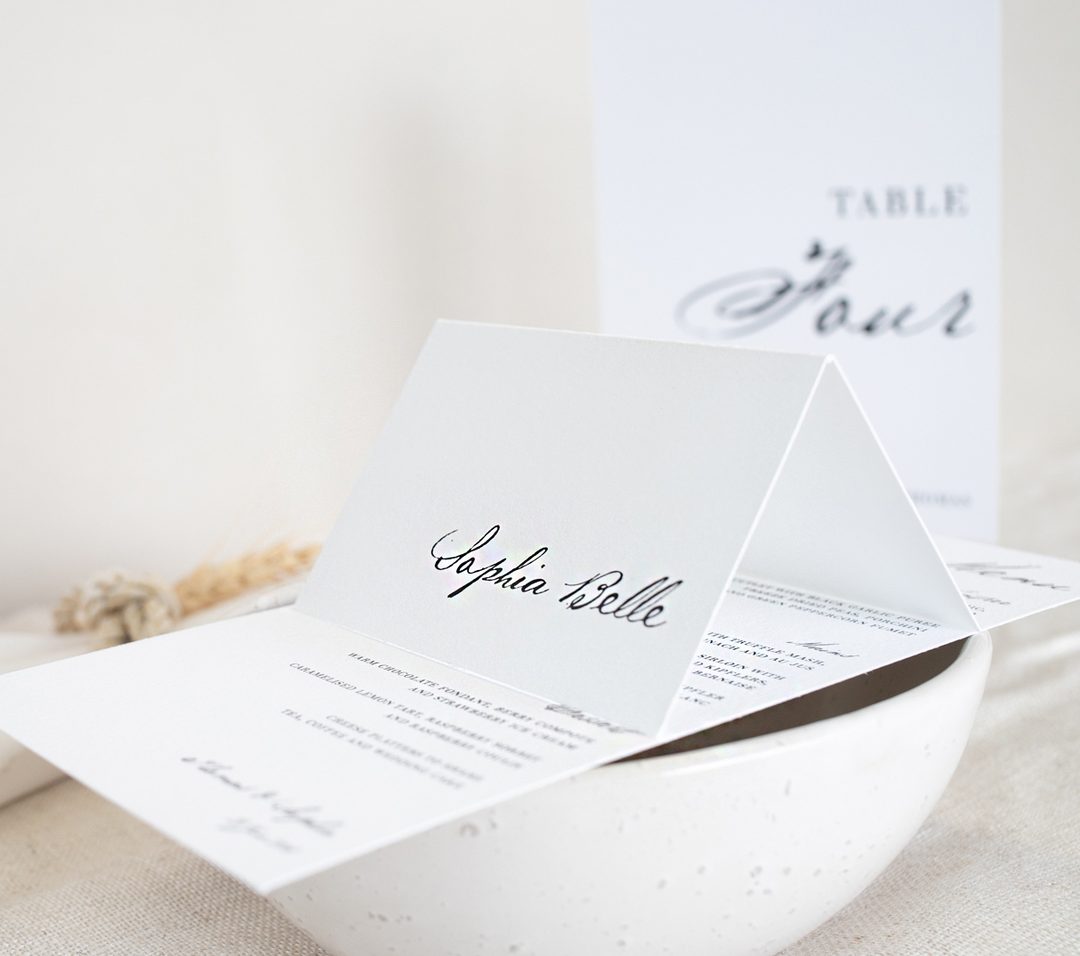
Frequently Asked Questions
Do I need a printed menu card at every place setting?
It depends on your service style. Plated dinners almost always benefit from a per-guest menu card. Family-style and buffet receptions can use a single table card or none at all if you prefer to let the food speak for itself.
When should I finalize my wedding menu for printing?
Finalize your menu wording at least four weeks before the wedding to allow time for design, proofing, and printing. Paperlust delivers your designer proof within 1-2 business days of placing your order, so the timeline is manageable as long as the catering menu is locked in.
What size should a wedding menu card be?
A5 (148mm x 210mm / 5.8″ x 8.3″) is the most common size for a full dinner menu. DL (99mm x 210mm) is narrower and suits shorter menus or cocktail hour inserts. Arch-shaped formats are a popular modern alternative to standard rectangles.
How many courses should be on a wedding dinner menu?
Most receptions serve two or three courses: a starter, an entree, and dessert. A four-course menu adds a soup or salad between the starter and entree. Five-course menus are rare outside formal or black-tie settings and typically signal a longer, sit-down reception.
How do I list dietary options without cluttering the card?
Use a brief abbreviation key at the bottom of the card (GF, V, VG, DF, N) and add the relevant symbol after each dish name. Alternatively, a single footer line stating that dietary options are available and guests should inform their server keeps the card visually clean.
Can I combine my cocktail hour menu and dinner menu on one card?
Yes. A dividing line or typographic break between the two sections keeps them visually distinct. This works best when the cocktail hour menu is short, typically three to five canapes, so the card does not become overcrowded.
What print finish works best for wedding menu cards?
It depends on your suite. Flat foil creates a mirror-bright metallic accent that pairs beautifully with formal or glamorous receptions. Letterpress on thick Wild Cotton paper suits romantic or heritage-style weddings. Digital print is the most versatile and affordable option for full-color or photo-forward designs.
Should menu card wording match my invitation wording style?
Yes, in tone at least. If your invitations used formal language (“the honour of your presence”), your menu card should follow suit with formal dish descriptions. Casual invitations pair naturally with a more relaxed menu card tone. The visual design should also coordinate in font, color, and finish.
What is the difference between flat foil and letterpress for menu cards?
Flat foil applies a mirror-bright metallic layer to the paper surface with no impression, so the card stays completely flat. Letterpress presses type and artwork into thick cotton paper, creating a tactile debossed effect you can feel. Flat foil is faster to produce; letterpress takes longer and is printed on heavier 300gsm or 600gsm stock.
How do I order matching menu cards with my invitation suite?
Browse wedding menu cards on Paperlust and filter by the same print method you chose for your invitations. Ordering three or more card types together qualifies for a 15% discount. A professional designer is assigned to your order and will ensure the suite elements stay consistent.
Settled on a menu? See it printed beautifully. Browse our menu card designs, or order a $5 sample pack to feel the stock and finish before you order.
Browse Menu CardsOrder $5 Sample PackReady to design your wedding menu cards?
Browse 500+ exclusive designs across digital, flat foil, letterpress, and more. Free white envelopes included. Designer proof in 1-2 business days.
Shop Wedding Menu CardsExplore Full Stationery Suite