
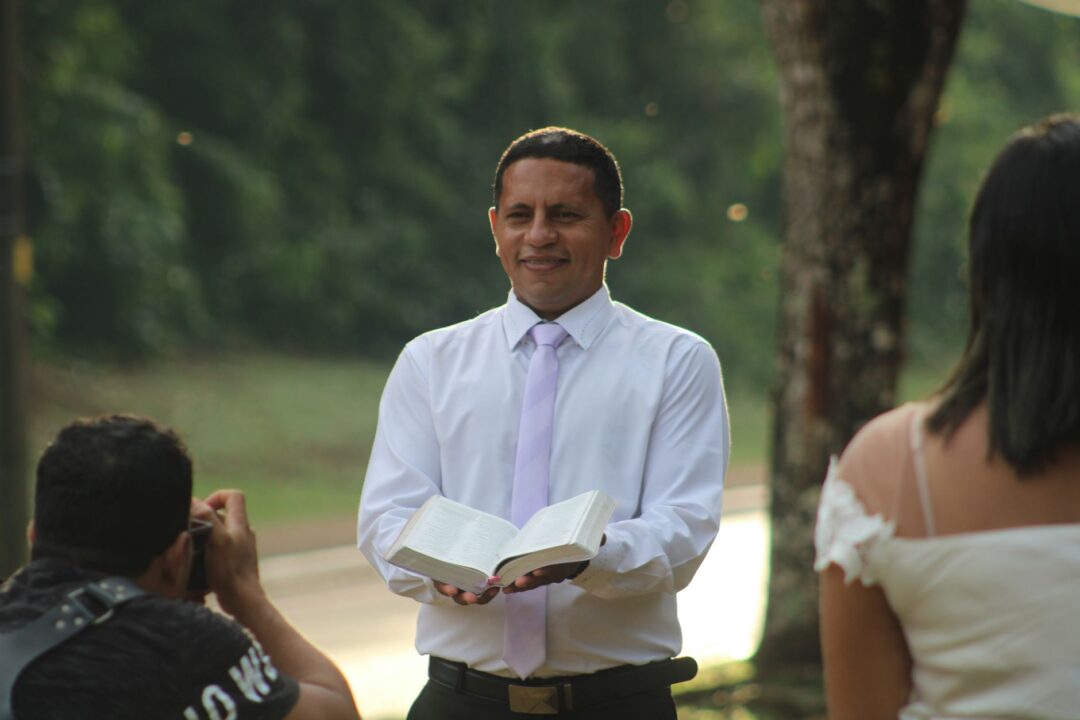
In the US, four categories of people have the legal authority to officiate a wedding: ordained clergy, civil officials (judges and their counterparts), online-ordained ministers, and, in a small number of states, notaries public. The exact rules vary by state and often by county, so confirming with your local county clerk before the ceremony is always the right move.
This guide covers each category in plain language, maps out which states have extra steps or restrictions, and explains what your officiant must actually do to make your marriage legally binding. If a friend or family member is leading your ceremony, bookmark this page.
For the step-by-step process of getting ordained, see our guide to how to become a wedding officiant. If you’re weighing the cost of hiring a professional, start with our wedding officiant cost guide.
- Four legal categories: ordained clergy, civil officials, online-ordained ministers, and (in some states) notaries public
- State law governs everything: there is no federal officiant registry; rules vary by state and are enforced at the county level
- Online ordination is widely accepted in most states, but Tennessee restricts it, Virginia has significant limitations, and several states require pre-ceremony registration
- Your officiant must sign the marriage license after the ceremony, and the license must be returned to the county clerk within the state’s filing deadline
- Self-solemnization (marrying without any officiant) is available in Colorado, Pennsylvania, and a handful of other states
The four types of people who can legally officiate a wedding
1. Ordained clergy
Priests, pastors, ministers, rabbis, imams, deacons, and other religious leaders derive their authority from their ordination within a recognized religious organization. In virtually every US state, ordained clergy can solemnize marriages statewide. No separate registration step is required, because the ordination itself is the credential. The ceremony does not have to take place inside a house of worship; the legal authority travels with the person.
One detail to confirm: the officiant must hold active standing in their religious organization. A retired or defrocked clergy member may not retain legal officiant status, depending on the state.
2. Civil officials: judges, justices of the peace, and magistrates
Active, retired, and former judges at the state and federal level are authorized in all 50 states to perform marriages. Depending on the state, this group can also include:
- Justices of the peace (common in Texas and several southern states)
- Magistrates
- Court clerks or county clerks
- Mayors (in some jurisdictions)
Civil officials are a reliable choice for couples who want a short, legally airtight ceremony with no religious component and no need to coordinate a third party’s credentials.
3. Online-ordained ministers
This is the route most couples take when they want a friend or family member to lead the ceremony. Organizations like the American Marriage Ministries (AMM) and the Universal Life Church (ULC) offer free or low-cost online ordinations that are legally recognized in the majority of US states.
The key point: it is the state’s law, and often the county clerk’s interpretation of it, that determines whether that ordination is valid. Not the ordination organization’s assurance that it is. See the state-by-state section below for the details that matter.
4. Notary publics
A small number of states authorize notaries public to solemnize marriages. Florida, Maine, Nevada, and South Carolina are among the most commonly cited. This is the exception rather than the rule; in most states, a notary commission carries no authority to perform a wedding ceremony.
If you’re considering a notary officiant, confirm eligibility with the state’s notary regulatory office first, because the rules on which type of notary qualifies can be narrow.
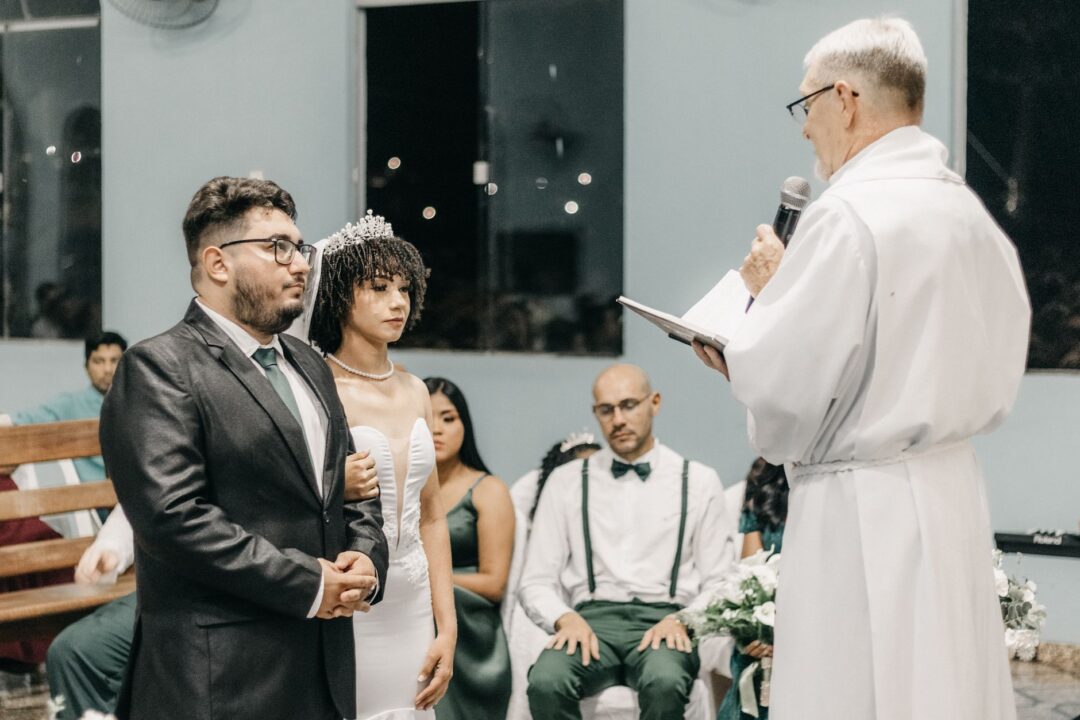

Can a friend or family member officiate your wedding?
Yes, in most states, and it has become one of the most popular choices for modern couples who want a ceremony that truly reflects their relationship. The path looks like this:
- Your friend or family member completes an online ordination (free through AMM or ULC).
- They check whether your county requires pre-ceremony registration of that ordination with the county clerk.
- If registration is required, they complete it before the wedding day.
- On the day, they lead the ceremony, then sign the marriage license alongside both spouses and any required witnesses.
- The signed license is returned to the county clerk within the state’s filing deadline, typically 3 to 30 days.
The full how-to, including the paperwork each ordination organization requires, is covered in our how to become a wedding officiant guide. For writing the ceremony together, see our wedding officiant script guide, which includes full copy-paste ceremony templates and vow options.
Online ordination by state: what to know before you commit
Online ordination is legally recognized in the vast majority of US states. But a handful of states either restrict it outright or require additional steps. The table below covers the states most commonly searched by couples planning their ceremonies.
| State | Online Ordination | Registration Required? | Notes |
|---|---|---|---|
| California | Accepted | No | Verify locally; some counties have specific license procedures |
| Texas | Accepted | No | Justices of the peace are also widely available county by county |
| Florida | Accepted | No | Notaries public may also legally officiate in Florida |
| New York (outside NYC) | Accepted | No | Standard statewide recognition |
| New York City | Accepted after registration | Yes | Officiant must register with the NYC City Clerk before the ceremony; license must be returned within 5 days |
| Colorado | Accepted | No | Also allows self-solemnization; no officiant required at all (see below) |
| Georgia | Accepted | No | Probate court issues licenses; verify license requirements locally |
| Nevada | Accepted | No | Notaries public may also legally officiate in Nevada |
| Arizona | Accepted | No | Notaries public may also officiate in Arizona |
| Delaware | Accepted after registration | Yes | Officiant must register with the Orphans’ Court before the ceremony |
| North Carolina | Accepted after registration | Yes | Register with the Register of Deeds in the county where the ceremony takes place |
| Tennessee | Restricted | N/A | A 2019 state law prohibits online-ordained ministers from performing legally recognized marriages; use ordained clergy or a civil official |
| Virginia | Restricted | N/A | Virginia law generally requires officiants to be ordained through a recognized church or religious organization; online-only credentials are frequently insufficient. Confirm with the county circuit court clerk |
| Pennsylvania | Varies by county | Verify locally | Some counties accept online ordination; others do not. Self-solemnization is also available (see below) |
The universal rule: contact the county clerk’s office for the county where the ceremony will take place, not just the state’s general marriage office. Marriage law is administered at the county level, and the same state can have counties with different practices.

Self-solemnization: marrying without any officiant
A small number of states allow what is called self-solemnization, also known as a self-uniting marriage. In these states, the couple can legally marry without a third-party officiant. They sign the marriage license themselves, with any required witnesses, and file it with the county clerk.
Colorado is the most permissive option. No witnesses are required, no officiant is required, and there is no waiting period after the license is issued. Once you have your marriage license, you can hold a private ceremony and sign it yourselves. This makes Colorado a popular choice for elopements and intimate destination weddings.
Pennsylvania offers a self-uniting marriage license rooted in the Quaker tradition but now available to couples of any background. Two witness signatures are typically required on the license.
Other states including Wisconsin, Illinois, and a handful of others allow some form of self-solemnization, but conditions vary. Kansas, Maine, and Nevada have historically limited the option to couples who practice a religious tradition that does not use officiants. Always check current requirements with the county clerk directly before planning around this option.
Self-solemnization is a meaningful choice for couples who want a purely private ceremony with no third party involved. It also solves a practical problem for destination weddings in states where finding a qualified local officiant is complicated.

What your officiant must do to make the marriage legally binding
Regardless of which category your officiant falls into, the same requirements apply across every state:
Hold valid authority on the ceremony date
Ordination, civil appointment, or state registration must be active on the day of the ceremony. If a friend’s online ordination lapses, or a judge retires in a state that distinguishes between active and retired officials, there could be an issue with the license.
Perform the ceremony in person
Both spouses must be present. Most states require at least one witness, some require two. Proxy marriages (one partner represented by a stand-in) are only permitted in a very small number of states.
Sign the marriage license
This is the most important step. The officiant’s signature is what converts the license from a permit to a legal record of marriage. The license also typically requires the officiant to record their legal name, address, and the nature of their authority.
Return the signed license to the county clerk
Filing deadlines range from 3 days (in some states) to 30 days after the ceremony. Missing the deadline does not automatically void the marriage in most states, but it does create a correction process with the clerk, which can delay any official documentation you need.
An invalid officiant, or a license that is never filed, can mean the marriage is not legally recognized. If there is any doubt about your state’s requirements, a brief consultation with a family law attorney is worth the cost.
How to choose the right type of officiant for your wedding
The choice usually comes down to three things: your state and county rules, the tone you want for the ceremony, and whether you want someone with a personal connection to you.
Traditional religious ceremony: an ordained clergy member from your faith community is the most legally straightforward choice in every US state. No extra steps, no county-level uncertainty.
Civil ceremony: a local judge, justice of the peace, or magistrate. Short, legally airtight, and often available at the courthouse on short notice. A good option if you want to separate the legal formality from a larger celebration.
Personalized ceremony led by someone you know: get your friend or family member ordained online, confirm the rules for your county, handle any required registration, and build the ceremony together. Our how to become a wedding officiant guide covers every step of that process. Once you have your officiant sorted, our officiant script examples include full ceremony templates and vow options you can customize.
On cost: professional officiants typically charge $200 to $600 for a full ceremony, with variation by region and experience level. Our wedding officiant cost guide has the full breakdown. Online ordination for a friend is generally free.
Locking in your officiant is one of the last big planning milestones before your date is truly set. Once you’re there, your save-the-dates should go out, typically 6 to 8 months before the wedding (or earlier for destination events). If you’re still working through the full vendor budget, our average wedding cost guide and wedding budget breakdown map out every line item.
FAQ
Who can legally officiate a wedding in the United States?
The four main categories are ordained clergy (priests, ministers, rabbis, imams, and other religious leaders recognized by their faith organization), civil officials (judges, justices of the peace, magistrates, and in some states clerks or mayors), online-ordained ministers (friends or family who have completed ordination through organizations like the American Marriage Ministries or Universal Life Church), and, in a small number of states, notaries public. Exact eligibility is set by state law and administered at the county level.
Can anyone get ordained online to officiate a wedding?
In most states, yes. Free online ordination through the American Marriage Ministries or the Universal Life Church is legally recognized in the majority of US states. However, Tennessee prohibits it outright under a 2019 state law, Virginia has significant restrictions, and several states require the ordained person to pre-register with a county or court office before the ceremony. Always verify the specific requirements in the county where the wedding will take place.
Do you have to be religious to legally officiate a wedding?
No. Online-ordained ministers, civil officials, and notaries (in qualifying states) all provide a non-religious path to a legally valid marriage ceremony. A friend ordained online can lead a fully secular, personalized ceremony from start to finish.
What is self-solemnization and which states allow it?
Self-solemnization means the couple marries without any third-party officiant. They sign the marriage license themselves and file it with the county clerk. Colorado allows this for any couple, with no witnesses required. Pennsylvania allows it through a self-uniting marriage license (two witnesses typically required). Wisconsin, Illinois, and a few other states permit it with additional conditions. Most states do not allow self-solemnization.
What makes a marriage ceremony legally binding?
Three things must happen: a legally authorized officiant must perform the ceremony, both spouses must be present (along with any state-required witnesses), and the signed marriage license must be returned to the county clerk within the state’s filing deadline. Missing any of these steps can mean the marriage is not legally recognized.
Can a notary public officiate a wedding?
In most states, no. Florida, Maine, Nevada, South Carolina, and Arizona are among the states that specifically authorize notaries to solemnize marriages. If you plan to use a notary, confirm their authorization with the state’s notary regulatory office, because eligibility rules can be specific about which type of notary commission qualifies.
Can a family member officiate my wedding?
Yes, in most states. Your family member would need to complete an online ordination (free through AMM or ULC), confirm that ordination is recognized in the county where the ceremony will take place, complete any required pre-ceremony registration, and sign the marriage license after the ceremony. See our full how to become a wedding officiant guide for every step of the process.
Sorting your wedding stationery?
Before you commit to a look, order a $5 sample pack from Paperlust and see the paper stocks, foil, and print finishes in your own hands. It is the surest way to lock in invitations you love without guessing from a screen.