


Your wedding day is twelve hours of joy, logistics, and moments you will remember for the rest of your life, and without a solid timeline, even the most beautifully planned celebration can unravel fast. A written, vendor-shared wedding day schedule is the single most effective tool for keeping photographers, caterers, DJs, florists, and family all moving in the same direction, so you can actually be present for every moment instead of watching the clock.
This guide gives you everything: a complete hour-by-hour template for a ceremony starting at 4pm, side-by-side first look vs. no first look schedules, timeline variations for morning, brunch, and destination weddings, golden hour photography math by month, a vendor coordination breakdown, and 12+ frequently asked questions answered by professionals. Whether you are planning a black-tie ballroom reception or an intimate backyard ceremony, these frameworks adapt to your day.
- A typical wedding day spans 10-12 hours from hair and makeup through the final send-off.
- 8+ vendors need a copy of your timeline, photographer, videographer, caterer, DJ, coordinator, florist, hair and makeup team, and transportation.
- A first look saves 45-60 minutes of portrait time post-ceremony and gives you more cocktail hour freedom.
- Build in 15 minutes of buffer per major block, speeches always run long, guests always arrive late, and lipstick always needs touching up.
- Golden hour (the 60 minutes before sunset) is the single best photo window, schedule portraits to end there if at all possible.
- Share your final timeline with all vendors at least 2 weeks before the wedding and confirm receipt from each one.
Why Build a Wedding Day Timeline
Most couples spend months choosing venues, flowers, and invitation suites, and then hand a rough schedule to their photographer the week before the wedding hoping for the best. That gap between planning and execution is where most wedding-day stress is born. A detailed, written timeline solves five major problems at once.
Vendor coordination without the chaos
On a wedding day, your vendors are working from separate locations, on separate schedules, and with separate assumptions about timing. Your florist may expect to deliver centerpieces at 2pm while the venue is still locked for a competitor event. Your hair and makeup team may have booked a 6pm appointment elsewhere assuming you finish at 4pm. Without a shared written document, these collisions are invisible until they happen, and by then, you are in a wedding dress with nowhere to pivot.
A timeline hands every vendor a single source of truth. When everyone operates from the same document, you eliminate the phone-tag loop on the morning of your wedding and give yourself back the mental space to actually enjoy getting ready.
Protecting your photography windows
Light is the photographer’s currency, and it has a time limit. The golden hour, the 45-60 minutes before sunset, produces the warmest, most flattering images of any moment in the day. Miss it because you ran 90 minutes behind on family formals, and no amount of post-production will bring it back. A timeline that is built backwards from the sunset time (see the Photography section below) locks that window in and structures the rest of the day around it.
Guest experience and hospitality
Guests who arrive at a ceremony that starts 40 minutes late and then wait at a venue with no drinks and no entertainment become restless fast. A well-structured timeline keeps your guests fed, watered, entertained, and cared for at every transition, because each handoff between ceremony, cocktail hour, and reception is explicitly planned and staffed.
Stress reduction for the couple
Decision fatigue on a wedding day is real. When you do not have a timeline, every moment requires a judgment call, is it time to do the first dance yet? Should we cut the cake before or after the parent dances? A timeline makes those decisions in advance, so your only job on the day is to show up and be present. You hand the schedule to your coordinator (or a trusted family member), and they handle the logistics.
A backup plan built in
A timeline is also your contingency document. When it rains at 3pm for an outdoor ceremony, your coordinator can see in seconds which portions can shift indoors, how much time each move takes, and where in the schedule there is flex. Without a written plan, you are improvising in a wedding dress under a canopy, a position no couple should have to be in.
The Standard Wedding Day Timeline Template
The most common wedding format in the US is a 4pm or 5pm ceremony with a reception running through 10pm or midnight. The template below is built around a 4pm ceremony start with getting ready beginning at 8am. Adjust every block proportionally for earlier or later start times.
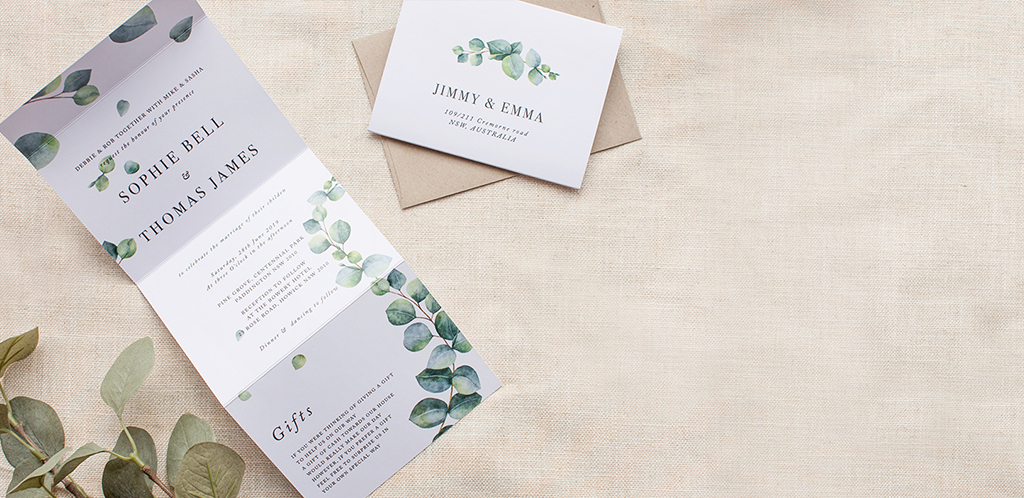
A custom wedding program walks guests through your ceremony, the order of speakers, and the receptions running order. Browse program options.

| Time | Block | Notes |
|---|---|---|
| 8:00 am | Hair & makeup begins (bride) | Bridesmaids rotate in order; bride always last so hair/makeup is freshest for photos |
| 8:30 am | Groom and groomsmen breakfast + dress | Photographer documents candid getting-ready shots; allow 2 hrs for suits and details |
| 9:30 am | Photographer arrives (bridal suite) | Detail shots: dress, shoes, jewelry, invitation suite, rings, florals |
| 10:00 am | Bridesmaids finishing hair/makeup | Second photographer documents groom suite simultaneously |
| 11:30 am | Bride’s hair and makeup complete | Buffer: 30 min before dress-on photos |
| 12:00 pm | Bride gets into dress | Photographer captures dress-on moment; mom, MOH present |
| 12:30 pm | Bridal party portraits | 45-60 min; full group + pairs + bride solo; bridesmaids fully ready by now |
| 1:30 pm | First look (if applicable) | Private reveal; 15-20 min emotional moment before couple portraits |
| 1:50 pm | Couple portraits (first look option) | 60-75 min; all major couple images completed before ceremony pressure |
| 3:00 pm | Family formals | 45-60 min; pre-circulate must-have shot list with photographer and key family members |
| 3:30 pm | Couple separated; rest and touch-ups | 30 min buffer before ceremony; eat a snack, hydrate, breathe |
| 3:30 pm | Guests begin arriving | Ushers in place; ceremony musicians/DJ playing prelude music |
| 4:00 pm | Ceremony begins | Processional starts on time; late guests seated by ushers during natural pause |
| 4:30 pm | Ceremony concludes | 20-30 min ceremony; kiss and recessional at ~4:25-4:30 |
| 4:30 – 5:30 pm | Cocktail hour | Guests enjoy drinks and appetizers; couple does post-ceremony portraits or family formals |
| 5:00 – 5:30 pm | Couple portraits (no first look option) | 45-60 min portrait window during cocktail hour; family formals immediately post-ceremony |
| 5:30 pm | Grand entrance into reception | DJ or emcee announces wedding party, then the couple; first dance immediately after |
| 5:45 pm | First dance | 3-4 min song; seamlessly into welcome toast by best man or MOH |
| 5:50 pm | Welcome toast + dinner blessing | 10-15 min total; signal caterer to begin dinner service immediately after |
| 6:05 pm | Dinner service | 60-90 min; couple eats first at sweetheart table; additional toasts during dinner |
| 6:30 – 7:00 pm | Golden hour portraits | 15-20 min slip-away with photographer; best light of the day (timing varies by month) |
| 7:30 pm | Parent dances | Mother-son, father-daughter (or chosen combination); 3-4 min each |
| 7:45 pm | Open dancing begins | DJ transitions from dinner to dance set; keep energy building |
| 8:30 pm | Cake cutting | 2-3 min ceremony; caterer begins slicing; keep dancing; avoid killing momentum with long pause |
| 9:00 pm | Any special events | Bouquet toss, garter ceremony, photo booth peak time, surprise performances |
| 9:45 pm | Couple’s last song announced | DJ gives 15-min warning; guests gather for send-off preparation |
| 10:00 pm | Send-off | Sparklers, confetti, flower petals, or ribbon wands; photographer captures exit |
| 10:00 pm – midnight | After-party (optional) | Separate venue or hotel bar; intimate group of closest friends; coordinate transportation |
Note: Sunset in June in the continental US averages around 8:15-8:30pm; in December it averages 4:30-5:00pm. Adjust the golden hour portrait window accordingly, see the Photography section for full month-by-month guidance.
First Look vs No First Look: Two Distinct Timelines
The single biggest structural decision in your wedding day timeline is whether or not to do a first look, a private, photographer-documented reveal before the ceremony. Each choice creates a fundamentally different schedule. Neither is objectively better; it comes down to what matters most to you as a couple.
| Factor | First Look | No First Look |
|---|---|---|
| Couple portraits | Completed pre-ceremony (60-75 min) | During cocktail hour (30-45 min) |
| Ceremony moment | Less “first”, couple already connected | True reveal; raw emotion at the altar |
| Cocktail hour presence | Couple can join guests (portraits done) | Couple mostly absent (portraits happening) |
| Family formals timing | Pre-ceremony or cocktail hour | Immediately post-ceremony (guests waiting) |
| Getting ready start time | 60-90 min earlier | Standard |
| Nerves and calm | Couple can privately connect; calmer ceremony walk | Traditional anticipation; ceremony is the reveal |
| Photo variety pre-ceremony | Wide and varied, no time pressure | Limited to bridal party; no couple shots |
| Best for | Couples who want more photo coverage and cocktail hour time together | Couples prioritizing the traditional “seeing each other for the first time” at the aisle |
If you choose no first look, plan for family formals to take place immediately after the ceremony while guests proceed to cocktail hour. Budget 45-60 minutes, keep a printed shot list, and assign a family wrangler, ideally someone who knows every family member by name, to herd people into the right groupings quickly.
Timeline Variations for Different Wedding Formats
The 4pm ceremony template is a starting scaffold, not a one-size-fits-all solution. Adjust these key variables for your specific day.
Morning wedding (ceremony at 10am or 11am)
Morning weddings are increasingly popular for outdoor venues in summer states, the light is beautiful, the heat is manageable, and you finish by early afternoon with the full day ahead of you. The getting-ready window compresses significantly: hair and makeup for a full bridal party needs to begin by 5:30am or 6:00am for a 10am ceremony. This is not a schedule for the faint-hearted, confirm your hair and makeup team does early starts before booking. Brunch receptions (seated meal from 11am-1pm, dancing from 1-3pm) work beautifully with this format.
Photography note: morning light before 10am is soft and golden (“blue hour” quality). After 11am, midday sun creates harsh shadows, plan indoor or shaded portraits between 11am and 1pm if possible.
Brunch wedding (ceremony at noon)
A noon ceremony with a brunch reception is one of the most cost-effective and guest-friendly formats available: catering costs are lower, alcohol consumption is naturally moderated, and you tap into the best of morning and midday light. Getting ready begins at 7am. Portraits happen in the 10:30-11:30am window before the ceremony. Reception runs from roughly 1pm to 4pm, a full and satisfying celebration that ends while guests still have energy.
Friday evening and weekday weddings
Friday weddings often secure better venue rates and vendor availability, and guests who book a long weekend feel like they are getting a mini-vacation. The timeline structure mirrors a Saturday exactly, the only meaningful adjustment is that some guests may arrive directly from work, so a cocktail hour starting no earlier than 5:30pm is considerate. Weekday weddings work best for courthouse or micro-wedding formats with receptions at intimate restaurants or private spaces.
Sunday wedding
Sunday weddings work well for venues that are booked every Friday and Saturday in peak season. Plan for a slightly earlier end time, an 8pm or 9pm close rather than 10pm or midnight, so guests can make early Monday commitments. Ceremonies starting at 3pm or 4pm are most common. The Sunday slot often opens up more vendor flexibility and can reduce pricing.
Destination wedding
Destination timelines require an additional layer of logistics: airport transfers, hotel room blocks, multi-day guest experience, and often a rehearsal dinner the evening before. Build a separate two-page timeline, one for the wedding day itself, and one for the full wedding weekend with transportation times and activity schedules. Confirm local sunset times at your destination, which may differ significantly from your home city.
Your stationery should be as organized as your timeline
From save the dates to ceremony programs and place cards, Paperlust designs are made in Melbourne and delivered worldwide. Proofs in 1-2 business days, flat foil and letterpress options, and a designer assigned to every order.
Ceremony Timeline
The ceremony is the emotional core of your wedding day, and it is the section most couples under-plan for timing. A civil ceremony can be as short as 12 minutes; a full Catholic or Jewish ceremony can run 90 minutes or more. Know your format and work backwards from the end time.
Processional
Budget 10-15 minutes from the moment the officiant signals start to the moment the bride reaches the altar. This includes: seating of grandparents (2-3 minutes), seating of parents (2-3 minutes), wedding party processional (5-8 minutes depending on party size and aisle length), and any ring bearer or flower girl walks. If you have a large wedding party, 8 bridesmaids and 8 groomsmen, give the processional a full 12-15 minutes. Rushing the processional is one of the most common timeline mistakes.
Ceremony music matters here too. If you want specific songs to match specific processional moments, work those details out with your musician or DJ in advance and include them in the timeline. For further help choosing ceremony music, our complete wedding songs guide covers processional, signing, and recessional tracks across every style.
Vows and readings
Each reading typically takes 2-4 minutes. Personal vows run 3-5 minutes per person if well-practiced (more if not). The ring exchange and pronouncement add another 3-4 minutes. For a standard modern ceremony with one reading, personal vows, and no religious rites, budget 25-35 minutes total. Add 15-20 minutes for each additional reading or ritual (unity candle, handfasting, sand ceremony).
Kiss and recessional
The recessional, the couple walking back down the aisle followed by the wedding party, takes 5-8 minutes for a large party. After the recessional, you will want 5-10 minutes in a private holding area to decompress, hug, cry, and take a breath before photos begin. Build this into the schedule explicitly. It is the most overlooked and most needed buffer in the entire day.
If you are incorporating a unity signing or certificate signing during the ceremony, confirm with your photographer that they will be positioned for this moment, it is a detail shot that often gets missed in venue transitions.
Cocktail Hour Timeline
The cocktail hour is 60 minutes, not 90. Guests who stand around with empty glasses for more than an hour before being seated for dinner start to feel neglected. If you need a longer gap, for example, because photos take longer than planned, keep the cocktail hour at 60 minutes and book the venue for an extended pre-dinner hour with continuous heavy appetizers and entertainment.
| Cocktail Hour Block | Duration | Notes |
|---|---|---|
| Guests arrive and first round of drinks | 0-10 min | Bar open immediately; passed appetizers begin |
| Main cocktail hour social | 10-50 min | Background music, lawn games, photo wall, or live acoustic set |
| Transition to dinner | 50-60 min | Coordinator signals guests; doors open; seating cards visible |
| Couple completes portraits | During cocktail hour (no first look) | Leave 5-10 min to sneak in, touch up, and prepare for grand entrance |
The wedding signs your guests see during cocktail hour, seating charts, welcome boards, table number signs, set the visual tone for the reception. Paperlust wedding signs are printed on fabric and PVC board, with vinyl foil options in gold, silver, and rose gold, and can be ordered to complement your full stationery suite.
Reception Timeline
The reception is where the bulk of your guests’ experience lives, and it is the section of the day most sensitive to timing mismanagement. Every segment below has a natural energy arc, honor that arc and the room will feel alive from entrance to send-off.
Welcome signs, seating charts, bar menus, and direction signs reduce the questions you’ll get on the wedding day. Browse the collection.
Grand entrance
The grand entrance sets the tone for the entire reception. Coordinate with your DJ or emcee at least a week in advance: confirm the announcement order (parents, wedding party, couple), the songs for each announcement, and whether you want the wedding party to do any walking or dancing theatrics. A high-energy entrance song for the couple carries the room from the cocktail hour lull into the reception energy immediately. Budget 8-10 minutes total for all introductions.
Dinner service
Work with your caterer to understand the exact dinner service timeline. A plated three-course dinner for 150 guests takes roughly 75-90 minutes. A buffet for the same crowd can take 45-60 minutes. Family-style service varies based on table count and server ratio. The caterer should be signaled to begin service immediately after the welcome toast, every 5 minutes of delay multiplies across every table.
Toasts are most naturally placed during dinner rather than before it. Guests eating while listening is fine and keeps the energy flowing. Keep toasts to 3-4 minutes each, your DJ can brief speakers in advance. More than 3 toasts during dinner service tends to stall the meal and drain the room. Save any additional remarks for the later portion of the evening if you want to accommodate additional speakers. For tips on the speeches themselves, our guides on wedding day wording and stationery cover the full suite of day-of communications.
First dance and parent dances
The first dance typically happens immediately after the grand entrance and before dinner begins, this gives you the full room’s attention at peak energy. Some couples choose to place the first dance after dinner to allow guests to relax into the evening first. Both work; just confirm with your DJ which timing you prefer and make sure it is in the written timeline they receive.
Parent dances (mother-son, father-daughter) work best as a block after dinner and before open dancing begins. Placing them together in 8-10 minutes of dedicated floor time with dinner cleared gives you a natural bridge into the dance set. If a parent is unable to attend, have an alternative dance partner ready and confirm the situation with your DJ and photographer so they are not caught off-guard.
Cake cutting
The cake cutting is a photo moment, not a catering event. It takes 3-4 minutes. Place it at a natural pause in dancing, typically 2-2.5 hours into the reception, when the dance floor needs a brief reset. Avoid cutting mid-song; coordinate with your DJ to fade the music and spotlight the moment. Signal the caterer in advance so slicing begins immediately after the ceremonial cut and guests are not waiting for dessert.
Open dancing and send-off
Open dancing is the heart of your reception, protect it. Avoid interrupting dancing for more than 15-20 minutes total across the entire evening for special events (bouquet toss, cake cutting, etc.). Each interruption drops the dance floor energy and takes 10-15 minutes to rebuild. Your DJ should build a set that crescendos toward the send-off, not trails off.
The send-off, sparklers, confetti, rose petals, ribbon wands, or a vintage car departure, requires 10-15 minutes of guest organization. Your coordinator or a designated point person gathers everyone outside and distributes props while the couple prepares for their exit inside. Brief your photographer on the exact outdoor location and direction of the exit so they are in position before you walk out.
Photography Timeline: Maximize Your Window
Your photographer is working against the light. Understanding when the best light happens, and structuring your timeline backwards from that window, is the most effective photography decision you can make outside of choosing your photographer in the first place.

The golden hour formula
Golden hour is the 45-60 minutes before local sunset. The light during this window is warm, directional, and naturally flattering, it requires minimal modification and produces images with a depth of color that no flash or reflector can replicate. Plan for a 15-20 minute golden hour portrait slip-away during dinner, where you excuse yourselves from the reception table and return to an outdoor location with your photographer. This brief window produces some of the most stunning images of the day.
The table below shows approximate sunset times by month for major US regions to help you plan your ceremony start time and portrait windows. These are averages, confirm exact sunset for your date and city using a weather or astronomy app.
| Month | Northeast (NYC) | Southeast (Miami) | Midwest (Chicago) | West Coast (LA) |
|---|---|---|---|---|
| January | 4:45 pm | 5:40 pm | 4:20 pm | 5:10 pm |
| February | 5:25 pm | 6:05 pm | 5:20 pm | 5:45 pm |
| March | 7:15 pm | 7:30 pm | 7:10 pm | 7:15 pm |
| April | 7:45 pm | 7:50 pm | 7:40 pm | 7:40 pm |
| May | 8:05 pm | 7:55 pm | 8:05 pm | 8:00 pm |
| June | 8:25 pm | 8:10 pm | 8:30 pm | 8:05 pm |
| July | 8:20 pm | 8:00 pm | 8:25 pm | 7:55 pm |
| August | 7:50 pm | 7:45 pm | 7:55 pm | 7:40 pm |
| September | 7:05 pm | 7:20 pm | 7:10 pm | 7:15 pm |
| October | 6:10 pm | 6:50 pm | 6:05 pm | 6:30 pm |
| November | 4:40 pm | 5:30 pm | 4:30 pm | 5:00 pm |
| December | 4:30 pm | 5:30 pm | 4:15 pm | 4:50 pm |
Times are approximate averages. Verify exact sunset time for your date and location before finalizing your timeline. DST transitions in March and November create abrupt shifts of approximately 60 minutes.
How to use sunset time to set your ceremony start
Work backwards: golden hour portraits need to start 60-70 minutes before sunset. Those portraits typically happen 75-90 minutes into your reception (after dinner service begins). Your reception starts 60-90 minutes after your ceremony ends. Your ceremony takes 25-45 minutes. Therefore:
Ideal ceremony start = sunset time minus 3.5 hours (approximate).
For a June wedding in Chicago with sunset at 8:30pm: ideal ceremony start is approximately 5:00pm. For a November wedding in the Northeast with sunset at 4:40pm: a 4pm ceremony start barely gives you 40 minutes of golden light, consider an earlier 2:30pm ceremony to capture the best of the afternoon.
Vendor Coordination: Who Needs the Timeline
Your wedding day timeline is a vendor operations document, not just a personal planner. Every vendor on this list should receive the final version at least 2 weeks before the wedding, not a rough outline, but the finalized hour-by-hour schedule. Follow up with each one to confirm receipt.
| Vendor | What They Need | Key Times to Confirm |
|---|---|---|
| Wedding photographer | Full timeline + shot list + family formal groupings | Arrival time, ceremony start, golden hour window, send-off |
| Videographer | Full timeline; same as photographer | Ceremony, first dance, toasts, send-off |
| DJ or band | Full timeline + song list + MC script | Cocktail hour music start, grand entrance, each dance, send-off |
| Caterer or catering manager | Reception timeline + dietary notes + cake cutting timing | Cocktail hour start, dinner service start, cake cut signal |
| Wedding coordinator | Master timeline + all vendor contacts | Every single transition; they own the master schedule |
| Florist | Setup window + delivery access instructions | Delivery arrival time, venue access time, setup completion deadline |
| Hair and makeup team | Per-person chair schedule | Start time, bride’s chair time, finishing deadline |
| Transportation (limo, shuttle, vintage car) | Pickup locations, passenger counts, drop-off addresses | Post-ceremony departure, end-of-night shuttle times |
| Officiant | Ceremony timeline only | Arrival time, ceremony start, rehearsal details |
| Cake designer / baker | Delivery window + setup location | Delivery arrival time, setup access |
If you are not working with a dedicated wedding coordinator, assign a reliable family member or friend the role of “day-of timeline keeper.” Give them the master timeline printed on paper and ask them to be the single point of contact for vendor check-ins throughout the day. This frees you and your partner from logistics entirely.
For save the dates, invitations, and ceremony programs that set guest expectations from the very first touchpoint, explore our complete range of wedding invitations and save the dates. Getting invitations addressed correctly matters too, our guide to addressing wedding invitations covers every scenario, from formal titles to blended family combinations.
Common Timeline Mistakes to Avoid
Even with a careful plan, three mistakes show up in roughly half of every timeline review. The first is underestimating the time between blocks: ten minutes to walk from the ceremony lawn to cocktail hour seems generous on paper but disappears the moment you stop for guest hugs and photos. The second is locking critical photo windows to a single fixed time without consulting the photographer about the actual sun position on the date, which is what determines the real golden hour, not a generic estimate. The third is forgetting to feed the wedding party and key vendors during cocktail hour, which leaves them flat by the time the reception starts and creates the kind of brittle energy that ruins toasts and first dances. Bake these three lessons into every draft and your timeline will hold up under pressure.
The Buffer Rule: Add 15 Minutes to Every Block
Professional wedding coordinators universally apply one rule when building a timeline: every single block of time takes longer than you think it will. Not sometimes. Always. The reasons are predictable and compounding.
Why timing always slips
- Getting ready runs long. Hair and makeup for 6 bridesmaids plus the bride almost always takes 30-45 minutes longer than the hair and makeup team’s estimate. Book an earlier start than you think you need.
- Guests arrive late. Ceremonies that start on time have roughly 70-80% of guests seated. That last 20% trickles in during the processional, creating visual disruption and requiring ushers to manage. Starting 5 minutes late for a late-arriving crowd is sometimes the better call, but it cascades into every subsequent block.
- Family formals take twice as long as planned. Getting 30 people into 12 different groupings while someone’s uncle is in the bathroom and the flower girl has escaped to the garden takes time. A 30-shot family formal list takes 45-60 minutes in real life, not 20 minutes.
- Speeches run long. Every toast speaker underestimates how long they will actually speak. Budget 5-7 minutes per toast in the schedule even if the speaker promises 3 minutes.
- Vendor setups run long. Cake deliveries, floral installations, and audio system checks regularly push past their scheduled completion time. Give every vendor an “access by” time that is 30 minutes before you actually need the space.
How to build buffer correctly
Do not add a single large buffer at the end of the day, that buffer will be eaten by slippage in the first half of the day before it is ever needed. Instead, add 15 minutes of cushion after every major block: after getting ready, after portraits, after the ceremony, and after cocktail hour. When a block finishes on time, you bank the buffer and carry it forward. When it runs long, you spend the buffer instead of cascading a delay through the entire rest of the day.
The best wedding timelines are not the ones that account for perfection. They are the ones that account for reality and still deliver a flawless experience to everyone in attendance.
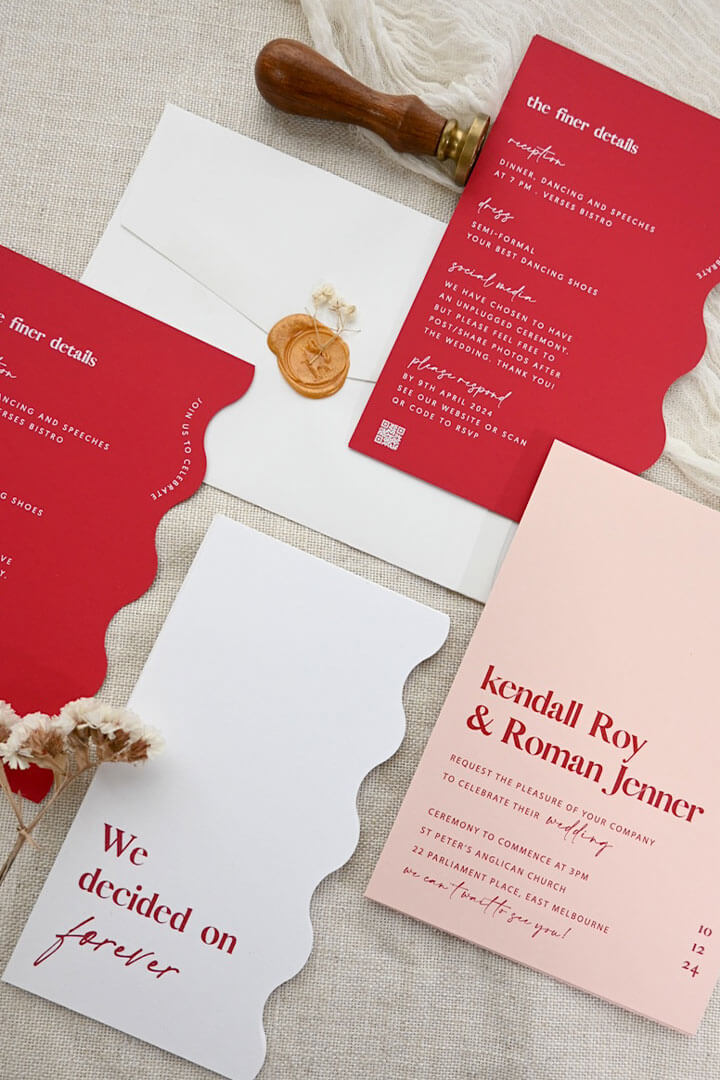
Wedding signs that keep your guests in the right place at the right time
Seating charts, welcome signs, table numbers, and directional signs, all printed on fabric or PVC board, with vinyl foil options in gold, silver, and rose gold. Every sign ships with a happiness guarantee.
Add a separate details card or itinerary insert to your invitation suite so guests have the full timeline before they arrive.
Frequently Asked Questions
How long should a wedding day be from start to finish?
Most wedding days span 10-12 hours from the moment the hair and makeup team arrives through the final send-off. If you are doing a first look with extended pre-ceremony portraits, the getting-ready window begins earlier and the day can run 12-14 hours. Build your timeline backwards from the venue’s end time and work forward from what feels manageable for you and your wedding party.
When should I send the timeline to my vendors?
Send the final timeline at least 2 weeks before the wedding and confirm receipt from every vendor. A preliminary draft can go out 4-6 weeks before so vendors can flag conflicts early. Some photographers and coordinators will ask for a 4-week lead time to give themselves room to request adjustments, ask your team what they prefer.
How long does the ceremony typically last?
A civil ceremony with one reading and personal vows runs 20-35 minutes. A religious ceremony, Catholic mass, Jewish ceremony, or full Orthodox service, can run 60-90 minutes or more. Confirm your expected ceremony duration with your officiant at the rehearsal, and build the rest of your timeline around that confirmed number, not an optimistic estimate.
Should I include the rehearsal dinner in my wedding day timeline?
No, the rehearsal dinner is a separate event, typically the evening before the wedding. Create a brief separate timeline for rehearsal day logistics: ceremony rehearsal (45-60 min), transportation to dinner venue, dinner start and end times. Share that with your wedding party and immediate family only, not all vendors.
How many people should have a copy of the timeline?
Every vendor on your contracted list, plus 2-3 trusted family members or friends who can act as point-of-contact on the day. If you have a wedding coordinator, they will distribute vendor copies, but confirm this is part of their service agreement. Print 8-10 physical copies for the day of; digital copies are easy to lose in the chaos of notifications.
What is the best ceremony start time?
4pm or 5pm are the most popular ceremony start times in the US because they position the golden hour window perfectly within the reception. For winter weddings in northern states where sunset falls before 5pm, consider a 2pm or 2:30pm ceremony. For outdoor summer weddings in hot climates, a 5pm or 6pm ceremony avoids the worst of the heat and still captures beautiful evening light.
How long should the getting-ready phase take?
For a bride with a wedding party of 4-6 people: budget 4-5 hours total for hair and makeup. Each person takes approximately 45-60 minutes for hair and 30-45 minutes for makeup. Bridesmaids rotate first; the bride is always last. Add 30-60 minutes of buffer for the inevitable late starts, touch-ups, and dress-on moments. Starting earlier than you think you need to is always the right call.
Do I need a first look if I want traditional ceremony photos?
No, a first look is entirely optional. Many couples who value the traditional “first look at the altar” moment choose not to do a pre-ceremony reveal, and their photographers deliver beautiful, complete galleries. The trade-off is a more compressed cocktail hour portrait window and a longer post-ceremony family formal session. If you skip the first look, plan for 60-75 minutes of post-ceremony portrait time.
How do I handle family formals efficiently?
The single biggest efficiency tip for family formals: create a prioritized shot list in advance and share it with both the photographer and a designated family wrangler. The wrangler’s only job is to know every person in every grouping and gather them before the photographer calls for them. Start with the largest group first, then remove people to create smaller groupings rather than adding people, which requires tracking down scattered guests repeatedly.
What happens if we run late on the wedding day?
Running late is normal, your timeline buffers exist precisely for this reason. If you are running more than 20-30 minutes behind, your coordinator (or timeline keeper) should triage: identify which blocks can compress without guest impact and which cannot. Family formals can be shortened by removing lower-priority groupings. Cocktail hour can extend by 15-20 minutes if catering is ready. The ceremony should start as close to on time as possible, guests who wait more than 15-20 minutes past a scheduled ceremony start become anxious.
Should I include the RSVP deadline on my timeline planning document?
No, the wedding day timeline is an operational document, not a planning calendar. RSVP deadlines, vendor payment schedules, and planning milestones belong in a separate wedding planning checklist. The day-of timeline covers only what happens on the wedding day itself. For wording your RSVP cards, our RSVP card wording guide has templates for every format.
How do I write my own wedding invitations to communicate the timeline to guests?
Your wedding invitations should communicate the ceremony start time and venue address clearly. The reception time and location are typically on an insert card. You do not need to share the full vendor timeline with guests, they only need to know when and where to be. Our 2026 wedding invitation trends guide covers the full stationery suite and how to sequence information across your invitation suite, and our save the date wording guide covers the earlier communication piece.
Is it worth hiring a day-of coordinator just for the timeline?
Yes, even if you have planned everything yourself and feel confident in your vendor relationships, a day-of coordinator is among the highest-ROI investments in your vendor budget. Their primary job on the wedding day is to own the timeline, manage vendor communications, and handle every unexpected situation so you do not have to. Even a partial-service coordinator who focuses on just the day-of execution will transform your experience from logistical to celebratory.
As seen in: Paperlust has been featured in Vogue Australia, Marie Claire Australia, The Sydney Morning Herald, and Harper’s Bazaar Bride as a leading destination for luxury wedding stationery.