
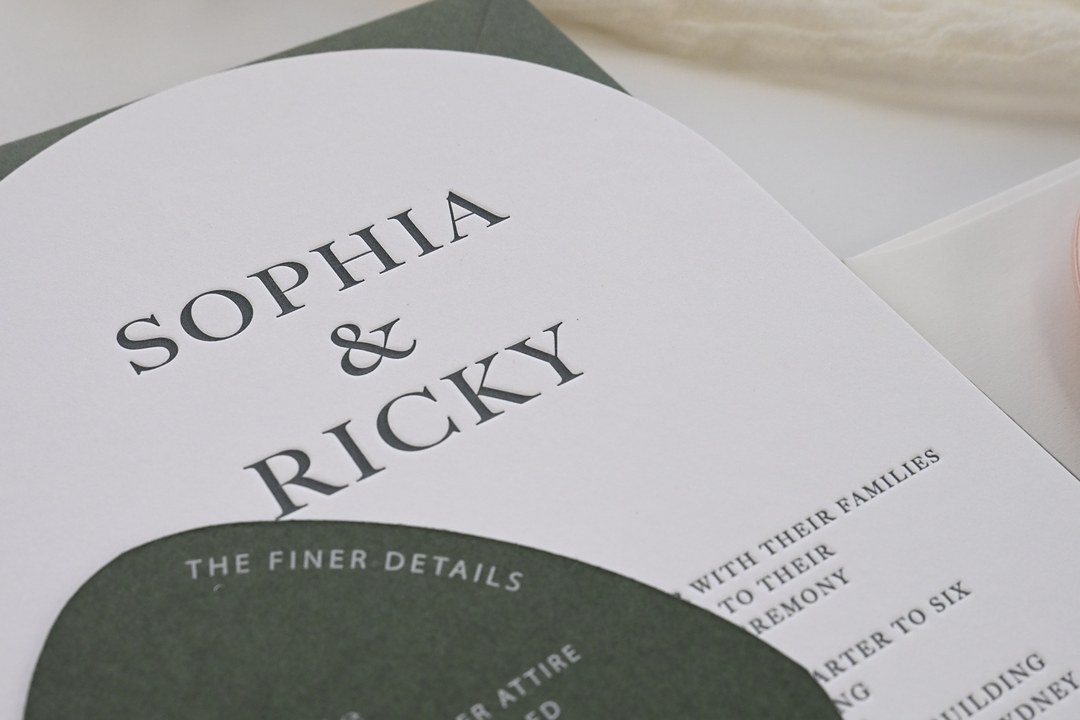
- Letterpress printing works like a heavy rubber stamp, pressing an inked raised design into paper and leaving color plus a pressed-in mark.
- One ink color needs one plate and one pass through the press.
- Cotton paper takes the deepest, most visible impression.
- Photographs and gradients do not translate to letterpress.
- Paperlust’s minimum letterpress order is 50 cards, printed in 20 to 23 working days after proof approval.
You have the sample in your hand, the one with the neat groove around the couple’s names, and the quote does not match the flat printed option. The word next to the option says letterpress printing, but nothing on the screen told you why that word adds cost, time and weight to the card.
Letterpress printing is the method behind that sample, and the price is not arbitrary. Each detail you felt has a step and a cost behind it.
This article walks through the process, the look, the real minimums, production days, a named design’s cost, and a straight verdict on when the method earns its price.
What letterpress printing is
Letterpress printing is relief printing: a raised surface is inked and pressed straight onto one sheet of paper at a time, like a heavy rubber stamp.
The question “What is letterpress?” has a simple answer: the raised surface carries the ink. The design stands up from the plate, receives the ink, and transfers to the paper under pressure. That pressed sheet carries color in the sunken area, and the mark itself is called a deboss. Embossing is the opposite effect, with the design raised above the surface.
Today the method is used most for wedding invitations, business cards, personalized stationery, greeting cards and small posters. Because each piece is printed one sheet at a time, the process suits considered pieces that are meant to be handled.
How letterpress printing works, step by step
Every job moves from separated artwork to a finished card through six hands-on stages.
- Separate the artwork by color. Each ink color becomes its own file or layer, because each color will need its own plate and pass.
- Make a photopolymer plate. The artwork is output to a film negative, exposed onto a light-sensitive polymer with UV light, and washed. The exposed parts harden and stand raised, creating the printing plate.
- Mix the ink by hand. The chosen color is matched before the press is made ready.
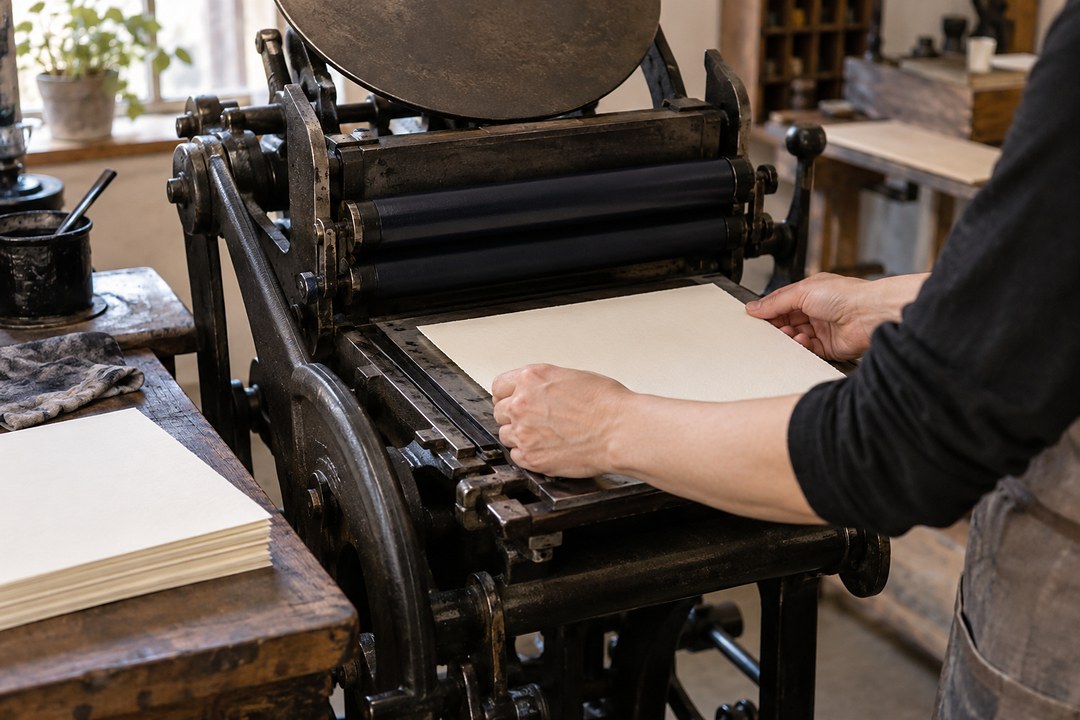
- Set up the letterpress machine. The plate is locked into the press, ink is rolled onto its raised surface, and the paper is positioned against it.
- Print each sheet, one color per pass. A two-color design makes two trips through the press, with a fresh plate and ink each time.
- Trim the cards. Sheets are cut or die cut to their final shape after the ink has been pressed.
This is why the method is slower than digital printing. A digital press lays a full image down in a single pass, while a letterpress job asks for a plate, an inked pass and clean-up for every color. If you add a third color, you are not just changing a file: you are paying for another plate, another set-up and another run.

What letterpress looks and feels like
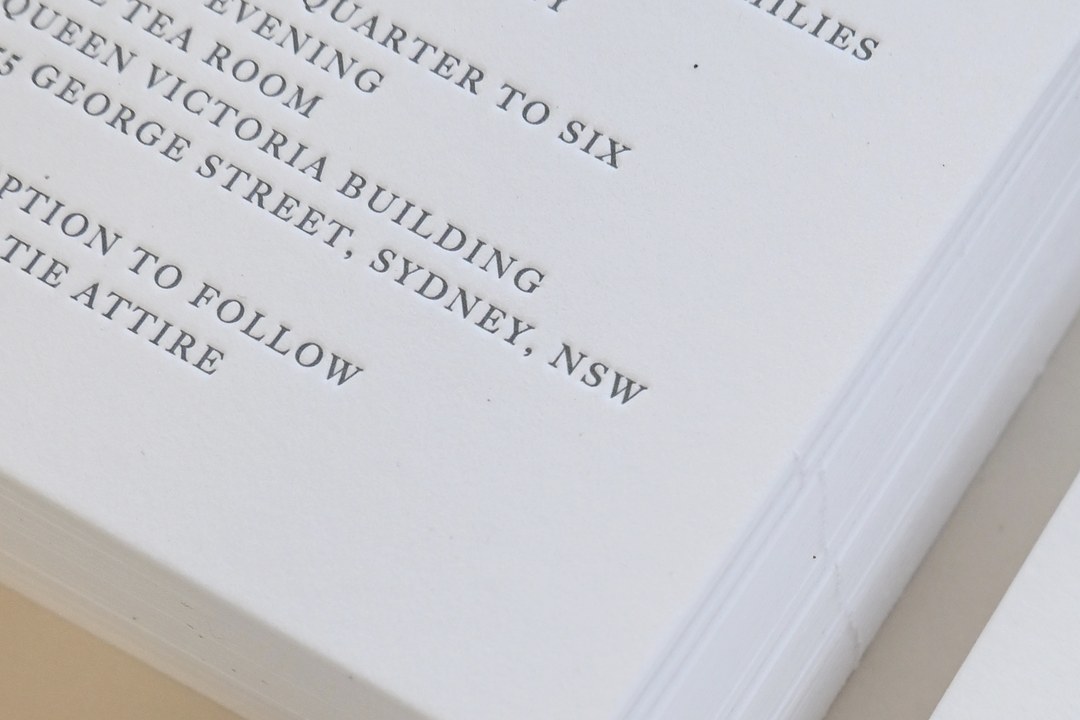
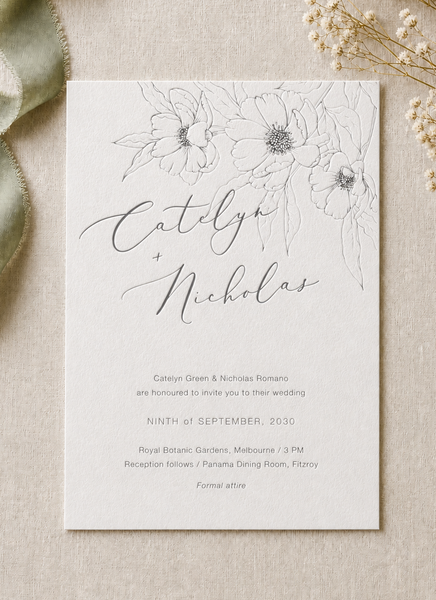
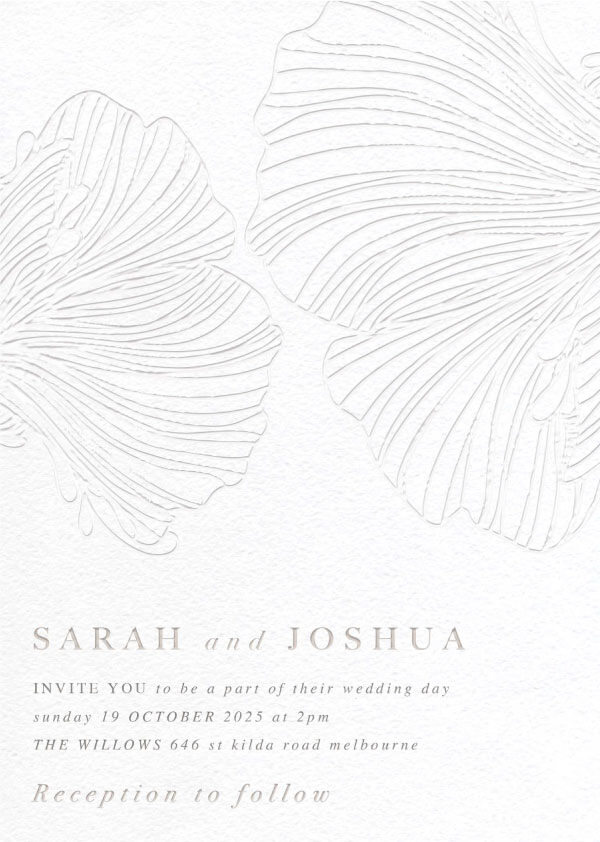
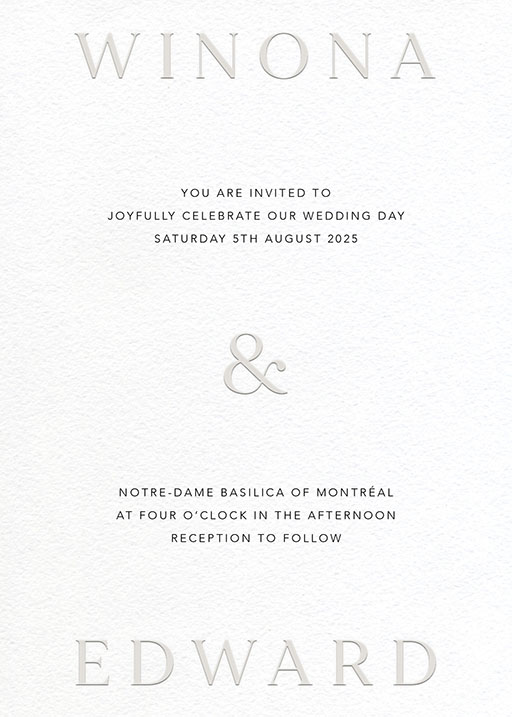
In your hand, letterpress printing reads as a crisp, tactile object: your eye sees ink sitting inside a pressed groove, and your fingertip feels the valley itself.
Older printers once tried to leave only a light kiss, with ink on the paper and almost no dent. Modern buyers usually want the opposite. A deep impression has become the detail people run their thumb across.
Soft, thick cotton paper takes the deepest impression, and a heavier sheet shows the mark more clearly. Since the inks are translucent, the paper tint changes the printed color, which is why pale card under dark ink reads clearly and light ink on a dark sheet looks weak. Large solid areas can look mottled, almost suede-like, while fine lines stay sharp.
Because the press strikes each sheet individually, no two cards are exactly identical, and the impression may show faintly on the back of thinner card. When you hold a sample, look at the edges of the letters first: they should feel crisp, not ragged. Check that the ink sits evenly along each stroke. Compare the same design on standard and double-thick cotton card side by side, since the heavier sheet should show a visibly deeper impression under the same artwork. Then turn the card over and look for a soft dimple under the printed areas; thin card may show a faint footprint, while double-thick stock stays flatter on the back.
A short history of letterpress
Letterpress printing began with Johannes Gutenberg and the movable type press in the mid-15th century. The basic idea, a raised form, ink and pressure, has stayed the same since then.
It remained the standard way to print text until the 20th century, when offset printing gradually took over books and newspapers. What was once everyday reproduction became a slower craft.
A craft revival brought it back. Photopolymer plates let small studios print from digital artwork without building a full metal type form, and wedding magazines in the 1990s helped make letterpress invitations popular again.
Letterpress next to foil and digital
Each print method has a different hand, shine range and lead time. The letterpress, foil and digital guide walks through the same decision in more detail. The table uses Paperlust’s current minimums and production times so you can compare like with like.
| Print method | How it looks | How it feels | Colors | Minimum order at Paperlust | Production time at Paperlust after proof approval |
|---|---|---|---|---|---|
| Letterpress printing | Fine inked lines with a sunken deboss | Deep impression on thick cotton paper | Usually one to four flat spot colors | 50 cards | 20 to 23 working days |
| Foil stamp | Metallic foil with a pressed mark | Shiny surface with a pressed mark | Metallic foil shades | 50 cards | 20 to 23 working days |
| Flat foil | Metallic shine with no impression | Smooth surface | Metallic plus digital color on the same card | 10 cards | 7 to 10 working days |
| Digital printing | Full-color flat print with no impression | Smooth surface | Full-color artwork and photography | 10 cards | 3 to 5 working days |
Letterpress is easy to confuse with embossing and debossing. Embossing raises the design above the surface, while debossing presses it down. Letterpress is inked relief printing that leaves a deboss; blind deboss is the same pressure without ink. Foil stamping, by contrast, uses a heated die to bond metallic foil to the paper. That gives metallic shine and a pressed mark.
Many suites mix methods across different cards rather than forcing one process to do everything. The main invitation can be letterpress, while a flat foil details card or a digitally printed map card handles color and speed. For a closer look at flat foil versus foil stamp, see the explainer on flat foil versus foil stamp.
Which artwork and paper suit letterpress
Letterpress rewards clean, considered artwork and punishes busy or photographic files. If the design is built around type and line, the method will make it tactile; if it is built around a photo, the method will flatten it.
Artwork that works
- Fine type and sharp line work, including hairlines down to 0.25 pt
- Single-color logos and clean typography
- Line art and simple motifs with dots of at least 1 pt
- Dark ink on light paper, which keeps translucent ink readable
- One to four flat spot colors, each with its own plate
Artwork that fights the method
- Photographs, gradients and soft shadows
- Large solid areas, which print salty or suede-like
- Light ink on dark paper, because translucent ink will not cover
- Reversed knocked-out type smaller than 12 pt
- Lines finer than 0.25 pt or dots under 1 pt
The best letterpress paper is soft and thick. Paperlust prints letterpress on Wild Cotton 300gsm, or on double-thick Wild Cotton 600gsm for a more pronounced impression; the same Wild Cotton stock is used for foil stamp. Browse ready-made letterpress wedding invitation designs to see how those paper choices sit under real artwork. The guide to embossed-look invitations explains the difference between letterpress and flat foil when you want a pressed appearance or a metallic finish.
What letterpress printing costs
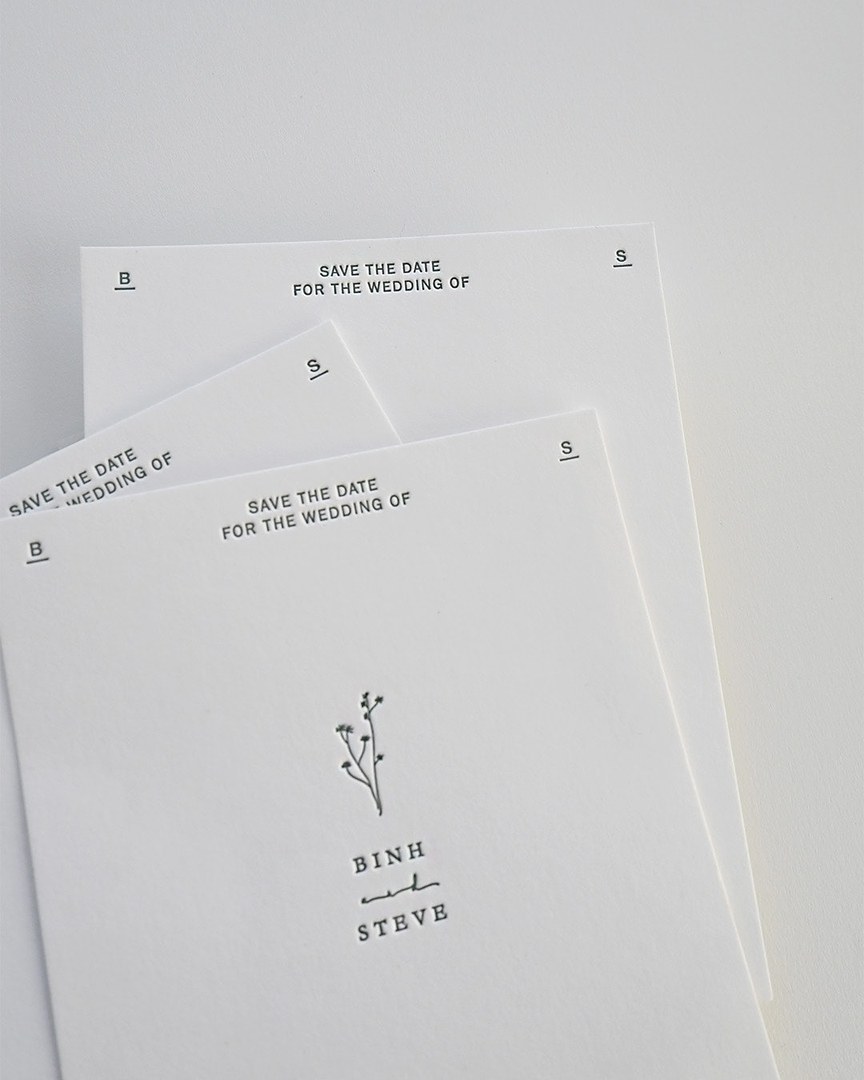
For the Paperlust Linear wedding invitation at 100 cards, letterpress printing costs about double digital printing. The letterpress version on Wild Cotton 300gsm is A$542 total; the digital version on Matte paper is A$280 total.
Several things drive that price.
- A custom plate is made for each ink color.
- Every color needs its own pass through the press.
- Production is slow and hands-on.
- Thick cotton stock costs more than standard card.
- Setup is spread over more cards, so small runs carry more of that fixed work per card.
| Print method | Paper | Quantity | Total | Per card |
|---|---|---|---|---|
| Letterpress | Wild Cotton 300gsm | 100 cards | A$542 | A$5.42 |
| Digital printing | Matte paper | 100 cards | A$280 | A$2.80 |
The same Linear invitation at the same size in digital printing is A$280 total, or A$2.80 per card. That is A$262 more per 100 cards, or A$2.62 per card, for letterpress printing on this design.
Prices do move, so treat these totals as a snapshot rather than a standing quote. For a wider view of the numbers behind invitation printing, read the wedding invitation cost breakdown.
When letterpress is worth it
Letterpress is worth it when the pressed mark is part of the invitation’s meaning, not just its decoration.
Worth the price
- You want a typographic or heirloom invitation that guests keep on the fridge.
- You need at least 50 invitations after you count one card per household.
- Your date allows 20 to 23 working days of production after proof approval, plus buffer.
- Your design is one to four flat colors and leans on fine lines rather than photos.
- You want the card to feel heavy and substantial in the hand.
Not the right call
- Your file is built around a photograph, gradient or soft shadow.
- You need fewer than 50 invitations after counting one card per household, and a digital or flat foil option with a 10-card minimum may fit better.
- You need printed pieces quickly and cannot wait for the standard production window.
- Your budget cannot stretch to the A$262 difference shown for the Linear design at 100 cards.
- Your layout uses a large solid block, which will look mottled rather than smooth.
Work the calendar before you choose. The proof usually arrives 1 to 2 business days after ordering. Once you approve it, production takes 20 to 23 working days, which is more than four calendar weeks, and there is no rush option. Start with the date the cards need to reach guests, allow time for proof changes and delivery, and see whether the proof plus production fits before that moment. That calendar check, not a general rule of thumb, tells you whether the method fits.
A middle path works for many couples: print the main invitation in letterpress for the tactile first impression, then use digital printing for the RSVP card and details card. You get the signature piece you wanted without stretching the whole suite.
Textured cotton paper with letterpress is one of the 2027 invitation trends in a roundup of ten looks and their print methods, so you can see it beside the other styles planned for the year.

How to get letterpress printing done
There are three realistic routes: choose a ready-made design, send your own artwork to a printing service, or try a hobby setup at home.
Start from a ready-made design
At Paperlust, you personalize a design online and wait for the proof before anything prints. A designer sends a free digital proof within 1 to 2 business days of ordering, and production starts only after you approve it. A sample pack lets you compare paper and print finishes first. The cards are printed in Melbourne, Australia and delivered internationally.
Send your own artwork to a letterpress printing service
A letterpress printing service for your own artwork suits clean typography, line art and single-color logos. Supply the artwork as single-color vector files, one file or layer per ink color. Photographs, gradients and soft shadows are not possible. You will receive a quote within 1 to 2 business days.
Try it at home
At home, a tabletop press or hobby kit can produce a small personal run, but the method still demands a custom polymer plate, ink, a brayer and practice paper. Even inking takes a steady hand. The first attempts usually fail on uneven ink coverage rather than on the press itself. This route is best for patient craft projects, not a 100-piece suite that needs to match.
Frequently asked questions
Is letterpress the same as embossing?
No. Letterpress prints with ink and leaves a sunken mark called a deboss. Embossing raises the design above the surface of the paper, the opposite effect. Letterpress gives you ink plus a pressed-in mark, while an embossed piece relies on raised shape alone. If you want the groove and the color in one pass, letterpress is the one to pick.
Why is letterpress printing more expensive than digital printing?
Each ink color needs its own plate and its own pass through the press, so every added color multiplies the hands-on work. The machines move slowly, paper is usually fed by hand, and the thick cotton stock that holds a deep impression costs more than standard card. A 100-card invitation is not simply printed; it is made color by color.
Can letterpress print photographs or full-color artwork?
No. Photographs, gradients and soft shadows cannot be reproduced with a raised plate and flat spot colors. Letterpress works with clean line art, typography, logos and usually one to four solid colors. If a full-color photo must stay in the design, digital printing is the better route because it lays all tones down in a single pass.
What paper is used for letterpress?
Letterpress paper is usually soft, thick cotton because it takes the deepest impression. A 600gsm double-thick cotton card will make the same design feel deeper than a 300gsm sheet. Dark ink on light paper gives the cleanest result because letterpress inks are translucent. The paper choice changes how clearly the deboss shows.
How long does a letterpress order take?
A digital proof usually arrives 1 to 2 business days after you order. Once you approve it, production takes 20 to 23 working days, which is over four calendar weeks. There is no rush option for letterpress. Delivery time is extra, so add it separately.
Can a beginner do letterpress at home?
Yes, with patience. The first pass usually goes wrong in the inking: too much ink fills fine lines and too little leaves patchy type. You need practice sheets and time to learn even coverage, and a small personal run is realistic. Matching a professional studio’s consistency on a full wedding suite is the hard part.
What is blind letterpress?
Blind letterpress, also called blind deboss, is a letterpress plate pressed into the paper with no ink. The design appears as a sunken impression only. It suits initials, borders or subtle marks, but it needs strong side light to be read clearly. The result is quieter than inked letterpress and easier to miss on thin paper.