

Getting the call to be best man is one of life’s great honors, and one of its great responsibilities. You are your groom’s right-hand person from the engagement ring purchase through the last dance, the person he trusts most to keep things running smoothly when nerves run high. Done well, the role is equal parts logistics coordinator, emotional anchor, and hype man. This guide breaks down every best man duty, month by month, so you know exactly what is expected and when.
- Top 5 duties: bachelor party, groomsmen coordination, ring holding, ceremony witness, wedding speech.
- Time commitment: expect 20-40 hours total across the engagement, more if planning the bachelor party from scratch.
- Typical personal cost: $300-$1,500+ depending on travel, suit, and bachelor party contribution.
- Ring holding: carry the wedding bands and pass them to the officiant at the ring exchange, practice the handoff at rehearsal.
- The speech: aim for 3-5 minutes, two personal stories, a genuine tribute to the couple, and a strong closing toast.
What Is a Best Man?
The title of best man carries centuries of history behind it. In Anglo-Saxon England, a groom would bring his most trusted warrior companion to his wedding, someone physically capable of defending the union if the bride’s family objected or if rivals interfered. The phrase “best man” referred literally to the best fighter available, the one person you would want at your side if things went sideways. Fortunately, the role has evolved considerably since then.
In modern weddings, the best man is the groom’s closest confidant and primary support person throughout the entire wedding process. He (or she, or they) handles logistics the groom cannot manage alone, coordinates the groomsmen, safeguards the rings, delivers a speech, and ensures the groom arrives at the altar on time and in good shape emotionally. The job is more producer than bodyguard, but the spirit of unconditional loyalty remains the same.
Gender-neutral versions of the role have become increasingly common and are fully equivalent in every sense. A woman serving in this role may be called a “best woman” or “best person,” and she carries exactly the same duties and the same standing in the ceremony. Many couples use gender-neutral language throughout their ceremony programs. The title is a label, the relationship and the responsibilities are what matter.
It is worth distinguishing the best man from the maid of honor, who performs a parallel role on the partner’s side. The two work closely together on logistics, processional arrangements, and reception coordination, but they report to their respective people. Think of the best man and maid of honor as co-producers of the same film, each responsible for one lead. When they communicate well, everything runs more smoothly.
Co-best men, two people sharing the title, are also fully legitimate. Some grooms cannot choose between a brother and a longtime friend, or want both their closest people standing beside them. In that case, split the duties logically: one holds the rings, one gives the speech, both support the groom on the morning. Just make sure the division is clearly agreed upon before the wedding weekend arrives.
The Best Man Job Description: Top 12 Duties
Before diving into the full timeline, here is the complete picture of what the role actually involves. These twelve duties represent the core responsibilities a best man is expected to handle. Some happen once, some span the entire engagement, and a few land on the wedding day itself. Understanding all twelve from the start means nothing catches you off guard.
Part of your role is supporting the couple through stationery decisions. Browse 200+ invitation designs filtered by style and palette.
| # | Duty | When | Priority |
|---|---|---|---|
| 1 | Accept the role and set expectations | Immediately after being asked | Critical |
| 2 | Groomsmen coordination | Throughout engagement | High |
| 3 | Suit fittings | 4-6 months before | High |
| 4 | Bachelor party planning | 6-8 weeks before; plan 3-4 months out | High |
| 5 | Rehearsal attendance | Day before wedding | Critical |
| 6 | Wedding morning support | Wedding day, first thing | Critical |
| 7 | Ring holding and handoff | Ceremony | Critical |
| 8 | Legal witness + marriage certificate signing | Ceremony or immediately after | Critical |
| 9 | Best man speech and toast | Reception (during dinner) | High |
| 10 | Dance with maid of honor | Reception | Medium |
| 11 | Send-off coordination | End of reception | High |
| 12 | Post-wedding attire return | Day after wedding | Medium |

Pre-Wedding Duties: The Full Timeline
The best man role does not begin at the rehearsal dinner. For most engagements, it starts the moment you say yes and continues for twelve months or more. Breaking the timeline into phases makes the workload manageable and ensures nothing falls through the cracks. Here is what to do, and when, from the moment you accept through the week before the wedding.
12+ months before: Accept and set expectations
The first thing to do after accepting the role is have a candid conversation with the groom about what he actually needs from you. Every groom is different. Some want a hands-on best man who is embedded in every decision; others need someone who will show up reliably for key moments and otherwise stay out of the planning. Ask directly: how involved should I be? Are there specific things you want me to own? Are there things you would prefer I stay out of?
This conversation will save a lot of friction later. If the groom wants you involved in vendor selections, lock that in now. If he just needs you to coordinate groomsmen and deliver a great speech, scope it accordingly. Either way, you both leave with aligned expectations.
This early stage is also a good time to introduce yourself to the maid of honor if you do not already know her. The two of you will be coordinating throughout the engagement and across the wedding weekend, it helps enormously to have a friendly working relationship before the pressure of the wedding day arrives. A quick text or call to introduce yourself goes a long way.
One of the couple’s first practical tasks will be managing their guest list and getting wedding invitations organized. Paperlust’s Address Manager tool lets couples collect guest addresses digitally, if the groom mentions they are working through their guest list, offer to help populate addresses. It takes a fraction of the time when someone other than the couple handles the data entry.
8-12 months before: Groomsmen coordination
Once the groomsmen group is confirmed, you become their primary point of contact for all wedding-related logistics. The couple should not have to chase down groomsmen for RSVPs, measurements, or travel bookings, that is your job. Set up a group chat immediately. Include all groomsmen, add the key dates (engagement party, fittings, bachelor party, rehearsal, wedding), and make it clear you are the hub for all communication.
At this stage, verify that everyone who may need to travel has a valid passport, especially for destination weddings. International events require considerably more lead time for travel bookings, and a groomsman discovering his passport expired two months before a Mexico wedding is a problem that lands on your plate. Better to surface it twelve months out.
This is also when the couple should be getting save the dates out, particularly if they are planning a destination wedding or holiday-weekend event. Early save the dates are one of the kindest things a couple can do for their guests. If the groom asks for your input, point him toward our guide on how to write save the date wording, it covers timing, phrasing, and what information to include so every guest has what they need.
Use the group chat to keep groomsmen informed without requiring the groom’s involvement. Update the group when dates are locked, remind people about deadlines, and follow up privately with anyone who goes quiet. Proactive follow-up is a core best man skill, do not assume silence means everything is handled.
4-6 months before: Suit fittings and attire
Confirm the attire vision with the groom at this stage: purchase or rental, matching or coordinated, what color and cut, what accessories. Once you have the details, communicate them clearly to the groomsmen group so everyone knows exactly what is expected and what they need to do.
If suits are being purchased or rented through a specific retailer, find out whether they offer group fitting appointments and coordinate everyone’s schedules to get it done in one organized window. Rentals often have strict deadlines for measurements to be submitted, typically 6-8 weeks before the wedding, and alterations on purchased suits require at least 4-6 weeks for a proper fit. If a groomsman is traveling from out of state, find out whether the retailer has locations near him or whether measurements can be submitted remotely.
Your own fitting should be done first so you can confidently guide the others through the process. Pick up the groom’s suit on his behalf if he is overwhelmed with other planning. Confirm on the day of pickup that everything is correct: size, color, buttonhole for boutonniere, any alterations completed. Do not leave the shop without trying it on.
3-4 months before: Start the speech
The best man speech is the duty most people underestimate. Three to four months is not too early to begin drafting, in fact, it is exactly the right time. Starting early means you can let the draft sit, come back to it with fresh eyes, get feedback from a trusted third party, and refine it into something genuinely memorable rather than a hasty three-minute improvisation.
At this stage, focus on gathering material: stories, memories, details that capture who the groom really is and what his relationship with his partner looks like. Write everything down without editing. You are building raw material you can shape later. Aim for a finished draft of 400-600 words, which translates to roughly 3-5 minutes of spoken delivery at a natural pace.
Avoid the trap of starting with a line like “For those who don’t know me…”, it signals you are not confident yet. Instead, open with something that makes the room lean in immediately. More on structure in the speech section below.
6-8 weeks before: Bachelor party
The bachelor party is typically planned 3-4 months out but executed 6-8 weeks before the wedding. By this point, you should have the guest list confirmed, deposits paid, and the itinerary finalized. Cross-reference the full bachelor party section below for detailed planning guidance. At the 6-8 week mark, your job is execution: collect final RSVPs, confirm bookings, send the group an itinerary, and handle any logistics (transport, accommodation, tickets) that require advance purchase.
One thing to keep firmly in mind at this stage: the bachelor party must not happen the night before the wedding or even two nights before. The groom needs to be rested, hydrated, and present on his wedding morning. Schedule it far enough out that recovery time is not a concern.
2-4 weeks before: Final preparations
This is the tightening-up phase. Confirm your suit fits perfectly, if anything has changed since your fitting, get it adjusted immediately. Collect the wedding bands from wherever they are being kept (jeweler, couple’s home) and store them somewhere secure that you can access without stress on the wedding morning. A dedicated inner jacket pocket in your suit is ideal.
Review the full wedding day schedule so you know every cue: when you arrive at the venue, when the processional begins, when the ring exchange happens, when speeches are scheduled. If you have not already memorized your speech, begin drilling it now. You should be able to deliver it without reading verbatim from notes.
If the couple is managing RSVPs themselves, offer to help cross-check final numbers. Our guide to RSVP card wording walks through the mechanics of managing responses, it can be a useful resource if the couple is still fine-tuning their process.
1 week before: Lock everything down
The week before the wedding is about execution, not planning. Everything should already be planned. Your job this week is to confirm all the pieces are in place and get yourself into the right headspace to perform on the day.
Attend the rehearsal without exception and pay close attention to every cue: when you enter, where you stand, when to step forward with the rings, what the officiant signals look like. Practice the ring handoff until it feels natural. Confirm that all groomsmen know where to be and when, follow up with anyone who seemed distracted at rehearsal.
Pack your survival kit (see the full list below), press your suit, confirm transport arrangements, and get a full night’s sleep. The groom needs you sharp and calm on the wedding morning, that starts the night before.
Help the couple lock in save the dates
One of the best early wins for a new best man: nudging the couple to send save the dates on time. Paperlust’s wedding save the date cards are fully customizable, printed in Melbourne, and delivered via DHL Express. From $1 per card. See the latest wedding invitation trends for style inspiration.
The Bachelor Party: Planning and Budgeting
The bachelor party is the best man’s biggest solo project. It is the event that lands squarely on your shoulders to conceptualize, plan, budget, coordinate, and execute. The stakes are real: a poorly organized bachelor party causes friction between groomsmen, surprises the groom with expectations he was not prepared for, or, worst case, creates chaos right before the most important weekend of his life. Plan it well and it becomes one of the groom’s best memories. Here is how to do it properly.
Start with a conversation
Before booking anything, sit down with the groom and ask four questions: What kind of experience do you actually want? Who must be there, and who is optional? What is a realistic budget per person? Are there any activities or locations that are off the table?
Not every groom wants Las Vegas. Some want a low-key golf weekend with six friends. Some want a three-day camping trip. Some want an evening out at a nice restaurant followed by a bar they love. The most common mistake best men make is projecting their own vision of a bachelor party onto the groom. Ask first, then plan. The groom’s comfort and enjoyment are the only metrics that matter.
Once you know the groom’s vision, run a quick gut-check with one or two close members of the group before finalizing anything, especially if the guest list includes people with varying financial situations. An activity that is affordable for some may genuinely strain others, and that tension tends to surface awkwardly when it is too late to change.
Guest list management
Compile the confirmed guest list from the groom and send a save the date to the group at least 8-10 weeks before the event. Be explicit about the date, approximate cost, and any travel or accommodation requirements. The earlier you surface costs, the fewer surprise declines you get closer to the event.
Collect deposits from everyone who confirms. This is not optional, it protects you from situations where people drop out after you have already booked non-refundable experiences. A $50-$100 deposit per person typically covers venue holds and activity deposits. Use a payment app (Venmo, Zelle, PayPal) and track every transaction. Designate yourself as treasurer for the event and keep a simple running spreadsheet of what has been collected versus what is owed.
Handle declines gracefully. People have work commitments, travel constraints, and financial limits. Follow up once with anyone who has not responded, then move on. The group that does come should feel celebrated, not distracted by absences.
Budget breakdown
| Tier | Cost per person | Examples |
|---|---|---|
| Budget | $50-$150 | Local bar crawl, sporting event, backyard BBQ, camping trip, poker night |
| Mid-range | $200-$450 | Golf weekend, Airbnb cabin, fishing charter, go-kart and dinner, brewery tour, lake house |
| Luxury | $500-$1,500+ | Las Vegas, Nashville, New Orleans, ski resort, international trip, yacht charter, F1 weekend |
The traditional rule is that the groom does not pay for his own bachelor party, the group covers his share. In practice, this means the per-person cost goes up slightly when divided among attendees. For mid-range events with six to eight people, the impact is modest. For luxury destination events, make sure everyone is aware before they commit. Have that conversation early and openly: it is far less awkward to discuss money in advance than to navigate resentment afterward.
Timing
The sweet spot for the bachelor party is 4-8 weeks before the wedding. Close enough that it feels like a proper send-off, far enough that the groom is not exhausted or nursing a hangover when he should be savoring his wedding week. Never schedule it the night before the wedding. Never schedule it two nights before. If you are planning a multi-day event, the last day should land no later than one week before the wedding, two weeks is even better.
Also avoid scheduling it on a weekend that clashes with another major wedding event: engagement parties, bridal showers, or venue walkthroughs. Check the couple’s calendar before committing to a date.
Day-of logistics
On the day of the bachelor party, you are the shepherd. Designate yourself as the person responsible for keeping the group together, on schedule, and out of genuine trouble. Book transportation in advance, rideshares, a party bus, or a sober driver, so no one is making last-minute decisions after a few drinks. Have a printed or digital itinerary with venue names, addresses, and booking confirmation numbers accessible offline in case of poor signal.
Keep the groom’s phone charged. If he is the type to lose track of it, hold it for him when needed. Have a backup plan for any activity that requires good weather or advance confirmation. And know when to call the night a success, the best bachelor parties end on a high note, not an ambulance.

Wedding Day Duties
The wedding day is when every hour of preparation pays off. Your job is to be calm when others are not, to move with purpose, and to ensure the groom experiences his wedding day rather than managing it. From the first alarm to the last sparkler, here is what the wedding day best man looks like in practice.
The morning of
Arrive at the getting-ready location at least 90 minutes before you need to leave for the venue, earlier if the groom is the anxious type. Your presence alone matters; just being there is part of the job. Check in with him emotionally without being heavy about it. A light conversation, a coffee, a moment of humor can do more to settle nerves than any pep talk.
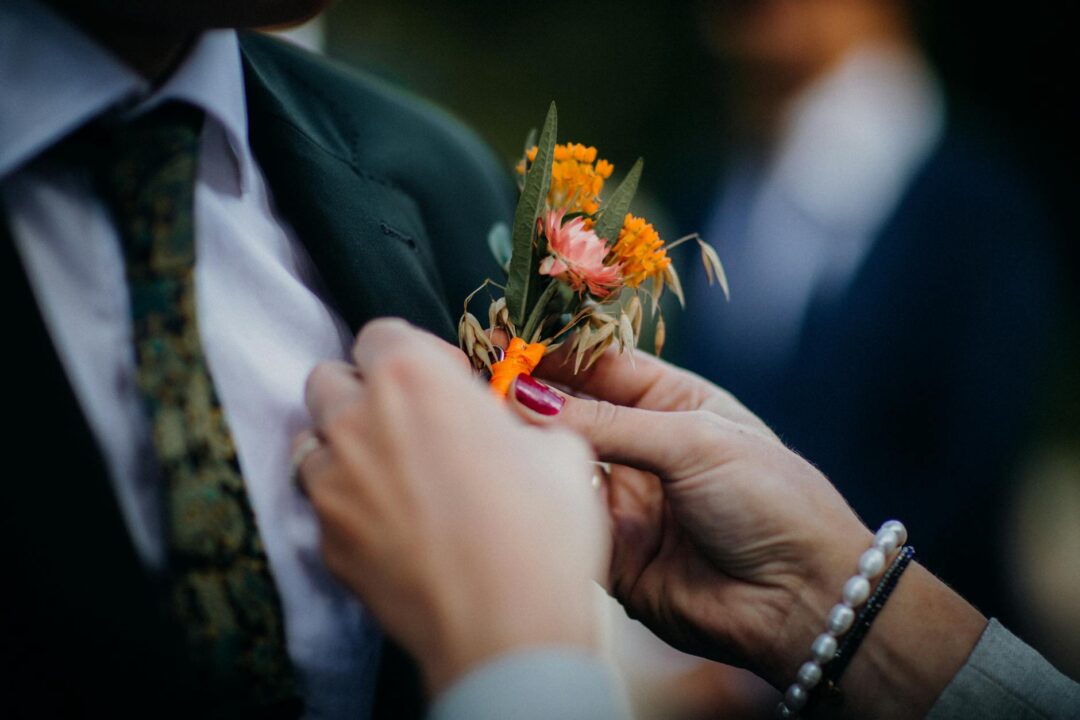
Run through the grooming checklist: suit on and pressed, boutonniere in place, collar stays inserted, shoes polished, tie or bow tie properly set. Pull up the wedding day schedule and confirm every groomsman knows departure time and ceremony start. Double-check that the wedding bands are in your inner jacket pocket, do this at least twice before leaving the room. Coordinate transport to the venue so no one is scrambling for an Uber ten minutes before they are supposed to be standing at the altar.
Manage the energy in the room. If a groomsman is running late, handle it without involving the groom. If something is missing or broken, fix it or find someone who can. Your goal is to insulate the groom from logistics friction so his only job is to show up and get married.
At the ceremony venue
Arrive at the venue before guests begin arriving. Walk the space with the venue coordinator or wedding planner: confirm where you and the groomsmen are positioned, where the processional enters from, and where the officiant expects you to stand. If there are wedding signs directing guests to their seats or to different areas of the venue, make sure they are in place and legible before guests arrive. A well-signed venue reduces the number of confused guests who stop you mid-processional prep to ask where the bathroom is.
Stand at the groom’s right side at the altar unless the officiant directs otherwise. Face forward, stay composed, and keep a quiet eye on the groom throughout the ceremony. If he looks faint or overwhelmed, a hand on the shoulder or a low word of reassurance is appropriate. You are his anchor point, make sure you feel like one.
Ring holding and the handoff
Carrying the wedding bands is the ceremonial duty most closely associated with the best man role. Keep both rings in your inner jacket pocket throughout the morning, not loose in a pants pocket, not in a bag, not delegated to anyone else under any circumstances. The ring box goes in the inside breast pocket where you can reach it instantly with one hand.
At the ring exchange, the officiant will signal you, typically by making eye contact and extending a hand, or by a verbal cue you have agreed on at rehearsal. Step forward, produce the ring box smoothly, and hand it over. Practice this exact motion at the rehearsal until it feels completely natural. The ceremony will pause briefly while you do this, and the smoother you are, the more seamlessly the moment flows.
Never delegate ring holding. If a ring bearer is part of the ceremony, he typically carries decorative rings or an empty pillow, the real bands stay with you until the moment of exchange. Confirm this setup at the rehearsal so there is no ambiguity on the day.
Signing the marriage certificate
In most jurisdictions, the marriage certificate or marriage license must be signed by witnesses, and the best man is typically one of them. The maid of honor is usually the other. This signing happens either immediately after the ceremony, during a brief pause in the program, or in a private room before the reception begins, ask the officiant at rehearsal exactly when and where it happens.
Sign with your full legal name, do not use a nickname or partial signature. Bring your own pen; it is a small detail that saves a surprisingly common awkward scramble. If you are unsure what name format is required, ask the officiant in advance.

Reception Duties
Once the ceremony is complete, your role shifts from logistics anchor to social one. The reception is where you deliver the speech, support the couple through the formalities, and generally function as a visible, positive presence for the entire evening. Here is what that looks like in practice.
The best man speech
Your speech is the moment most guests are anticipating. Delivered well, it becomes a highlight of the entire day, a story the couple will retell for decades. Delivered poorly, it is quickly forgiven but rarely forgotten. The good news is that a 3-5 minute speech, prepared months in advance and practiced aloud at least a dozen times, is entirely within reach of anyone regardless of public speaking experience.
Timing is important. Best man speeches typically happen during the dinner service, after the first course has been served and guests are settled. Confirm the exact timing with the wedding coordinator or reception venue manager the day before, some venues have strict schedules around speeches and the band or DJ’s programming.
Stand up, speak slowly, and make eye contact with different parts of the room throughout. Pause after anything that gets a laugh, do not talk over the reaction. Keep your notes on paper rather than your phone (phones go dark, screens reflect badly in photos, and paper does not have notifications popping up mid-sentence). The full speech structure is covered in detail in the section below.
The toast sequence
In traditional reception order, the best man speaks first among the wedding party speeches, typically after the father of the bride (or a designated family speaker). The maid of honor follows, and then the couple may speak if they choose to. Confirm this sequence with the couple and their coordinator in advance, some couples rearrange it based on their preference or venue logistics.
Your toast ends the speech: raise your glass, direct the room to join you, and offer a genuine, brief wish for the couple. Keep the toast itself short (one to two sentences) and warm. “To [Groom] and [Partner], may every day together feel as good as today” is more powerful than a complicated metaphor that requires a second reading to unpack.
Dance with the maid of honor
Many weddings include a traditional wedding party dance where the best man and maid of honor join the couple on the floor for the first dance or a subsequent one. This tradition is optional and entirely dependent on the couple’s preferences, confirm whether they want this when you are reviewing the reception program. If yes, coordinate briefly with the maid of honor beforehand so neither of you is caught off guard when the moment arrives. You do not need to be a skilled dancer; you just need to show up and be present on the floor.
Guest ambassador
Throughout the reception, you are one of the most visible people in the room. Guests who do not know where to go, who are looking for someone to talk to, or who need a table number checked will naturally gravitate toward you. Be approachable and helpful. If you spot the groom trapped in a long conversation with a great-uncle when he would clearly rather be dancing with his new spouse, give him a graceful out by swooping in with a gentle interruption. This is one of the genuinely useful things a best man can do all evening.
Send-off coordination
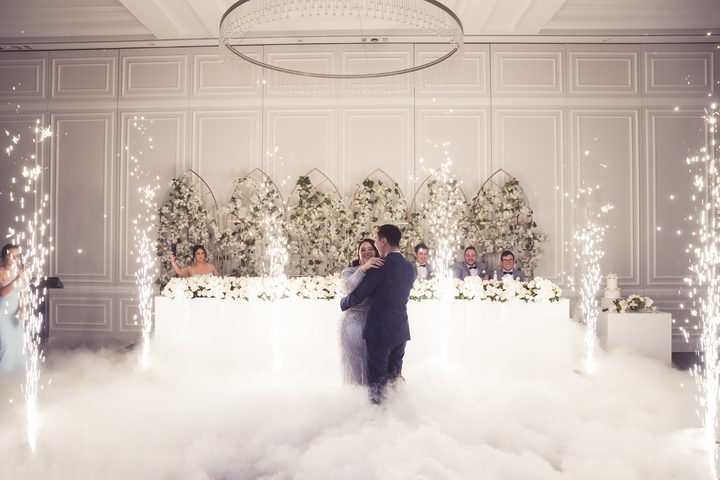
The send-off is the final act of the reception and requires coordination in the last 20-30 minutes of the evening. Work with the maid of honor and wedding coordinator to decide how guests will be organized, in a line, a tunnel, a circle, and what they will be holding: sparklers, ribbon wands, flower petals, bubbles. Ensure the supplies are staged and accessible, brief key guests on positioning, and then execute with energy. The couple should walk out to a genuinely celebratory send-off, not a confused cluster of guests who were not sure it was happening.
Once the couple has departed, help coordinate any post-event logistics: collecting items left at the venue, returning borrowed decorations, ensuring the groom’s belongings are accounted for. Your job is done when you know the couple is on their way and everything is in order.
Best Man Survival Kit
The survival kit is the one thing standing between a smooth wedding day and a minor disaster that derails the schedule. Assemble it the night before and keep it in your jacket pocket or a small bag that travels with you throughout the day. Every item on this list has saved a wedding at some point.
Help the couple with their thank-you stationery once the wedding is done. Browse foil, letterpress, and digital options.
| Item | Why you need it |
|---|---|
| Collar stays | Keep shirt collar points flat, a curled collar shows in every photo |
| Safety pins (assorted) | Fixes hems, buttons, buttonholes, even a broken boutonniere stem |
| Breath mints | For yourself and anyone who asks, carry a full pack, not two loose ones |
| Stain remover pen | Champagne, sauce, grass, pre-ceremony stains happen more often than you think |
| Extra tie clip | Tie clips get lost; having a spare prevents a sloppy photo for the whole group |
| Phone charger and battery pack | You will need your phone all day; a dead battery right before speeches is avoidable |
| Cash $60-$100 | Tips for venue staff, emergency transportation, last-minute vendor needs |
| Printed speech notes | Backup to your memorized delivery, paper does not crash mid-speech |
| Headache tablets | For you, the groom, or any groomsman who needs them, long days create headaches |
| Band-aids | New shoes cause blisters; blisters during a four-hour reception are miserable |
| Pen | For signing the marriage certificate, do not scramble for a venue pen at that moment |
| Vendor contact sheet | Names and phone numbers for coordinator, caterer, photographer, DJ, printed, not just in your phone |
Best Man Speech: Quick Primer
The speech is what guests remember most from the reception. More than the food, more than the first dance, more than the decor, the best man speech is the moment the room falls silent and waits. A great speech earns the couple a memory they will carry forever. Here is how to build one that lands.
The five-part formula
The most reliable best man speech follows a five-part structure that creates a natural arc from opening to toast.
Opening hook: Do not begin with “For those who don’t know me, I’m…”, it signals a prepared speech rather than a genuine moment. Instead, open with something that grabs the room: a single sentence that is either funny, surprising, or touching. “I’ve known [Groom] for twenty-two years, and I have been waiting to give this speech for at least nineteen of them.” The first line sets the tone for everything that follows.
Relationship context: In two to three sentences, tell the room who you are to the groom. How long have you known him? In what context? This is brief, the audience needs context but not your full biography. Keep it warm and human.
Story one: A single specific, detailed story about the groom that is genuinely revealing of his character. The best stories are ones only you could tell, something that happened in a particular place, at a particular time, involving real details that make guests feel present in the memory. Avoid the generic: “He’s always been there for me” means nothing without a story attached. The story should ideally be slightly uncomfortable for the groom (embarrassing, revealing, funny) while being completely appropriate for all ages in the room.
The partner tribute: This is the pivot point of the speech, the moment you acknowledge what the partner means to the groom and to you. Be specific. If you watched the groom change for the better after they met, say so and give an example. If the partner has become a close friend to you as well, say that. Generic lines like “she’s perfect for him” are forgettable. A specific observation about something you have witnessed carries weight.
The toast: Close with a brief, sincere wish for the couple. One or two sentences, delivered while raising your glass and inviting the room to join. The toast should feel like a natural ending to everything that came before it, a conclusion, not a separate appendage.
Timing and delivery
Aim for 3-5 minutes total. Under three minutes feels rushed and under-prepared; over five minutes and you begin to lose the room. Practice aloud, not in your head, not by mouthing the words, but fully spoken, standing up, at the volume you will use in the room. Record yourself at least once and watch it back. You will notice things you would never catch otherwise: filler words, rushed delivery, moments where you lose eye contact.
On the day, stand still with your feet planted and deliberately slow your pace by about 20 percent, nerves speed everything up. Make eye contact with different parts of the room as you move through the speech. Pause after anything that gets a reaction. Hold the microphone 4-6 inches from your mouth and at a slight downward angle. Breathe.
What to avoid
Do not mention ex-partners by name. Do not include stories that require disclaimers (“I can say this now that the statute of limitations has expired…”). Avoid inside jokes that only three people at a two-hundred-person wedding will understand, they isolate the room rather than include it. Do not read the entire speech from your phone with your eyes never leaving the screen. And do not let the self-deprecating opening go on so long that guests begin to wonder if the speech is about you or the groom.
The couple spent as much time and thought on their wedding invitation wording as you should invest in your speech, word choices, tone, and the impression you want to leave. For a deeper look at that kind of intentional wording process, see our wedding invitation wording guide.
For 30 ready-to-use examples, wording templates, and a full how-to delivery guide, see our complete best man speech guide.
The Financial Side: What Does Being Best Man Cost?
Being best man is a genuine financial commitment, and very few guides address that honestly. Costs vary enormously depending on geography, event scale, and your relationship with the groom, but having a realistic picture going in means you can manage the numbers without resentment building up over 12 months.
| Expense | Typical range | Notes |
|---|---|---|
| Suit purchase | $300-$800 | Higher end if tailored or designer; lower if off-the-rack with alterations |
| Suit rental | $100-$250 | Varies by retailer and style; add $30-$60 for accessories if not included |
| Bachelor party share | $100-$500+ | Includes your own expenses plus a share of the groom’s; wide range by event type |
| Wedding gift | $75-$200 | Best man is expected to give a gift from the registry or a personal gift |
| Travel and accommodation | $0-$2,000+ | Zero for local weddings; significantly higher for destination or multi-city engagements |
| Survival kit and misc | $30-$80 | One-time assembly cost; most items are things you already own or can reuse |
For a local wedding with a mid-range bachelor party, the realistic total is $600-$1,500. For a destination wedding with a travel-heavy bachelor party, costs can easily reach $1,500-$3,500 or more. These are not small numbers, and there is no shame in having an honest conversation with the groom early in the engagement if cost is a genuine constraint. A good groom would rather know about budget limitations upfront than discover later that you put expenses on a credit card and are quietly stressed about it. Most grooms will adjust plans to accommodate what is realistic for their closest people.
What If You Cannot Make the Wedding?
Life occasionally intervenes in even the best-planned relationships. A family emergency, a serious illness, an unavoidable work commitment, there are scenarios where a best man cannot fulfill the role on the day. If this happens to you, handle it with as much advance notice, transparency, and grace as possible.
Tell the groom as early as possible
The moment you know there is a serious risk that you cannot attend, tell the groom. Do not wait until you are certain, hoping the situation resolves. Giving him a week’s notice is drastically harder to manage than giving him six weeks. Have the conversation directly and personally, not over text, and be honest about what you know and what you are uncertain about. He deserves the truth and the time to make alternative arrangements.
Delegate your duties to another groomsman
Work with the groom to identify the person best placed to take on your duties. Then brief that person comprehensively: every schedule detail, every vendor contact, the ring location and handoff plan, the speech situation, the send-off logistics. Do not leave the substitute to figure things out on the fly. Write up a one-page briefing document and walk through it with him in person or on a call. Your goal is a seamless handover, the groom should feel covered, not patched together.
The speech: consider recording a video message
If you cannot be there in person, a pre-recorded video message of under three minutes can still give the couple a genuine best man moment. Coordinate with the couple and the AV team to confirm they have the capability to play it (projector, sound system) and agree on the timing in the reception program. Film it somewhere quiet with good lighting, dress in your suit if possible, and keep the message tight and personal. A two-minute heartfelt video is better than a five-minute rambling one.
The rings: hand to the stand-in at least 24 hours before
If you are not attending, transfer the wedding bands to the designated stand-in at least 24 hours before the ceremony. Confirm the handoff in a text message so there is a written record that the transfer happened. Never leave ring delivery to a rushed exchange the morning of the wedding.
The marriage certificate: let the couple arrange another witness immediately
In most jurisdictions, the couple simply needs to designate another qualified witness. Alert the couple and their officiant as soon as you know you cannot attend so they can arrange a replacement. This is a legal formality, it should not be left until the day before.
One early task that best men can assist with, even at a distance, is helping coordinate invitation logistics. If the couple is addressing their wedding invitations and needs help managing the guest list, our guide to how to address wedding invitations covers everything from envelope formats to inner and outer envelope conventions, a genuinely useful reference for making sure every guest receives their invitation correctly.
Beautiful wedding invitations, from $2.04 per card
As best man, you are one of the first people the couple leans on for advice and logistics. Point them toward Paperlust’s wedding invitations, 500+ exclusive designs, designer proof in 1-2 business days, digital print, flat foil, letterpress and more. Orders over $350 USD ship free via DHL Express.

Order a free sample pack so the couple can feel paper weight, foil texture, and color in person before they commit.
Frequently Asked Questions
What is the most important duty of a best man?
If you have to prioritize one thing, it is being a reliable, calming presence for the groom throughout the entire wedding day. Logistics matter, the rings, the speech, the groomsmen coordination, but the groom chose you because he trusts you. Your composure, your availability, and your ability to absorb problems without passing stress back to him are the single most valuable things you bring to the role. Everything else can be delegated or recovered from. Failing to show up emotionally cannot.
When should I start planning the bachelor party?
Begin planning 3-4 months before the wedding and execute 6-8 weeks out. If you are organizing a destination event, Las Vegas, a ski resort, an international trip, start even earlier, at 5-6 months, to give everyone time to book travel and take time off work. The longer the runway, the more likely you are to get full attendance and reasonable pricing on accommodation and activities. Leaving bachelor party planning until 4 weeks out consistently results in limited options and rushed logistics.
Does the best man pay for the bachelor party?
The best man typically organizes and coordinates the bachelor party rather than personally funding it. Costs are split among all attendees, with the group collectively covering the groom’s share so he does not pay for his own event. As the organizer, you may end up fronting deposits that are later reimbursed, collect money from the group before paying large non-refundable bookings. If you are in a group where cost is genuinely variable, a tiered event structure or a clearly communicated per-person budget prevents the awkward post-event settling-up conversation.
How long should the best man speech be?
3-5 minutes is the target. At a natural speaking pace, that translates to roughly 400-600 words of written material. Under three minutes tends to feel underprepared or rushed; over five minutes and audience attention begins to drift regardless of how good the content is. Practice aloud with a timer, the gap between how long you think your speech is and how long it actually runs when spoken is usually surprising. Time it standing up, at speech volume, with natural pauses included.
Can a woman be a best man?
Absolutely. The role of best man, best woman, or best person carries identical duties and standing regardless of gender. Many couples use gender-neutral language throughout their ceremony programs, and a best woman stands at exactly the same position in the processional, holds the rings, signs the certificate, and delivers the speech. The title is a label; what it describes is the most trusted person the groom has chosen to stand beside him. If you have been asked to fill that role, that is what matters.
Who walks with the best man during the ceremony processional?
In the traditional processional order, the best man enters with the groom, typically walking behind the groomsmen as they escort guests or take their positions. In some ceremony formats, the best man and maid of honor walk together as a pair behind the other wedding party couples. The specific arrangement depends on the couple’s preferences and the officiant’s guidance, always confirm the exact processional order at the rehearsal rather than assuming a standard format applies to this particular ceremony.
Does the best man have to dance with the maid of honor?
No, it is a tradition, not a rule. Some couples include a formal wedding party dance in their reception program; others do not. Whether you dance with the maid of honor depends entirely on what the couple has planned and what you and the maid of honor are comfortable with. Confirm the reception program with the couple before the wedding day so you are not caught off guard. If it is on the program, a brief conversation with the maid of honor beforehand makes the moment more natural and less awkward for everyone.
What if I hate public speaking?
Start early and practice more than feels necessary. The best cure for speech anxiety is familiarity with the material, when you know your speech so well that you could deliver it half-awake, the nerves become manageable because you are not also trying to remember what comes next. Practice in front of a mirror, then in front of one trusted friend, then in front of a small group. Record yourself and watch it back. The anxiety never fully disappears, but preparation reduces it to something you can work through. Remember that the audience is completely on your side, they want you to succeed.
Is the best man supposed to buy a wedding gift?
Yes. Being in the wedding party does not replace a gift. The cost of your suit, bachelor party contribution, and travel are all part of your role as an attendee and participant, the wedding gift is separate. A thoughtful gift from the registry or a personalized gift in the $75-$200 range is appropriate. If cost is genuinely a constraint after all your other best man expenses, a heartfelt personal gift with a well-written card often means more to the couple than an expensive registry item from someone they know is stretched thin.
What should the best man do if the groom is extremely nervous on the wedding morning?
Stay calm and do not escalate the energy. Anxiety is contagious, and so is composure. Speak slowly and quietly, keep conversation light and grounded in the present, and avoid the temptation to deliver a big motivational speech, most people find that approach more stressful, not less. Keep him physically moving: getting dressed, having breakfast, doing small tasks. Physical activity helps burn off nervous energy. Remind him that the nerves are a sign he cares, that the ceremony will begin and the moment he sees his partner everything else will fall away, and that you are there and everything is handled.
How do I handle a groomsman who is unreliable?
Follow up consistently and without escalating to the groom unnecessarily. Most unreliable groomsmen are not malicious, they are disorganized or not taking the timeline seriously. Set clear deadlines for responses, frame requests as group-wide messages (so no one feels singled out), and send individual follow-ups 48-72 hours after a group message with no response. If a specific groomsman is repeatedly unresponsive and it is affecting suit fittings or bachelor party planning, escalate to the groom privately and let him have a direct conversation, it is his wedding and his relationship to manage.
What is the best man’s role at the rehearsal dinner?
The rehearsal dinner is a social event rather than a working one, your primary role is to be present, warm, and available. This is typically where you meet extended family members and future in-laws for the first time, so making a good impression matters. Some best men choose to offer a brief informal toast at the rehearsal dinner as well, particularly if the wedding speech will be polished and relatively contained, the rehearsal dinner allows for something slightly warmer and more casual. Confirm with the couple whether they want toasts at both events before offering one.
Can there be two best men?
Yes, co-best men are entirely legitimate and increasingly common. The key to making it work is a clear division of duties agreed upon well in advance. Typically, one person holds the rings and the other delivers the speech (though a co-speech can work if both are comfortable on a microphone and the timing is tight). Both stand at the groom’s side during the ceremony. Both participate in groomsmen coordination. The couple’s program, processional order, and speech timing all need to reflect the co-best man arrangement, confirm all of this with the couple and the officiant during planning.
As seen in
Paperlust has been featured in Vogue Australia, Marie Claire Australia, The Sydney Morning Herald, and Harper’s Bazaar Bride. Trusted by tens of thousands of couples worldwide for wedding stationery that makes an impression.