
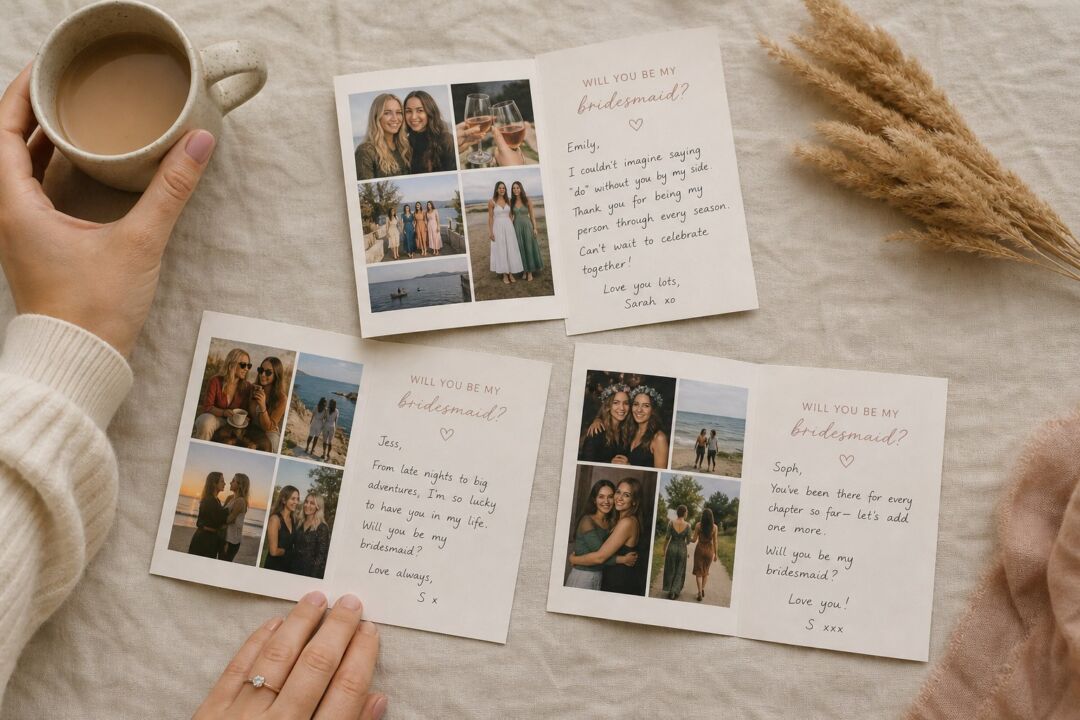
Asking someone to be in your wedding party is one of the first things you do after getting engaged. It sets the tone for everything that comes after, and the right words can make it feel as meaningful as it actually is.
This guide covers wording for every relationship and register, from a heartfelt note to your sister to a low-key text to a friend across the country. The examples here are original, so use them as a starting point and make them yours.
One decision to make before you start: are you giving each person a card, a box, or a direct message? The words below work for any format.
Quick reference: what to cover in your ask
- Name the role clearly (bridesmaid or maid of honor, not just “part of my day”)
- Say why you chose this person specifically, even in one sentence
- Give a rough sense of what you are asking them to commit to, especially if travel is involved
- Leave room for them to say no without guilt
A proposal card is what makes the ask a keepsake instead of a text message.
Wording by Relationship
No two friendships are the same, and your bridesmaid asks should not read like copies of each other. Below are wording ideas grouped by relationship.
For Your Sister
A sister ask often carries years of shared history. You do not need to explain the relationship, so lean into the shorthand you already have.
Warm and sincere:
“Growing up with you is something I would not trade for anything. Having you beside me on the day I get married feels like the natural next chapter. Will you be my bridesmaid?”
A little playful:
“After everything we have put each other through over the years, you being my bridesmaid is the least you can do. I mean that in the best possible way. Will you?”
Short and genuine:
“I cannot do this without you. Be my bridesmaid?”
For Your Best Friend
This is the ask where you have the most room to be specific and personal. Use a detail or a memory only the two of you would recognize.
Heartfelt:
“You have shown up for every version of me, including the ones I am not proud of. The person I am on my wedding day exists in part because of your friendship. I would be so honored if you would stand beside me as my bridesmaid.”
For a friendship that started young:
“We have been doing life together since [your shared starting point]. I cannot imagine beginning this chapter without you in the front row. Will you be my bridesmaid?”
Direct and warm:
“My wedding day has a bridesmaid-shaped space with your name on it. Say yes?”
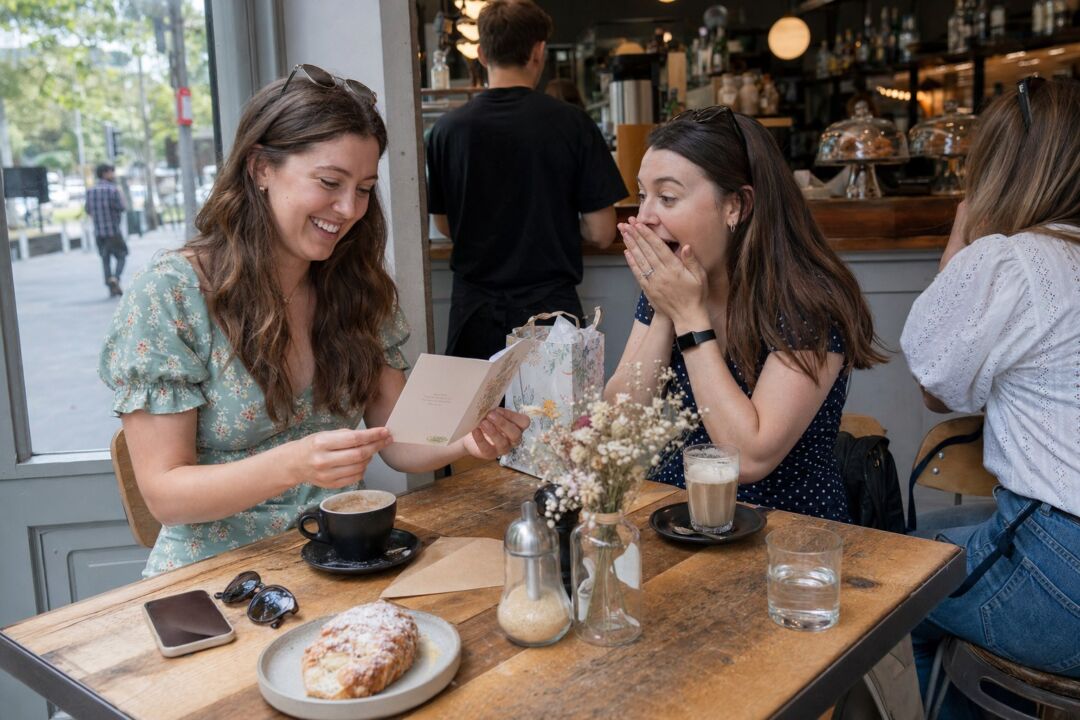

For Your Future Sister-in-Law
This ask can feel slightly formal if the relationship is still new, or entirely easy if you have been close for years. Either is fine.
If the relationship is still developing:
“I am so glad I am joining your family. I would love to start this next chapter by having you beside me. Would you be a bridesmaid at our wedding?”
If you are already close:
“We went from almost strangers to people who send each other ridiculous messages at midnight. I want you beside me on the biggest day of my life. Will you be my bridesmaid?”
Simple and welcoming:
“Being part of your family is something I am already so grateful for. It would mean the world to have you stand with me. Will you be my bridesmaid?”
For a Friend You Have Drifted From
This ask is worth making. If someone mattered to you during a formative period, asking them back in is one of the quieter, lovelier things about getting married.
Honest and open:
“Life pulled us in different directions, but the friendship we had, and still have, is something I think about more than you might know. I would love to have you beside me on my wedding day if you are up for it. No pressure either way, but I wanted to ask.”
Light but meaningful:
“I know it has been a while. I have been thinking about you lately, and I realized there was no version of my wedding where I did not at least ask. Will you be my bridesmaid?”
Short Wording When You Want to Keep It Simple
Short wording works especially well on a small card, added as a note inside a box, or sent as a message when you and the recipient have that kind of friendship.
- “You are my person. Will you be my bridesmaid?”
- “My wedding needs you in it. Say yes?”
- “No long speech. Just: will you be my bridesmaid?”
- “Stand beside me on the best day of my life?”
- “I pick you. Bridesmaid?”
- “I am getting married and I want you there, up front. Will you be my bridesmaid?”
- “Bridesmaid? I already know your answer but I am asking properly anyway.”
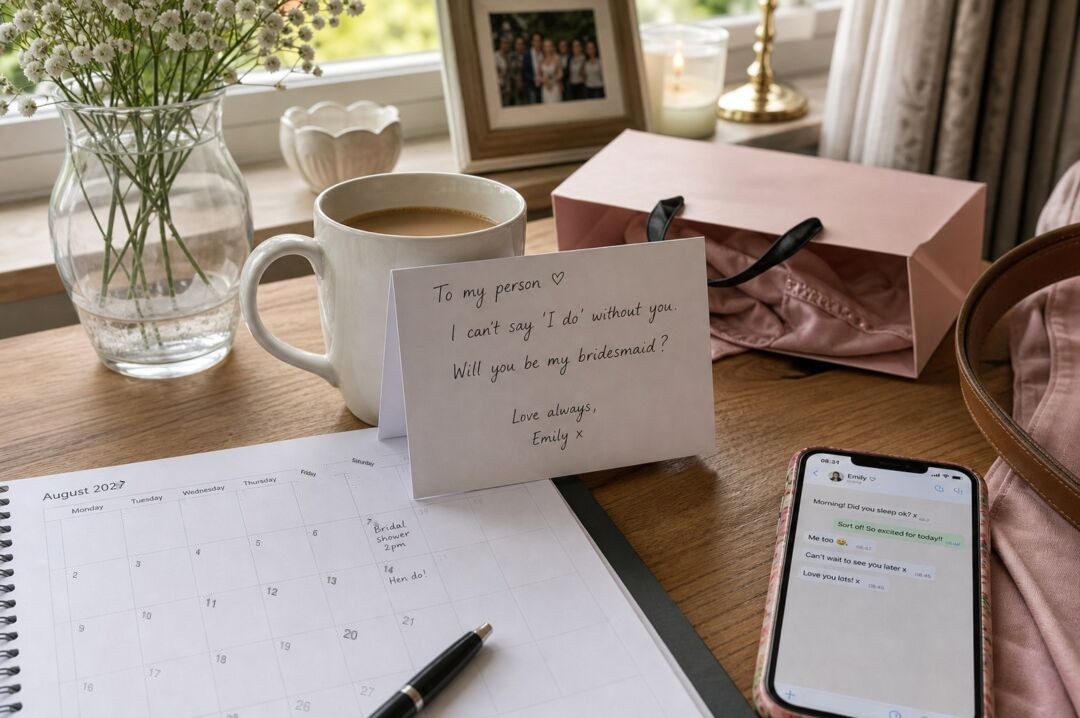
Funny Wording for Bridesmaids
Funny works when it matches the friendship. These examples assume the person receiving them has the same sense of humor as the sender.
Commitment-focused:
“I am about to ask you to spend a meaningful amount of money on a dress you may wear exactly once. But first: will you be my bridesmaid?”
Self-aware:
“Fair warning: there will be spreadsheets. And opinions about flowers. And a seating chart that changes seventeen times. Still want to be my bridesmaid?”
Recruiting tone:
“You have been selected for an important mission. The dress code is formal, the dancing is mandatory, and the speeches will make you cry. Please report to the altar. Will you be my bridesmaid?”
Understated:
“I am getting married. I need backup. You are my first call.”
Warm underneath the joke:
“I cannot think of anyone I would rather have beside me while I try not to trip walking down the aisle. Be my bridesmaid?”
Gift tags and cards you personalize with her name.
Asking Your Maid of Honor
Maid of honor wording should be distinct from bridesmaid wording. Name the role clearly, and say something about why you are choosing this person for it specifically.
Full and heartfelt:
“Of everyone in my life, you are the person I call first when something happens, good or bad. You know me better than almost anyone. I would be so honored if you would be my maid of honor, the person standing closest to me on the day I get married.”
Honest about what the role means:
“Being my maid of honor is not just a title. It is the person I lean on when the planning gets overwhelming, the one who talks me down when something goes sideways, and the one standing right beside me when everything goes right. That person is you. Will you be my maid of honor?”
Short and certain:
“I am asking you to be my maid of honor because there is no one else it could be. Will you?”
For a sister you are making maid of honor:
“I know I can always ask you the hardest things. So here is the hardest-but-actually-easiest question: will you be my maid of honor?”
Asking Someone to Be a Bridesmaid, Not the Maid of Honor
This is the question most wording guides skip. If your maid of honor is already chosen and you have a larger bridal party, you may be asking people who know they are not in the lead role. Clarity matters here.
The simplest approach: name the role directly in the ask, so there is no ambiguity.
Direct and warm:
“I am asking a few of my closest people to be bridesmaids, and you are one of them. I would love to have you beside me on the day. Will you be a bridesmaid at my wedding?”
If you think they might wonder:
“[Name] is going to be my maid of honor, and I could not be happier she said yes. Now I have an equally important ask for you: will you be one of my bridesmaids? I want you up there with me.”
Casual:
“I am putting together my bridal party and you are on my list. You are actually near the top of my list. Will you be my bridesmaid?”
One thing to avoid: calling someone a bridesmaid in the ask but expecting maid-of-honor-level involvement without saying so. If someone is a bridesmaid, they should know what that means for your specific wedding before they say yes.
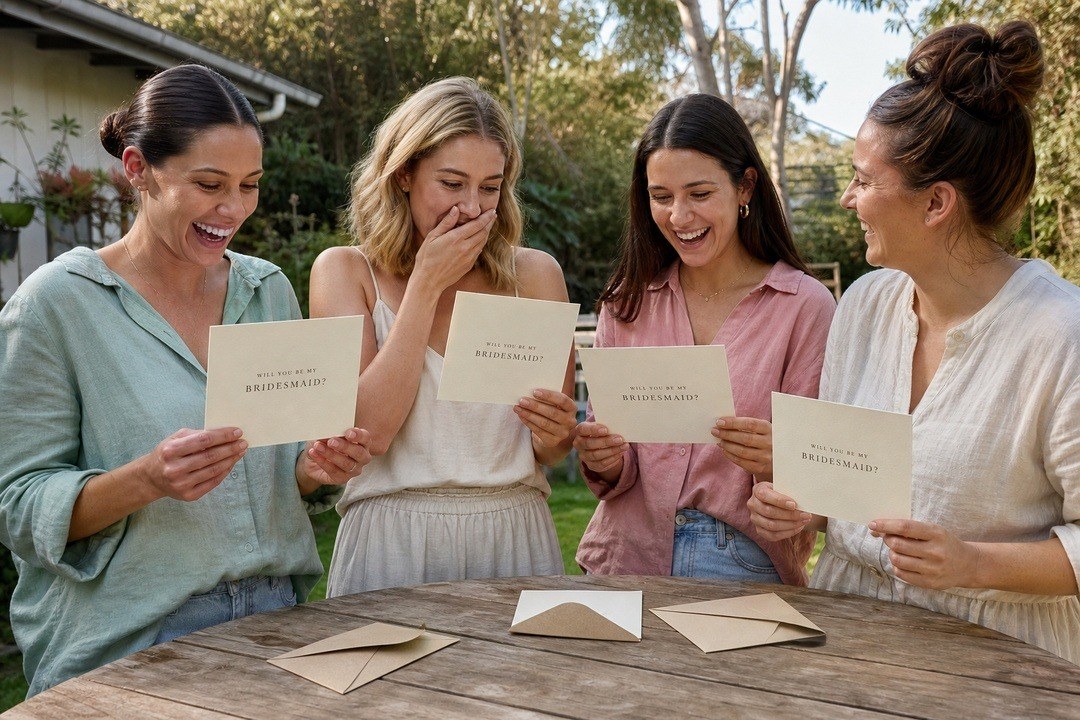
Asking Someone Who Lives Far Away
Long-distance asks come with a layer of complexity most wording guides ignore. You are asking someone to commit time, travel, and money without a full picture of the schedule yet.
A few things make long-distance asks land better.
Acknowledge the distance. Do not write around it. Naming it shows you have actually thought about what you are asking.
Be upfront about expectations. Even a rough outline of the main events you hope they can attend helps them say yes without quiet worry in the background.
Make the out feel real. If travel genuinely does not work, you can still involve them in other ways. Say that, and mean it.
Wording examples for long-distance bridesmaids:
“I know we are not in the same city, and I know this is a bigger ask because of that. But you are one of my closest people, and I would love to have you beside me on my wedding day. No pressure if the logistics do not work, but I hope they do. Will you be my bridesmaid?”
“Distance has never changed how much your friendship means to me. I am getting married and I want you there, ideally up front in a beautiful dress. I know it is a trip, and I promise I will work around what makes sense for you. Will you be my bridesmaid?”
For a maid of honor who lives far away:
“You are the person I want as my maid of honor, even though I know that comes with some travel. I want to be honest with you: I do not know yet exactly what I will need or when. Can we talk through what works? And would you be willing to be my maid of honor?”
A video call followed by a mailed card is a format that works well for long-distance asks. The call makes it feel personal in real time; the card gives them something physical to hold on to. If you want a card that travels, you can find designs you can personalize at Paperlust and mail ahead of the conversation. If the card travels inside a box, printed gift tags keep the whole parcel looking considered rather than assembled.
How to Deliver the Ask
The wording matters, but so does the format.
Card only. A personal handwritten note, or a printed card with your message inside, is the most classic format. It is easy for the recipient to keep. It works for any relationship and any distance.
Card inside a box. If you are putting together a proposal box with small gifts, let the card carry the actual ask. The gifts create a moment; the words do the work. (Your sibling article covers box ideas in depth if you are heading in that direction.)
Video call, then a card. For long-distance asks, calling first and mailing a card afterward is a combination that holds up well. They get the real-time moment, and they get something physical afterward.
Text or voice note. If your friendship is primarily digital, a thoughtful message or voice note is completely appropriate. The format does not diminish the ask.
Whatever you choose, the other person will remember the words more than the packaging.
Engagement and bridal party stationery personalized online. The $5 sample pack puts seven designs and an envelope in your hands, including real foil and letterpress, so you judge paper and finish off a screen.
Frequently Asked Questions
When should I ask my bridesmaids?
The bridal party is commonly asked within the first few weeks of getting engaged. You do not need a venue locked in or a date confirmed before you ask, but knowing the rough year helps the people you are asking understand the time commitment. Asking early also means your bridesmaids can be involved in any planning stages they want to participate in.
How many bridesmaids should I have?
There is no rule. Some parties have two people; some have twelve. The number that works is the number of people you genuinely want beside you, not a number you arrive at by trying to match the groomsmen or follow a trend. A smaller party is easier to coordinate and typically involves less expense for everyone in it.
Do bridesmaids have to be women?
No. A bridesperson or bridesmen can stand on the bride’s side regardless of gender. The wording of the ask is the same: you name the role, say why you chose them, and ask clearly. “Will you be my bridesperson?” or “Will you stand beside me as part of my bridal party?” works for anyone.
What if someone says no?
Let them off the hook without making it complicated. A no is almost always about logistics or life circumstances, not about how much they care about you. “No pressure at all, I completely understand” is the right response. Follow through on it, and keep the friendship intact.
Do I need to ask everyone at the same time?
Not necessarily. It is common to ask your maid of honor first and then your bridesmaids separately. What matters is that no one finds out they were not asked by hearing about it from someone who was. Handle the relationships where that could sting before word spreads.
Is it okay to ask someone to be a bridesmaid over text?
Yes, especially for casual friendships or long-distance relationships. A heartfelt message counts. If the friendship is one where a more ceremonial ask would feel right, do that instead. The best format is the one that matches how the two of you actually communicate.