
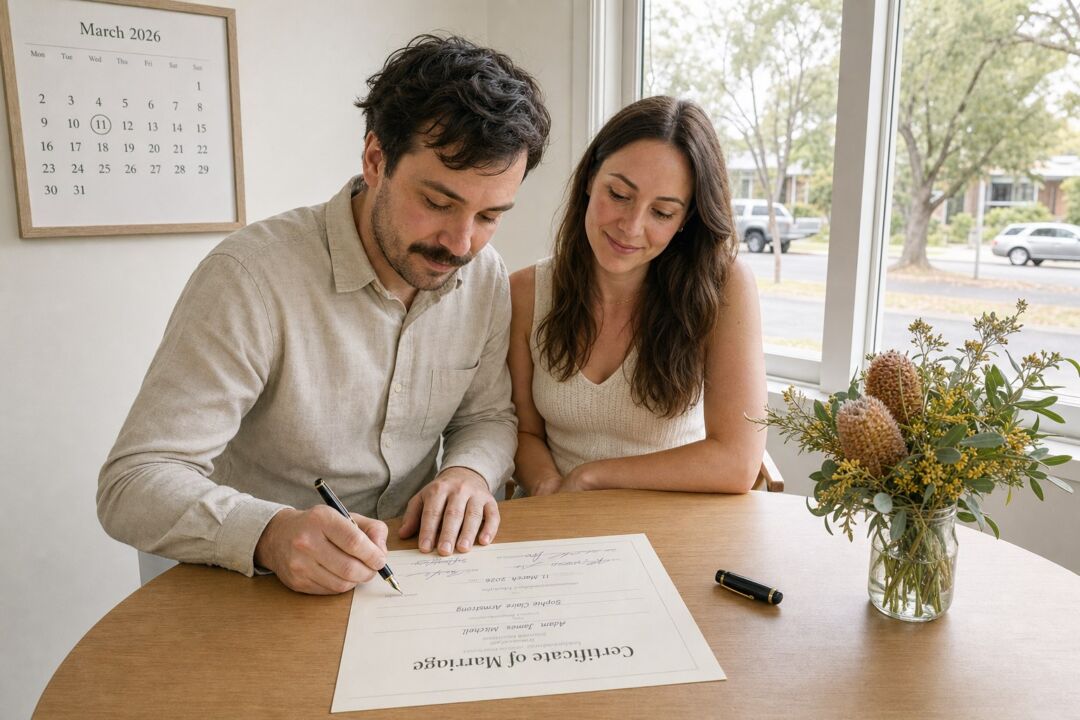
A legal marriage and a traditional wedding are not the same thing. A wedding is an event. A marriage is a legal status. You can have one without the other, and the path to the legal part is simpler than most people realize.
The four routes couples actually use are: a courthouse or registry office ceremony with witnesses only, an elopement just the two of you and an officiant somewhere that matters, a small home ceremony with a celebrant, and a legal signing now with any celebration planned for later. Every one of these involves the same paperwork and produces the same legal result. None requires a venue, catering, a guest list, or invitations.
What none of them can skip: a marriage license (in the US) or a Notice of Intended Marriage filed in advance (in Australia), an authorized officiant, and two adult witnesses. The legal minimum is real. Everything else is a choice.
| Option | Typical timeline | What you need | Best for |
|---|---|---|---|
| Courthouse / registry office | Days to weeks (AU: min. 1 calendar month for NOIM) | License + officiant + 2 witnesses | Maximum simplicity, lowest cost |
| Elopement | Same legal lead time | License + officiant + witnesses + location | Wanting a moment, not a crowd |
| Home or private ceremony with celebrant | Same legal lead time | Celebrant + license + 2 witnesses | Some control over setting and feel |
| Legal now, celebration later | Legal part now; party whenever suits | License + officiant + witnesses | Practical urgency or party fatigue |
In every case: you cannot skip the license, the officiant, the witnesses, or the filing. Those are set by law, not by tradition.
Two witnesses or twenty friends, they all need the where and when in writing.
Courthouse or Registry Office: The Fastest Legal Route
In the United States, the process runs like this: obtain a marriage license from the county clerk’s office in the county where you plan to marry, satisfy any waiting period your state requires (many states have none, others require one to three days), then appear for a brief civil ceremony before a judge, magistrate, or court clerk. The ceremony usually takes under fifteen minutes. You state your consent, the witnesses sign, the officiant files the paperwork. You leave legally married.
Fees vary by county and state. The license itself and the civil ceremony are typically the only costs.
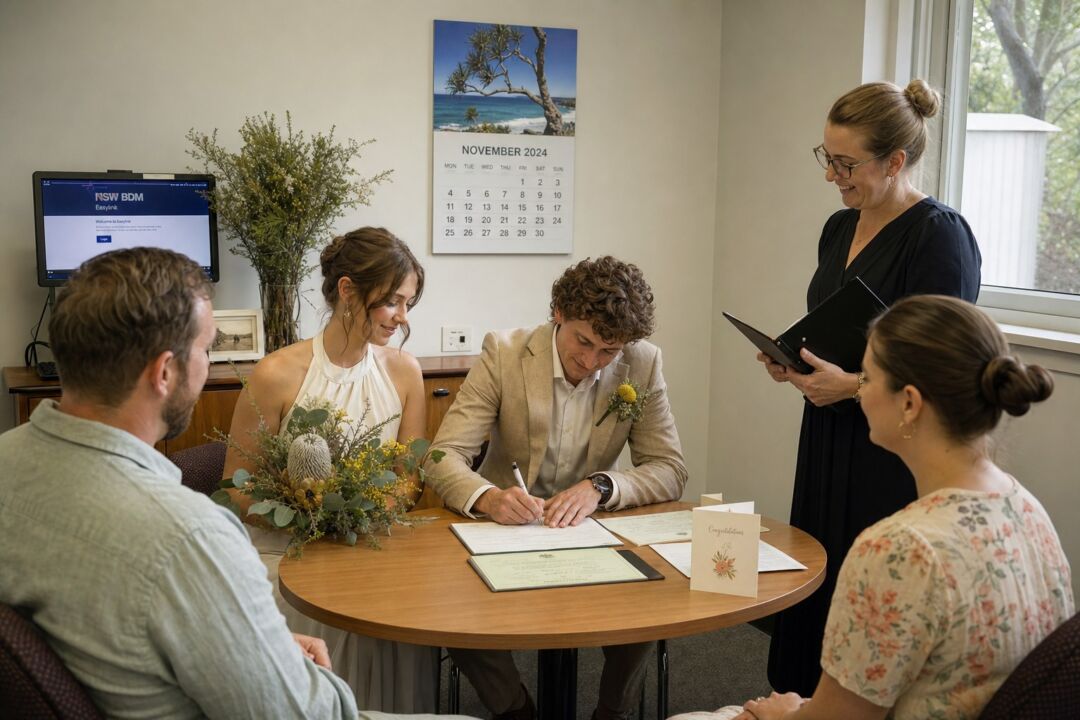
In Australia, the equivalent is a ceremony at a Births, Deaths and Marriages (BDM) registry office in your state or territory. This is not a courthouse wedding in the American sense; Australian courthouses handle legal proceedings, not marriages. A registry ceremony is short, conducted by registry staff, and held in a basic on-site room. Fees are set by each state and territory and vary accordingly.
The critical requirement that applies to every legal wedding in Australia, registry office or otherwise: you must lodge a Notice of Intended Marriage (NOIM) with your celebrant or registry at least one calendar month before the ceremony, and no more than eighteen months before. You also need two adult witnesses present on the day. You cannot walk in without this notice having been lodged.
For a full walkthrough of the US courthouse process, see how to get married at the courthouse. For the Australian registry office process, see registry office weddings in Australia.
What you give up: any say over the setting, any personalization of the ceremony, and the kind of moment couples tend to describe when they talk about their wedding day. If none of that matters to you, this is the simplest, fastest, and cheapest route available.

Elopement: Just the Two of You, Somewhere That Matters
Elopement is often described as skipping the wedding. What it actually is: a legal ceremony, the same as any other, held in a location you choose rather than an office building. You still need an authorized officiant. You still need two witnesses in most places. The certificate still needs to be signed and filed.
What changes is the context. Couples who elope generally pick somewhere meaningful: a hiking trail, a beach they have been to before, a hotel room in a city they love, a quiet corner of a park. The ceremony can take ten minutes. The officiant says the required words, both of you consent, the certificate is signed, and it is done.
In Australia, the NOIM timeline still applies. You cannot decide on Monday and elope on Tuesday. The notice must be lodged at least one calendar month in advance with your chosen celebrant, even for the most minimal possible ceremony. The ceremony location is flexible (some public parks and national parks require permits), but the paperwork is not.
Cost for a bare-bones elopement varies. A basic ceremony with an officiant or celebrant has no government-set minimum; the actual fee depends on your location and who you hire, so get quotes from a few local officiants or celebrants before setting a budget. Add a photographer, a specific private location, or a dinner afterward, and the number rises. The real constraint is time, not money: build the license or NOIM lead time into any date you are considering.
What you give up: the ability to share the moment with anyone. For some couples that is exactly the point. For others, it creates ongoing tension with family, which is worth thinking through before you do it.
A Small Ceremony at Home with a Celebrant
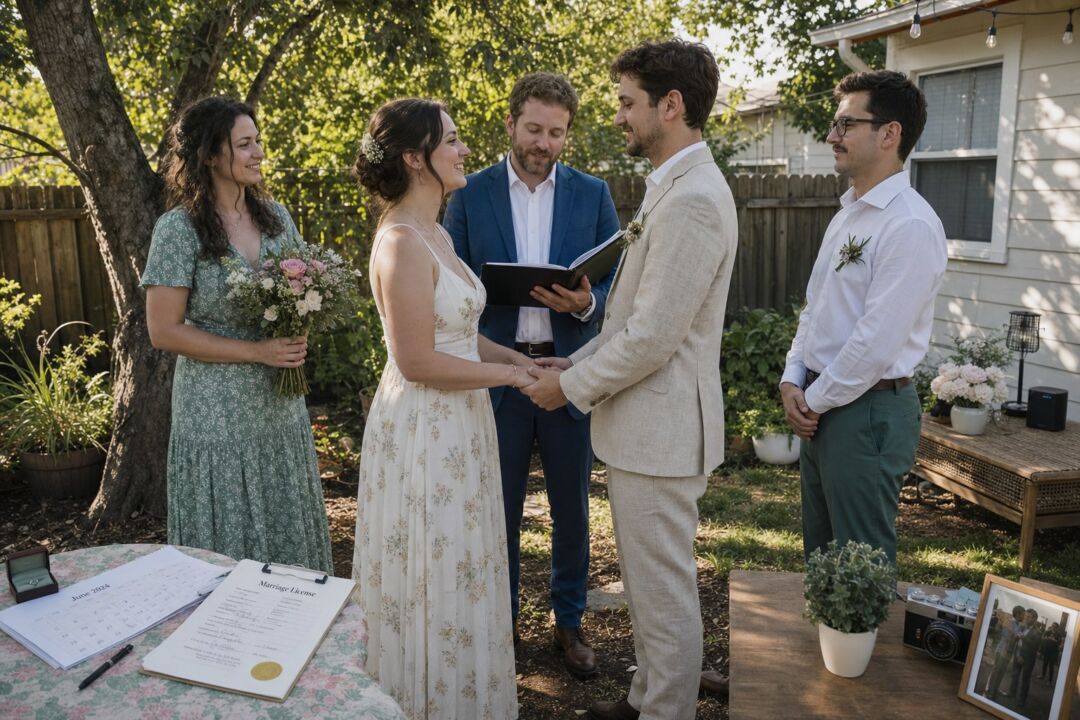
This option sits between “nothing” and “a wedding.” You hire an authorized officiant or celebrant to come to you. The ceremony happens at your home, in your garden, in a rented space, or anywhere private. You can have a few people there or keep it to witnesses only.
The legal requirements are the same as any other option. In the US: a valid marriage license, an officiant authorized in your state, and witnesses as required. In Australia: NOIM lodged at least one calendar month in advance, an authorized marriage celebrant, and two adult witnesses. The legally required words of consent must still be spoken aloud. You cannot substitute a private reading for the legal language.
What this option adds is some control over the feel of the event. A good civil celebrant can write a brief ceremony that feels personal even if the whole thing takes fifteen minutes. You choose who is in the room. You choose the setting. If you want no guests at all, you bring two witnesses and that is the complete attendance.
What you give up: scale, and the political simplicity of “nobody was invited, not just you.” If you have close family, a home ceremony with five people present is a harder conversation than an elopement with zero guests, because some people were there and others were not. That cuts both ways.
An announcement tells people it happened. The invitation to the party comes after.
Marrying Legally Now and Celebrating Later
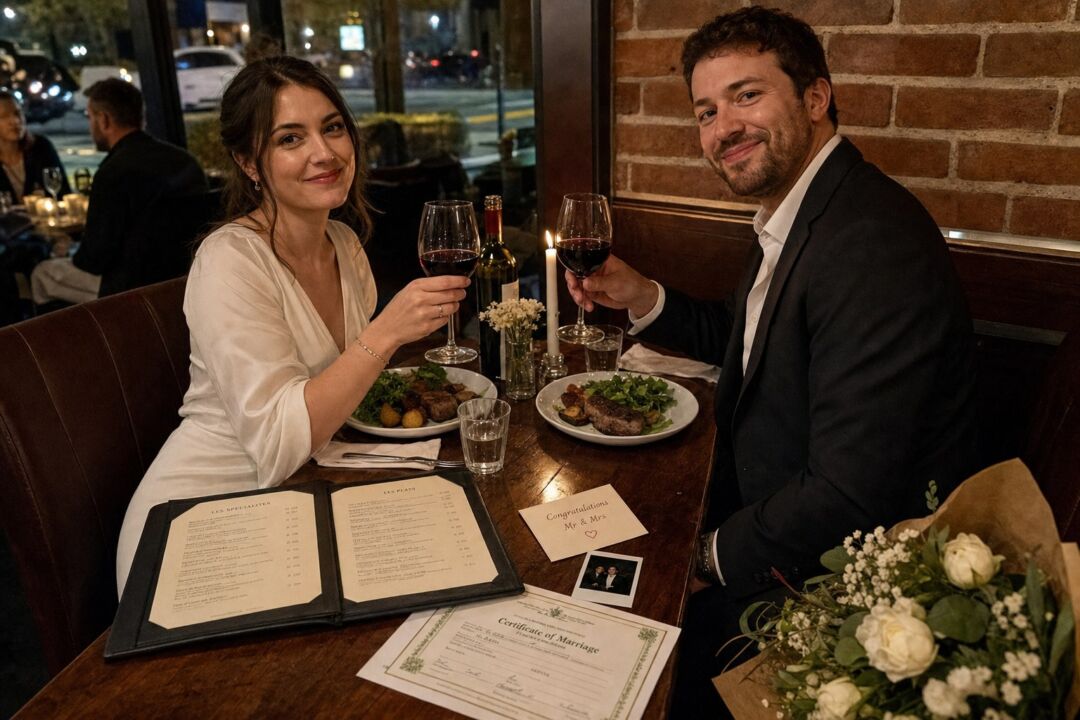
This is one of the more common patterns for couples who need or want legal recognition before they are ready for any kind of celebration. The legal ceremony happens first, with minimal witnesses and no event. The gathering, party, or celebration happens later, on a timeline that works.
Practical reasons couples use this approach: one partner needs to be added to the other’s health insurance or visa status before a planned ceremony date; there is a pregnancy and the legal timeline matters; the couple wants to file taxes jointly before a large celebration; or they want the legal part done and the pressure of planning an event removed from the same season of life.
The later celebration is entirely up to you. It can be a dinner for thirty, a backyard gathering, a formal event, or nothing at all. By the time it happens, you are already married, so any subsequent gathering is a party, not a legal ceremony. You design it without the standard requirements of a wedding.
What you give up: having the legal moment and the social celebration happen at the same time. Some couples care deeply about those being aligned. Others find the separation useful, especially when planning a large event in the same window as everything else in life feels genuinely overwhelming.
For a full walkthrough of the legal requirements in Australia, including the NOIM, witnesses, and certificate process, see how to legally get married in Australia.
Telling People You Got Married Without Them
This is the part most guides skip. It is also often the real anxiety sitting behind the search query.
If you have parents, siblings, or close friends who expected to be at your wedding, telling them you are already married is its own process, and it deserves some thought.
Tell close family personally, before anything goes online. Discovering the news through a social media post or, worse, through someone else is the version of this that tends to create lasting tension. A phone call or face-to-face conversation, even a short one, does the relational work that a post cannot.
Lead with the marriage, not the explanation. The couples who handle this well are the ones who open with what the marriage means to them and what they are looking forward to, rather than starting with a list of reasons why no one was invited. The reason matters less than the relationship, and framing it that way tends to go better.
Consider what you send. Many couples who marry without a wedding still want to share the news properly. A printed announcement card does work that a group text or Instagram story does not. It acknowledges that the people receiving it matter enough to be informed directly. It is something people keep. It handles the “telling people” task with more warmth than most conversations can manage on their own.
Paperlust’s collection of wedding stationery and announcements includes designs that work well as post-marriage announcement cards, customized with your names, date, and whatever message fits the tone of your news. For couples who skipped everything else, this is often the one piece of stationery that still makes sense. Printed wedding announcements are the format built for this: they share the news after the fact rather than asking anyone to attend.
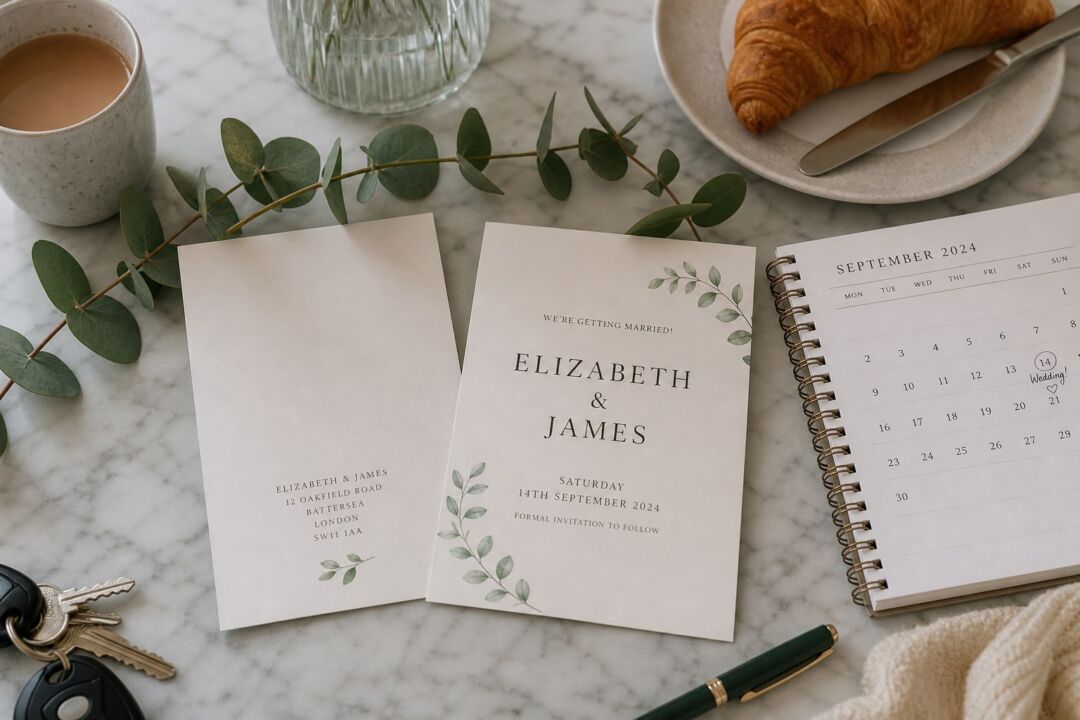
Wedding announcement designs you personalize online, printed and posted. The $5 sample pack puts seven designs and an envelope in your hands, including real foil and letterpress, so you judge paper and finish off a screen.
Frequently Asked Questions
What is the cheapest way to get married without a wedding?
A courthouse appointment or registry office ceremony is typically the lowest-cost legal option. In the US, you pay for the marriage license and the civil ceremony fee; both vary by county. In Australia, state registry offices set their own fees; check your state’s Births, Deaths and Marriages website for the current schedule. Both options require only two adult witnesses beyond the officiant. There is no minimum spend beyond the government fees.
Do you still need witnesses if you don’t have a wedding?
In most places, yes. Most US states require one or two adult witnesses. Australian law requires two adult witnesses at every legal ceremony, regardless of how small it is. A small number of US states, including Colorado, allow self-solemnization, meaning no officiant or witnesses are required. Check the specific rules for your state or territory before planning your date.
What do you call getting married without a wedding?
Common terms include civil ceremony, courthouse wedding (US), registry wedding (AU), and elopement. All describe a legally binding marriage that skips the traditional event. “Elopement” has broadened in meaning in recent years and now often refers to any small or private legal ceremony rather than its older meaning of marrying in secret without family knowledge.
Can you just sign paperwork to get married?
The legal minimum is close but not quite that simple. You need a valid marriage license (US) or a lodged NOIM (Australia), an authorized officiant in most jurisdictions, two adult witnesses in most states and territories, and the ceremony must include the legally required words of consent spoken aloud. In the few places that allow self-solemnization, you can skip the officiant, but you still need a license. There is no jurisdiction where a private document signing alone constitutes legal marriage.
How do you tell your family you got married without a wedding?
Tell close family personally before anything is posted publicly. A phone call or in-person conversation, even a brief one, avoids the friction that comes with finding out through a social media post or third party. Lead with what the marriage means to you rather than with an explanation of why no one was invited. A printed announcement card sent to family and close friends afterward does additional relational work that a digital message tends not to.
Is getting married without a wedding legally valid?
Yes. The ceremony format, guest count, venue, clothing, rings, and virtually everything else associated with a wedding are social customs, not legal requirements. What makes a marriage legally valid is the license or NOIM, the authorized officiant where required, the adult witnesses where required, the spoken words of consent, and the certificate filed with the relevant authority. None of those depend on any element of a traditional wedding.