
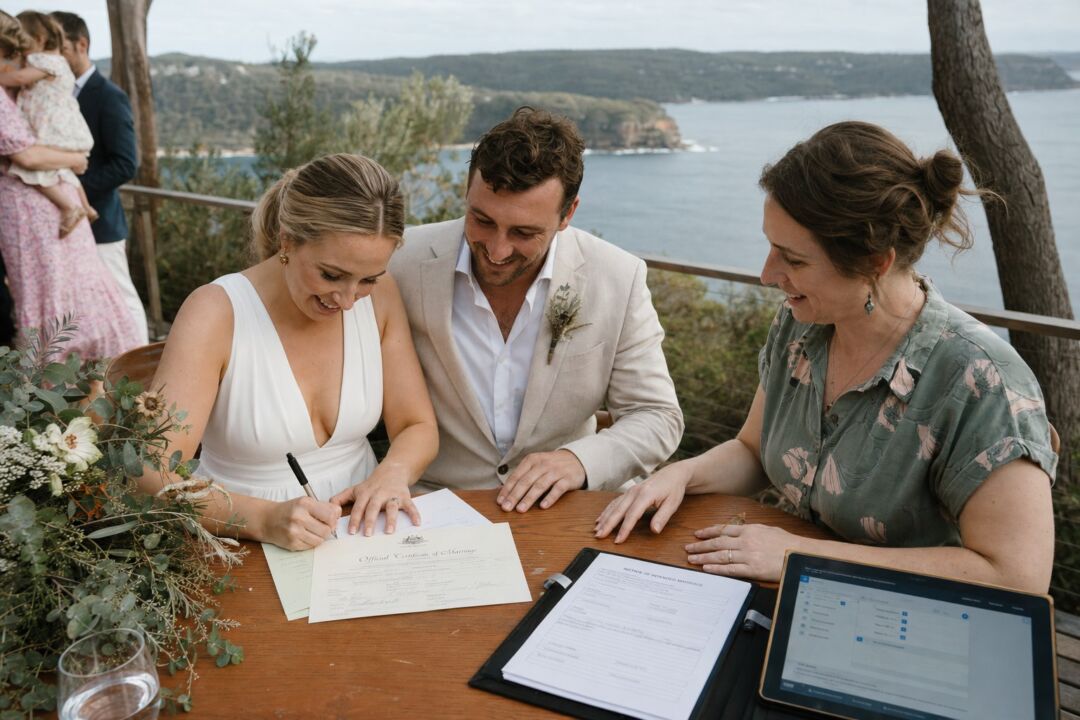
An elopement in Australia can cost less than $700 or more than $15,000. That range is real but not helpful on its own. The honest answer is built from parts: what each legal step costs, what a photographer adds, what a permit runs in your state, and what flowers and outfits realistically contribute.
This article builds that picture, then puts the parts together in three sample budgets: the bare legal minimum, a proper ceremony with a photographer at a scenic location, and the elopement-plus-celebration approach where you marry privately then host a party later. It also covers what all-inclusive packages actually include, and what to check before booking one.
All figures are in Australian dollars.
| Component | Typical range (AUD) |
|---|---|
| Celebrant – legals-only ceremony | $500 to $700 |
| Celebrant – full personalized ceremony | $800 to $1,400 |
| NOIM lodgement (government fee) | $0 (no statutory charge) |
| Official marriage certificate | $56 to $70 (varies by state) |
| National park or council permit | $175 to $700+ |
| Photographer (1 to 3 hours) | $1,000 to $3,000 |
| Bouquet and buttonhole | $150 to $350 |
| Outfits (both people) | $400 to $3,000+ |
| Travel and accommodation | $200 to $5,000+ |
The three tier totals in the body are worked examples, not research averages. Sourced line items: Easy Weddings 2026 Annual Australian Wedding Industry Report (celebrant national average); state BDM fee schedules (VIC, NSW, QLD, WA, NT); Parks Victoria 2026-27 event fee schedule; NT Parks, Wildlife and Heritage site fee schedule.
Even at two guests, something has to tell them where to be.
What each part of an elopement costs
The Notice of Intended Marriage
The Notice of Intended Marriage (NOIM) is the form you lodge with your celebrant at least one calendar month and no more than 18 months before the ceremony. When you marry through a private authorized celebrant rather than a state registry office, there is no government fee to lodge the NOIM. Some celebrants list a “NOIM lodgement” or “admin” fee of around $150 to $200, but this is a private charge for their time and paperwork, not a statutory government fee.
The celebrant’s fee
This is the largest legal cost. The Easy Weddings 2026 Annual Australian Wedding Industry Report puts the national average celebrant fee at $1,031. Legals-only ceremonies typically run below that average; a full personalized ceremony with a bespoke script typically runs above it. In Sydney and Melbourne, experienced celebrants often start well above the national average. If your location requires travel, budget separately for a travel loading.
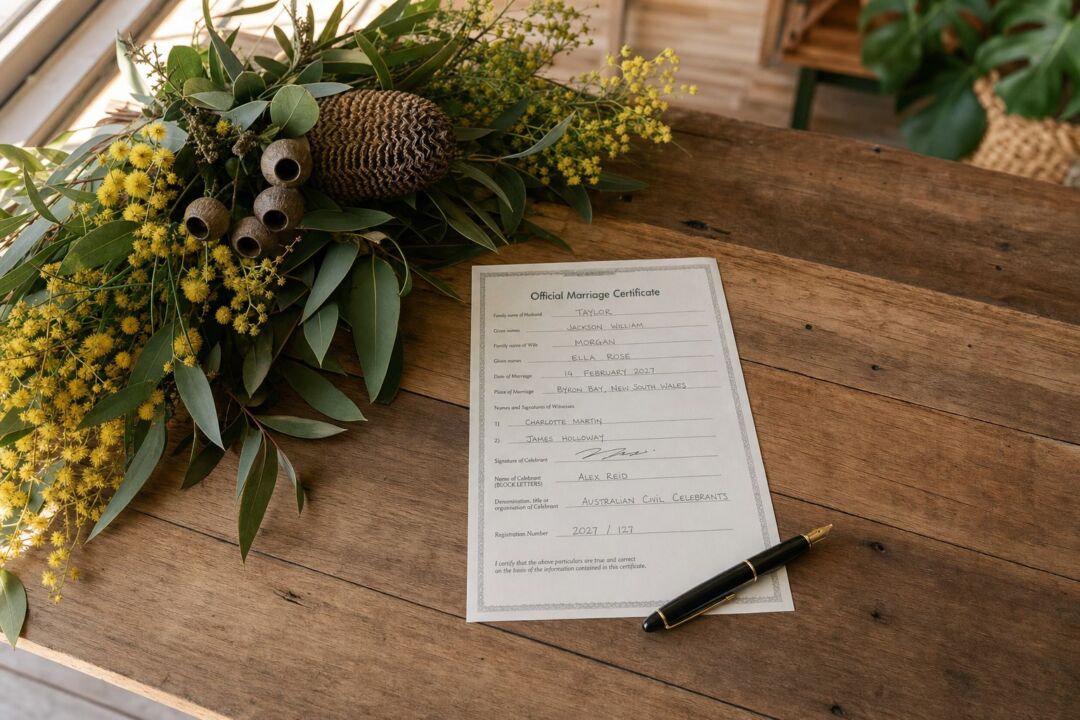
The official marriage certificate
After the ceremony, your celebrant lodges the completed registration paperwork with the relevant state or territory registry of Births, Deaths and Marriages. You then apply separately for your official certificate. Fees from current government schedules: Victoria $59.10, Queensland $56.20, Western Australia $58.00, New South Wales $70, Northern Territory $54. Budget around $60 to $70 regardless of state.
Location permits
Most scenic locations require a permit. Parks Victoria’s 2026-27 wedding event fee schedule lists ceremony and photography permits for Mornington Peninsula National Park at $511.10 and Great Otway National Park at $445.10. In the Northern Territory, territory-managed parks charge site fees starting at $175 for up to six hours (NT Parks, Wildlife and Heritage fee schedule). Council-managed beaches typically require a ceremony booking; fees vary by council. Budget for the specific permit your location requires, and note that iconic or high-demand locations run well above council averages.
Permit processing times vary considerably: approximately eight weeks in Victoria, six weeks in Western Australia, four weeks in the Northern Territory, two weeks in Queensland, and around seven days in New South Wales. Apply before you lock in your date with your celebrant and photographer.
Photographer and other costs
One to three hours of professional photography is the biggest discretionary cost in most elopements. Rates vary widely by experience, portfolio, and location. A bridal bouquet and matching buttonhole cost $150 to $350 through a florist. Outfits range from modest off-the-rack purchases to custom pieces; elopement attire tends toward the less formal end, which keeps costs lower than a traditional wedding. Add transport and overnight accommodation if your location requires it.

Three sample elopement budgets
The tables below are worked examples using typical mid-market choices, not researched industry averages. Your actual costs will differ based on your location, celebrant, and photographer.
Tier 1: Sample legal minimum
On this example budget, the goal is becoming legally married with nothing else added.
| Item | Example cost (AUD) |
|---|---|
| Celebrant – legals-only civil ceremony | $600 |
| Official marriage certificate | $65 |
| Two witnesses (friends, no cost) | $0 |
| Transport to local venue or park | $50 |
| Sample total | approx. $715 |
A state registry office is another path to the legal minimum. Registry offices set their own fees for ceremonies and paperwork, and ceremonies are generally conducted at the registry’s premises on fixed dates rather than at a location you choose. Check your state registry’s current fee schedule for the complete cost.
Tier 2: Sample typical elopement
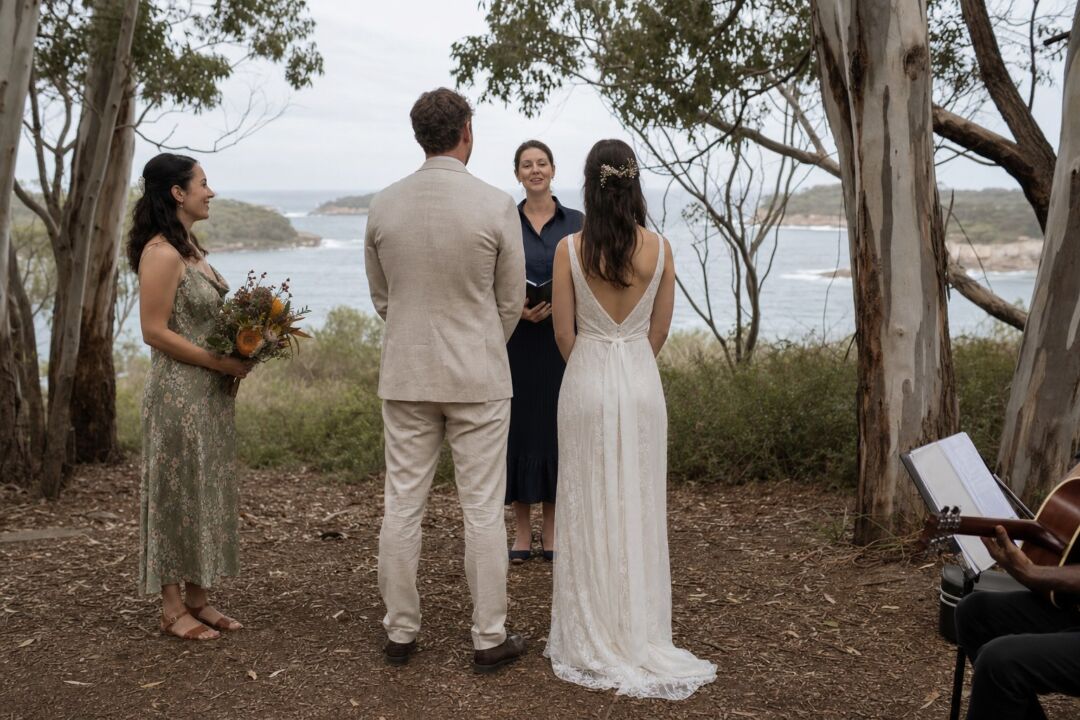
On this example budget, the couple holds a proper ceremony at a meaningful location, with a photographer.
| Item | Example cost (AUD) |
|---|---|
| Celebrant – full personalized ceremony | $1,100 |
| Official marriage certificate | $65 |
| National park or beach permit | $350 |
| Photographer – 2 hours | $1,800 |
| Bouquet and buttonhole | $250 |
| Outfits (both, mid-range) | $1,200 |
| Transport and a celebratory dinner for two | $400 |
| Sample total | approx. $5,165 |
On this example budget, photographer choice and location drive most of the variation. A weekday ceremony at a less popular location, a newer photographer building their portfolio, and casual outfits bring the sample total toward $3,500. A well-known coastal park, a senior photographer, and more elaborate florals push it toward $6,500.
Tier 3: Sample elopement plus celebration party
Some couples marry privately, then host a dinner or reception for family and friends. On this example, the elopement uses the same inputs as Tier 2. The celebration adds:
| Item | Example cost (AUD) |
|---|---|
| Elopement (Tier 2 as above) | approx. $5,165 |
| Private dining room or small venue hire | $1,500 to $4,000 |
| Catering – sit-down dinner, 20 to 30 guests | $3,000 to $8,000 |
| Invitations for the celebration dinner | $200 to $500 |
| Sample total range | approx. $9,000 to $17,000 |
This approach suits couples who want the intimacy of a private ceremony but whose families would feel excluded by having no celebration. The key advantage is control: you plan the two events independently and avoid the situation where one vendor decision inflates the whole budget.
Budget invitation designs printed on real stock, personalized online.
How an elopement compares to the average Australian wedding
The Easy Weddings 2026 Annual Australian Wedding Industry Report puts the national average wedding cost at $38,252. Couples typically start with a budget of $29,471 and overspend by around 23 percent. The average venue cost alone is $17,518, which already exceeds the sample Tier 2 elopement total from start to finish.
The main savings in an elopement come from skipping a reception venue, catering for a large guest list, and the vendor fees that scale with guest count. Many couples choose an elopement because they want a small, specific experience, not primarily to cut costs.
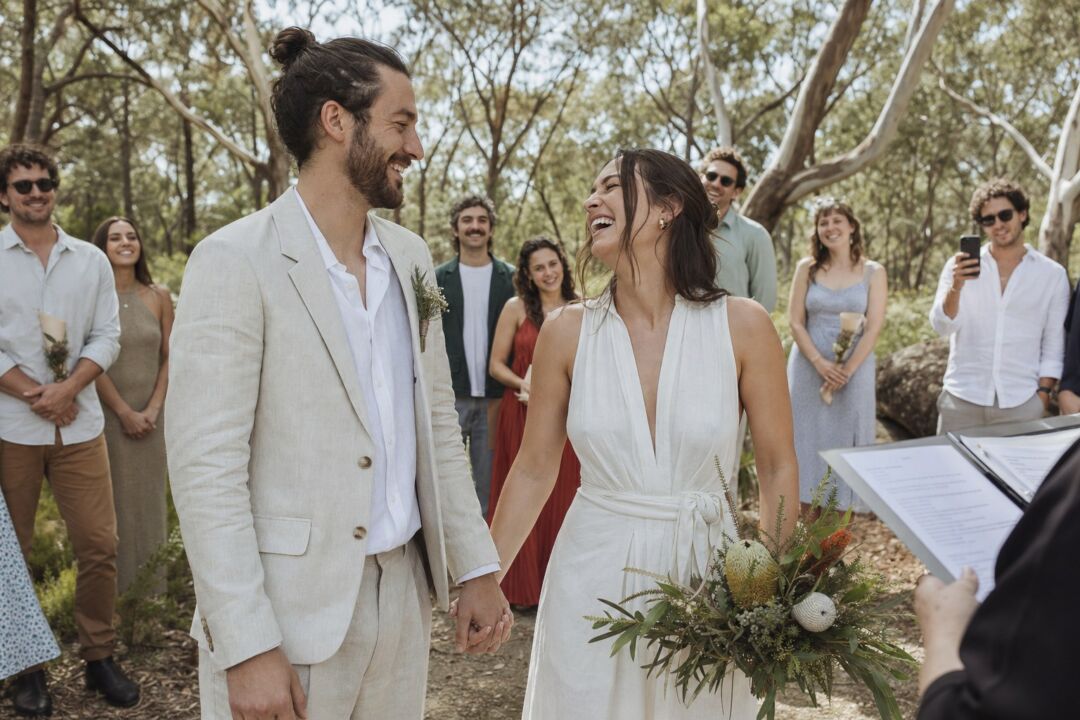
What elopement packages include (and what to check)
All-inclusive elopement packages have become a genuine market in Australia, with providers bundling celebrant, photography, and florals at a fixed price. Most packages at the entry level include a registered marriage celebrant with all legal paperwork, a personalized ceremony, one and a half to two hours of photography, and a bouquet and buttonhole. Some include hair and makeup; many do not.
Mid-range packages typically add a specific venue or location, ceremony styling (chairs, an arch or arbour), and a champagne toast or light grazing. Higher-tier packages often include one or two nights of accommodation, expanded florals, and fuller catering.
Items that packages almost always list as optional extras: videography, a wedding cake, formal catering beyond a toast, and transport.
Before booking, ask:
- Is the permit or venue hire fee included in the package price, or billed separately?
- What is the total photography coverage time, and are all edited digital files included?
- Is there a guest limit, and what is the per-head cost beyond that limit?
- Does the celebrant’s fee include travel to the listed location, or is there a travel surcharge?
- If a specific location is named in the package, is it guaranteed, or subject to availability?
“All-inclusive” is not a regulated term in Australia. Read the full inclusions list carefully before signing.
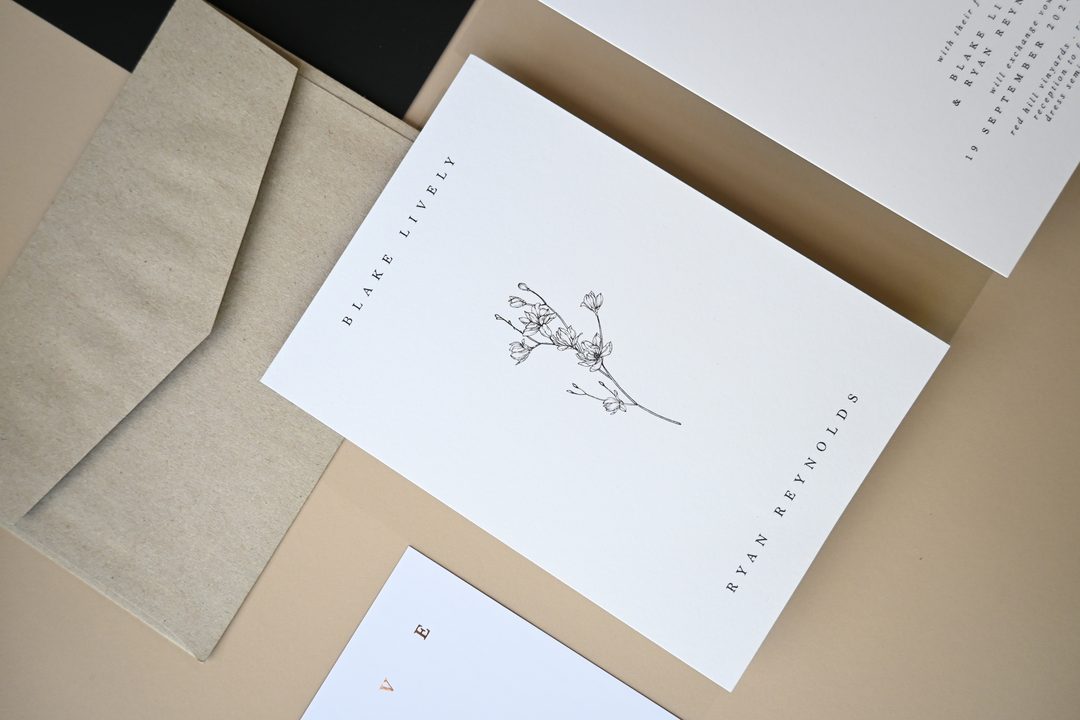
The two stationery costs that belong in your budget
Two stationery items come up in most elopements and are easy to leave off the initial budget.
Elopement announcement cards. If you marry before telling family and friends, a printed announcement is the considered way to share the news. A short run of quality announcement cards typically costs $150 to $400.
Celebration invitations. If you are hosting a party after the elopement, you need invitations for that event. Browse wedding invitations to find a design that fits the tone of your celebration, from clean digital prints to foil-stamped and letterpress options. Budget for save the date cards as well if the party is more than a few months out, since guests booking flights need the date early.
Both are worth including in your initial budget rather than treating them as an afterthought.
The legal steps that come first
Before you book a photographer or apply for a park permit, confirm the legal sequence.
Step 1: Choose an authorized celebrant
Check authorization through the register maintained by the Attorney-General’s Department. Your celebrant must be Commonwealth registered for the marriage to be legal in Australia.
Step 2: Lodge the NOIM
Lodge the Notice of Intended Marriage with your celebrant at least one calendar month before the ceremony. You can lodge it up to 18 months in advance. There is no government fee for this step when you use a private authorized celebrant.
Step 3: Apply for location permits
Apply for park, beach, or council permits at the same time as you lodge the NOIM. Processing times in some states take eight weeks, which catches many couples off guard.
Step 4: On the day
Bring your identity documents as requested by your celebrant. You need two witnesses aged 18 or over. The ceremony must include specific legally required words; your celebrant handles this.
For a full walkthrough of the legal process, see our guide to how to elope in Australia.
Announcement cards for the people who were not there. The $5 sample pack puts seven designs and an envelope in your hands, including real foil and letterpress, so you judge paper and finish off a screen.
Frequently asked questions
How much does it cost to elope legally in Australia?
The legal minimum, based on the worked example in this article, is around $715. This covers a celebrant offering a legals-only civil ceremony, your official marriage certificate from the state Births, Deaths and Marriages registry (VIC $59.10, QLD $56.20, WA $58.00, NSW $70, NT $54), and basic transport. You need two witnesses, but they can be friends at no cost. There is no government fee to lodge the Notice of Intended Marriage when you use a private authorized celebrant.
What is included in an all-inclusive elopement package in Australia?
Most Australian all-inclusive elopement packages include a registered marriage celebrant with all legal paperwork, a personalized ceremony, professional photography for one to two hours, and a bridal bouquet and buttonhole. Mid-range packages also include ceremony styling and a champagne toast. Items that are often listed as extras rather than inclusions: hair and makeup, videography, a cake, accommodation, and permit or venue fees. Read the full inclusions list carefully and ask whether the location permit is in the price.
Do I need a permit to elope in a national park in Australia?
Yes, in almost all cases. Parks Victoria’s 2026-27 fee schedule lists ceremony and photography permits at Mornington Peninsula National Park at $511.10 and Great Otway National Park at $445.10. In the Northern Territory, territory-managed parks charge from $175 for a six-hour site fee (NT Parks, Wildlife and Heritage). Council-managed beaches often require a ceremony booking. Apply at least two to three months in advance; processing takes eight weeks in Victoria and six weeks in Western Australia.
How much does a celebrant cost in Australia for an elopement?
The Easy Weddings 2026 Annual Australian Wedding Industry Report puts the national average celebrant fee at $1,031. Some celebrants charge less for a short legals-only ceremony; many charge more for a full personalized ceremony with a bespoke script. In Sydney and Melbourne, experienced celebrants often start above the national average. Budget separately for travel if your location requires it.
How much cheaper is eloping than a traditional wedding in Australia?
The Easy Weddings 2026 Annual Australian Wedding Industry Report puts the average Australian wedding at $38,252. The sample Tier 2 elopement in this article comes to around $5,165, and the sample Tier 3 elopement-plus-celebration comes to around $9,000 to $17,000. The venue is the main saving: the average venue spend in the same report is $17,518, more than the total sample Tier 2 elopement.
When do we get our official marriage certificate after eloping?
Your celebrant is required to lodge the completed marriage registration paperwork with the relevant state Births, Deaths and Marriages registry within 14 days of the ceremony. You then apply separately to that registry for your official certificate. Standard processing in most states takes two to four weeks from the date of your application. Check your state registry’s current fee schedule for priority processing options and their costs.