

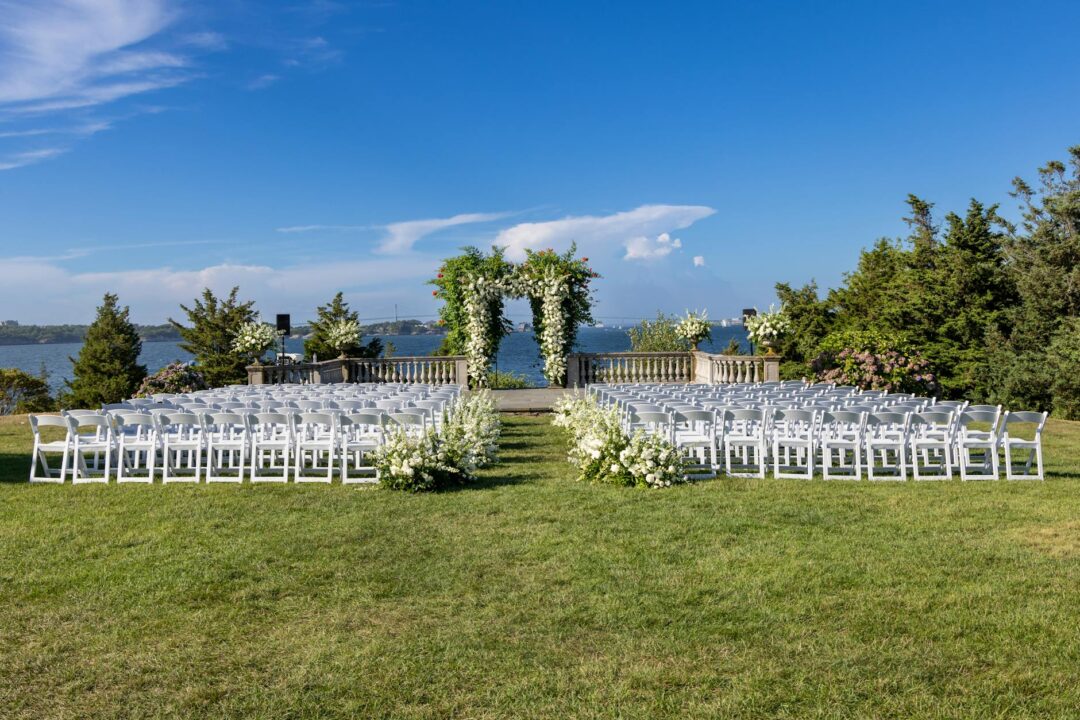
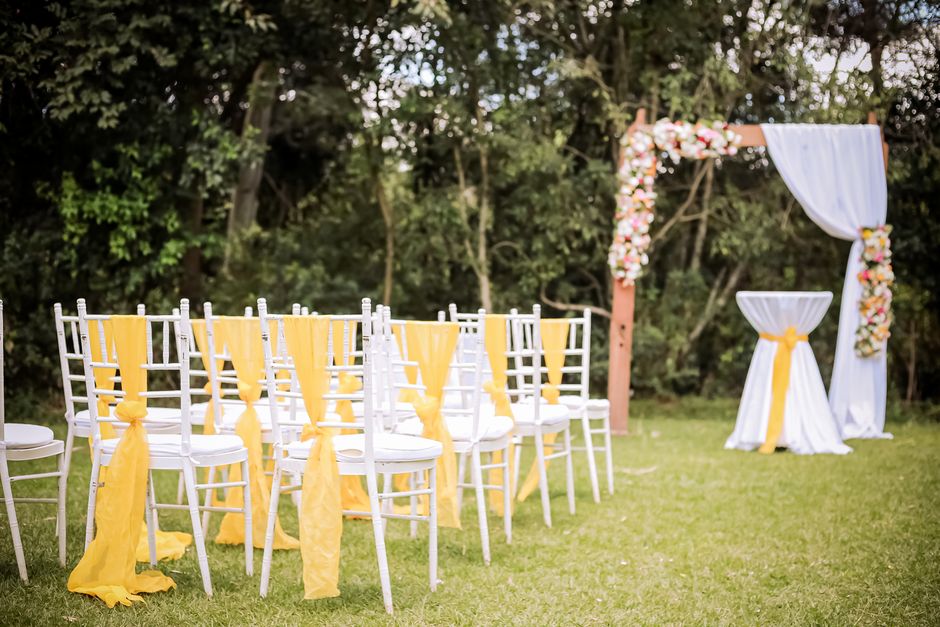

Your wedding theme is the single idea that ties every decision together – the flowers, the venue, the food, the fonts on your invitations, and the way guests feel when they walk in the door. Get it right and planning becomes intuitive. Without one, every choice feels disconnected. This guide covers more than 30 of the most beautiful and genuinely trending wedding aesthetics for 2026, with practical breakdowns for each so you can stop scrolling Pinterest and start deciding.
- Top trending for 2026: Italian Riviera, dark romance, earthy wabi-sabi, coastal, and modern minimalist are the five aesthetics dominating bridal searches right now.
- A theme is not a color palette – it is a full narrative that drives venue choice, decor, attire, and stationery simultaneously.
- Your venue is your biggest constraint: lock it first, then choose a theme that works with (not against) the architecture and landscape.
- Budget impact varies widely – rustic barn and garden themes typically cost less to style than ballroom glam or black tie formats where decor minimums are higher.
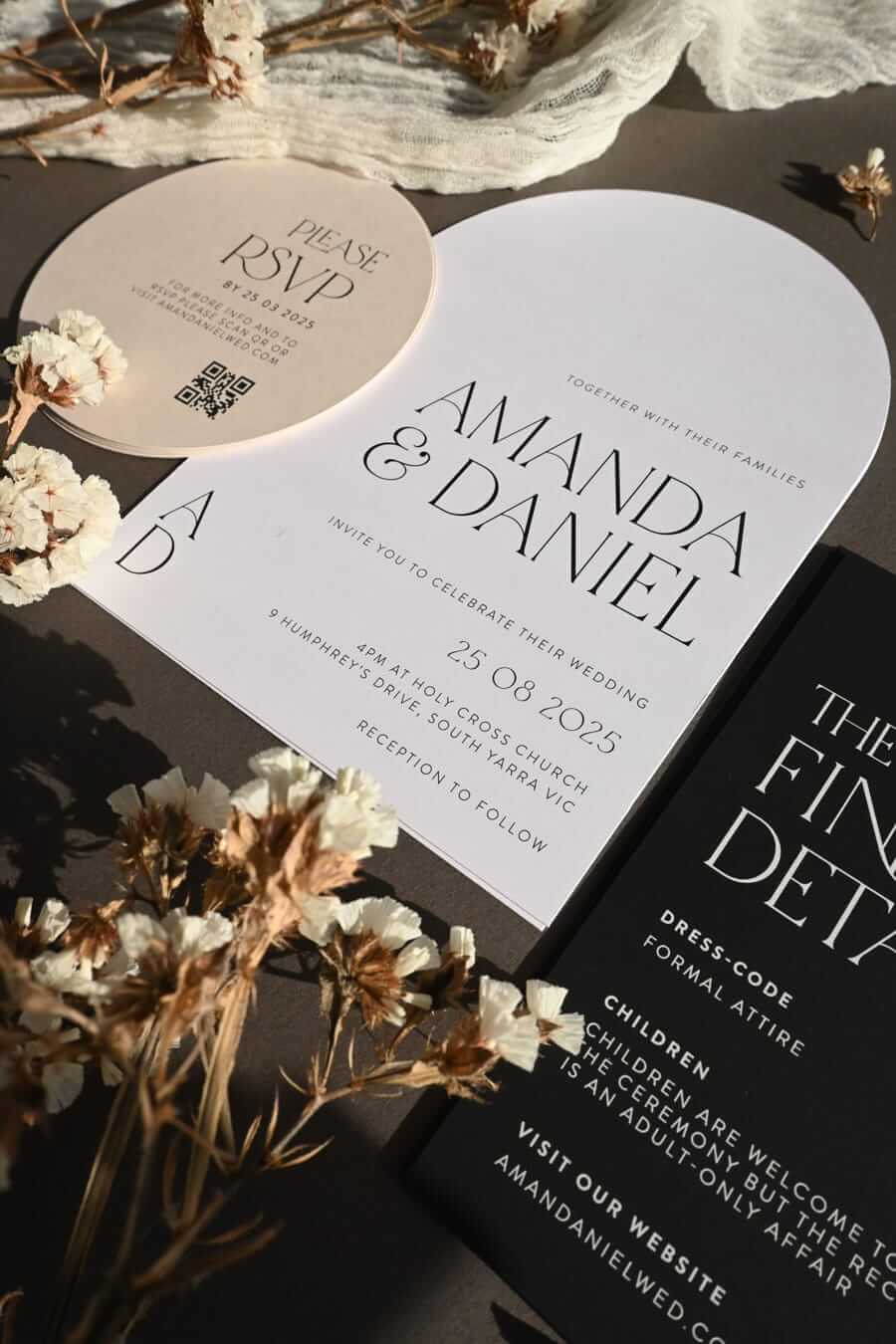
- Stationery sets the tone before guests arrive: the right invitation suite signals your theme immediately and builds anticipation from the moment it lands in a mailbox.
- Most couples land on their theme within the first three planning sessions once they have a venue confirmed and a rough guest count.
What is a Wedding Theme (vs. Style, vs. Color Palette, vs. Aesthetic)
These four terms are often used interchangeably, but they operate at different levels of specificity. Understanding the difference saves you from planning contradictions – like choosing a “rustic” color palette and then booking a downtown loft venue.
| Term | What it means | Example |
|---|---|---|
| Theme | A complete narrative or world – the overarching concept that governs every decision | Italian Riviera |
| Style | A design language or mood – more flexible, can exist within many themes | Romantic, minimalist, maximalist |
| Color palette | A set of 3-5 colors that guide florals, linens, attire, and stationery | Terracotta, dusty rose, ivory, sage |
| Aesthetic | The visual feeling – a looser, mood-board level word that can precede or describe a theme | Cottagecore, old money, dark academia |
When planners say “pick a theme,” they mean: pick the theme first, let it define the style, then build the palette around the style, and finally pull all three into a cohesive aesthetic. Doing it in reverse – falling in love with a color and then trying to build a theme around it – is the most common planning mistake.
How to Choose a Wedding Theme: A 5-Step Framework
Choosing a theme is not about picking what looks best on a mood board. It is about finding the intersection of what you love, what your venue allows, and what your budget can support. Work through these five steps in order.
Once you’ve locked your aesthetic, the invitation suite is what guests notice first. Browse 200+ designs filtered by style and color palette.
Step 1: Lock the venue first
Your venue dictates more than any other single decision. A converted warehouse fights a romantic garden theme. A coastal headland venue fights an indoor ballroom concept. Walk your venue space before committing to any aesthetic. Ask: what does this space already look like? Work with it, not against it.
Step 2: Pull 3-5 images that make you feel something
Not images that look “pretty” in general – images that make you think “yes, that is us.” Show them to each other without over-explaining. Look for the common thread. Is it the light? The textures? The intimacy or the grandeur? The thread is your theme.
Step 3: Name it, even loosely
Giving your theme a name – even a working title – forces you to articulate it. “Italian Riviera in autumn” is more useful than “kind of Mediterranean vibes.” Your vendors will ask, and a named concept makes briefing florists, photographers, and caterers dramatically faster.
Step 4: Check budget compatibility
Some themes are inherently more expensive to execute than others. A black tie formal wedding in a hotel ballroom carries minimum spends on florals, food, and entertainment that a garden picnic wedding does not. Be honest at this stage rather than falling in love with a theme you cannot afford to execute properly.
Step 5: Pressure-test against your guest list
A destination or physically demanding theme (mountain elopement, beach bonfire) works brilliantly with a small guest list of close friends and family. It becomes problematic with 200 guests across a range of ages and mobility levels. Your theme must work for the people you are celebrating with.
The 30+ Wedding Themes for 2026
Each theme below includes its defining elements, ideal color palette, best venue types, signature decor, and the stationery style that will match it best. Use these profiles to compare options side by side.
Romantic Garden
Defining elements: Overflowing florals, natural greenery, soft sunlight, linen tablecloths, and a sense of effortless abundance. The romantic garden theme leans into beauty without formality – guests feel welcomed rather than impressed.
- Palette: Blush, ivory, dusty rose, sage, soft peach
- Venue: Private estate garden, botanical garden, winery with grounds, parkland
- Key decor: Peony and garden rose arrangements, trailing vines, wooden farm tables, pillar candles, unstructured floral arches
- Stationery: Watercolor botanicals, deckle-edge paper, letterpress with floral motifs, warm ivory stock
Modern Minimalist
Defining elements: Clean lines, intentional negative space, premium materials over volume, and a “less is more” approach that communicates sophistication through restraint. One of the fastest-growing aesthetics since 2024.
- Palette: White, off-white, taupe, warm gray, occasional black accent
- Venue: Contemporary art gallery, architect-designed spaces, rooftop, minimalist loft
- Key decor: Single-stem bud vases, sculptural foliage, acrylic signage, geometric candle holders, linen with clean hems
- Stationery: Flat foil on heavyweight white stock, sans-serif typography, maximum white space, editorial layout
Bohemian
Defining elements: Free-spirited and artistic, with layered textures, macrame, wildflowers, and a relaxed dress code. Boho weddings feel personal and handcrafted rather than curated or corporate.
- Palette: Terracotta, burnt orange, dusty mauve, cream, pampas-grass neutrals
- Venue: Open land, vineyard, farm, forest clearing, desert landscape
- Key decor: Macrame backdrops, pampas grass, mismatched vintage chairs, lanterns, low seating areas, dried botanicals
- Stationery: Kraft paper, watercolor wash backgrounds, hand-lettered calligraphy, illustrated botanicals
Rustic Barn
Defining elements: Warm, unpretentious, and grounded in nature. The rustic barn theme uses raw wood, mason jars, string lights, and seasonal florals to create an atmosphere that feels genuinely cozy rather than staged.
- Palette: Cream, warm wood tones, sage, dusty blue, sunflower yellow
- Venue: Working barn, converted farm building, rural event space, country property
- Key decor: Hay bales, wooden signage, wildflower centerpieces, Edison string lights, galvanized tin vessels
- Stationery: Kraft paper with twine or wax seal, hand-drawn map inserts, serif fonts, woodgrain textures
Coastal
Defining elements: Relaxed elegance with salt air and sea views at its heart. Coastal weddings feel breezy and alive – nautical without being kitschy, beach-themed without the sand-between-toes informality.
- Palette: Navy, white, sand, seafoam, soft coral
- Venue: Beachfront estate, clifftop ceremony site, waterfront restaurant, boat club
- Key decor: Driftwood accents, sea glass, linen fabric, tropical or coastal florals, lanterns, rattan furniture
- Stationery: Watercolor ocean wash, blue and white palette, linen-texture paper, simple serif typography
Tropical
Defining elements: Bold, joyful, and unapologetically lush. Tropical weddings use oversized palm leaves, bird-of-paradise blooms, and vivid color to create an atmosphere of escape and celebration.
- Palette: Emerald green, fuchsia, tangerine, gold, white
- Venue: Resort or hotel garden, jungle or rainforest clearings, beachside pavilion, greenhouse
- Key decor: Banana leaves, monstera, orchids, bird-of-paradise, rattan, colorful fabric, citrus centerpieces
- Stationery: Lush botanical prints, vivid color accents, bright white card stock, illustrated tropics
Industrial
Defining elements: Raw and refined simultaneously. Industrial weddings embrace exposed brick, steel beams, and concrete floors as a backdrop for elegant floral and textile contrasts. The juxtaposition of rough materials and beautiful details is the point.
- Palette: Charcoal, black, rust orange, burgundy, warm gold
- Venue: Warehouse, converted factory, urban event space, brewery
- Key decor: Edison bulbs, iron pipe candelabras, moody floral arrangements, velvet seating, chalkboard signage
- Stationery: Dark card stock, metallic or white ink printing, bold typography, geometric borders
Old Hollywood Glam
Defining elements: Black and white photography, glamour in capital letters. Old Hollywood weddings reference the golden age of cinema with dramatic florals, mirrored surfaces, and a sense of red-carpet grandeur that never slides into tacky.
- Palette: Black, white, gold, champagne, deep red
- Venue: Grand hotel ballroom, theatre venue, historic estate, rooftop terrace
- Key decor: Mirrored table runners, black and white photography displays, calla lilies, gold charger plates, crystal chandeliers, feather accents
- Stationery: Foil stamped on black or deep navy stock, art deco lettering, letterpress on heavy white cotton, monogram motifs
Vintage
Defining elements: A romantic nod to a specific era without becoming a costume party. True vintage weddings feel curated and timeless – the antiques look collected, not rented.
- Palette: Dusty rose, ivory, sage, mustard, warm brown
- Venue: Historic mansion, Victorian home, heritage listed property, antique-filled estate
- Key decor: Mix-and-match china, lace tablecloths, candelabras, birdcages, antique book centerpieces, typewriter
- Stationery: Letterpress on cotton paper, vintage illustration inserts, aged-edge treatments, sepia palette
Mid-Century Modern
Defining elements: A 1950s-1960s design sensibility applied to a contemporary wedding. Clean organic shapes, teak and walnut furniture tones, graphic prints, and a color palette that feels simultaneously retro and fresh.
- Palette: Avocado green, harvest gold, warm brown, off-white, burnt orange
- Venue: Palm Springs-style desert venue, mid-century home, modern museum space
- Key decor: Eames chairs, geometric candle holders, tulip vases, graphic textile napkins, succulent centerpieces
- Stationery: Bold graphic typography, two-color print, geometric motifs, statement color blocks
Art Deco
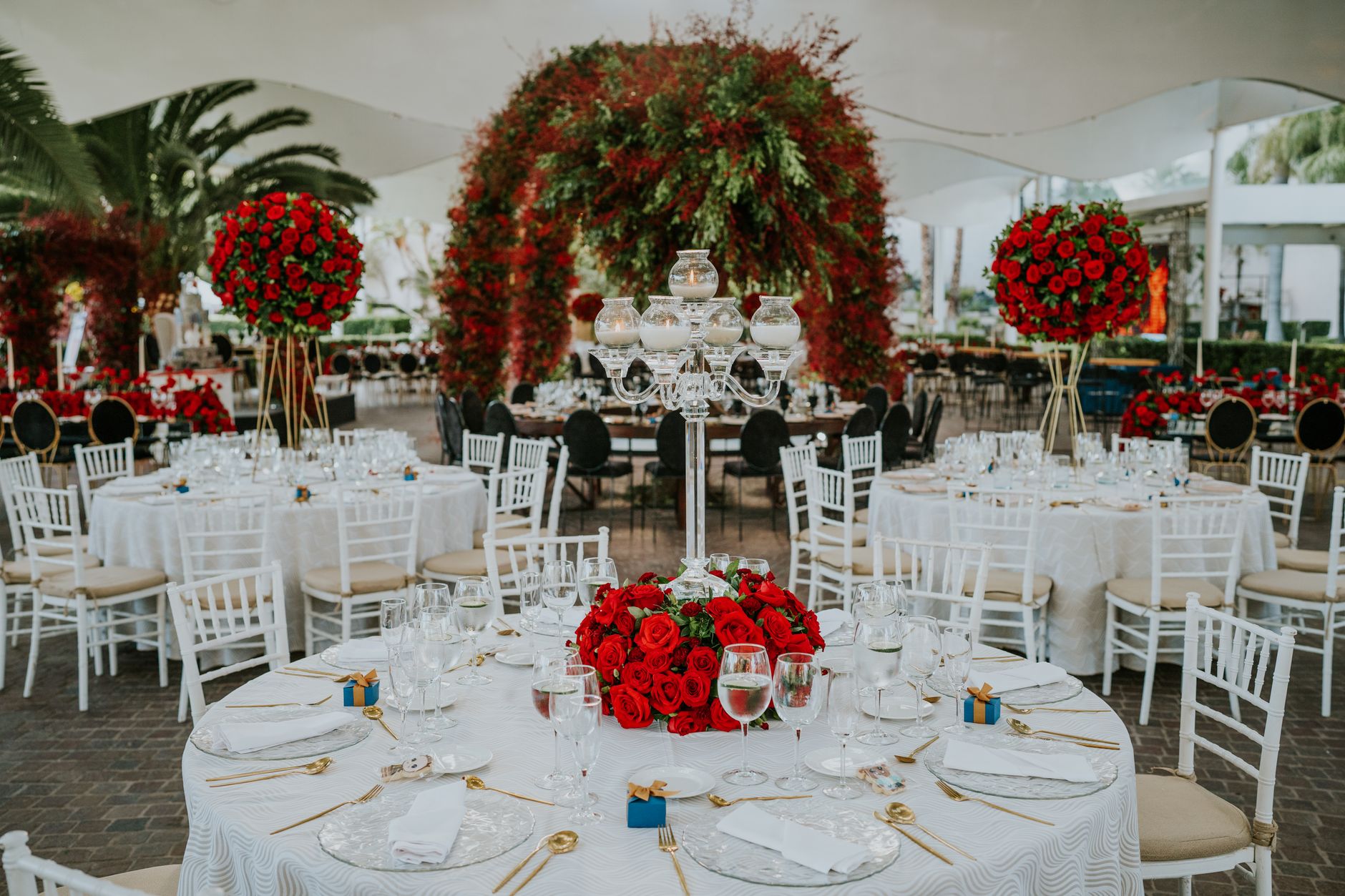
Defining elements: Symmetry, opulence, and geometric precision. Art deco weddings draw from the 1920s golden age of design – think The Great Gatsby visual language applied with editorial restraint.
- Palette: Gold, black, deep green, white, champagne
- Venue: Grand hotel, 1920s-era ballroom, rooftop terrace, luxury yacht club
- Key decor: Geometric table numbers, gold chevron patterns, feather centerpieces, crystal glassware, mirrored surfaces
- Stationery: Foil-stamped geometric borders on heavyweight black or ivory card, art deco typefaces, gold detail throughout
Fairytale
Defining elements: A storybook world made real. Fairytale weddings are theatrical and transportive – arched doorways of flowers, soft candlelight, and a ceremony space that makes guests feel they have stepped into a different world entirely.
- Palette: Soft pink, lavender, gold, ivory, sky blue
- Venue: Castle, historic chateau, forest with clearings, grand estate with topiary gardens
- Key decor: Floral ceiling installations, draped fabric, golden candelabras, rose petal aisles, ornate gold chargers
- Stationery: Illustrated storybook motifs, letterpress on thick cotton stock, gold foil crests or monograms, envelope liners with illustrated scenes
Whimsical
Defining elements: Playful, colorful, and joyful without taking itself seriously. Whimsical weddings subvert convention with unexpected color combinations, interactive food stations, and a guest experience that prioritizes fun over formality.
- Palette: Rainbow brights, mixing pastels with saturated hues, no single dominant tone
- Venue: Botanical garden, art museum, quirky event space, rooftop, countryside
- Key decor: Colorful balloon installations, illustrated table numbers, mismatched florals, custom neon signs, interactive elements
- Stationery: Bold illustrated designs, playful typography, multi-color printing, unexpected shapes and sizes
Gothic
Defining elements: Dark, dramatic, and deeply romantic. Gothic weddings are not macabre – they are moody and theatrical, using deep color, candlelight, and architectural grandeur to create intensity rather than gloom.
- Palette: Black, deep burgundy, forest green, purple, gold
- Venue: Cathedral, stone chapel, gothic mansion, ancient castle, library
- Key decor: Pillar candles in abundance, black roses and dahlias, iron candelabras, velvet draping, skull and botanical motifs
- Stationery: White ink on black card, letterpress on dark stock, wax seals in black or deep red, gothic-influenced typography
Dark Romance
Defining elements: The fastest-growing 2026 wedding aesthetic – moody, cinematic, and intentionally seductive. Dark romance sits between gothic and traditional romantic, using rich jewel tones, dramatic florals, and low lighting to create an atmosphere of intense intimacy.
- Palette: Deep burgundy, mauve, charcoal, midnight navy, blush, gold
- Venue: Candlelit cellar or cave, moody estate, converted church, library or archive space
- Key decor: Trailing garden roses in deep tones, tapered candles at every surface, velvet linens, moody floral chandeliers, richly patterned table runners
- Stationery: Deep navy or black base with gold or blush foil, letterpress on cotton stock, envelope liners in deep floral or star-map prints
Earthy Wabi-Sabi
Defining elements: The Japanese concept of finding beauty in imperfection and impermanence, applied to wedding design. Wabi-sabi weddings use raw organic materials, unfinished textures, and a deliberately imperfect hand-craft aesthetic to create warmth and authenticity.
- Palette: Stone, clay, warm white, umber, dried grass
- Venue: Open-air earthen space, pottery studio, sustainable eco venue, rural property
- Key decor: Handmade ceramic vessels, dried grasses and wildflowers, wabi-sabi pottery, organic shaped candles, natural linen
- Stationery: Letterpress on rough-edge cotton paper, single-color printing, minimal illustration, seed paper or kraft for an eco finish
Scandinavian
Defining elements: Hygge applied to weddings – warmth, simplicity, and a deliberate reduction to what matters most. Scandinavian design principles produce weddings that feel calm, intentional, and deeply personal.
- Palette: White, light wood tones, dusty blue, pale green, birch bark
- Venue: Minimalist white barn, Scandinavian-inspired interior, forest clearing, coastal cabin
- Key decor: Birch branch installations, white taper candles, simple greenery, linen runners, wooden place settings
- Stationery: Clean sans-serif typography, white or pale card, single color printing, hand-stamped botanical marks
Mediterranean
Defining elements: Whitewashed walls, blue shutters, terracotta, and the feeling of sitting on a cliffside at noon with a glass of something cold. Mediterranean weddings capture a specific warmth and ease that feels both aspirational and deeply livable.
- Palette: Cobalt blue, white, terracotta, olive green, warm gold
- Venue: Clifftop estate, white-painted venue, ceramic-tiled winery, poolside property
- Key decor: Terracotta pots with herbs, olive branches, lemon citrus arrangements, mosaic tile details, blue ceramic table accents
- Stationery: Illustrated Mediterranean motifs – lemons, olives, tiles – on white or warm ivory card, classic serif typography
Italian Riviera
Defining elements: The most-searched wedding aesthetic emerging in 2026. Italian Riviera captures the specific glamour of coastal Italy – Capri, Positano, Portofino – with a sophisticated ease that is stylish without being cold.
- Palette: Bright white, azure blue, lemon yellow, terracotta, gold
- Venue: Coastal estate or villa, rooftop with city or sea views, white-walled venue with a terrace
- Key decor: Lemon trees as centerpieces, trailing bougainvillea, rattan furniture, Amalfi-print linen, hand-painted ceramic place settings, white parasols
- Stationery: Italian-inspired typography, lemon or botanical illustrated inserts, flat foil on white stock, deep blue envelope liners with Amalfi motifs
English Countryside
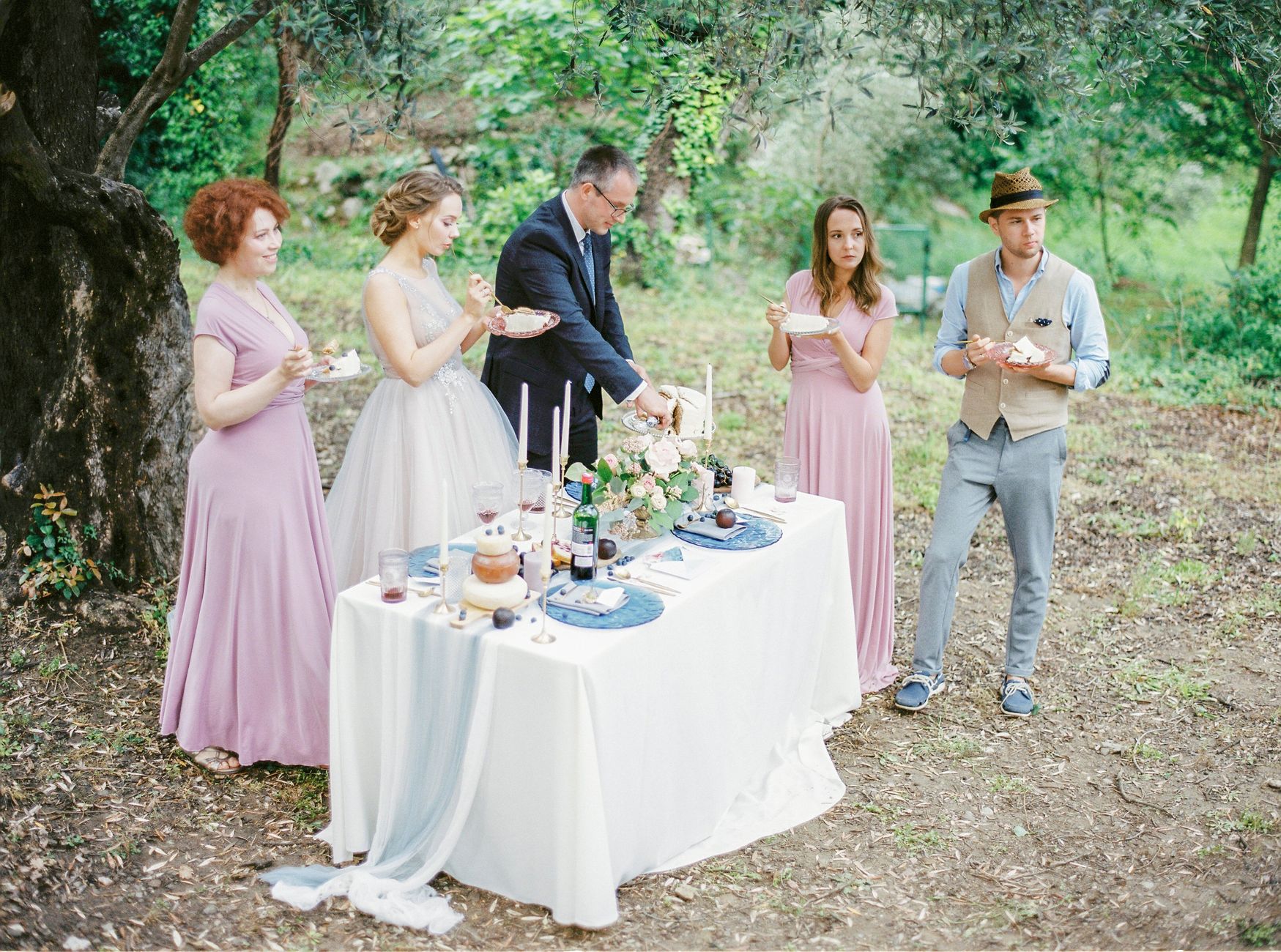
Defining elements: Rolling green hills, stone walls, and the quietly beautiful aesthetic of the British countryside without formality. English countryside weddings are warm, grown, and deeply romantic in an understated way.
- Palette: Sage, dusty rose, warm cream, lavender, soft yellow
- Venue: Countryside estate, stone barn, walled garden, National Trust property style
- Key decor: English garden flowers (sweet pea, foxglove, larkspur, David Austin roses), heritage tableware, picnic-style seating, wildflower garlands
- Stationery: Botanical illustration, floral watercolor, letterpress on cotton stock, warm cream envelope with liner prints
French Chateau
Defining elements: Old-world European grandeur combined with effortless French elegance. Chateau weddings feel timeless and romantic without being stuffy – the formality is in the architecture, not the atmosphere.
- Palette: Blush, ivory, champagne, soft sage, pale gold
- Venue: Chateau or manor house, French-inspired winery, formal garden estate
- Key decor: Lush peony and rose arrangements, candlelit chandeliers, French menu cards, topiaries, sheer fabric draping
- Stationery: Script typography, flat foil on heavyweight ivory stock, French monogram crest, deckle-edge cards
Japanese Zen
Defining elements: Harmony, simplicity, and intentionality in every element. Japanese Zen weddings use negative space, natural materials, and precise floral arrangement to create an atmosphere of profound quiet beauty.
- Palette: White, pale blush, ink black, bamboo green, warm stone
- Venue: Japanese garden, tea house, modern minimal interior, bamboo grove
- Key decor: Ikebana-style floral arrangement, bamboo, paper lanterns, stone pathway ceremony, moss centerpieces
- Stationery: Minimal with deliberate empty space, Japanese calligraphy-inspired lettering, white on white emboss, cream stock with single botanical print
Moroccan
Defining elements: Rich, layered, and deeply sensory. Moroccan weddings use pattern, warmth, color, and candlelight at an intensity that feels transportive – guests genuinely feel they are somewhere else entirely.
- Palette: Saffron, deep teal, terracotta, gold, burgundy
- Venue: Riad-style courtyard, tiled estate, hotel terrace, outdoor pavilion
- Key decor: Moroccan lanterns, tile print linens, jewel-colored cushions, arched doorways draped in fabric, hanging copper lanterns
- Stationery: Geometric tile-inspired print, rich jewel colors on white or gold stock, envelope liners in tiled patterns
Desert
Defining elements: Stark, sculptural, and breathtakingly beautiful. Desert weddings use the landscape itself as the primary decor element – couples lean into the drama of saguaro cactus, red rock, and golden light rather than fighting it.
- Palette: Terracotta, rust, dusty mauve, sage, sand, sunset orange
- Venue: Joshua Tree or Sonoran Desert, red rock canyon, eco resort, private desert ranch
- Key decor: Cactus and succulent arrangements, terracotta vessels, woven rugs, dried grasses, crystal accents
- Stationery: Watercolor desert landscape illustrations, terracotta or rust palette, kraft paper with white ink accents
Mountain
Defining elements: Elevated in every sense. Mountain weddings use altitude, panoramic views, and the textures of alpine landscapes – pine, granite, wildflower meadow – to create an atmosphere of majestic intimacy.
- Palette: Navy, forest green, stone gray, ivory, burnt orange (fall) or soft blue (winter)
- Venue: Alpine resort, mountaintop ceremony site, ski lodge, national park lodge
- Key decor: Pine boughs, antler accents (if appropriate), wildflower meadow bundles, wooden ceremony arch, stone and fern table arrangements
- Stationery: Illustrated mountain landscapes, letterpress on heavy stock, deep navy or forest green envelope liners, topographic map inserts
Fall Harvest
Defining elements: The warmth of autumn channeled into every detail. Fall harvest weddings embrace the season’s abundance – rich color, textured surfaces, and the particular golden light of October and November.
- Palette: Deep burgundy, burnt orange, pumpkin, mustard, warm brown, cream
- Venue: Apple orchard, vineyard at harvest, barn venue, forested estate
- Key decor: Pumpkins, gourds, autumn foliage, wheat stalks, dried orange slices, barrel repurposed as bar
- Stationery: Botanical autumn illustration, warm jewel color palette, letterpress or foil on heavyweight stock, envelope liners with maple leaf prints
Winter Wonderland
Defining elements: The magic of winter distilled into a wedding day – snow or the suggestion of it, ice-like crystal details, and an atmosphere of warmth and wonder that makes December and January feel like the most romantic months of the year.
- Palette: Ice blue, silver, white, deep emerald, gold
- Venue: Ski resort, candlelit church, grand hotel, glass-ceiling event space
- Key decor: Crystal and snowflake motifs, frosted branches, silver birch candelabras, white fur accents, warm lighting against snow or cold-night backdrop
- Stationery: Silver or white foil on deep navy or ice blue stock, snowflake motifs, letterpress on heavy cotton, sparkle envelope liner
Spring Pastel
Defining elements: Fresh, light, and radiantly optimistic. Spring pastel weddings capture the particular lightness of April and May – everything blooming, everything possible. Florals are abundant and soft, guests wear color, and the atmosphere is unabashedly joyful.
- Palette: Lilac, butter yellow, baby blue, mint, soft coral, blush
- Venue: Cherry blossom garden, botanical garden, historic manor with spring grounds
- Key decor: Tulips, peonies, ranunculus, cherry blossom branches, pastel ribbon, lace tablecloths
- Stationery: Soft watercolor illustration, pastel palette, delicate floral print on white or ivory card
Summer Citrus
Defining elements: Vibrant, energetic, and built around outdoor celebration. Summer citrus weddings use the saturated palette of summer fruit – lemon, lime, grapefruit, blood orange – as a color and decor anchor.
- Palette: Lemon yellow, tangerine, grapefruit pink, lime green, white
- Venue: Outdoor terrace, rooftop garden, beachside lawn, vineyard
- Key decor: Citrus fruit centerpieces and garlands, tropical foliage, bright linen napkins, outdoor bar with citrus cocktails as hero
- Stationery: Bold illustrated citrus prints, bright color accents on white stock, flat foil in gold or citrus tones
Black Tie Formal
Defining elements: The most formal of all wedding formats – full length gowns expected, tuxedos standard, champagne on arrival, and a reception that feels like a gala. Black tie weddings succeed when every element matches the register: nothing casual, nothing budget-visible.
- Palette: Black, white, champagne, gold, ivory, deep navy
- Venue: Five-star hotel ballroom, private club, historic palace or manor
- Key decor: Floor-length floral arrangements, crystal chandeliers, gold charger plates, white glove service, formal place settings
- Stationery: Engraved or letterpress on heavyweight cotton stock, foil-stamped monograms, formal wording, printed dress code on insert cards
Disco
Defining elements: A joyful throwback to the 1970s dance floor – mirror balls, sequins, and a reception that is unapologetically a party from the moment guests arrive. Disco weddings have been growing steadily since 2023 and are firmly in the mainstream for 2026.
- Palette: Gold, silver, hot pink, cobalt blue, mirror-reflective silver
- Venue: Urban event space, hotel rooftop, club venue, converted warehouse
- Key decor: Mirror ball as hero, sequin tablecloths, neon signage, disco-era floral (carnations, chrysanthemums), 70s-era furniture accents
- Stationery: Metallic card stock, retro typefaces, foil stamping throughout, bold graphic disco-era illustration
Find invitations that match your wedding aesthetic
Paperlust carries 500+ exclusive designs across every style – from modern minimalist foil to boho letterpress on cotton paper. Browse the full collection and filter by print method, style, and color.
How Theme Drives Stationery Choices
Your wedding invitations are the first physical experience your guests have of your wedding. Before they arrive at the venue, before they see the flowers or the lighting, they hold your invitation in their hands and form a complete picture of what is coming. The theme-stationery relationship is therefore one of the most important decisions in the entire planning process.
Send save-the-dates 8-12 months out to anchor your guest list and signal your wedding aesthetic before the formal invitations land.
Consider what each element of your wedding invitation communicates about your theme:
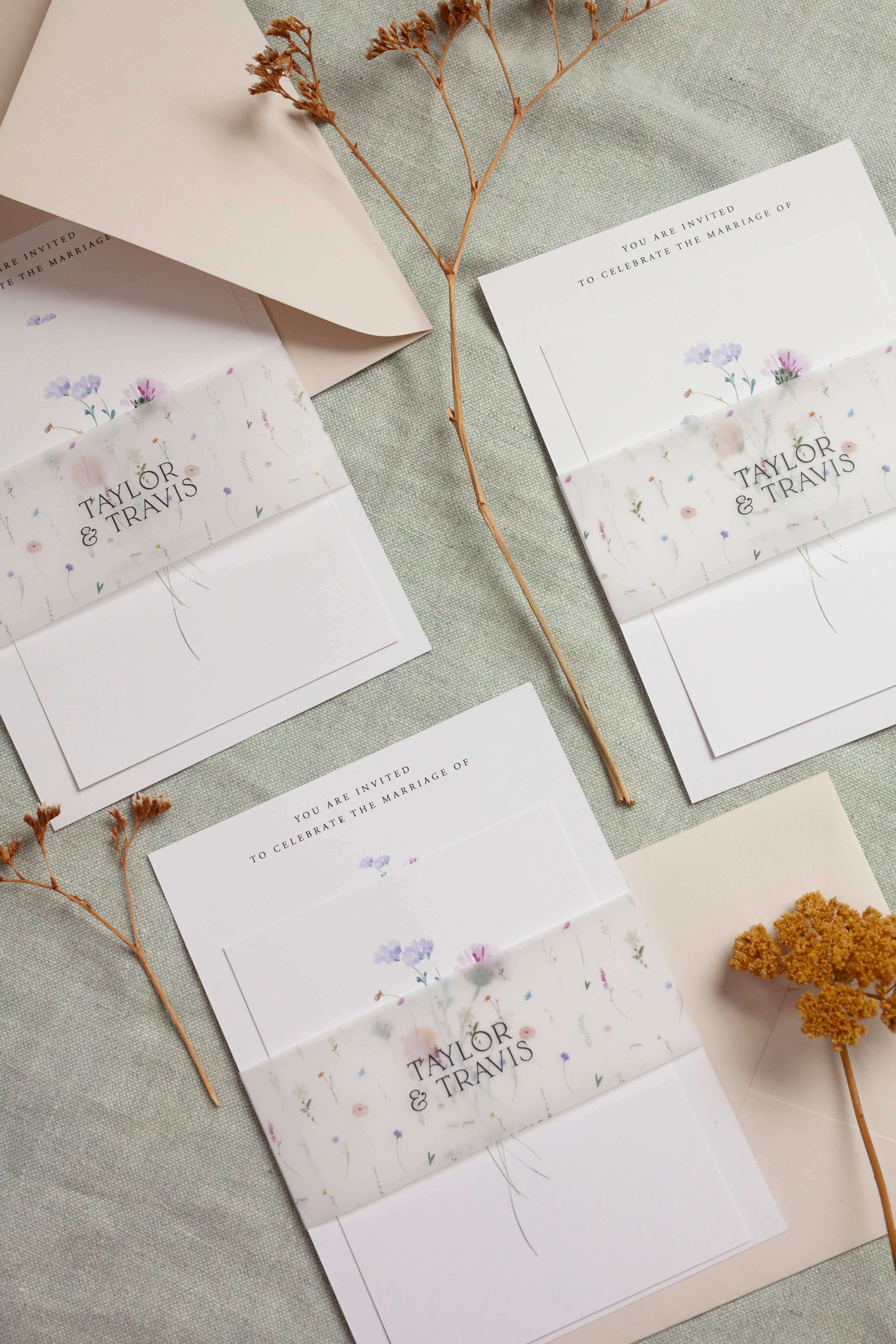
- Paper weight and texture: Heavy cotton stock signals formality and craft. Smooth matte signals modern minimalism. Kraft paper signals rustic or boho. Vellum signals ethereal, romantic, or modern.
- Print method: Letterpress is heritage and handcraft – ideal for vintage, rustic, English countryside, and garden themes. Flat foil is glamorous and precise – ideal for black tie, art deco, Italian Riviera, and old Hollywood. Digital print is versatile – ideal for whimsical, tropical, spring pastel, and themes that rely on full-color illustration.
- Typography: Serif fonts signal tradition and romance. Sans-serif signals modernity. Script signals elegance and warmth. A font mismatch can undermine an otherwise cohesive theme.
- Color: Your invitation palette should share at least two of your wedding palette’s colors. It does not need to be an exact match, but it should clearly belong to the same world.
- Illustration and motif: A lemon branch illustration signals Mediterranean or Italian Riviera before a guest reads a single word. A geometric border signals art deco. A hand-drawn botanical signals garden or boho. Illustration is often the fastest way to communicate theme.
The 2026 wedding invitation trends are closely aligned with the aesthetic directions in this guide. You will find that the stationery trends mirror what is happening in wedding themes more broadly – a shift toward richer color, more editorial layouts, and print methods that add tactile dimension.
For a full guide to wording your invitations correctly once you have chosen your style, see the 2026 wedding invitation wording guide and the guide to how to address wedding invitations correctly. For the accompanying save the date cards, our guide to save the date wording covers every format and style. And when it comes to RSVP card wording, the register of your response card should match your theme’s formality level.

Theme + Color Palette Pairings
Each theme carries a signature palette. Use this reference table when briefing your florist, stationer, and decorator – give them the theme name and the palette, and you will receive consistent proposals back across all vendors.
| Theme | Primary colors | Accent color | Metal tone |
|---|---|---|---|
| Romantic Garden | Blush, ivory, sage | Dusty rose | Rose gold |
| Modern Minimalist | White, off-white, taupe | Black | Brushed gold or silver |
| Bohemian | Terracotta, cream, dusty mauve | Burnt orange | Copper |
| Rustic Barn | Cream, sage, dusty blue | Sunflower yellow | Antique brass |
| Coastal | Navy, white, sand | Seafoam | Silver or brushed gold |
| Industrial | Charcoal, black, rust | Burgundy | Matte black or warm gold |
| Old Hollywood Glam | Black, white, champagne | Deep red | Polished gold |
| Art Deco | Gold, black, deep green | Champagne | Polished gold |
| Dark Romance | Deep burgundy, mauve, charcoal | Midnight navy | Antique gold |
| Italian Riviera | Azure blue, bright white, lemon | Terracotta | Polished gold |
| Winter Wonderland | Ice blue, white, deep emerald | Deep navy | Silver |
| Disco | Gold, silver, hot pink | Cobalt blue | Mirror silver |
Budget Impact by Wedding Theme
Your theme is also a budget decision, whether you treat it as one or not. Some themes are structurally cheaper to execute because the environment does much of the styling work. Others require significant vendor spend to achieve the visual impact the theme demands. Use this overview to pressure-test theme choices against your actual budget before committing.
| Theme | Relative decor cost | Main cost driver | Budget tip |
|---|---|---|---|
| Rustic Barn | Low-medium | Venue hire | Seasonal wildflowers dramatically reduce floral costs |
| Bohemian | Low-medium | Textiles and macrame | Dried florals and pampas grass have a long lead time and lower cost than fresh |
| Desert / Mountain | Low-medium | Location logistics | The landscape provides most of the decor – keep arrangements minimal |
| Garden / Coastal | Medium | Florals | Choose seasonal flowers from your local region – import cost adds up fast |
| Modern Minimalist | Medium | Premium materials | Fewer, higher-quality pieces cost the same as many cheaper pieces – less is genuinely less |
| Romantic Garden / Fairytale | Medium-high | Floral volume | Greenery-to-bloom ratio: more foliage and fewer premium blooms reduces cost without sacrificing fullness |
| Dark Romance | Medium-high | Candles and linens | Candle volume is the single biggest atmosphere driver – a candle budget well spent replaces expensive lighting rigs |
| Italian Riviera | Medium-high | Venue terrace access | Lemon trees rented for the day are significantly cheaper than cut-flower equivalents |
| Black Tie / Art Deco / Old Hollywood | High | Venue minimums + catering | These themes require venue and catering minimums that cannot be worked around – confirm before committing to the style |
A practical rule: your decor budget should represent roughly 8-15% of total wedding spend for most themes. Black tie and ballroom formats often push this to 20% or higher because the venue’s expectations for floral and lighting installations are significant. Outdoor and relaxed themes can stay at the lower end of that range while still looking beautiful and intentional.
Wedding signs that match your theme
From welcome boards to seating charts, Paperlust wedding signs are printed on fabric or PVC board and designed to complement your invitation suite. Browse the full range.
Order a free sample pack to feel paper weight, foil texture, and color in person before you commit to a full suite.
Frequently Asked Questions
What is the most popular wedding theme for 2026?
Italian Riviera, dark romance, and modern minimalist are the three themes generating the most bridal search volume and Pinterest saves heading into 2026. Italian Riviera in particular has grown sharply since late 2025, driven by destination weddings in coastal Italy and couples recreating the aesthetic domestically. Earthy wabi-sabi and coastal are close behind.
What is the difference between a wedding theme and a wedding style?
A theme is a complete narrative concept that governs venue, decor, attire, and stationery simultaneously – for example, “Italian Riviera” or “rustic barn.” A style is a design language or mood that exists within or across themes – for example, “romantic” or “minimalist.” Most couples have both: a theme that names their world and a style that describes the design approach within it.
How do I choose a wedding theme if my partner and I have different tastes?
Look for themes that hold multiple aesthetics simultaneously. Dark romance, for example, appeals to both maximalist and moody sensibilities. Mediterranean works for someone who wants warmth and someone who wants color. Bohemian can skew either rustic or glam depending on execution. Start by each saving 10 images independently, then compare and identify any common threads – the shared ones are usually closer to your answer than either individual list.
Does the venue have to match the theme perfectly?
No – but significant mismatches require expensive intervention. An industrial warehouse can be transformed into a romantic garden setting with enough florals, fabric, and lighting, but the budget required is substantially higher than if you had chosen an outdoor venue to begin with. The practical advice is: pick a venue that shares at least the broad register of your theme (formal vs. relaxed, indoor vs. outdoor, rural vs. urban) even if it does not perfectly match every aesthetic detail.
How early should I decide on a wedding theme?
Ideally before you book your venue, because your venue shapes your theme options significantly. Most couples refine their theme within the first 2-3 planning sessions once venue, guest count, and budget are broadly established. The theme should be clear enough to brief vendors – florist, photographer, stationer – by the time you start those conversations, which is typically 10-14 months before the wedding for larger events.
Can I mix two wedding themes?
Yes, and many of the most memorable weddings do. Successful combinations tend to share at least one strong aesthetic element – boho and rustic share natural materials and relaxed atmospheres; modern minimalist and black tie share formal restraint. Combinations that tend not to work as well are those with contradictory registers, such as whimsical and black tie, or gothic and tropical. The test is whether the two themes share a coherent palette and venue type.
What wedding theme is best for a small wedding or elopement?
Intimate settings favor themes that thrive with less decor volume. Earthy wabi-sabi, Japanese Zen, Scandinavian, desert, and mountain themes all work beautifully with 10-30 guests because the landscape or minimal materials do the heavy lifting. Garden and coastal also scale down elegantly. Black tie formal and disco – which rely on a critical mass of guests and a large event space – are harder to execute at small scale.
How does a wedding theme affect my budget?
Significantly. Themes that rely on abundant florals (romantic garden, French chateau, fairytale) have higher floral minimums. Themes that require venue transformation (industrial into garden, dark romance in a neutral space) require more spend on decor. Themes that work with the existing environment (desert, mountain, rustic barn) tend to have lower decor budgets because the setting provides so much of the atmosphere. As a general rule, the higher the required transformation from a blank event space, the higher the decor budget.
What is the best wedding theme for an outdoor wedding?
Garden, boho, coastal, Mediterranean, Italian Riviera, desert, mountain, and fall harvest are all built for outdoor settings. The best choice depends on your location and season. Coastal and Mediterranean work year-round in warm climates. Fall harvest is specifically seasonal. Mountain requires access to appropriate terrain. Garden works in almost any outdoor setting with sufficient planting or floral budget.
How do I communicate my wedding theme to vendors?
Give each vendor three things: a theme name, 5-10 reference images, and a palette (3-5 colors with approximate descriptions). For florals, also specify any flowers you love and any you want to avoid. For photography, describe the feeling you want in images rather than specific shots. For catering, describe the register (formal plated dinner, relaxed grazing table, family-style service) because service style is as much a theme signal as the food itself.
How does my wedding theme affect my invitations?
Your invitation suite should translate the theme into paper and print. The paper weight, print method, typography, color, and any illustration or motif should all signal your theme before a guest reads a single word. A boho wedding sends an illustrated botanical design on kraft paper. A black tie wedding sends engraved or letterpress text on thick white cotton stock. The complete guide to 2026 wedding invitation trends covers which design directions are most popular for each aesthetic this year.
What is the difference between Italian Riviera and Mediterranean as a wedding theme?
Italian Riviera is a specific subset of Mediterranean – it references the coastal glamour of places like Capri, Positano, and the Amalfi Coast specifically, and carries a slightly more polished, fashion-forward sensibility. Mediterranean is the broader concept, encompassing Greek island aesthetics, Spanish coastal vibes, and Turkish coastal culture alongside Italian. Italian Riviera uses lemons, bougainvillea, and Amalfi-blue as signature markers; Mediterranean uses terracotta, olive, and cobalt blue more broadly.
Is dark romance appropriate for a wedding?
Absolutely – and it is one of the fastest-growing 2026 wedding aesthetics precisely because it subverts the expectation that weddings must be all white and bright. Dark romance uses deep jewel tones, abundant candlelight, and rich florals to create an atmosphere of intense intimacy rather than gloom. It works especially well for evening weddings, dinner receptions, and couples who want a cinematic, editorial feel. The key is execution: every detail needs to be intentional and cohesive.
Can my wedding theme change after I have booked the venue?
Yes, with caveats. If your theme shift stays within the same broad register as your venue, it is usually straightforward – moving from “romantic garden” to “English countryside” in a garden estate venue is simple. Moving from “boho outdoor” to “black tie ballroom” after booking an outdoor venue is a significant practical and budget complication. Most planners recommend locking theme and venue within the same month to avoid this.
As seen in: Vogue Australia, Marie Claire Australia, The Sydney Morning Herald, Harper’s Bazaar Bride Australia