

If your wedding vision includes castle walls, candlelit feasts, and an atmosphere pulled straight from a fairy tale, your invitations should set that mood the moment they arrive. Medieval, renaissance, and fantasy-themed wedding invitations are one of the most personal niches in stationery. They tell your guests this is not a standard celebration, and they arrive prepared to enter another world.
- Medieval wedding invitations lean on parchment textures, gothic type, heraldic crests, and wax-seal details to create atmosphere before guests arrive.
- Scroll-style invitations are a dramatic format option. They work best as a premium keepsake, not a standard mailer.
- Flat Foil in gold or copper delivers mirror-bright metallic ornamentation that suits gothic and renaissance designs. For the pressed-impression heritage feel, Letterpress on cotton paper is the standout choice.
- Jewel tones (deep emerald, sapphire, burgundy, amethyst) and rich metallics (gold, aged bronze, copper) are the go-to color palette for this aesthetic.
- Fantasy-inspired invitations (LOTR-inspired, Game of Thrones-inspired) should use “inspired by” language and lean into original crest and sigil design rather than direct IP.
- Designer proofs are ready within 1-2 business days and orders over $350 USD ship free via DHL Express.
Medieval and Renaissance Wedding Invitation Styles
The medieval and renaissance wedding invitation category is broader than most people expect. It covers everything from lightly romantic parchment-toned designs with a single heraldic flourish, all the way to full-scale dark gothic invitations printed on deep jewel-toned stock with gold foil crests and old-English typography. Understanding where your aesthetic sits helps you choose the right design, format, and print method.
Three core sub-styles to know
Renaissance romantic
This is the most accessible style. It borrows from renaissance aesthetics without going full dark. Think: cream or ivory stock, delicate botanical borders in the style of illustrated manuscripts, gentle arch frames, and an old-English or calligraphy script typeface. Colors stay warm and light: aged gold, ivory, dusty sage, soft blush. This approach works for couples who want thematic flavor without the heavy gothic atmosphere, and it appeals to guests who may not share the same passion for medieval theater.
Gothic medieval
Gothic medieval invitations are high contrast and bold. Deep color stocks, near-black, midnight navy, rich burgundy, carry white ink or gold foil text. Typography draws from blackletter and gothic script traditions. Motifs include pointed arches, gargoyles in fine-line illustration, thorned roses, ravens, and medieval weaponry rendered elegantly. This style suits couples planning a dark romance or Halloween-adjacent ceremony, or anyone who loves the brooding visual language of gothic architecture.
Fantasy and high fantasy
Fantasy wedding invitations take the visual language of medieval-inspired stories (elves, dragons, runic script, mythical crests) and apply them to a celebration. This sub-style has grown significantly as couples who grew up with fantasy fiction now bring those influences into their weddings. Designs in this category often feature illustrated maps, heraldic-style crests created specifically for the couple, and typography that nods to elvish or archaic script traditions.
| Sub-style | Color palette | Best print method | Key motifs |
|---|---|---|---|
| Renaissance romantic | Ivory, aged gold, dusty sage, blush | Flat Foil, Letterpress | Botanical borders, calligraphy script, arch frames |
| Gothic medieval | Near-black, burgundy, midnight navy + gold/silver/white | Flat Foil, White Ink | Blackletter type, pointed arches, thorned roses, ravens |
| Fantasy / high fantasy | Deep jewel tones + metallic accents | Flat Foil, Letterpress | Heraldic crests, illustrated maps, runic / archaic script |
Scroll Invitations: What They Are and How They Work
Scroll invitations are the format most associated with medieval aesthetics: rolled parchment sealed with wax, tied with a ribbon, the visual language of a royal proclamation. They create an unforgettable unboxing moment and work well as a premium upgrade for VIP guests or as the invitation itself for small, intimate guest lists.
The practical reality of scroll invitations
Before committing to scroll format, it helps to understand the logistics:
- Mailing costs more. Scrolls cannot go through standard postal machinery and must be mailed in tubes or rigid envelopes, which increases postage substantially.
- They are best for small lists. For guest lists over 100, the cost and preparation time for scroll format at scale usually pushes couples to reserve scrolls for the wedding party and close family, and use standard flat invitations for the broader guest list.
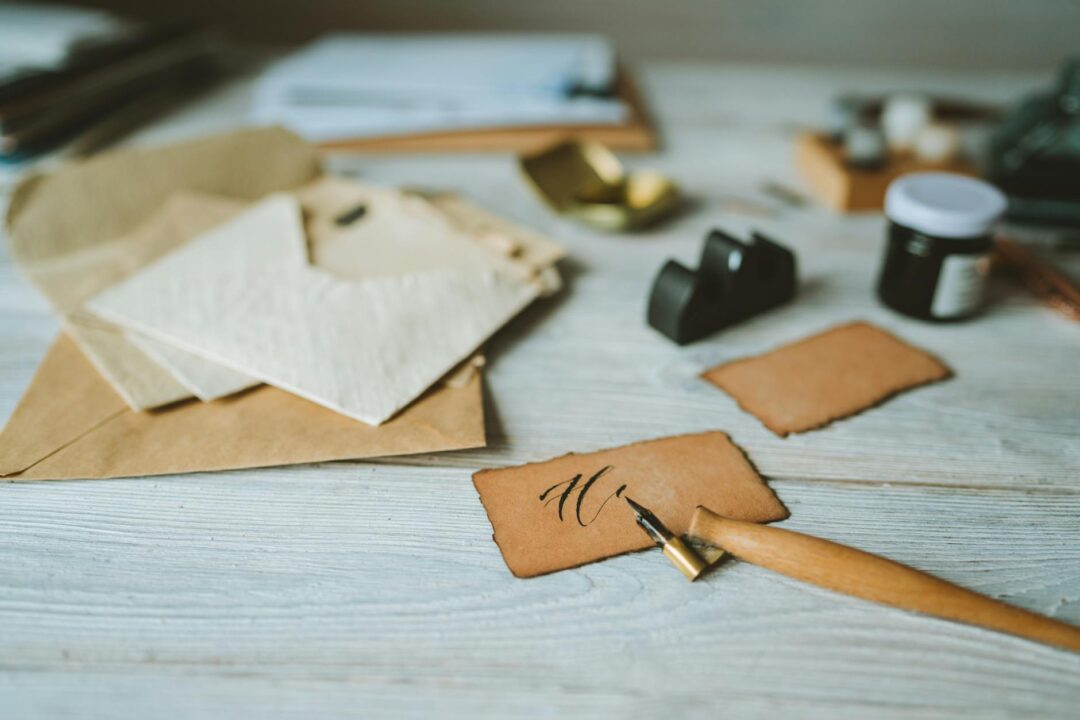
- Parchment stock is the foundation. Whether printed or hand-calligraphed, the paper should have aged warmth, not stark white. Kraft, vellum, and genuine parchment-texture papers all work.
- Wax seals are the finishing touch. A wax seal on the ribbon (so it can be removed without damaging the scroll) or on the outer tube adds authentic medieval atmosphere.
Scroll-inspired flat invitations
If scroll logistics are not practical for your guest list, most of the visual appeal can be captured with a flat invitation designed to evoke a scroll. This means parchment-colored stock (or printed parchment texture), rolled-edge graphic borders, and a layout that mimics the visual weight distribution of a scroll: heavy at the top with a proclamation-style heading, lighter in the middle for details.
Design Elements: Heraldry, Gothic Type, and Parchment Textures
Getting the design right requires understanding the individual elements that make medieval invitations recognizable. Most couples work from 2-3 of these elements rather than stacking all of them. Restraint creates sophistication.
Heraldic crests and custom sigils
A heraldic crest is the centerpiece element for formal medieval and fantasy invitations. For renaissance-style invitations, this might be a traditional coat-of-arms format with a shield, supporters, and a motto banner. For fantasy-inspired invitations, couples often commission or collaborate on a custom sigil that represents their combined “houses” (borrowing the concept from fictional house crests without copying any protected artwork directly).
Elements that typically appear in wedding heraldry: the couple’s initials rendered in a shield or cartouche, a chosen emblem (floral, animal, celestial, or symbolic), a Latin or English motto, and decorative supporters such as animals or botanical figures.
Gothic and blackletter typography
Typography does more work than almost any other element in medieval-themed invitations. Blackletter (sometimes called gothic script, Old English, or Fraktur) is the most recognizable choice. It immediately signals medieval atmosphere. However, pure blackletter can be difficult to read for guests unfamiliar with the style. The best-performing approach in modern invitation design is a pairing: blackletter or gothic script for names and headline elements, paired with a clean, modern serif or italic for the body details (date, time, venue, RSVP information).
This pairing ensures the invitation is atmospheric without sacrificing readability.
Parchment textures and dark stocks
Paper choice is a defining decision:
- Wild Cotton (300gsm or 600gsm): Paperlust’s letterpress paper has natural texture and warmth that reads as parchment even without printing effects. The 600gsm double-thick version has the weight of a historic document.
- Kraft stock (290gsm): Natural brown kraft reads as parchment and pairs well with black, gold, or white ink.
- Deep color stock: Midnight navy, forest green, or deep burgundy color stock flips the palette entirely. Light text on a dark ground gives an entirely different energy: more gothic than renaissance.
- Vellum overlays: A translucent vellum layer over a dark invitation can carry supplementary information (venue map, wording overlay) and adds a layered, manuscript-like quality.
Wax seals and ribbon details
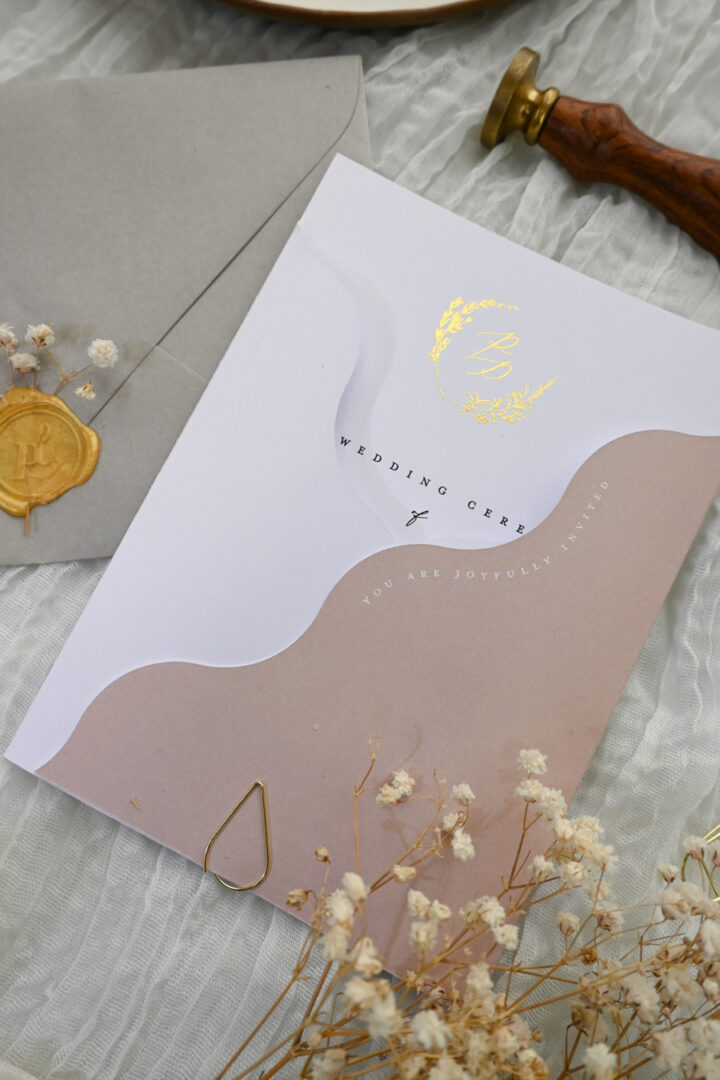
Wax seals have had a sustained resurgence because they translate medieval authenticity into a tangible, tactile experience. A seal with the couple’s initials, a custom crest, or a symbol (rose, raven, crown, fleur-de-lis) pressed in deep burgundy, midnight blue, or aged gold wax adds a finishing detail that photographs beautifully and is often kept as a keepsake long after the wedding.
Wording for Medieval Wedding Invitations
Wording is where medieval invitations either succeed completely or tip into parody. The goal is atmosphere and clarity: guests need to actually know where to be and when, even if the surrounding language is theatrical.
Traditional medieval wording
Full medieval wording replaces modern phrasing with archaic pronouns and proclamation structure. This works best for deeply immersive themed events where guests expect the theater.
that Lord James and Lady Eleanor
do humbly request the honour of thy presence
as they are united in holy matrimony
on the twenty-second day of August, in the year of our Lord two thousand and twenty-six
at four o’clock in the afternoon
Ashford Castle, County Mayo
Feasting and merriment to follow
Thy response is requested by the twenty-fifth of July
Semi-archaic wording (recommended for most couples)
This approach keeps one or two archaic phrases to establish tone while keeping the rest in standard modern wording. It signals the theme without requiring guests to decode every line.
James William Hartley and Eleanor Rose Ashford
invite you to witness their marriage
Saturday, the twenty-second of August, two thousand and twenty-six
at four in the afternoon
Ashford Castle
County Mayo, Ireland
Dinner and dancing to follow
Kindly reply by the twenty-fifth of July
Fantasy-themed wording
Fantasy-themed wording often draws on the language of proclamations and royal decrees. The key rule: avoid using trademarked house names or quotes directly from fictional properties. Instead, create your own house names, your own sigil concept, and your own realm name.
Let all loyal subjects know
that James and Eleanor
shall be united at the stroke of four in the afternoon
on the twenty-second of August, two thousand and twenty-six
at Ashford Castle, County Mayo
A grand feast and revelry shall follow
Thy reply is requested no later than the twenty-fifth of July
For a complete guide to formal and traditional invitation wording formats, see our formal wedding invitation wording guide.
Color Palettes: Jewel Tones, Black, and Gold
Color does more atmosphere-building work than almost any other element in medieval invitation design. The palettes that perform best:
Jewel tones with gold
Deep emerald, sapphire blue, amethyst, and rich burgundy paired with gold foil is the classic medieval combination. These colors reference the richness of medieval tapestries, stained glass windows, and royal regalia. On a deep color stock with gold foil text, this palette is immediately recognizable as formal, historic, and luxurious.
Near-black with silver or white
A dramatic alternative: near-black or true charcoal stock with silver foil or white ink. This reads as gothic and mysterious, without the warmth of gold. It suits dark-romance aesthetics, winter or Halloween-adjacent weddings, and couples who love the visual language of gothic architecture or dark fantasy.
Aged parchment with black and burgundy
For the most legible and accessible take on the medieval palette, aged parchment (cream or warm tan) with deep black type and burgundy or deep red accents reads immediately as historic without being heavy. This is the most versatile approach: it photographs well, reads at a glance, and works for venues ranging from actual castles to rustic barns styled with medieval elements.
Ivory and antiqued gold
A softer, renaissance-romantic interpretation: pale ivory or cream stock with antiqued or aged gold foil (rather than mirror-bright gold). This palette works for couples who want historical atmosphere with a more elegant, less theatrical feel. Think of it as what a noble family might actually have sent rather than a stage-production version.
| Palette | Stock | Ink / Foil | Mood |
|---|---|---|---|
| Jewel tone + gold | Deep emerald, sapphire, burgundy colour stock | Gold Flat Foil | Formal, royal, festive |
| Near-black + silver/white | Near-black or charcoal colour stock | White Ink or Silver Flat Foil | Gothic, dark romance, winter |
| Parchment + burgundy | Kraft 290gsm or Wild Cotton 300gsm | Digital (black + burgundy) | Historic, accessible, rustic-elegant |
| Ivory + antiqued gold | Premium 380gsm or Matte 300gsm | Flat Foil (gold) or Metallic | Renaissance romantic, soft, elegant |
Fantasy Wedding Invitations (LOTR, Game of Thrones Inspired)
Fantasy wedding invitations inspired by epic fiction are a growing and deeply personal niche. Couples who have been shaped by these stories want to bring that love into their wedding day. The invitation is the first moment guests experience that vision.
LOTR-inspired wedding invitations
Lord of the Rings-inspired invitations typically draw on the visual language of the films and books without copying any protected artwork or text. This means:
- Typography inspired by Tolkien’s elvish scripts (Tengwar style) for decorative elements: not the specific licensed characters, but lettering with the same flowing, organic feel.
- Illustrated maps of your venue area rendered in the style of a fantasy world map (contour lines, illustrated mountains, compass roses).
- Nature and mythology motifs such as the White Tree, branching oak and ash, stars and crescent moons, and flowing water.
- Paper choice: Wild Cotton (300gsm or 600gsm) letterpress invitations have the weight and warmth of something that could plausibly have been delivered by an elf on horseback. The debossed impression of letterpress adds to the tactile-artifact quality.
Game of Thrones-inspired wedding invitations
Westeros-inspired invitations lean heavily on heraldry. The house crest concept is central. The practical approach is to design an original house crest for the couple rather than using house Stark, Lannister, or Targaryen crests (which are trademarked intellectual property). A custom crest designed to the couple’s brief (their surnames, a chosen symbol, a motto they write themselves) captures the spirit completely without any IP risk.
Elements that evoke the aesthetic without copying it:
- Iron-look grey color stock with silver foil or white ink
- A custom designed crest centered at the top of the invitation
- Heavy gothic typography for the “house” framing (“House of Hartley presents…”)
- Wax seals pressed in black, deep burgundy, or metallic colors
Original fantasy crests for couples
The most enduring and personal approach to fantasy invitations is a fully original crest designed for the couple. This becomes a motif that can carry through the entire stationery suite: the invitation, envelope liners, menu cards, place cards, and wedding signage. A custom crest built on the couple’s surnames, interests, and chosen symbols creates something entirely unique that belongs to them permanently.
Building a Medieval Wedding Stationery Suite
The visual language of a medieval or fantasy wedding extends well beyond the invitation card. A coordinated stationery suite carries the theme through every guest touchpoint: from the first save the date they receive to the program in their hand during the ceremony.
Save the dates
For medieval and renaissance weddings, save the dates work best when they introduce the visual motif (the crest, the color palette, the typeface) without giving away the full invitation design. A save the date on parchment stock with the couple’s crest and minimal information creates anticipation and gives guests a preview of what is coming.
Envelope details
Envelope choice elevates a medieval suite substantially:
- Deep color envelopes (navy, black, forest green, burgundy) for light-colored invitations create dramatic contrast.
- Kraft envelopes for parchment-toned invitations reinforce the aged, historic feel.
- Wax seals on the envelope flap or as a closure are nearly mandatory for this aesthetic. They are the most recognizable and most photographed detail.
- Address fonts: Using a blackletter or gothic calligraphy for envelope addressing ties the exterior and interior together. Paperlust offers envelope address printing at approximately $0.20 per address.
On-the-day stationery
The suite continues at the ceremony and reception:
- Programs: A single tall program card with the ceremony order, printed in the same typography as the invitation. Parchment or kraft stock with black ink or gold foil headings.
- Menu cards: Table-format or individual menu cards in matching palette. For a long-table feast format, a single scroll-style menu at each table creates theater.
- Place cards: Gothic typeface place cards on deep color stock or kraft.
- Seating charts: For a large guest list, a printed PVC board seating chart styled with the medieval motif at the venue entrance.
Print methods for the full suite
| Stationery piece | Recommended method | Why it works |
|---|---|---|
| Invitation (hero piece) | Letterpress or Flat Foil | Letterpress on cotton gives debossed heritage texture; Flat Foil in gold/copper delivers mirror-bright metallic ornamentation |
| Invitation (accessible option) | Letterpress | Deep-pressed type on Wild Cotton cotton stock; luxury feel, natural texture |
| Save the date | Flat Foil or Digital | Flat Foil gives metallic shine without custom die cost; Digital on kraft reads parchment |
| Envelopes | Digital (dark stock) or White Ink | White Ink on kraft or dark envelopes for interior printing; matches the color palette |
| Programs, menus, place cards | Digital or Flat Foil | Volume pieces where cost-per-unit matters; foil accent on key text only |
To explore the full range of wedding invitation styles available at Paperlust (including designs that complement medieval and gothic themes), browse the wedding invitations collection. For wording help across every style, the complete wedding invitation wording guide covers formal, semi-formal, and custom formats.
Ready to bring your medieval vision to life?
Browse Paperlust’s wedding invitation collection. Flat foil, letterpress, dark stock, and custom designs available. Designer proofs in 1-2 business days.
Frequently Asked Questions
What paper works best for medieval wedding invitations?
Wild Cotton stock (300gsm or 600gsm double-thick) is the top choice for letterpress and flat foil medieval invitations. It has natural texture and warmth that reads as parchment. Kraft 290gsm is the most affordable option and prints beautifully with digital black or white ink. For dark gothic invitations, deep colour stock (midnight navy, forest green, burgundy) with flat foil or white ink creates the most dramatic result.
Can I get scroll-style wedding invitations?
Scroll invitations are available but require consideration for mailing logistics. They need to be sent in tubes or rigid envelopes, which increases postage. Most couples use scrolls as a premium format for the wedding party or immediate family, and use flat invitations for the broader guest list. A flat invitation designed to evoke a scroll (parchment-toned stock, bordered layout, wax-seal detail) captures most of the same atmosphere at standard mailing cost.
What print method is best for gothic or medieval invitations?
For the metallic ornamentation central to gothic and medieval aesthetics, Flat Foil in gold or copper is the strongest choice. The mirror-bright metallic surface on crests, script headings, or border details creates the ceremonial richness that defines this style. For the tactile pressed-impression feel of a historic document, Letterpress on Wild Cotton cotton paper is the standout option. The deep-pressed type has a handcrafted heritage quality that reads as genuinely ancient. Many medieval suites combine both: letterpress body with flat foil accent on the crest or names.
Can I use Game of Thrones or LOTR characters and artwork on my invitations?
House names, specific crests, character names, and artwork from Game of Thrones (HBO/George R.R. Martin) and Lord of the Rings (Tolkien Estate/Amazon/New Line Cinema) are protected intellectual property. The safest and most personal approach is to create original designs inspired by the aesthetic: your own house crest, your own motto, your own sigil. This produces something unique to your wedding that you own entirely.
How much do flat foil or letterpress medieval wedding invitations cost?
Paperlust wedding invitations start from $2.04 per card for digital print. Flat Foil and Letterpress invitations carry a premium for the specialist print process and materials. Pricing depends on design complexity, quantity, and paper choice. For an accurate price on a specific design, browse the wedding invitations collection and configure your order. Orders over $350 USD qualify for free DHL Express shipping.
Do I need to order the same design across my whole stationery suite?
No. Paperlust offers individual cards across all stationery types (save the dates, invitations, RSVP cards, menu cards, programs, place cards). You can mix the same design across multiple product types or work with a designer to adapt a design from one card to another. A discount of 15% applies when you order 3 or more card types.
How long does production take for letterpress or flat foil invitations?
Designer proofs are delivered within 1-2 business days of placing your order. Production timelines vary by print method. Letterpress and flat foil typically take around 20 business days. After dispatch, DHL Express delivers in 2-4 business days to US addresses. For tight timelines, a 24-hour rush print option is available for an additional fee on eligible products.
Are heraldic crest or custom illustration designs available?
Paperlust’s design team can work with custom artwork. If you have an existing crest or illustration, the design team can incorporate it into a Paperlust invitation design. For fully custom designs created from scratch, the custom design service at paperlust.co/custom-design/ offers quote-based pricing for bespoke work.