

The quote looked reasonable. The invoice was not.
A wedding budget usually gets built around the main vendors: venue, catering, photographer, florist, music. What arrives on the final bill is a longer list. Vendor meals. Overtime. Corkage. Cake cutting. Pack-down. Postage. Alterations. A second shooter. Audio equipment nobody mentioned until a week before the date.
None of these are optional extras. They are real costs, often written into vendor contracts or required by venues, and almost none of them appear in the initial quote. Naming them in advance does not make them smaller, but it does mean they will not arrive as surprises.
- Vendor meals: required for which vendors, and at what rate?
- Service charge on food and beverage: what percentage, and is it already in the quote?
- Corkage: per bottle or per head?
- Cake-cutting fee: per guest, per slice, or a flat rate?
- Venue overtime rate: per hour, from what time, and does it apply to bar and music separately?
- Vendor overtime: ask every supplier for their rate, in writing
- Delivery, setup, and pack-down: included or separately quoted?
- Second shooter: in the base package or an add-on?
- AV and sound: supplied by the venue or do you hire separately?
- Postage: have a fully assembled invitation suite weighed before you order
- Dress and suit alterations: get an estimate before you buy
- Wedding insurance: required by some venues, worth considering for all
- GST or sales tax: is the quote inclusive or exclusive?
Invitation weight and envelope size decide it, and both are chosen at the design stage.
The Vendor Meal Requirement
Most catering contracts include a clause requiring you to provide meals for vendors who are on-site through the dinner service. This is not negotiable and should not be pushed back on. A photographer who has been on their feet since nine in the morning needs to eat before shooting the reception.
The question is not whether to feed your vendors. The question is which rate applies.
Venues and caterers typically offer two options: the full guest rate, or a reduced vendor rate. The vendor rate is usually a simpler plate, sometimes described as a staff meal or crew meal. If the contract does not specify which rate applies, you may be billed at the full guest price for every vendor at your wedding.
Ask before you sign: “What is the vendor meal rate, and which vendors are included in that count?” Get the answer in writing, along with the exact number of meals the venue is expecting.
At a wedding with a photographer, second shooter, videographer, DJ, and coordinator, you could easily be providing five or more vendor meals. At venues where the vendor rate is close to the guest rate, this adds meaningfully to the catering bill.
Also ask about the service charge. Many catering contracts apply a percentage charge on top of food and beverage costs. In Australia, also check whether the per-head quote includes GST. The Australian Taxation Office sets GST at 10 percent, and a quote that is exclusive of GST understates the total by exactly that margin. In the US, ask whether state sales tax is included.
Corkage, Cake Cutting, and the Real Cost of BYO
If your venue allows you to bring your own alcohol, you will likely be charged a corkage fee for the privilege. The fee covers handling: the venue’s staff are opening, serving, and managing your bottles, and they charge for that service.
The structure matters more than any single figure. Some venues charge per bottle opened during the night. Others charge per head, based on an expected consumption rate. Ask the venue: “Is corkage charged per bottle or per head, and does it apply to both wine and champagne?” For a wedding of 100 guests, these two models can produce very different numbers depending on how much your guests drink.
Also ask whether there are separate handling fees for specialty formats such as kegs or magnums. Put all of this in writing before you decide whether BYO is actually cheaper than the venue’s own beverage package.
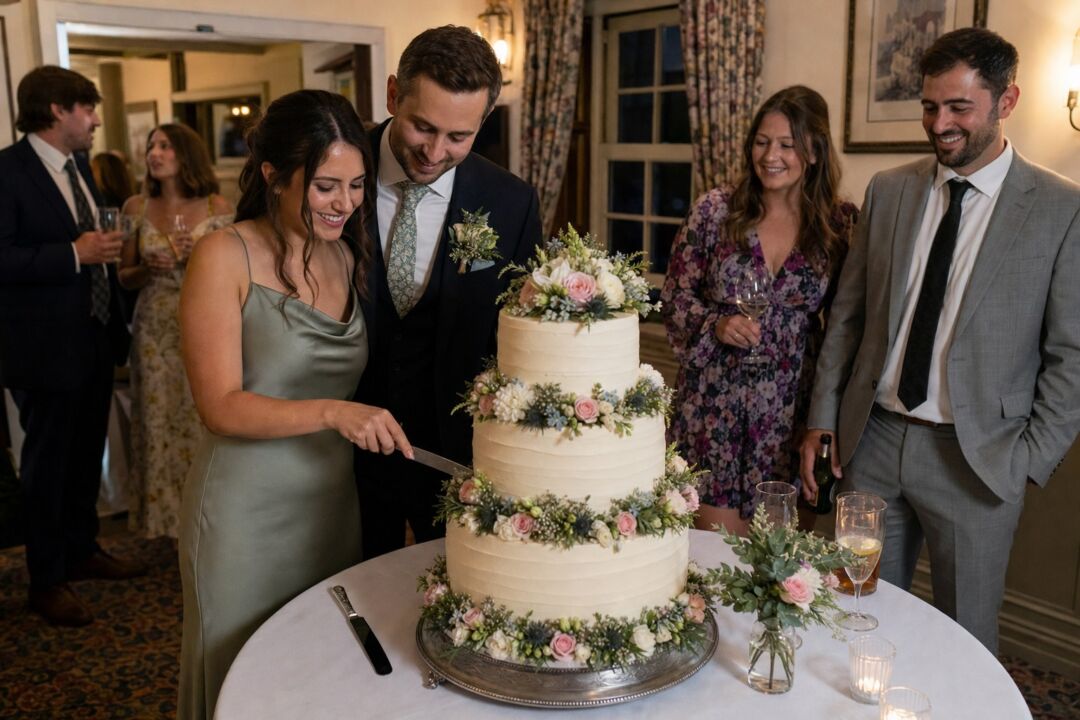
The same logic applies to cake. Many venues charge a fee to cut, plate, and serve a cake from an outside bakery. Some charge per guest, some per slice, and some apply a flat rate. Ask before you book a baker who is not on the venue’s approved list. Some venues add a separate surcharge for external suppliers who are not on that list, regardless of whether the supplier is a baker, florist, or decorator.

When the Event Runs Long
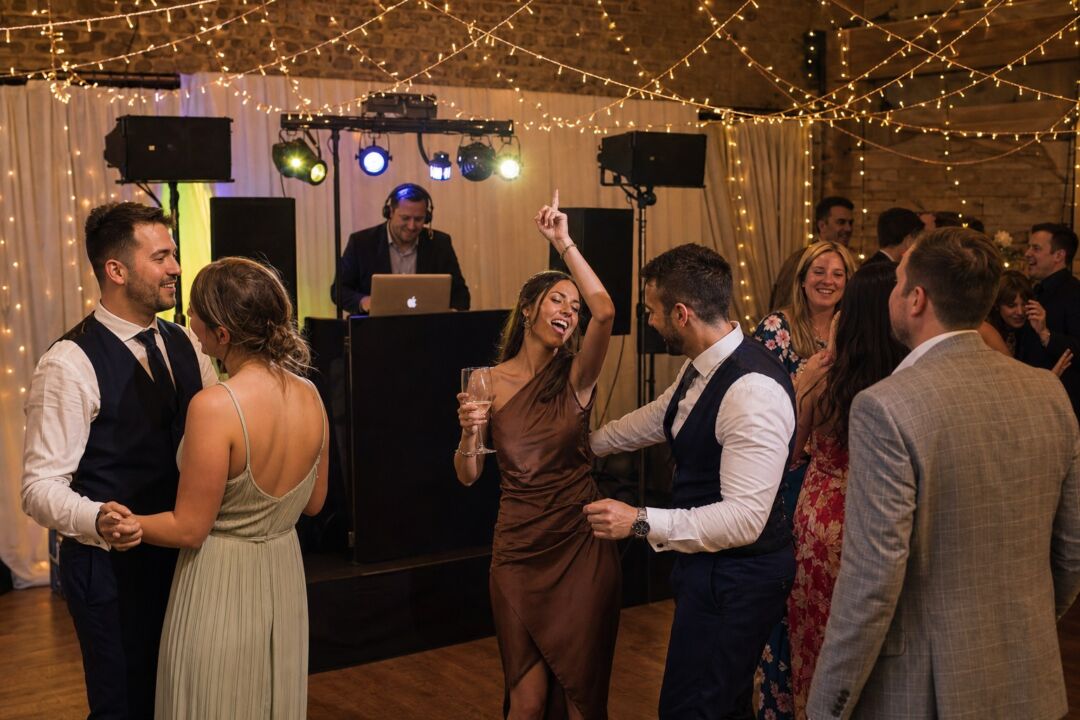
Venue overtime is one of the most expensive surprises in a wedding budget. Most contracts specify a hard end time for the room, bar service, and music. Running past that time may be allowed, but it will be charged, and the rate per hour is typically much higher than the per-hour equivalent in your base booking.
Ask for the overtime rate in writing before you book. Ask whether it applies per hour or in half-hour increments, and ask whether bar service and music are cut at the contracted end time even if the room itself remains available.
Ask the same question of every vendor with a contracted end time: the DJ, the band, the photographer, the videographer, the wedding planner or coordinator. Each of these suppliers typically has an hourly overtime rate written into their contract. If your reception runs an hour late, you may owe overtime to three or four vendors at the same time.
The practical fix is to build realistic buffer time into your bookings. If you expect the reception to finish at 10:30 pm, contract until 11 pm. The cost of that buffer hour, priced in advance as part of the package, is significantly less than the same hour billed as overtime on the final invoice.
A reply card with a deadline printed on it saves the fortnight of phone calls.
Delivery, Setup, and Pack-Down
Florists and hire companies rarely include delivery and collection in their base quote. These are separate line items: a delivery fee to transport items to the venue, a setup fee for the time spent arranging them, and a pack-down fee to collect everything after the event finishes.
Ask every florist and hire company the same question: “Is the quote all-inclusive of delivery, setup, and pack-down, or are those billed separately?” Also ask what the pack-down time window is. Some venues charge the couple if a supplier’s team is still on the premises after a certain hour, which can create a situation where the couple pays the venue penalty and the supplier’s overtime simultaneously.
If you are collecting any items yourself the following morning, ask the venue whether there is a fee for leaving items on the premises overnight and whether the room will be accessible for collection.
The Second Shooter, the Sound System, and Other Add-Ons
Many wedding photographers present a package that does not include a second shooter, then offer it as an upgrade. A second shooter covers angles the lead photographer cannot cover from a single position: the groom’s reaction during the processional while the photographer is positioned for the bride’s entrance, two different ceremony perspectives at once, candid crowd shots while the lead is positioned for a formal moment.
Whether you need one depends on your venue layout, your guest count, and how much you care about coverage from multiple angles. The relevant question at the contract stage is whether the package includes a second shooter and what the cost is if you decide to add one later. Adding it after the initial contract is signed puts you in a weaker negotiating position than asking upfront.
Sound is the other common add-on. Dry-hire venues, meaning venues that provide the space only and nothing else, typically do not supply a PA system, microphones, or any ambient music infrastructure. You will need to hire audio equipment separately or confirm that your DJ or band brings sufficient equipment for the size of your room.
Ask the venue: “Is this a dry hire, and what audio equipment, if any, is included?” Ask your DJ or band: “Does your quote cover all equipment for a room this size, or is there a separate charge for additional speakers or extended rigging?”
Alterations, Insurance, and Getting Your Stationery to Your Guests
Wedding dress alterations are rarely included in the price of the gown. Most dresses require at minimum a hem and a body adjustment, and some require more significant work depending on the cut, fabric, and how close the sample size is to the buyer’s measurements. Ask the bridal boutique for a realistic alteration cost range before you commit to buying the dress, not after you have paid a deposit.
The same applies to suits and bridesmaids’ dresses. Tailoring is usually a separate invoice, and the total for a full bridal party can be substantial if nobody has accounted for it.
Wedding insurance is required by some venues as a condition of booking. Outside of that requirement, it is worth comparing before you sign any large vendor contract. Policies typically cover cancellation caused by events outside your control: extreme weather, sudden venue closure, or a key vendor being unable to attend. In both Australia and the US, independent wedding insurance providers publish rates based on guest count and coverage level. Request quotes from several providers before your first deposit clears.
Then there is postage. The stationery budget covers printing, but the mailing cost is a separate line that many couples overlook. An invitation suite with multiple inserts, premium-weight paper, or a non-standard envelope shape is likely to weigh more than one standard letter and may attract a non-machinable surcharge from the postal service.
In the US, USPS publishes current first-class and large-envelope rates at usps.com, and rates change at least annually. In Australia, Australia Post publishes domestic large-letter rates at auspost.com.au. Before you finalize your invitation design, take a fully assembled sample suite to the post office, have it weighed, and ask the counter staff whether it will attract any surcharges. That single step tells you the exact stamp budget.
When you are ready to look at invitation designs, browse the full collection at Paperlust before you run the postage test, since different paper weights and suite formats will produce different stamp requirements. Reply postage is the cost most couples forget, so price RSVP cards and their return envelopes at the same time as the invitation.
Invitations and RSVP cards ordered together, personalized online. The $5 sample pack puts seven designs and an envelope in your hands, including real foil and letterpress, so you judge paper and finish off a screen.
Frequently Asked Questions
Do I have to feed my vendors?
In most cases, yes. Vendors who are on-site through your dinner service are typically entitled to a meal, and this requirement is often written into their contracts. The question to resolve before signing is whether vendors will be charged at the full guest rate or at a reduced vendor meal rate. Ask every caterer or venue for that figure in writing before you sign.
What is a corkage fee and how is it calculated?
A corkage fee is what a venue charges to open, serve, and manage alcohol you have supplied yourself. Some venues charge per bottle opened during the event. Others charge per head based on an expected consumption rate. For a guest count of 100 or more, the two models can produce very different totals, so ask which structure applies before you decide whether bringing your own alcohol saves money.
What does dry hire mean?
A dry-hire venue provides the physical space only. Catering, bar service, audio equipment, furniture, and lighting are not included and must be arranged separately. Dry hire gives you full control over suppliers and presentation, but it also means the cost of running the space sits entirely on your budget. Confirm what is and is not supplied before you book.
Should I get wedding insurance?
If your venue requires it, the decision is made for you. Outside of that, it is worth comparing quotes before you commit to a large deposit with any major vendor. Policies typically cover cancellation due to extreme weather, vendor failure, and unexpected venue closure. Compare quotes from dedicated providers in your country, and do it before the first deposit clears.
Why does postage on wedding invitations cost more than I expect?
An invitation suite with multiple cards, heavy paper, or a square or very thick envelope is likely to weigh more than a standard letter and may fall into a non-machinable category. Postal services charge higher rates for items that cannot pass through automated sorting. The simplest fix is to take a fully assembled sample invitation to the post office before you place your order, have it weighed, and ask whether it attracts any surcharges.