
Getting legally married in Australia comes down to one form, one authorised celebrant, and a minimum of one month’s notice. The venue, the dress, and the photographer can be booked in whatever order suits you. The Notice of Intended Marriage cannot be left until the week before.
Under the Marriage Act 1961 (Cth), every marriage in Australia follows the same federal legal process, whether the ceremony takes place at a vineyard in the Hunter Valley, a church in Hobart, or a registry office in Brisbane. This guide covers each requirement: who is eligible to marry, what the NOIM is and when to lodge it, what type of celebrant can legally perform the ceremony, what gets signed on the day, and how to apply for your official marriage certificate from Births, Deaths and Marriages (BDM) afterward. Where a state or territory has its own administrative procedure, we point you to the right registry.
- Lodge your Notice of Intended Marriage (NOIM) with your authorised celebrant at least one calendar month and no more than eighteen months before the ceremony.
- Both parties must be at least 18, not currently married to anyone else, and not in a close family relationship.
- Three types of authorised celebrant can legally marry you: Commonwealth-registered civil celebrants, ministers of religion, and registry office officers.
- Each partner signs a Declaration of No Legal Impediment on or close to the wedding day.
- Three marriage certificates are signed at the ceremony by both parties, the celebrant, and two witnesses aged 18 or older. The copy lodged with BDM is the legal record.
- After the ceremony, apply to your state or territory BDM registry for the official registered certificate you will need for name changes and legal purposes.
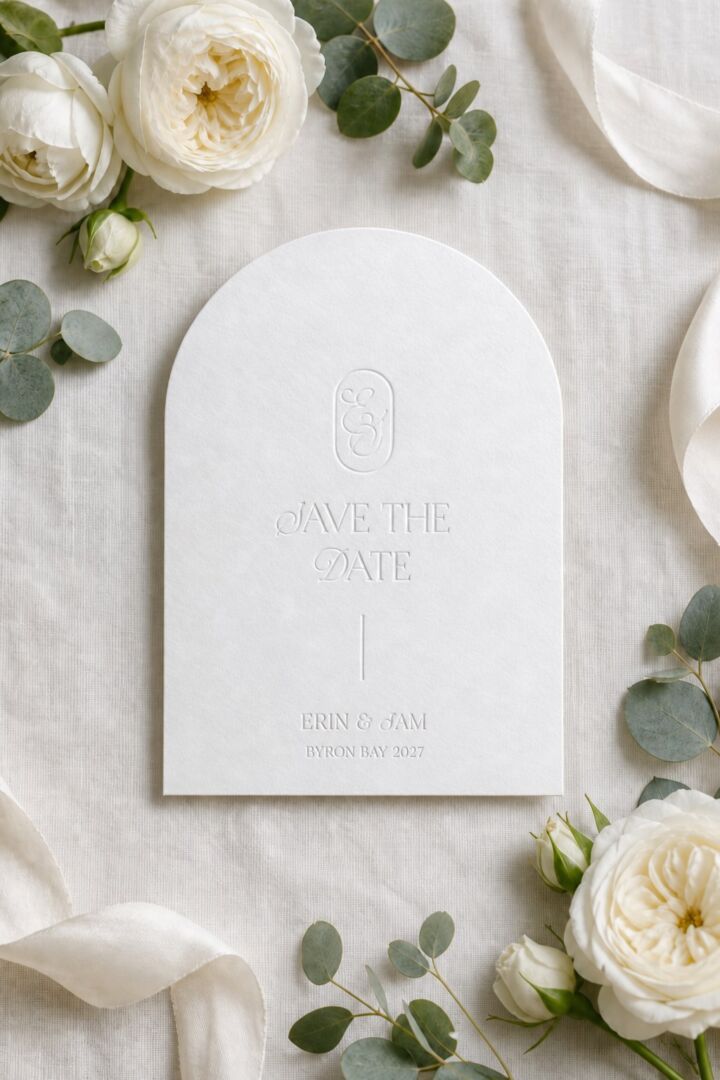
You cannot marry inside a month of lodging the NOIM. A save the date holds your guests while the paperwork runs its course.
Who Can Legally Marry in Australia
Under the Marriage Act 1961 (Cth), as published by the Attorney-General’s Department, you can marry in Australia if all of the following are true:
- You are at least 18 years old. A person aged 16 or 17 may marry only if the other party is 18 or older and a judge or magistrate has issued a court order authorising the marriage, with required parental or guardian consents. No one under 16 can marry, and two people who are both under 18 cannot marry each other under any circumstances.
- You are not currently married to anyone else.
- You are not closely related to your partner. Prohibited relationships include parent and child, grandparent and grandchild, and brother and sister (including adopted siblings).
- You freely consent. A marriage is not legally valid if consent was obtained through duress, fraud, or mistake, or if either party lacked the capacity to understand what they were agreeing to.
Citizenship and visa status are not barriers. Visitors on temporary visas can legally marry in Australia, provided all other requirements are met.
If you were previously married, you must provide evidence that the prior marriage has legally ended: a divorce order or a death certificate for a former spouse. Your celebrant must sight original documents, not photocopies.
What Is the Notice of Intended Marriage?
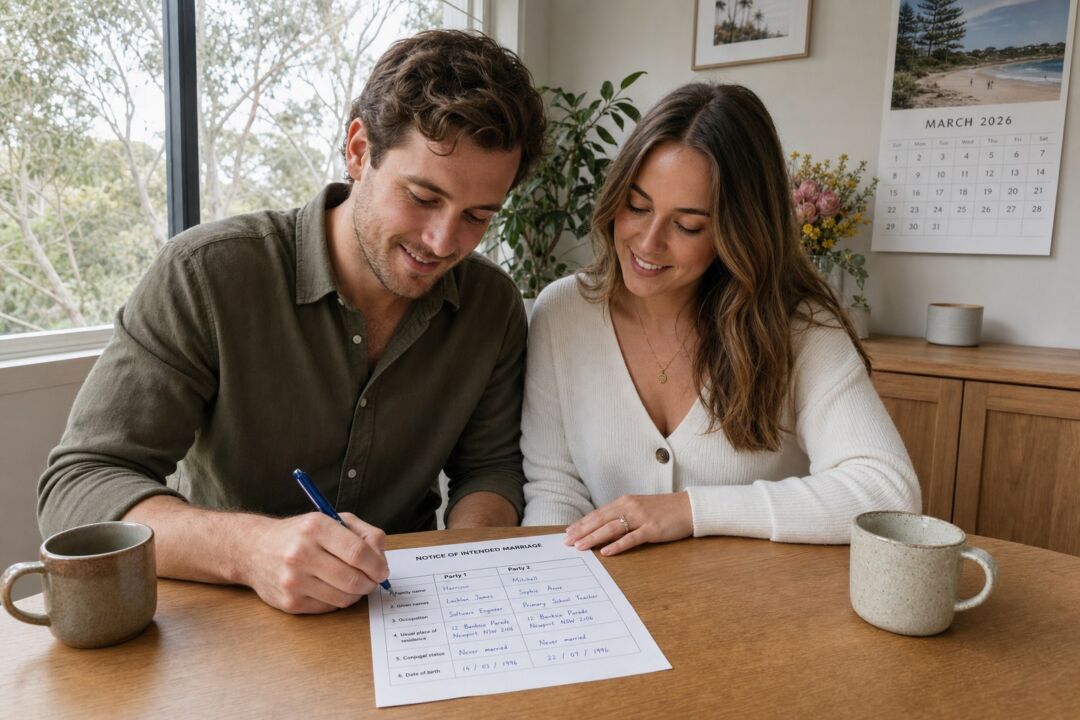
The Notice of Intended Marriage (NOIM) is a federal form required by section 42 of the Marriage Act 1961 (Cth). It is the legal notice that you intend to marry, given to your authorised celebrant before the ceremony.
The timing rule. The NOIM must be lodged at least one calendar month before the ceremony date, and no more than eighteen months before it. Lodge on 15 August and the earliest legal ceremony date is 15 September. A NOIM expires after eighteen months, so lodging too early means completing a new one.
Fees. Lodging a NOIM with a private celebrant carries no government fee. If you are marrying through a registry office, the office charges its own fees; South Australia itemises a $138 NOIM fee within its registry-office service. The fee belongs to the path you choose, not the form itself.
You can obtain the NOIM from your chosen celebrant, from the Attorney-General’s Department at ag.gov.au, or from your state or territory BDM registry.

Completing and Lodging the NOIM
Both parties complete the NOIM together and sign it in front of an authorised witness. You will also need to provide your celebrant with original documents: proof of date and place of birth, photo identification, and (if previously married) a divorce order or death certificate. Once signed and witnessed, the NOIM goes to your celebrant, not to BDM directly. For the full section-by-section walkthrough, witness rules, and document checklist, see our detailed guide to completing the NOIM form.
Your Celebrant Options
Three categories of authorised celebrant can legally solemnise a marriage in Australia, and all three produce a legally identical outcome:
- Commonwealth-registered civil marriage celebrant. The most common choice. These independents can marry you at any location, set their own fees, and offer the most flexibility in ceremony script, provided the required legal wording is included.
- Minister of religion. A minister of a recognised denomination nominated by their denomination. Ministers conduct ceremonies according to their faith’s rites but must include the legal words required by the Marriage Act. Ministers are not obliged to marry any particular couple.
- Registry office officer. A state or territory BDM officer or court officer. Registry ceremonies are brief, held at fixed locations, and cost a set government fee, making them the lowest-cost option in most states.
Choose your celebrant before lodging the NOIM, because the NOIM is given to the celebrant who will perform the ceremony. For help deciding which option suits your situation, see our guides to choosing a wedding celebrant in Australia and civil celebrant versus registry office.
Invitations go out after the legal pieces are locked, usually eight to twelve weeks before the day.
The Declaration of No Legal Impediment
Shortly before the ceremony, each party signs a Declaration of No Legal Impediment to Marriage. This confirms your current marital status (never married, divorced, or widowed) and that you are not aware of any legal reason the marriage should not proceed.
The declaration is prepared by your celebrant using the information on the NOIM. It is signed on or close to the wedding day. Your celebrant retains the signed declarations and lodges them with BDM after the ceremony, usually within fourteen days.
If a real legal impediment exists, such as an existing marriage that has not been dissolved, the ceremony cannot legally go ahead.
What Must Happen During the Ceremony
For a marriage to be legally valid under the Marriage Act 1961 (Cth), the ceremony must include the following, regardless of whether it is civil or religious.
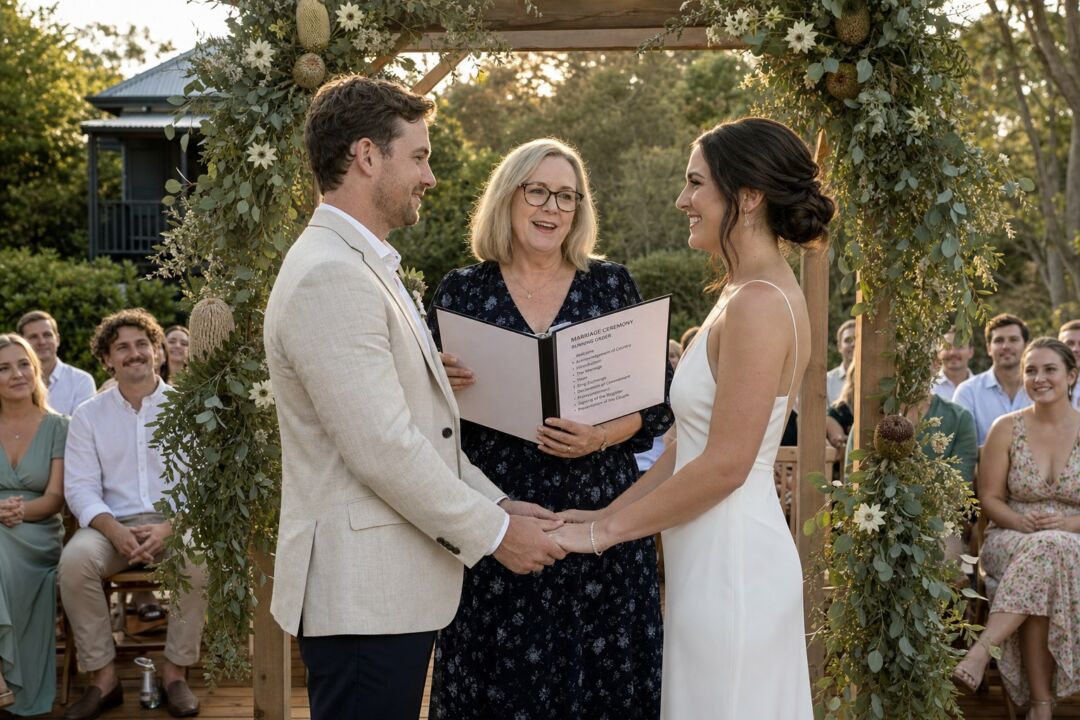
The monitum. The authorised celebrant must read a statement about the nature and meaning of marriage under Australian law.
The marriage vows. Both parties must say words that clearly indicate they are taking each other as lawful spouses. The prescribed form is:
I call upon the persons here present to witness that I, [Name], take you, [Name], to be my lawfully wedded [wife / husband / spouse].
Personalised additions are permitted as long as the required legal wording is present.
Two adult witnesses. Two people who are each at least 18 years old must be present throughout the ceremony and must sign the marriage certificates.
The Certificates Signed on the Day
Three marriage certificates are signed at the ceremony by both parties, the celebrant, and both witnesses. The copy lodged with BDM by your celebrant after the ceremony is the legal record used for name changes, visa applications, and official proof of marriage. The certificate your celebrant hands you at the ceremony is a presentation keepsake only. For the full process of obtaining your registered certificate from BDM, see our guide to getting your marriage certificate in Australia.
The Stationery and Paperwork Timeline
The NOIM window and the standard wedding stationery timeline overlap almost entirely. A venue booked twelve to eighteen months out puts you well inside the NOIM window.
| When | Action |
|---|---|
| 12-18 months out | Book venue and set a date. You are now inside the NOIM window. Choose your celebrant. |
| 9-12 months out | Send save the dates. Lodge the NOIM with your celebrant as soon as you have a confirmed date. |
| 6-8 weeks out | Send wedding invitations with RSVP deadline. |
| Day of ceremony | Sign the Declaration of No Legal Impediment. Ceremony and certificates signed. |
| Within 14 days after | Your celebrant lodges paperwork with BDM. |
| After registration confirmed | Apply to your state or territory BDM for the official marriage certificate. |
Save the dates go out when a venue is confirmed, around the same time the NOIM is lodged. You can browse Paperlust’s save the date cards once your date and venue are set.
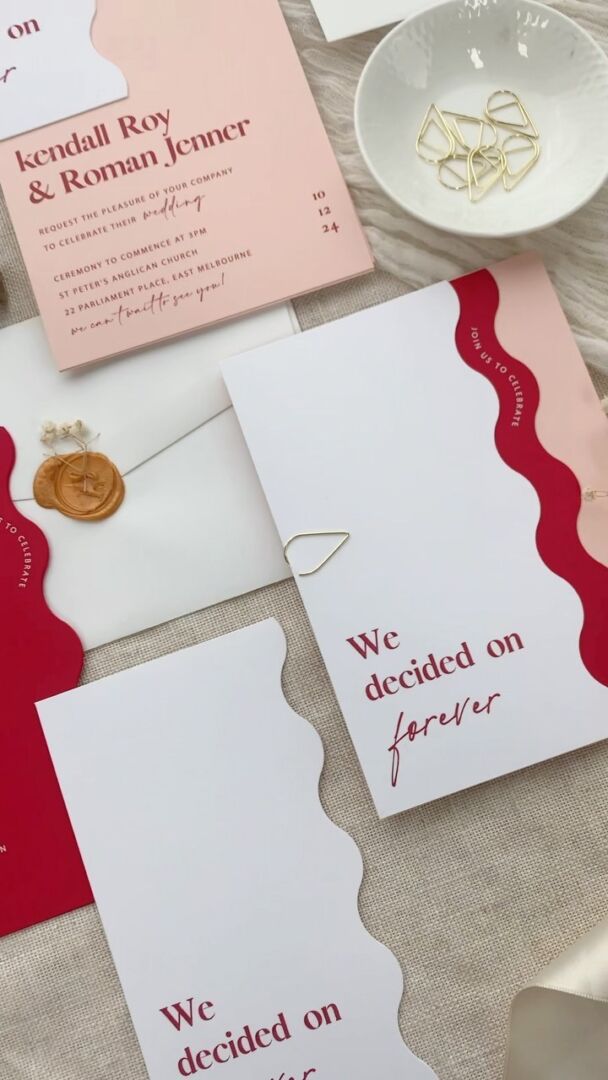
Wedding invitations follow at six to eight weeks before the ceremony. Paperlust’s wedding invitations cover digital, foil stamp, and letterpress styles from 500-plus independent Australian and international designers, with free overnight delivery Australia-wide. Stationery decisions can run in parallel with the NOIM process without adding complexity to either.
Getting Your Official Marriage Certificate
After the ceremony, your celebrant lodges the required documents with the BDM registry in the state or territory where the marriage took place. Apply to that registry for a certified copy of your marriage certificate once registration is confirmed. Apply to the state where you married, not where you live. For fee schedules, processing timelines, and application links for all eight states and territories, see our guide to getting your marriage certificate from Births, Deaths and Marriages.
Wedding invitation designs you personalize online, printed in Australia. The $5 sample pack puts seven designs and an envelope in your hands, including real foil and letterpress, so you judge paper and finish off a screen.
Frequently Asked Questions
How far in advance do you need to lodge the NOIM in Australia?
Under section 42 of the Marriage Act 1961 (Cth), the Notice of Intended Marriage must be lodged with your authorised celebrant at least one calendar month before the ceremony date and no more than eighteen months before it. If you lodge the NOIM on 1 June, the earliest legal ceremony date is 1 July. Eighteen months is the upper limit: a NOIM lodged earlier than that has expired and you would need a new one.
Can you get married in Australia without a celebrant?
No. Every legally valid marriage in Australia must be performed by an authorised celebrant: a Commonwealth-registered civil or religious marriage celebrant, a minister of religion of a recognised denomination, or a registry office officer. No other person can legally solemnise a marriage under the Marriage Act 1961 (Cth).
What happens if you cannot give the full month’s notice?
If you need to marry sooner than one calendar month after lodging the NOIM, you must apply to a prescribed authority (typically your state or territory BDM registry) for a formal shortening of time. The application requires a statutory declaration explaining the exceptional circumstances and supporting evidence. It is discretionary and cannot be granted by the celebrant alone.
Is the certificate the celebrant hands you at the ceremony the official one?
No. The certificate presented at the ceremony by your celebrant is a presentation or decorative copy. The legal marriage record is the copy lodged with Births, Deaths and Marriages by your celebrant after the ceremony. You then apply to BDM for a certified copy of that registered record, which is what government agencies, banks, and passport offices require.
Can one partner be from overseas? What documents are needed?
Yes, couples where one or both partners are from overseas can marry in Australia. Foreign birth certificates may need an official English translation. Foreign divorce documents must be recognised under Australian law. Your celebrant can advise on what is acceptable for your specific documents, and may ask for a statutory declaration if there is any uncertainty about an overseas divorce.
Do you need Australian citizenship or residency to marry in Australia?
No. Citizenship and residency are not requirements. You can legally marry in Australia as a citizen, permanent resident, or a visitor on a temporary visa, provided both parties meet the age, consent, and marital status requirements of the Marriage Act 1961 (Cth).