

Browse Muslim and Islamic wedding invitations in your region:
Australia |
United Kingdom |
United States |
Canada |
New Zealand
Muslim wedding invitations carry a weight that goes beyond paper and print. They open with the name of God, announce a sacred covenant, and set the tone for a ceremony rich in meaning. Whether you’re planning a traditional Nikah, a multi-day celebration, or a modern American wedding that weaves in Islamic heritage, your invitation is the first place those layers come together.
This guide covers everything from the Bismillah opening to Walima wording, bilingual Arabic-English formats, Arabic calligraphy design choices, and how to build a full stationery suite that honors tradition while reflecting your personal style.
- Muslim wedding invitations traditionally open with the Bismillah (“In the name of God, the Most Gracious, the Most Merciful”) in Arabic, English, or both.
- The Nikah is the Islamic marriage ceremony; the Walima is the reception feast celebrated after. They often get separate invitations or a single card covering both events.
- Bilingual Arabic-English invitations are the norm for US Muslim couples: Arabic for religious openings and Quranic verses, English for venue, date, and RSVP details.
- Arabic calligraphy styles most used on invitations: Naskh (clean, readable) and Thuluth (ornate, ceremonial).
- Print methods that suit Islamic wedding stationery: flat foil for gold calligraphy accents, letterpress for textural depth, and digital for intricate geometric patterns.
- Send Nikah invitations 6-8 weeks in advance for local guests; allow 8-10 weeks for out-of-state or international families.
Muslim Wedding Invitation Traditions
Islamic wedding stationery draws from centuries of tradition across Arab, South Asian, Malay, West African, and Turkish communities. The aesthetic varies widely, but certain principles are shared across all. A Muslim wedding invitation is not merely logistical. It is an announcement of a religious event, a du’a (supplication) for the couple’s future, and an expression of gratitude to the community being invited to witness.
What makes a Muslim wedding invitation different
Unlike secular Western wedding invitations that typically open with the couple’s or parents’ names, Muslim invitations begin with an Islamic declaration. The Bismillah (“Bismillah ir-Rahman ir-Raheem” – “In the name of God, the Most Gracious, the Most Merciful”) anchors the card in faith before any names or event details appear. This is not optional decoration; it is the spiritual foundation of the announcement.
Many invitations also include a Quranic verse or Hadith relevant to marriage. Surah Ar-Rum 30:21 is the most commonly chosen:
The role of family in Muslim wedding invitations
Traditionally, Muslim wedding invitations are issued in the names of the parents, not the couple. The bride’s father, or her Wali (legal guardian), plays a formal role in the Nikah, so his name and the groom’s father’s name typically head the invitation. For American Muslim couples, this convention ranges from strictly observed to freely adapted. Modern invitations often list the couple’s own names prominently while still honoring parents in the body text.
Key differences across Muslim communities in the US
| Community background | Typical invitation style | Language mix |
|---|---|---|
| Arab American | Formal, Arabic-forward, geometric motifs | Arabic primary, English secondary |
| South Asian American (Pakistani, Indian, Bangladeshi) | Ornate florals, gold foil borders, Urdu or Arabic text | English, with Arabic Bismillah and sometimes Urdu |
| West African American (Senegalese, Nigerian, Guinean) | Rich colors, patterned borders, more informal tone | English or French, Arabic Bismillah |
| Malay American / Indonesian American | Softer palettes, floral motifs, bilingual Malay-English | English, Arabic Bismillah, sometimes Malay |
| Convert / mixed-background couples | Modern minimalist with Islamic elements layered in | English primary, Arabic accent phrases |
The Bismillah Opening and Its Placement
The Bismillah (“Bismillahir Rahmanir Raheem”) is the defining opening of an Islamic wedding invitation. Getting its placement and rendering right matters both visually and spiritually.
How to write the Bismillah on your invitation
There are three common approaches for US Muslim couples:
- Arabic script only. The full Arabic calligraphy of “بِسْمِ اللَّهِ الرَّحْمَنِ الرَّحِيمِ” appears at the top. Elegant and traditional, but guests who do not read Arabic will need to take the meaning on faith or look it up.
- Arabic with transliteration. Arabic script followed by “Bismillahir Rahmanir Raheem” in Roman letters. Gives non-Arabic readers a way to say it aloud.
- Arabic with English translation. Arabic calligraphy followed by “In the name of God, the Most Gracious, the Most Merciful.” Clear to every guest, regardless of language background. This is the most common format for US bilingual invitations.
Bismillah placement rules
The Bismillah should appear at the very top of the invitation, before any names, dates, or descriptive text. On a double-panel invitation (common in South Asian and Arab traditions), it typically appears centered at the top of the inner left panel. On a single-card format, it sits above the opener line, either centered or left-aligned.
Wording the Bismillah line
In the name of God, the Most Gracious, the Most Merciful
In the name of God, the Most Gracious, the Most Merciful
Adding a Quranic verse after the Bismillah
Many couples follow the Bismillah with a marriage-relevant verse. Surah Ar-Rum 30:21 is standard. Others use a Hadith about the blessings of marriage:
A shorter pull-quote from the verse, set in Arabic calligraphy as a design element, is also popular on modern minimalist invitations that want faith present without a full quotation block.
Nikah Ceremony Wording vs. Walima Reception Wording
This is where couples most often need clarity. The Nikah and the Walima are two distinct events with different purposes, and their invitation language reflects that distinction.
What is a Nikah?
The Nikah is the Islamic marriage contract. It is a legal and religious ceremony conducted by an Imam (or officiant), witnessed by at least two adults, and involves the formal acceptance (Ijab and Qabul) by bride and groom. The Nikah may be small and intimate or larger and public, but it is the religious heart of the wedding.
What is a Walima?
The Walima is the reception feast held to celebrate and publicize the marriage after the Nikah is complete. The Prophet Muhammad (peace be upon him) encouraged the Walima as a Sunnah act. It may take place the same day as the Nikah, the following day, or within three days. The Walima is typically the more socially open event. Extended family, colleagues, and community members who may not attend the Nikah are often invited to the Walima.
Options for how to structure your invitation
There are three common approaches:
- Single card, both events. One invitation lists the Nikah ceremony details first (date, time, venue), then a second section for the Walima reception (date, time, venue if different). Clear and cost-effective.
- Two separate cards. A formal Nikah invitation sent to close family and witnesses, plus a Walima invitation sent to a broader guest list.
- Nikah card with Walima insert. The main invitation focuses on the Nikah; a smaller insert card gives Walima details to those invited to both.
Nikah invitation wording examples
In the name of God, the Most Gracious, the Most Merciful
Mr. and Mrs. Khalid Al-Rashidi
and
Mr. and Mrs. Tariq Hasan
joyfully invite you to the Nikah ceremony
uniting their children
Fatima Al-Rashidi
and
Ahmed Hasan
Saturday, the fourteenth of September
at eleven o’clock in the morning
Dar Al-Hijrah Islamic Center
Falls Church, Virginia
Walima reception to follow at six o’clock in the evening
The Ritz-Carlton, Tysons Corner
With gratitude to Allah and joy in our hearts,
Layla & Omar
invite you to witness their Nikah
Friday, the twenty-second of August
at two o’clock in the afternoon
Islamic Society of North America Mosque
Plainfield, Indiana
RSVP by August 1st
rsvp@laylaaandomarwedding.com
Walima-only invitation wording example
With gratitude to God and joy in our hearts,
we invite you to join us
for the Walima reception celebrating the marriage of
Aisha & Yusuf
Saturday, the twenty-second of March
at six o’clock in the evening
The Grand Ballroom at The Westin
Chicago, Illinois
Modest attire is appreciated
A note on gender-separated ceremony wording
Some Muslim communities hold gender-separated Nikah ceremonies or receptions. If your event has separate spaces or separate timing for male and female guests, your invitation should state this clearly. Common approaches include:
Gentlemen’s ceremony: South Hall, 11:00 AM
Mixed Walima reception: Grand Ballroom, 6:00 PM
Alternatively, print separate cards for the ladies’ and gentlemen’s sides, with the Walima details on a shared insert.
Arabic Calligraphy and Typography Options
Arabic calligraphy is one of the most recognizable and beloved art forms in Islamic culture. On a wedding invitation, it can range from a single Bismillah rendered in a traditional hand to a full bilingual layout where Arabic type mirrors the English text.
The main Arabic calligraphy styles used on invitations
| Style | Character | Best for |
|---|---|---|
| Naskh | Clean, rounded, highly legible | Full bilingual invitations, body text in Arabic |
| Thuluth | Tall, ornate, ceremonial | Bismillah, Quranic verses, headings |
| Diwani | Flowing, looping, highly decorative | Couple names, accent headings on ornate designs |
| Ruq’ah | Compact, quick strokes, informal | Rarely used on formal wedding invitations |
| Kufic | Geometric, angular, abstract | Border and pattern design elements, not body text |
Digital calligraphy vs. hand-lettered calligraphy
Most Paperlust designs use high-quality digital typefaces that replicate calligraphic styles. Digital calligraphy offers consistency across a print run and pairs cleanly with modern layouts. Hand-lettered calligraphy commissioned from a professional calligrapher is an option for couples who want a fully bespoke feel. The artwork is then incorporated into the digital design file before printing.
Pairing Arabic and English typefaces
The visual challenge in bilingual Arabic-English design is matching the weight and feel of the typefaces across two scripts. Some general rules:
- Pair a Naskh Arabic font with a clean serif English font (Garamond, Cormorant, Playfair) for a traditional look.
- Pair a Naskh or Diwani Arabic font with a modern sans-serif for contemporary minimalism.
- Avoid pairing Thuluth (heavy, ceremonial) with a very light English font. The visual weight contrast will feel jarring.
- Gold ink or flat foil on the Arabic calligraphy against an English font in deep navy, charcoal, or forest green is a classic combination.
Right-to-left layout considerations
Arabic reads right to left, English reads left to right. On bilingual invitations, there are three common layout approaches:
- Vertical stack. Arabic block on top (for the Bismillah and verse), English block below (for event details). Most common and least visually complex.
- Mirrored panels. Arabic text on the right panel, English on the left. Works well on double-panel or gatefold formats.
- Centered. Both scripts centered, with Arabic above and English below each element. Elegant for short text; challenging for longer passages.
Bilingual Arabic and English Invitation Formats
For most US Muslim couples, English is the primary working language but Arabic holds the spiritual dimension. The goal of a bilingual format is to honor both without making the card feel cluttered or performing a translation exercise for guests.
What to put in Arabic vs. English
| Element | Arabic | English |
|---|---|---|
| Bismillah | Yes (calligraphy) | Translation beneath (optional) |
| Quranic verse | Yes (calligraphy or typeset) | Translation beneath |
| Couple names | Arabic rendering (if desired) | Primary listing |
| Parents’ names | Optional | Primary listing |
| Date and time | Optional (Hijri date) | Gregorian date, spelled out |
| Venue name and address | No (too complex to render clearly) | Full address in English |
| RSVP details | No | Yes |
| Dress code | Optional note in Arabic | Yes |
Including the Hijri (Islamic) calendar date
Many families appreciate seeing the Islamic calendar date alongside the Gregorian date. The format is typically:
10 Rabi’ al-Awwal 1448 AH
The Hijri date is a meaningful touch for religiously observant families and for international guests. You can calculate the corresponding Hijri date using an Islamic calendar converter before sending your design to print.
Bilingual wording example (full card)
In the name of God, the Most Gracious, the Most Merciful
وَمِنْ آيَاتِهِ أَنْ خَلَقَ لَكُم مِّنْ أَنفُسِكُمْ أَزْوَاجًا
“And of His signs is that He created for you mates”
Quran 30:21
Dr. Amir and Mrs. Rania Hussain
along with
Mr. Bilal and Mrs. Noura Chaudhry
joyfully invite you to the Nikah ceremony of their children
Mariam Hussain
and
Zaid Chaudhry
Sunday, October 11, 2026
at two o’clock in the afternoon
Masjid Al-Noor
Houston, Texas
Walima reception to follow at six o’clock in the evening
The Houstonian Hotel
Modern Islamic Wedding Invitation Designs
The strongest trend among US Muslim couples today is design that feels genuinely modern – not Islamic-by-checklist, but invitations that could sit on any design blog while still carrying every element that matters to the family. Here is what that looks like in practice.
Geometric minimalism
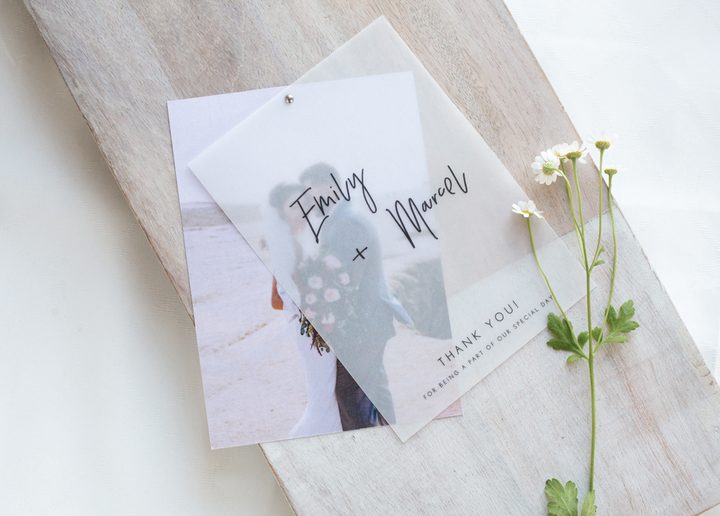
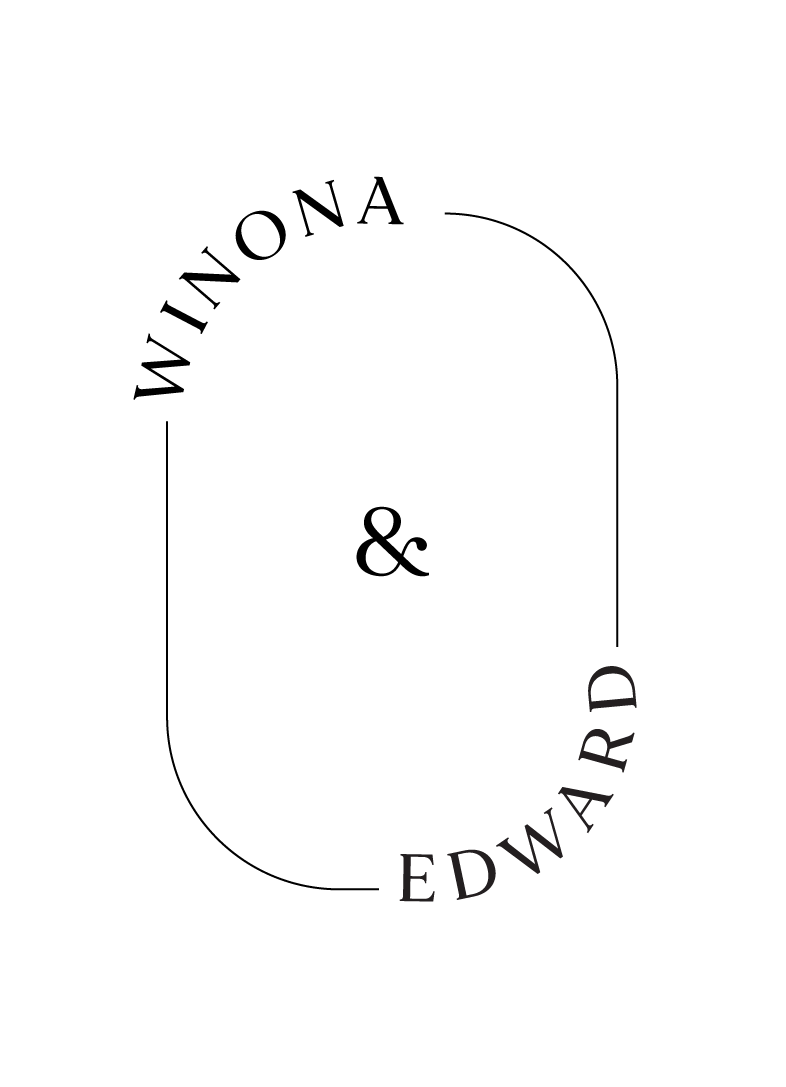
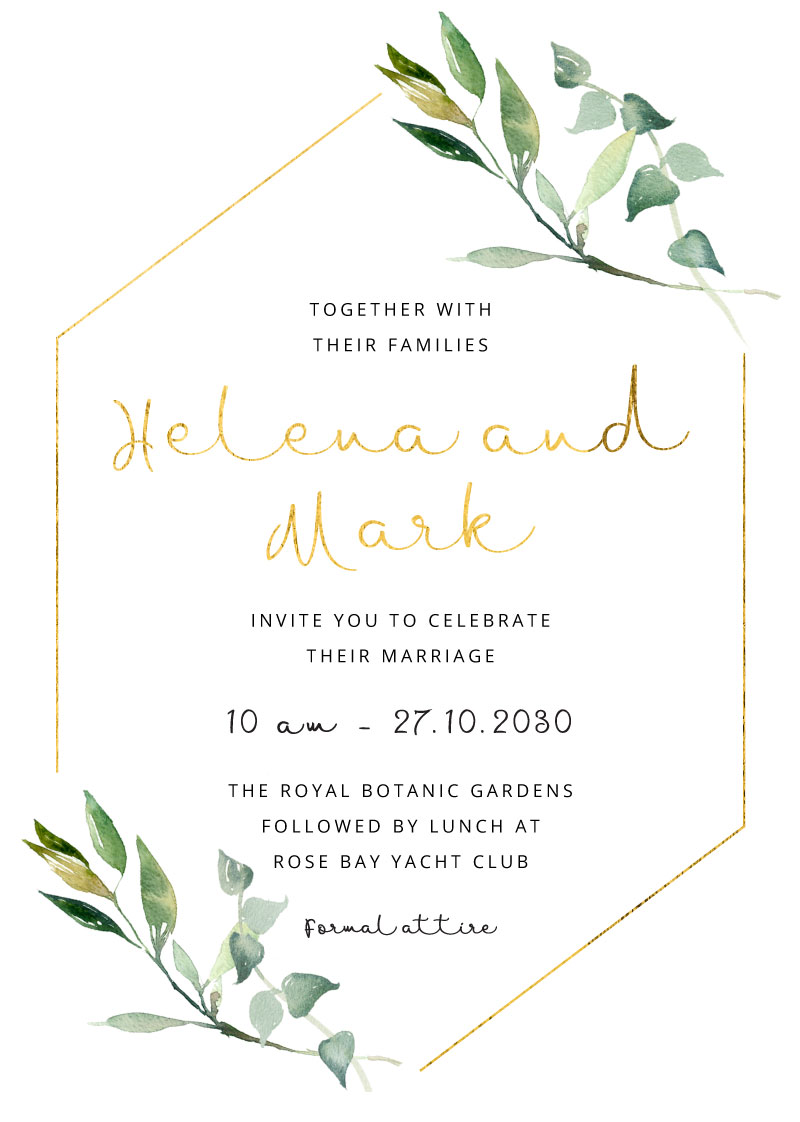
Geometric patterns (arabesque, star motifs, interlocking circles) drawn from Islamic art traditions are being reinterpreted in clean, minimal layouts. A single repeated geometric motif as a border or background watermark, combined with a restrained color palette of ivory, warm gold, and soft sage, reads as contemporary while remaining culturally grounded.
Geometric wedding invitations →

Terracotta ArchDigital printing

Half MoonColour Stock + Foil
MirageDigital printing
Garden WindowFlat foil
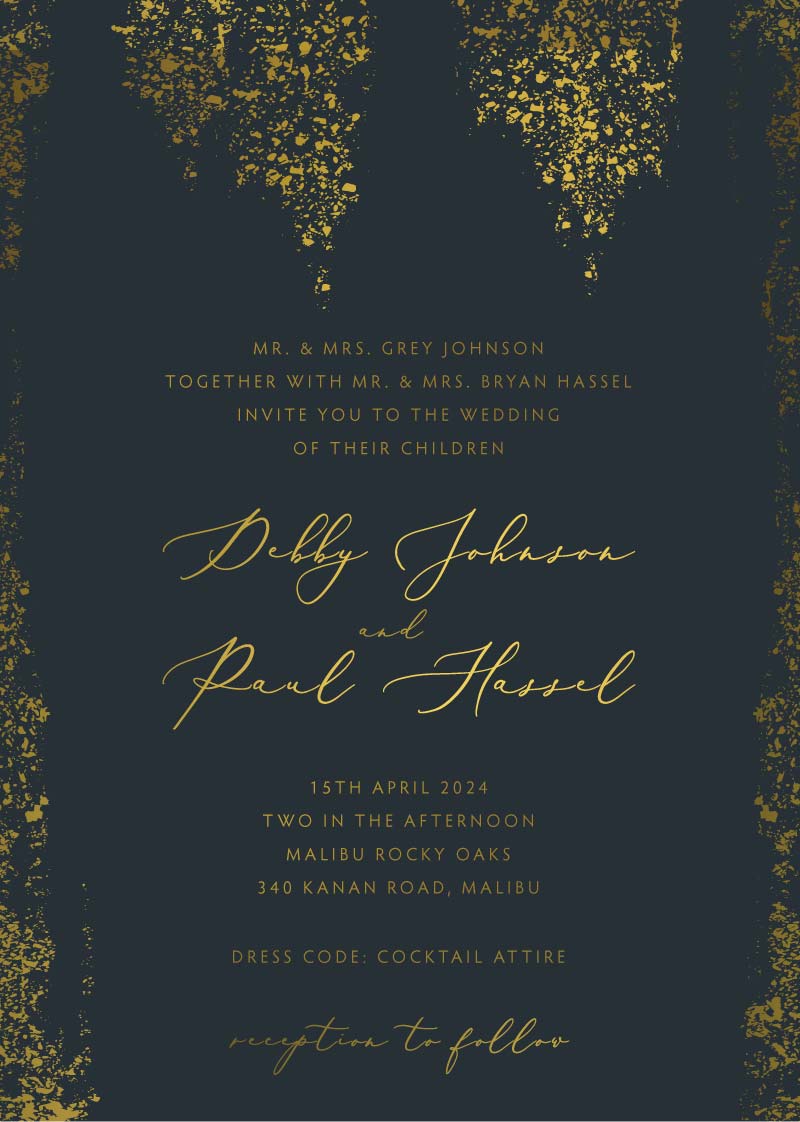
Gold calligraphy on dark stock
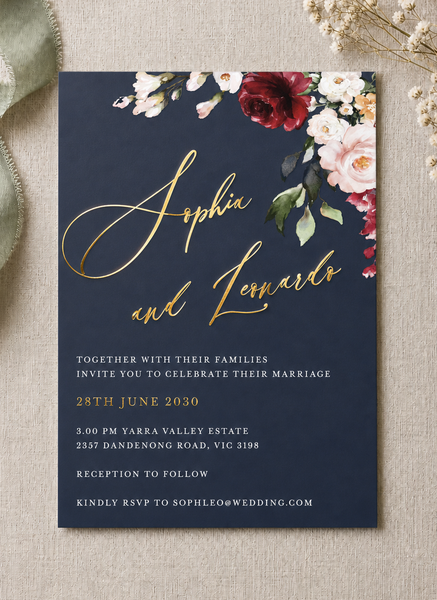
Gold flat foil on deep navy, forest green, or charcoal stock is one of the most striking directions for Islamic wedding invitations. The Bismillah in flat foil gold calligraphy at the top, followed by English typeset below in a light color, creates the visual hierarchy of a luxury invitation that communicates clearly.
On Paperlust invitations, flat foil is available in gold, pale gold, rose gold, silver, copper, and a range of specialty colors. The Bismillah or a Quranic verse set in gold flat foil on 380gsm Premium or 500gsm Colour Stock is a combination that prints exceptionally well and photographs beautifully.
Black and gold wedding invitations →
La ButteFlat foil
Starry NightMetallic

Celebrate In StyleColour Stock + Foil

Gold DustColour Stock + Foil
Soft florals with Islamic accents
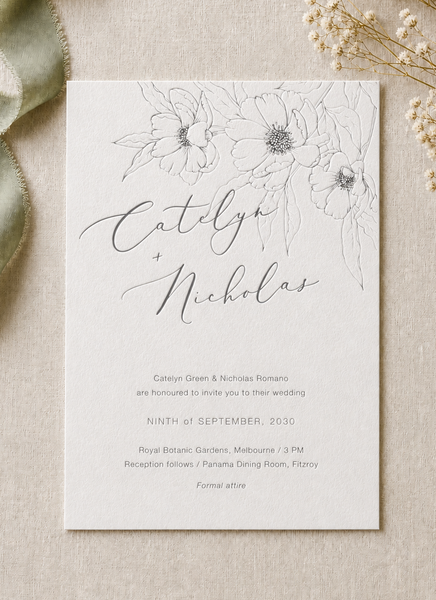
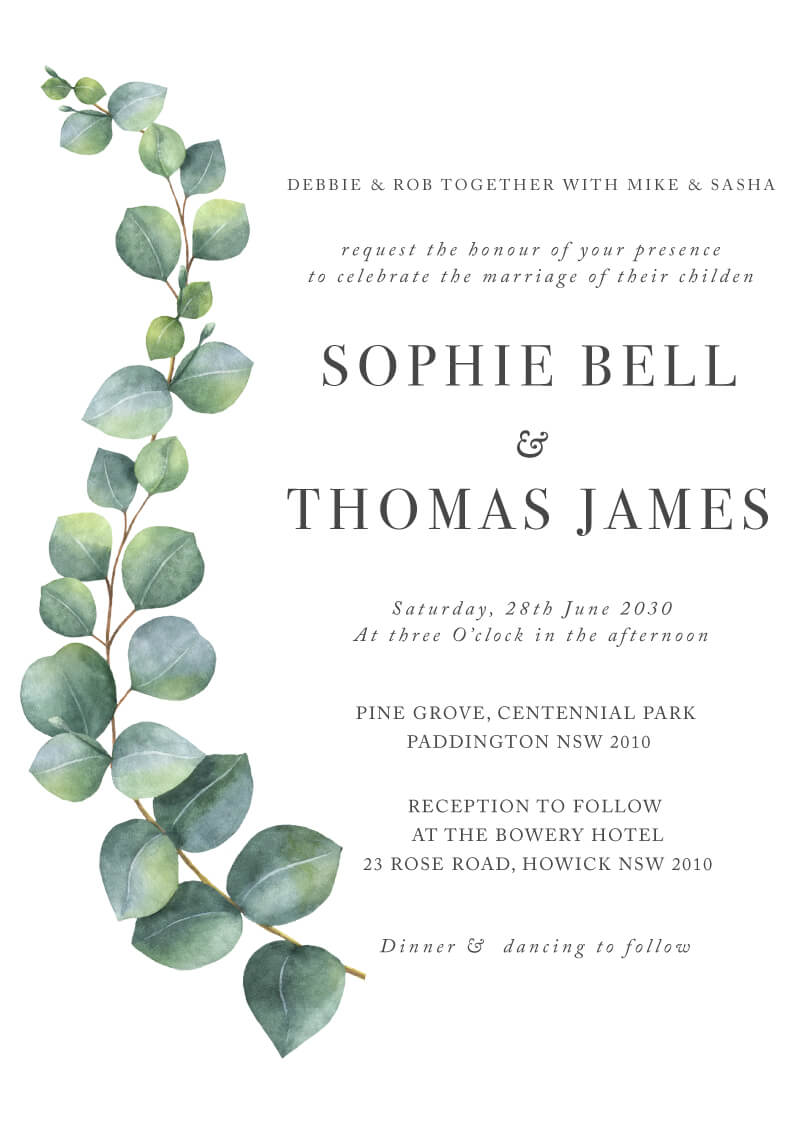
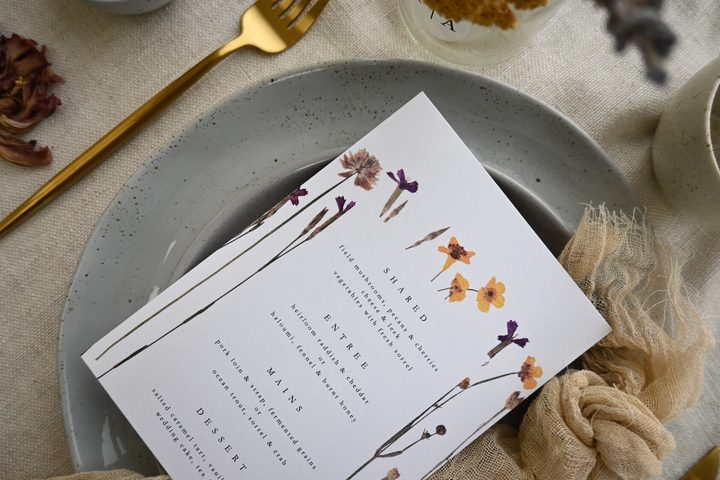
Botanical illustration wedding invitations are currently one of the dominant trends in American wedding stationery. They translate naturally to Muslim wedding invitations when combined with a small Arabic calligraphy element. A delicate floral border or corner detail, the Bismillah set in Arabic at the top, and the rest of the invitation in English creates an invitation that fits seamlessly into the broader American wedding aesthetic while carrying its Islamic identity.
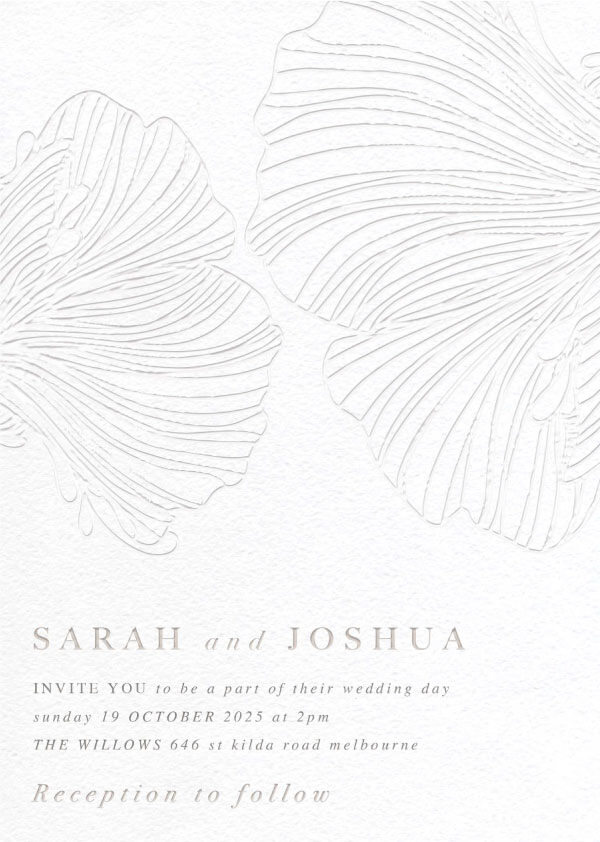
Cotton paper letterpress
For couples who want maximum tactile luxury, a letterpress invitation on 600gsm Wild Cotton Double Thick is a statement piece. The pressed texture of letterpress print on heavyweight cotton paper has a timeless quality that suits both traditional and modern aesthetics. An Arabic calligraphy element set alongside the English text in a second color creates a beautiful result.
Letterpress wedding invitations →

Sweet and SaltyLetterpress
Graphite BloomsLetterpress
Botanic PressLetterpress
EucalyptusLetterpress
Design directions at a glance
| Design direction | Print method | Best paper | Vibe |
|---|---|---|---|
| Gold calligraphy on dark stock | Flat foil | 500gsm Colour Stock (navy or deep green) | Luxe, dramatic |
| Geometric minimalism | Digital | 380gsm Premium or 300gsm Matte | Modern, clean |
| Botanical with Arabic accent | Digital or flat foil accent | 300gsm Matte or Premium | Romantic, contemporary |
| Letterpress with calligraphy | Letterpress | 600gsm Wild Cotton Double Thick | Heritage, luxe, tactile |
| Ivory and gold traditional | Flat foil or digital metallic | 380gsm Premium | Classic, formal |
Muslim Wedding Stationery Suite Guide
A complete Muslim wedding stationery suite follows the same logic as any full invitation suite, with a few additions that reflect the multi-event nature of many Islamic weddings.
Core invitation suite items
For a Nikah-and-Walima wedding, most couples build a suite around these pieces:
- Main invitation card. The formal Nikah announcement, with Bismillah opening and parental names.
- Walima insert card. Reception details if the Walima is at a separate venue or significantly later in the day.
- RSVP card. With a return date. For gender-separated events, you may need two RSVP cards (ladies’ side and gentlemen’s side).
- Information card. Venue directions, hotel room blocks, dress code, and any other logistical details. From approximately $25 USD per set.
- Outer envelope. Guest name and address. Paperlust includes free white envelopes with every order; colored or textured envelopes are available.
- Inner envelope. Traditional formal suites use an inner envelope addressed to specific family members attending. This is useful when not all guests in a household are invited to the Nikah, even if all are invited to the Walima.
Optional suite additions
- Save the date. Send 3-4 months ahead for local guests; 4-6 months for out-of-state or international families traveling from Muslim-majority countries.
- Mehndi (Henna) night invitation. If you’re hosting a Mehndi celebration the night before the Nikah, a coordinated card for this event is a thoughtful addition.
- Day-of signage. Welcome signs, seating charts, and table numbers in matching design elements to tie the room together.
- Thank-you cards. After the Walima, send personalized thank-you notes to guests. Available on Paperlust and easily coordinated to match the invitation suite.
Matching stationery suite across all pieces
The visual consistency of a full suite – matching fonts, colors, and design elements across every card type – is one of the details that elevates the whole experience. Paperlust’s design library lets you work with one base design across the invitation, RSVP card, information card, save the date, and day-of items.
Browse the full collection of wedding invitations at Paperlust wedding invitations.
If you’re also planning save the dates that coordinate with your Nikah suite, see the save the date collection and choose a design that carries the same color palette and typography across both.
Ready to design your Muslim wedding invitations?
Browse Paperlust’s full collection of wedding invitations. Filter by style, color, and print method to find the right base design for your bilingual or calligraphy-accented suite.
Muslim wedding invitations
Order a $5 sample pack to feel the paper and print methods before you commit
Frequently Asked Questions
What is the correct wording for a Muslim wedding invitation?
A Muslim wedding invitation traditionally opens with the Bismillah (“Bismillahir Rahmanir Raheem” – In the name of God, the Most Gracious, the Most Merciful) in Arabic, transliteration, or English translation. It then typically includes a Quranic verse or Hadith related to marriage, the parents’ names, the couple’s names, and Nikah ceremony details (date, time, venue). Walima reception details are added if applicable. For US Muslim couples, English is used for venue and RSVP details, with Arabic reserved for the religious opening and any verses.
What is the difference between a Nikah invitation and a Walima invitation?
The Nikah is the Islamic marriage ceremony – the formal religious and legal contract. The Walima is the reception feast held to celebrate and publicize the marriage after the Nikah. Some couples send one invitation covering both events; others send separate cards. The Nikah may be limited to close family and witnesses, while the Walima is often open to a broader guest list including colleagues and community members.
How do you include Arabic on a wedding invitation if you use an English printer?
Arabic text on wedding invitations is handled as a design element. The Arabic calligraphy or typeset text is incorporated into the invitation artwork file that goes to print. At Paperlust, you can work directly with a designer to include Arabic script in your invitation design. The Bismillah, a Quranic verse, or your names in Arabic calligraphy can all be added to any base design. The printer receives a finished PDF with all text embedded.
Does Bismillah need to be in Arabic script, or can it be written in English?
Both are acceptable. Most Muslim families prefer to see the Bismillah in Arabic script for its religious significance and visual beauty, but including the English translation (“In the name of God, the Most Gracious, the Most Merciful”) alongside the Arabic is encouraged for all guests. Some modern invitations use only the transliteration (“Bismillahir Rahmanir Raheem”) for a middle path. There is no single rule; choose what feels right for your community and your guests.
Should a Muslim wedding invitation mention if the event is gender-separated?
Yes. If your ceremony or reception has separate spaces or separate timings for men and women, state this clearly on the invitation. List venues and times separately for each side, or include a clear note such as “Sisters’ ceremony: North Hall, 11:00 AM / Brothers’ ceremony: South Hall, 11:00 AM.” Clear communication avoids confusion and ensures guests know what to expect.
How far in advance should Muslim wedding invitations be sent?
Send Nikah invitations 6-8 weeks before the wedding for local guests. If you have out-of-state or international guests – which is common in Muslim communities with extended family in Muslim-majority countries – allow 8-10 weeks. For a save the date, 3-4 months ahead is standard for local guests; 4-6 months for those traveling internationally.
What print methods work best for Islamic wedding invitations with calligraphy?
Flat foil is the most popular choice for gold calligraphy on Muslim wedding invitations. It produces a mirror-bright metallic finish that makes Bismillah calligraphy and geometric accents stand out beautifully. Letterpress on cotton paper is the premium tactile option, ideal for couples who want a pressed, textured feel on heavyweight stock. Digital print works well for intricate geometric patterns and full-color designs. At Paperlust, proofs are delivered within 1-2 business days so you can review your Arabic text and layout before going to print.
Can I order a custom design with my own Arabic calligraphy artwork?
Yes. Paperlust’s custom design service allows you to either modify an existing design or start from scratch with your own artwork. If you have commissioned hand-lettered Arabic calligraphy and want it incorporated into a full invitation design, Paperlust’s designers can work with your artwork files. Visit paperlust.co/custom-design to start a custom quote.