
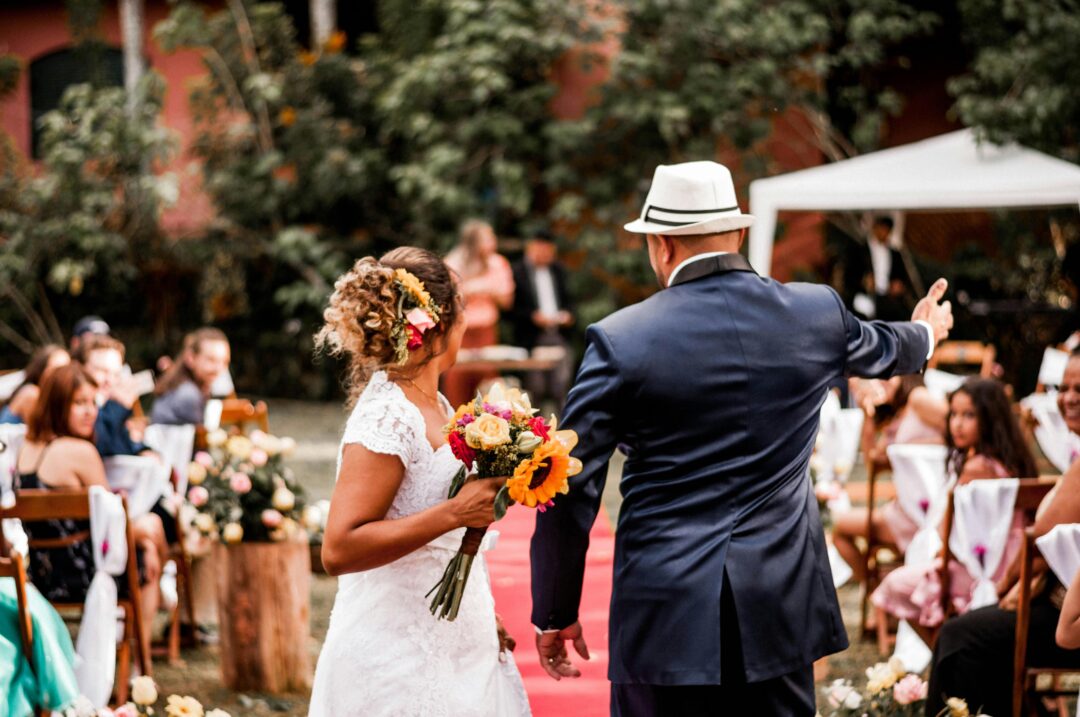

- The processional has three distinct moments: family seating, bridal party entrance, and the bride or couple’s entrance – each calling for a different musical mood.
- Classical standards like “Canon in D” and “Air on the G String” work for virtually any ceremony style and never feel dated.
- Modern vocal picks like “A Thousand Years” by Christina Perri and “Turning Page” by Sleeping at Last are top choices for emotional bride entrances.
- Upbeat tracks like “Signed, Sealed, Delivered” and “September” keep the bridal party entrance energetic and fun without feeling out of place.
- Venue acoustics, live vs. recorded music, and religious restrictions all affect which songs work best for your ceremony.
- Most processional songs run 3-5 minutes – always time your walk before the day to confirm the track fits your aisle length.
The moment music starts and the doors open is one of the few parts of your wedding day that every single guest will remember. Choosing the right processional songs sets the emotional tone for everything that follows – from the vows to the reception. Whether you want something timeless and classical, quietly romantic, or joyfully modern, this guide covers 30 of the best wedding processional songs and exactly how to use them.
What is a wedding processional?
The processional is the formal entrance portion of a wedding ceremony – the sequence of music that plays as everyone walks down the aisle before the ceremony begins. It is divided into three distinct moments, each with its own function and feel.
1. Family seating
Before the wedding party enters, close family members – typically both sets of parents, grandparents, and any honored guests – are escorted to their seats. This is usually the quietest, most understated moment of the processional. Soft instrumental pieces work well here, and many couples choose a single continuous piece to play throughout the entire pre-ceremony seating period. A gentle piano arrangement or a string quartet playing something like “Clair de Lune” keeps the atmosphere calm and welcoming as guests settle in.
2. Bridal party entrance
Groomsmen, bridesmaids, the ring bearer, flower girls, and any other members of the wedding party walk in during this phase. The music can stay the same as the family seating track, shift to something with a slightly more upbeat feel, or even be a completely different song with more energy. Many couples like to give their bridal party a personality-forward entrance – this is where songs like “Signed, Sealed, Delivered” or “September” can bring a smile to every face in the room.
3. Bride or couple’s entrance
This is the centerpiece moment – the entrance that everyone is waiting for. Whether it is the bride alone, the couple together, or a same-sex couple entering simultaneously, this moment gets its own song. It is almost always slower, more emotionally charged, and deliberately chosen. This is the track that will appear in every video highlight and live in your memory for decades.
| Processional moment | Suggested tempo | Typical length |
|---|---|---|
| Family seating | Slow, ambient | 5-10 min (continuous loop) |
| Bridal party entrance | Moderate to upbeat | 2-4 min |
| Bride or couple’s entrance | Slow, emotional | 3-5 min |
Print the running order your guests will follow
Ceremony program designs that list the processional, readings and recessional, matched to your invitation suite.
30 wedding processional songs
This list spans three categories – classical and instrumental standards, modern vocal songs for an emotional entrance, and upbeat options that give your bridal party a memorable walk. Every song here has been chosen for versatility, emotional resonance, and real-world performance on the day.
Classical and instrumental
These pieces have stood the test of time because they carry genuine emotional weight without competing with the visuals. They work equally well live (string quartet, harpist, pianist) or from a carefully curated playlist.
| Song | Artist / Composer | Best for | Tempo |
|---|---|---|---|
| Canon in D | Johann Pachelbel | Bride’s entrance – any style | Moderate, stately |
| Trumpet Voluntary | Jeremiah Clarke | Grand church ceremony entrance | Upbeat, ceremonial |
| Air on the G String | J.S. Bach | Elegant, intimate ceremonies | Slow, flowing |
| Jesu, Joy of Man’s Desiring | J.S. Bach | Religious ceremonies, family seating | Steady, peaceful |
| Ave Maria | Franz Schubert | Bride’s entrance, spiritual tone | Slow, reverent |
| Clair de Lune | Claude Debussy | Family seating, ambient background | Gentle, dreamlike |
| Gymnopedie No. 1 | Erik Satie | Minimalist, modern-classical ceremonies | Very slow, meditative |
| The Four Seasons: Spring | Vivaldi | Outdoor garden or spring ceremony | Light, energetic |
| Hallelujah Chorus | Handel (from Messiah) | Grand religious ceremony, triumphant exit | Majestic, bold |
| Ode to Joy | Beethoven | Joyful, uplifting bridal party entrance | Upbeat, triumphant |
Shop wedding invitations
The stationery sets the tone before the first note plays.
Modern vocal (emotional, slower tempo)
These songs are consistently the most requested for the bride’s or couple’s entrance. They carry lyrics that feel personal and emotional without being niche – your guests will recognize them, which adds to the collective moment.
| Song | Artist | Best for | Tempo |
|---|---|---|---|
| A Thousand Years | Christina Perri | Bride’s entrance | Slow, romantic |
| Turning Page | Sleeping at Last | Intimate, emotional bride’s entrance | Slow, delicate |
| Make You Feel My Love | Adele | Sentimental, universally loved | Slow, piano-driven |
| Better Together | Jack Johnson | Relaxed, beach or outdoor ceremony | Easy, warm |
| Marry Me | Train | Romantic, mainstream crowd-pleaser | Moderate, heartfelt |
| I Choose You | Sara Bareilles | Couple’s entrance, joyful and personal | Moderate, uplifting |
| To Make You Feel My Love | Bob Dylan / Adele | Classic, timeless feel | Slow, tender |
| How Long Will I Love You | Ellie Goulding | Romantic, understated elegance | Slow, ethereal |
| Grow as We Go | Ben Platt | Modern couples, introspective tone | Slow, piano-led |
| Here Comes the Sun | The Beatles | Optimistic, outdoor summer ceremony | Gentle, warm |
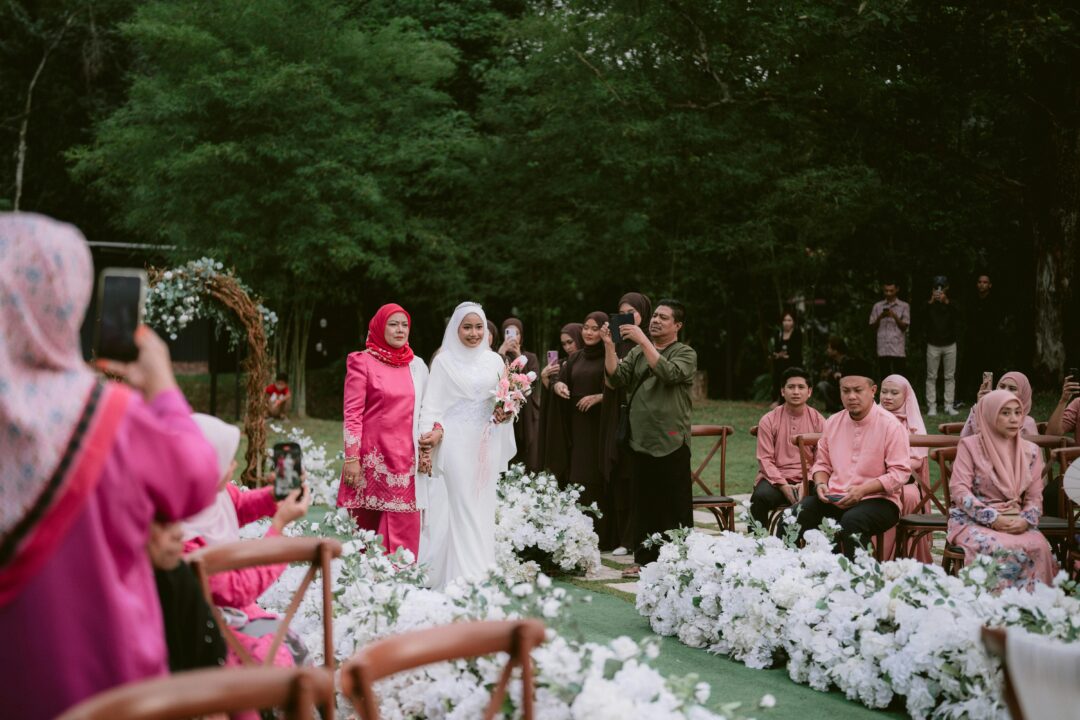
“A Thousand Years” has topped wedding processional charts for over a decade for good reason. The opening piano is immediately recognizable, the tempo is perfectly suited to a measured walk down the aisle, and the lyrics feel written for exactly this moment. Listen here:
Bridal party and upbeat entrance options
These tracks are specifically suited to the bridal party’s entrance – moments where a touch of energy and personality can set the tone for how your guests feel about the day ahead. They also work beautifully if your couple prefers a more joyful, celebratory entrance over something strictly romantic.
| Song | Artist | Best for | Tempo |
|---|---|---|---|
| Signed, Sealed, Delivered | Stevie Wonder | High-energy bridal party entrance | Upbeat, soulful |
| You Make My Dreams | Hall and Oates | Fun, nostalgic bridal party walk | Upbeat, retro pop |
| Happy | Pharrell Williams | Relaxed, sunny ceremony feel | Upbeat, feel-good |
| September (instrumental) | Earth, Wind and Fire | Upbeat bridal party, non-lyrical version | Upbeat, funky |
| Good Day Sunshine | The Beatles | Outdoor summer ceremony, playful tone | Light, cheerful |
| Soul Bossa Nova | Quincy Jones | Fun, quirky bridal party entrance | Groovy, breezy |
| Bloom | The Paper Kites | Intimate, indie-folk ceremony | Slow, delicate |
| Lucky | Jason Mraz and Colbie Caillat | Couple’s entrance, warm and conversational | Easy, light |
| First Day of My Life | Bright Eyes | Indie-romantic couple’s entrance | Moderate, earnest |
| Brown Eyed Girl | Van Morrison | Upbeat, crowd-familiar classic | Upbeat, classic rock |
Choosing paper as well as songs?
Order a $5 sample pack and see the stocks and foils in person.
Choosing the right song for each processional moment
Picking the music is one thing. Knowing which song goes where is another. Here is a practical framework for matching songs to each part of your processional.
For family seating
This phase is about atmosphere, not drama. Choose something that creates a warm, anticipatory mood without demanding attention. Soft instrumental pieces played on repeat or looped work well because guests are still arriving, chatting, and finding seats. If you have a live musician, give them a short repertoire of similar-tempo pieces to cycle through. “Clair de Lune,” “Gymnopedie No. 1,” and “Air on the G String” are all ideal here – they sit in the background without feeling like elevator music.
For the bridal party entrance
Consider your overall ceremony vibe. If your wedding leans traditional and formal, match the processional mood with classical or softly modern tracks. If your wedding is more relaxed and personal, this is the right moment to let your bridal party have a personality-forward entrance – a well-chosen upbeat track brings audible joy to the room. One practical tip: give your officiant or DJ a clear cue for when to transition to the bride’s entrance song. The changeover should feel deliberate, not accidental.
For the bride or couple’s entrance
This is the one song that should be non-negotiable. Think about what you want to feel in that moment – and what you want your partner to feel when the doors open. Test the tempo by literally walking to the song before your wedding day. Some songs that feel romantic in headphones are actually too fast or too choppy for a measured walk. “A Thousand Years” and “Turning Page” both have a natural, measured pace that maps cleanly onto an aisle walk. If you love an upbeat song for your entrance, ask your musician or DJ for a slowed-down instrumental version.
For a complete map of musical moments across your entire wedding day – from cocktail hour through to last dance – see our complete wedding songs guide.
Religious vs secular considerations
Many houses of worship have rules about music that can be played during the ceremony. Catholic, Lutheran, and Methodist churches, for example, often require that all processional music be either sacred or at minimum not explicitly secular in lyric. This does not mean you are stuck with only classical pieces – many churches are open to well-known hymns sung in modern arrangements, or instrumental versions of contemporary songs that strip away the lyrics entirely.
Before committing to any song on this list, confirm the following with your venue or officiant:
- Is recorded music permitted, or must it be live?
- Are there restrictions on secular or contemporary songs?
- Is there a preferred list of approved music, or a musician on staff?
- What audio equipment is available, and does the venue have a sound system?
If your venue requires religious music, the Bach selections on this list – “Jesu, Joy of Man’s Desiring” and “Air on the G String” – are almost universally approved, as is “Ave Maria” and any Handel piece. For couples who want something warmer and more contemporary but still spiritually appropriate, a hymn like “How Great Thou Art” in a modern string arrangement can bridge both preferences.
For non-religious ceremonies, you have complete creative freedom. The main practical constraint is timing: your song needs to be long enough for every member of the wedding party to complete their walk, but short enough that guests do not lose the emotional thread. Most aisle walks run 1-3 minutes per processional segment – factor that in when choosing track length, and consider requesting a fade-out rather than an abrupt stop if the timing does not naturally align.
Complete your ceremony with beautiful stationery
The music sets the mood. The stationery sets the tone before guests even arrive. From the moment your wedding invitations land in their mailboxes, guests begin forming an impression of what your ceremony will feel like. Paperlust offers over 500 exclusive designs across digital print, letterpress, flat foil, and foil stamp – each one crafted to match the aesthetic of your day, whether that is classical and formal, relaxed and bohemian, or anything in between.
Orders include a professional designer, proofs within 1-2 business days, two rounds of edits, and free white envelopes as standard. Free DHL express shipping applies on international orders over $350 USD.

Print the order
Wedding programs + order of service
Capture every processional song, reading, and ceremony moment in printed programs your guests can follow along with.
Frequently asked questions
What is the most popular wedding processional song?
“Canon in D” by Johann Pachelbel has been the most requested wedding processional song for decades. Its familiar, building structure makes it immediately recognizable and emotionally effective, regardless of ceremony style or formality level. Among modern songs, “A Thousand Years” by Christina Perri consistently tops contemporary charts.
Do you need a different song for each part of the processional?
No – many couples use a single song or piece throughout the entire processional, from family seating through to the bride’s entrance. However, using a softer ambient piece for seating and then transitioning to a more emotionally distinct track for the bride’s entrance creates a clear, memorable moment. The change in music signals to guests that something important is about to happen.
How long should a processional song be?
A typical bride’s entrance song needs to be at least 3 minutes long to accommodate a full aisle walk with a measured pace. If your aisle is very short, ask your DJ or musician to fade out gracefully at the right moment. For the bridal party entrance, 2-4 minutes is usually sufficient depending on the size of your party.
Can you use a song with lyrics in a church ceremony?
It depends on the denomination and the specific venue. Catholic churches generally prefer sacred music for the processional, which means instrumental classical pieces or approved hymns. Protestant churches vary widely – some are open to contemporary secular music, others require approval. Always check with your officiant before finalizing any song with lyrics.
Should the bride walk to the same song as the bridal party?
This is a personal choice, but many couples prefer a distinct song for the bride’s entrance because it creates a clear emotional escalation. Using the same song for both the bridal party and the bride can dilute the impact of that entrance. A common approach is to use an instrumental for the bridal party and switch to a more recognizable or vocally rich piece for the bride.
What tempo works best for walking down the aisle?
A tempo between 60 and 80 beats per minute (BPM) generally works well for a formal, measured walk. This covers most classical processional standards and slower modern vocal songs. Walking at roughly half-time to the beat is a comfortable, dignified pace. If you’re unsure, walk to the song at home before the wedding – it takes about 90 seconds to feel whether a track fits your natural stride.
Can you use an upbeat song for the bride’s entrance?
Yes – and it works beautifully when it reflects the couple’s personality. A few practical considerations: upbeat songs can feel awkward if you’re walking very slowly to them, so either match your pace to the tempo or request a slowed-down version. Also consider how the song will sound in your venue’s acoustics – bass-heavy tracks can feel overwhelming in small indoor spaces.
What is the difference between a processional and a recessional?
The processional is the entrance music – played as everyone walks in before the ceremony begins. The recessional is the exit music – played immediately after the ceremony concludes as the newly married couple walks back up the aisle together. Recessionals are typically more upbeat and celebratory than processionals, reflecting the shift in mood from anticipation to celebration.
Do you need live music for the processional?
Live music is not required, but it does add a dimension that recorded music cannot fully replicate – particularly in acoustic spaces where sound carries. A string quartet, solo violinist, pianist, harpist, or acoustic guitarist can adapt the tempo in real time to match the actual speed of the walk. If live music is not in your budget, a high-quality audio system with a skilled DJ or music coordinator can achieve an equally moving effect.
How many songs should be on your processional playlist?
At minimum, prepare one song for the bridal party entrance and one for the bride or couple’s entrance. For family seating, you may want 3-5 softer pieces queued up as ambient background. In total, most couples finalize 3-6 songs to cover the entire pre-ceremony and processional period, with clear cues established for each transition.
Can same-sex couples use these processional song ideas?
All of these songs work for any couple’s entrance, regardless of ceremony structure. For same-sex couples entering together, songs like “I Choose You” by Sara Bareilles, “Lucky” by Jason Mraz and Colbie Caillat (which features a duet format), and “First Day of My Life” by Bright Eyes are particularly fitting in tone and lyric. The same timing and tempo principles apply.
What if you cannot decide between two songs?
Walk to both of them – literally. Put on each song and walk at ceremony pace in your home or a long hallway. One of them will feel right in your body in a way the other does not. If you are still undecided, consider using one for the bridal party entrance and saving the other for the recessional. Many couples find that a song they love but cannot commit to for the entrance becomes the perfect recessional.
Do you need to tell your guests what songs will be played?
You do not have to, but a printed ceremony program is a lovely way to share your musical choices – especially if you have selected less familiar pieces that guests might want to look up afterward. It also serves as a keepsake. If you include song titles, list both the piece name and the artist or composer so guests can find the right version later.
About Paperlust
Paperlust is a Melbourne-founded wedding stationery studio trusted by couples around the world. With 500+ exclusive designs from independent artists, multiple premium print methods, and a 100% happiness guarantee, Paperlust creates wedding invitations, save the dates, and ceremony stationery that match the tone and aesthetic of your day. As featured in Vogue Australia, Marie Claire Australia, the Sydney Morning Herald, and Harper’s Bazaar Bride.
Browse wedding invitations to complete your ceremony stationery, or return to the complete wedding songs guide to plan every musical moment.
Image credits