
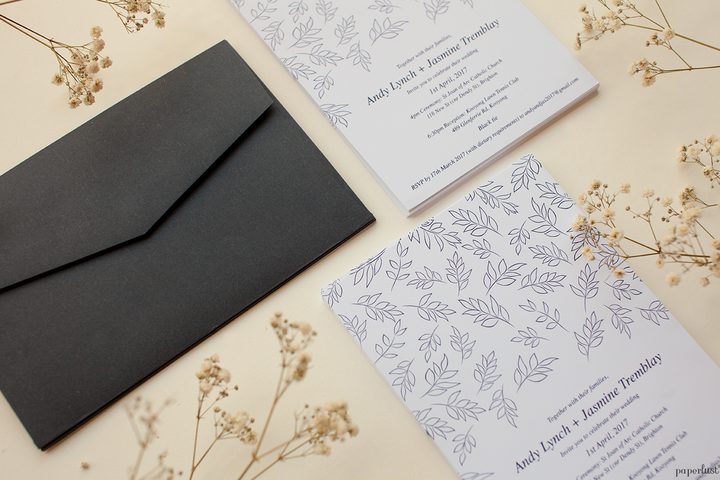
The honest answer to whether premium wedding stationery is worth it is: sometimes yes, sometimes no, and the deciding factors are not the ones most people think they are. This is not an article that will tell you to spend more money. It is an article that will help you think clearly about what premium stationery actually buys you, and whether what it buys is something you care about.
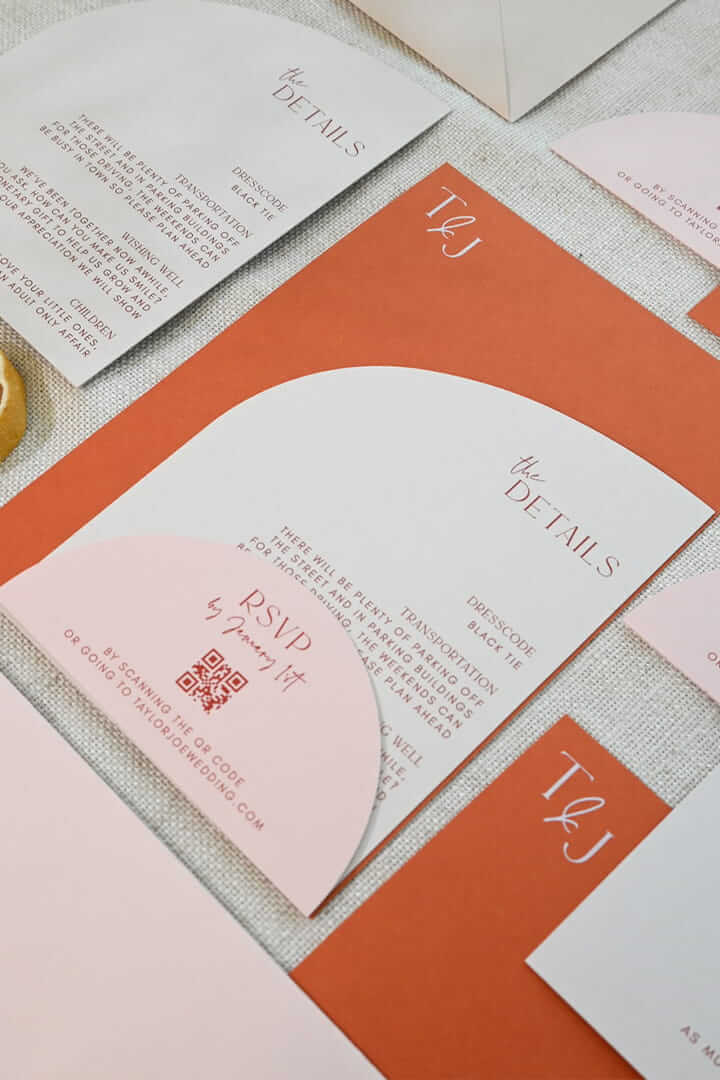

Let’s start with a definition. “Premium” in wedding stationery typically means letterpress printing, foil stamp, 600gsm Wild Cotton paper, or some combination of these. It also means a per-card cost that is 3-7 times higher than a well-executed digital print on 380gsm stock. The question is whether that premium is justified for your specific situation.
- Premium is worth it when: The tactile experience is genuinely important to you, your budget has room, you are hosting a formal or high-formality event, or stationery photography is a meaningful part of your wedding documentation
- Premium is not worth it when: Budget is tight and the money would serve better elsewhere, your wedding is casual or outdoors, or you primarily care about the invitation looking beautiful rather than feeling luxurious
- The smart middle ground: Flat foil or metallic print on 380gsm premium stock: beautiful, photographable, meaningful – without letterpress pricing
What Premium Stationery Actually Is
Premium stationery is defined by its physical properties, not just its price. Here is what distinguishes the premium tier:
Letterpress
Letterpress presses a custom plate into thick cotton paper, leaving a physical debossed impression you can feel by running your finger across it. Every letter, every illustration, every line element sinks into the paper surface. It is printed on Wild Cotton stock at 300gsm or 600gsm (double-thick, the heaviest stock Paperlust offers). Letterpress cannot be replicated digitally. It produces a tactile quality that is fundamentally different from any flat-printed alternative.
Foil Stamp
Foil stamp uses a custom die to press a metallic film into the paper surface, simultaneously creating the foil shine and a debossed impression. On deep-colored or textured stocks, the contrast between foil and paper is visually striking. The die creates an impression you can feel in the same way as letterpress. Minimum order is 50 cards.
600gsm Wild Cotton
Paper weight signals quality immediately. A 600gsm card is double the density of most invitation stocks and is noticeably heavier when placed in the hand. It does not curl, flex significantly, or feel insubstantial in any way. This weight, combined with the cotton fiber content (soft, slightly textured surface), produces a sensory experience that 300gsm or 380gsm stocks cannot replicate regardless of how good the printing is.
The Case For Premium Stationery
The Mailbox Moment Is Real
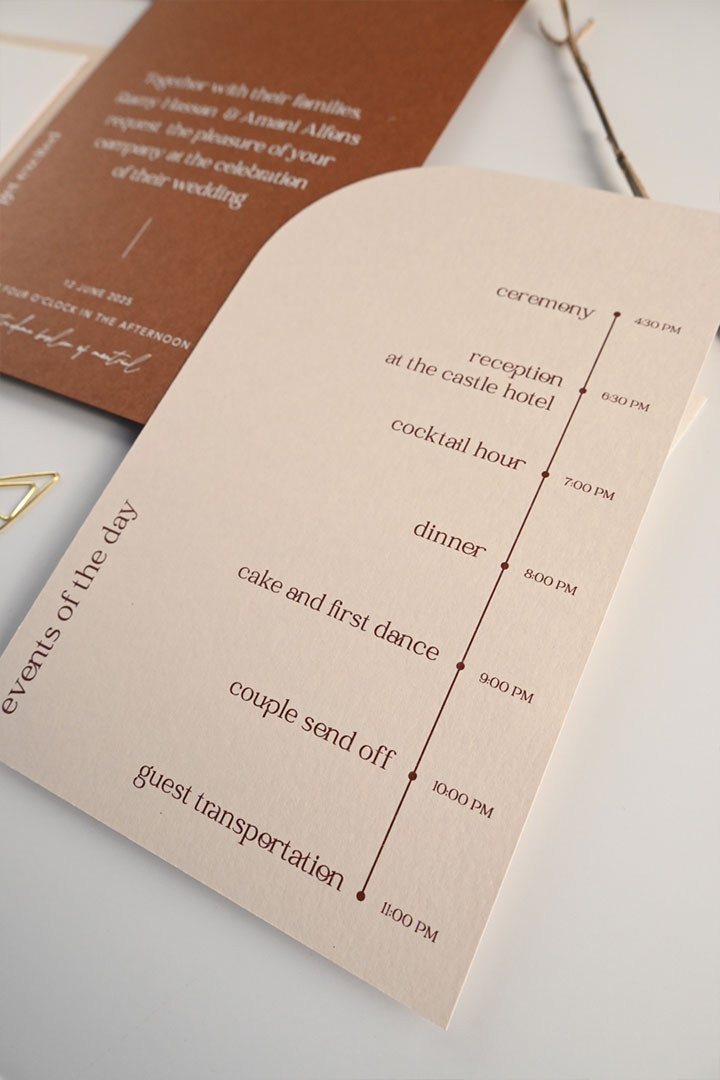
Your invitation is the first physical experience your guests have of your wedding. Most of them have been to other weddings and opened other invitations. When a guest opens an envelope and finds a 600gsm cotton card with a pressed letterpress impression, they recognize it instantly as different. They hold it for longer. They show it to someone else in the household. The mailbox moment – that 30-second window when someone first holds your invitation – is the only opportunity to create a first impression that no other element of your wedding can replicate.
Whether that moment is worth the cost difference is the central question. For many couples, the answer is yes.
Photography Impact
Wedding photographers document invitation details. Invitation flat lays appear in engagement shoots, wedding details galleries, and editorial submissions. A letterpress invitation or a foil stamp card photographs differently from a digital print because the camera captures the dimensional quality of the impression and the way foil reflects light. If your wedding will be professionally photographed and stationery details are part of your photography package, premium paper quality changes the result of those images.
Keepsake Value
Some guests keep wedding invitations for years. A quality letterpress card on cotton paper is worth keeping; it is a beautiful object independent of its function. A digital print on thin stock gets discarded. If you want your invitation to be something guests hold onto – to stick on a corkboard, keep in a drawer, or give back to you years later – premium materials serve that goal.
Formality Signaling
The weight and finish of an invitation communicates the formality of the event before the words on the card are read. A 600gsm cotton letterpress card tells guests this is a formal occasion that warrants formal dress and serious planning. If your wedding is black-tie or high-formality, the stationery should match. Formal guests expect formal invitations.
The Case Against Premium Stationery
Most Guests Don’t Keep Invitations
Here is the uncomfortable truth: the majority of guests read the invitation, note the date, and discard it within weeks. For many households, wedding invitations go directly to recycling after the RSVP deadline passes. If you are spending significantly more per card on premium materials for guests who won’t notice the difference between a letterpress card and a high-quality digital one, the investment is buying you emotional satisfaction rather than a tangible outcome.
This is not an argument against spending more; emotional satisfaction is a legitimate reason to allocate budget. It is an argument for being honest about what you are buying.
The Cost Differential Is Significant at Scale
The cost difference between digital print and letterpress may be $4-$8 per card. At 100 cards, that is $400-$800 more. At 150 cards, $600-$1,200 more. What else in your wedding budget could that money fund? A different florist. An additional hour of photography. A dessert upgrade. These are not rhetorical questions; they are the real trade-offs that premium stationery demands.
Design Matters More Than Method
A beautifully designed invitation on premium matte 380gsm stock looks better than a mediocre design on 600gsm cotton. Print method does not rescue a weak design; it amplifies whatever the design already is. If your priority is visual impact, invest in design quality first. The print method is secondary.
Most People Cannot Identify Letterpress on Sight
Unless your guests are stationery professionals or designers, the majority will not be able to tell letterpress from digital print unless they pick up the card and feel the impression. The texture is the distinguishing feature, not the visual appearance. If your guests are unlikely to handle the card attentively, the letterpress impression is largely invisible to them.
The Smart Middle Ground: Maximum Impact, Managed Cost
The most value-efficient approach to premium-feeling invitations is flat foil or metallic print on 380gsm premium matte stock. Here is why this tier punches above its cost:
Flat Foil on 380gsm Premium
Flat foil applies mirror-bright metallic to the paper surface with no custom die required. The reflective quality photographs beautifully and creates genuine visual impact. On a 380gsm card, the weight is substantial and professional. This combination is significantly less expensive than foil stamp and letterpress but produces a card that nearly every guest will notice as special.
Minimum order is just 10 cards, making it accessible for smaller guest lists. See flat foil wedding invitations.
Metallic Print on Premium Stock
Metallic print uses a gold pigment toner for a warm, subtle shimmer rather than mirror-bright foil. At digital print pricing, this is the most accessible way to add perceived value to invitations. On 380gsm premium stock, a metallic print card feels and looks premium without letterpress or foil costs.
White Ink on Colour Stock
White ink on a deep-colored card stock (navy, forest green, burgundy) creates a high-contrast, visually striking result that photographs dramatically and signals genuine intentionality. It is priced between metallic and flat foil, and produces a design outcome that letterpress cannot match (letterpress is limited in color range by its very nature). See all wedding invitation print methods.
When to Splurge: Five Scenarios Where Premium Is Clearly Worth It
1. Your Wedding Budget Is Over $40,000
At this budget level, the marginal cost of premium stationery is small relative to the total spend, and the visual-experiential contribution is disproportionate. A $30,000 wedding with $300 in invitations has a visible aesthetic gap between the stationery and everything else. Premium stationery is the alignment piece.
2. You Are Publishing or Submitting for Editorial Coverage
If you are working with a photographer for editorial submission or have a strong social media presence and intend to share your wedding content, premium stationery significantly elevates your flat lay shots. Art directors notice the difference between letterpress and digital print in photographs.
3. Your Guest List Is Under 60
With 50-60 guests, the total cost premium of letterpress vs. digital print is $300-$600. At this scale, the upgrade is financially accessible for couples who care about it, and the more intimate guest list means the invitation is more likely to be noticed and appreciated.
4. Stationery Is the Design Element You Care About Most
Some couples care deeply about flowers. Others care about the food. Others care about the music. For couples who genuinely love paper goods and design, and for whom the invitation represents a meaningful creative expression, spending more on premium materials is entirely rational. Budget reflects priorities.
5. You Are Hosting a Formal or Black-Tie Event
The social contract of a formal event includes formal invitations. Letterpress or foil stamp on thick cotton stock is the correct stationery for black-tie. Anything less creates a disconnect between the formality signaled by the event and the stationery delivering that signal.
When to Save: Five Scenarios Where Premium Is Not Worth It
1. Your Wedding Budget Is Under $20,000
At tight budgets, every dollar counts and the premium on stationery has direct opportunity cost elsewhere. A beautifully designed digital invite on 380gsm premium stock is a reasonable $150-$250 for 80 guests. The $400-$800 saved by not doing letterpress goes somewhere that guests will notice more.
2. Casual or Outdoor Weddings
Letterpress on cotton paper at an outdoor winery wedding or a beach ceremony creates a tonal mismatch. The stationery signals formality the event does not deliver. Save premium materials for formal venue settings.
3. You Have a Large Guest List (150+)
At 150+ guests, the premium becomes very expensive in absolute dollars. Digital print for a large casual wedding is genuinely the right call. Reserve the premium budget for the few pieces guests will specifically study: the main invitation card, perhaps the ceremony program.
4. The Design Is Not Letterpress-Appropriate
Letterpress works best with clean typography, minimal color, and designs that benefit from impression depth. Complex multi-color designs, full-color watercolors, and illustrated florals are better in digital print where color rendering is unlimited. Choosing letterpress for a design that fights its constraints is wasting the premium.
5. You Are Ordering Under the Foil Stamp Minimum
Foil stamp requires a minimum order of 50 cards. Very small weddings (under 30 guests) cannot take advantage of foil stamp economics, and letterpress economics for micro-orders can be punishing per-card. For small weddings, flat foil (minimum 10 cards) is the smart premium choice.
The Verdict
Premium stationery is worth it when it is bought deliberately, with clear-eyed knowledge of what it costs and what it contributes. It is not worth it when it is bought out of obligation or vague aspiration without a clear sense of what the premium is buying.
The most common regret in stationery is not “I wish I had done letterpress.” It is “I wish I had ordered more on time” and “I wish I had gotten better samples before deciding.” Ordering early and sampling before committing matter more than which tier you end up choosing.
Whatever your budget, Paperlust’s $5 sample pack lets you hold every major print method before committing to any of them. That single $5 decision resolves more confusion than any amount of reading about paper weight and print techniques.
Frequently Asked Questions
Is letterpress really worth the extra cost for wedding invitations?
Letterpress is worth it for couples who specifically value the tactile quality of the pressed impression in thick cotton paper, are hosting a formal event, have a larger budget, or care deeply about wedding photography details. It is not worth it for casual weddings, tight budgets, or couples whose primary goal is visual impact rather than tactile luxury. For couples uncertain about the difference, the $5 sample pack lets you feel letterpress before committing.
What is the best affordable alternative to letterpress that still looks premium?
Flat foil on 380gsm premium stock is the most value-efficient premium alternative. It provides mirror-bright metallic impact, photographs beautifully, requires a minimum order of just 10 cards, and costs significantly less than foil stamp or letterpress. Metallic print on premium stock is also a strong option for couples who want subtle gold shimmer at digital print pricing.
Do guests notice the difference between letterpress and digital print invitations?
Guests who pick up the card and feel it notice the letterpress impression, as it creates a physical texture that cannot be mistaken for flat printing. Guests who only look at the card without handling it closely may not distinguish letterpress from high-quality digital print. The weight of the paper (600gsm vs 300gsm) is perceptible to virtually everyone who holds it, making paper weight an accessible way to signal quality without letterpress pricing.
Can I use letterpress for just the main invitation and digital for the RSVP and details cards?
Yes. Using letterpress for the main invitation and digital print for the functional insert cards (RSVP, details) is a common cost-management strategy. The main card gets the premium treatment that makes the strongest first impression; the inserts are efficiently produced. As long as the paper stocks and design elements coordinate, the suite reads as cohesive.
What is the minimum order for letterpress wedding invitations?
Minimum order quantities for letterpress at Paperlust vary by order. Contact the design team for specifics. For small weddings under 30 guests where the letterpress minimum creates excess, flat foil (minimum 10 cards) is often the better alternative at smaller quantities.