
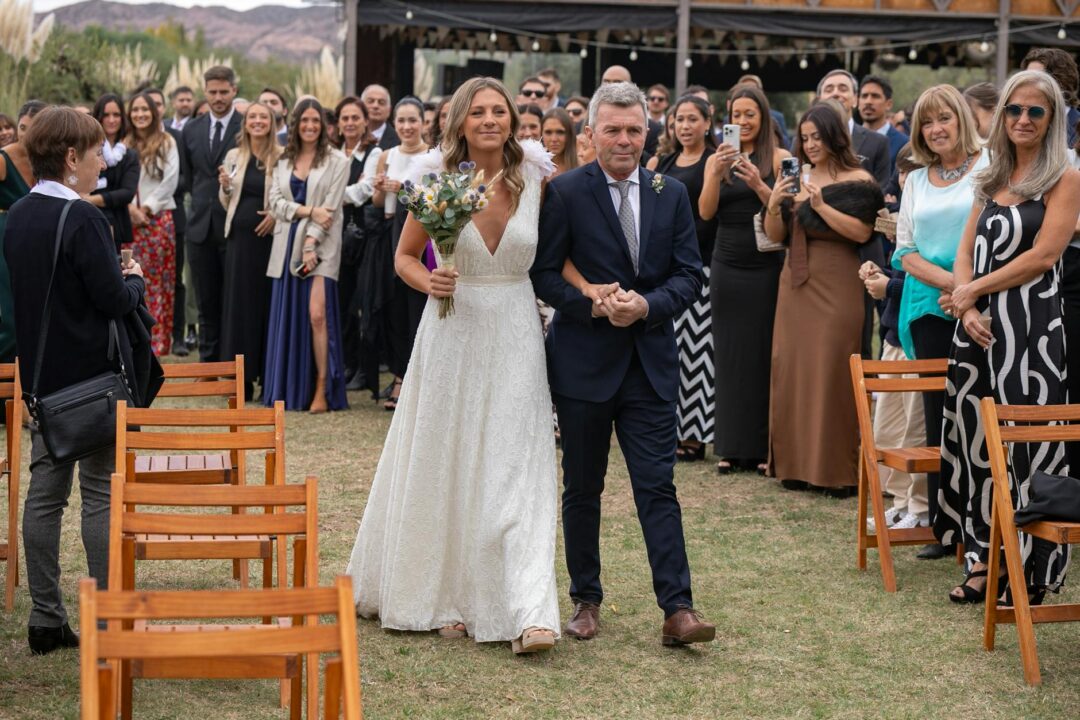
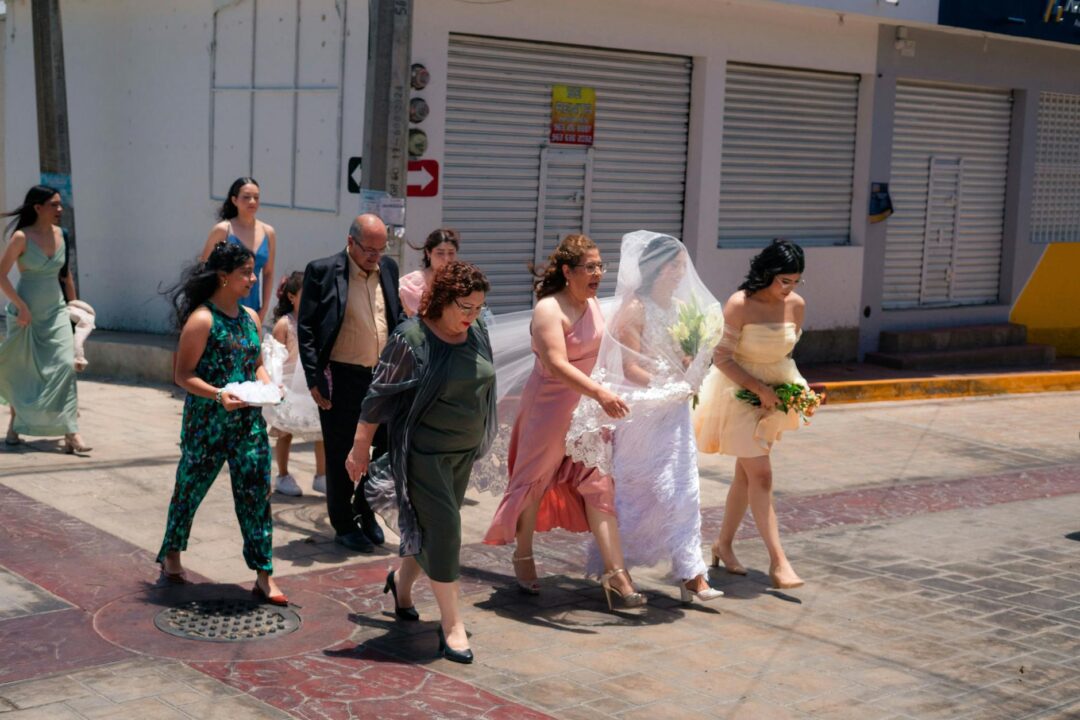

- The standard processional order opens with the officiant, followed by groomsmen, bridesmaids, ring bearer/flower girl, and finally the bride.
- Catholic, Jewish, Hindu, and Protestant traditions each have distinct sequences – some include both parents walking the couple, not just fathers.
- The recessional exits in reverse: bride and groom first, then wedding party in pairs, then parents, then guests.
- Walk at a slow-march pace of roughly 50 BPM, maintain 6-8 feet of spacing between each person or pair, and look toward your partner at the altar.
Standard Wedding Processional Order (Step-by-Step)
The standard processional order below applies to most non-denominational Christian ceremonies in the US. It assumes a traditional aisle setup with the officiant at the altar and guests seated in pews or chairs on either side.| Order | Who Walks | Notes |
|---|---|---|
| 1 | Officiant | Takes position at the altar before anyone else enters |
| 2 | Groom | Enters from the side with his best man, or walks down the aisle |
| 3 | Groom’s grandparents | Escorted by a groomsman or usher |
| 4 | Bride’s grandparents | Escorted by a groomsman or usher |
| 5 | Groom’s parents | Walk together; groom’s mother is escorted to front-right pew |
| 6 | Bride’s mother | Escorted by groomsman or family member; seated front-left |
| 7 | Groomsmen | Walk solo or in pairs from back of aisle to front; take positions left of altar |
| 8 | Bridesmaids | Walk solo or escorted by groomsmen; take positions right of altar |
| 9 | Maid/Matron of Honor | Walks last among bridesmaids; stands closest to bride |
| 10 | Ring Bearer | Carries pillow; walks just before flower girl |
| 11 | Flower Girl(s) | Scatters petals or carries basket; walks just before bride |
| 12 | Bride | Enters last, escorted by father or chosen family member; guests stand |
[Best Man] [Groom] | [Bride] [Maid of Honor]
[Groomsman 2] | [Bridesmaid 2]
[Groomsman 3] | [Bridesmaid 3]
<— Aisle —>
[Groom’s family, right side] | [Bride’s family, left side]
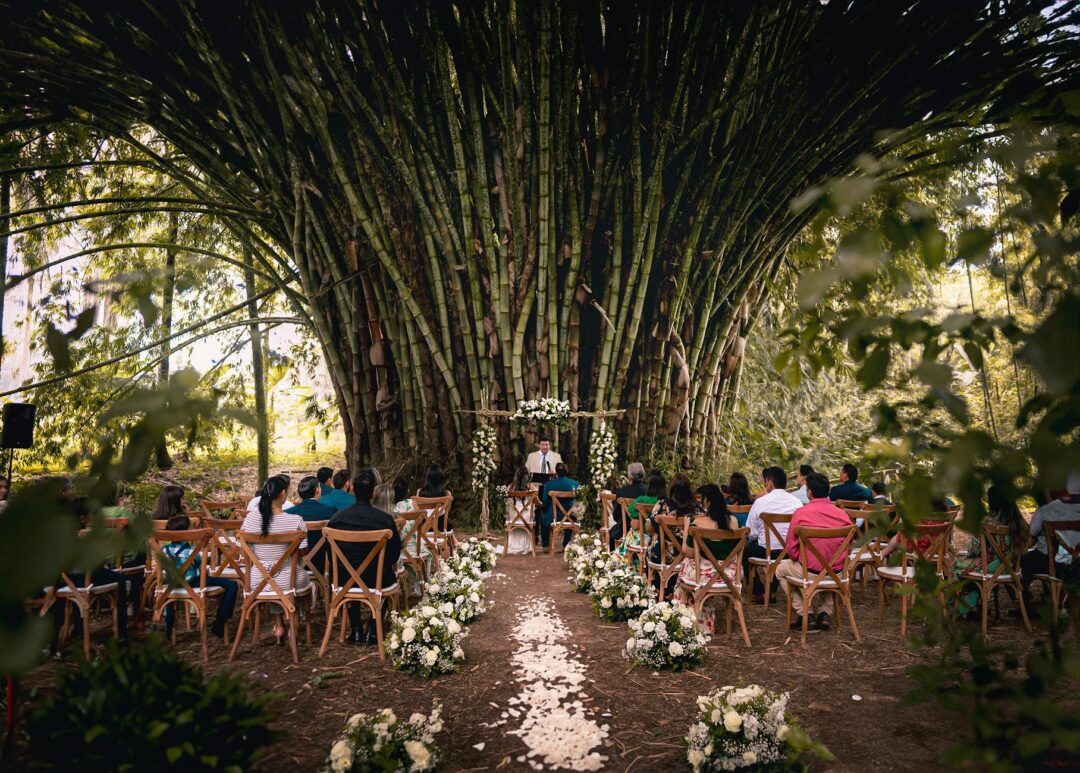
Catholic Wedding Processional Order
Catholic ceremonies follow a formal structure typically held within a church. The priest and altar servers process in first, which is a significant difference from most other traditions.| Order | Who Walks |
|---|---|
| 1 | Altar servers and priest/deacon (ecclesiastical procession) |
| 2 | Groom’s parents (walk together, seat themselves) |
| 3 | Bride’s mother (escorted by groomsman) |
| 4 | Groomsmen (with or without bridesmaids paired) |
| 5 | Bridesmaids (solo or paired) |
| 6 | Maid of Honor |
| 7 | Flower girl and ring bearer |
| 8 | Bride, escorted by her father (or both parents) |
- The groom enters with the priest from a side door or vestibule, then takes his place at the altar before the procession begins – he does not typically walk down the aisle
- The nuptial Mass can last 60-90 minutes, so the processional sets a composed, unhurried tone
- Music selection is often subject to church approval – check with your parish before finalizing songs
- Readers (lectors) and gift bearers also have ceremonial roles during the Mass, though they don’t walk in the opening procession
Protestant Wedding Processional Order
Protestant ceremonies (Baptist, Methodist, Lutheran, Episcopal, non-denominational Christian) vary by denomination but share a general framework. The key difference from Catholic is that the groom often walks down the aisle rather than entering from the side.| Order | Who Walks |
|---|---|
| 1 | Officiant (takes position at altar) |
| 2 | Groom (enters from side or back with best man) |
| 3 | Grandparents of both families (escorted) |
| 4 | Groom’s parents |
| 5 | Bride’s mother (escorted; she signals the start of the bridal procession) |
| 6 | Groomsmen |
| 7 | Bridesmaids |
| 8 | Maid of Honor |
| 9 | Ring bearer and flower girl |
| 10 | Bride, escorted by father or family member |
Jewish Wedding Processional Order (Including the Huppah)
Jewish wedding processionals are distinct in two ways: both sets of parents often walk their child down the aisle (not just the father walking the bride), and the ceremony takes place under a huppah (a wedding canopy) which is often already in position when guests arrive.| Order | Who Walks |
|---|---|
| 1 | Rabbi and/or cantor |
| 2 | Grandparents (groom’s side, then bride’s side) |
| 3 | Groomsmen |
| 4 | Best man |
| 5 | Groom, flanked by both his parents |
| 6 | Bridesmaids |
| 7 | Maid of Honor |
| 8 | Flower girl and ring bearer |
| 9 | Bride, flanked by both her parents |
- Both sets of parents walk their child to the huppah – this reflects the Jewish emphasis on family and community, not just the transfer of the bride from father to groom
- After walking their child to the huppah, parents take their place standing under or adjacent to the canopy during the ceremony
- The groom traditionally arrives at the huppah before the bride
- In egalitarian or Reform ceremonies, the order may be adjusted so that both partners walk simultaneously from opposite ends of the aisle
- Sephardic traditions may vary from Ashkenazi customs – check with your rabbi for the specific customs of your community
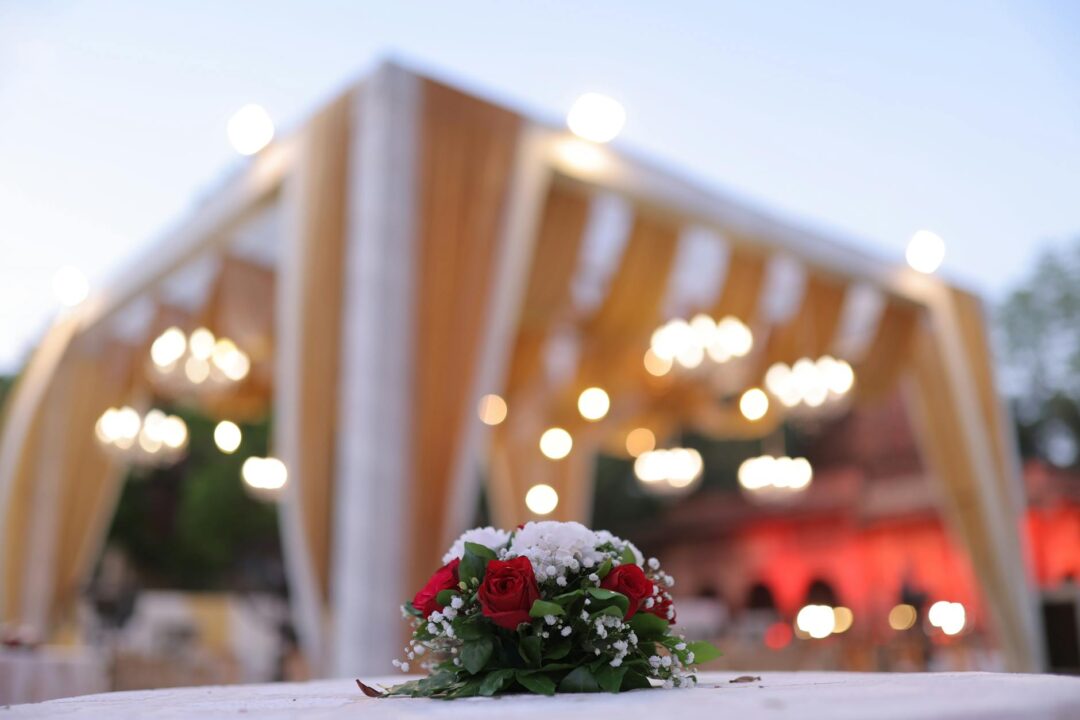
Hindu and South Asian Wedding Processional Order
Hindu weddings follow a very different structure from Western ceremonies. The most important ritual, the Baraat, happens before the ceremony begins and involves the groom’s party arriving at the venue in a joyful procession, often with music, dancing, and family surrounding the groom. The Baraat (Groom’s Procession):- The groom arrives on horseback (or in a decorated car/carriage) surrounded by his family and friends
- Dancing, dhol (drum) music, and celebration are central to the Baraat
- The bride’s family meets the groom’s party at the entrance for the Milni ceremony (formal meeting of families)
| Order | Who Proceeds |
|---|---|
| 1 | Groom, accompanied by his family, takes his place under the mandap (wedding canopy) |
| 2 | Bride’s female relatives form a protective circle as she processes |
| 3 | Bride, escorted by her maternal uncle (mama) in many traditions, or her brothers |
| 4 | Bride’s parents welcome her to the mandap and formally present her to the groom |
- South Indian (Tamil, Telugu, Kannada) ceremonies may have the bride already seated at the altar when the groom arrives
- Bengali weddings feature the shubho drishti ritual where the couple sees each other for the first time under a betel leaf screen
- Punjabi and North Indian weddings tend to follow the Baraat structure most closely
- For Hindu-Western fusion ceremonies, many couples blend the Baraat celebration with a more structured Western-style processional for the ceremony itself
Non-Religious and Secular Wedding Processional Order
Secular and non-religious ceremonies have no liturgical requirements, which gives couples the most flexibility. The standard American non-religious processional closely mirrors the Protestant structure but without religious music restrictions or church protocol. A common modern secular order:| Order | Who Walks |
|---|---|
| 1 | Officiant (takes position) |
| 2 | Groom, escorted by both parents (or enters from side) |
| 3 | Wedding party (groomsmen and bridesmaids, paired or solo) |
| 4 | Children in the wedding (ring bearer, flower girl, junior attendants) |
| 5 | Bride, escorted by one or both parents, or walking solo |
Same-Sex Wedding Processional Variations
Same-sex weddings have no prescribed gender roles, which means couples have complete flexibility to design their own processional. Here are the most common approaches:Option 1: Traditional Order, Both Partners Walking
Both partners walk down the aisle, each escorted by parents or family members. They can walk simultaneously (from opposite ends, meeting at the altar) or one after the other with a brief pause in between.Option 2: One Partner Waits at the Altar
One partner takes the groom’s traditional position – either entering from the side or walking down early – and waits while the other partner enters last. This creates the classic “big reveal” moment that many couples love.Option 3: Walking Together
Both partners walk down the aisle side by side, together. This is especially powerful when neither partner wants to be “presented” to the other – the entrance becomes a joint statement.Order of wedding party for same-sex ceremonies:
- If both partners have attendants (e.g., a bride with bridesmaids and a groom with groomsmen), each group typically processes in front of their respective partner
- If both partners have mixed-gender wedding parties, attendants can be organized by height, relationship closeness, or simply alphabetically – whatever works visually
- Ring bearers and flower girls walk in their standard position: just before the final partner’s entrance
Processional Order with Divorced Parents, Step-Parents, or Single Parents
Family dynamics are complex, and the processional often needs to reflect that reality gracefully.Divorced Parents (Amicable Relationship)
If divorced parents are on good terms, they can walk together just as married parents would. The key is agreeing on the plan in advance so there’s no awkwardness at the altar.Divorced Parents (Not on Good Terms)
Walk them separately, with a groomsman escort if needed. The parent you are less close to typically walks earlier in the procession; the parent you are closer to walks later (closer to your entrance). Give each parent their own seating row so they are not seated next to each other.Step-Parents
Step-parents who have played a significant role in your life absolutely belong in the processional. Walk a step-parent alongside the biological parent if the relationship allows it, or have the step-parent escorted separately immediately after the biological parent. You do not need to exclude step-parents to avoid confusion.Single Parent Walking the Bride or Groom
A single parent walks their child down the aisle exactly as two parents would. If you want to honor the missing parent, a symbolic gesture like a single white rose on the seat where they would have sat is a common and meaningful tribute.Grandparents Taking a Parental Role
If grandparents raised you, they take the parent’s position in the processional. Walk them down the aisle where parents would traditionally walk – there is no rule that says this position is reserved only for biological parents.Walking Yourself Down the Aisle
Walking solo is a fully valid choice. It can be a powerful statement of independence, or simply a preference. Some couples walk down the aisle together, which achieves the same effect while keeping the entrance as a shared moment.Wedding Recessional Order (Exit After Ceremony)
The recessional is the reverse of the processional. The newly married couple exits first, followed by the wedding party, then parents, then guests.| Order | Who Exits | Notes |
|---|---|---|
| 1 | Newlyweds | Walk arm-in-arm; this is the celebratory exit moment |
| 2 | Ring bearer and flower girl | Walk together or are collected by a parent |
| 3 | Maid of Honor and Best Man | Walk arm-in-arm |
| 4 | Bridesmaids and Groomsmen (paired) | Paired from front to back of altar position |
| 5 | Bride’s parents | Walk together or with escort |
| 6 | Groom’s parents | Walk together or with escort |
| 7 | Grandparents | Ushers assist grandparents and guests with mobility needs first |
| 8 | Guests (row by row) | Ushers dismiss rows from front to back; plan for 5-10 min total |
Walking Pace, Spacing, and Where to Look
These are the practical details that don’t make it into most guides – but your wedding party will thank you for covering them at the rehearsal.Walking Pace
- Target a pace of approximately 50 BPM (beats per minute) – this is a slow march, roughly one step every 1.2 seconds
- On a 60-foot aisle, this means roughly 30-35 steps from start to altar
- Avoid the “wedding shuffle” – a very slow creeping walk that looks unnatural on video. A measured slow walk looks far better
- If you feel yourself speeding up (nerves do this), take a breath and slow down intentionally
Spacing Between Walkers
- Maintain 6-8 feet between each person or pair in the procession
- Have your coordinator or a trusted friend hold the next person back at the entrance until the preceding person has created enough distance
- Do not let two groups of walkers merge – the visual separation is important for guests watching and for photos
Where to Look
- Wedding party members: Look toward the altar and the couple or officiant – not at the floor, not at guests
- Bride or groom walking to the altar: Look at your partner if you can see them. If they are not yet visible, look straight ahead with a calm, present expression
- Parents being escorted: Walk naturally and make brief eye contact with close family as you pass – this is a deeply emotional moment for them
Arms and Posture
- Wedding party members walking solo can keep their hands loosely in front, holding a bouquet, or relaxed at their sides
- Paired walkers link arms (arm through arm, not hand-holding, which can feel awkward)
- Shoulders back, chin up – good posture photographs beautifully and reads as confident rather than nervous
Wedding Party Assembly Position During the Ceremony
Once everyone has processed, here is where each person stands or sits during the ceremony:- Officiant: Center, facing the congregation
- Couple: Directly in front of the officiant, facing each other or angled slightly toward guests
- Best man: To the groom’s right, one step back
- Maid/Matron of Honor: To the bride’s left, one step back; typically holds the bride’s bouquet during the ceremony
- Groomsmen: Stepped to the right of the best man in a line or slight arc
- Bridesmaids: Stepped to the left of the MOH in a matching line or arc
- Ring bearer and flower girl: Seated with parents in the front rows after processing, or standing in the wedding party line if they are old enough
- Parents: Front row, bride’s family on the left (facing the altar), groom’s family on the right
Wedding Processional Mistakes to Avoid
Not Holding a Rehearsal
The most common processional disaster is skipping or rushing the rehearsal. Everyone needs to physically walk the aisle at least once before the ceremony. Knowing where to enter, where to pause, and where to stand eliminates 90% of the confusion.Forgetting to Cue the Officiant and Music
Designate one person (your day-of coordinator, a trusted bridesmaid, or a venue staff member) as the cue-caller. This person signals the musician when each walker should begin and coordinates the processional music transitions.Choosing Music That Is Too Fast or Too Slow
Test your processional music against the actual aisle length. Walk from the back of the venue to the altar while the music plays. If the song ends before you arrive, it is too short. If the same 8 bars repeat endlessly, trim the track. Most couples underestimate aisle length.Not Telling the Groom’s Family Where to Sit
Groom’s family often mills around unsure of where to go. Put someone in charge of directing families to their rows before the processional begins. Reserved row signs on the first 2-4 rows help enormously.Letting Children Improvise
Flower girls and ring bearers are wonderful, but they perform best with a specific, practiced job. Tell the flower girl exactly how many petals to drop and when to stop. Give the ring bearer something real to hold (or a pillow with decoy rings). If children are very young (under 4), have a parent positioned near the front to collect them calmly after they walk.Packing the Processional Too Tightly
When walkers are only 2-3 feet apart, photos look crowded and guests cannot easily see who is walking. Maintain that 6-8 foot spacing even if it means the processional takes a few extra minutes.Ignoring the Recessional
The recessional is often not rehearsed because the focus is on the processional. Run through the exit at least once so the wedding party knows to walk at a celebratory pace (slightly faster than the processional) and to exit in order before the couple turns to greet guests.Your Wedding Programs: Making Every Walk Memorable
Your ceremony program is the piece guests hold in their hands while they watch every person walk down that aisle. It lists the processional order, names, and roles – giving context to everything unfolding in front of them. Paperlust designs wedding programs that match your full stationery suite, from the save the dates through to the day-of pieces. Whether you want a simple single-page order of service or a multi-fold booklet that walks guests through every reading, vow, and musical piece, our designers build it to match your invitation suite. Programs are available in digital print, flat foil, letterpress, and foil stamp finishes. If you want to see the paper and print quality in person before you order, a Paperlust sample pack includes examples across multiple print methods so you can feel the difference between digital, letterpress, and foil options. Related ceremony reading: Wedding Ceremony Script: A Complete Guide, Wedding Day Timeline, and How to Be a Wedding Officiant. For the full ceremony picture, you will also want to plan your wedding vows, ceremony readings, and ceremony music. If your seating plan is still in progress, the wedding seating chart guide walks through the full process. And once your programs are printed, wedding menu cards complete the paper goods suite for the reception.List the processional order, name your wedding party, and walk guests through every reading and song. Programs match your full stationery suite across digital, flat foil, letterpress, and foil stamp.
Shop wedding programsOrder a sample pack, $5Frequently Asked Questions
Who walks first in a wedding?
The officiant takes their position first. Then grandparents are escorted to their seats, followed by the groom’s parents, the bride’s mother, the groomsmen, bridesmaids, the maid of honor, the ring bearer and flower girl, and finally the bride. In Jewish and some secular ceremonies, the groom also walks down the aisle, typically flanked by both parents.
Does the groom’s mother walk down the aisle?
Yes, in the standard American processional, the groom’s mother walks down the aisle with the groom’s father before the bridal party enters. A groomsman or usher typically escorts the groom’s parents to their front-row seats. In Jewish ceremonies, both parents walk alongside the groom as part of the formal processional.
What order does the wedding party walk?
Groomsmen walk first, followed by bridesmaids, then the maid of honor walks last among the attendants. The ring bearer and flower girl follow, and the bride (with escort) enters last. Groomsmen and bridesmaids can walk solo or be paired together depending on the couple’s preference and the number of attendants.
Do groomsmen walk down the aisle?
Yes, groomsmen typically walk down the aisle in the processional. They can walk solo or paired with bridesmaids. In some ceremonies (particularly Catholic), the groom and his attendants enter from a side door and take their places at the altar without walking the full aisle, but this varies by venue and tradition.
What is the recessional order?
The recessional reverses the processional. The newlyweds exit first, arm-in-arm, followed by the ring bearer and flower girl, the maid of honor and best man, then paired bridesmaids and groomsmen, then parents of the couple, then grandparents, and finally guests row by row. Ushers help dismiss guest rows starting from the front.
Can the groom walk down the aisle?
Absolutely. It is increasingly common for the groom to walk down the aisle, either escorted by both parents or walking solo. This is standard practice in Jewish ceremonies and gaining popularity in secular and non-religious ceremonies. The groom walking the aisle creates a meaningful moment and allows his family to be formally included in the processional.
How slow should you walk down the aisle?
Aim for a pace of roughly 50 BPM, or about one slow step every 1.2 seconds. This is noticeably slower than a normal walk but not so slow that it looks like a shuffle. On a 60-foot aisle, this translates to about 30-35 steps. Practice with your actual processional music at the rehearsal to calibrate your pace to the aisle length.
What happens if no parent is available to walk the bride down the aisle?
Many options exist. A sibling, grandparent, godparent, close friend, or mentor can walk the bride down the aisle in place of a parent. Some brides walk solo, which is a perfectly dignified and increasingly popular choice. In some traditions, the maid of honor or a close friend accompanies the bride. There is no rule requiring a biological father – the escort should be whoever holds that place in your life.
Can you have pets in the processional?
Yes, and it can be a memorable moment when handled well. Assign a designated handler (not a wedding party member who has other responsibilities) to bring the dog or pet down the aisle. Have the handler walk the pet to the altar during the ring bearer or flower girl slot, then remove the pet to a quiet area before the ceremony begins. Pets work best at outdoor venues with easy access to outdoor space.
How long does a wedding processional take?
The processional typically takes 5-10 minutes for a standard wedding party of 4-8 attendants plus parents and grandparents. Larger wedding parties or longer aisles add time. When planning your ceremony music, select processional songs that cover at least 8-10 minutes to account for the full entry including families, not just the wedding party.