
Pocket wedding invitations, or pocketfold wedding invitations, are a great alternative to traditional wedding invitations. If you want something a bit different that keeps every insert organized in one elegant package, the pocket format delivers. This guide covers everything you need to know: what styles are trending in 2026, how to assemble a pocket suite, what to expect on pricing, and how to lay out each insert card so guests find every detail instantly.
- Pocket folds hold 3-4 insert cards (invite, RSVP, details, accommodation) in one organized package.
- The arch-top pocket fold is the dominant 2026 style; minimalist, vellum overlay, and flap-fold formats are also trending.
- Paper weight matters: use 350-400gsm for the pocket base and 250-300gsm for inserts.
- Paperlust wedding invitations start from $2.04 per card; a $5 sample pack lets you check quality before ordering.
- Designer proofs arrive in 1-2 business days; two rounds of edits are included at no extra cost.
- Free DHL Express shipping on orders over $350 USD; US transit is 2-4 business days after dispatch.
What Is a Pocket Wedding Invitation?
A pocket invitation is a fold-out invitation design that not only contains your main invitation card but also holds a pocket (or two) for the other items in your suite, like an RSVP card, details card, accommodation information, and directions. The pocket keeps everything together so guests open one elegant package rather than a loose pile of cards.
Types of Pocket Invitations
Here are the popular layouts for pocketfold wedding invitations:
- The classic bi-fold
- Panel pockets
- Vertical
- Square
- Rectangular
- Pocket frames
The layout and number of folds is ultimately up to you. Let the number of items in your invitation suite be your guide. The flap-fold, where a single scored panel folds over the inserts rather than a sewn or glued pocket, is a cleaner, more modern alternative gaining traction in 2026 for minimalist weddings.
Why Choose a Pocket Invitation?
Pocket envelopes for wedding invitations are a great option when you want to include a lot of stationery in one send. Hosting a destination wedding with hotel blocks to communicate? Multiple events over a weekend? A wedding website QR code and a wishing well card? The pocket format holds it all without creating a confusing loose pile. If you want to keep things very simple, flat cards may suit better, but if you have details to share and want a presentation that feels like a gift, pocket invitations deliver.
What Should I Include in My Pocket Invitation Suite?
You can include all of the following, or any combination, in your invitation suite:
- Base card and pocket (where everything is enclosed)
- Invitation card (and invitation mat, if using)
- Mailing envelope
- RSVP card (include a dietary requirements line)
- Schedule of wedding events (especially useful for destination weddings)
- Information cards (accommodation, directions, parking)
- Wishing well or gift information card
- Belly bands or ribbon ties
- Wedding website details or QR code card
Should I Order Samples? If So, When?
Ordering sample pocket wedding invitations can prevent a costly mistake. You can read about a company’s paper quality, but nothing replaces holding the cardstock in your hand and seeing the print method for yourself. Order a $5 sample pack or the $20 full swatch kit to feel the difference between matte, cotton, linen, and premium stocks before committing to your suite. We recommend ordering samples 9-12 months before the wedding to give yourself enough lead time to select, proof, and order.
Pocket Wedding Invitation Styles in 2026: What Is Trending
Pocket fold wedding invitations have evolved well beyond the standard rectangular card with a basic flap. Here is what couples are choosing right now.

Arch-Top Pocket Folds
The arched top that took over the invitation market in the past two years has fully migrated to pocket folds. The main card has an arch-shaped top panel that softens the traditionally boxy rectangle and gives the closed suite a contemporary, editorial silhouette. Arch-top pocket folds work particularly well with minimalist, botanical, and modern romantic themes.
Minimalist Monochrome
Black ink on thick white cotton stock, or white ink on deep navy. No decorative motifs, no borders, just the couple’s names in a single elegant typeface and the essential details. The pocket format suits minimalist design well because the structure itself provides visual interest; the design does not need to work as hard.
Vellum Overlay Panels
A translucent vellum sheet printed with a fine botanical or geometric pattern sits over the outer face of the pocket fold. The invitation text shows through the vellum, creating a layered, soft effect that feels both modern and romantic. Vellum overlays are one of the most requested finishes in 2026 because they photograph beautifully and add perceived luxury at a relatively low cost addition.
Flat Foil on Cotton Stock
A flat foil motif, a couple’s monogram, a fine botanical sprig, or a simple geometric frame, applied to the outer panel of the pocket fold turns the closed invitation into a design object. Gold on deep blue, rose gold on ivory, or copper on terracotta: the foil detail creates an immediate luxury impression before the pocket is even opened. Paperlust’s flat foil invitations are available on premium cotton stock with the same foil range (gold, rose gold, copper, silver, and holographic) for an elevated pocket suite.
Colored Pocket Interiors
The interior pocket in a contrasting color creates a layered reveal when the fold opens. Blush against white, forest green against warm cream, navy against ivory, the insert cards appear to float against a colored background rather than sitting against matching stock. This is a simple upgrade that adds significant visual depth for a modest cost increase.
Flap-Fold Format
Rather than a sewn or glued pocket, the flap-fold uses a single scored panel that folds down over the insert stack and slots into a tab or band. It is cleaner and more modern than the traditional pocket, and it is easier to assemble because there is no gluing step. The flap-fold is the preferred format for minimalist and Scandinavian-influenced wedding styles in 2026.
How to Assemble a Pocket Wedding Invitation Suite
Assembly is straightforward once you understand the order. Work through each step with one invitation as a test before running the full batch.
Step 1: Gather Your Materials
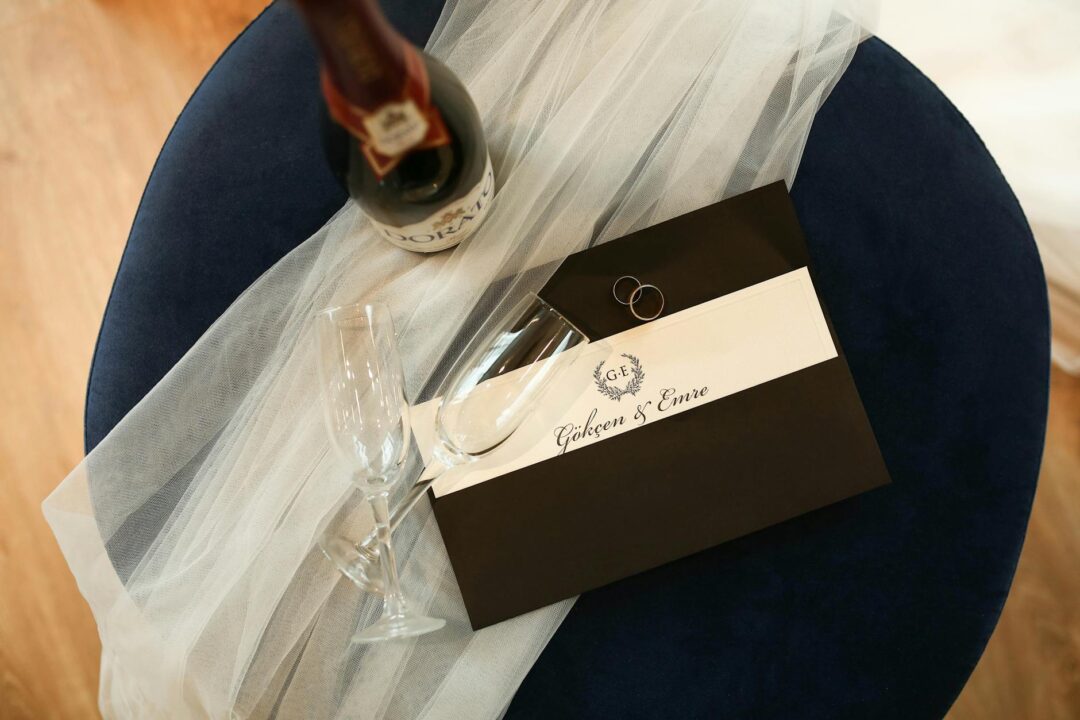
- Pocket fold base cards
- All insert cards (invitation, RSVP, details, accommodation if applicable)
- Return RSVP envelopes (pre-stamped if including postage)
- Belly bands or ribbon ties
- Mailing envelopes
- Bone folder or scoring tool (for crisp folds without cracking)
- Wax seal or sticker seal if using one
Step 2: Fold and Set the Pocket
- If your pocket fold arrives pre-scored, open it fully and press the fold lines flat using a bone folder before inserting cards. This prevents the pocket from bulging after assembly.
- If it arrives flat (self-assembly kit style), score and fold along the marked lines. Apply a thin line of adhesive along the side tabs and press firmly. Let dry before loading inserts.
Step 3: Load the Inserts in Order
- Place the largest card at the back of the pocket (usually the invitation itself or the details card).
- Layer smaller cards in front, from largest to smallest, so the top of each card is visible above the one behind it.
- RSVP card and its return envelope go in last, at the front of the stack, since guests need to retrieve these first.
- If you have a vellum overlay sheet, it sits on top of the invitation card, not inside the pocket.
Step 4: Add Closure and Embellishments
- Slide a belly band over the closed pocket fold, or thread a ribbon through a pre-punched hole and tie a loose bow.
- Apply a wax seal over the belly band join or over the envelope flap to hold everything closed.
- If using a vellum jacket over the entire suite (some formats), wrap it around the outside of the assembled pocket fold before applying the band.
Step 5: Stuff Envelopes and Address
- Slide the assembled pocket fold into the mailing envelope with the opening facing up, so guests can pull it out naturally.
- Handwritten calligraphy addressing is the premium option; Paperlust’s address manager tool lets you import guest addresses via Excel or email for printing.
- Weigh one complete invitation before ordering postage stamps in bulk, pocket suites with multiple inserts can exceed standard letter postage rates.
Step 6: Do a Test Mail
- Send one fully assembled invitation to your own address before the full batch goes out. Check that the pocket holds its shape in transit, the inserts arrive in order, and the envelope seals properly.
Pocket Invitation Pricing: What to Expect in 2026
Pocket invitations cost more per unit than flat cards because of the additional paper weight, folding, and pocket construction. Here is a realistic breakdown of what different configurations cost.
| Configuration | Print Method | Price Range (per invite) | Best For |
|---|---|---|---|
| Pocket base + 1 insert (invite only) | Digital | From $2.04 per card | Simple, single-venue weddings |
| Pocket base + RSVP + details card | Digital | $5-10 per complete set | Most standard weddings |
| Pocket base + 3 inserts + vellum overlay | Flat foil on outer panel | $12-18 per complete set | Destination weddings, luxury tier |
| Full suite: pocket + 4 inserts + wax seal | Letterpress on cotton | $20-30+ per complete set | Black-tie, couture weddings |
Key pricing factors to know:
- Paper stock: Cotton stock costs more than standard matte. Wild Cotton at 600gsm (used for letterpress) is Paperlust’s premium option.
- Print method: Digital is the most affordable. Flat foil adds a moderate premium. Letterpress (which requires engraved plates and multiple press passes) is the most involved process and is priced accordingly.
- Quantity: Like all stationery, per-unit cost decreases as quantity increases. Ordering 100 sets costs significantly less per set than ordering 30.
- Extras: Belly bands, wax seals, and envelope addressing each add to the total. Factor these in when budgeting.
- Samples first: A $5 sample pack lets you verify the paper weight and print quality before committing to a full run. A $20 swatch kit covers all available paper stocks.
Free DHL Express shipping on orders over $350 USD. US delivery is 2-4 business days transit after dispatch. Production time varies by print method: digital suites typically take 8-10 business days; letterpress suites take approximately 20 business days due to the plate and press process.
Pocket Invitation Materials: Card Stock, Linen, and Cotton Compared
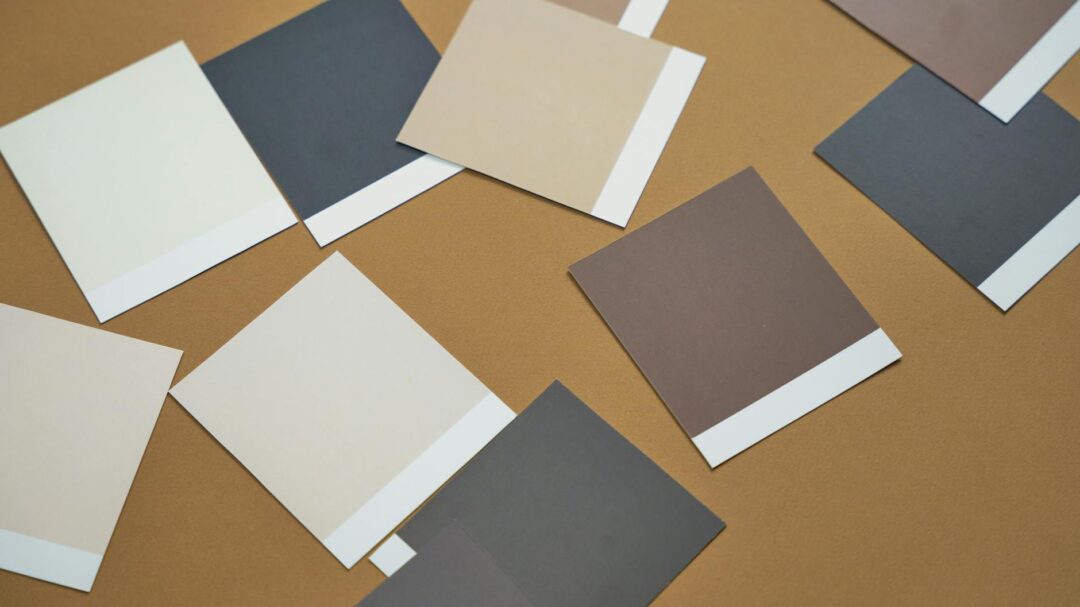
The material you choose for the pocket base determines how the entire suite feels in the hand. Here is how the main options compare.
| Stock | Weight | Texture | Print Methods | Best For |
|---|---|---|---|---|
| Matte | 300gsm | Smooth, clean | Digital, Metallic | Minimalist, modern, budget-conscious |
| Premium | 380gsm | Smooth, substantial weight | Flat Foil, Metallic | Flat foil pocket suites, most versatile |
| Heavyweight | 350gsm | Smooth, stiff | Flat Foil (min order 30) | Pocket base that holds shape without sag |
| Linen | 300gsm | Woven texture, tactile | Digital, Metallic | Rustic, vintage, countryside weddings |
| Wild Cotton | 300gsm or 600gsm | Fibrous, luxury handfeel | Letterpress, Flat Foil | Luxury pocket suites, tactile impression |
| Vellum | 180gsm | Translucent, semi-sheer | White Ink, Colour Stock + Foil | Overlay panels, ethereal and layered effect |
Recommendation for pocket base: 350gsm Heavyweight or 380gsm Premium are the most practical choices. They are stiff enough to hold the pocket shape through mailing, fold cleanly at score lines, and are available with flat foil for couples who want a metallic detail at an accessible price point.
Recommendation for inserts: 300gsm Matte for digital inserts (RSVP, details, accommodation). The weight contrast between a heavier pocket base and slightly lighter inserts is intentional and feels premium.
Wording Layout for Pocket Suites: Where Each Insert Goes
A pocket invitation suite typically includes three to four insert cards. Here is the standard layout logic, and what wording goes on each piece.
The Invitation Card (Main Card)
This is always the largest piece and sits at the back of the pocket or forms the outer panel itself. It carries the core event information:
Emma Clarke & James Thornton
request the pleasure of your company
at their marriage
Saturday, the fourteenth of June, two thousand and twenty-six
at half past three in the afternoon
St. Mary’s Cathedral
New York City, New York
Reception to follow
The RSVP Card
Goes at the front of the insert stack, the first thing guests see when they open the pocket, because it requires action. Standard RSVP wording:
_______________________ accepts with pleasure
_______________________ declines with regrets
Dietary requirements: ______________________
The Details Card
Sits between the invitation and RSVP in the pocket. Covers anything that does not fit on the invitation without crowding the design:
The Pierre Hotel
2 East 61st Street, New York City
Dinner & dancing from 6:30pm
Dress: Black tie
For accommodation options, directions,
and our wedding website:
www.emmaandjames2026.com
The Accommodation Card (if applicable)
For destination weddings or out-of-town guests, a separate accommodation card prevents the details card from becoming cramped:
The Pierre Hotel
Room block rate: $295/night
Book by: April 1, 2026
Mention ’Clarke-Thornton Wedding’ when booking
Reservations: 1-800-743-7300
The Wishing Well / Gift Card (optional)
Many couples include a separate small card rather than adding gift information to the invitation itself. Keep the wording gracious:
Should you wish to give a gift,
a contribution to our honeymoon fund
would be greatly appreciated.
www.emmaandjames2026.com/gifts
DIY vs. Professional Pocket Wedding Invitations
DIY pocket invitations are possible, but the math on time often surprises couples. Here is an honest comparison to help you decide.
| Factor | DIY | Professional (Paperlust) |
|---|---|---|
| Time per invite (assembly) | 10-20 minutes | Arrives assembled or near-ready |
| Total time for 100 invites | 16-33 hours | 2-3 hours (envelope addressing only) |
| Flat foil / metallic print access | Not available at home | Available from $2.04/card |
| Paper quality control | Variable | 100% happiness guarantee |
| Proof process | Self-proofed | Designer proof in 1-2 business days |
| Best for | Craft-enthusiast couples with extra time | Most couples prioritizing quality and time |
If you enjoy crafting and have the time, a pocket wedding invitations kit (pre-scored blanks you print and assemble yourself) is a genuine middle ground. If your time is limited or you want print methods like flat foil, professional printing is the practical choice.
Ordering Pocket Wedding Invitations from Paperlust
Paperlust’s design team handles the design, print, and quality check of every pocket suite. Here is what the process looks like.
Choose your design from the collection, or brief the custom design team on something unique. Provide wording for all pieces: the main invitation, RSVP card, details card, and any additional inserts. A designer proof arrives within 1-2 business days, with two rounds of edits included at no extra cost. Once approved, your suite goes to print.
Wedding invitations start from $2.04 per card. A $5 sample pack or $20 swatch kit lets you feel the paper quality before committing. Pair with save the dates from $1 per card for a fully coordinated pre-wedding stationery suite.
Ready to design your pocket suite?
Browse 500+ exclusive designs across digital, flat foil, letterpress, metallic, and white ink print methods.
Browse Wedding InvitationsOrder a $5 Sample PackPocket Wedding Invitation FAQs
What is a pocketfold wedding invitation?
A pocketfold wedding invitation is a folded card with an interior pocket that holds the enclosure cards for the invitation suite, typically the RSVP card, details card, and any additional inserts. The pocket keeps everything organized and creates a premium, gift-like presentation when guests open it.
How many inserts can a pocket wedding invitation hold?
Most pocket fold invitations comfortably hold 3 to 4 insert cards without the pocket becoming overfull. A main invitation, RSVP card with return envelope, and details card is the standard configuration. Additional inserts like accommodation cards or wishing well cards can be added for complex guest logistics.
What paper weight should pocket wedding invitations be?
The pocket fold base card should be 350-400gsm to hold its shape and support the weight of multiple inserts. Insert cards work best at 250-300gsm. The weight contrast between the pocket base and its contents feels intentional and premium.
Are pocket wedding invitations more expensive?
Pocket fold invitations cost more per unit than flat cards due to the additional paper weight, folding, and pocket construction. However, they simplify assembly by keeping all inserts in one place. At Paperlust, wedding invitations start from $2.04 per card.
What is flat foil and how does it work on a pocket invitation?
Flat foil is a heat transfer process where metallic foil is bonded to specific areas of the card surface using a heated plate. There is no custom die and no debossed impression in the paper; the foil sits flat on the surface. At Paperlust, flat foil is available in gold, rose gold, copper, silver, and holographic on Premium and Heavyweight stock, with a minimum order of 10. It is the most accessible way to add a metallic finish to a pocket suite. Letterpress is Paperlust’s other tactile method, pressing ink into cotton stock to create a physical impression, and it pairs well with flat foil on the outer panel of a pocket fold.
What are the most popular pocket invitation styles in 2026?
Arch-top pocket folds, minimalist monochrome on cotton stock, vellum overlay panels, and flat foil outer panels are the leading styles. The flap-fold format (a scored panel rather than a glued pocket) is also gaining ground for minimalist and modern wedding aesthetics.
How long does it take to assemble pocket wedding invitations?
Expect 10-20 minutes per invite for full DIY assembly (fold, insert, seal, address). For a guest list of 100, budget 16-33 hours total. If Paperlust prints your suite, cards arrive ready to load and address, cutting active assembly time to a fraction of that.
When should I order pocket wedding invitations?
Order samples 9-12 months before the wedding. Place your final order at least 10-12 weeks before the send date to allow for design, proofing, printing, and any transit buffer. Destination weddings with hotel block information need to go out 6-8 months before the wedding, so factor that into your timeline.
Can I add a wax seal to a pocket wedding invitation?
Yes, a wax seal over the belly band join or on the mailing envelope flap is one of the most popular pocket suite finishes. Custom monogram wax seal stamps are widely available. Apply the seal after the belly band is in place; let the wax cool fully before stacking assembled invites.
Does Paperlust offer envelope addressing for pocket suites?
Yes. Paperlust’s address manager tool lets you import guest addresses via Excel or email for printed addressing at approximately $0.20 per address. You can also use the tool for free to manage your guest list and export addresses for hand-calligraphy or label printing.
Its a good idea for those who don’t like the Bulky and Heavy Cards, I liked it.