
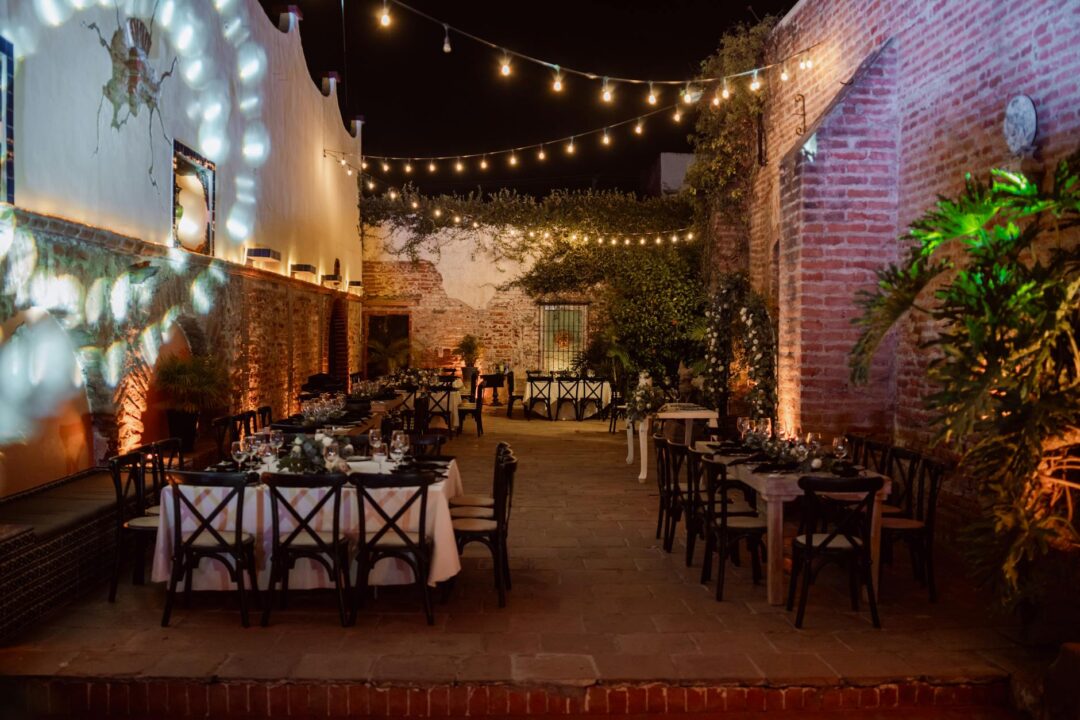
Somewhere between the 200-person ballroom and a courthouse elopement, there is a category that couples keep discovering and rarely regret: the small wedding. Fewer than 50 guests, a venue that actually fits the people inside it, and the kind of dinner where everyone can hear the toasts.
This guide is built around one core argument: a small guest list is not a budget compromise. It is a design choice that unlocks venues, food, stationery, and experiences that are simply unavailable when you are feeding 150. The goal here is not to show you how to scale down, but how to scale up the quality of every detail.
Whether you are picturing 12 close family members at a chef’s counter or 48 friends on a backyard terrace, you will find ideas, budget breakdowns, and stationery guidance to plan a celebration that feels genuinely elevated. If you are still in early stages, our complete wedding planning guide and wedding planning checklist are good starting points. Couples who want to go even smaller may prefer our elopement ideas guide, and for the full cost picture we have a detailed average wedding cost breakdown for 2026.
Quick reference
Small Wedding Ideas in 30 Seconds
- Micro weddings: up to 20 guests. Intimate weddings: 21-50 guests. Both qualify as “small.”
- Average US cost for under-50-guest weddings: $8,000-$17,000 depending on market and vendor tier.
- Best venue unlock: restaurant buyouts, boutique hotels, private homes, and national park permits.
- Long-table family-style dining is the defining reception format for intimate celebrations.
- Stationery budget: 2-3% of total spend. With fewer guests, this frees up money for better paper and print methods.
- Semi-circle ceremony seating makes every guest feel like they are standing in the front row.
- Key trade-off: you do not shrink the wedding, you redesign it around presence instead of scale.
Browse wedding invitations by country
United States |
Australia |
United Kingdom |
Canada |
New Zealand
What Counts as a Small Wedding (Guest Count Thresholds)
The terminology in wedding planning shifts depending on who you ask, but there is a working consensus worth anchoring to.
Micro Wedding: 10-20 Guests
A micro wedding is the smallest recognized category. Think immediate family, your closest friends, and perhaps a witness or two. The ceremony and reception are often the same room, the same evening, and frequently the same table. Micro weddings unlock the most exclusive venues (chef’s tables, private rooms at Michelin-starred restaurants, national park backcountry permits) because the logistics are genuinely simple.
Intimate Wedding: 21-50 Guests
This is the sweet spot for most couples who want a wedding that still feels like a wedding, but without the coordination overhead of a large event. Fifty guests is roughly the threshold below which a single long-table seating works; above it, you need a room-flow plan. Forty to fifty guests is also the guest count where restaurant buyouts become financially feasible and backyard receptions remain comfortable.
Why These Numbers Matter for Planning
Each threshold unlocks different venue options, catering formats, and stationery approaches. A 12-person wedding genuinely requires different planning than a 48-person one. Throughout this guide, notes on each idea will indicate which size range it fits best.
Why Couples Are Choosing Small Weddings in 2026
The shift toward intimate celebrations is not just a post-pandemic holdover. It reflects a deeper change in what couples want from their wedding day.
Presence Over Performance
A 200-person wedding often becomes a performance: cocktail-hour rounds, table visits, choreographed first dances timed to the DJ. A 50-person wedding allows something different. You can actually have a conversation with every guest. You will remember the dinner.
The Budget Math Reframes Completely
The average US wedding cost in 2026 runs approximately $30,000-$35,000. The average for under-50-guest weddings: $8,000-$17,000. But the more interesting math is per-guest spend. At 200 guests with a $30,000 budget, you have $150 per head. At 40 guests with a $20,000 budget, you have $500 per head. That difference shows up in the food, the flowers, the stationery, and especially the venue.
Better Vendors Become Accessible
Many of the best photographers, florists, and caterers are booked solid for large Saturday weddings at peak season. Intimate weddings can attract these vendors on a Friday, a Tuesday, or an off-season date, and at rates that reflect the reduced production complexity.
Mental Health of the Planning Process
Wedding planning stress scales roughly with guest count. Guest list negotiations, seating chart politics, catering minimums, and vendor coordination all compress or disappear at smaller guest counts. For many couples, the small wedding is the version they actually enjoyed planning.

Small Wedding Venue Ideas: Backyards, Restaurants, Boutique Spaces
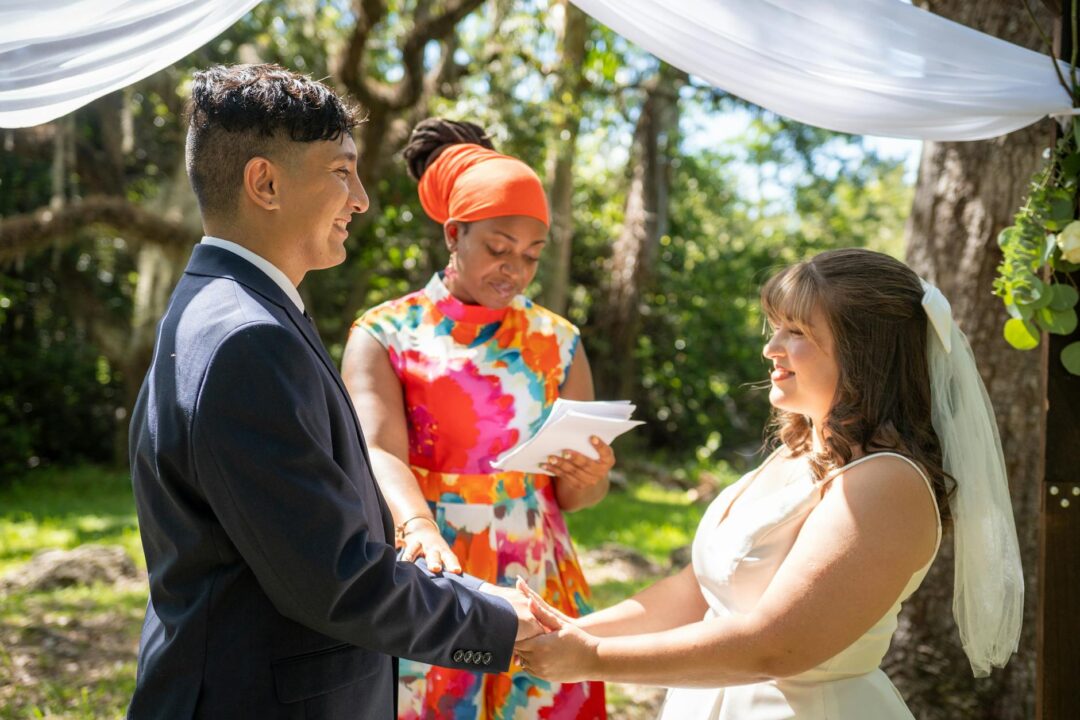
Venue is where the small wedding pays the largest dividends. A room designed for 200 guests and scaled down to 40 will always feel like a missed party. The correct approach is finding a space calibrated for your actual number.
Private Home and Backyard
The backyard wedding has never been more considered as an aesthetic choice rather than a budget fallback. With 50 or fewer guests, the logistics are manageable: a single permit in most jurisdictions, one restroom trailer if needed, a food truck or catered setup, and a tent for contingency. The advantage is complete freedom from venue minimums, time restrictions, and corkage fees.
For a backyard to work at 30-50 guests, you need roughly 600-1,000 square feet of flat usable space. Factor in the ceremony area, dining setup, a food station, and circulation room between tables.
Restaurant Buyouts
One of the most underused options for intimate weddings. Many restaurants will close a section or the entire venue for private events with 20-50 guests, and the built-in kitchen, service staff, and atmosphere mean your decor and rental costs drop significantly. The food quality at a dedicated restaurant almost always exceeds the catering quality at a standard wedding venue. Look for restaurants with private dining rooms, outdoor terraces, or naturally intimate interiors.
Boutique Hotels and Inn Properties
Small boutique hotels, historic inns, and bed-and-breakfast properties frequently have event spaces calibrated for intimate groups. Many offer room blocks for out-of-town guests as part of a package, making the logistics of a destination intimate wedding considerably simpler.
Parks, Preserves, and Scenic Permits
National and state parks, botanical gardens, vineyards, and farm properties are all viable with small guest counts. Permit costs for 50 or fewer guests are often a fraction of large-event fees, and the backdrop does a large share of the aesthetic work.
Choosing a Venue Sized for Your Group
The single most important venue rule for small weddings: find a space where 50 people feel like a full room, not a sparse one. Ceiling height, room shape, and natural acoustics all affect intimacy. Low ceilings, warm lighting, and enclosed rectangular rooms read as intimate. High-ceilinged ballrooms with round tables spread across a floor feel sparse at 50 guests no matter how good the flowers are.
Designing the Ceremony for an Intimate Group
With fewer guests, the ceremony becomes something entirely different from the march-down-the-aisle format designed for 200.
Semi-Circle and Circular Seating
Arranging chairs in a semi-circle or full circle places every guest within 20 feet of the couple. No one is in the back row. The photographs from this format look more candid, more intimate, and more documentary, because the ceremony literally wraps around the couple rather than looking at them from a distance.
Standing Ceremonies
For very small groups, 10-20 guests gathered standing in a garden or on a terrace creates an atmosphere that is closer to a gathering than a performance. This format works particularly well for micro weddings and for couples who prefer brevity.
Personalized Ceremony Elements
At a small wedding, the officiants remarks can include stories about the couple that actually land because everyone in attendance knows the people involved. Personal vows feel more powerful when the guests witnessing them are the people who have watched the relationship develop. If you need inspiration or a starting point, our wedding ceremony script guide covers vow formats, readings, and structure across different traditions and styles.
Ceremony Decor Focused on One Moment
Rather than decorating an entire venue, an intimate ceremony can concentrate its entire florals, arch, and styling budget on a single visual focal point. An arch for 50 guests gets the same 200 photographers-per-second social media attention as an arch for 200, and you have used one-quarter of the flowers.
Reception Ideas: Long Tables, Family Style, Chef’s Counter
The reception format is where small weddings most visibly depart from the standard wedding template.
The Long Table
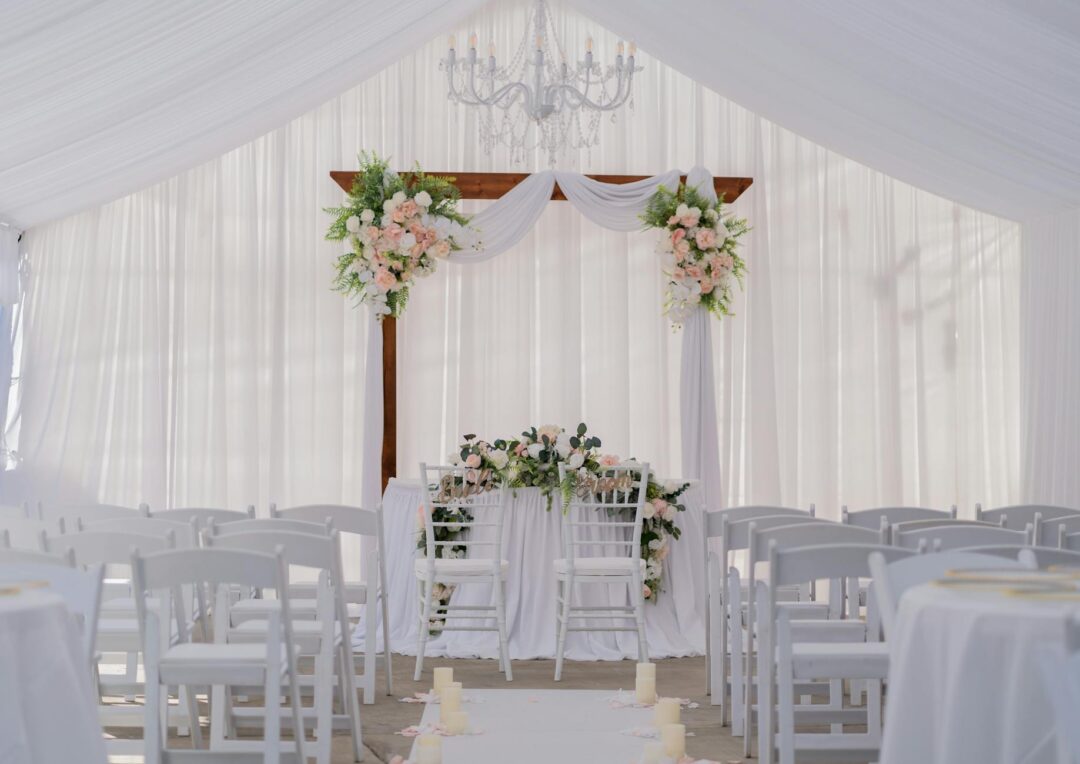
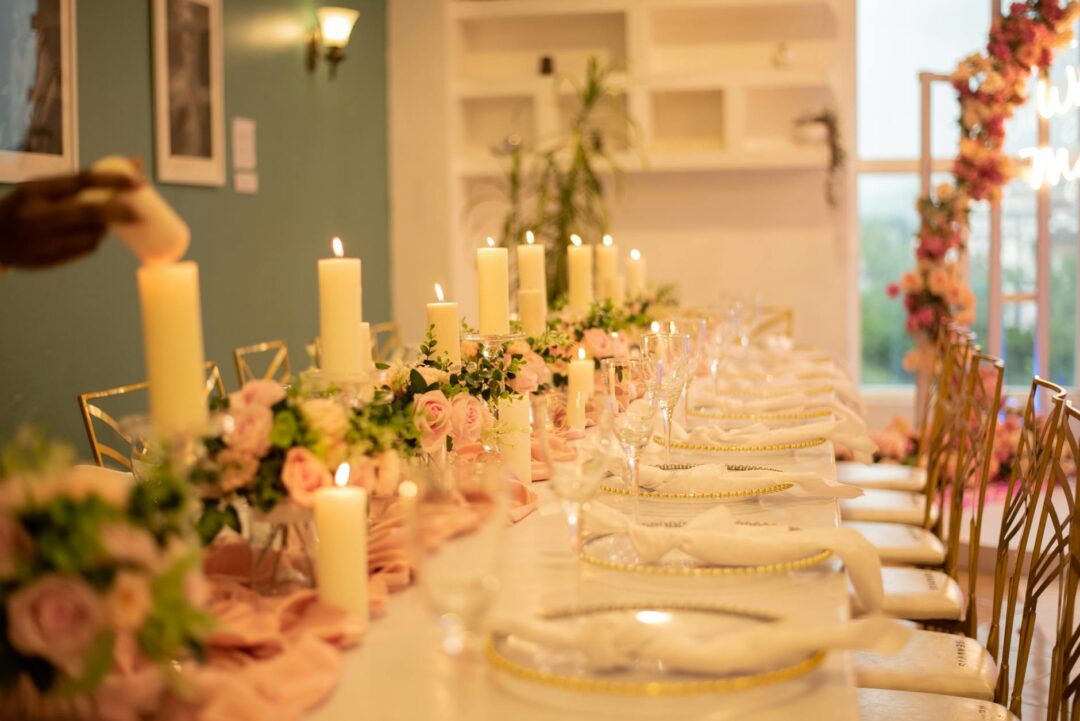
For 20-50 guests, a single long table is one of the most powerful reception design choices available. Everyone can see everyone. Toasts land differently when the speaker can make eye contact with every person in the room. The long table also photographs beautifully, and it encourages the kind of cross-group conversation that round tables prevent.
Long tables work best with family-style service: platters passed down the table rather than individual plated meals. The format is warm, abundant, and logistically simpler for caterers at small guest counts.
Chef’s Counter Dinners
For micro weddings of 10-20 people, a chef’s counter or open-kitchen experience is a genuinely extraordinary option. A handful of restaurants offer private counter dinners where the chef cooks directly in front of the group, with a set menu that can be customized for the occasion. This format transforms the wedding dinner into an experience that is completely unavailable at scale.
Wine Pairing and Tasting Menus
At 50 or fewer guests, a tasting menu with wine pairings becomes financially viable in a way that it simply is not at 150 guests. Per-head food-and-beverage costs of $150-$300 are achievable without exceeding a modest total budget, and the quality gap between a tasting menu and buffet catering is significant.
Food Trucks and Curated Stations
For more relaxed receptions, food trucks calibrated to your group’s taste can provide excellent food at lower cost than full-service catering. A wood-fired pizza truck, a taco station, or a wood-fired grill paired with a cocktail bar creates a festival atmosphere that encourages mingling rather than table-bound formality.
Post-Dinner Activities
With 50 or fewer guests, you can actually do activities. A group wine tasting after dinner, a lawn game setup, live acoustic music in a room small enough for conversation, a projector screening of the couple’s favorite film, or an after-party at a neighborhood bar. Scale enables format experimentation that large weddings cannot accommodate.
Small Wedding Stationery: Single-Sheet Invitations, Hand Calligraphy
Stationery is where the small wedding argument becomes most compelling. With 30-50 guests instead of 150, the same budget per guest produces a dramatically elevated result.
The Case for Premium Print Methods at Small Guest Counts
A letterpress invitation suite for 150 guests requires a significant minimum order and a correspondingly large budget. The same suite for 40 guests drops to a cost where letterpress or foil stamp becomes straightforwardly affordable for couples who would otherwise default to digital print. This is not a minor upgrade. Letterpress invitations, pressed into 600gsm Wild Cotton paper, communicate before they are opened that this wedding is different.
For US wedding invitations designed for intimate celebrations, our full collection is available at Paperlust wedding invitations. The designer proof arrives within 1-2 business days, and two rounds of edits are included at no extra charge.
Single-Sheet and Simplified Suite Design
A small guest count also frees you from the traditional multi-piece invitation suite. When you have 30 guests and a wedding website, the argument for a separate information card, RSVP card, and envelope liner weakens. A single beautifully printed card with a QR code to your wedding website can be more elegant than a multi-piece suite, and considerably more streamlined to assemble and mail.
Handwritten Calligraphy Is Actually Feasible
Addressing 40 envelopes by hand, or hiring a calligrapher to do so, is a realistic proposition. At 150 envelopes, hand addressing becomes cost-prohibitive for most couples. At 30-50, it is an afternoon’s work for a skilled calligrapher, and the result signals care in a way that printed labels never do.
Paperlust’s invitation designs include options in letterpress, flat foil, foil stamp, metallic, digital, and white ink printing, with a 1-2 business day proof turnaround. Paper options range from 300gsm digital matte to 600gsm Wild Cotton for letterpress.
Day-Of Stationery: Menus, Place Cards, and Programs
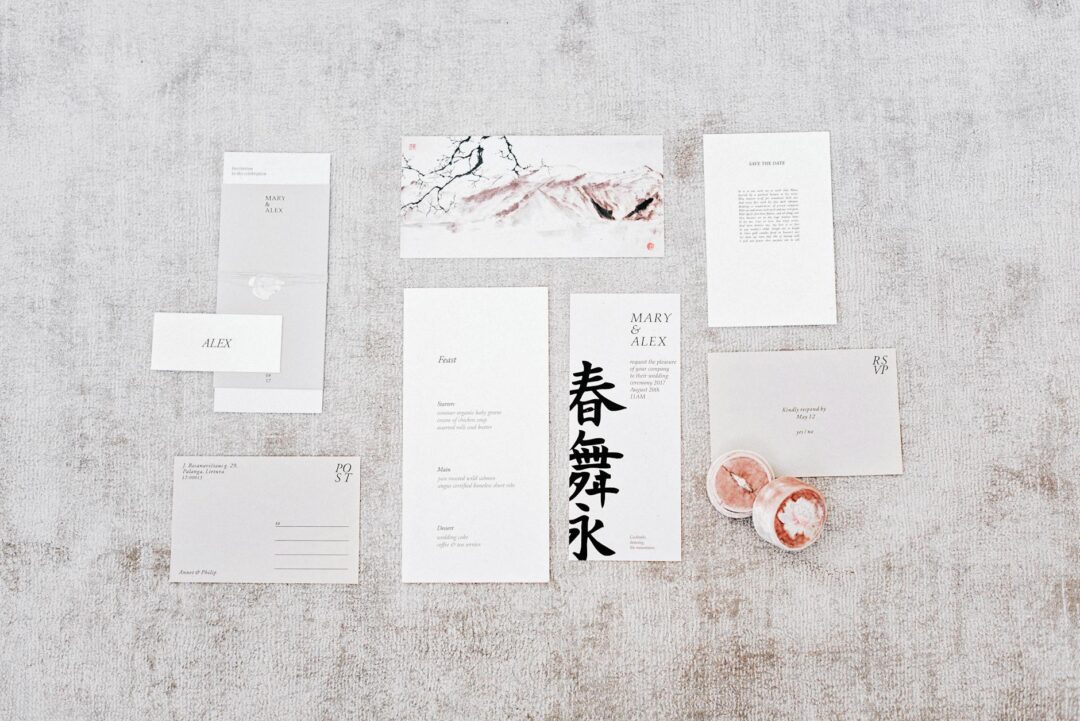
At an intimate dinner, menu cards and handwritten place cards are visible to every guest throughout the meal. The quality of these pieces registers more than at a large event where guests barely see the table stationery before the service removes it. A 40-person wedding can have genuinely beautiful individual printed menus for a total cost that would barely register in a large-wedding budget.
Small Wedding Budget: Where to Splurge and Save
For US intimate weddings with 20-50 guests in 2026, total budgets typically range from $8,000 at the lean end to $25,000 at the elevated end. Here is how those dollars move through the main categories.
Budget Allocation Table for Intimate Weddings
| Category | % of Budget | Notes |
|---|---|---|
| Venue + catering | 40-50% | Restaurant buyout often lowers this vs. traditional venue |
| Photography | 15-20% | Fewer guests means shorter coverage window; 6 hrs often enough |
| Florals and decor | 8-12% | Concentrate budget on ceremony arch + long-table centerpiece |
| Attire and beauty | 8-12% | No change from larger weddings; fixed cost |
| Music / entertainment | 5-8% | Acoustic duo or curated playlist often better than DJ at small scale |
| Stationery | 2-4% | Spend up here; fewer pieces = more room for premium print methods |
| Transportation | 2-3% | Often eliminates entirely with private-home or nearby venue |
| Officiant + fees | 1-3% | Many couples use a friend who becomes ordained online |
| Contingency | 5-10% | Smaller events have fewer budget surprises; 5% is usually sufficient |
Where to Deliberately Spend More
Photography is the one category where restraint costs couples long-term. The day goes fast, and the photographs are what remains. Spending 20% of your budget on a photographer who specializes in intimate weddings is not extravagance; it is prioritization.
Food and drink quality scales per-head at a small wedding in ways that just are not possible at larger guest counts. Spending $200 per head on dinner for 40 people ($8,000 total) produces a categorically better experience than $100 per head on 120 people ($12,000 total), even with a higher absolute food spend at larger scale.
Stationery print method is the easiest upgrade at small guest counts. Letterpress invitations for 40 people cost roughly 25-30% more than digital print for the same quantity, and the tactile and visual difference is substantial.
Where to Save Without Sacrifice
DJ vs. acoustic musician. At 40-50 guests in an intimate space, a DJ setup and speaker system designed for 200 people is frequently overkill. An acoustic guitarist or a small jazz trio fits both the scale and the atmosphere.
Florals through selective focus. Rather than spreading flowers across every table, concentrate your entire floral budget on one spectacular arch or ceremony installation and simple greenery at the dinner table. The photographs will be better, and the visual impact is stronger.
Weekend timing. Off-peak Friday evenings and Saturday lunches open restaurant buyouts and boutique venues that would otherwise be unavailable, often at 15-30% lower venue fees.
For a deeper dive into the cost side, our wedding budget breakdown guide covers the full cost structure with vendor-negotiation tactics.
Small Wedding FAQs
What is the difference between a micro wedding and an intimate wedding
A micro wedding typically has 10-20 guests, while an intimate wedding covers the range of 21-50 guests. Both share the same design philosophy: calibrating every element to the actual number of people attending rather than scaling a large wedding down. The key difference is the venue options and service formats available at each size.
How much does a small wedding cost in the US in 2026
For 20-50 guests in the US, total wedding costs in 2026 typically run between $8,000 and $20,000, depending on market, venue type, and vendor tier. The Knot’s 2025 data points to an average of approximately $17,000 for weddings under 50 guests. In high-cost markets (NYC, San Francisco, Napa), this figure rises significantly; in secondary markets and with off-peak timing, it comes in lower.
Can I have a small wedding without it feeling like we compromised on anything
Yes, and this is the central argument of this guide. A small wedding done well does not feel like a compromise. It feels like a deliberate version of a better wedding: food that is genuinely excellent, a venue that fits the people in it, photography that captures real conversation rather than table-visit logistics, and stationery that you actually spent money on because you only needed 40 invitations. The comparison is not 50-guest wedding vs. 200-guest wedding; it is 50-guest wedding vs. the 200-guest wedding you could have had with the same budget.
What venues work best for intimate weddings under 50 guests
Restaurant buyouts, private home gardens, boutique hotels and inns, national and state park permits, vineyards, art galleries, and private dining clubs all work well. The most important criterion is that the space feels full and warm at your actual guest count. Avoid large ballrooms and hotel event spaces designed for 200+ guests; even beautifully styled, they read as sparse at 50 people.
How do I handle the guest list for a small wedding
The guest list for an intimate wedding is the hardest conversation and the most important one. Start from the people you genuinely cannot imagine the day without, not from obligation or extended family expectations. A clear, honest conversation early, with a firm number communicated to both families, prevents the list from growing by attrition. Some couples find a strict rule helpful: immediate family and friends you have seen in the last 12 months.
What is the best stationery approach for a small wedding
With under 50 guests, invest in print method over quantity. Letterpress or foil stamp invitations for 30-50 guests are accessible at a cost that would be prohibitive for a large wedding, and the tactile quality creates an immediate impression. Consider simplifying the suite to a single well-designed card plus a wedding website rather than a multi-piece packet. For US invitations, the full range of print methods is available at Paperlust wedding invitations.
Should small weddings still have a formal ceremony and reception
There is no requirement to follow the ceremony-cocktail-hour-reception format just because it is conventional. Intimate weddings have the flexibility to design the day differently: a ceremony followed by a long shared dinner with toasts woven through the meal, a morning ceremony followed by a brunch reception, or an evening ceremony followed by dancing at a private venue. The format should serve the people attending, not the reverse.
How do I plan a backyard wedding for under 50 guests
Start with the infrastructure checklist: power access for lighting and speakers, restroom facilities (a single restroom trailer for 40-50 guests runs approximately $200-$400 for an evening), flat ground for tables and ceremony, a tent or weather contingency plan, and local noise ordinance timing. Then build the experience around the natural assets of the space: the light at a particular hour, the view from a specific spot, the garden’s natural flow. A professional event planner experienced with backyard weddings for a day-of coordinator can manage vendor timing and logistics for a fee that quickly pays for itself.
Ready to Begin?
Stationery That Matches Your Vision
With fewer than 50 invitations to print, you can afford the print method you actually want. Letterpress, flat foil, foil stamp, and digital all available with a 1-2 business day proof turnaround.