

United States |
Australia |
United Kingdom |
Canada |
New Zealand
If you have held a wedding invitation that made you stop before opening it, there is a good chance that was the work of a print technique that creates something physical: a pressed-into-paper impression, a mirror-bright metallic line, or both at once. Couples searching for “embossed wedding invitations” are almost always searching for that quality of feel. This guide explains what the term actually means, which Paperlust techniques deliver it, and how to choose between them.
- Most couples searching “embossed” want either a tactile pressed-in feel (letterpress) or metallic shine (flat foil), or both
- Paperlust offers letterpress exclusively on 300gsm or 600gsm Wild Cotton paper for deep pressed impressions
- Paperlust’s flat foil delivers mirror-bright metallic shine without a custom die; minimum order just 10 cards
- Traditional custom-die foil stamping (industry-wide technique using a bespoke metal die) requires 50-card minimums and adds significant setup cost; Paperlust’s flat foil delivers comparable metallic results at lower minimums
- Designer proof in 1-2 business days; unlimited ordinary proof edits at no extra charge
- Free DHL Express shipping on orders over $350 USD
What “Embossed” Wedding Invitations Really Means (Industry Terminology)
The word “embossed” is used loosely in wedding stationery, and it covers at least three separate industry techniques. Knowing the distinction makes it much easier to shop for exactly what you want.
In the strictest printing sense, embossing means pressing paper from behind a custom die so it rises above the surface, creating a three-dimensional bump with no ink or foil. This “blind emboss” creates a subtle sculptural effect. Debossing is the reverse: pressing a die into the paper surface to create an indentation. Most consumer wedding printing does not use pure blind embossing as a standalone method; it typically appears as an accent alongside other techniques.
What couples almost always mean when they say “embossed” is one of the following:
- Custom-die foil stamp (industry-wide), a heated custom metal die presses metallic foil film onto paper, leaving both a foil-bonded surface and a deboss impression on the reverse. Requires a bespoke die per design. Common at traditional stationery printers but adds significant cost and minimum quantities (typically 50+ cards). Paperlust does not offer this format.
- Letterpress, a relief plate pressed into cotton paper under high pressure, creating a deep tactile groove filled with ink. No metallic shine, but the pressed-into-paper impression is what most couples describing “embossed” are picturing when they close their eyes. Paperlust offers this on 300gsm and 600gsm Wild Cotton.
- Flat foil, foil film bonded to paper via a roller and heat, without a custom die. Delivers the same mirror-bright metallic shine as foil stamping, but with no pressed impression on the reverse. Lower minimum (10 cards), faster setup, lower per-card cost. Paperlust offers this in 11 foil colors.
The practical reality: if you are drawn to “embossed wedding invitations” because you want paper you can feel, letterpress is your answer. If you are drawn to it because you want metallic shine, flat foil is your answer. If you want both, Paperlust can combine the two techniques.
The Two Techniques That Deliver the “Embossed” Experience at Paperlust
Paperlust’s letterpress and flat foil cover the full spectrum of what couples searching “embossed” are actually looking for. Here is how they compare side by side.
| Feature | Letterpress | Flat Foil |
|---|---|---|
| The feel | Deep pressed-into-paper texture; tactile groove you can run a finger across | Smooth metallic surface; no pressed impression, but distinct foil texture |
| Paper | Wild Cotton 300gsm or 600gsm only | Matte, 380gsm Premium, 350gsm Heavyweight, Colour Stock + Foil (270gsm and 500gsm) |
| Color | Ink (hand-mixed); 1-2 colors typical | Gold, pale gold, rose gold, silver, copper, red, green, blue, hot pink, celestial blue, holographic |
| Minimum order | Check live pricing | 10 cards (30 for 350gsm Heavyweight) |
| Production time | ~20 business days | ~20 business days |
| Best for | Heritage, formal, botanical, tactile-first design | Modern, glam, minimalist, metallic-first design |
| Can combine? | Yes, letterpress body text + flat foil names in two passes | Yes, flat foil accents over digital print; also combinable with letterpress |
Letterpress Wedding Invitations: The Tactile Pressed-Impression Look
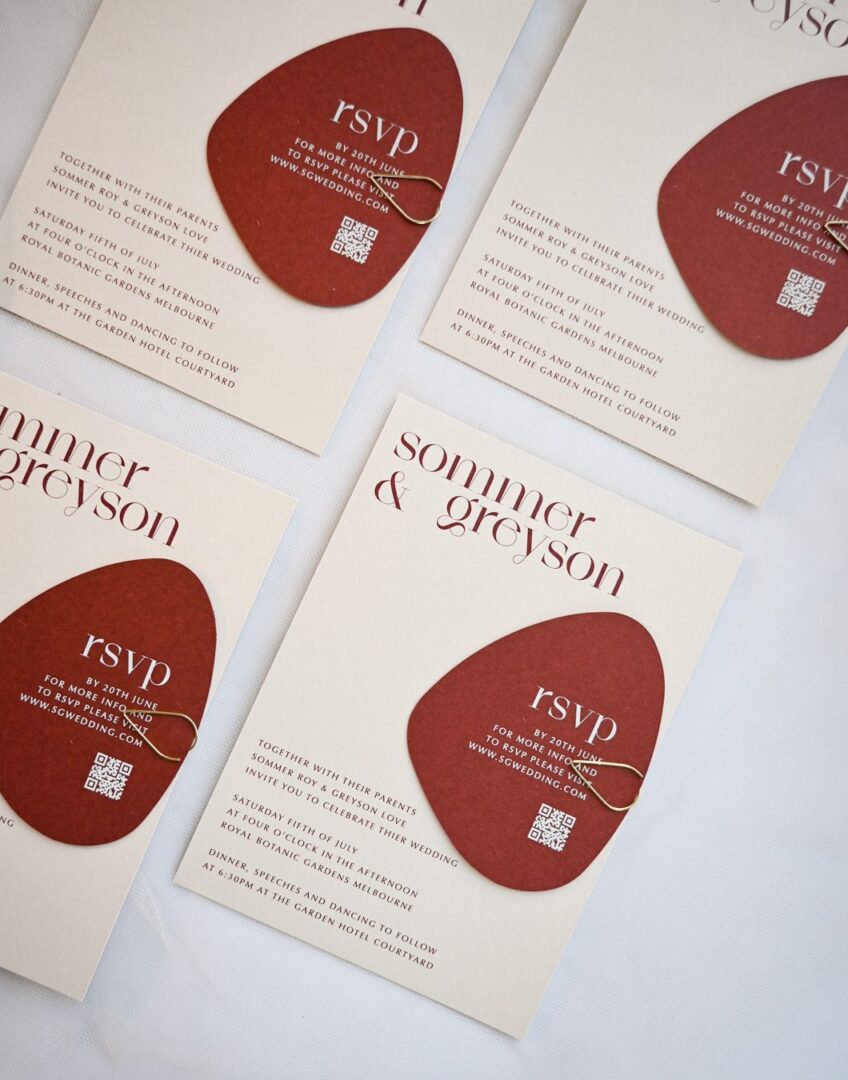
Letterpress is the technique most directly connected to what couples picture when they say “embossed.” A relief plate pressed into dampened cotton paper under high pressure creates a permanent indentation, the paper fibers are squeezed into a groove that you can feel years after the wedding. The impression goes into the paper rather than rising above it, which technically makes it a deboss, but the tactile experience is exactly what the word “embossed” evokes.
The cotton paper is not optional
Paperlust prints letterpress exclusively on Wild Cotton, available in 300gsm and 600gsm (double-thick). The cotton fiber structure absorbs and retains the plate impression; standard card stock returns to its original shape. On 600gsm Wild Cotton, a deep impression can be 1-2mm visible and will catch light at low angles. This is the paper weight most associated with the “heirloom letterpress” look.
Ink color and design
Letterpress uses hand-mixed ink rather than foil. The color of ink against the cream or white Wild Cotton surface provides the visual contrast. Most letterpress designs work best with 1-2 ink colors, adding more colors increases cost because each color requires a separate print pass. Darker inks on Wild Cotton read with the most clarity; pale inks against pale cotton create an elegant low-contrast look that suits garden and romantic aesthetics.
Design rules for letterpress
- Fine hairlines below 0.5pt weight can fill in during the impression, the Paperlust design team reviews every file before production and flags any element at risk
- Large solid areas of ink can show slight variation in impression depth, which reads as handcrafted texture rather than a flaw
- Scripts and serifs in letterpress read beautifully at appropriate sizes; test fine ornamental scripts at size during the proof stage
- The impression is visible on the reverse of the card, some couples leave the back blank to let the texture show; others print details on the reverse
Weddings that suit letterpress best
Letterpress is the strongest fit for formal, garden, classic, and heritage-leaning weddings. The handcrafted quality of a pressed impression on thick cotton paper reads as considered and unhurried. It is also a natural pairing for botanical illustration, script typography, and nature-inspired design motifs. Couples who want their invitation to feel genuinely different from a digitally printed card will find letterpress delivers that in a way no other technique does.
Can you add metallic foil to letterpress?
Yes. Letterpress and flat foil are run as separate production passes. A common combination is letterpress-printed body text and venue details on Wild Cotton, with flat foil applied to the couple’s names. The design team coordinates the two passes during production. Describe the effect you want and they will advise on the most practical execution.

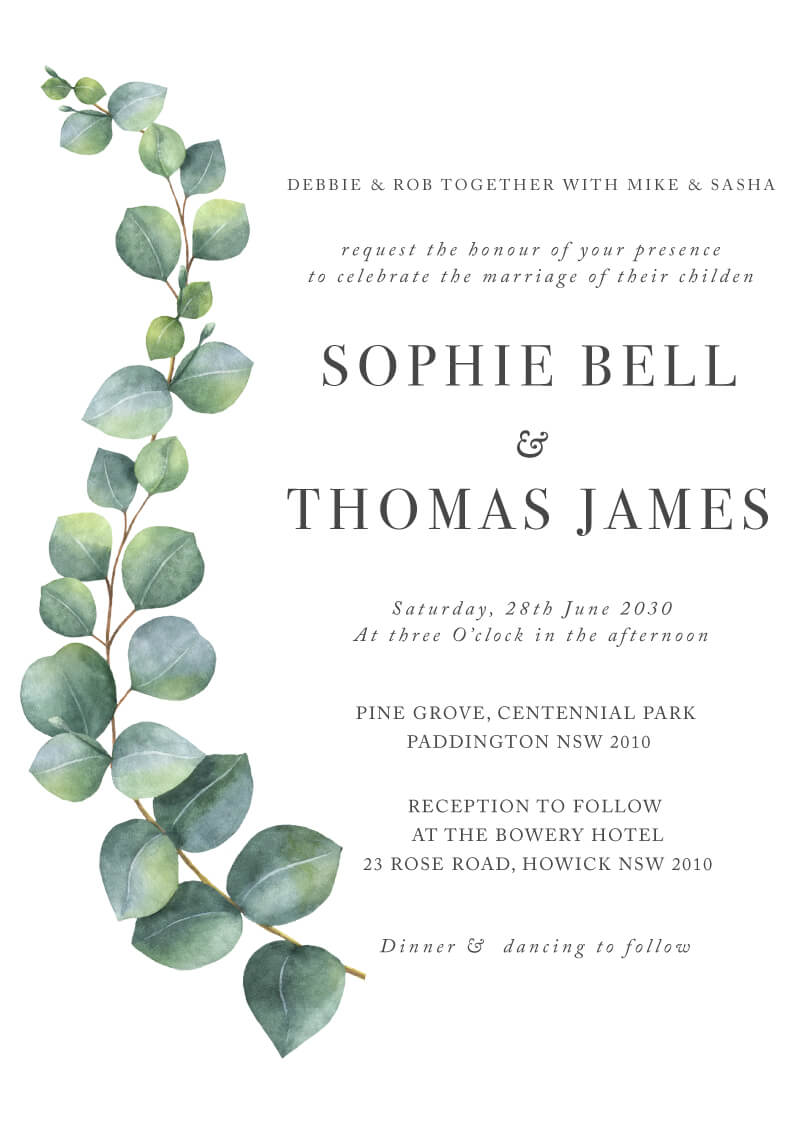
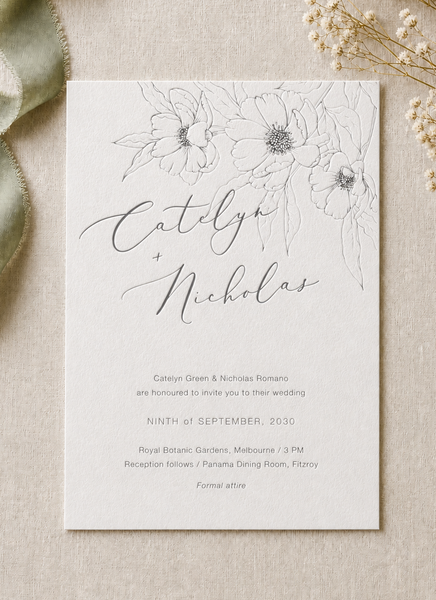
Flat Foil Wedding Invitations: Metallic Shine Without the Custom Die
If the “embossed” look you want is the metallic shine, the mirror-bright element that catches light across the room, flat foil is the Paperlust technique that delivers it most accessibly.
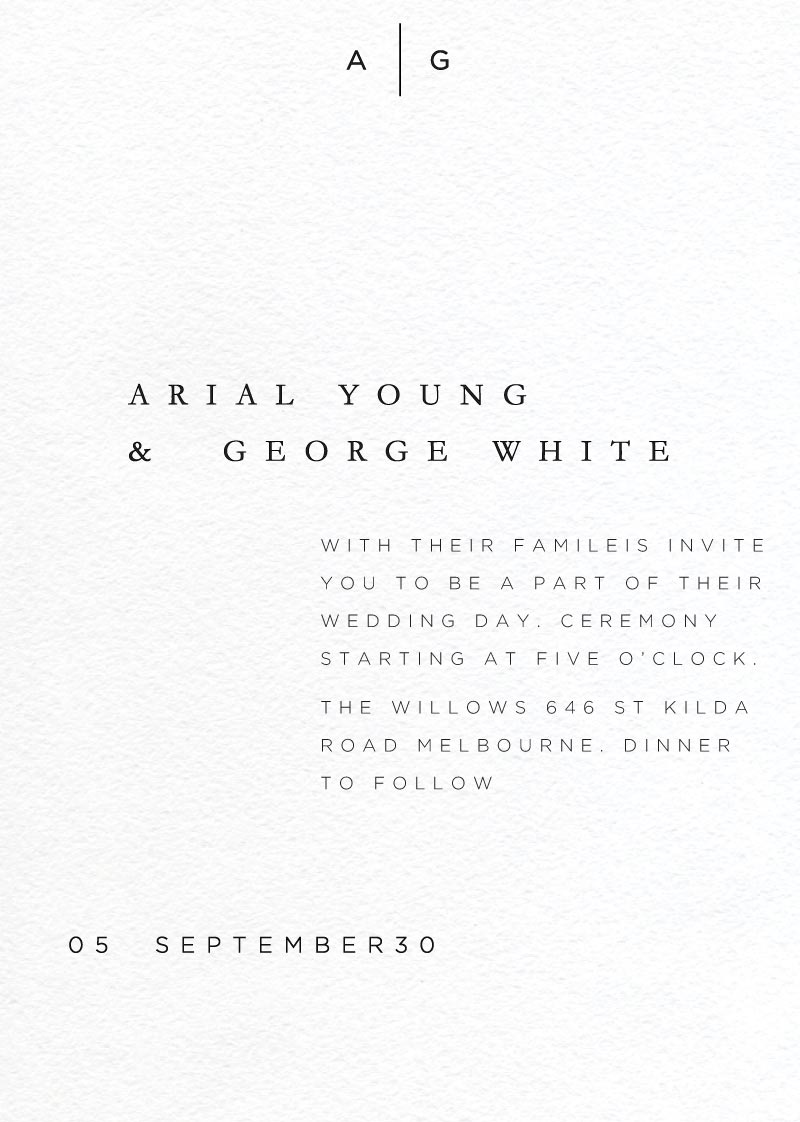
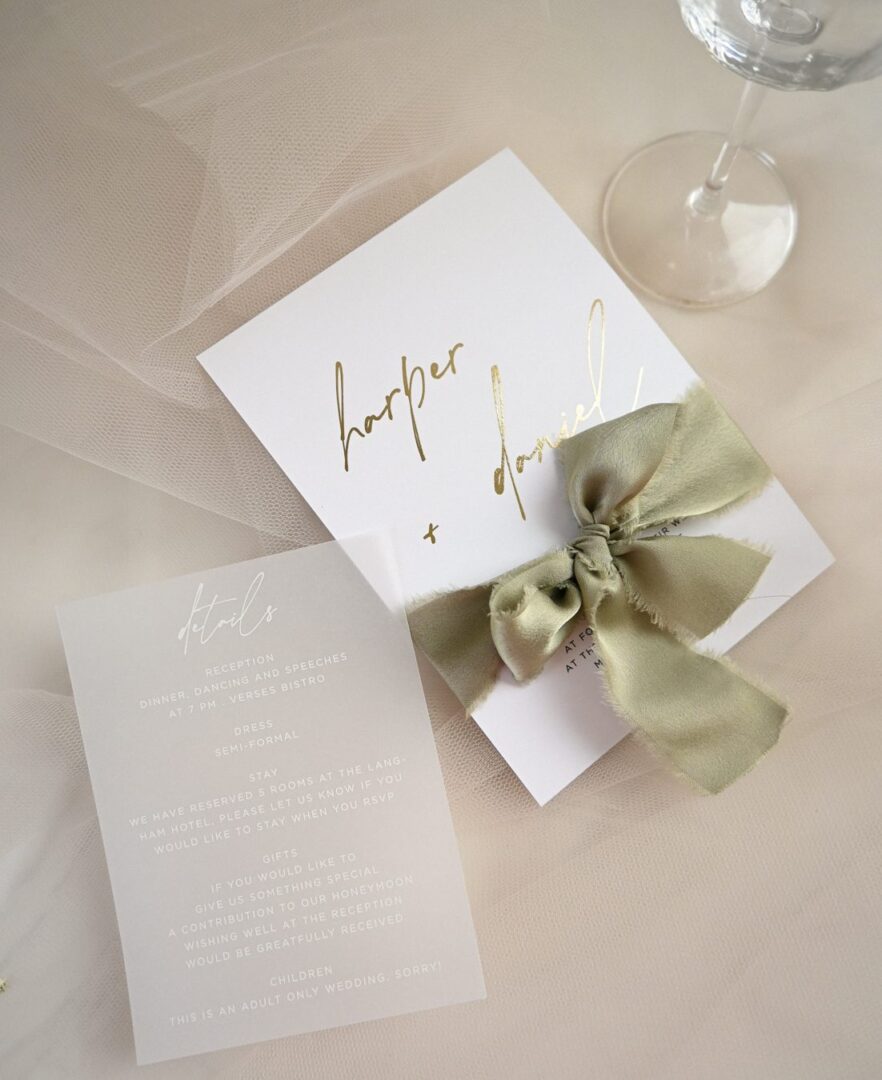
Flat foil bonds metallic foil film to paper via a roller and heat process, without a custom metal die. The result is visually identical to the metallic surface produced by industry-wide foil stamping (the custom-die technique), but without the die-creation cost and without the pressed impression on the reverse of the card. This makes flat foil the most accessible metallic wedding invitation option, with a minimum order of just 10 cards.
Foil color options
Paperlust’s flat foil range covers 11 colors:
- Gold, the benchmark for formal weddings; warm and classic on cream or white paper
- Pale gold, softer and more contemporary; pairs naturally with blush, sage, and terracotta palettes
- Rose gold, warm metallic with a pink undertone; suits dusty rose, blush, and warm neutral color schemes
- Silver, cool and contemporary; reads beautifully on white and off-white papers
- Copper, rich warm metallic that complements earthy and organic aesthetics
- Holographic, shifts color with viewing angle and light; the most impactful statement option
- Celestial blue, hot pink, green, red, blue, bold specialty colors for non-traditional designs
Paper options for flat foil
Flat foil works on a wider range of papers than letterpress:
- Matte stock, most affordable; clean foil contrast
- 380gsm Premium, solid weight; the standard for flat foil invitations
- 350gsm Heavyweight, substantial feel; minimum 30 cards for this paper
- Colour Stock + Foil (270gsm and 500gsm), real foil on European colored card in navy, black, red, and other deep tones; gold or silver foil on dark stock produces the highest-contrast invitation designs in the range
Weddings that suit flat foil best
Flat foil is the most versatile of Paperlust’s premium techniques. Modern minimalist designs, a single script name in gold foil on white card, read as quietly luxurious. Maximalist designs, holographic foil on deep navy 500gsm stock, read as boldly glamorous. The technique spans the full aesthetic spectrum, which is why it appears across the widest range of Paperlust invitation styles.
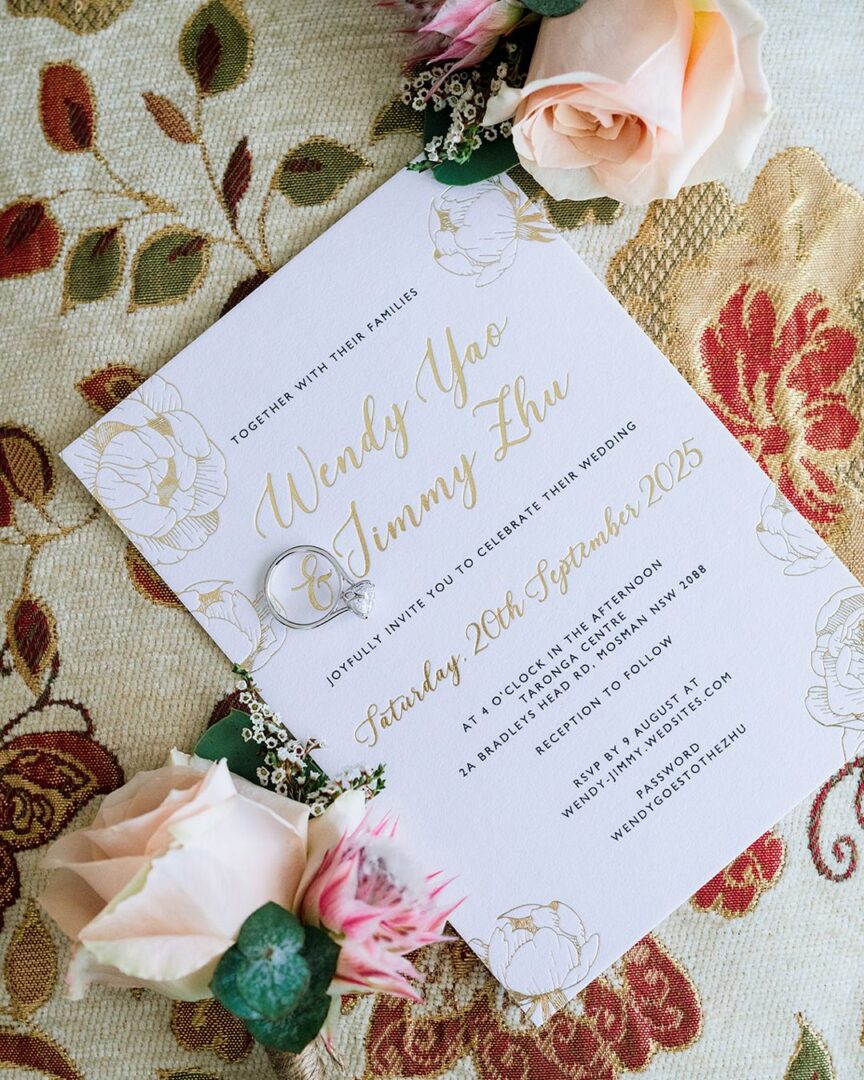

Rose et GrisFlat foil

Moira Hughes CoutureColour Stock + Foil
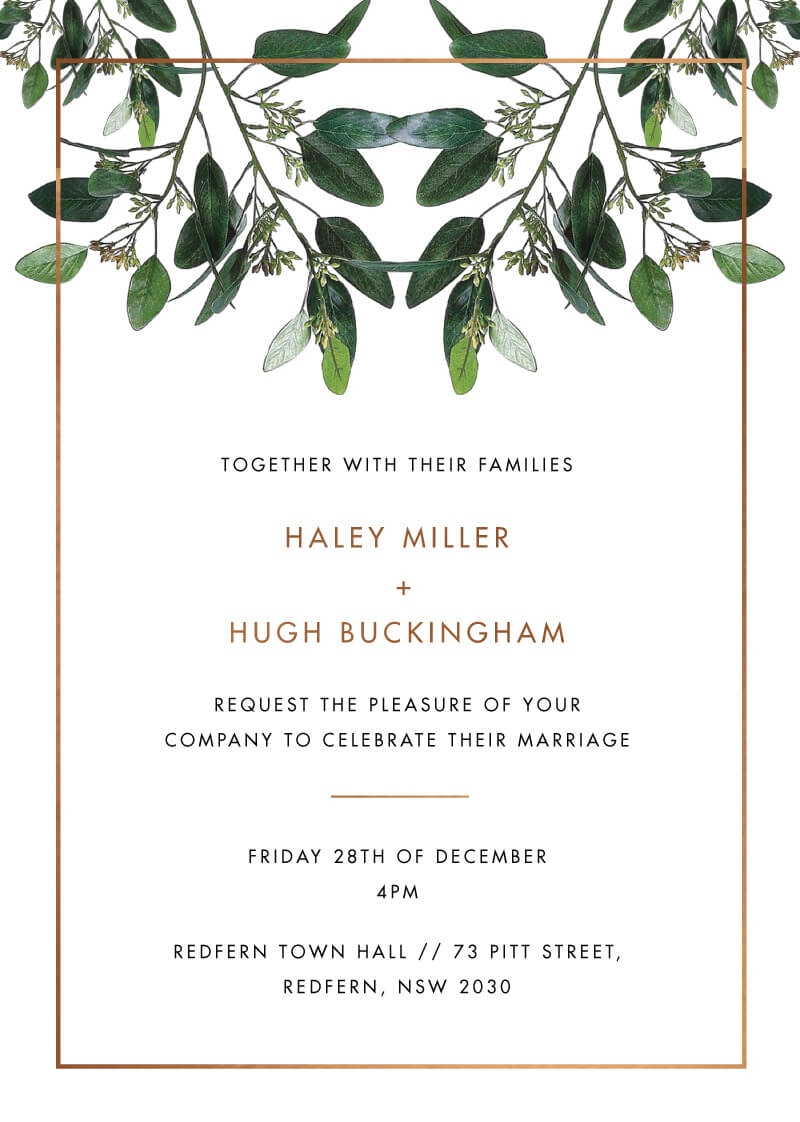
Garden EstateFlat foil
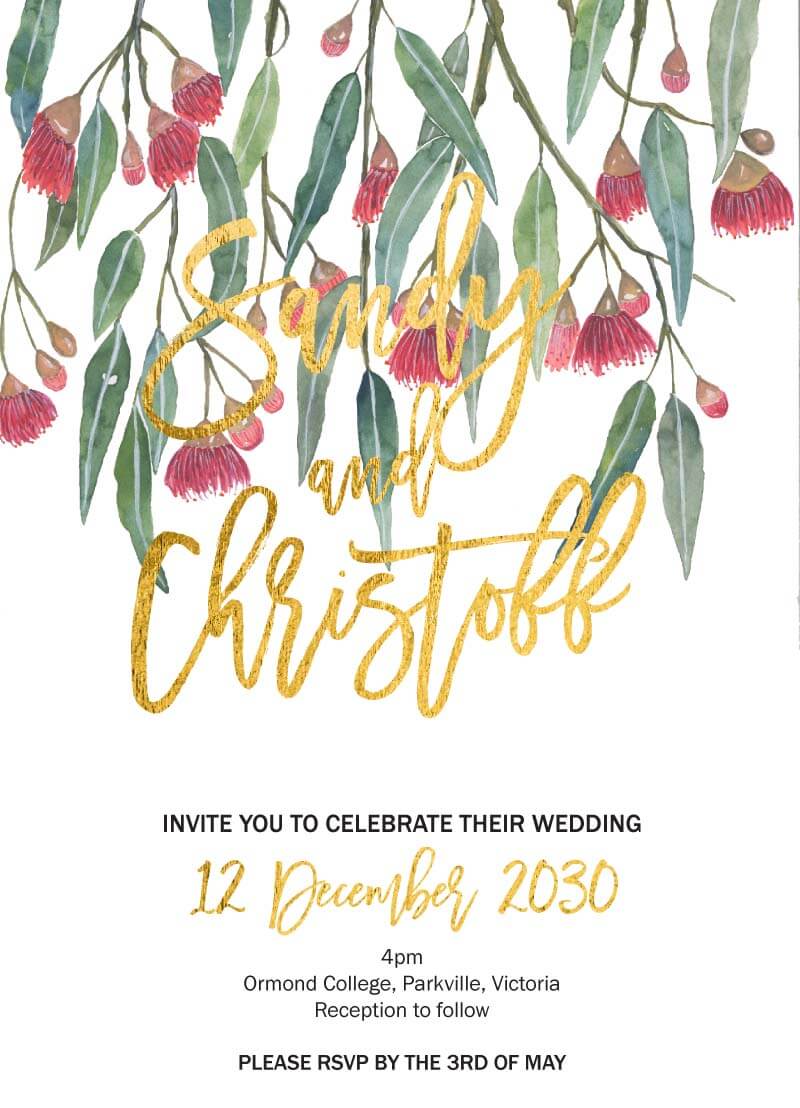
Golden NativeFlat foil
Letterpress vs Flat Foil: Which Is Right for Your Style
Choose letterpress if…
- You want a physical impression you can feel, the paper itself carries the design as a texture
- Your wedding has a formal, garden, heritage, or nature-inspired aesthetic
- You are drawn to the look of thick cotton paper with deep pressed-in type
- You want the invitation to feel genuinely handcrafted rather than machine-produced
- You are comfortable with ink color rather than metallic shine as the primary visual element
Choose flat foil if…
- You want metallic shine, an element that catches and reflects light
- You have a smaller guest list (minimum 10 cards means it works for intimate weddings)
- You want a specific metallic color (11 options including holographic)
- Your wedding is modern, minimalist, glam, or maximalist
- You want the lowest-cost entry to a premium metallic invitation
Choose both if…
- You want tactile texture AND metallic shine on the same card
- You are comfortable with the combined cost of two production passes
- A typical approach: letterpress for body text on Wild Cotton + flat foil for the couple’s names
| Wedding style | Best technique | Best foil color (if applicable) |
|---|---|---|
| Modern minimalist | Flat foil on 380gsm Premium | Pale gold, silver |
| Classic formal | Letterpress on 600gsm Wild Cotton, or letterpress + flat foil | Gold |
| Garden / botanical | Letterpress on 300gsm Wild Cotton | Copper, rose gold (if foil added) |
| Bohemian / organic | Letterpress on 300gsm Wild Cotton | Copper, warm gold (if foil added) |
| Glamorous / maximalist | Flat foil on Colour Stock + Foil (500gsm) | Holographic, gold, celestial blue |
| Romantic / intimate | Flat foil (low minimum of 10 cards) | Rose gold, pale gold |
How Paperlust’s Process Differs from Custom-Die Foil Stamping
Custom-die foil stamping (the industry-wide technique used by many traditional stationery printers) uses a bespoke brass or magnesium die machined specifically for your artwork. The heated die presses metallic foil film onto the paper surface and simultaneously creates a deboss impression on the reverse. The results are striking, but the die creation cost adds $150-$300+ to the setup, and most printers require a minimum of 50 cards to spread the tooling cost.
Paperlust’s flat foil delivers visually comparable metallic results without the custom die. The foil bonds cleanly to the paper surface via a roller-and-heat process, creating the same mirror-bright metallic finish. There is no pressed impression on the reverse, which for most couples is not a factor in the decision. For couples who specifically want the deboss impression that custom-die foil stamping creates, Paperlust’s letterpress technique delivers the pressed-into-paper tactile quality on Wild Cotton cotton paper.
The practical upshot:
- Want metallic shine with the lowest minimum and fastest setup? Flat foil (min 10 cards)
- Want the pressed-into-paper tactile quality? Letterpress on Wild Cotton
- Want both? Letterpress + flat foil in two production passes
Pricing for Embossed-Look Wedding Invitations at Paperlust
| Technique | Typical range (per card) | Minimum order | Key cost driver |
|---|---|---|---|
| Flat foil | From $2.04 (digital base) + foil premium; check live pricing | 10 cards (30 for 350gsm Heavyweight) | No custom die; fastest metallic setup |
| Letterpress | Check live pricing at /browse/wedding-invitations/letterpress/ | Check live pricing | Wild Cotton paper; impression depth; ink passes |
| Letterpress + flat foil combo | Combined cost of both passes; check live pricing | Check live pricing | Two production passes; Wild Cotton required |
| Industry custom-die foil stamp (other printers) | Typically $3-$8+ per card industry-wide | Typically 50+ cards | Custom die creation; specialist press |
Quantities significantly affect unit cost. Ordering near a quantity tier (for example, rounding from 75 to 100 cards) often reduces the per-card cost enough to offset the extra quantity.
What is included in the price
Every Paperlust order includes a professional designer assigned to your invitation, unlimited ordinary proof edits at no extra charge, and a designer proof within 1-2 business days. Free white envelopes are included with every invitation order; colored or textured envelope upgrades are available.
Shipping
US orders ship via DHL Express. Orders over $350 USD qualify for free DHL Express shipping. Production timelines are 20-23 business days for letterpress, 7-10 business days for flat foil, and 3-5 business days for digital print. These begin after proof approval and exclude transit. Build your timeline accordingly when planning invitation send dates.
Getting a sample before committing
A $5 sample pack includes seven designs printed across different methods, including a letterpress sample, the best way to hold the paper quality and print impression in your hands before placing a full order. A $20 full swatch kit includes all available paper stocks including letterpress options. A $15 custom sample of your actual design is available for most print methods; it is not available for letterpress.
2026 Trends: What Modern Couples Are Choosing for That “Embossed” Look
The “embossed” aesthetic in wedding invitations is moving in two clear directions in 2026: refined restraint and bold maximalism.
Restrained letterpress on natural cotton
The dominant direction for tactile invitations is monochrome letterpress, a single deep-pressed ink color on natural or blush Wild Cotton. No metallic element. The cotton texture and the press impression do all the work. This approach reads as deliberately unhurried, and it photographs beautifully in both natural light and low candlelight.
Flat foil with white ink on dark stock
For couples who want impact, gold or silver flat foil on deep navy or black Colour Stock (500gsm) is consistently the most-saved combination on wedding planning platforms. A white ink underprint provides the text, with flat foil used for the couple’s names or a central motif. High contrast, maximum visual weight, zero restraint.
Holographic foil on minimalist card
A minimal design, script names only, centered, white card, with holographic flat foil is becoming a statement choice for couples who want something that reads differently in every lighting condition. The holographic shift is strongest under natural light and candlelight.
Letterpress botanical on blush cotton
Botanical illustration letterpress on blush or natural Wild Cotton continues as the strongest trend in the garden and outdoor wedding category. Terracotta, sage, and warm brown inks on 300gsm Wild Cotton. Copper or rose gold flat foil added to names for couples who want a metallic element.
Monochrome flat foil with bold typography
Architectural, bold typography, large sans-serif names in gold flat foil on thick matte or Premium card, is the direction for couples with a graphic design aesthetic who want a contemporary wedding stationery look. The flat foil color provides the premium signal; the typography does the design work.
Embossed Wedding Invitation FAQs
Is letterpress the same as embossing?
Not exactly, though the effect is similar. Embossing (in the strictest sense) presses paper from behind a die so it raises above the surface, no ink, no foil, just raised texture. Letterpress presses a relief plate into the paper surface from the front, creating an inked deboss impression. The result looks and feels similar, a tactile, dimensional impression, but the mechanics differ. Both create the kind of physical texture that couples associate with premium “embossed” wedding invitations.
Does Paperlust offer custom-die foil stamping?
Paperlust does not offer traditional custom-die foil stamping, which requires a bespoke metal die machined for each design and typically has a 50-card minimum. Instead, Paperlust offers flat foil, which delivers the same mirror-bright metallic finish without the custom die, with a minimum of just 10 cards. For couples who want the pressed tactile impression that comes with foil stamping, Paperlust’s letterpress on Wild Cotton cotton paper delivers that quality.
What is the difference between flat foil and foil stamping?
Both apply metallic foil to paper using heat, but the process differs. Traditional foil stamping (an industry-wide technique) uses a custom metal die that presses the foil film onto the paper surface and leaves a deboss impression on the reverse. Flat foil bonds foil to paper via a roller-and-heat process without a custom die, no deboss impression, but the same mirror-bright metallic surface on the front. Flat foil has a lower minimum order and lower per-card cost as a result of no die-creation cost.
Can I get both embossed texture AND metallic shine?
Yes. Paperlust can combine letterpress (for the pressed-into-paper tactile impression) and flat foil (for the metallic shine) on the same invitation in two separate production passes. A common approach is letterpress-printed body text on Wild Cotton with flat foil applied to the couple’s names. Describe the effect you want to the design team and they will advise on the most effective combination.
What is the cheapest embossed-look wedding invitation option?
Flat foil is the most accessible entry point. It has a minimum of just 10 cards, no custom die setup cost, and delivers a mirror-bright metallic finish. For couples who want a tactile impression rather than metallic shine, the cost comparison between letterpress and flat foil depends on quantity and paper choice, check live pricing at paperlust.co letterpress invitations.
Shoppers in the United States who prefer a debossed impression rather than a raised embossed finish can browse the Paperlust collection of letterpress wedding invitations.
How long does it take to print letterpress or flat foil invitations?
Letterpress production is 20-23 business days; flat foil is 7-10 business days; digital print is 3-5 business days. These begin after proof approval and exclude transit. A designer proof is delivered within 1-2 business days of placing your order, and unlimited ordinary proof edits are included at no extra charge. US orders ship via DHL Express after production; allow 2-4 business days transit after dispatch.
What is the minimum order for flat foil wedding invitations?
The minimum order for flat foil is 10 cards (or 30 for 350gsm Heavyweight paper). This makes flat foil suitable for intimate weddings and elopements where a large minimum quantity would be wasteful. Letterpress minimums are listed on the live product page.
What paper works best for an embossed look?
For letterpress, Wild Cotton is the only option and the right one. The cotton fiber structure absorbs and retains the plate impression in a way that standard card stock cannot. The 600gsm double-thick Wild Cotton produces the deepest, most dramatic impression. For flat foil metallic shine, 380gsm Premium and 350gsm Heavyweight both provide enough weight to complement the foil; Colour Stock + Foil papers (270gsm and 500gsm) are the right choice when you want foil on a deep-colored card.
Can letterpress invitations have colored envelopes?
Every Paperlust invitation order includes free white envelopes. Colored and textured envelope upgrades are available. The envelope choice is separate from the print method, letterpress cards can ship with any available envelope option.
Do I need a designer to create letterpress or flat foil invitations?
No. Every Paperlust order includes a professional designer assigned to your invitation who works with your chosen design from the 500+ collection. If you want a fully custom design from scratch, that is also available via the custom design service. Proofs are delivered within 1-2 business days and unlimited ordinary proof edits are included at no extra charge.
Browse letterpress and flat foil wedding invitations from 500+ designer collections, or order a $5 sample pack to hold the paper quality and print impression before you commit.
Shop Wedding Invitations at Paperlust
Hundreds of wedding invitation designs you can customize online, with an online proof before you print.