

Shop by region: United States | Australia | United Kingdom | Canada | New Zealand
Desert weddings have a magnetism that no other setting quite matches: open skies, ancient rock formations, and a color palette that feels like it was lifted straight from the earth. Your invitations are the first preview guests get of that world, and the right design does a lot of work before your big day even arrives. Whether you are getting married in the red canyon country near Sedona, among the Joshua trees outside Palm Springs, or under the saguaro silhouettes of Tucson, a desert-inspired invitation sets the tone for everything that follows.
- Desert invitation aesthetics range from minimal and earthy to dramatic and illustrated. Both read as desert-authentic.
- Core motifs include cactus, agave, saguaro, watercolor sunsets, and terracotta arches.
- Best palettes: terracotta, sand, sage, rust, blush, and warm cream. Avoid high-contrast brights that compete with the landscape.
- For outdoor mailing durability, choose matte finishes and heavier card weights (290gsm kraft or 380gsm premium).
- Paperlust kraft stock (290gsm) and color stock options are natural fits for desert tones.
- Order at least 10-12 weeks before your send date to allow for design proofs and production.
Desert Wedding Invitation Aesthetics
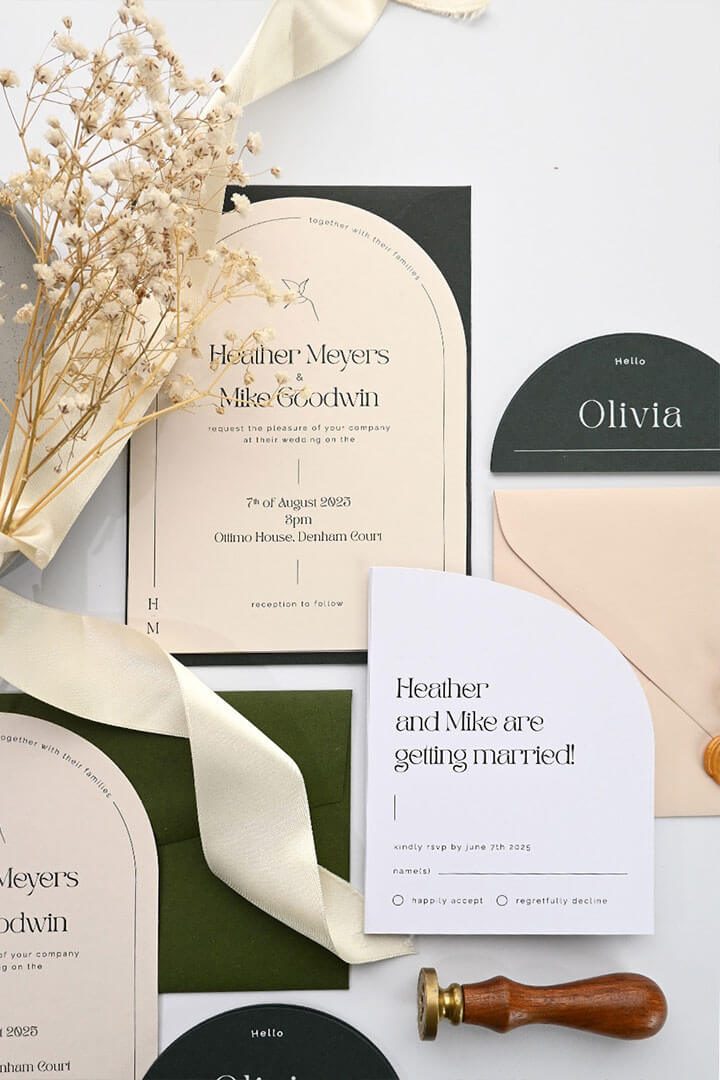
Two visual directions dominate the desert invitation space, and neither cancels out the other. The first is the pared-back approach: clean sans-serif or refined serif typography, a single arch or rounded-corner card shape, and a muted earthy palette. The card speaks quietly and lets the venue do the talking. The second direction leans into illustration: a watercolor saguaro skyline, painted canyon walls, or a botanical cactus wreath framing the couple’s names in calligraphy. Both directions are desert-authentic; your choice comes down to how your venue and overall wedding styling will feel on the day.
What ties both aesthetics together is restraint. Desert landscapes are inherently dramatic through scale and color, not through busyness. Invitation designs that try to cram in too many elements (a sunset, a cactus pattern, a floral border, and a foil monogram) end up looking cluttered rather than atmospheric. The most effective desert invitations treat negative space as part of the composition, mirroring the way the actual landscape breathes.
Paperlust’s suite of independent-artist designs includes botanical and terracotta-toned options that translate this balance well onto card stock. Browse the full wedding invitations collection to see how different styles sit across paper types and print finishes before you commit to a direction.
Design Elements: Cactus, Agave, and Sunsets
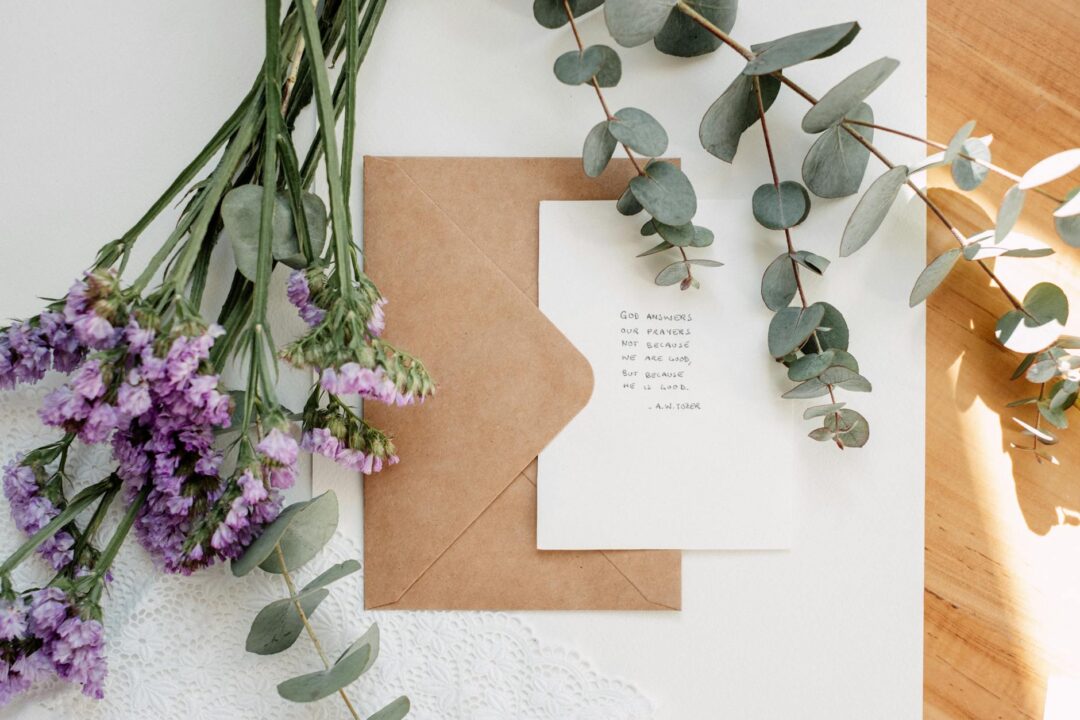
Botanical illustration is the workhorse of desert stationery design. The most popular motifs and how they tend to be used:
Saguaro and columnar cactus
Tall, structured silhouettes that read as distinctly Southwestern. These work best as small-scale line drawings flanking the ceremony details, or as a panoramic skyline illustration spanning the bottom of a portrait invitation. Watercolor washes in dusty sage or warm terracotta keep them from looking like clip art.
Agave and succulent clusters
Lower-profile plants that sit naturally at the edge of a composition. Agave rosettes in muted green and grey are a popular border element, and their sculptural quality suits both minimalist line-art and fuller watercolor treatments.
Prickly pear and cholla
The flat-padded prickly pear shape adds visual interest without height, making it useful for stationery elements like RSVP cards and information cards where you want botanical presence without dominating the text. Cholla’s spiky silhouette reads best at small scale in a suite element rather than as the hero illustration.
Watercolor sunsets and canyon skies
Gradient washes in burnt orange, rose, and lavender that evoke that specific hour before dusk in the Southwest. These work as full-bleed backgrounds on invitation cards when the typography is set in cream or white. They are also popular for envelope liners, where the gradient creates a dramatic moment on opening without competing with the front of the card.
Rock formations and canyon walls
Geometric canyon layer patterns, cliff faces, and mesa silhouettes have a modern, abstract quality that suits couples who want a desert reference without the literal cactus illustration. These lean architectural rather than botanical, which pairs well with clean serif typography and minimal decoration.
Color Palettes: Terracotta, Sand, Sage, and Rust
Desert palette work is about layering warm neutrals with a handful of accent tones rather than building contrast. The earth does not fight itself, and your invitation palette should not either. Here are the combinations that photograph well and print cleanly across the paper types most suited to desert stationery.
| Palette name | Core tones | Best for | Accent option |
|---|---|---|---|
| Sedona Sunset | Terracotta, rust, burnt sienna | Illustrated / landscape invites | Pale gold flat foil |
| Joshua Tree Neutral | Sand, warm cream, putty | Minimal / typography-led invites | Sage ink or dried botanicals |
| High Desert Sage | Dusty sage, eucalyptus, warm white | Botanical suite designs | Blush or terracotta envelope |
| Canyon Rust | Deep rust, chocolate, clay | Bold / moody desert aesthetic | White ink on dark stock |
| Sonoran Blush | Dusty pink, peach, warm blush | Romantic desert with botanical | Rose gold flat foil |
A practical note on printing: the warmth of terracotta tones can shift slightly between screen and print depending on the paper stock. Matte stocks absorb ink and produce softer, more natural tones: ideal for earthy palettes. Digital print on kraft stock naturally enriches warm terracottas because the natural brown base of the paper merges with the warm ink tones. Always request a proof before approving the full production run; Paperlust delivers designer proofs within 1-2 business days.
Wording for Desert and Southwestern Ceremonies
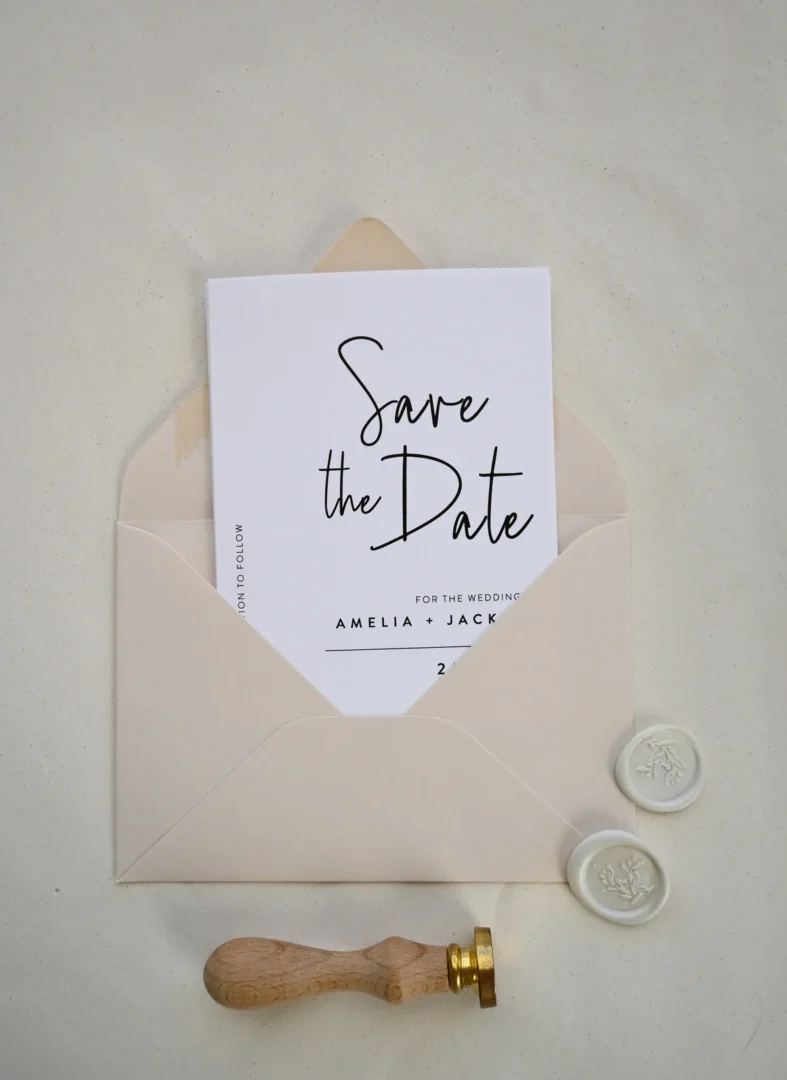
Desert ceremonies span a wide range of formality. They run from a black-tie dinner at an upscale Scottsdale resort to a barefoot sunset ceremony among the boulders at Joshua Tree. Your wording should match the actual tone of the event, not just the aesthetic of the landscape. Below are wording templates for the three most common desert ceremony formats.
Formal venue (resort, estate, luxury ranch)
Emily Grace Holloway
and
Marcus James Reyes
request the honor of your presence
at their marriage
Saturday, the fourteenth of November
Two thousand and twenty-six
at five o’clock in the evening
Camelback Inn Resort
Scottsdale, Arizona
Dinner and dancing to follow
Outdoor ceremony (Joshua Tree, Sedona, open desert)
are getting married
October 18, 2026
at golden hour
Joshua Tree, California
Directions and parking details enclosed
Dress for the desert. Layers recommended
Elopement-style micro ceremony with celebration
Now we’re celebrating with the people who matter most.
Join us for dinner
Saturday, November 7, 2026
7 in the evening
Tlaquepaque Arts Village
Sedona, Arizona
A note on dress code wording
Desert ceremonies almost always warrant a dress code note, even if it is just a suggestion. Guests often do not account for how fast temperatures drop after sunset in the desert, or how uneven some terrain can be for formal footwear. Common wording additions include:
- “Dressy casual. Heels not recommended for outdoor terrain.”
- “Desert chic attire requested”
- “Smart casual. Temperature drops significantly after sunset; layers welcome.”
- “Black tie preferred. Outdoor setting; solid footwear recommended.”
If you are hosting at a private or remote location, add directions or coordinates directly on the invitation rather than assuming GPS will be reliable. This is especially relevant for Joshua Tree and rural New Mexico venues where cell service is intermittent.
Arizona, Joshua Tree, and Sedona-Specific Considerations
Each major US desert wedding destination has distinct characteristics that should inform not just your stationery design but the practical information you communicate to guests.
Arizona (Phoenix, Scottsdale, Tucson, Sedona)
Arizona offers the widest range of desert venue types: upscale resort properties in the Scottsdale corridor, red-rock backdrop venues in Sedona, and saguaro-studded sites in the Tucson foothills. Arizona couples often include a heat advisory for summer and early fall dates (temperatures above 100 degrees Fahrenheit in June through September are common at lower elevations). Sedona specifically draws couples who want dramatic red-rock backgrounds in their ceremony photos; the terracotta and rust color palette is a direct echo of the landscape there.
Design note: Sedona venues frequently photograph with warm orange and red rock walls in the background. Invitation palettes that use competing saturated colors can look discordant with venue photography. Stick with the earth tones from your invitation palette when choosing florals and decor too.
Joshua Tree and the Coachella Valley
Joshua Tree has become one of the most-photographed US wedding locations in the past decade, with its sculptural trees, boulder fields, and otherworldly horizon lines. The aesthetic tends toward spare, modern minimalism. Couples who choose Joshua Tree tend to want their stationery to match that quality. Clean sans-serif typography, minimal decoration, and sandy or putty paper tones read more authentically here than heavily illustrated botanical suites.
Practical note: the nearest town (Twentynine Palms) has limited accommodation. Your invitation should include a hotel block or accommodation list insert, particularly if you are hosting guests from out of state. Include the link or phone number for the hotel block directly on the insert card so guests do not have to search for it.
New Mexico (Santa Fe, Taos, Rio Grande)
New Mexico desert weddings often incorporate Southwestern and indigenous art influences: geometric patterns, terracotta and turquoise pairings, and adobe-style architecture as the venue backdrop. Stationery for Santa Fe or Taos weddings can incorporate subtle geometric borders or a turquoise accent ink, which still reads as desert-authentic without leaning into cactus illustration. Note that turquoise does not print equally well across all methods; request a proof to confirm the color reads correctly on your chosen stock.
Colorado high desert
The high desert of western Colorado (the San Luis Valley, Mesa Verde surrounds, and the Grand Junction area) sits at elevation and carries cooler temperatures than Arizona or Southern California. Sage and blue-grey tones read authentically here alongside terracotta. The landscape is less immediately recognizable to most guests than saguaro or Joshua trees, so invitation illustrations tend toward geological elements (canyon layering, mesa silhouettes) rather than cactus motifs.
Paper and Finish Choices for Desert Invitations
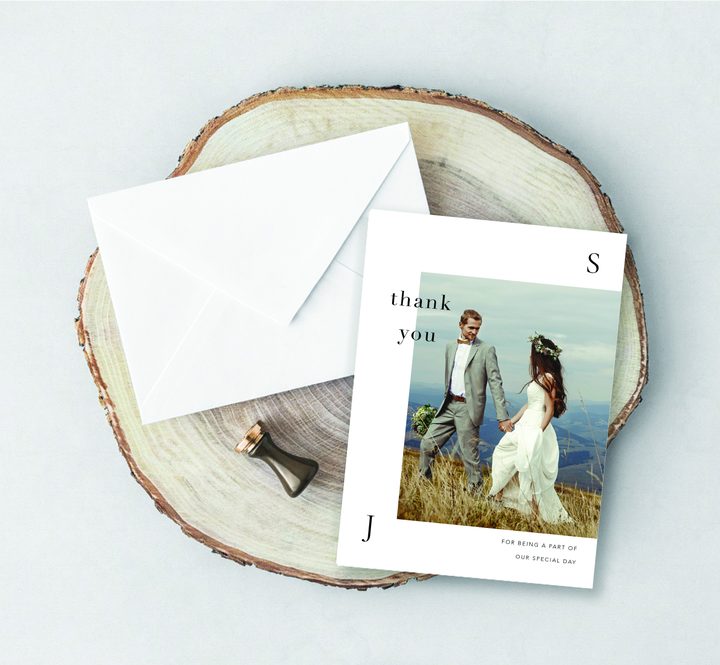
The physical feel of a desert invitation matters as much as the visual design. Here is how the main paper and finish options perform for this aesthetic and for the practical realities of desert mailing and outdoor display.
Kraft stock (290gsm)
Paperlust kraft stock is 290gsm digital paper with a warm brown base tone. It is one of the most naturally suited stocks for desert and earthy wedding aesthetics. The paper color itself does the palette work before any ink is applied. White ink prints clearly on kraft, giving you the warm-on-warm contrast that reads as artisanal and handcrafted. Digital printing in terracotta or sage on kraft adds a second warm tone layer that reinforces the desert feel. Note that kraft does not suit all colors equally. Highly saturated or cool-toned designs can look muddy on the brown base. Request a proof before committing to a full run.
Matte stock (300gsm)
Matte finish absorbs light rather than reflecting it, which suits outdoor desert settings where sunlight can create glare on glossy surfaces. For couples hosting outdoor ceremonies or displaying invitation suites in natural light (table settings, escort card displays), matte consistently photographs better than gloss. Terracotta and sage palettes reproduce softly on matte, with a slightly desaturated, sun-bleached quality that suits the aesthetic.
Flat foil on color stock
Flat foil adds metallic accent without the custom die cost of foil stamp. For desert stationery, pale gold or rose gold flat foil on a terracotta or rust color stock creates a rich combination: warm metal against warm card. Paperlust flat foil is available in gold, pale gold, rose gold, copper, and silver, among other options. The 270gsm and 500gsm color stock options give you access to genuine European colored card as the base, which produces more saturated terracotta and rust tones than a white matte stock printed in that color. Flat foil minimum order is 10 cards (or 30 for 350gsm heavyweight stock).
Letterpress on Wild Cotton (premium tactile tier)
For the premium tactile tier, letterpress on Wild Cotton (300gsm or 600gsm) combined with flat foil delivers both the pressed impression and the metallic warmth that suit a desert aesthetic. Letterpress presses ink into the paper surface; the resulting debossed impression is visible and feelable, giving the card a handcrafted quality that no digital print can replicate. Add copper or rose gold flat foil as a metallic accent over the letterpress base and the combination reads genuinely luxurious – warm metals against the cotton-textured card, catching light the way canyon walls catch the late afternoon sun. Minimum order 50 cards for letterpress; flat foil can be added to the same run.
Letterpress on Wild Cotton
Letterpress presses ink into the paper surface, creating a dimensional impression you can feel with your fingertips. On 600gsm Wild Cotton, the result is genuinely weighty and tactile. For desert weddings with a handcrafted, artisanal aesthetic (couples who want the invitation to feel like it came from a small studio rather than a mass print run), letterpress is the natural choice. The debossed impression photographs beautifully in flat lay shots and suits botanical line illustrations as well as clean typographic-only designs.
Finishing considerations for warm climates
Paper stock can soften and curl in heat and humidity. If you are storing invitations before mailing in a hot climate, keep them flat and away from direct sun. For display at outdoor events in warm weather, avoid leaving stationery in direct sunlight for extended periods. All paper stocks will fade and curl with prolonged exposure. Matte stocks are more forgiving in direct light than gloss. Heavier card weights (290gsm+) hold their shape better than lighter stocks when temperatures fluctuate.
Building a Desert Wedding Stationery Suite
A cohesive suite makes the invitation piece feel like part of a larger, considered experience rather than a standalone card. For desert weddings, the practical elements of a suite become especially important. Guests often need more information than they would for an urban venue.
Core suite components
| Suite component | What to include | Desert-specific notes |
|---|---|---|
| Main invitation | Ceremony date, time, venue name + city | Include GPS coordinates for remote sites |
| RSVP card | Reply deadline, meal choice if applicable | 6-8 weeks lead time recommended for destination |
| Information card | Accommodation, transport, schedule | Include nearest major airport + hotel block link |
| Directions insert | Turn-by-turn or map illustration | Essential where GPS is unreliable |
| Save the date | Date + location only (suite follows) | Send 9-12 months ahead for destination guests |
| Menu card | Dinner courses or reception food details | Match card stock to invitation for table cohesion |
| Place cards | Guest names, table numbers | Kraft or terracotta color stock ties back to suite |
Envelope choices that tie the suite together
Envelopes are a significant visual moment. They are the first thing guests see before the invitation itself. For desert stationery, terracotta envelopes with white ink addressing are a strong combination. Kraft envelopes with digital printing in a darker tone give a natural, artisanal feel. If your main invitation is on white or cream stock, a terracotta or rust inner envelope adds a surprise of warmth on opening.
Paperlust includes free white envelopes with every order. Colored or textured envelope upgrades are available. Pair envelope color to a secondary palette tone rather than the primary one. This creates depth without repetition across the suite.
Suite coordination at scale
When you are building a desert suite with 5-7 components, keep the following in mind:
- Use the same base stock (or at minimum, the same finish) across all printed pieces for visual consistency.
- Apply the botanical motif to 2-3 pieces maximum. Using the cactus illustration on every card dilutes its impact.
- Use 15% off when ordering 3 or more card types from Paperlust in the same order.
- Order all pieces from the same design family so the typography, color palette, and layout structure stay consistent without needing to manually match them.
Need help bringing the full suite together? Browse the wedding stationery sets collection to see coordinated suites, or explore individual components including RSVP cards and menu cards that match your invitation style.
Find your desert invitation design
500+ exclusive designs from independent artists. Proofs within 1-2 business days. Free DHL Express on orders over $350 USD.
Frequently Asked Questions
What paper stock works best for desert wedding invitations?
Kraft stock (290gsm) and matte white stock (300gsm) are the two most popular options for desert aesthetics. Kraft gives you a warm natural base that reinforces earthy palettes without extra ink. Matte avoids glare in outdoor settings and produces softer, sun-bleached terracotta tones. For maximum tactile luxury, Wild Cotton (300gsm or 600gsm) suits letterpress and flat foil treatments. The right choice depends on your print method and palette. Paperlust can send a $5 sample pack so you can feel the difference before ordering.
What print method suits a cactus or botanical illustration best?
Digital print handles watercolor-style botanical illustrations most faithfully because the full-color inkjet process can reproduce gradient washes and fine detail. Letterpress suits clean line drawings at larger sizes where the debossed impression adds a tactile element. Flat foil works well as an accent over a digitally printed botanical design. For example, a gold flat foil monstera or cactus outline on top of a terracotta digital base creates real impact. Foil stamp requires a custom die, so it suits designs with clearly defined shapes rather than soft watercolor washes.
How far in advance should I send desert wedding invitations?
For local Arizona, Southern California, or Colorado guests, 8-10 weeks before the wedding date is standard. For destination weddings where guests are traveling from out of state or internationally, send 12-16 weeks ahead. Send save the dates 9-12 months before the event for destination weddings. This gives guests time to book flights and accommodation before hotel blocks expire. Desert venues often fill quickly for peak autumn season dates (October and November in Arizona), so earlier saves-the-dates give guests more scheduling flexibility.
Can I include GPS coordinates or directions on a desert wedding invitation?
Yes, and for remote desert locations it is strongly recommended. Some Joshua Tree and rural New Mexico sites are not reliably mapped by GPS applications, or the coordinates that come up are for a nearby road rather than the venue entrance. A small directions insert or information card with written turn-by-turn directions is a practical addition to your suite. You can also include a custom map illustration as the insert card design. This is a popular choice for desert weddings at off-the-beaten-path venues.
What color envelopes go with terracotta invitations?
Terracotta invitations pair naturally with white, cream, or sand envelopes for a classic look, or with a deeper rust or chocolate envelope for a more dramatic, tonal effect. If you want contrast, a sage or eucalyptus green envelope against terracotta card stock is a popular combination in the desert palette family. Paperlust includes free white envelopes with every order; colored envelope upgrades are available. For a distinctive unboxing moment, consider a watercolor sunset envelope liner that extends the desert illustration to the inside of the envelope.
Does Paperlust ship to Arizona, California, and New Mexico?
Paperlust ships to all US states via DHL Express. Orders over $350 USD qualify for free DHL Express shipping. US delivery is 2-4 business days in transit after production and dispatch. Production time varies by print method: digital print takes approximately 8-10 business days; flat foil approximately 12-15 business days; letterpress approximately 20 business days. Plan your order timeline from the production start date, not just the shipping date.
Can I get a sample before ordering my full desert wedding invitation suite?
Yes. Paperlust offers a $5 sample pack that includes 7 designs across different print methods, so you can see and feel the card stock, print quality, and finish options before committing to a full order. A $20 full swatch kit includes all available paper stocks. If you want to proof your exact design, a $15 custom sample is available for most print methods (not available for letterpress). Paperlust also provides designer proofs within 1-2 business days of placing your order, with two rounds of edits included at no extra charge.
What size should desert wedding invitations be?
The most common size for wedding invitations is 5 x 7 inches (approximately 127 x 178mm), which fits a standard A7 envelope. Arch-shaped or rounded-corner cards use the same overall footprint but add a distinctive silhouette that suits the organic, natural quality of a desert aesthetic. Square invitations are also popular for minimal, modern desert designs. DL format (99 x 210mm) provides a tall, slim card that can be mailed in a standard DL envelope. The distinctive proportion pairs well with portrait-format botanical illustrations.