
Setting your RSVP deadline is one of those wedding planning details that seems simple until you’re staring at a blank calendar and second-guessing every choice. Get it right, and you hand off your final headcount to the caterer without breaking a sweat. Get it wrong, and you spend the week before your wedding chasing down responses instead of enjoying it. This guide walks you through exactly when to set the deadline, how to word it on the card, and what to do when guests ignore it anyway.
- Set your RSVP deadline 3-4 weeks before the wedding, not on the wedding date itself.
- Mail invitations 6-8 weeks out for a local wedding; 10-12 weeks for destination or holiday dates.
- Word the date as “Kindly reply by [Month Day]” or “Please respond by [Month Day]” for clarity.
- Send a polite follow-up 2-3 days after the deadline passes for non-respondents.
- Have a firm cutoff script ready for guests who miss the window by more than a week.
- Your caterer and venue typically need your final count 1-2 weeks before the event – that is why the deadline must be earlier than it feels.
How Far Out Should Your RSVP Deadline Be?
The RSVP deadline you print on the card is not your actual final-headcount date – it is a buffer that gives you time to chase stragglers and still deliver accurate numbers to your vendors. That distinction matters enormously in practice.
The standard window: 3-4 weeks before the wedding
Industry-wide consensus lands at 3-4 weeks before your wedding date. This window works because:
- It gives you 1-2 weeks to follow up with non-responders before you need final numbers.
- Most caterers and venues need a final headcount 7-14 days before the event.
- It gives your stationer time to print escort cards, menu cards, and seating charts if you are ordering those items after the guest list is confirmed.
When to go earlier: 5-6 weeks out
Push the deadline further out if any of the following apply:
- Destination wedding: Guests need to book travel. An early deadline lets you confirm block-room releases and transportation logistics.
- Holiday weekend wedding: Hotels fill fast. A 5-6 week deadline protects your room block and gives guests urgency to commit.
- Catering style requires early planning: Plated dinners with meal choices or elaborate tasting menus often need a 3-week catering lead on top of your seating-chart production window.
- Large guest list (150+): More guests means a longer follow-up window. Build in extra time.
When to keep it at 3 weeks: smaller, simpler events
If your wedding is under 75 guests, local, and using a buffet or stations-style reception, three weeks before the date is plenty. You will still have time to chase the holdouts and finalize numbers without the deadline feeling punishingly early for guests.
Invite timing feeds everything
Your RSVP deadline is only workable if your invitations go out on time. The general rule:
| Wedding type | Send invites | RSVP deadline |
|---|---|---|
| Local / standard | 6-8 weeks before | 3-4 weeks before |
| Destination or holiday | 10-12 weeks before | 5-6 weeks before |
| Elopement / micro (under 20) | 4-6 weeks before | 2-3 weeks before |
How to Word the RSVP Date on Your Invitation
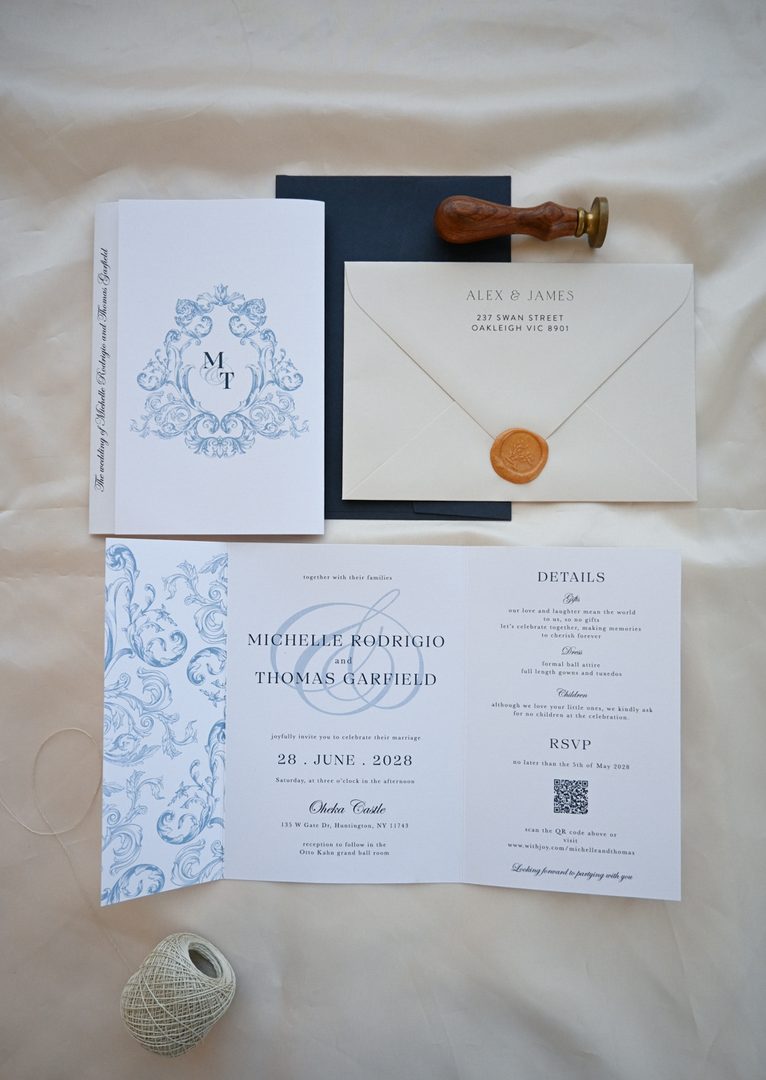

The wording on your RSVP card does two jobs: it tells guests the deadline clearly, and it signals the tone of your wedding. Formal events call for formal phrasing; relaxed celebrations can loosen up. Whatever you choose, keep it unambiguous.
Classic and formal options
Modern and semi-formal options
Playful and casual options
What not to write
Avoid these common mistakes when wording the RSVP date line:
- Do not use the wedding date as the RSVP deadline. “Please reply by October 4th” when October 4th is your wedding day gives guests zero buffer time and leaves you scrambling at the venue.
- Do not be vague. Phrases like “as soon as possible” or “at your earliest convenience” invite procrastination. Always use a specific calendar date.
- Do not hide the deadline in fine print. The RSVP date line should be one of the most legible elements on the card. If your designer buries it in a small font at the bottom, ask them to bump it up.
For a deeper dive into the full range of wording styles, see our guide: Wedding RSVP Deadline: The Complete Guide.
What Happens If You Set the Deadline Too Early or Too Late
Finding the right window matters because errors in either direction create real problems.
If you set the deadline too early
A deadline that is 8-10 weeks before the wedding feels aggressive to guests. You will likely see:
- Lower initial response rates. Guests who have not yet checked their schedules will put the card aside and forget about it.
- More changes after the deadline. Guests who do respond early are more likely to change their plans closer to the date. You lose the certainty you were trying to create.
- Inflated follow-up workload. Ironically, a very early deadline does not reduce chasing – it just moves the chasing earlier and adds a second round closer to the event.
If you set the deadline too late
A deadline that is only 1-2 weeks before the wedding leaves no buffer:
- You cannot finalize seating arrangements on time. Escort cards, printed seating charts, and name-card orders all need production lead time.
- Caterers get an inaccurate count. Most venues charge a per-head minimum based on the guaranteed count you provide. A late deadline means your best-guess count costs you.
- You are stressed at exactly the wrong time. The week before your wedding should be for final fittings and rehearsal dinners – not texting your Aunt Karen at midnight.
How to Follow Up with Guests Who Haven’t Responded
No matter how clearly you word the deadline, some guests will not respond by it. That is not a personal slight – it is just how people work. A polite, systematic follow-up approach handles the stragglers without damaging relationships.
Step 1: Wait 2-3 days after the deadline before reaching out
Do not chase the moment midnight passes. Give guests a short grace window. On day two or three, compile your non-response list from your tracking spreadsheet and begin outreach.
Step 2: Choose the right channel for each guest
Match your follow-up method to your relationship with the guest:
- Close family / wedding party: Phone call or in-person conversation. Keep it warm: “We want to make sure we have your meal choice confirmed. Are you and [partner] coming?”
- Friends: Text or DM. Casual and brief.
- Older relatives or colleagues: Phone call or email. Some guests genuinely feel uncomfortable with texts from a number they may not have saved.
- Plus-ones you don’t know well: Route through your guest. “Can you check with [guest] on whether their plus-one is confirmed?”
Step 3: Ask a direct yes/no question
Open-ended messages generate open-ended delays. Phrase your follow-up as a direct question requiring a simple answer:
For a full suite of follow-up message templates and scripts, see our companion guide: How to Follow Up on a Wedding RSVP: Scripts That Actually Work.
Managing Late RSVPs: Scripts for Awkward Conversations
Some guests will attempt to RSVP after your deadline has passed, sometimes well after. How you handle these situations depends on where you are in the planning timeline when they surface.
Late RSVP received before you have submitted final numbers
If you still have a few days before your caterer or venue deadline, you may be able to accommodate a late response. Do not feel obligated to, but if the guest is important to you and the timing works, simply accept it without comment.
Late RSVP received after you have submitted final numbers
This is the harder scenario. Be honest about the constraint while staying warm:
The “I assumed I was invited” conversation
Occasionally a guest who was not on the list reaches out expecting an invitation. This is rare, but when it happens:
- Do not apologize or over-explain. A brief, warm response is kinder than a long one.
- Do not blame venue size or budget directly – keep it simple: “We had to keep the guest list very intimate.”
- Offer to celebrate in another way if the relationship warrants it: a dinner after the honeymoon, a housewarming later in the year.
The serial non-responder
After two follow-up attempts with no reply, it is reasonable to count that guest as a “no” and finalize your numbers accordingly. You are not required to hold a seat indefinitely. If they contact you later, use the late-RSVP scripts above.
Catering and Venue RSVP Requirements You Need to Know
The logistics behind why RSVP deadlines matter are driven almost entirely by your catering and venue contracts. Understanding these requirements lets you set a deadline that is firm for a real reason – which also makes it easier to explain to guests why you cannot extend it.
Guaranteed guest count
Most venues require a “guaranteed minimum” headcount 7-14 days before the event. This is the number they will charge you for, even if fewer guests actually attend. Confirm the exact date with your venue and work backwards from there to set your RSVP deadline.
Meal choice collection
Plated dinners with pre-selected entrees require an even longer lead time. Your caterer needs to order ingredients, prep proteins, and staff accordingly. If you are serving a plated menu, your effective RSVP deadline is at least 3-4 weeks out – sometimes more. Check your catering contract for the specific meal-choice cutoff.
Dietary restrictions and allergies
Your RSVP card should include a line for dietary restrictions and serious allergies, especially if you are offering a plated or buffet menu with allergen-present dishes. Collect this information at the RSVP stage so your caterer can plan. Do not rely on guests flagging allergies on the night.
Staffing ratios
Catering staff are booked based on headcount. A significant difference between your quoted count and your actual attendance affects service ratios. Most venues have a policy for guest count changes within a certain window – ask them at your initial planning meeting so you are not surprised.
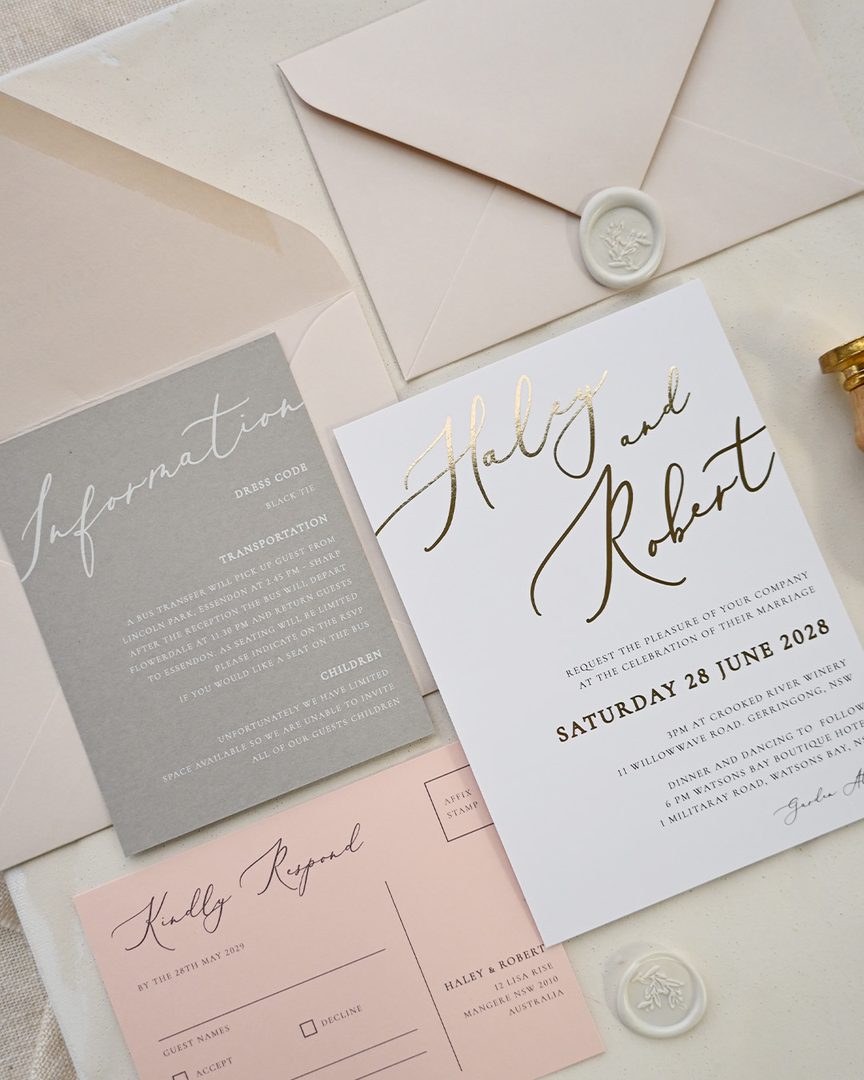
Table and seating chart production
If you are ordering printed wedding stationery for the reception – escort cards, table name cards, or a printed seating chart – factor in production and shipping time on top of your headcount deadline. Paperlust designer proofs are delivered within 1-2 business days of placing your order, with US delivery in 2-4 business days after dispatch via DHL Express. If you are ordering after the RSVP deadline closes, plan accordingly.
RSVP Deadline FAQ
When should the RSVP deadline be for a wedding?
Set your RSVP deadline 3-4 weeks before the wedding date. This gives you time to follow up with non-respondents and still deliver your final headcount to the caterer and venue at least 1-2 weeks before the event. For destination weddings or weddings on holiday weekends, push the deadline to 5-6 weeks before the date.
Is it rude to set an early RSVP deadline?
A deadline that is 3-4 weeks before the wedding is not rude – it is standard. Setting it 8-10 weeks out, however, can frustrate guests who have not yet confirmed their schedules. If your venue or caterer genuinely requires an early headcount, include a brief note explaining this on your invitation or wedding website so guests understand the reason.
How do you word the RSVP date on the invitation?
Use a specific calendar date, not vague language. “Kindly reply by August 22, 2026” and “Please respond by August 22nd” both work well. For formal invitations, you can spell out the date in full: “Kindly reply by the twenty-second of August, two thousand and twenty-six.” Avoid setting the deadline on the wedding date itself.
What do you do when guests don’t RSVP by the deadline?
Wait 2-3 days after the deadline passes, then reach out personally. Match your method to the relationship: phone call for close family, text or DM for friends, email or phone for older relatives. Ask a direct yes/no question rather than an open-ended one to prompt a fast reply.
Can you add guests after the RSVP deadline?
If you have not yet submitted your final headcount to the caterer or venue, you may be able to accommodate a late yes. Once you have submitted final numbers, adding guests requires checking with your venue about flexibility – most have a policy on this. It is reasonable to tell late responders that you need to check before confirming.
Should RSVP deadline be before or after the wedding?
Always before the wedding – ideally 3-4 weeks before. An RSVP deadline that falls on or after the wedding date is not a deadline at all. The purpose of the deadline is to give you confirmed numbers in time to finalize catering, seating, and stationery orders before the event.
How long should guests have to RSVP?
Most couples send invitations 6-8 weeks before the wedding and set the RSVP deadline 3-4 weeks before. That gives guests roughly 2-5 weeks to respond from the time they receive the invitation, which is a reasonable window for most people to check their calendars and confirm their plans.
What is good etiquette when following up on an RSVP?
Wait a couple of days past the deadline before reaching out. Keep your message warm and brief. Ask a direct yes/no question. Reach out privately – do not post a public reminder on social media. Give the guest one or two days to reply before following up a second time. After two attempts with no response, it is reasonable to count that guest as a no and finalize your numbers.
Do you need a separate RSVP card, or can guests reply online?
Both work. A printed RSVP card mailed back with a pre-addressed envelope is traditional and still preferred for formal weddings. Online RSVPs via your wedding website work well for modern and casual events. Many couples use both – a printed card for older guests and an online option for those who prefer digital. If you go the online-only route, print the URL or QR code clearly on your invitation.
How do you handle guests who RSVP yes and then cancel?
Thank them for letting you know. If they cancel before your final headcount submission, update your numbers. If they cancel after your caterer has been finalized, note that you may still be charged for their place. Keep the response gracious – plans change and people appreciate not being made to feel guilty about it. You can ask them to celebrate with you separately after the wedding if the relationship warrants it.
Set your deadline, then make replies easy with matching RSVP cards. Browse our invitation suites, or order a $5 sample pack to test the paper first.
Browse Wedding InvitationsOrder $5 Sample PackReady to design your RSVP cards?
Browse hundreds of designs – from classic letterpress to modern flat foil – and get a designer proof within 1-2 business days.