

Australia |
United States |
United Kingdom |
Canada |
New Zealand
Laser cut wedding invitations are one of the most-searched premium stationery styles right now. The intricate cutwork, sculptural shapes, and layered designs create an impression no standard flat card can match. This guide covers what the laser cut look is, what it costs, and exactly how to get that same elevated aesthetic with Paperlust’s die-cut, flat foil, letterpress, and vellum options, without the long lead times or specialist vendors.
- Laser cutting uses a computer-guided beam to cut intricate patterns directly into cardstock, vellum, or acrylic. Paperlust does not offer laser cutting, but our die-cut, flat foil, and letterpress options deliver comparable luxury.
- Laser cut invitations typically cost $4 to $12+ per card with lead times of 3 to 6 weeks and minimums of 50 to 100 cards.
- Paperlust’s arch-shaped die-cut invitations capture the defining shaped-card look. Combine with flat foil or letterpress for the full tactile effect.
- Flat foil starts from $5.50 per card, minimum 10 cards, with designer proofs in 1 to 2 business days.
- Letterpress on 300gsm or 600gsm Wild Cotton delivers a pressed, three-dimensional result, the closest tactile match to what makes laser cut invitations feel special.
- Free DHL Express shipping on orders over $350 USD.
Get the Laser Cut Look with Paperlust
Paperlust does not offer laser cutting as a print method. What we do offer delivers the same defining qualities couples are drawn to: shaped cards, tactile depth, metallic brilliance, and translucent vellum layers. Here is how each method maps to the laser cut aesthetic.
Arch and die-cut shaped invitations
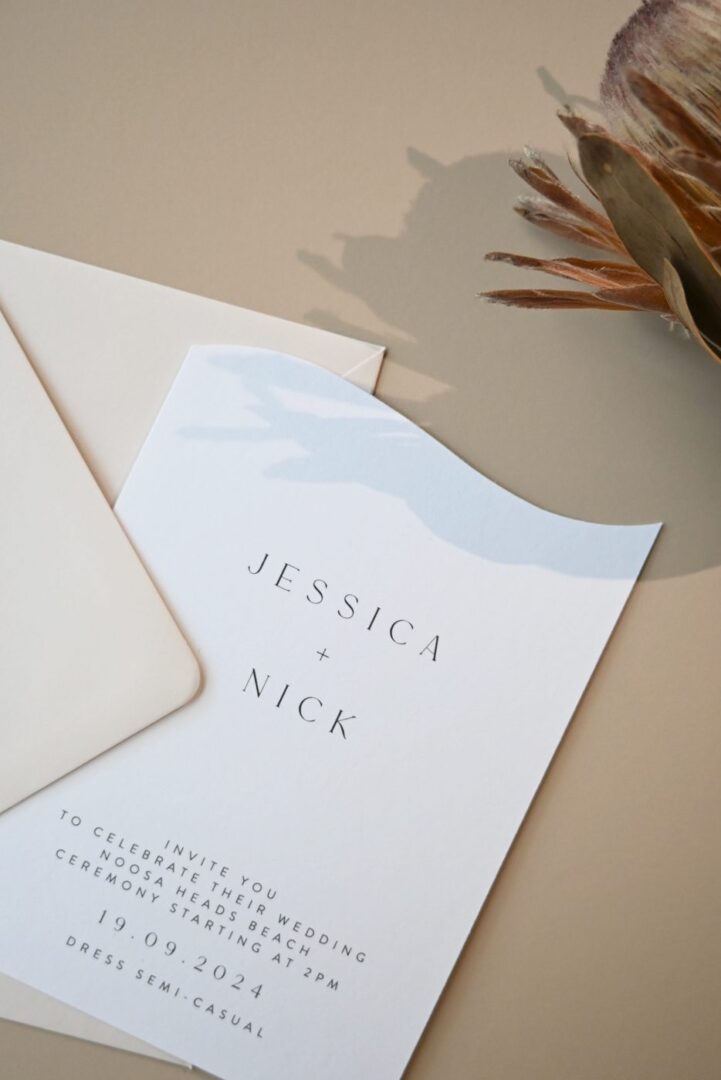
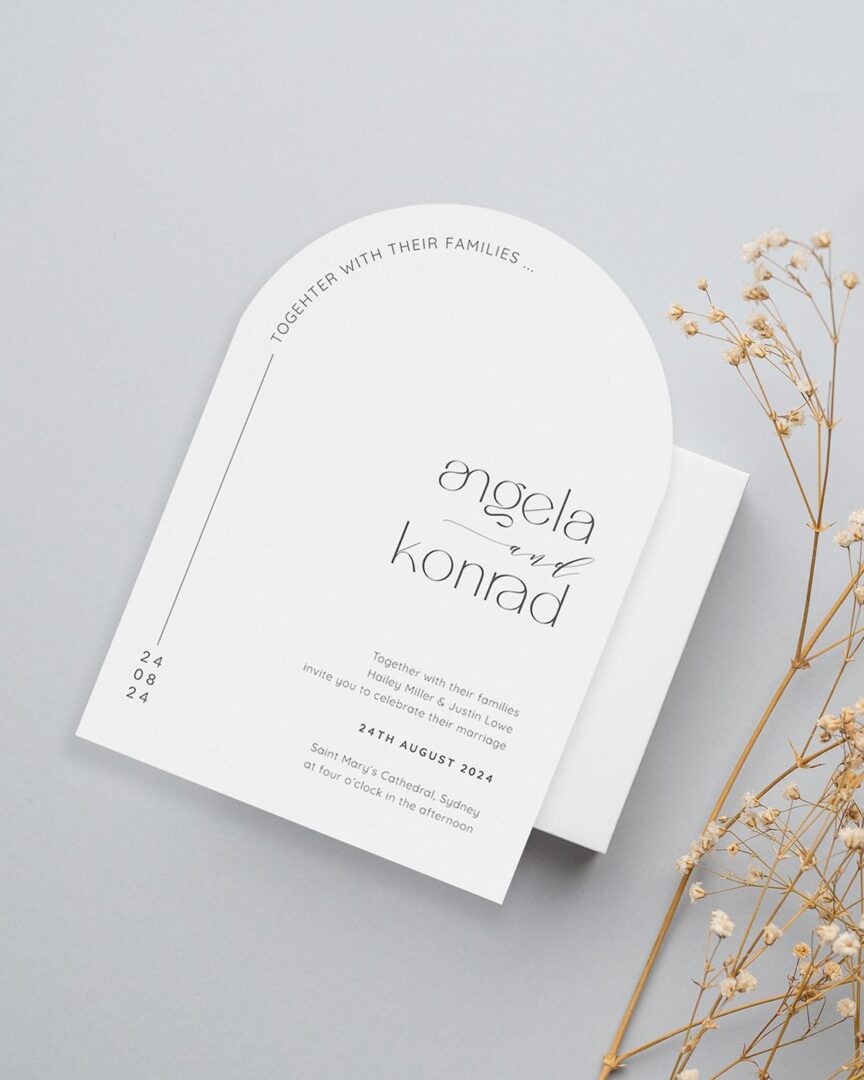
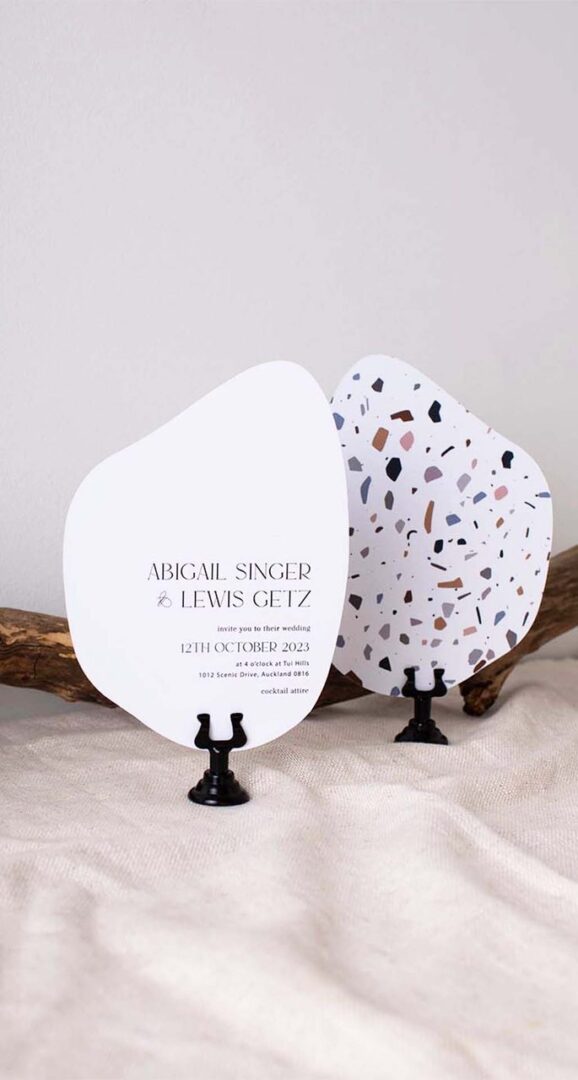
The arch-top card is the single most recognizable laser cut shape in 2026, and it is equally available as a standard die-cut. Paperlust’s die-cut wedding invitations include arch, oval, and custom-contour shapes across all print methods. You get the silhouette without laser-specific minimums or lead times.
Flat foil: the metallic brilliance of laser cut suites
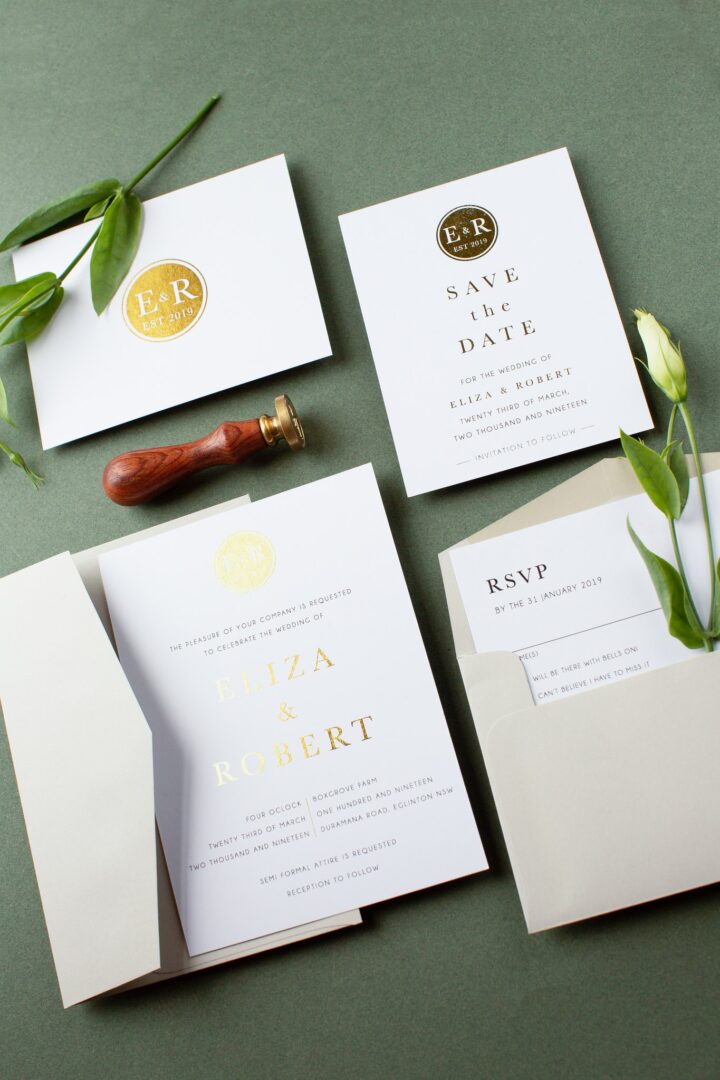
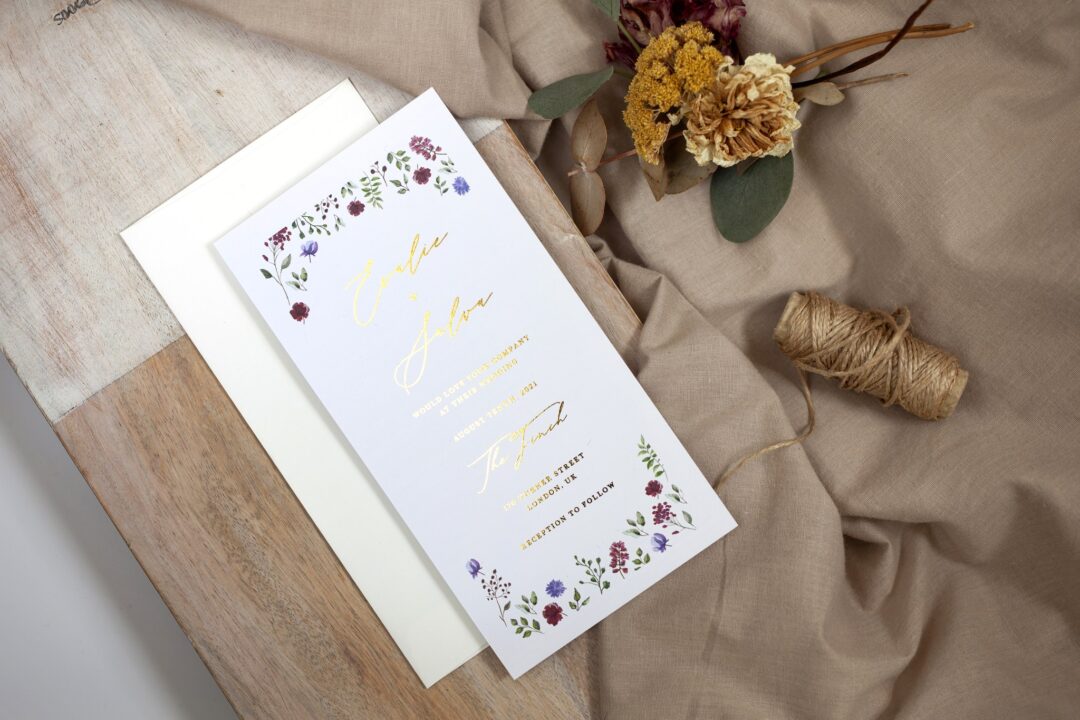
Laser cut invitations are almost always paired with metallic printing because the plain card face needs contrast against the intricate cutwork. Paperlust’s flat foil wedding invitations apply a mirror-bright metallic layer directly to the card surface. No custom die required. Available in gold, pale gold, rose gold, silver, copper, red, green, blue, hot pink, and holographic finishes. Minimum 10 cards (30 on 350gsm Heavyweight). Proofs in 1 to 2 business days.
Letterpress: tactile depth that rivals any cut technique
The reason laser cut invitations feel special is weight and dimension. Letterpress presses design and type directly into 300gsm or 600gsm Wild Cotton paper under significant pressure, creating a debossed impression you can see and feel. On Wild Cotton Double Thick (600gsm), the result is genuinely keepsake-quality, noticed immediately at touch. Production takes approximately 20 to 23 business days. Explore letterpress wedding invitations.
Vellum overlays
A vellum sleeve placed over a printed backing card is one of the fastest-growing combinations. Paperlust offers vellum as a paper option, allowing couples to layer a translucent element over the invitation text card. The layered effect is visually striking, and more structurally robust than single-sheet laser cut lace.
Foil stamp
For couples who want both metallic brilliance and a pressed, tactile impression, foil stamp combines a mirror-bright foil with a debossed effect from a custom die. Minimum order 50 cards. Available on Wild Cotton and specialty textured stocks. Foil stamp and flat foil are two distinct products: flat foil has no custom die and lower minimums; foil stamp leaves a debossed impression and requires a die setup.
Invitations start from $2.04 per card for digital print, with 500+ exclusive designs from independent artists. Proofs arrive within 1 to 2 business days with two rounds of edits at no extra cost.
What Laser Cut Wedding Invitations Actually Look Like
Laser cutting is a subtractive process: a computer-guided beam burns or vaporizes material along precise cut lines, producing intricate patterns, shaped edges, and openwork designs that cannot be achieved by ink printing alone. A single card can take two to five minutes to cut, which is why per-unit costs and lead times are high.
The defining visual qualities: shaped card silhouettes, cut-through botanical or geometric patterns, layered constructions with a backing card and cut overlay, and translucent vellum sleeves. These are the elements couples are searching for. Every one of them is achievable through Paperlust’s die-cut, flat foil, letterpress, and vellum options.
Laser cut also has real constraints: intricate designs that remove more than 40% of the card surface become structurally fragile, mailing requires hand canceling and inner envelopes, and complex multi-layer construction adds cost. The minimalist direction in 2026 (a single arch cut, one botanical accent) narrows the gap between laser-specific production and what standard die-cut can deliver.
Popular Laser Cut Styles for 2026
Arch and shaped cards
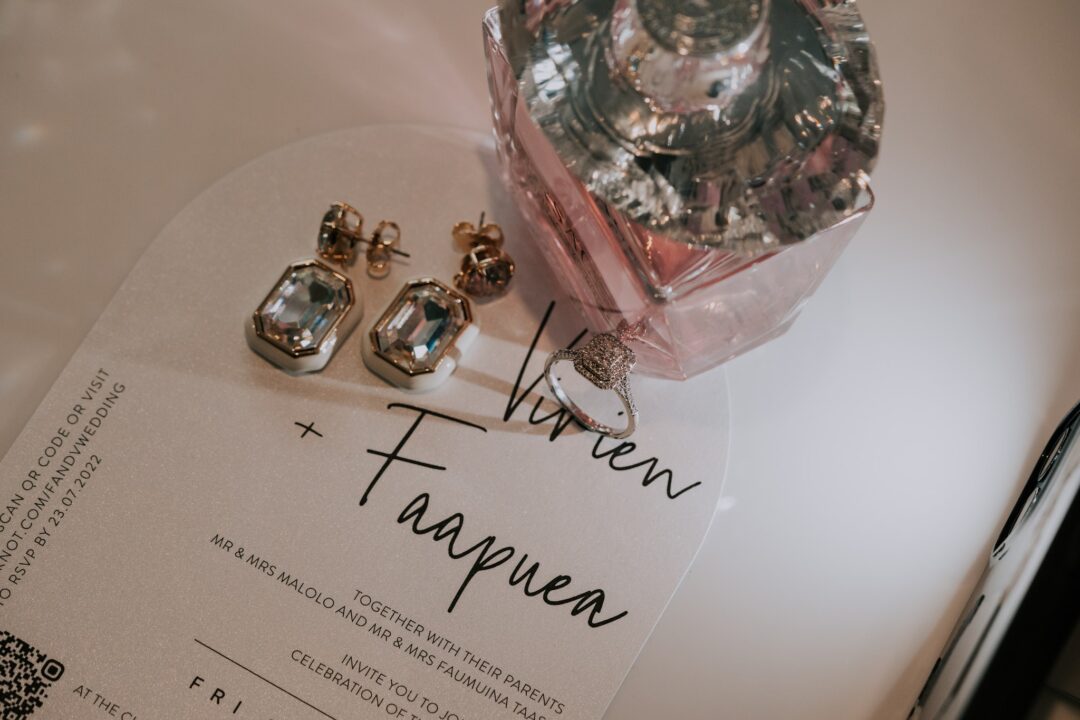
The arch-top invitation is the dominant shaped format in 2026. A single clean arch at the top of the card delivers a distinct, contemporary look without full lace cutting. This format works equally well with die-cutting, making it the most accessible entry point into the laser cut aesthetic. Paperlust’s arch die-cut collection covers this exact silhouette across digital, flat foil, and letterpress print methods.
Botanical restraint
Rather than a full-card floral lace border, the 2026 direction uses a single botanical element: a fern frond from one corner, a sprig of eucalyptus as an accent, or a minimal wreath framing the top of the card. Laser cut renditions of these motifs are popular with boutique studios; flat foil or letterpress botanical designs from Paperlust achieve the same visual result on a tighter timeline.
Vellum overlays
A vellum sleeve or overlay placed over a printed backing card is one of the fastest-growing laser cut constructions. The cut vellum sits above the invitation text, creating a translucent layered effect. Paperlust’s vellum paper option replicates this exactly: vellum over a letterpress or flat foil backing card creates the same layered visual with better structural integrity.
Mixed-method suites
Laser cut toppers paired with foil printing on the backing card represent the current high point for premium invitations. The shaped or cut element provides dimension; the foil adds metallic brilliance. Paperlust’s flat foil or foil stamp on arch die-cut achieves the same combination without the specialist laser vendor or extended production window.
Laser Cut vs. Die Cut: What Is the Difference?
| Laser Cutting | Die Cutting | |
|---|---|---|
| How it works | Computer-guided laser beam burns along cut lines in a digital file | Custom metal die stamped through paper under pressure |
| Design flexibility | Very high: any shape or interior pattern from the same machine | Limited to the specific die shape; arch and oval dies widely available |
| Edge finish | May show slight scorching at cut edges | Clean, sharp edges with no heat discoloration |
| Minimum quantity | Often 50 to 100 cards; small runs are expensive per unit | 10 cards minimum (Paperlust flat foil die-cut); lower per-unit cost |
| Interior cut-outs | Yes: complex lace, botanical cut-throughs, windows | Shaped outer edge only; no interior cut-outs |
| Typical lead time | 3 to 6 weeks from proof approval | 5 to 7 business days (digital die-cut); 7 to 10 (flat foil); 20 to 23 (letterpress) |
| Best for | Intricate lace patterns, complex interior cut-outs, custom shapes | Arch, oval, hexagon silhouettes; cleaner production at scale |
The key distinction: laser cutting can produce interior cut-outs and complex lace patterns anywhere on the card. Die cutting shapes the outer edge only. For couples drawn to the arch silhouette or the shaped-card format rather than intricate internal patterns, die-cut is the direct, faster, and more affordable equivalent.
What Laser Cut Invitations Cost (And Why the Paperlust Route Competes)
Laser cut invitations carry a premium because each card takes two to five minutes of machine time plus a separate print step for any text or color. Pricing by supplier type:
| Supplier Type | Laser Cut Price Per Card | Notes |
|---|---|---|
| Budget / mass-market (Etsy resellers, overseas) | $0.80 to $2.50 | Limited customization; quality varies significantly |
| Mid-range online stationer | $2.50 to $5.00 | Pre-made templates; some personalization |
| Full-service premium stationer | $5.00 to $12.00+ | Custom designs, professional designer, premium materials |
| Bespoke boutique studio | $12.00 to $25.00+ | Fully custom, multi-layer construction, specialty materials |
Suite pricing adds up quickly. Most couples apply laser cutting to the invitation only, then use standard digital printing for RSVP and details cards to manage total cost. A full suite with a laser cut invitation and digitally printed inserts typically runs $8 to $18 per suite at mid-range suppliers, before mailing costs.
By comparison, a Paperlust flat foil arch invitation starts from $5.50 per card with a minimum of 10. On 380gsm Premium or 350gsm Heavyweight stock, it photographs and handles at the same luxury tier as a mid-range laser cut invitation, with no setup die cost and proofs in 1 to 2 business days.
Letterpress from Paperlust carries higher per-card cost but similar suite pricing to a mid-range laser cut order, with the advantage of being produced in our Melbourne studio on 300gsm or 600gsm Wild Cotton rather than outsourced to a laser specialist.
Mailing: What to Know for Shaped and Layered Suites
Whether you go laser cut or die-cut, layered suites have practical mailing requirements that apply equally to both:
- Envelope size: Shaped and layered suites need a larger envelope than the nominal card size. The assembled suite is thicker and cannot be bent or creased.
- Hand canceling: Ask your post office to hand cancel rather than run the suite through automated sorting machines. This applies to any structured or shaped invitation, not just laser cut. No additional charge in most cases.
- Weight and postage: Multi-layer suites with ribbon, wax seal, inner and outer envelope often exceed standard letter weight. Weigh a complete sealed sample before purchasing postage for the full run. Non-machinable surcharges may apply ($0.41 USPS surcharge for first-class non-machinable mail).
- Inner envelope: A protective inner sleeve around the invitation card adds protection for any structured suite. Most full-service stationers, including Paperlust, include white envelopes with every order.
Laser Cut Wedding Invitation FAQs
Does Paperlust offer laser cutting?
No. Paperlust does not offer laser cutting as a print method. Our premium alternatives are die-cut and arch-shaped invitations (same shaped-card aesthetic), flat foil (mirror-bright metallic treatment, minimum 10 cards, from $5.50 per card), letterpress on 300gsm or 600gsm Wild Cotton (pressed tactile impression), and vellum overlays. These options collectively cover the defining qualities of the laser cut look on faster timelines and with more design variety.
What is the closest Paperlust alternative to a laser cut invitation?
For the shaped-card look: arch die-cut in flat foil. This combination delivers the distinctive silhouette, metallic brilliance, and premium paper weight that define the high end of the laser cut market. For tactile depth over metallic shine: letterpress on Wild Cotton paper. Browse die-cut wedding invitations and flat foil wedding invitations to compare options.
How much do laser cut wedding invitations cost?
Laser cut invitations run $2.50 to $5.00 per card at mid-range online stationers and $5.00 to $12.00+ at full-service studios. A full suite (invitation, RSVP, details card) typically costs $8 to $18 per suite at mid-range suppliers. Per-card cost is higher than standard digital print because each card requires individual machine time. Paperlust flat foil arch invitations start from $5.50 per card and are competitive on suite pricing with mid-range laser cut options.
How far in advance should I order laser cut invitations?
Order at least 8 to 10 weeks before your send date. Production runs 3 to 6 weeks from proof approval, and you need buffer for proof revisions and mailing time. If your timeline is under 6 weeks, premium flat foil or letterpress from Paperlust is a faster alternative: proofs in 1 to 2 business days, digital die-cut production in 5 to 7 business days, flat foil in 7 to 10 business days, letterpress in approximately 20 to 23 business days.
What is the difference between laser cut and die cut invitations?
Laser cutting uses a computer-guided beam to burn cut lines into the card, enabling intricate interior patterns, lace cutwork, and complex shapes. Die cutting uses a metal blade stamped through paper to produce shaped outer edges: arch, oval, hexagon. Laser cutting can produce interior cut-outs and complex patterns anywhere on the card. Die cutting shapes the outer edge only, but delivers cleaner edges with no heat discoloration and is available at lower minimums. For couples drawn to the arch or shaped silhouette specifically (rather than complex interior patterns), die-cut is the direct equivalent.
Can I add foil or letterpress to a shaped invitation?
Yes. Paperlust’s die-cut and arch invitations are available with flat foil, foil stamp, letterpress, metallic, and digital print methods. The combination of arch die-cut with flat foil is one of the strongest visual matches to a premium laser cut invitation with metallic printing. Browse the full wedding invitation collection to filter by shape and print method.
Ready to find your perfect invitation?
Browse 500+ exclusive designs across letterpress, flat foil, die-cut, and digital print methods.