
- The six main invitation styles in 2026 are: classic, romantic, modern minimalist, bohemian, dark romance, and destination.
- Print method shapes the style more than any design element – letterpress reads heritage, foil reads luxury, digital reads versatile.
- Paper choice matters: Wild Cotton (300-600gsm) is the letterpress stock; Kraft suits rustic and bohemian; dark colour stock defines the moody dark-romance aesthetic.
- Foil colors available include gold, rose gold, silver, copper, holographic, and several bold options – matching foil to your wedding palette is part of the design process.
- Paperlust has 500+ designs from independent artists; filter by style, color, and print method to find your match.
Your wedding invitation is a preview – one small rectangle of paper that tells guests whether they’re walking into a candlelit cathedral, a sun-drenched vineyard, or a backyard celebration under string lights. Choosing a style that genuinely reflects your wedding’s atmosphere matters, and it’s more involved than simply picking a design you like on a screen. This guide walks through the major wedding invitation styles, the print methods and papers that define each one, and how to make a decision that holds up beautifully in person.

How to Identify Your Wedding Invitation Style
Before exploring individual styles, answer three questions:
- What is your venue? – Ballrooms call for formality; gardens call for softness; barns call for texture and warmth.
- What is your color palette? – Ivory and sage read differently from black and gold; blush and dusty rose from navy and white.
- What impression do you want guests to have before they arrive? – “This is a formal, once-in-a-lifetime event” reads differently from “Come as you are, this is going to be beautiful and relaxed.”
Style is not about following a trend. It’s about visual consistency between your invitations and the experience your guests will have on the day. When those two things align, the invitation works.
- Ballroom / formal venue + neutral palette: Classic or romantic letterpress
- Outdoor garden or vineyard + floral palette: Romantic or botanical digital print or flat foil
- Industrial loft or gallery space + minimal palette: Modern minimalist digital or metallic
- Barn or winery + warm earth tones: Bohemian or rustic – kraft paper, white ink, or digital
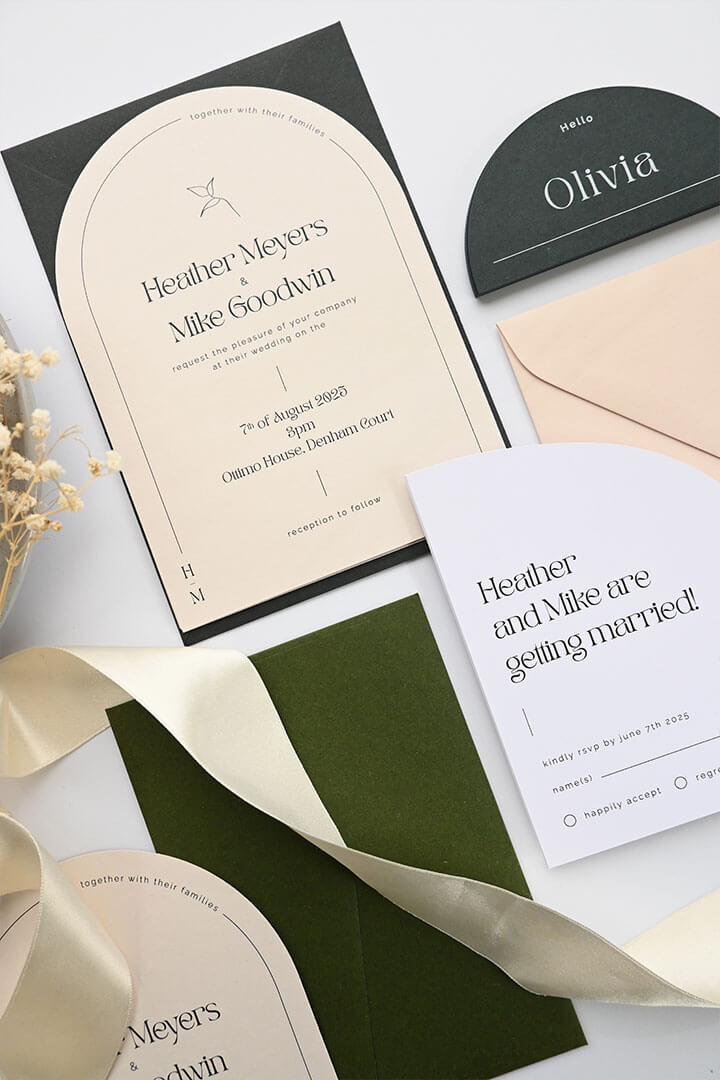
- Evening ballroom or library + deep jewel tones: Dark romance – colour stock + white ink or foil
- Beach, mountain, or overseas venue: Destination – photo-format digital or loose watercolor
Classic Wedding Invitations
Classic style is defined by restraint, symmetry, and quality of materials. It doesn’t chase trends because it doesn’t need to. Black or navy text on heavy ivory or white card stock, traditional serif typefaces, centered layouts, and formal wording conventions are the hallmarks. Nothing is decorative for decoration’s sake.
Best print methods for classic style
Letterpress is the defining print method for classic wedding invitations. The deep pressed impression into 300-600gsm Wild Cotton paper produces something that cannot be replicated digitally. Every letter is physically driven into the paper, creating micro-shadows that make the type read as almost three-dimensional. For couples who want their invitation to feel as significant as the occasion, letterpress is the natural choice.
Foil stamp is the classic alternative when metallic accents are part of the brief. Unlike letterpress, foil stamp uses a custom die to press mirror-bright metallic foil into the paper surface, creating both a debossed impression and a reflective finish. Gold foil on ivory letterpress paper is one of the most enduring combinations in wedding stationery.
Best papers for classic style
- Wild Cotton 600gsm – the thickest and most luxurious stock; exclusive to letterpress
- Wild Cotton 300gsm – still heavy, slightly more flexible; also letterpress
- Premium 380gsm – for foil stamp and flat foil when using a non-letterpress approach
Romantic Wedding Invitations
Romantic style is the most popular wedding invitation category, and for good reason – it suits more venues, color palettes, and aesthetics than any other style. Romantic invitations use flourishes, calligraphic script typefaces, soft florals (watercolor, botanical illustration, or pressed-flower-inspired), and gentle color palettes: blush, sage, dusty rose, lavender, champagne, and warm ivory.
Best print methods for romantic style
Digital print is ideal for romantic style because watercolor gradients, floral illustrations with dozens of colors, and soft-edged designs are reproduced faithfully only with full-color printing. Letterpress and foil cannot accurately reproduce watercolor shading. Digital on a premium matte or linen card stock achieves an elegant result at an accessible price.
Flat foil adds a romantic metallic shimmer without the setup cost of a custom die. Rose gold, pale gold, and copper foil on soft design backgrounds work beautifully for romantic aesthetics. Flat foil doesn’t leave a debossed impression – it sits on the surface of the paper with a mirror-bright finish.
Metallic print is a subtle middle option: a fifth-color metallic pigment applied at the print stage produces a quiet, non-reflective gold sheen that suits romantic designs without the full mirror-brightness of foil.
Best papers for romantic style
- Matte 300gsm – clean surface that lets floral illustrations breathe
- Premium 380gsm – substantial weight with a smooth finish
- Linen 300gsm – subtle texture that softens designs
- Blush stock – available for digital print; the blush tone integrates into the design
Modern Minimalist Wedding Invitations
Modern minimalist invitations strip the design down to its essential elements: one or two typefaces, a controlled amount of white space, a disciplined color palette (usually monochromatic or limited to two colors), and no decorative flourishes. The result reads as confident and self-assured – every element earns its place.
Best print methods for modern minimalist
Digital print handles clean typography-led designs perfectly. On premium matte stock, a minimalist design in black and white – or black and one accent color – reads as genuinely sophisticated.
Metallic print adds a modern edge to minimalist designs without overwhelming the restraint. A single metallic element – a geometric motif, a monogram, a thin rule – introduces interest without decoration.
Flat foil in silver, gold, or holographic finishes pairs exceptionally well with minimal design layouts. The contrast between the spare design and the bold metallic element creates visual tension that reads as intentional and contemporary.
Best papers for modern minimalist
- Matte 300gsm – clean, flat surface amplifies the minimalist aesthetic
- Premium 380gsm – substantial without texture
- Metallic stock – for couples wanting an immediately striking first impression from the paper itself
Bohemian and Rustic Wedding Invitations
Bohemian and rustic styles share a commitment to natural materials, organic textures, and a sense that beauty doesn’t require perfection. Feathers, dried botanicals, macrame motifs, wildflowers, and hand-lettered script are common design elements. Color palettes lean warm: terracotta, rust, sage, cream, and tan.
Best print methods for bohemian and rustic style
Digital print on kraft paper is the classic choice. Kraft’s warm brown tone reads as inherently earthy, and printing in black, cream, or copper on kraft creates an immediately natural aesthetic. Kraft is 290gsm at Paperlust – substantial enough to feel quality without the weight of cotton stock.
White ink on kraft or colour stock is a particularly striking option for this style. White ink on the warm surface of kraft paper creates an organic, layered look that photographs beautifully and feels distinctly artisanal. White ink can also underlay a CMYK layer for more complex multi-color designs.
Best papers for bohemian and rustic style
- Kraft 290gsm – the defining paper for this aesthetic
- Vellum 180gsm – translucent overlays add an ethereal, botanical quality
- Colour stock (sage, green, olive tones) – for couples who want a more saturated earthy palette
Dark Romance and Moody Wedding Invitations
Dark romance is one of the fastest-growing wedding aesthetics in 2026. Where romantic style leans light and soft, dark romance leans into depth, shadow, and drama. Deep navy, black, forest green, burgundy, and plum backgrounds. Gold or white ink. Gothic or editorial typefaces. Floral illustrations that lean toward botanical intensity rather than soft watercolor. The result feels luxurious, deliberate, and visually arresting.
Best print methods for dark romance
White ink on dark colour stock is the defining combination for this style. Paperlust’s colour stock in cobalt, navy, black, forest green, burgundy, and grey provides the deep background, and white ink lays over it cleanly. The ink can underlay CMYK for multicolor designs on dark substrates.
Colour Stock + Foil combines European coloured card with real metallic foil – gold foil on black stock, rose gold on navy, silver on deep green – and produces results that look genuinely bespoke. Available in 270gsm and 500gsm weights; the 500gsm stock feels extraordinarily substantial in hand.
Flat foil on dark stocks also works well – gold or silver foil on a premium dark-colored paper creates the drama without the full custom-die cost of foil stamp.
Best papers for dark romance
- Colour stock (cobalt, navy, black, forest green, burgundy, grey) – the foundation of this aesthetic
- Colour Stock + Foil 500gsm – for the most luxurious result
- Vellum – as a translucent overlay on dark stock, adding mystery
Destination Wedding Invitations
Destination invitations need to do more heavy lifting than standard wedding invitations because guests have more decisions to make: flights, accommodation, passports, time off work. The design often signals the location through color, motif, or imagery – tropical watercolors for a beach wedding, architecture illustrations for a European venue, mountain silhouettes for a mountain resort.
Best print methods for destination style
Digital print is the right call for most destination designs because the illustration work typically involves complex color gradients and detailed imagery that only full-color printing can reproduce. The range of design styles under the “destination” umbrella is wide – from loose watercolor maps to photography-forward formats.
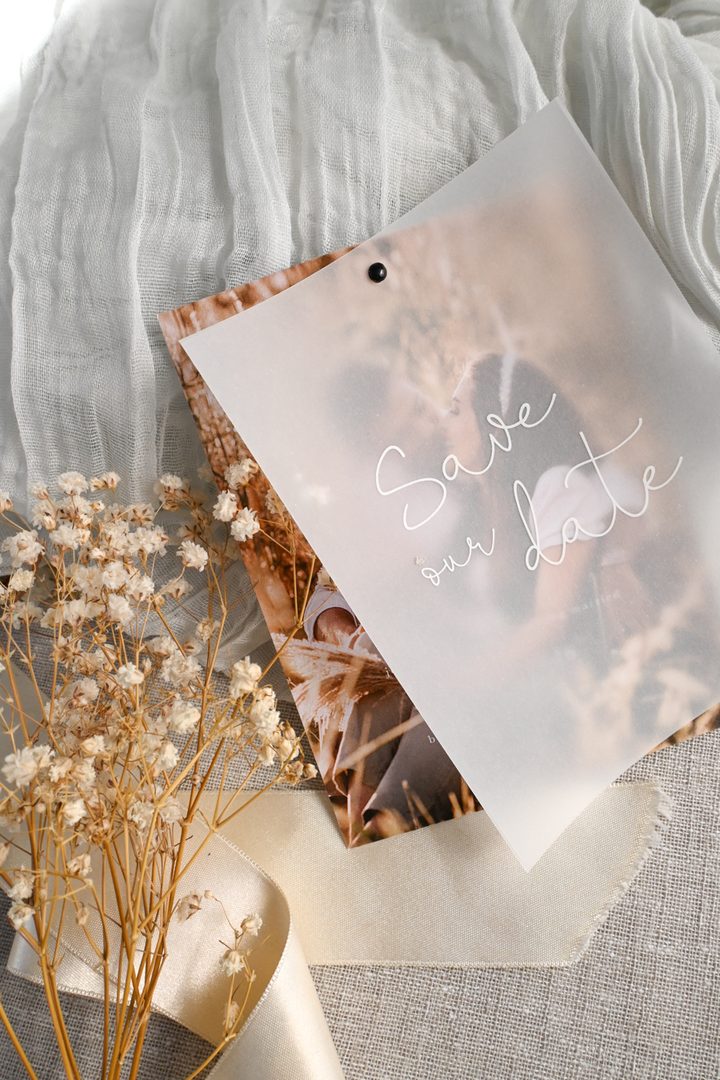
Photo format on digital print is particularly effective for destination weddings. A beautiful shot of the venue or landscape printed as a save-the-date photo card immediately communicates the destination’s atmosphere and gets guests excited about the trip.
Information load on destination invitations
Destination suites typically require more enclosure cards than standard weddings: accommodation details, travel tips, excursion information, and itinerary outlines. Plan for a larger suite and take advantage of the 15% discount when ordering multiple card types together.
Print Methods at a Glance: Matching Style to Technique
| Print Method | Visual Effect | Best Styles | Min Order |
|---|---|---|---|
| Digital print | Full color, crisp, versatile | Romantic, minimalist, destination, bohemian | No stated minimum |
| Metallic print | Subtle gold shimmer (dry toner) | Modern minimalist, romantic | No stated minimum |
| Flat foil | Mirror-bright metallic, no deboss | Romantic, modern, dark romance | 10 cards (30 for 350gsm HW) |
| Foil stamp | Mirror-bright + debossed impression | Classic, heritage, dark romance luxury | 50 cards |
| Letterpress | Deep pressed impression, handcrafted | Classic, romantic-luxury | Varies by design |
| White ink | White on dark/kraft backgrounds | Dark romance, bohemian, rustic | No stated minimum |
| Colour Stock + Foil | Real foil on European coloured card | Dark romance, luxury, editorial | 10 cards |
For detailed print method information including paper pairings and production timelines, see the full wedding invitations collection. You can filter by print method directly to narrow your choices:
- Letterpress wedding invitations
- Foil stamp wedding invitations
- Flat foil wedding invitations
- Digital wedding invitations
- White ink wedding invitations
- Metallic wedding invitations
Foil Color Guide: Matching Metallics to Your Palette
For flat foil and foil stamp, selecting the right foil color is as important as the design. Here’s how the available colors pair with common wedding palettes:
| Foil Color | Description | Pairs Well With |
|---|---|---|
| Gold | Warm, rich yellow-gold mirror finish | Ivory, cream, blush, champagne, navy |
| Pale gold | Lighter, softer gold – less bold | White, blush, sage, soft pastels |
| Rose gold | Warm pink-gold metallic | Blush, dusty rose, peach, white |
| Silver | Cool mirror-silver finish | White, slate, ice blue, black |
| Copper | Warm orange-bronze metallic | Terracotta, rust, ivory, burnt orange |
| Holographic | Rainbow-shifting prismatic finish | White, black, any maximalist palette |
| Hot pink | Bold neon-adjacent pink foil | White, black, contemporary bold palettes |
| Celestial blue | Deep metallic blue | Navy, midnight, dark backgrounds |
| Red, Green, Blue | Solid bold color foils | Seasonal themes, bold contemporary palettes |
Style Trends to Know in 2026
Illustrated and hand-drawn aesthetics
Couples are moving away from template-style designs toward invitations that look like they were made specifically for them. Illustrated venue portraits, custom botanical borders, and hand-drawn typefaces are all growing in popularity. Paperlust’s artist-designed collection gives access to this aesthetic without commissioning a fully custom piece.
Maximalist botanicals
After several years of minimalism dominating the wedding aesthetic, maximalist floral designs are having a significant moment in 2026. Full-bleed botanical illustrations, layered flowers, and deeply saturated color palettes are appearing on wedding invitations more than at any point in the past decade.
Vellum overlays
Vellum as an accent element – whether as a translucent overlay on a printed invitation or as a separate enclosure card – creates a layered, tactile effect that photographs beautifully and feels different from anything that can be reproduced digitally.
Dark and moody color palettes
Navy, black, deep forest green, and burgundy as background colors for invitations (rather than just text) continues to grow. The dark romance aesthetic has moved from niche to mainstream, and the stationery category has followed.
About This Guide
This guide was written by the Paperlust content team using data from Paperlust’s print production records, designer consultations, and trend analysis across thousands of wedding stationery orders processed through our Melbourne studio. Print method descriptions and paper specifications are verified against Paperlust’s live catalog (May 2026). Style trend observations reflect design orders and customer briefs from the 2024-2026 wedding season.
Sources: Paperlust print catalog (verified May 2026); Paperlust design team consultation; wedding industry trend data 2024-2026.
Frequently Asked Questions
What is the most popular wedding invitation style in 2026?
Romantic floral remains the broadest category, encompassing watercolor botanicals, soft script typefaces, and gentle color palettes. Within it, the trend is moving toward richer and more saturated palettes – deep sage, dried rose, terracotta – rather than the ultra-pale blush of previous years. Dark romance is the fastest-growing category for couples looking for something more dramatic.
Can I combine letterpress and foil on the same invitation?
Yes. Letterpress and foil can be combined: the design is pressed into the paper via letterpress, and metallic foil is applied to specific elements. This is one of the most luxurious combinations available. Note that they are separate production processes – coordinate with Paperlust’s design team to ensure the layout works technically for both.
What print method works best for invitations with a photo?
Digital print. Letterpress and foil cannot reproduce photographic imagery. Digital print handles any full-color image faithfully, including couple portraits, venue shots, and watercolor illustrations with complex gradients.
Is vellum a separate card or a type of printing?
Vellum is a paper stock, not a print method. Paperlust’s Vellum is a translucent 180gsm stock available for white ink printing and as a colour stock + foil option. Many couples use vellum as an overlay on top of a printed invitation – the text on the vellum shows through both the vellum and the invitation below, creating a layered effect.
How do I make sure my invitations match my wedding’s style?
Order the $5 sample pack first to hold physical examples of different print methods and papers. Then compare the samples against your venue photos, florals, or decor swatches. The print method you can feel in your hand is often different from what you imagine from a screen, especially for letterpress and foil.
What foil color is most popular for weddings?
Gold remains the most popular foil color across all wedding styles. Rose gold is dominant in romantic and blush-palette weddings. Silver is the choice for cooler, more contemporary palettes. Holographic has grown significantly as a choice for couples who want something unexpected and contemporary.
Do I need to choose one style for my entire suite?
Not strictly, but visual consistency across your suite creates a more polished impression. Your invitation, RSVP card, save the date, and thank you cards don’t need to be identical, but they should share a common design element – a color, a typeface, a motif – that ties them together as a family.
Shop Wedding Invitations at Paperlust
Hundreds of wedding invitation designs you can customize online, with an online proof before you print.