
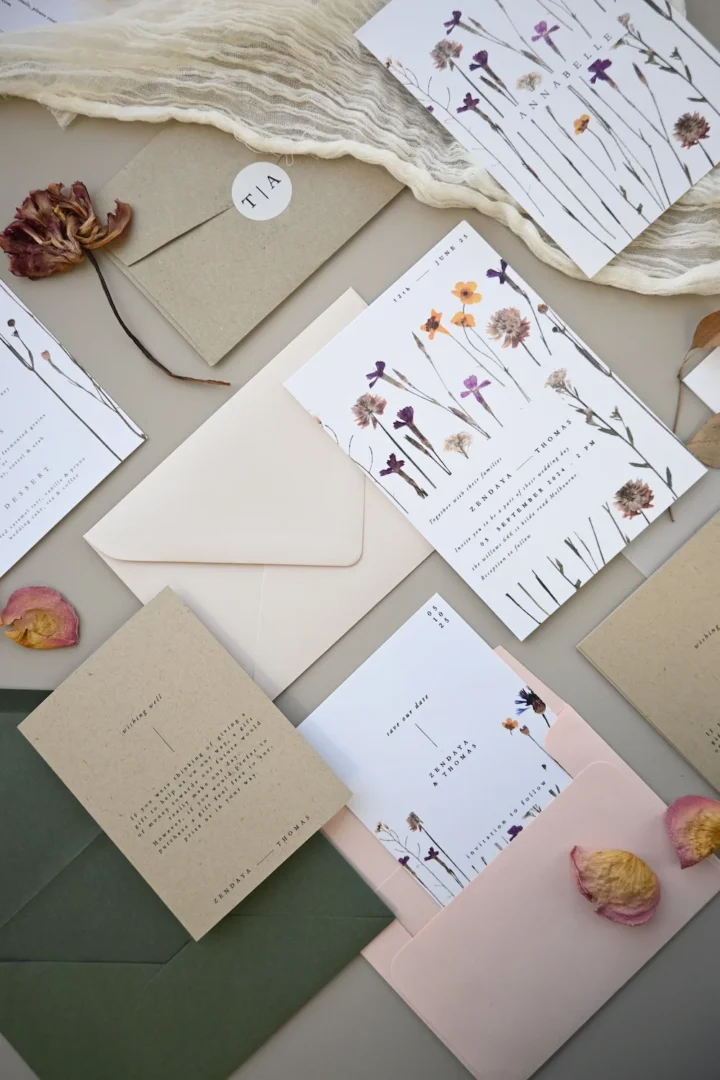
Most couples spend months choosing their wedding invitations and almost no time thinking about the stationery that guests actually live with on the day itself. The programs they hold during the ceremony. The menu cards they read at the table. The place cards that make them feel seen. This guide covers every piece of on-the-day wedding stationery, what it does, how to word it, when to order it, and how to make it all work together as a cohesive suite.
Complete Wedding Day Stationery Checklist
- Ceremony programs (order of service), hand out at the door
- Menu cards, at each place setting or per table
- Place cards, individual seat assignments at each setting
- Escort cards or seating chart, directs guests to their table at the entrance
- Table numbers, identifies each table for guests and catering staff
- Wedding signs, welcome sign, bar sign, unplugged ceremony sign, seating area signs
- Wishing well card, if applicable, included in invitation suite
- Thank you cards, order now, send within 2-3 months of the wedding
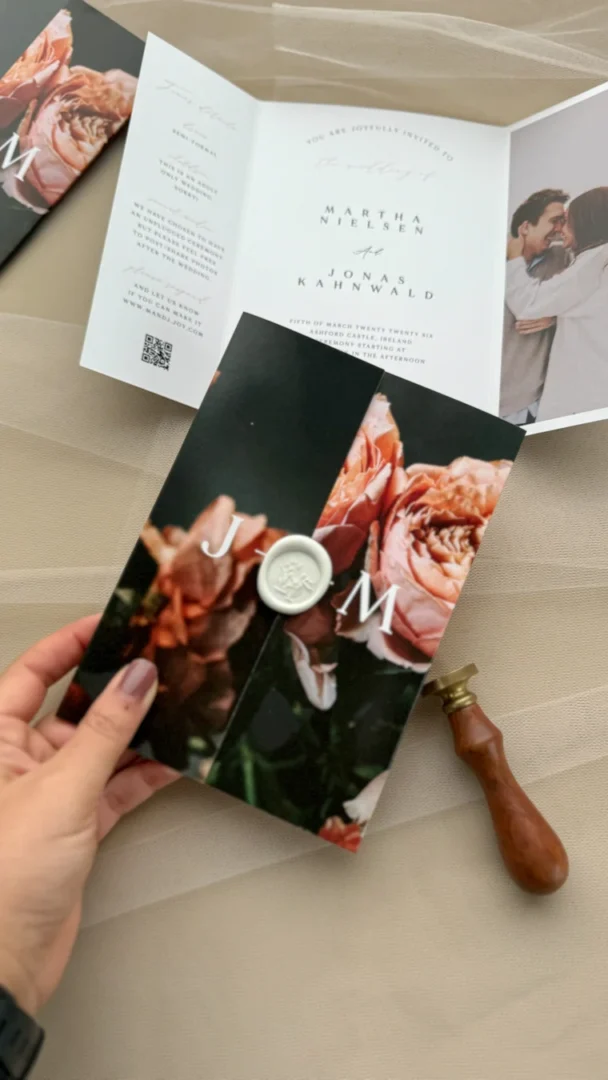

At a Glance: Wedding Day Stationery Checklist
- Pre-ceremony: welcome signs, ceremony programs, parking + arrival signage
- Ceremony: order of service, reserved-row signs, vow books
- Reception: seating chart, place cards, menus, table numbers
- Guest experience: guest book, thank-you tags, favour labels, send-off signs
- Order timing: place day-of stationery 8 weeks out; finalise names + seating 2 weeks out
Why On-the-Day Stationery Matters More Than You Think
Your wedding invitation creates the first impression. Your on-the-day stationery delivers the last tangible impression guests take home. A menu card left on the table, a program folded carefully into a bag, a place card kept as a small memento, these pieces travel with your guests. They are held, read, handled, and in many cases kept for years.
They also carry real functional weight. A seating chart that is hard to read at the entrance creates a bottleneck. A menu card with unclear dietary notation means your catering team is fielding questions all evening. Table numbers that are too small to read across a crowded room cause confusion during service. Getting these pieces right is partly about aesthetics, but it is also about the smooth running of your reception.
The good news: all of this is entirely achievable with planning and the right timeline. Here is everything you need to know, piece by piece.
The Complete Wedding Day Stationery Checklist
1. Ceremony Programs (Order of Service)
The ceremony program, also called an order of service, is handed to guests as they arrive at the ceremony. It tells them what to expect: the order of events, any readings or music, the names of the wedding party, and often a personal note from the couple.
Shop wedding invitations at Paperlust
500+ exclusive wedding invitation designs, free white envelopes, and 1-2 day proofs.
What to include:
- Couple’s names and wedding date
- Ceremony sequence (processional, welcome, readings, vows, ring exchange, pronouncement, recessional)
- Names of the wedding party (officiant, bridesmaids, groomsmen, flower girls, parents)
- Song titles for any music
- Reading titles and readers’ names
- Optional: a personal note or poem from the couple
- Optional: a memorial acknowledgment for loved ones who have passed
Ordering timeline: Order 4-6 weeks before the wedding, but only finalize wording once your ceremony order is confirmed with your officiant. Allow 1-2 business days for your Paperlust proof, then 1-2 weeks for production and delivery.
How many to order: One per couple or family group attending the ceremony, roughly the same number as your ceremony invitation count. Add a 10-15% buffer for guests who grab a second copy or for keepsakes. Note: ceremony guests may not all be reception guests if you have an intimate ceremony followed by a larger reception.
For wording guidance and examples, see the wedding program wording guide. Browse Paperlust ceremony programs to find designs from your invitation suite’s collection.
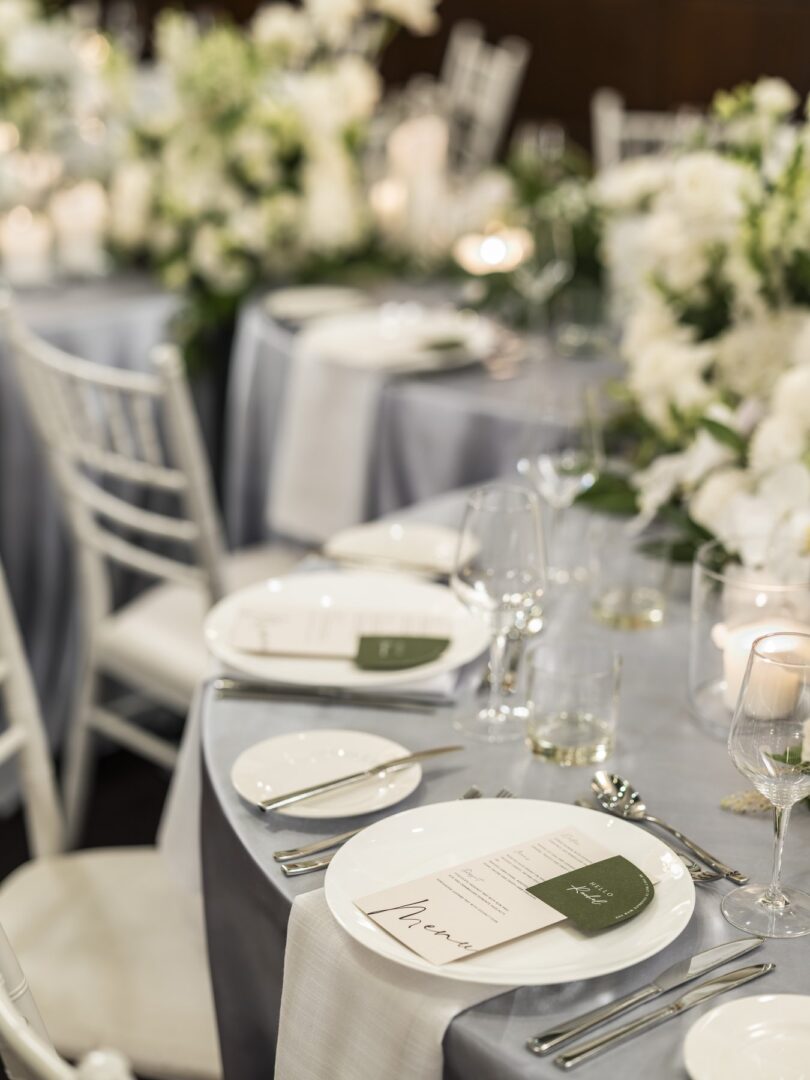
2. Wedding Menu Cards
Menu cards sit at each place setting (or are shared per table) and tell guests what they are being served. For plated receptions, they help catering staff deliver the right meal to each guest, especially when pre-selected meals are involved. For buffet receptions, they set expectations for the evening and serve as a take-home keepsake.
What to include:
- Couple names and date (header)
- Each course with a brief dish description
- Dietary notation (V, VG, GF, DF) after applicable dishes
- Brief drinks note (bar tab, wine service, signature cocktail)
- Optional: a short thank-you message
Ordering timeline: Menu cards are the last piece of stationery you finalize, because your catering menu is usually confirmed 4-8 weeks before the wedding. Order 4-5 weeks out, after your caterer confirms the exact menu. Always have your caterer review the wording on your proof before approving print.
How many to order: One per guest for plated meals (so pre-selected meal choices can be noted on each card); one per couple or per table for buffet or shared receptions. Add 10-15% buffer.
See the full wedding menu card wording guide for 50+ templates by cuisine and service style. Browse Paperlust wedding menu cards.
3. Place Cards
Place cards sit at each individual place setting and assign guests to specific seats. They are essential for plated receptions where meal choices need to be tracked, and for any reception where you want precise control over who sits where. They also serve as small, personal keepsakes, many guests take their place card home.
What to include:
- Guest name (first and last, for clarity at larger receptions)
- Optional: a small meal indicator (icon, colored dot, or text like “Chicken” or “Salmon”)
- Honorifics only for formal/black-tie events
Ordering timeline: Order 3-4 weeks before the wedding, after your RSVP deadline and with your confirmed final guest list. Place cards are personalized with specific names, you cannot repurpose extras for different guests. Order a 10-15% buffer.
How many to order: One per seated guest, place cards count per person, not per household.
Full wording guidance, including escort card vs. place card explained, 40+ wording examples, and how to indicate meal choices, is in the wedding place card wording guide. Browse Paperlust place cards.
4. Escort Cards and Seating Charts
Before guests can find their place card at the table, they need to know which table they are assigned to. This is the job of either escort cards (small individual cards near the entrance listing each guest’s name and table number) or a seating chart (a large displayed list of all guests and their table assignments).
Escort cards: Individual cards arranged near the entrance, usually alphabetically. Guests find their name, pick up the card, and take it to their table. Easier to update last-minute than a printed seating chart, you can swap or add individual cards right up to the day. Work especially well for 50-150 guests.
Seating chart: A single large display (printed poster, framed board, or mirrored surface) showing all guests and their table assignments. A strong visual element at the reception entrance. For large guest lists (150+), a seating chart is often more practical than individual escort cards. Browse Paperlust seating charts for printed options.
For help deciding which approach suits your reception, see the wedding seating chart guide.
5. Table Numbers
Table numbers help guests locate their assigned table and help catering staff navigate the room during service. They are a small piece of stationery with significant functional importance, a table number that is too small, poorly lit, or inconsistently styled creates real confusion during the seated service.
What to include: The table number or name (some couples use names instead of numbers, botanicals, locations, songs). Table name alternatives add a personal touch but require you to include a reference system so guests know which “table” is theirs on the escort card or seating chart.
Sizing and display: Table numbers need to be visible from a standing position and legible from across the table. Paperlust table numbers in a folded tent format, placed in a small stand or propped against a centerpiece, work well for most reception setups. For very large tables or venue spaces, a larger format is worth considering.
Ordering timeline: Order with your other day-of stationery (menus and place cards), 3-4 weeks before the wedding. You need to know the total number of tables, which is confirmed once your RSVP count is finalized.
6. Wedding Signs
Wedding signage covers a broad category, from the welcome sign at the venue entrance to a seating area sign during the cocktail hour to a bar sign during the reception. The most commonly ordered signs are:
- Welcome sign: Greets guests at the ceremony or reception entrance. Typically includes couple names, date, and a short phrase. Usually the largest printed sign piece. See the wedding welcome sign wording guide for examples.
- Unplugged ceremony sign: Asks guests to put phones away during the ceremony. Increasingly standard. Placed at the ceremony entrance or displayed by the officiant.
- Bar or drinks sign: Lists signature cocktails, wine choices, or bar instructions. Placed at the bar or drinks station during cocktail hour and reception.
- Table name/number display: For couples using a seating chart rather than escort cards, a sign directing guests to the chart is helpful.
- Gift or wishing well sign: If you have a wishing well at the reception, a small sign with wording echoing your wishing well card is a thoughtful touch.
Paperlust signs are available as printed fabric or printed PVC panels, both in a range of sizes and from the same design collections as your invitations.
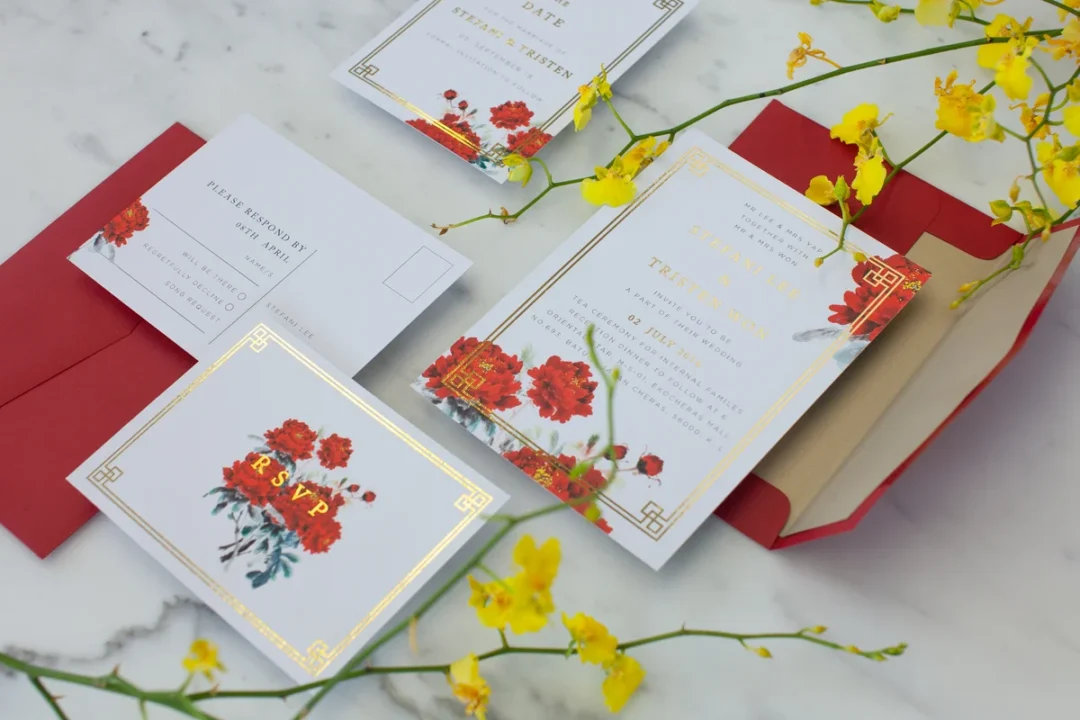
7. Wishing Well Cards
Wishing well cards are technically part of your invitation suite rather than on-the-day stationery, they are included as inserts with your invitations. But the wishing well itself is a day-of element, so it belongs on this checklist.
If you are having a wishing well at your reception, order the insert cards with your invitations (8-10 weeks before the wedding) and consider a small matching sign for the wishing well display at the reception. The sign wording should echo your insert card: brief, warm, and optional in tone.
Full wording guidance and etiquette for wishing well cards is in the wishing well cards guide.
8. Thank You Cards
Thank you cards are the last piece of stationery from your wedding suite, sent to guests after the wedding to acknowledge gifts and their attendance. Most couples know they need to order thank you cards but leave it until the last minute. The smart move is to order them before the wedding, so they are ready to address and send in the weeks immediately following.
When to send: Within 2-3 months of the wedding. Sooner is always better. A thank you card that arrives within 4-6 weeks of the wedding is memorable; one that arrives six months later is awkward.
What to include: A personalized note for each guest, reference the specific gift they gave or a specific moment from the day. Generic thank you cards that could have been sent to anyone feel impersonal. Browse Paperlust wedding thank you cards in your invitation suite’s design.
On-the-Day Stationery: Ordering Timeline
| Stationery Piece | Order When | Notes |
|---|---|---|
| Wishing well insert cards | With invitations (8-10 weeks before) | Include in invitation envelopes |
| Thank you cards | Before the wedding (any time) | Have them ready to address immediately after |
| Ceremony programs | 4-6 weeks before | Finalize after confirming ceremony order with officiant |
| Wedding signs (welcome, unplugged) | 4-6 weeks before | Largest signs take longer, order early |
| Seating chart (printed) | 3-4 weeks before | Needs near-final guest count |
| Escort cards / place cards | 3-4 weeks before | Order after RSVP deadline with confirmed names |
| Table numbers | 3-4 weeks before | Order with place cards, same timeline |
| Menu cards | 4-5 weeks before | Finalize after caterer confirms exact menu |
At Paperlust, every order includes a designer proof within 1-2 business days. Build that into your timeline, you need to review and approve the proof before printing begins, so factor in a couple of days for proof review and any revisions.
Making Your Day-of Suite Look Cohesive
The goal is not for every piece to look identical, it is for every piece to feel like it comes from the same world. Here is how to achieve that without overthinking it.
Shop wedding place cards
Match your place cards to the invitation suite , letterpress, foil, embossed, and flat-print.
Shop from the same design collection
Paperlust designs come as full suites, most invitation designs have matching programs, menus, place cards, table numbers, and thank you cards available. Choosing from the same collection is the single most effective way to achieve cohesion, because the typography, color palette, and decorative elements are already coordinated. You do not have to use the exact same print method for every piece, but staying within the same collection ensures the visual language is consistent.
Consistent print method hierarchy
If your invitations are letterpress, consider flat foil or digital print for day-of stationery, you do not need to match the print method on every piece, but avoid jarring contrasts (letterpress invitations paired with clearly digital-printed menus can feel inconsistent). A natural hierarchy is: premium print for invitations and programs, clean digital print for menus and place cards, and printed fabric or PVC for signs.
Color palette consistency
Two to three colors used consistently across all pieces is enough. Exact color matching across different paper stocks and print methods is not always achievable, but staying within the same tonal range, warm or cool, muted or saturated, creates harmony across the suite.
For a broader guide to building your full wedding stationery suite (pre-wedding and day-of), see the complete wedding stationery checklist.
How to Decide What Day-of Stationery You Actually Need
Most couples over-order. Use these three filters before adding anything to the day-of suite, every item should earn its place by solving a real wayfinding, etiquette, or photo-moment problem.
1. Filter by Guest Wayfinding
If a guest will be confused without it, you need it: a welcome sign at the venue entrance, parking direction signage, ceremony-vs-reception signs at multi-space venues. Skip cute-but-redundant signs (e.g. “Cocktails this way” when the bar is in plain sight). Wedding signs earn their place when they solve a real navigation problem.
2. Filter by Etiquette Expectations
Place cards, seating charts, and ceremony programs at religious or formal weddings carry social weight, older guests expect them. Casual backyard weddings can drop programs and use a single seating chart instead of individual place cards.
3. Filter by Photo Hierarchy
Some stationery is also décor: menus on every plate, a hand-lettered welcome sign, a guest-book sign with monogram. Pick 2-3 stationery moments your photographer will shoot in detail, and put your budget there.
Frequently Asked Questions
What stationery do you need for the wedding day?
Wedding day stationery includes: ceremony programs (order of service), menu cards, place cards, escort cards or a seating chart, table numbers, wedding signs (welcome sign, unplugged ceremony sign, bar sign), and optionally wishing well cards. Thank you cards are also ordered before the wedding for sending afterward. The exact pieces you need depend on your reception format, a buffet reception needs fewer pieces than a formal plated dinner.
When should you order wedding day stationery?
Order in stages: ceremony programs and welcome signs 4-6 weeks before the wedding; menu cards 4-5 weeks before (after your caterer confirms the menu); place cards, escort cards, seating charts, and table numbers 3-4 weeks before the wedding (after your RSVP deadline). Thank you cards can be ordered any time before the wedding so they are ready to send immediately after. Allow 1-2 business days for your Paperlust proof and 1-2 weeks for production and delivery.
What is the difference between a seating chart and escort cards?
A seating chart is a large displayed list near the reception entrance showing all guests and their table assignments. Escort cards are individual small cards arranged near the entrance, each listing one guest’s name and table number, guests find their card and take it to their table. Both serve the same function: directing guests to their assigned table. Escort cards are easier to update last-minute; seating charts are a stronger visual display and suit larger guest counts.
Do you need both place cards and escort cards?
Not necessarily. For smaller weddings under 50 guests, place cards alone (or a simple verbal direction) are usually sufficient. For 50 or more guests, escort cards at the entrance plus place cards at the table gives guests the best experience and gives catering staff the precision they need. For buffet receptions where exact seat assignment matters less, escort cards or a seating chart alone is often enough.
How do you make wedding day stationery look cohesive?
The most effective approach is to choose all your day-of stationery pieces from the same Paperlust design collection, invitations, programs, menus, place cards, and table numbers from the same suite are already visually coordinated. Beyond that: keep your color palette to two or three consistent tones across all pieces, maintain a logical print method hierarchy (premium print for invitations and programs, clean digital for menus and place cards), and prioritize font consistency.
Shop Place Cards at Paperlust
Place cards and escort cards to match your invitations, customizable online.