
Micro weddings have evolved far beyond a pandemic-era workaround. In 2026, more couples are choosing intimate ceremonies of 20 or fewer guests as a deliberate, values-driven decision, trading ballroom receptions for vineyard dinners, rooftop ceremonies, and destination elopements that feel genuinely personal. Your invitations are the first signal to guests that this celebration is something different, something curated rather than scaled back.
- Guest count: Micro wedding = 20 or fewer; intimate wedding = 20-50; elopement = 2-10
- Wording tone: First person and casual works well; formal third-person is also appropriate
- Invitation timing: 6-8 weeks before (local); 3-4 months before (destination)
- Print methods that shine: Letterpress on cotton paper, flat foil, digital on textured stock
- Starting price: Wedding invitations from $2.04/card; save the dates from $1/card
- Proof turnaround: 1-2 business days; two rounds of edits included
What to Include in Micro Wedding Invitations
When it comes to micro wedding invitations, the most important details are the couple’s names, the date and time of the wedding, and the location. This information should be clear and easy to read, as the invitation will likely be viewed by a smaller number of guests. Other details that can be included on the invitation, depending on the specific plans for the wedding, are the dress code, any specific instructions for the ceremony or reception, and any transportation or accommodation information for out-of-town guests.
In terms of sizing, micro-wedding invitations are typically smaller than traditional wedding invitations. This is because there are typically fewer guests, and the invitation is often presented uniquely and creatively. Some couples have their invitations printed on small cards or postcards, while others opt for a folded design or a scroll-like invitation. You can customize our save the date sized cards (140mm x 107mm / approximately 5.5″ x 4.2″) and turn them into a micro wedding invite.


Why couples choose micro weddings
There are many reasons why couples choose to have a micro wedding. For some, it’s a way to have a more personal and meaningful celebration with their closest friends and family members. For others, it’s a way to save money and have more flexibility in terms of the location and design of the wedding. Still, for others, it’s a way to have a more unique and memorable wedding experience.
Overall, micro-wedding invitations are a creative and unique way to invite guests to your special day. With careful consideration of the details and a focus on creating a personal and meaningful experience, you can create the perfect micro wedding invitation for your big day. If you are unsure about how to structure your micro wedding invitations, reach our customer service on live chat or email. Our wedding invitation designers will be happy to help you with your questions.
Micro Wedding Invitation Styles
One of the best parts of planning a micro wedding is the creative freedom it gives you with your invitations. With a smaller guest count, you can invest more per invitation, opting for premium finishes that would be cost-prohibitive for a 200-person celebration. Here are some of the most popular styles couples choose for their intimate weddings.
Letterpress on cotton paper is a natural fit for micro weddings. The deeply pressed impression into Wild Cotton Double Thick stock (600gsm) feels handcrafted and personal, perfect for a gathering of 20 or fewer guests. The tactile quality says something before a single word is read.
Flat foil adds a metallic shimmer that photographs beautifully. Rose gold, copper, and champagne tones are popular for romantic micro weddings, while silver and black foil suit modern minimalist aesthetics. Because you’re printing fewer cards, the per-card cost of flat foil is easier to absorb. Paperlust offers flat foil in 12 colors including gold, rose gold, silver, copper, and holographic, with no custom die required.
Vellum wraps over a printed inner card create an ethereal, layered effect that feels truly special. The translucent outer layer can carry a single line of calligraphy script, the couple’s names, the date, or a short quote, while the full invitation details sit beneath.
Minimalist designs with bold typography work exceptionally well for micro weddings. When the guest list is tight, there is no need to overwhelm the invitation with information. A single centered typeface, a clean layout, and generous white space can feel more luxurious than any ornate floral design.
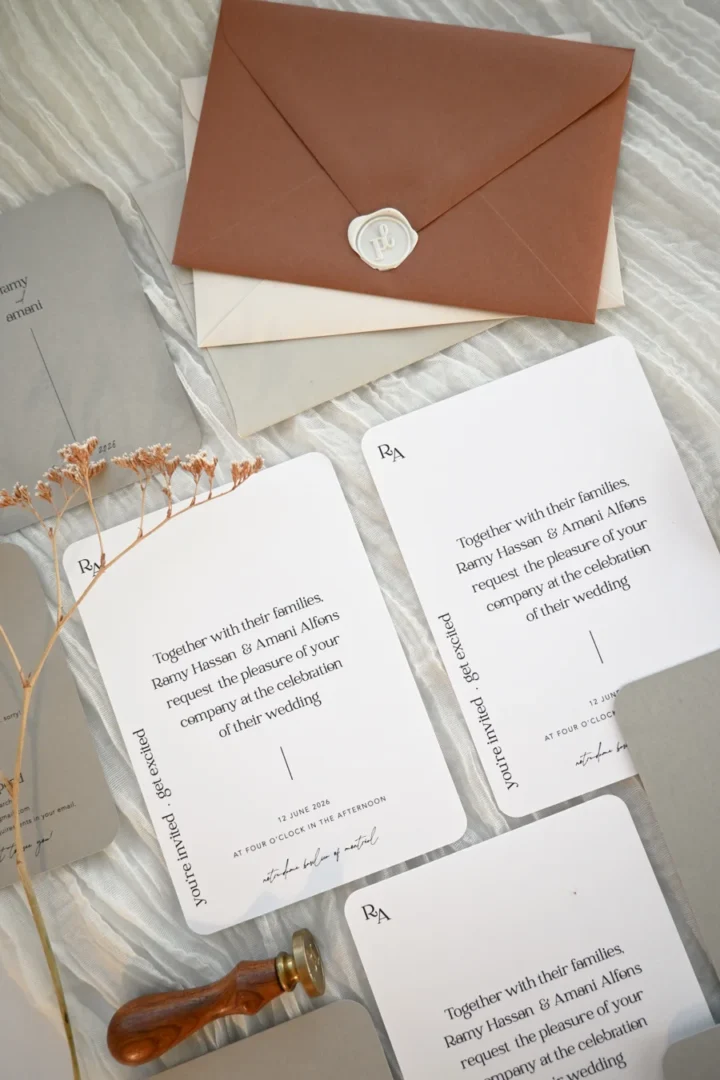
Wording Your Micro Wedding Invitations
Because the tone of a micro wedding tends to be intimate and personal, your wording should reflect that warmth. Formal third-person phrasing works if you’re hosting a black-tie elopement dinner, but most micro couples prefer something that sounds like them.
A simple and heartfelt format might look like this:
invite you to celebrate their marriage
Saturday, September 12, 2026
at four o’clock in the afternoon
The Old Mill House, Hudson Valley, New York
Dinner and dancing to follow
Dress: Cocktail attire
For a very intimate micro wedding (under 15 guests), some couples go even more casual: “We’re getting married, and we want you there.” The invitation wording sets the emotional tone before anyone arrives, so don’t be afraid to let your personalities come through. You can browse our micro wedding invitations collection for wording inspiration across different styles and sizes.
Key information to always include: full names, exact date and time, venue name and address, RSVP details (deadline and method), and any relevant notes about the ceremony format, especially if you’re having an unplugged ceremony or asking guests to travel.
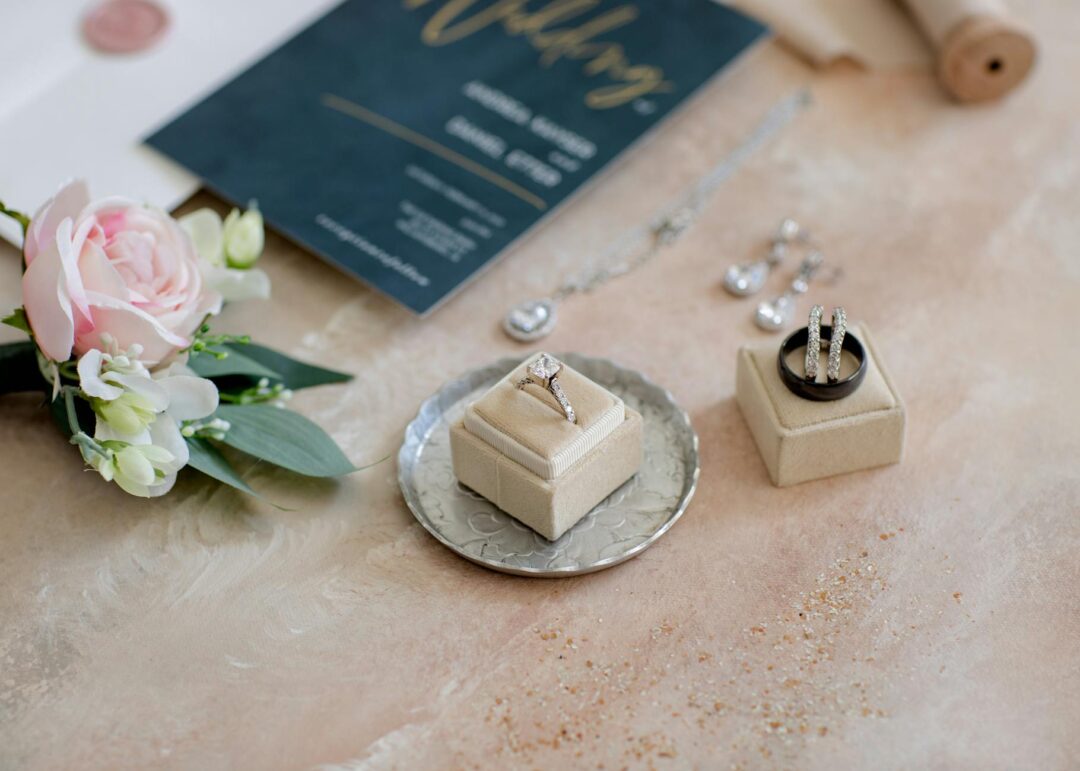
Paper and Print Options for Intimate Weddings
A smaller print run opens the door to papers and finishes that most couples can only dream about. Here’s what works especially well for micro wedding stationery:
Cotton paper – Paperlust’s Wild Cotton Double Thick at 600gsm is our thickest stock and the go-to choice for letterpress invitations. It has a natural, slightly textured feel that suggests quality without trying hard. Letterpress stock starts at 300gsm for a more refined, lightweight option.
Vellum and translucent stocks – Best used as wraps or overlay cards rather than as the main invitation substrate. They don’t hold ink well on their own but create a beautiful layered effect.
Seed paper – For eco-conscious couples, plantable seed paper turns the invitation itself into a keepsake. Guests can plant it after the wedding and grow wildflowers, a charming concept that suits an intimate, nature-forward celebration. Browse our full range of paper options when you explore our wedding invitations collection and request a swatch kit to feel the difference before you commit.
Wedding invitations start from $2.04 per card for digital print, and with a micro wedding, your total stationery budget stays manageable even at premium print methods. Request a $5 sample pack to see paper and print quality in person before ordering.
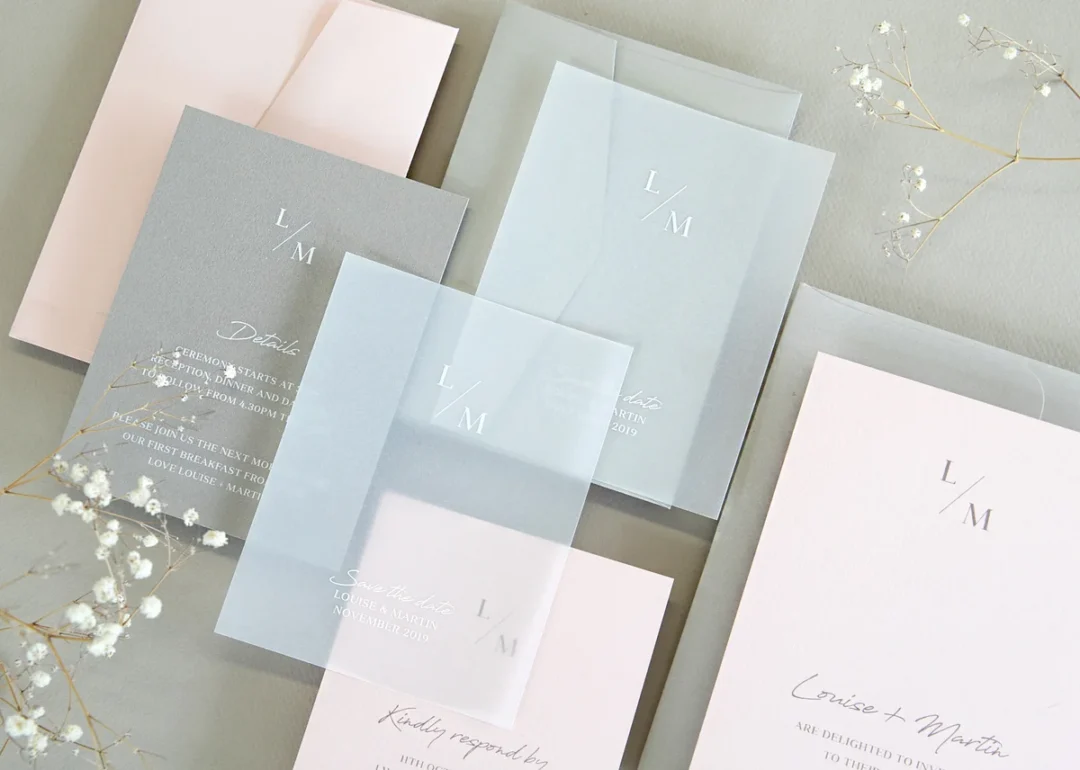
When to Send Micro Wedding Invitations
Timing for a micro wedding follows slightly different rules than a traditional wedding, since your guest list is so intentional. Here is a reliable timeline:
6 to 8 months before: Send save the dates if any guests need to travel. Even for a local micro wedding, save the dates help guests plan around your date early, especially important when you’re asking people to take time off work or arrange childcare. Save the dates start from $1 per card, making them easy to include even on a tight budget.
6 to 8 weeks before: Send the formal invitations. With a small guest count, you don’t need to allow months for RSVPs to trickle in. A 6-week window is plenty.
3 to 4 weeks before: RSVP deadline. Following up by phone or text is completely acceptable at this scale, you’re inviting people you know well.
If your micro wedding involves a destination or significant travel for guests, push all these dates earlier by 2 to 3 months. Give people time to arrange flights, accommodation, and time off. You might also consider adding a small detail card with travel recommendations or a wedding website link.
And if you’re personalizing name cards, menus, or small keepsakes for your guests, custom stickers from Paperlust Print Shop are a simple way to add a polished, cohesive touch to every detail.
Micro Wedding Invitation Wording Examples: 12 Templates for Under-20 Guest Lists
The right wording for a micro wedding invitation depends on your tone, venue, and whether you’re holding a private ceremony or an intimate gathering that doubles as the celebration. Below are 12 ready-to-use templates spanning formal, semi-formal, and casual styles, plus elopement reception formats.
Formal and semi-formal templates
Together with their families
[Partner A Full Name]
and
[Partner B Full Name]
invite you to an intimate wedding ceremony
followed by dinner
on Saturday, the thirteenth of September, two thousand twenty-six
at five o’clock in the evening
[Venue Name], [City, State]
Reception to follow
Kindly reply by August 15
[Partner A Name] & [Partner B Name]
invite you to celebrate their marriage
with an intimate dinner ceremony
Saturday, September 13, 2026
5:00 in the evening
[Venue Name]
[City, State]
Dinner and dancing follow
Dress: Cocktail attire
RSVP at [wedding website]
Because you have supported us, laughed with us, and loved us,
we invite you to share in our small wedding ceremony.
[Partner A Name] & [Partner B Name]
Saturday, September 13, 2026
3:00 p.m.
[Venue Name], [City, State]
Dinner and celebration to follow
RSVP by August 20 at [website]
Casual and first-person templates
We’re getting married.
And we want you there.
Join us for an intimate ceremony and dinner
[Partner A] & [Partner B]
September 13, 2026 at 5 p.m.
[Venue Name], [City, State]
Please RSVP at [website]
Please join us for an intimate backyard wedding
as [Partner A] & [Partner B] say “I do”
Sunday, September 14, 2026 at 4:30 p.m.
[Address], [City, State]
Casual dress welcome
Light refreshments and lawn games to follow
RSVP to [email or phone]
We’re escaping to the mountains, and we’d love for you to come with us.
Join [Partner A] & [Partner B]
for an intimate wedding ceremony
Friday, October 3, 2026 at 4:00 p.m.
[Venue Name], [City/Region]
Dinner and stargazing to follow
Travel details at [wedding website]
RSVP by August 1
Elopement reception and post-ceremony templates
We did a thing.
We got married!
Please join us for a celebration of our marriage
[Partner A] & [Partner B]
were wed on [private ceremony date] in [location]
Celebrate with us on
Saturday, September 13, 2026 at 6:00 p.m.
[Venue Name], [City, State]
Drinks, dinner, and dancing
RSVP at [website]
Together with their families
[Partner A Full Name] and [Partner B Full Name]
joyfully announce their marriage in an intimate ceremony
on Thursday, the twelfth of June, two thousand twenty-six
in [City, State]
You are warmly invited to celebrate with them
at an evening reception
Saturday, the twelfth of September, two thousand twenty-six
at seven o’clock in the evening
[Venue Name], [City, State]
Reception to follow
RSVP: [website]
We ran away and got married.
Now it’s time to celebrate together.
Join [Partner A] & [Partner B]
for a relaxed reception
Saturday, September 13, 2026 at 5 p.m.
[Venue Name], [City, State]
Casual dress | Light bites and drinks
RSVP at [website]
Intimate ceremony wording, specific guest counts
Our wedding is small by design.
We chose the people who mean the most to us.
We chose you.
[Partner A] & [Partner B]
September 13, 2026 at 3 p.m.
[Venue Name], [City, State]
Private dinner to follow
RSVP directly to [Partner A or B name/phone]
Please join us
for an intimate rooftop ceremony
as [Partner A] & [Partner B] exchange vows
followed by dinner at [Restaurant Name]
Saturday, September 13, 2026
6:00 p.m.
[Venue Name], [City, State]
Smart casual dress
Kindly RSVP by September 1 at [website or email]
Raise a glass with us.
[Partner A] & [Partner B]
invite you to their intimate vineyard wedding
Saturday, October 4, 2026
4:00 p.m.
[Winery Name], [City, State]
Wine tasting, ceremony, and seated dinner to follow
Please RSVP by September 5 at [website]
2026 Micro-Wedding Trends That Affect Your Invitation Design
Micro-wedding planning in 2026 looks different from even two years ago. The aesthetic and logistical trends shaping the space have clear implications for how invitations should look and what they should communicate.
Destination and “elopement reception” hybrids
One of the biggest shifts in 2026 is the rise of the elopement reception, where couples hold a private ceremony (sometimes abroad, sometimes a courthouse signing) and then invite a wider circle to a separate celebration party. This format requires a specific invitation approach: you need to communicate that the ceremony has already happened and that guests are being invited to a celebration, not a wedding ceremony. See Templates 7, 8, and 9 above for wording that handles this gracefully.
Venue specificity as design direction
In 2026, micro-wedding couples are leaning into their venues as the creative anchor for their invitations. A vineyard wedding calls for warm terracotta or sage green color palettes, textured kraft or linen paper, and earthy typography. A rooftop urban ceremony lends itself to clean sans-serif fonts, city-grid geometric borders, and metallic flat foil accents. The venue is no longer just an address line, it’s the design brief.
Sustainability and plantable paper
Eco-conscious couples with small guest counts are choosing seed paper or recycled cotton stock because the per-unit cost at low quantities is manageable. Invitations that guests can plant after the wedding (wildflower or herb seed paper) have become a talking point in themselves, reinforcing the intentional, low-impact ethos of a micro wedding.
QR codes replacing detail cards
Rather than a full stationery suite with a separate details card, RSVP card, and accommodations insert, many 2026 micro-wedding couples are streamlining to a single invitation card plus a QR code linking to a wedding website. This keeps the invitation visually clean and reduces postage weight. For a 15-person wedding, you can afford the premium paper and print method on a single card and still come out ahead financially.
Keepsake-quality printing as a priority
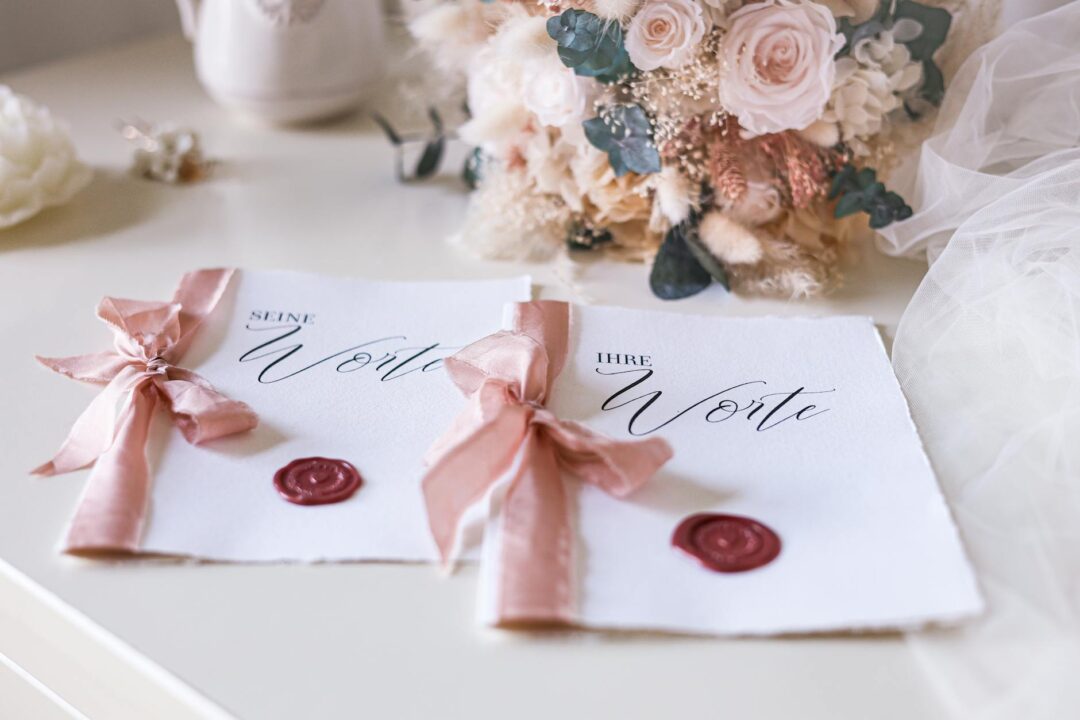
Because micro-wedding invitations go to only the most important people in the couple’s lives, there’s growing emphasis on treating them as keepsakes rather than information delivery mechanisms. Letterpress on 600gsm Wild Cotton Double Thick, hand-addressed envelopes, wax seals, and woven ribbon ties are all seeing higher take-up in small-run orders, where the per-card cost premium is absorbed by the small quantity.
Venue-Specific Micro Wedding Wording: Backyard, Vineyard, and Destination
Venue context shapes both the tone and the practical content of your invitation. Here’s what to adjust depending on where you’re celebrating.
Backyard and home ceremony wording
Backyard and home ceremonies are the most casual context for a micro wedding. Your wording should set a relaxed tone and include practical details guests may need: parking instructions, whether there’s a rain plan, and whether the celebration is indoors or outdoors. First-person wording works well here.
Key things to include: the specific address (not just the suburb), dress code (lawn-appropriate footwear note if needed), whether children or pets are welcome, and any parking details. You can skip the formal “kindly RSVP” language and simply say “RSVP to [email] by [date].”
Vineyard and winery ceremony wording
Vineyard micro weddings call for a sense of occasion without pretension. The setting does a lot of the work, so your invitation wording can be warm and evocative without being overly formal. Include the winery name prominently (guests often want to research the venue), mention whether there’s a tasting, a seated dinner, or an outdoor ceremony, and note the dress code since vineyard terrain can make heels impractical.
Consider a short evocative line at the top of the invitation to set the mood, something like “Raise a glass with us” or “Under the vines.” Then follow with the standard details block.
Rooftop and urban venue wording
Urban micro weddings often have logistical complexity that needs to be communicated: building access, elevator instructions, coat check availability, and city parking. Keep the invitation wording itself clean and minimal, but add a small details card or QR code to your wedding website with logistics information. Rooftop ceremonies are weather-dependent, so include a note about your rain backup plan.
Destination micro wedding wording
Destination micro weddings, whether a Tuscan farmhouse, a national park, or a coastal cottage, require the most logistical detail. Your invitation should mention the destination prominently, include a wedding website link for travel information, and be sent 3 to 4 months in advance (not the usual 6-8 weeks). If you’re expecting guests to travel internationally or take significant time off work, pair the invitation with a save the date sent 6 to 8 months out.
For destination weddings, be specific about whether you’re covering or contributing to accommodation costs, what the dress code is (outdoor terrain, climate), and whether any group activities are planned around the wedding day.
| Venue type | Tone | Key details to include | Lead time |
|---|---|---|---|
| Backyard / home | Casual, first-person | Full address, parking, rain plan | 6 weeks |
| Vineyard / winery | Warm, evocative | Winery name, dinner vs tasting note, terrain dress code | 8 weeks |
| Rooftop / urban | Clean, modern | Building access, rain plan, parking | 6-8 weeks |
| Destination | Warm and specific | Wedding website, travel info, accommodation, climate | 3-4 months |
| Restaurant / private dining | Celebratory | Dress code, whether the full dinner is hosted, any speeches | 6-8 weeks |
Micro Wedding vs Elopement vs Intimate Wedding: Which Invitation Do You Need?
These three terms are often used interchangeably, but they have different implications for your invitation format, wording, and timeline. Understanding the distinction will help you choose the right stationery approach.
| Format | Guest count | Ceremony structure | Invitation type | Estimated per-card cost |
|---|---|---|---|---|
| Elopement | 2-10 (witnesses + officiant) | Private, no or minimal guests | Not required; announcement card or elopement reception invite if celebrating later | From $2.04 (digital) to $8+ (letterpress) |
| Micro wedding | Up to 20 guests | Full ceremony with witnesses and guests | Standard invitation format; wording can be casual or formal | From $2.04 (digital) to $8+ (letterpress) |
| Intimate wedding | 20-50 guests | Full ceremony, small reception | Standard invitation format; typically more traditional wording | From $2.04 (digital); flat foil from ~$4/card at this quantity |
| Elopement reception | Any | Ceremony already happened; this is the celebration party | Reception invitation clarifying the ceremony date; wording acknowledges the elopement | From $2.04 (digital) |
When you need an elopement invitation
Strictly speaking, if you’re eloping privately (courthouse, registrar, or a ceremony with just two witnesses), you don’t need traditional wedding invitations. However, if you plan to celebrate with family and friends afterward, you’ll need an elopement reception invitation. This is a different format: it announces that you’re already married and invites people to the party rather than the ceremony. The wording examples in Templates 7, 8, and 9 above cover this format in detail.
When a micro wedding invitation fits
If you’re having a ceremony with up to 20 guests present, you need a standard wedding invitation, just for a very small number of people. This is where you have the most flexibility: the small print run means letterpress, flat foil, and premium cotton stocks are financially accessible. The per-card premium matters less when you’re printing 15 invitations rather than 150.
When an intimate wedding invitation is appropriate
With 20 to 50 guests, you’re in intimate wedding territory. The invitation format is conventional, but you still have more design freedom than a traditional large wedding. At this quantity, digital print and flat foil are the most popular choices because they offer good quality at a price that keeps the stationery budget manageable across the full suite (invitation, RSVP card, details card, save the date).
Comparing per-card costs across print methods
| Print method | Best for | Starting price | Minimum quantity | Turnaround |
|---|---|---|---|---|
| Digital print | Any budget, full color designs | From $2.04/card | 1 card | Approx. 8-10 business days |
| Flat foil | Mirror-bright metallic details, no deboss | Contact for quote | 10 cards | Approx. 10-14 business days |
| Metallic print | Subtle gold shimmer, most affordable foil alternative | From $2.04/card | 1 card | Approx. 8-10 business days |
| Letterpress | Maximum tactile luxury, cotton paper | Contact for quote | 25 cards | Approx. 20 business days |
| White ink | Dark/colored stock; kraft or vellum | From $2.04/card | 1 card | Approx. 8-10 business days |
Micro Wedding Invitation FAQs
How many guests is considered a micro wedding?
A micro wedding typically involves 20 or fewer guests, though some definitions extend to 30. The defining feature is intimacy, a deliberately small, curated guest list rather than a scaled-down version of a large wedding.
What size should micro wedding invitations be?
Micro wedding invitations can be any size, but many couples choose smaller formats like 5″ x 3.5″ (A2 card) or postcard-style cards. Paperlust’s save the date size (140mm x 107mm / approximately 5.5″ x 4.2″) is a popular choice that feels intimate and easy to mail.
Do you still need save the dates for a micro wedding?
Save the dates are recommended if any guests need to travel or if your micro wedding is more than 3 months away. For very small elopement dinners with local guests, you can skip them. But for destination micro weddings, send save the dates 6 to 8 months in advance.
Can I get letterpress printing for a micro wedding invitation?
Yes. Letterpress is actually ideal for micro weddings because the smaller print run makes the premium per-card cost more manageable. Paperlust offers letterpress on cotton paper starting at 300gsm, with Wild Cotton Double Thick at 600gsm as the premium option.
What is the difference between a micro wedding and an elopement?
An elopement typically involves just the couple and perhaps two witnesses, with no or very few guests. A micro wedding includes up to 20 guests and has a structured ceremony that those guests attend. The invitation format differs: elopements often require only an announcement or a reception invitation after the fact, while micro weddings use a standard wedding invitation.
Can I use the same invitation for a micro wedding and a larger celebration later?
If you’re holding a private micro ceremony for close family and then a larger party for extended friends and colleagues, you’ll need two different invitation pieces. The ceremony invitation goes only to the 15-20 attending guests. A separate reception invitation or party announcement goes to the broader celebration group. The wording should be distinct so guests understand whether they’re being invited to the ceremony, the reception, or both.
What wording do I use if we eloped and are now having a reception party?
Use “elopement reception” language that acknowledges the private ceremony has already taken place. Phrases like “We eloped! Please celebrate with us” or “joined in marriage on [date], we invite you to celebrate” communicate the situation warmly without making anyone feel like a second-tier guest. See the wording templates in the elopement section above.
How far in advance should I send micro wedding invitations?
For a local micro wedding, 6 to 8 weeks is sufficient. If any guests need to travel, send invitations 3 to 4 months in advance. For destination micro weddings requiring flights or international travel, pair an invitation with a save the date sent 6 to 8 months before the date.
What print method is best for a micro wedding invitation?
Letterpress on cotton paper is the most popular premium choice because the small quantity makes the per-card cost manageable. Flat foil is the best option for mirror-bright metallic detail without a debossed impression. For budget-conscious couples, digital print on 380gsm Premium stock delivers a clean, high-quality result from $2.04 per card.
Is flat foil the same as foil stamping?
These are two different print methods. Flat foil applies a metallic layer without a custom die or debossed impression, and has a lower minimum order (10 cards). Foil stamping uses a custom die that leaves a pressed impression in the paper alongside the metallic finish, with a minimum order of 50 cards. Paperlust offers flat foil for micro wedding quantities; this is the right method for small-run metallic invitations.
Ready to design your micro wedding invitations?
Browse 500+ exclusive designs by print method, paper type, and style. Designer proofs delivered in 1-2 business days. Two rounds of edits included at no extra cost.
This article is well-researched, informative, and provides valuable insights for couples who are planning a micro-wedding. The article is also visually appealing, with high-quality images and graphics that enhance the reader’s engagement with the content. Thanks!
Micro weddings can also minimize costs that will be used and are time efficient too, especially if the wedding couple is a worker
I read your article and found it to be very informative and helpful. I especially liked the section on what to include in micro wedding invitations. The author did a great job of highlighting the most important details that couples should include, such as the couple’s names, the date and time of the wedding, and the location.
You’ve written your article very well. Such classy card designs for wedding cards. I’ve read this post twice; it’s quite interesting. I appreciate you providing this excellent article on wedding invitations card. These play such a unique role in the planning of the wedding. Always feel free to ask for more help or inspiration when it comes to wedding-related matters.