
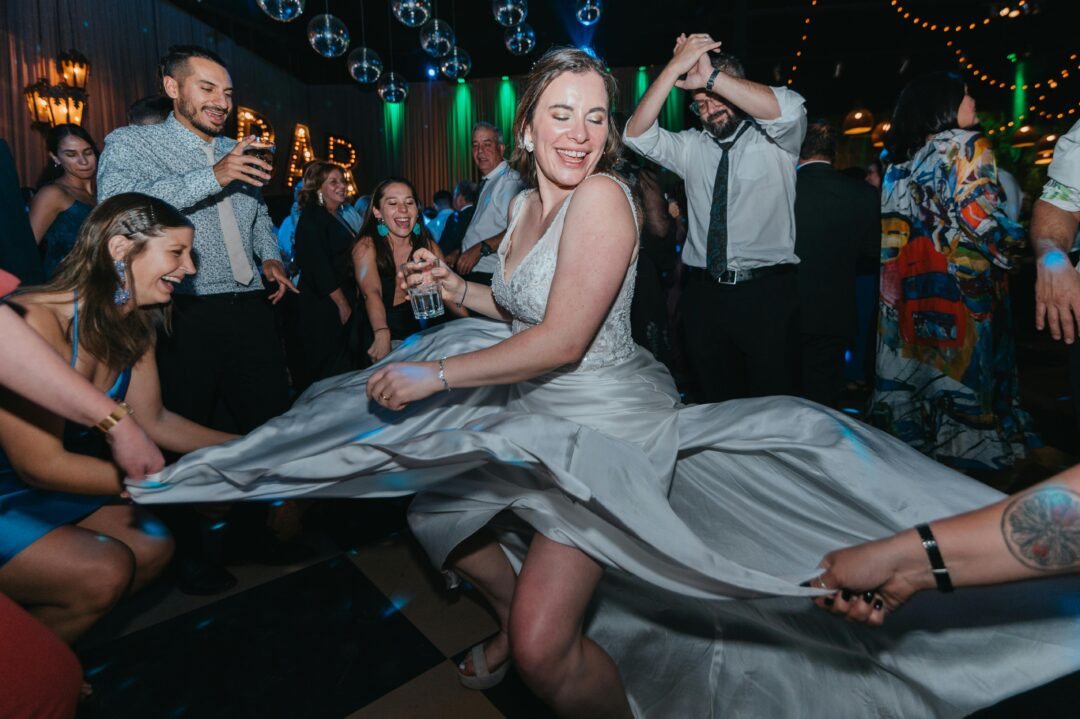

- Ask these 50 questions across 5 phases – initial inquiry, logistics, pricing, day-of execution, and post-wedding – before signing any DJ contract.
- Always ask whether they use local music libraries vs. streaming – venues with weak WiFi can kill a live set mid-reception.
- Confirm the backup plan if your DJ is sick on the day – a good DJ has a named stand-in, not a vague promise.
- Get the overtime rate in writing before you sign – receptions almost always run long, and surprise fees are common.
- A do-not-play list is just as important as a must-play list – confirm how specific you can be and how strictly they enforce it.
- The best DJs function as MC and crowd reader, not just track selectors – phase 4 questions will tell you which type you’re hiring.
Your wedding DJ controls the energy in the room for four to six hours straight – every first dance, every awkward silence between courses, every moment guests decide to stay on the floor or drift back to their seats. Choosing well is one of the highest-leverage decisions in your entire vendor roster. These 50 questions, organized into five phases, give you everything you need to vet a DJ properly, spot red flags before you sign, and walk into your reception knowing the night is in capable hands.
Each question includes the industry context behind it, what a strong answer looks like, and what should make you pause. Work through the phases in order, or jump to the section most relevant to where you are in your search.
Phase 1: Initial Inquiry
Before you discuss pricing or packages, you need to know who this person is as an artist and professional. The questions in this phase reveal experience, versatility, and whether their working style is compatible with your vision.
1. Do you serve as both DJ and MC, or are those separate roles?
Some DJ companies split the MC duties (crowd announcements, toasts, transitions) from the mixing duties – sometimes using two different people. This matters enormously for cohesion. A strong answer explains clearly how they handle both roles and whether the voice you hear at the consultation is the voice you’ll hear at the reception. A red flag: a vague answer that avoids committing to who is actually speaking on the microphone that night.
2. Have you worked at our venue before?
Venue familiarity shortens setup time, reduces acoustic surprises, and means the DJ knows the load-in logistics, where sound reflects poorly, and whether the venue has tricky noise restrictions. A good answer is either direct experience or a willingness to do a venue walkthrough beforehand. A red flag: no venue knowledge and no interest in doing a scout – that’s someone who is winging the setup.
3. Can you share a portfolio or recordings from past wedding receptions?
Highlight reels tell you very little – a full set recording or a testimonial-backed portfolio tells you how they manage transitions, handle crowd energy drops, and pace a four-hour reception. A strong DJ will have recordings or at minimum detailed references. A red flag: nothing shareable beyond a polished promo video, which is almost always curated to obscure weaknesses.
4. How would you describe your style and genre range?
Some DJs live and die in one genre; others are genuinely versatile. If your guest list spans three generations or you want a mix of Top 40, throwbacks, and Latin, you need to know upfront whether their library and instincts can handle it. A strong answer describes range with specific examples. A red flag: “I play whatever you want” with no discussion of how they actually navigate genre shifts.
5. Do you use a local music library or rely on streaming services?
This is one of the most underasked and highest-stakes questions. A venue with spotty WiFi can break a streaming-only DJ’s entire set at the worst possible moment. Industry best practice is a locally stored library of 20,000+ tracks with streaming only as backup. A red flag: full dependence on Spotify or Tidal with no local fallback – that is a genuine reliability risk in any venue with marginal internet.
6. How do you build a playlist around our taste?
This reveals whether they have a process or just take a loose request list and improvise. Good DJs typically send a music questionnaire weeks before the wedding, use it to build a custom framework, and then read the room live within that framework. A red flag: “just send me some songs you like” with no structured process – that approach tends to produce safe, generic sets with no story arc.
7. How many weddings do you take per weekend?
Many solo DJs double-book Saturday dates, meaning a second wedding later in the same day or even overlapping slots with staff coverage. That is not automatically a problem, but it affects how much prep time and energy they bring to yours. A strong answer is transparent. A red flag: defensiveness about the question – if they won’t tell you how they manage their schedule, that is worth noting.
8. What is your backup plan if you are sick or have an emergency on our wedding day?
Every experienced DJ has a named stand-in – another professional they trust, briefed on your music preferences and capable of running the full setup. Anything less is a liability. A strong answer names a specific person or describes a formal network arrangement. A red flag: “that’s never happened to me” – that is not a plan, that is wishful thinking, and it tells you they have not prepared for the scenario.
9. Can you provide references from recent weddings, ideally at similar venues?
References from couples who got married at banquet halls do not tell you much about how a DJ handles an outdoor vineyard with sound restrictions. Targeted references reveal real performance context. A strong DJ provides multiple references and follows up to ensure they respond. A red flag: only written testimonials with no option to speak to actual past clients – those testimonials cannot be questioned or cross-referenced.
10. How do you handle requests for cultural music or non-English language tracks?
For multicultural weddings, this is critical. A DJ without meaningful experience in your cultural repertoire – whether that is Bollywood, cumbia, K-pop, or a specific regional folk tradition – can fail the moment that part of the celebration begins. A strong answer describes specific experience with your tradition. A red flag: “I can find anything on the internet” with no demonstrated prior knowledge or library depth in that genre.
Phase 2: Logistics
Even the most talented DJ can create chaos if their logistics are not airtight. Setup timing, power requirements, and equipment details all need to be confirmed in writing – and these questions pull those details into the open.
11. What equipment do you bring, and what are your power and space requirements?
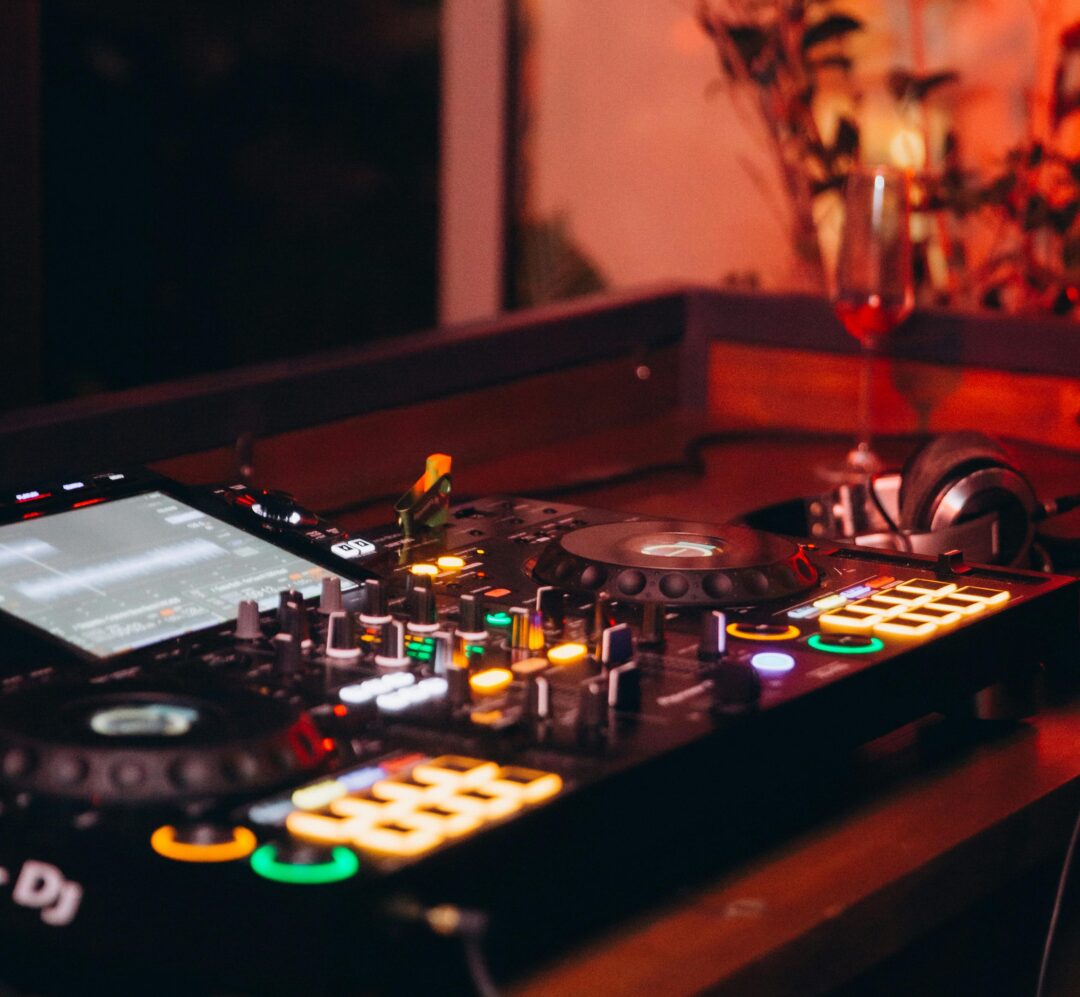
A professional DJ should be able to hand you a full equipment list without hesitation: speaker models, mixer, lighting rigs, cable runs, power draw. Your venue coordinator needs this information to confirm technical compatibility. A strong answer is specific. A red flag: vague descriptions like “pro gear” or “everything we need” with no specifics – that is a sign they have not coordinated closely with venues before.
12. How much time do you need for setup and breakdown?
Most professional DJ setups require 90 minutes to 2 hours for full installation and sound check. If your venue only allows vendors access 45 minutes before guests arrive, that is a scheduling conflict that needs resolution before you sign. A strong answer gives exact times. A red flag: “we’ll figure it out on the day” – that phrase should never apply to load-in logistics.
13. When do you schedule the sound check?
A sound check before guests arrive is non-negotiable for a professional setup – it catches feedback issues, tests the room acoustics, and confirms every channel works. Ask whether it happens before or after the venue setup is complete. A strong answer specifies a defined pre-event window. A red flag: no formal sound check in the schedule, which is common with underprepared DJs who “just plug in and go.”
14. Do you require a vendor meal?
This is a practical logistics question that affects your catering headcount. Most venues and caterers expect vendor meal requests in advance. Many DJs do include this in their contracts; some do not. A strong answer is simply honest and specific. A red flag is not the request itself – a red flag is discovering this for the first time at the final headcount because it was never discussed.
15. What is included in your lighting setup, and what counts as an add-on?
Many DJ packages include basic dance floor lighting but charge separately for uplighting, intelligent wash lights, monogram projections, or pin-spot candle lighting. Getting the itemized breakdown upfront avoids sticker shock. A strong answer breaks it down line by line. A red flag: a package description so vague that you cannot tell what “lighting” actually includes without asking repeatedly.
16. How many microphones do you provide – specifically for the ceremony versus the reception?
Ceremony needs are different from reception needs – an officiant lapel mic, a handheld for readings, and possibly a second lapel for the couple are all ceremony considerations. Reception toasts need a different setup. A strong DJ specifies microphone count by event segment. A red flag: one handheld mic for everything, with no acknowledgment that different moments need different setups.
17. Can you provide amplification for an outdoor ceremony?
Outdoor sound is a different technical challenge from indoor – ambient noise, wind, and the absence of walls to reflect sound all require more powerful amplification and different speaker placement. Confirm they have the right outdoor-rated equipment. A strong answer demonstrates specific outdoor experience. A red flag: the assumption that indoor speakers “will probably be fine outside.”
18. Do you charge travel fees, and at what distance does that apply?
Most DJs build travel into their base rate within a certain radius, then charge per mile beyond it. If your venue is more than 60-90 minutes from their base, expect an add-on. A strong answer gives you a specific rate and threshold. A red flag: no mention of travel fees at the quote stage followed by a line item on the final invoice – always confirm this upfront.
19. Do you scout the venue in advance, or do you rely on floor plans?
An in-person venue scout allows the DJ to identify acoustic issues, confirm power outlet locations, plan cable runs, and meet the venue coordinator. Not every DJ does this for every booking, but for complex or unfamiliar venues it is a mark of professionalism. A strong answer describes their standard pre-event site process. A red flag: no site visit, no floor plan review, and no communication with the venue coordinator in advance.
20. How do you manage load-in logistics around other vendors?
At most weddings, the DJ, florist, caterer, and lighting team are all setting up simultaneously in the same space. A disorganized load-in creates conflict and delays. A strong DJ has a clear protocol: who they contact first, how they coordinate cable runs with the lighting team, and how they stage their equipment when floor space is tight. A red flag: no prior communication with the venue about shared vendor access windows.
Phase 3: Pricing and Payment
DJ pricing is notoriously opaque, with base rates that balloon once add-ons are applied. These questions force the full cost picture into the open before you sign – and reveal the policies that will govern your night.
21. What exactly is included in your base package?
DJ packages vary widely – some include ceremony sound and cocktail hour as standard; others charge for each segment separately. Know exactly what hours of coverage, what equipment, and what services are in the base rate before comparing quotes. A strong answer gives a detailed scope statement. A red flag: a package description built around marketing language rather than a clear list of inclusions.
22. What are your most common add-ons, and what do they cost?
Ceremony sound, cocktail hour coverage, uplighting, monogram projection, and photo booth integration are the most common upgrades. Getting the add-on menu upfront lets you build a realistic total cost rather than discovering extras piecemeal. A strong answer is a written itemized list. A red flag: add-ons revealed gradually across multiple conversations rather than disclosed together upfront.
23. What is your overtime rate if the reception runs past the contracted end time?
Receptions almost always run long – dinner service takes longer than planned, speeches go over, the dance floor refuses to clear. Knowing the overtime rate in advance prevents an awkward mid-reception conversation. Industry rates typically run $150 to $300 per hour beyond the contracted window. A strong answer gives you an exact figure in writing. A red flag: “we’ll figure it out at the end of the night” – that is not a policy, and it creates financial ambiguity at the worst time.
24. What is your deposit amount, and what is the payment schedule?
Most DJs require a deposit of 25-50% to hold your date, with the balance due one to two weeks before the wedding. Understand what the deposit covers, whether it is refundable under any conditions, and what triggers the final payment. A strong answer is a written schedule. A red flag: a large non-refundable deposit with no corresponding written contract – pay nothing without a signed agreement in hand.
25. How long can my do-not-play list be, and how specific can I get?
A do-not-play list is as important as a must-play list – many couples have songs tied to past relationships, family tension, or simply personal disdain. Confirm whether you can list by song, by artist, by era, or by genre – and confirm that the DJ takes it seriously rather than treating it as optional guidance. A strong answer describes their specific enforcement process. A red flag: “I’ll use my judgment” – that is not reassurance, that is refusal to commit.
26. What is your policy on guest song requests on the night?
Some DJs take all guest requests; others funnel everything through the couple or coordinator. There is no single right answer, but your preference needs to be agreed in advance. If a guest requests a song on your do-not-play list, what happens? A strong DJ has a clear protocol. A red flag: blanket openness to all guest requests with no filtering mechanism – that is how a drunk uncle gets “Cotton Eye Joe” played at midnight.
27. What does uplighting cost, and how many fixtures are included?
Uplighting transforms a reception space – it is one of the highest visual-impact-per-dollar upgrades available. But fixture count matters: a 3,000-square-foot ballroom may need 20+ units for full coverage, while a smaller space needs far fewer. A strong answer specifies per-fixture pricing and a recommended count for your venue size. A red flag: a flat “uplighting package” fee with no mention of how many units are included.
28. Do you offer photo booth integration, and how is that priced?
Many DJ companies offer photo booth rentals as a separate add-on, operated independently or as part of the same team. If this is on your wishlist, confirm whether the DJ manages it directly or subcontracts it – and whether the operator is briefed on your timeline. A strong answer clarifies who is running what. A red flag: a subcontracted photo booth where the DJ has no direct relationship with the operator.
29. Are there any extras – pipe and drape, ambient lighting, or room transformation – that you handle?
Some full-service DJ companies have expanded into room decor and ambiance production. If you are interested in a cohesive look and want fewer separate vendors, this is worth exploring. A strong answer is transparent about scope and subcontracting. A red flag: a DJ who claims to offer everything but subcontracts heavily with no meaningful quality oversight.
30. What typically drives cost overruns with your bookings?
This question inverts the sales dynamic and reveals honesty. A professional DJ will tell you exactly what tends to push final invoices higher – overtime, last-minute uplighting additions, late-start penalties from delayed venue access. A strong answer is candid. A red flag: “that never happens with us” – it always happens somewhere, and a DJ who denies it is either inexperienced or evasive.
Phase 4: Day-Of Execution
A DJ’s day-of skills separate the average from the exceptional. These questions probe how they manage the room, communicate with your team, and handle the inevitable surprises that come with live events.
31. How do you manage reception flow – from dinner service through first dances, speeches, and open floor?
The best DJs function as event directors, not just music players. They understand that dinner service requires background energy at a specific volume, that transitions between speeches and dancing need intentional pacing, and that the open dance floor has an arc – it builds, peaks, and needs recovery windows. A strong answer demonstrates a systematic approach. A red flag: “I just follow the timeline” with no description of how they actively shape the room’s energy.
32. How do you communicate with the planner or coordinator during the reception?
Timing changes happen at every reception – courses arrive late, a speech runs long, the photographer needs five more minutes for portraits. A DJ who is not in active communication with the coordinator is operating blind. A strong answer describes a specific protocol: earpiece, shared timeline, pre-agreed hand signals. A red flag: “I’ll keep an eye on things” with no structured communication plan.
33. How do you coordinate the first dance with the photographer and videographer?
The first dance is one of the most photographed moments of the night. If the DJ starts the track before the photographer and videographer are in position, the first few seconds – often the most emotional – are lost. A strong DJ describes a specific ready-check protocol with the photo and video team. A red flag: “they need to keep up with me” – that attitude guarantees missed moments.
34. How do you handle a guest who requests a song from the do-not-play list?
This tests whether their do-not-play policy has actual teeth. The best answer: they decline politely, redirect the guest, and do not escalate the situation to the couple. The MC skill here is social intelligence, not just rule-following. A strong answer describes the specific language they use. A red flag: “I’d probably just play it if the guest was really into it” – that is a direct breach of the couple’s stated preferences.
35. How do you read a crowd and adjust when the dance floor starts to empty?
Crowd reading is the hardest skill to teach and the easiest to fake in a sales conversation. Look for specificity: do they describe identifying demographic clusters, using a “reset” song to recapture a lost floor, or reading table body language? A strong answer cites actual techniques. A red flag: “I have great instincts” with no concrete description of what those instincts actually look like in practice.
36. How do you manage microphone handoffs during parent speeches and toasts?
Toast logistics are notoriously chaotic – nervous speakers, multiple people in sequence, unexpected additions to the lineup. A DJ who handles mic handoffs smoothly keeps energy up between speakers and prevents the dead-air moments that make guests check their phones. A strong answer describes their standard toast management protocol. A red flag: no defined process – “people just pass the mic” is a recipe for technical failure.
37. What happens if a piece of equipment fails mid-reception?
Amplifiers fail, laptops crash, and speakers blow. A professional DJ carries redundant equipment – a backup laptop with the same music library, a spare mixer channel, and spare cables. Ask what specific backup gear travels to every event. A strong answer lists the actual redundancy they maintain. A red flag: “that has never happened to me” – again, not a plan.
38. How do you signal the transition from dinner to dancing?
This transition is the most critical energy pivot of the night. A weak transition – a flat announcement followed by a volume jump – kills momentum. A strong DJ describes a deliberate energy build: music gradually shifting tempo and volume during dessert service, a clear but warm MC announcement, then the first up-tempo track chosen specifically to pull people off their seats. A red flag: no defined transition strategy beyond “I announce it and start playing.”
39. How do you keep energy high late in the night when guests start to thin?
The midnight hour is when weak DJs lose the room. Strong DJs concentrate their most engaged dancers, shift to tighter genre windows that reward the remaining crowd, and use call-and-response moments to build participation. A strong answer describes specific late-night tactics. A red flag: “I just play bangers” – that is not crowd management, that is volume management.
40. Do you have a structured process for getting a timeline from us before the wedding?
A DJ without a detailed pre-event intake process is improvising on the night. The best DJs send a structured questionnaire 4-6 weeks out, then schedule a final call one to two weeks before the wedding to confirm every cue time, every must-play moment, and every special request. A strong answer describes that intake system precisely. A red flag: “just send me an email with the details” – no structure means details fall through the cracks.
Phase 5: Post-Wedding
What happens after the reception reveals as much about a DJ’s professionalism as what happens during it – and these questions surface both practical logistics and long-term relationship considerations.
41. What is your equipment breakdown timeline relative to the end of the reception?
Venues often have strict vendor departure windows – sometimes as tight as 30-60 minutes after the last guest leaves. A DJ who needs two hours to break down is going to create conflict. Confirm their standard breakdown time and whether it fits within your venue’s end-of-event access window. A strong answer gives a specific timeframe. A red flag: “it depends” with no ability to commit to a range.
42. Do you gather client feedback after the wedding, and in what form?
A DJ who systematically collects and uses feedback is one who is actively improving their craft. It also tells you they care about your experience beyond the invoice. A strong answer describes a genuine feedback loop – a structured survey, a follow-up call, or a review request with a specific platform. A red flag: no feedback process at all, which signals either indifference or a track record they prefer not to surface.
43. Will you ask us for a review or referral, and how do you handle that?
There is nothing wrong with a DJ asking for a review – it is how small businesses grow. But there is a spectrum between a professional request and pressure tactics. A strong DJ describes a simple, low-pressure process: a follow-up email two to three weeks after the wedding with a review link. A red flag: review requests timed before the job is done, or any suggestion that future service is contingent on positive feedback.
44. Do you archive or retain our song list, and could we access it for anniversary events?
Some couples want to recreate the energy of their reception for milestone anniversaries. A DJ who archives your playlist and is willing to reprise it shows genuine long-term client care. It also signals organizational discipline – they are not just erasing every wedding the moment the invoice clears. A strong answer confirms their archive policy and retention timeline. A red flag: no retention of any client data, which also raises questions about how organized they are before the event.
45. What is your process if you play a song from our do-not-play list by mistake?
Mistakes happen. What matters is how a professional handles them. A strong DJ describes a clear resolution process – an immediate apology, a protocol for making it right (a partial refund, a discount on a future booking), and an acknowledgment that it represents a real breach of the agreement. A red flag: defensiveness, minimizing language like “it was only one song,” or no defined resolution process whatsoever.
46. Do you stay connected with past clients for anniversary or milestone events?
A DJ who follows up on first anniversaries or offers returning-client rates is building a genuine relationship rather than a transactional one. This is especially meaningful if you want your wedding DJ at a vow renewal or major anniversary party. A strong answer describes a real touchpoint protocol. A red flag: “once the wedding is over, our job is done” – that is fine as a policy, but it tells you something about how they value the relationship.
47. Do you collaborate with photographers or videographers on portfolio content from our wedding?
Some DJs work with photographers to capture quality behind-the-console shots or reception footage for their portfolio and social channels. If you are comfortable with that, it can be a nice way to give back. The key is consent – they must ask before using any images or footage featuring you. A strong answer makes the consent request explicit and upfront. A red flag: any assumption that portfolio use is automatic.
48. If we were not completely satisfied, how would you handle that conversation?
This is a character question more than a logistics question. How a vendor handles dissatisfaction reveals their values. A strong answer describes a genuine listening process, a willingness to acknowledge specific failures, and a defined resolution path. A red flag: immediate defensiveness, framing all client dissatisfaction as a misunderstanding, or any suggestion that complaints are rare enough to dismiss.
49. Do you have professional liability insurance or event-specific coverage?
Many venues now require vendors to carry liability insurance – and even if yours does not, a DJ running a large electrical setup in a crowd of hundreds carries real risk exposure. A professional DJ carries general liability coverage, and some carry equipment insurance as well. A strong answer includes their coverage type and limits. A red flag: no insurance, or uncertainty about their coverage status – that is a professionalism gap and potentially a venue compliance issue.
50. Is there anything about our wedding that you would want to know before deciding whether to take the booking?
This final question flips the consultation and reveals how much the DJ is actually listening. A thoughtful professional will ask about guest demographics, cultural considerations, unusual venue logistics, or timeline complexity. A surface-level DJ will just say “sounds great” and wait for the deposit. A strong answer demonstrates genuine curiosity. A red flag: no questions, no curiosity – if they are not asking questions now, they will not ask them before your wedding either.
Tying Your Reception Together
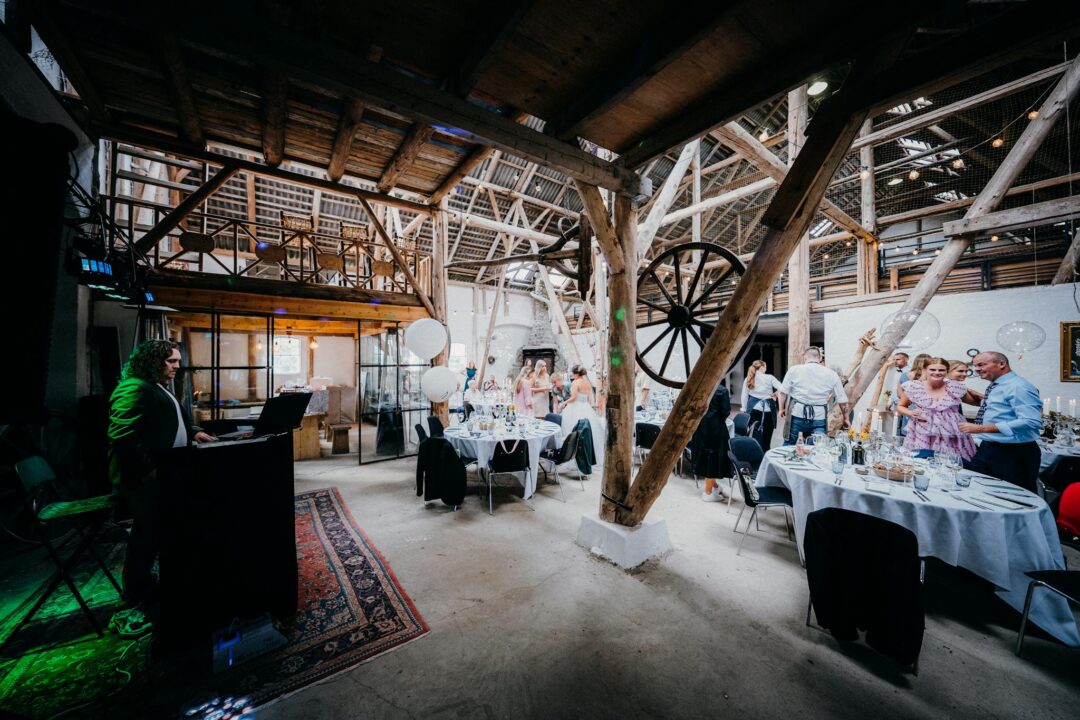
Your DJ is one piece of a larger reception system – and the vendors around them need to be equally prepared. Before your big day, make sure your printed materials are working as hard as your music lineup.
Your wedding reception menus set the tone at each place setting and help guests follow the flow of the evening – from appetizers through the first dance announcement. A well-designed menu matches your invitation suite and gives your coordinator one more tool for managing dinner-to-dancing pacing. Paperlust’s reception menus are printed in-house at the Melbourne studio across digital print, flat foil, and metallic finishes, with a designer proof delivered in 1-2 business days.
Your wedding seating chart also plays a direct role in reception flow – when guests find their seats quickly, dinner service starts on time, and your DJ has a clean runway to the first dance. Paperlust offers printed seating charts on fabric or PVC board, both available with vinyl foil in gold, silver, or rose gold.
If you are still building out your full vendor question toolkit, the sibling guides in this series cover every key consultation: 50 questions to ask your wedding photographer, questions to ask your wedding planner, and questions to ask your wedding caterer – because the DJ, photographer, planner, and caterer all need to work as a coordinated team for your reception to run smoothly.
Direct your guests
Reception signs + seating charts
While the DJ runs the dance floor, signage and seating charts run the room. Custom-printed in matching colorways.
Frequently Asked Questions
How far in advance should I book my wedding DJ?
For Saturday dates in peak season (May through October), book 10-14 months in advance. Popular wedding DJs fill their calendars faster than most couples expect – quality vendors in major markets often have fewer than 3-4 Saturdays available by the time a couple starts seriously researching. For off-peak dates or midweek ceremonies, 6-8 months is typically sufficient.
What is the average cost of a wedding DJ in the US?
Wedding DJ pricing in the US typically ranges from $1,000 to $5,000+ for a full reception, with the national average sitting around $1,500-$2,500 for a competent mid-market professional. Full-service DJs who also cover ceremony sound, cocktail hour, and uplighting often land in the $3,000-$5,000 range once add-ons are included. Budget DJs under $1,000 are generally an amateur risk not worth taking on your wedding day.
Should I hire a DJ who is also an MC?
Yes, for most weddings. Having the same person handle music and crowd announcements creates a more cohesive experience – the DJ can time announcements to the music build rather than shouting over an awkward silence. Separate MC and DJ setups work better at large-format events with professional emcees, but for a typical wedding reception, a single DJ-MC is almost always the better choice.
How long should I expect the DJ to be at my venue?
Add setup and breakdown to your contracted performance hours. A DJ booked for a 5-hour reception should arrive 90 minutes to 2 hours before the first guest, and may need 45-60 minutes to break down after the last song. Budget for 8-9 hours of venue access when coordinating with your venue coordinator on vendor schedules.
What is a do-not-play list, and how specific should it be?
A do-not-play list is your explicit instruction to the DJ to avoid specific songs, artists, or genres. You can – and should – be very specific: list individual song titles, specific artists whose catalog you want off the table entirely, and broad genre restrictions if relevant (no country, no hip-hop with explicit lyrics, etc.). Most professional DJs accept lists of 10-25 items without pushback. If a DJ limits you to fewer than 5-10 entries, that is a red flag.
Do I need to provide a full playlist to my DJ?
No – in fact, over-specifying the playlist can limit a DJ’s ability to read the room. The better approach is a list of 10-20 must-play songs, a do-not-play list, a few must-play moments (first dance, father-daughter dance, last song of the night), and a general direction by genre or era. Leave the DJ enough flexibility to respond to the crowd’s actual energy rather than executing a rigid track list.
What should I do if my DJ plays a song from the do-not-play list?
Raise it immediately after the reception, not in the middle of it. Document the specific song and the approximate time it was played. Most professional DJs will acknowledge the error and offer some form of remediation – a partial refund, a credit toward a future event, or a formal apology. If the DJ dismisses the concern, that is your signal to escalate through whatever dispute resolution your contract outlines.
Can my DJ provide ceremony music as well as reception music?
Yes, most professional wedding DJs offer ceremony sound coverage as either a package inclusion or an add-on. For outdoor ceremonies especially, having the same vendor handle both segments simplifies coordination and ensures consistent audio quality. Confirm what the ceremony package includes – processional, recessional, and any music during the signing – and whether a separate speaker setup is used at the ceremony site.
What is the difference between uplighting and standard DJ lighting?
Standard DJ lighting is mounted on the DJ rig and points onto the dance floor – it creates movement and energy during open dancing. Uplighting is placed around the perimeter of the room and washes the walls with color – it transforms the ambient atmosphere of the entire space and is visible in every photo taken that evening. The two serve different functions, and many couples choose both for a fully designed reception environment.
Do I need to feed my DJ a vendor meal?
Most wedding contracts either specify a vendor meal or leave it to the couple’s discretion. For a DJ working a 5-6 hour reception, a vendor meal is a reasonable professional courtesy – it keeps energy levels up and avoids the distraction of a hungry vendor stepping away from their setup. Confirm with your caterer what the per-head cost is, include it in your headcount, and note it in your vendor confirmation sheet.
What happens if the DJ cancels last minute?
Your contract should specify what happens in a cancellation scenario – typically a full refund of the deposit plus damages if the cancellation is within a specified window. Beyond the contract, ask specifically during the booking conversation what their named backup is. A professional DJ company should be able to provide a vetted stand-in from their network. If they cannot name a specific person, that is a risk you are accepting without mitigation.
Is it worth hiring a DJ over a band for a wedding reception?
Both have real merits. A DJ offers a larger song catalog, perfect reproduction of the original recordings, more reliable volume control, and typically a lower price point. A live band offers energy and spontaneity that no recording can replicate. For couples who care deeply about specific songs – including current chart hits or obscure tracks – a DJ is usually the safer choice. For couples who want spectacle and are flexible on the specific song list, a band can be transformative. Many couples choose a DJ who can coordinate with a live musician (saxophonist, percussionist) for the best of both.
About Paperlust
Paperlust was founded in Melbourne in 2014 and has been recognized as a Westpac Business of Tomorrow. The studio offers 500+ exclusive invitation designs by independent Australian and international artists, printed in-house at the Melbourne studio across digital print, letterpress, flat foil, metallic print, and white ink on colored stocks. Every order includes a dedicated professional designer who delivers your proof within 1-2 business days, two rounds of edits at no extra cost, free white envelopes, a 100% happiness guarantee, free DHL express shipping on orders over $350 USD, and a tree planted with every order.
Image credits