

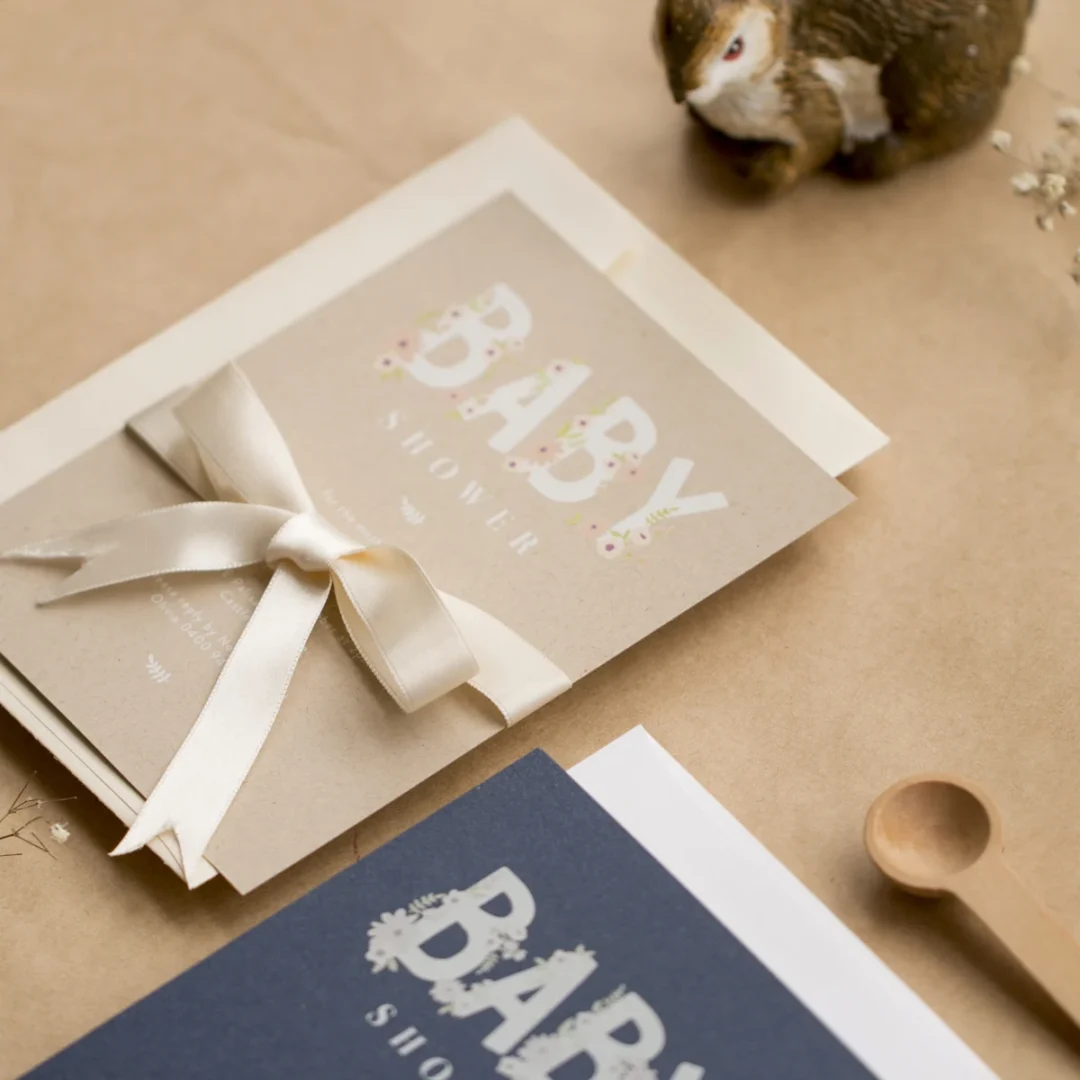
A birth announcement is one of the few pieces of stationery that carries genuine emotional weight on both sides – you’re sharing one of the most significant moments of your life, and every recipient is delighted to receive it. But for new parents in the fog of those first weeks, questions about who to send to, what to include, and how to handle anything outside the standard template can feel unexpectedly daunting. This guide covers every etiquette question you’re likely to have, so you can send with confidence.
- Send within 6 weeks of birth – though any time in the first few months is perfectly acceptable.
- Include both parents’ names if both are involved in raising the baby.
- Never send a birth announcement before the baby arrives.
- Anyone who attended a baby shower should be on your mailing list.
- Follow up with thank-you cards after receiving gifts prompted by the announcement.
See our Australia, United States, United Kingdom, Canada, or New Zealand collection to see locale-specific designs and shipping.
Who should you send a birth announcement to?
The short answer: anyone who would be genuinely happy to hear the news. The longer answer involves a few tiers worth thinking through.
Family and close friends
These are always on the list – no second-guessing required. Immediate family, grandparents, aunts, uncles, and close friends who have been part of your pregnancy journey all deserve a printed announcement. One important consistency note: if you’re sending to two of your mother’s sisters, include the third. Accidental omissions create unnecessary hurt feelings during an otherwise celebratory time.
Baby shower attendees
Anyone who attended your baby shower – whether they gave a gift or not – should receive an announcement. They invested time and energy in celebrating your baby’s arrival before it happened; a birth announcement closes the loop beautifully and honors their involvement.
Coworkers
This depends on your workplace relationships. Close colleagues who followed your pregnancy and asked regularly? Yes. A large team of professional acquaintances? Probably not – a group email or Slack message handles that circle better. Save printed announcements for the coworker relationships that genuinely feel personal.
Out-of-touch acquaintances and distant relatives
Optional, but often more appreciated than you’d expect. Sending to your college roommate you haven’t seen in five years or a distant cousin you stay loosely connected with is a generous gesture. No obligation exists here – send to people whose joy you want to include, not out of social pressure.
Religious leaders and godparents-elect
Yes – especially if you’re planning a baptism, baby naming, or dedication ceremony. Your pastor, rabbi, priest, or religious community leader will appreciate the announcement, and it naturally precedes any formal ceremony invitations that follow.


When is the right time to send?
The traditional window is within six weeks of birth, but this is a guideline rather than a firm rule. Newborn exhaustion is real, and no one expects you to be addressing envelopes at two weeks postpartum. For a detailed breakdown of timing by situation – including how early is too early, how late is too late, and what the digital vs. printed timelines look like – read our guide on when to send birth announcements.
One etiquette point that is non-negotiable: call immediate family before any announcement goes out. Grandparents and close family members should never learn the news via a card in the mailbox or a social media post – a phone call first is both respectful and expected. Once your inner circle knows, the announcement serves as the official, tangible record of the arrival for everyone else.
Should you send a birth announcement to people who already know?
Yes – and here is why. A birth announcement is not purely an information delivery mechanism. For many recipients it becomes a keepsake: pinned to a refrigerator, slipped into a baby album, or tucked away in a card box they return to for years. A close friend who was the first person you called, or a sister who visited in the hospital, still deserves the printed, permanent version of the moment.
Think of the announcement as the official record of your baby’s arrival – separate from the texts, calls, and hospital room visits that preceded it. The people who already know will often appreciate receiving it most.
When to skip: if the relationship is distant enough that you genuinely wouldn’t expect a response and the announcement would feel performative rather than personal, it’s fine to leave them off. But when in doubt, err toward including.
What should be included in the wording
Etiquette here is about completeness and accuracy rather than any particular wording style. The essentials are:
- Both parents’ names – if both parents are in the baby’s life, both names belong on the announcement. Omitting one parent’s name is a noticeable exclusion.
- Baby’s full given name – first and last at minimum; middle name is optional but common.
- Birth date – the day, month, and year.
- Weight and length – traditional and expected by many relatives, but genuinely optional. If your baby was born premature and the stats feel complicated to include, leave them out.
- Optional additions: time of birth, hospital name, sibling names.
One thing that should never appear on a birth announcement: gift registry information. An announcement celebrates the birth – it is not a gift solicitation. If recipients want to send something, they’ll ask. Including registry details on an announcement crosses a clear etiquette line. For practical guidance on designing and sending cards while adjusting to newborn life, see how to create baby announcements when you’re adjusting to life with a newborn.
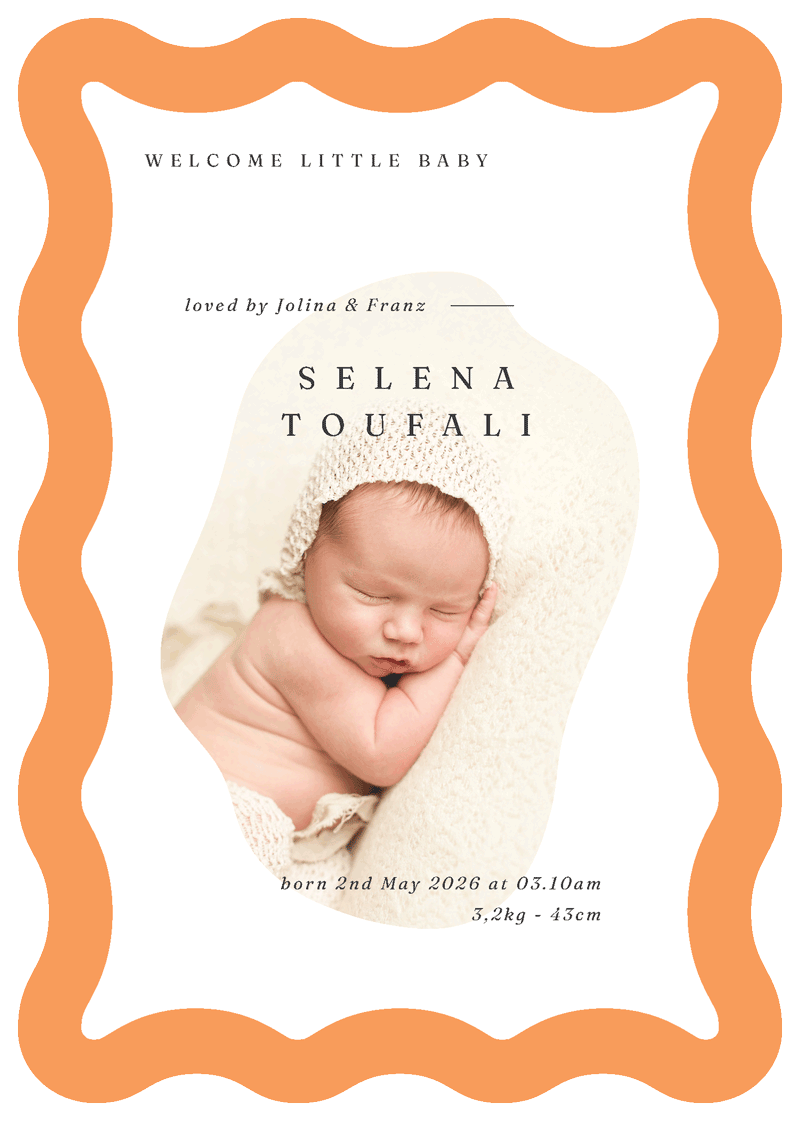
AmberDigital printing

ImpressionistDigital printing
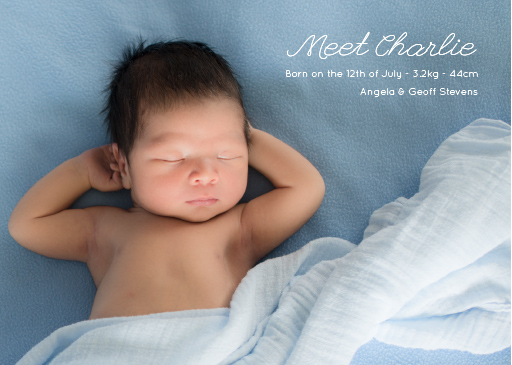
Meet the newbie Type 2Digital printing

All MinimalDigital printing
Special situations and the etiquette
Modern families come in every configuration, and birth announcement etiquette has evolved accordingly. Here is how to navigate the situations that the standard template doesn’t cover.
Adoption
Use language that celebrates the arrival without referencing the biological parents or framing adoption as rescue. Preferred phrasing centers the family and the joy:
Avoid phrases like “finally ours” which inadvertently suggest the child was previously unclaimed. The announcement is about this family, this child, and this moment – keep the focus there.
Same-sex couples
Both parents’ names appear equally on the announcement – no hierarchy, no “parent” and “co-parent” distinction unless that is your personal preference. The format is identical to any other two-parent announcement. The etiquette is simple: both people are parents, so both names belong on the card with equal weight.
Surrogacy
The announcing parents are the parents on the card – the format is the same as any birth announcement from their perspective. Most families choose not to reference the surrogacy arrangement in the announcement itself, keeping the focus on the baby’s arrival. What you share about the surrogacy journey is entirely personal and optional.
Blended families
Acknowledging existing siblings on a birth announcement is a lovely, inclusive gesture:
This affirms that the new baby is joining an existing family, not displacing anyone. You can include step-children and half-siblings by first name – no explanation of family structure is needed or expected.
Single parents by choice
A single parent’s announcement features one parent’s name with pride and confidence. There is no etiquette rule requiring explanation of family structure, and no need to reference the absence of a second parent. The announcement celebrates what exists: a new baby, a loving parent, and a family.
Babies after loss and rainbow babies
Some parents choose to acknowledge a previous loss in their announcement – through language like “our rainbow baby” or a subtle design element – and others prefer to let the birth announcement stand on its own. Both choices are valid. If you do reference a previous loss, keep language gentle and forward-looking. Never suggest the new baby replaces a previous child, or use language that frames one loss as the price of this arrival. They are separate children, each deserving individual recognition.
NICU babies and premature arrivals
There is no etiquette obligation to send an announcement until you are ready – and in a NICU situation, that may mean waiting until your baby is home and you have any mental bandwidth left for stationery at all. If you do send early, you can briefly acknowledge the premature arrival (“arrived a little ahead of schedule but doing beautifully”) or say nothing about it. Your baby’s medical details are not required information on an announcement. Send when you’re ready – no window has closed.
Twins and multiples
Each baby gets their own name and stats listed individually. Birth order is the standard naming sequence – Baby A first, then Baby B. Photos showing all babies together are the norm, though individual photos on a multi-panel card work beautifully for triplets or more. The announcement should celebrate each child as an individual within the set, not only as a collective.
Sending birth announcements after a divorce or estrangement
If parents are separated or recently divorced, the announcement still represents the baby. Both parents’ names may appear if both are involved, but there is no requirement to do so – many co-parents send separate announcements from each household, which is entirely appropriate. What matters is that the baby’s arrival is communicated, not the specific formatting of adult relationships on the card.
In cases of family estrangement, the decision of who receives an announcement becomes personal rather than etiquette-driven: send to the relationships you want to maintain or reconnect, and leave off those you don’t. One nuance worth noting: if an estrangement exists between you and one side of the family, your baby’s relationship with grandparents and aunts and uncles on that side is not the same as the adult relationship in question. Many parents choose to include those extended family members regardless.
Religious considerations
In many traditions, a formal birth announcement aligns naturally with a religious milestone. Jewish families often coordinate announcement timing with the baby naming ceremony – a simchat bat for girls or the bris at eight days for boys – and some families send a single combined announcement-and-invitation. Catholic families may send birth announcements first and baptism invitations separately, or wait to announce until after the baptism. Hindu families celebrating a namakaran (naming ceremony) typically announce using the baby’s formally given name after the ceremony takes place.
There is no universal rule requiring ceremony timing to govern announcement timing. If your tradition calls for waiting, wait. If you want to announce the birth and separately invite people to a ceremony later, that is entirely appropriate. What matters is that the announcement reflects your family’s cultural and religious context rather than a generic template.
Digital vs. printed birth announcements – etiquette comparison
Neither format wins outright on etiquette grounds – context determines the right choice. A few considerations:
- Printed announcements are the traditional choice and carry permanence that digital cannot replicate. For older relatives or anyone who may not engage with digital communications, a printed card is the only format that guarantees meaningful receipt. Printed announcements also become keepsakes – held onto for years in ways that emails and texts simply are not.
- Digital announcements are faster, more affordable, and reach a broad network instantly. For a wide circle of connected contacts, a beautifully designed digital announcement covers the etiquette obligation perfectly well.
- Both together is the approach many families choose – printed cards for inner circle and immediate family, digital for the wider network.
One clear etiquette point regardless of format: a public social media post is not a substitute for direct notification of close family and friends. A post on Instagram announces to all followers simultaneously, which means distant acquaintances learn the news at the same moment grandparents do. Close relationships deserve direct contact – whether printed, phoned, or personally messaged – before any public announcement goes up.
Ready to design something worth keeping? Browse the full range at Paperlust baby announcements.
Photo birth announcement cards →

Ocean WavesFlat foil

Meet the newbie Type 1Digital printing
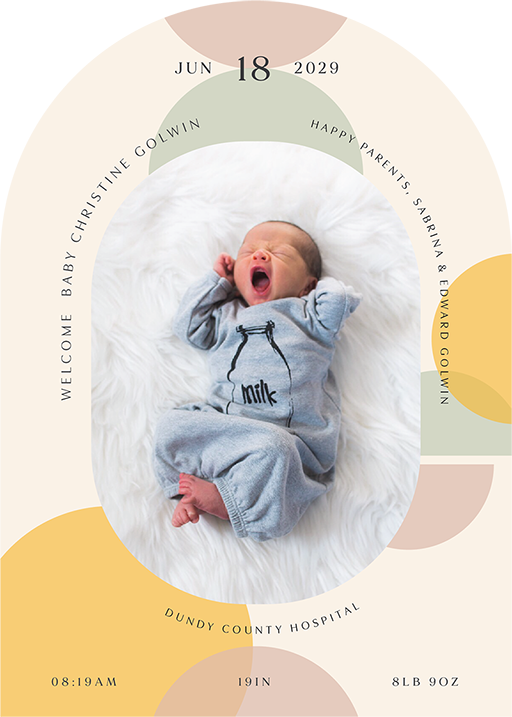
Pastel DaydreamDigital printing
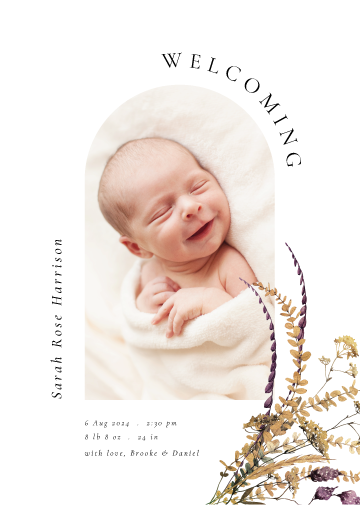
Autumn BouqetDigital printing
Following up with thank-you cards
Birth announcements prompt gift-giving, and gifts require thank-you cards. The etiquette window for thank-you notes is within six to eight weeks of receiving the gift – not six to eight weeks after the birth. Newborn exhaustion is understood; no one expects a thank-you card in week one. But once the first wave of gifts arrives, the clock starts.
The note does not need to be long. A brief, specific acknowledgment – naming the gift and expressing genuine gratitude – is far better than a lengthy, generic message. For wording guidance on baby cards of all kinds, our baby cards 101 guide covers what to write and how to keep it sincere without spending an hour per card.

How to handle late birth announcements graciously
Life with a newborn does not follow a calendar. If six weeks have passed – or six months – and you still haven’t sent announcements, send them anyway. There is no etiquette rule that voids a birth announcement after a certain point. The only adjustment needed is a light acknowledgment of the timing if you want to include one:
That kind of note is warm and self-aware without being overly apologetic.
Alternatively, say nothing about the timing at all. Most recipients are simply delighted to receive the news and the card – the postmark date is largely irrelevant to the joy it delivers.
Birth announcement etiquette for second and third children
The etiquette for subsequent children is identical to the first – every child deserves a formal announcement. The mailing list may be smaller (you know your relationships better by the third time), and that is entirely appropriate. Send to the people who will genuinely celebrate the news, not to match the scale of what you did before.
Sibling acknowledgment on the announcement is optional but widely appreciated. Naming an older child as “big brother” or “big sister” makes them part of the announcement rather than a footnote – a gesture that is meaningful both for the recipient reading it and for the older child who may one day look back at the card. Find designs with space for sibling names in our baby announcements collection.
Frequently asked questions about birth announcement etiquette
Who should you send birth announcements to?
Send to immediate family, close friends, anyone who attended a baby shower, godparents-elect, and relevant religious leaders. Coworkers and distant acquaintances are optional – base the decision on genuine warmth in the relationship, not obligation.
Is it rude to not send a birth announcement?
Not rude exactly, but it can feel like an omission to people who were expecting one – particularly close family and baby shower attendees. If printed cards feel unmanageable as a new parent, a simple digital announcement covers the etiquette obligation. The gesture matters more than the format.
Should you send a birth announcement to someone who has already met the baby?
Yes. A birth announcement is a keepsake, not just a news delivery. Close friends and family who visited in the hospital or in the first days home still appreciate receiving the printed announcement – many will keep it for years alongside other milestones from your child’s life.
Is it okay to send a birth announcement after 6 months?
Absolutely. No etiquette rule voids a birth announcement after a certain point. Send whenever you are ready. A brief, warm acknowledgment of the delay is optional but thoughtful – most recipients are simply happy to receive it regardless of when it arrives.
Do you have to include the baby’s weight on a birth announcement?
No. Weight and length are traditional and expected by many families, but they are genuinely optional. If the stats feel complicated – as they might for a premature birth – leave them out entirely. The baby’s name and birth date are the only required information.
Is it bad luck to send birth announcements before the baby arrives?
Many cultures and families hold the belief that announcing a birth before it happens invites misfortune, and some extend this to pre-birth announcement cards. Etiquette defers to your own beliefs and family traditions here. Standard practice is to send after the birth, which also makes practical sense – you need the actual birth date, weight, and name to complete the card.
What is the etiquette for adoption announcements?
Use celebratory, family-centered language: “We are thrilled to welcome our son [name] to our family” or “Our family grew by one on [date].” Avoid language that references relinquishment or biological parentage unless you personally choose to include it. The announcement belongs to your family – keep the focus on the joy of this child’s arrival.
How do same-sex couples typically word birth announcements?
Both parents’ names appear equally – the format is identical to any two-parent announcement. Many same-sex couples also choose gender-inclusive language (“their parents” where relevant) to reflect how their family naturally describes itself. The etiquette is simple: both people are parents, so both names belong on the card with equal prominence.
Is it appropriate to mention a rainbow baby in a birth announcement?
Only if you want to. Some parents find deep meaning in acknowledging a previous loss alongside a new arrival; others prefer to let the announcement focus purely on the present celebration. If you do reference it, keep language gentle and forward-looking. Never frame the new baby as a replacement for a previous loss – each child deserves individual recognition.
Do you send birth announcements to coworkers?
Depends on the relationship. Close colleagues who know you well and asked about the pregnancy regularly are good candidates for a printed announcement. A broader team notification is better handled via email or an office message. Save printed cards for workplace relationships that genuinely feel personal.
Is digital better than printed for birth announcements etiquette-wise?
Neither is definitively better – the right choice depends on the recipient. Printed cards are most appropriate for close family, older relatives, and anyone less engaged with digital communications. Digital works well for a broader, more connected network. Many families send both: printed to the inner circle, digital to everyone else.
Should you write thank-you cards before or after sending birth announcements?
After. The sequence is: send birth announcements, receive gifts prompted by them, then send thank-you cards within six to eight weeks of receiving each gift. If you receive gifts before the announcements go out – from people who already knew – those thank-you cards can go out on their own timeline without waiting.
Trusted by parents worldwide
Paperlust has been featured in Vogue, Brides, Martha Stewart Weddings, and Junebug Weddings. Designed by 500+ independent artists. Printed in Melbourne. Backed by a 100% happiness guarantee – free reprint or full refund if you’re not completely satisfied.
Ready to celebrate?
Shop Birth Announcement Cards
500+ designs from independent artists. Digital, flat foil, and metallic print options. Cotton, smooth white, kraft, ivory, and pearlescent card stocks. Fully customizable online – your wording, your photo, your style.
Browse Birth Announcement Cards
Sample pack includes 5 paper stocks and examples of all 3 print methods. Ships within 5-7 business days. Free DHL Express on orders over $350.