

Viewing this from Australia? Browse wedding signs AU |
United States: Browse wedding signs US |
United Kingdom: Browse wedding signs UK |
Canada: Browse wedding signs CA |
New Zealand: Browse wedding signs NZ
A wedding photo booth is one of those details guests remember long after the cake is gone. Done well, it adds entertainment, produces keepsakes, and creates moments your photographer never could have staged. This guide covers every decision you will face, from choosing the right booth style for your venue to setting up lighting, choosing props, and using a custom sign to pull it all together.
- Best booth for small venues: Open-air frame or backdrop wall (no footprint issues)
- Best for a “wow” moment: 360 booth or mirror booth
- DIY cost range: $150-$800 depending on backdrop and camera setup
- Rental cost range: $800-$2,500 for 4 hours, varies by market
- Setup time: Plan 1-2 hours for DIY; 45-60 minutes for most rental setups
- Ideal placement: Near the reception entrance or dance floor, not blocking catering traffic
- Custom sign tip: A hashtag sign or “Snap & Share” arrow doubles as decor and instruction
Wedding Photo Booth Styles: Which Format Is Right for Your Venue?
There are four main photo booth formats, and the right choice depends on your venue size, guest count, and aesthetic. Here is a breakdown of each.
Enclosed Photo Booth
The classic curtained or boxed booth seats two to four people and delivers prints automatically. It has a nostalgic feel and guests respond to it instinctively. Most people have used one before. Downsides: it takes up more floor space (typically 4×4 feet minimum), can create queues, and is harder to DIY without renting a kiosk unit. Best for: larger receptions (150+ guests), barn or warehouse venues with open floor plans.
Open-Air Frame Booth
An open-air setup uses a freestanding or wall-mounted frame with a backdrop behind it and a camera on a tripod in front. Groups of 6 to 10 can fit in the frame, which means more laughs and group shots. This is the most popular DIY option because the materials are simple (PVC pipe or a wooden arch frame, fabric or paper backdrop) and the result looks polished. Best for: versatile across all venue sizes; especially good for indoor-outdoor reception spaces.
Mirror Booth
A full-length mirror with a touchscreen interface guides guests through poses and animations before printing. The mirror itself becomes a visual feature of the reception. Guests love seeing themselves full-length and animated prompts keep the experience engaging. Rental-only in most markets ($1,000-$2,000 for 4 hours). Best for: modern, luxe, or art deco weddings where the booth needs to double as a statement piece.
360 Photo Booth
Guests stand on a rotating platform while a camera arm circles them, producing short video clips that can be shared to social in seconds. The output is distinctively different from still photos and tends to go viral on Instagram and TikTok. Footprint is larger (6-8 feet diameter platform) and this is always a rental, typically $1,200-$2,500 for 4 hours. Best for: high-energy receptions, couples with a social-media-savvy guest list, larger ballroom-style venues.
DIY vs Rental Photo Booth: Cost, Effort, and Quality Comparison
The DIY vs rental question comes down to three things: how much you want to spend, how much setup work you are comfortable doing, and what quality output matters to you.
| Factor | DIY | Rental |
|---|---|---|
| Cost (4-hour event) | $150-$800 (one-time materials) | $800-$2,500 |
| Setup time | 1-3 hours day-of + testing | 45-90 minutes (vendor sets up) |
| Print quality | Good (varies by printer model) | Excellent (commercial dye-sub) |
| Customization | Unlimited – you decide everything | Template-based overlays and branding |
| Staffing | Need a volunteer or unattended setup | Attendant usually included |
| Guest experience | Great if tested thoroughly beforehand | Consistently smooth |
| Best for | Budget-conscious, creative couples | Hands-off couples, premium events |
DIY decision checklist: Before committing to a DIY setup, make sure you can check all of these boxes.
- You have someone willing to set up and troubleshoot on the wedding day (not the couple)
- You have done at least one full test run with the camera, lighting, and printer connected simultaneously
- Your venue has a dedicated power outlet within 6 feet of the booth location
- You have confirmed your backdrop fits within your allocated booth footprint
- You have a printed instruction card for guests so the booth runs unattended
Backdrop Ideas for Wedding Photo Booths
The backdrop is the first thing guests see and the most visible element in every photo. Choose something that photographs well under artificial lighting, complements your color palette, and holds up over four or five hours of use.
Floral Wall (Fresh or Artificial)
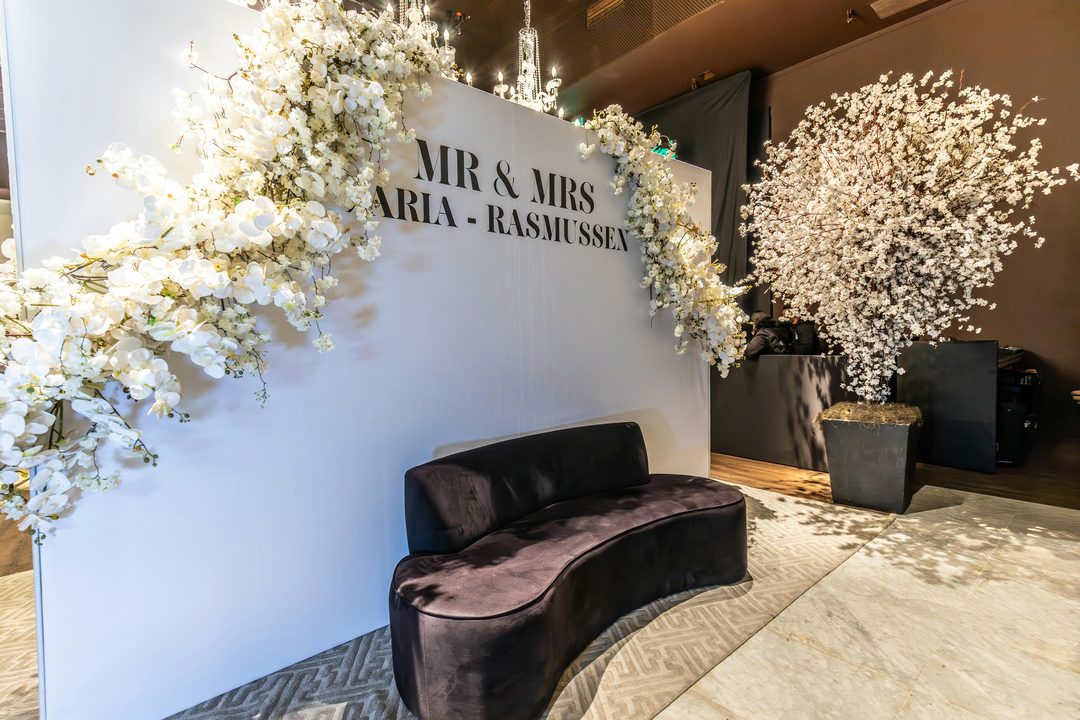
A floor-to-ceiling floral wall is the most photographed backdrop style at weddings right now. Fresh flowers look spectacular but cost $800-$2,000 to build and can wilt in warm venues. High-quality silk flower panels ($200-$600 for a 6×8 foot coverage) are a practical alternative. Most guests cannot tell the difference in photos. Match the flower varieties and colors to your bouquet and centerpieces for a cohesive look.
Fabric Drape Backdrops
Flowing fabric (particularly crushed velvet, sequin, or sheer organza panels) creates a soft, luxurious background that photographs beautifully under warm uplighting. This is one of the easiest DIY options: hang the fabric from a copper pipe frame or a tension curtain rod and add fairy lights or greenery garlands to add depth. Colors to consider: dusty blush, champagne gold, sage green, deep burgundy, or ivory for a timeless look.
Greenery and Eucalyptus Wall
A wall of preserved or fresh eucalyptus, ferns, and trailing ivy gives an organic, garden-party feel that suits rustic barn, vineyard, and outdoor receptions. Preserved greenery panels are available ready-made for $150-$400 and reusable. Fresh is more fragrant but needs to be assembled the morning of the wedding.
Neon Signs and Acrylic Panels
A neon sign mounted in front of a simple white or black backdrop creates an instantly iconic photo booth background. Common neon text choices: “Mr & Mrs,” “Better Together,” the couple’s wedding date, or a custom hashtag. Combine with an acrylic perspex sign leaning at the foot of the backdrop for additional personalization. This style works especially well for modern, industrial, and minimalist weddings.
Custom Fabric Wedding Signs
A large printed fabric sign featuring your monogram, a custom illustration, or a floral pattern designed to match your stationery pulls together the photo booth and your broader decor narrative. Paperlust’s fabric wedding signs are printed in-house in Melbourne, available in portrait and landscape orientations, and designed to coordinate with your invitation suite artwork. A custom fabric backdrop sign is genuinely different from anything available at a craft store.
Explore the full range at Paperlust wedding signs.
Wedding Photo Booth Prop Ideas That Actually Get Used
The wrong props sit in a basket untouched all night. The right props are already in guests’ hands before the photographer finishes directing the lineup. Use this framework when curating your prop collection.
Tier 1: Always Used (Include These)
- Large printed speech bubbles (“Best Day Ever,” “She Said Yes,” the couple’s names)
- Matching “Bride” and “Groom” crowns or sashes (they get used ironically by everyone)
- Oversize sunglasses (the flashier the better)
- Custom photo booth hashtag sign (A5 or A4 foam board with your wedding hashtag printed)
- Custom selfie frames (a large A1 open frame guests hold up together, printed on lightweight foam board)
- A printed arrow pointing toward the booth (“This way to memories”)
Tier 2: Theme-Dependent Props
- Mini chalkboard signs guests can personalize with their table number or message
- Themed accessories matching your wedding aesthetic (tropical leis for a beach wedding, feather boas for a glamour theme, mini cowboy hats for a country wedding)
- Wooden or acrylic letter signs spelling names or “LOVE”
- Polaroid-frame props guests hold up for a photo-within-a-photo effect
Tier 3: Skip Unless You Have a Clear Theme
- Generic mustache-on-a-stick props (overdone, often look cheap)
- Generic superhero capes (not wedding-specific)
- Novelty teeth or wax lips (can feel more birthday party than wedding)
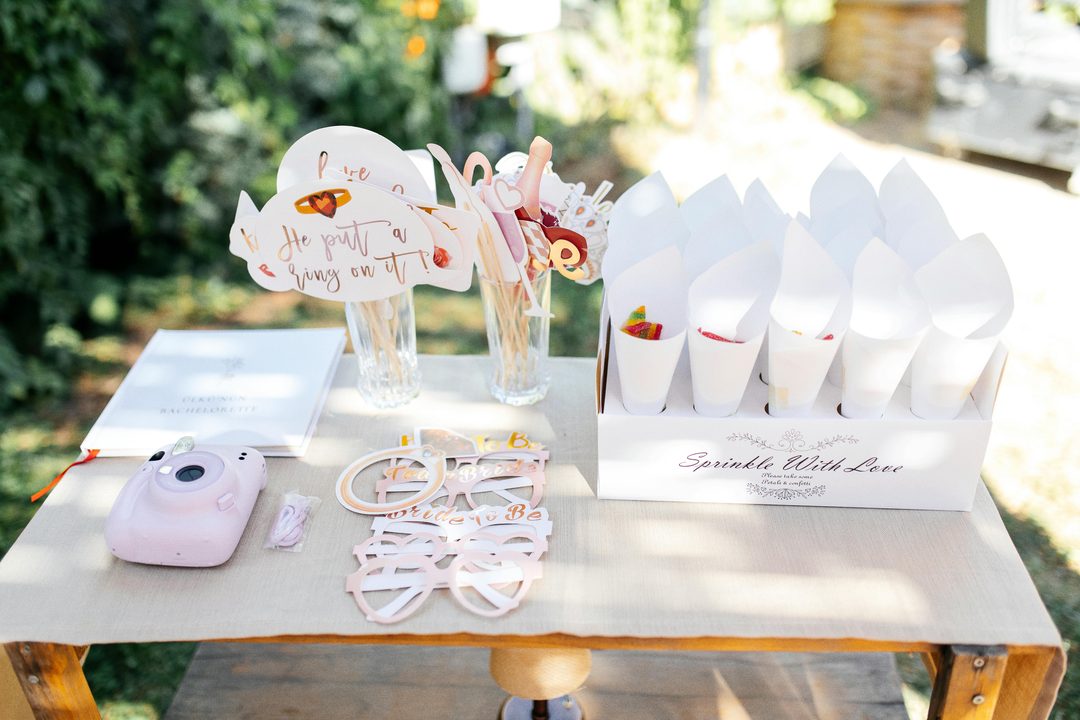
Storage and display tip: Arrange props in a flat wicker tray at waist height with a small handwritten label or printed card explaining what the booth is. Guests at sit-down receptions sometimes do not realize a photo booth is available. A small sandwich board or sign directing them from the dance floor to the booth area solves this.
Lighting Guide for Indoor and Outdoor Photo Booths
Lighting is the single biggest variable between a photo booth that produces professional-looking results and one that produces murky, shadowy shots. Here is what you need to know.
Ring Light vs Softbox
For DIY setups, a ring light (18-inch or larger) mounted directly above or behind the camera gives the most forgiving, evenly lit results. The ring light’s circular catchlight in the eyes also looks attractive in portraits. A softbox requires more space and additional stands but produces even softer shadows. It is better suited to a photojournalism-style booth with a DSLR camera.
Ambient vs Supplemental Lighting
Do not rely on venue lighting alone. Even beautifully lit ballrooms have warm, flattering ambient light that registers as orange-yellow in unfiltered photos. A daylight-balanced LED ring light corrects this automatically. For outdoor daytime booths, a reflector panel (white foam board works) positioned opposite the main light source fills in shadows.
String Lights and Fairy Lights
String lights do not provide enough illumination for the camera to produce clean photos in low-light conditions. They are purely decorative and background elements. Do not mistake a beautifully lit backdrop for adequate photographic lighting. Use the ring light for photography, string lights for ambiance.
Outdoor Considerations
Direct sunlight is the worst lighting for a photo booth. It creates harsh shadows under chins and brows and causes guests to squint. Position an outdoor booth in open shade (under a pergola, marquee, or on the shaded side of the venue). If shooting in golden hour (the hour before sunset), this becomes beautiful naturally occurring light, but you need a dedicated attendant to tell guests when the angle is right.
Tech Setup: Cameras, Printers, and Social Sharing
Camera Options
DSLR or mirrorless camera: Best image quality, especially in low light. Needs to be tethered to a laptop or a dedicated photo booth software application. Requires more setup and testing. Recommended for couples who want gallery-quality prints.
iPad or tablet: The easiest DIY option. Pair with a photo booth app (Simple Booth, Darkroom Booth, or Booth It are the most reliable options in 2026) and mount on a tripod at chest height. Most apps handle countdown, filters, print formatting, and digital sharing automatically.
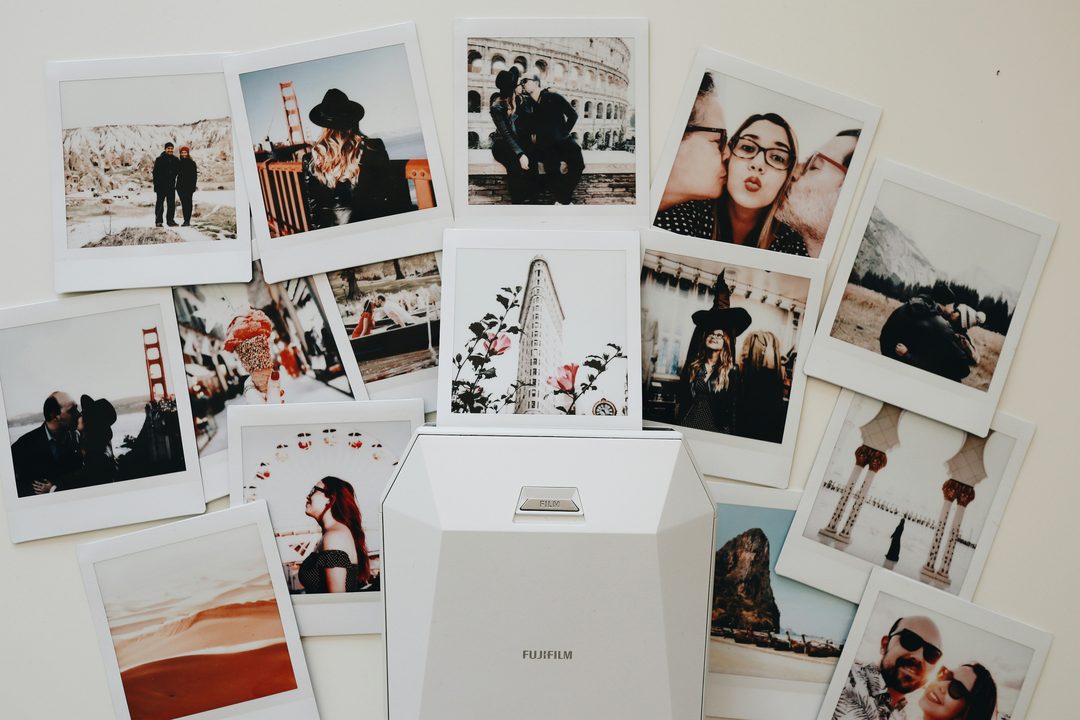
Instant camera (Fujifilm Instax): Low tech, low setup, produces physical prints guests keep instantly. No software, no printer queue. The camera is the printer. The nostalgic analog feel resonates strongly with guests. Limitation: film costs approximately $1 per shot and you need someone to manage the camera and hand out prints.
Printer Options
Dye-sublimation printer (Canon Selphy, DNP QW410): Produces professional lab-quality 4×6 or 2×6 strip prints. A Canon Selphy CP1500 retails for around $130-$150 and uses purpose-built dye-sub cartridge/paper sets. Print time is 40-50 seconds per photo. Ideal for a full reception.
Home inkjet printer: Will work in a pinch but ink smears if guests handle prints before they are fully dry, and cartridge costs add up quickly for 100+ prints.
Digital-only (no physical prints): Increasingly popular. Guests receive their photos via QR code that sends to their phone. Zero printer maintenance, zero paper management. Works well if your guest list is younger and comfortable with digital keepsakes.
Social Sharing and Gallery Setup
A social gallery (a live display showing the latest photo booth shots on a screen during the reception) keeps guests engaged and creates a real-time highlight reel. Most photo booth apps include a slideshow mode. If you use a custom hashtag, you can also configure a social aggregator to pull tagged Instagram posts to the same screen, combining photographer shots and photo booth shots in one live display.
How to Integrate Your Photo Booth Into Wedding Decor
A photo booth that looks like an afterthought is a missed opportunity. Couples who get the most from their booth treat it as a designed element of the reception, not a vendor add-on in the corner.
Match the Booth to Your Invitation Suite
Your wedding invitations establish the visual language of your day: the color palette, the typography style, the overall level of formality. The most cohesive photo booths use the same palette and design language. If your invitations are letterpress on deep navy cotton stock with gold flat foil text, your photo booth backdrop might be a deep navy fabric panel with gold fairy lights and a gold-frame border. If your invitations are botanical watercolor on ivory stock, your backdrop could be a eucalyptus and white flower wall with matching greenery garlands framing the camera.
Browse Paperlust wedding invitations to find a design that sets the visual direction for your entire day, including the booth.
Use a Seating Chart as a Booth Feature
A large-format printed seating chart (particularly an arch-shaped or framed format) can double as a photo booth backdrop for the cocktail hour before guests take their seats. Position the seating chart on an easel, add some greenery or florals around the frame, and let guests take photos in front of it as they look for their table. This creates a natural traffic flow and solves the “how do we draw guests to the booth” problem. See our wedding seating chart designs for large-format print options.
Position the Booth Near the Dance Floor
Guests who are already dancing are already in a photo-taking mood. Positioning the booth within 15 to 20 feet of the dance floor captures energy at the right moment: after the second or third song when inhibitions have dropped but the party energy is still building. A dedicated directional sign pointing from the dance floor to the booth (“Photo memories this way”) helps guests find it without hunting.
Coordinate Table Numbers and Props
If your reception uses designed table numbers (printed cards, acrylic, or brass), add coordinating prop signs in the same font or frame style to the photo booth prop basket. Guests notice when the small details align, and the consistency tells a story about how much thought went into the day.
Custom Signs for Photo Booths: Hashtags, Arrows, and Marquee Letters
A custom sign might be the single most useful addition to any wedding photo booth. It serves three functions simultaneously: it identifies the booth for guests who have not spotted it yet, it gives guests a prop they naturally want to hold in photos, and it reinforces your branding for the social media posts that follow.
Hashtag Signs
A printed sign displaying your wedding hashtag (example: #SmithWedding2026) drives social sharing more effectively than any verbal instruction. Design the sign to match your invitation suite typography. Choose a size that reads clearly in a photo when a guest holds it at arm’s length. Approximately A3 (11×16 inches) is the practical minimum for readability in photos.
Arrow Signs
A simple printed arrow pointing to the booth (“This way to forever” or “Memories this way”) serves as directional signage and becomes a prop in its own right. Coordinate the arrow sign’s frame color and typography with your other wedding signage for consistency.
Welcome Signs at the Booth
A small A4 or A3 welcome sign at the booth entrance that tells guests what to do (“Stand here, press the button, collect your print”) removes all confusion and means no one needs to manage the booth full-time. Design this in the same font as your ceremony program and menus so every piece of printed material tells the same visual story.
Marquee Letter Lights
Illuminated marquee letter lights (LOVE, the couple’s initials, or an ampersand) create an immediate focal point behind the camera position and make the booth visible from across the reception room. They can be rented through party supply companies for $150-$300 for the night, or purchased for approximately $250-$500 for the set if you plan to use them again.
Paperlust’s printed fabric and PVC board wedding signs can be customized with your exact typography, monogram, or design artwork, and sized to serve as a functional photo booth backdrop. Browse custom wedding signs to see the full range.
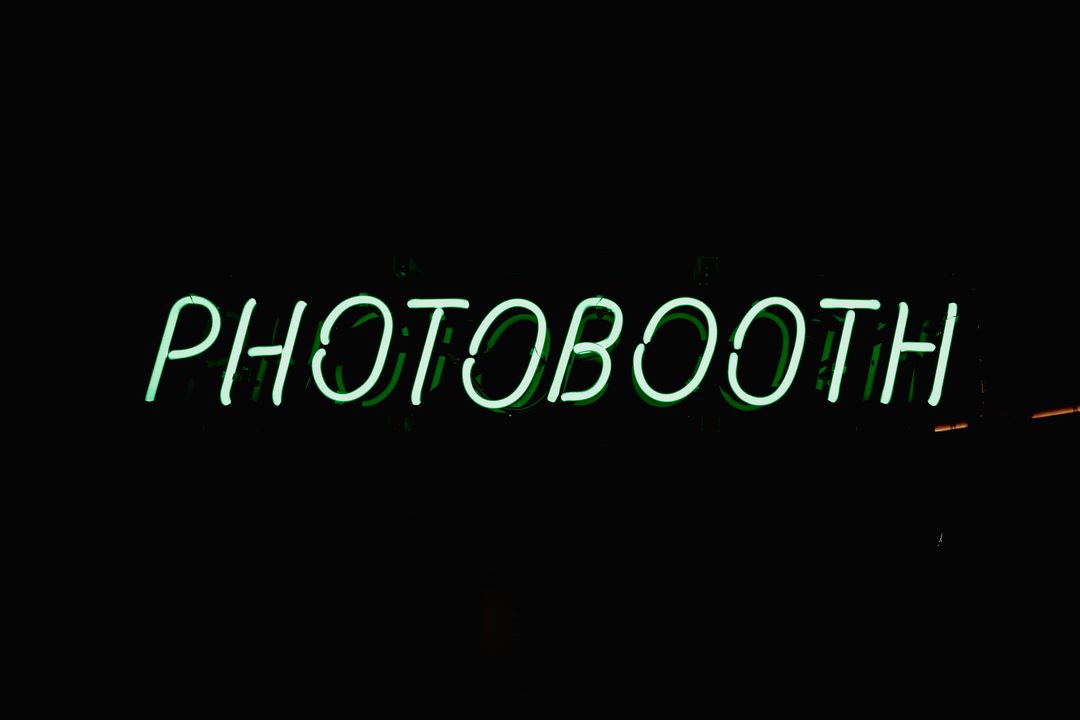
Photo Booth Timeline: When to Set Up and How Long You Need It
Planning Timeline (Months Before the Wedding)
6-8 months out: Decide on DIY vs rental. If renting, shortlist vendors now. Popular photo booth companies in major markets book out 6 months ahead for peak summer and fall weekends.
4-6 months out: If DIY, order or build your backdrop frame and backdrop material. Order any custom signs or props that need production time (printed signs, custom overlays for the photo booth app).
2-3 months out: Purchase or rent camera equipment, ring light, and printer. Download and configure your photo booth software. Do a test run in a space similar in size to your booth footprint.
4-6 weeks out: Do a full dress rehearsal: bring the entire setup together, invite a few friends over, run 20-30 test photos through the full workflow (capture, process, print/share). This is where technical problems surface, not on the wedding day.
1 week out: Confirm your venue’s power outlet locations and confirm the booth placement with your venue coordinator. Charge all batteries. Prepare a spare SD card or tablet.
Day-Of Timeline
| Time | Task |
|---|---|
| 2 hours before reception opens | Deliver and begin backdrop setup; lay out prop table |
| 90 minutes before reception | Camera, ring light, and printer connected and powered on |
| 60 minutes before reception | Test full workflow (capture, process, print/send) with a helper |
| 30 minutes before reception | Place instruction sign, arrange props, load paper/ink |
| Reception opens | Booth live; confirm everything works when guests first arrive |
| End of reception | Pack down backdrop frame; save digital gallery; collect remaining props |
How Long Should the Booth Be Available?
Aim for 3.5 to 4.5 hours of active booth time during the reception. Most usage clusters into two bursts: during cocktail hour and in the 90 minutes after dinner before the reception winds down. If your wedding ends at 10 PM and dinner runs until 7:30 PM, ensure the booth is fully operational by 5 PM during cocktail hour and remains available until at least 9:30 PM.
Complete your photo booth with a custom Paperlust sign
Fabric and PVC board wedding signs, custom-designed to match your invitation suite. Made in Melbourne, shipped worldwide.
Wedding Photo Booth FAQs
How much does a DIY wedding photo booth cost?
A DIY wedding photo booth typically costs $150 to $800 depending on the backdrop, camera, and printer you choose. A basic setup using an iPad, ring light, and digital-only output sits at the lower end. Adding a dye-sublimation printer, a quality backdrop frame, and custom props brings the cost toward $600 to $800. These are one-time costs. Many couples sell or repurpose the materials after the wedding.
What is the most popular wedding photo booth style?
Open-air frame booths are the most popular style for weddings in 2026 because they accommodate large groups, photograph well, and work across all venue sizes. 360 booths are a close second for couples who want a show-stopping entertainment element during the reception.
Do you need an attendant for a wedding photo booth?
Not necessarily, but it helps. For DIY setups, you need someone who can troubleshoot a paper jam, refill the printer, or restart the software if it locks up. If you have a designated “tech-savvy” family member or friend willing to check in on the booth every 15-20 minutes, an unattended setup can run smoothly. Rental booths typically include an attendant in the price.
What should you put on a wedding photo booth backdrop?
The backdrop should coordinate with your wedding color palette and aesthetic. Popular options include floral walls, fabric drapes, greenery walls, neon signs on a simple background, or a custom printed fabric sign featuring your monogram, initials, or a design that matches your invitation suite. Avoid anything with very fine patterns or text that will be too small to read in photos.
How early should you set up a wedding photo booth?
Set up at least 1.5 to 2 hours before the reception opens. For a DIY booth, allow yourself 2 full hours so you have time to test the full workflow (photo capture, processing, printing or digital sharing) before guests arrive. Do not leave testing for the day-of. Do a full dress rehearsal at least 4 weeks in advance.
What size backdrop do you need for a wedding photo booth?
A backdrop of at least 6 feet wide by 7 feet tall is sufficient for a couple or small group. For group shots of 4 to 6 people, aim for 8 feet wide by 8 feet tall. If you want guests to spread out horizontally or do full-body shots, 10 feet wide is ideal. Standard backdrop frames come in 5×7, 6×8, and 8×8 configurations.
Can you use a wedding sign as a photo booth backdrop?
Yes, and it is one of the most practical dual-purpose ideas for reception decor. A large custom printed fabric sign or PVC board sign featuring your monogram, wedding date, or a design from your invitation suite creates an instant branded backdrop that doubles as wedding decor. It is also a better conversation starter than a generic balloon wall. Browse Paperlust’s custom wedding signs for options designed to coordinate with your stationery suite.
What print finishes does Paperlust offer for wedding signs and invitations?
Paperlust offers flat foil, letterpress, digital, metallic, and white ink printing. Flat foil applies metallic foil directly onto the printed surface without a custom die, producing a bright mirror-like finish with a 10-piece minimum. Letterpress presses ink into the paper under high pressure, creating a tactile debossed impression that is especially striking on Wild Cotton stock. The industry term “foil stamp” refers to a custom-die emboss technique that Paperlust does not offer. If you have seen foil-stamped invitations at a stationery store, Paperlust’s flat foil is the closest equivalent in appearance, achieved without the custom die cost.