
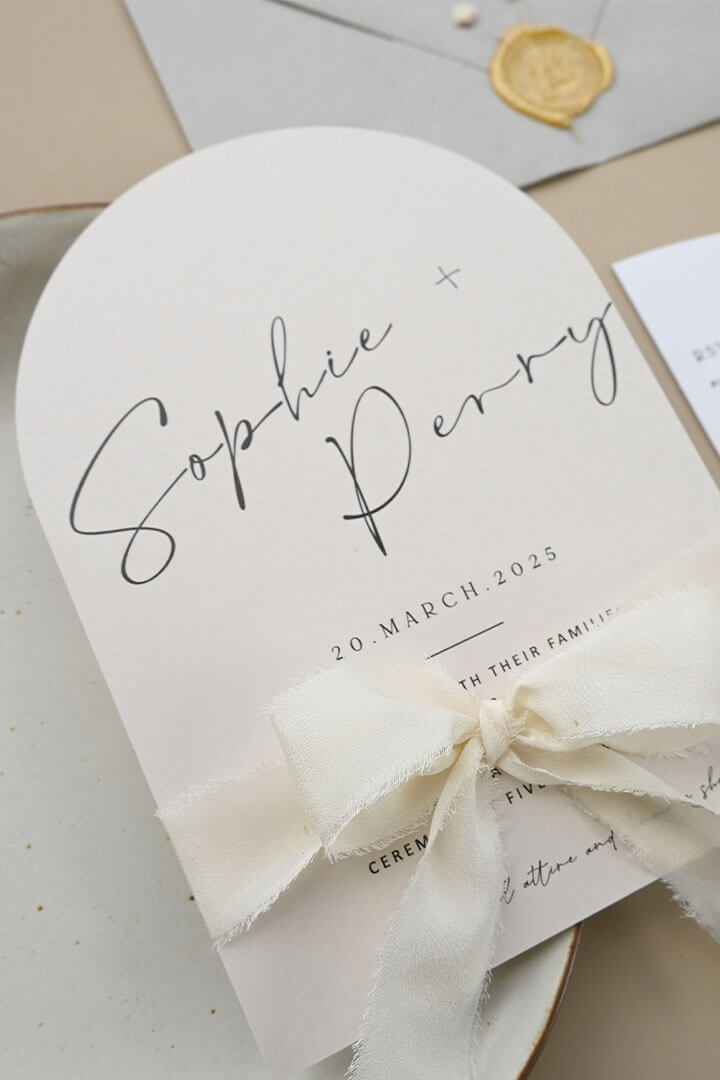
Your wedding menu card is one of the few pieces guests actually read at the table. Get the wording right and it sets the whole tone for the meal: formal, festive, or delightfully relaxed. Get it wrong and couples end up with stiff corporate-sounding copy that clashes with their floral centerpieces. This guide gives you 20+ ready-to-use wording examples across every course and dietary style, from a plated five-course dinner to a casual cocktail-hour grazing table. For a full guide to sizes, formats, and print methods, see our complete wedding menu cards guide.
| Element | Formal | Casual |
|---|---|---|
| Dish names | French culinary terms: “Poulet Roti,” “Saumon en Croute” | Plain English: “Herb Roasted Chicken,” “Baked Salmon” |
| Descriptions | Short, ingredient-led, no adjectives | Warm, sensory, conversational |
| Dietary labels | Discreet symbols (V, VG, GF) in footer | Inline parenthetical: “(vegan)” or “(gluten-free option)” |
| Header text | “Dinner Menu” or couple’s names only | Playful: “Tonight’s Feast,” “Eat, Drink & Be Married” |
| Allergen disclosure | Elegant footer note, small font | Friendly note: “Let us know about any allergies!” |
| Beverage section | Named wines, vintage, region | “Beer, wine & signature cocktails” |
Menu Card Wording: Formal vs. Casual Tone Guide
The single biggest wording decision is tone. Your menu card shares a table with your centerpiece, place cards, and linen; it either harmonizes or clashes. Tone is set before you write a single dish name.
Formal Tone: What to Know
A formal menu reads like a fine-dining restaurant. Course headings use consistent capitalization. Dish names favor French culinary terms or stripped-back nouns (“Seared Duck Breast” rather than “crispy pan-seared duck with a hint of orange”). Descriptions stay tight (one line maximum), focusing on preparation method and hero ingredients, not adjectives like “delicious” or “melt-in-your-mouth.”
Emma & James
September 14, 2026
Amuse-Bouche
Heirloom tomato consomme, basil oil
First Course
Burrata, roasted fig, aged balsamic, toasted brioche
Second Course
Seared scallop, celery root puree, pancetta crisp, chive oil
Main Course
Filet mignon, truffle jus, pommes dauphine, haricots verts
or
Pan-roasted halibut, saffron beurre blanc, fennel confit, microgreens
Dessert
Chocolate fondant, Chantilly cream, raspberry coulis
V Vegetarian GF Gluten-Free
Semi-Formal Tone: The Sweet Spot
Semi-formal is the most popular choice in 2026. English dish names, short sensory descriptions, and a warm header create menus that feel elevated without being unapproachable. This tone works for barn venues, vineyard receptions, and hotel ballrooms alike.
Sophie & Liam | Dinner Menu
To Start
Whipped ricotta crostini, cherry tomatoes, fresh basil
Salad
Arugula, shaved parmesan, candied walnuts, lemon vinaigrette (GF)
Main
Slow-roasted lamb, rosemary jus, roasted root vegetables, minted peas
or
Mushroom Wellington, red wine reduction, wilted spinach (V, GF)
Dessert
Vanilla panna cotta, summer berry compote, tuile
Casual Tone: Relaxed and Personal
Casual menus can carry the couple’s personality. Playful headers, affectionate descriptions, and even a short personal note from the couple are all fair game. Think farm-to-table barn weddings, backyard celebrations, or destination elopements with a small dinner after.
Tonight’s Menu
(Made with love for your most important meal yet)
To Kick Things Off
Cheese & charcuterie board, house-made jam, warm sourdough
The Good Stuff
BBQ pulled pork sliders, coleslaw, house pickles
or
Stuffed portobello mushroom, roasted peppers, goat cheese (V)
Something Sweet
Dessert bar: help yourself!
Grab a drink from the bar and settle in. The night is just getting started.
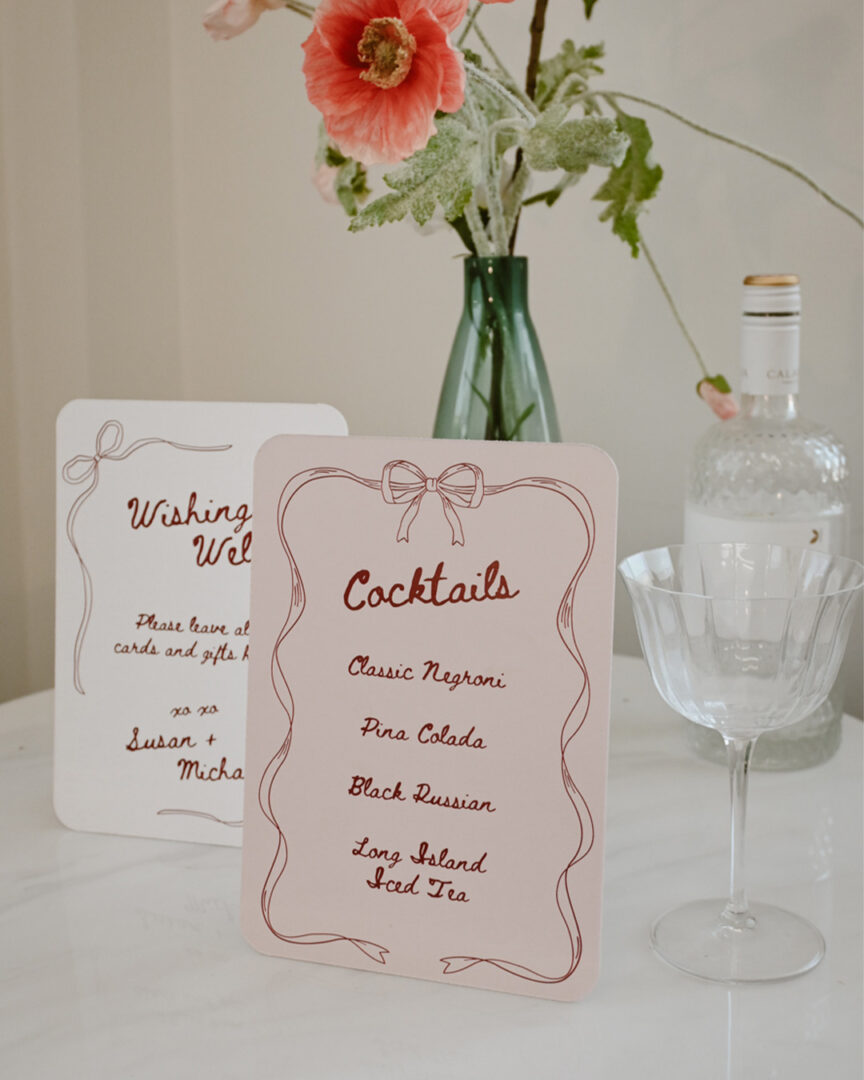

Multi-Course Dinner Menu Wording Examples (Appetizer Through Dessert)
A seated dinner with multiple courses is where wording really earns its keep. Guests need to make choices, understand what’s coming, and communicate any dietary needs to the wait staff. Clear structure matters as much as the words themselves.
How to Structure a Multi-Course Menu
- List courses in service order from top to bottom
- Separate each course with a line break or thin rule
- For choice courses, use “or” centered between options (not a slash)
- Keep dish descriptions to one line, two maximum
- Place dietary symbols after the dish name, before the description
Three-Course Dinner Wording (Formal)
Lobster bisque, chive cream, gruyere crisp
Main Course
Beef tenderloin, bordelaise sauce, truffle potato gratin, broccolini
or
Pan-seared sea bass, lemon caper butter, sauteed spinach, jasmine rice (GF)
or
Roasted beet & goat cheese tart, walnut crumble, herb oil (V, GF)
Dessert
Opera cake, espresso anglaise, candied hazelnut
Four-Course Dinner Wording (Semi-Formal)
Smoked salmon blini, creme fraiche, dill
Salad
Little gem lettuce, shaved radish, cucumber, green goddess dressing (GF, VG)
Main
Herb-crusted chicken thigh, lemon pan sauce, roasted fingerling potatoes, green beans
or
Cauliflower steak, romesco sauce, crispy capers, wild rice pilaf (VG, GF)
Dessert
Lemon tart, fresh blueberry, whipped cream
Five-Course Dinner Wording (Black-Tie Formal)
Chilled cucumber gazpacho, micro herb
First Course
Seared foie gras torchon, brioche toast, fig jam
Second Course
Burrata, heirloom tomato, aged balsamic, Sicilian olive oil (V, GF)
Main Course
Prime rib, au jus, Yorkshire pudding, creamed spinach, horseradish cream
or
Pommes Anna, wild mushroom ragout, port reduction, grilled asparagus (V)
Dessert
Croquembouche, creme patissiere, spun sugar
Cocktail Hour Menu Card Wording Examples
Cocktail hour menus are lighter in structure, no courses, no choices, but they still need clear wording to help guests navigate passed apps and grazing stations. The tone here can be more playful than your dinner menu, even at formal weddings.
Passed Appetizers Format
Passed Appetizers
Mini beef sliders, caramelized onion, aged cheddar
Smoked salmon blini, dill creme fraiche, cucumber
Caprese skewer, fresh mozzarella, cherry tomato, basil oil (V, GF)
Prawn cocktail, house remoulade (GF)
Mushroom & brie phyllo cups (V)
Bar open, enjoy!
Grazing Table / Charcuterie Station Format
Artisan cheeses: aged gouda, brie, manchego
Charcuterie: prosciutto, salami, pate
Accompaniments: honeycomb, fig jam, pickled vegetables, olives, cornichons
Breads & crackers: sourdough, seeded crisp, rosemary flatbread
Fresh fruit: seasonal selection
All boards replenished throughout the cocktail hour.
Casual Cocktail Hour Card
Mini fish tacos with avocado crema
Caprese crostini with fresh basil (V)
BBQ pulled chicken sliders
Loaded nachos (GF, VG option available)
Seasonal fruit skewers (GF, VG)
See a server for allergen details.
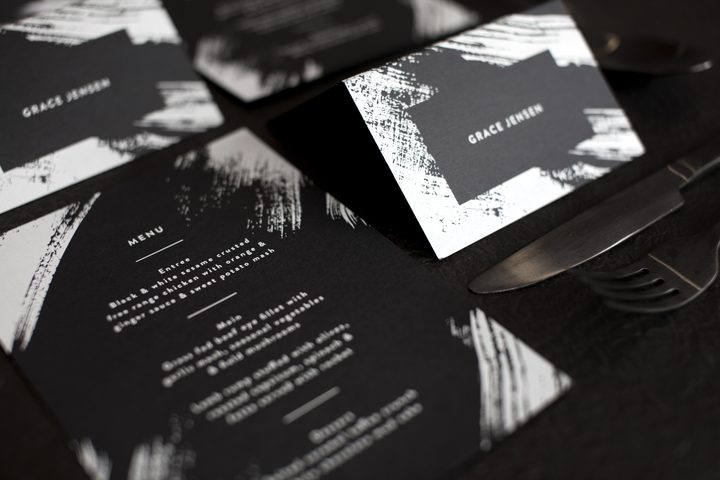
How to Note Dietary Variants: Vegetarian, Vegan, Gluten-Free
The way you label dietary variants says as much about your hosting as anything else on the menu. A clear, consistent system puts guests at ease and reduces the number of questions your wait staff fields during service.
Symbol System vs. Written Labels
Both approaches work. Symbols are cleaner on a crowded menu; written labels are clearer for guests who may not know your symbol key.
| Dietary Need | Symbol Option | Written Option |
|---|---|---|
| Vegetarian | V | (vegetarian) |
| Vegan | VG | (vegan) |
| Gluten-Free | GF | (gluten-free) |
| Dairy-Free | DF | (dairy-free) |
| Nut-Free | NF | (nut-free) |
| Halal | H | (halal) |
| Kosher | K | (kosher) |
Symbol Key Footer Wording
Always include a legend if you use symbols. Place it below your last course, in a smaller font size.
V Vegetarian VG Vegan GF Gluten-Free DF Dairy-Free
Key: V = Vegetarian | VG = Vegan | GF = Gluten-Free
All dishes prepared in a kitchen that handles nuts and dairy.
Writing Dietary Variants Inline
For menus with only one or two dietary variants to flag, inline labels are cleaner than a symbol system.
Braised short rib, creamy polenta, gremolata
or
Wild mushroom risotto, truffle oil, shaved parmesan (vegetarian, gluten-free)
How to Handle a “Choice at Table” Dietary Option
If guests did not pre-select their meal but will choose at service, note available alternatives clearly so wait staff can prompt efficiently.
Herb-roasted chicken, pan jus, roasted vegetables
or
Grilled salmon, lemon butter, asparagus, wild rice (GF)
or
Stuffed zucchini, tomato sauce, pine nuts (VG, GF)
Please advise your server of any dietary requirements.
Allergen Disclosure Wording on Wedding Menus
Allergen disclosure on a wedding menu is a courtesy, not a legal substitute for direct communication with your caterer. That said, a well-worded allergen note manages expectations, reduces stress for guests with serious allergies, and shows thoughtful hosting.
Light Allergen Note (Formal Tone)
Friendly Allergen Note (Casual Tone)
Comprehensive Allergen Note (for high-risk events or guests with anaphylactic allergies)
Nut Allergy-Specific Note
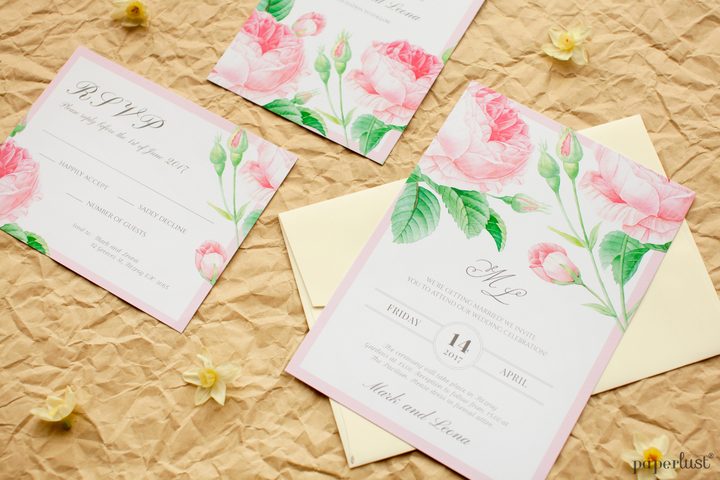
Children’s Menu Wording Examples
A dedicated children’s menu is a practical kindness at weddings with younger guests. Keep the language simple and the dishes recognizable. This is not the place for elevated cuisine.
Standalone Children’s Menu Card Format
(For guests 12 and under)
To Start
Garlic bread or vegetable sticks with hummus
Main
Chicken nuggets, crispy fries, garden salad
or
Pasta with tomato sauce and parmesan (vegetarian)
or
Cheese burger, fries, coleslaw
Dessert
Vanilla ice cream with chocolate sauce and sprinkles
Juice, lemonade, or milk available: just ask!
Children’s Section on the Main Menu Card
If you are printing a single menu card per place setting, add a children’s section at the bottom rather than a separate card.
Pasta with tomato sauce (VG option) | Chicken strips & fries | Cheese pizza
Dessert: Ice cream & sprinkles
Please advise your server at the start of the meal.
Casual Children’s Menu Card
Here’s your special menu
Starter: Garlic bread sticks
Main: Pick one!
- Mini sliders with fries
- Cheesy pasta
- Nuggets & wedges
Sweet: A big scoop of ice cream (you deserve it)
Drinks: Juice, lemonade, or water
Bar and Beverage Menu Wording Examples
A bar or beverage menu card tells guests what is available without them needing to flag down a server for a wine list. This is particularly useful for signature cocktails, wine pairings, or limited bar service.
Signature Cocktail Menu (Two Drinks)
The Bride’s Sip
Elderflower gin, prosecco, fresh cucumber, mint
The Groom’s Pour
Bourbon, honey syrup, smoked orange bitters, single ice cube
Also available: beer, white wine, red wine, soft drinks, sparkling water
Wine Pairing Menu (Formal)
First Course
2024 Sonoma Coast Chardonnay, Roth Estate
Main Course
2022 Napa Valley Cabernet Sauvignon, Jordan Winery
or
2023 Willamette Valley Pinot Noir, A to Z Wineworks (with seafood selection)
Dessert
Moscato d’Asti, non-vintage
Non-alcoholic alternatives available on request.
Open Bar Menu (Casual)
Beer: local lager, IPA, cider
Wine: Sauvignon Blanc, Pinot Noir, Rose
Cocktails: Emma’s Elderflower Spritz, Jack’s Whiskey Sour
Non-alcoholic: fresh lemonade, iced tea, sparkling water, mocktail of the evening
Cheers from Emma & Jack!
Non-Alcoholic / Mocktail Section
Garden Cooler: cucumber, mint, lime, soda
Berry Bliss: mixed berry shrub, vanilla, sparkling water
Sunset Spritz: mango, passion fruit, ginger beer
All three cocktails also available with a spirit: just ask!
Wording your wedding menu cards well takes the same attention you give your invitation suite. If you are coordinating your menus with your invitations, place cards, and table numbers as a full set, our wedding stationery suite guide walks through how to keep every piece cohesive. Browse our full collection of customizable menu cards at Paperlust wedding menu cards. Every design comes with a professional designer proof within 1-2 business days.
FAQ: Wedding Menu Card Wording
What should I write on a wedding menu card?
A wedding menu card should list every course in service order, with each dish name and a brief one-line description. For choice menus, use “or” centered between options. Include a dietary symbol key (V, VG, GF) at the bottom, and optionally a short allergen note. Formal menus use French culinary terms; casual menus use plain English descriptions.
How do you format a multi-course wedding menu?
List courses top to bottom in service order: amuse-bouche, first course, second course (optional), main course, dessert. Separate each course with a line break or thin rule. Keep dish descriptions to one line maximum. For choice courses, place “or” on its own centered line between the options. Place dietary symbols directly after each dish name, before the description.
Should I use French culinary terms on my wedding menu?
French terms work well for black-tie and formal receptions where guests expect fine-dining language. For semi-formal or casual weddings, plain English dish names are more approachable and less likely to confuse guests. The most important thing is consistency, pick one style and stick to it throughout the entire menu.
How do I indicate vegetarian and vegan options on a wedding menu?
The cleanest approach is a symbol system: V for vegetarian, VG for vegan, GF for gluten-free, DF for dairy-free. Place the symbol directly after the dish name, before any description. Always include a symbol key at the bottom of the menu. For menus with only one or two dietary variants, you can write them inline in parentheses instead: “(vegetarian, gluten-free).”
What should the allergen note on a wedding menu say?
A standard allergen note covers whether the kitchen handles common allergens (nuts, gluten, dairy, shellfish, eggs) and directs guests to speak with their server. For weddings with guests who have severe or anaphylactic allergies, include a note that the kitchen is shared and cannot guarantee allergen-free preparation, and provide a caterer contact for advance notice. Keep the note brief, one to two sentences, and place it at the very bottom of the menu.
Do I need a separate children’s menu card?
A separate children’s menu card is a thoughtful touch if more than four or five children will attend. It simplifies service and helps parents manage their kids’ meal selection. If children are only a small number of your guests, a brief children’s section at the bottom of the main menu card works just as well without the added printing cost.
How long should dish descriptions be on a wedding menu?
Keep dish descriptions to one line, two at most. Focus on the three or four key ingredients and the primary cooking method. Avoid superlatives like “delicious,” “incredible,” or “melt-in-your-mouth”, they read as filler. The goal is to inform guests what is in each dish so they can make a choice or flag an allergy, not to sell the food.
Can the wedding menu card match my invitation suite?
Yes, coordinating your menu cards with your invitations, place cards, and table numbers as a suite is one of the most impactful things you can do for reception styling. Paperlust offers full stationery suites with consistent typography, color palette, and print method across every card type. You can order all pieces from the same designer and proof them together before printing.
What size is a standard wedding menu card?
The most common wedding menu card sizes are 4×9 inches (DL format, designed to sit upright in a napkin fold or lean against a glass), 5×5 inches (square, often used as a place-setting card), and A5 (5.8×8.3 inches, for longer menus with multiple courses). Arch-shaped and round die-cut menus are also popular for more decorative styles. The right size depends on how many courses and how much text you need to fit.
How early should I finalize my wedding menu card wording?
Aim to finalize your menu card wording at least 4-6 weeks before the wedding. This gives time for designer proofing (Paperlust delivers proofs within 1-2 business days), any revisions, printing, and shipping. If you are ordering a full stationery suite, coordinate with your caterer earlier, ideally 8-10 weeks out, so your menu and place card quantities match your final guest count.
Ready to Design Your Wedding Menu Cards?
Choose from 500+ exclusive designs. Proofs delivered within 1-2 business days. Free white envelopes included.