
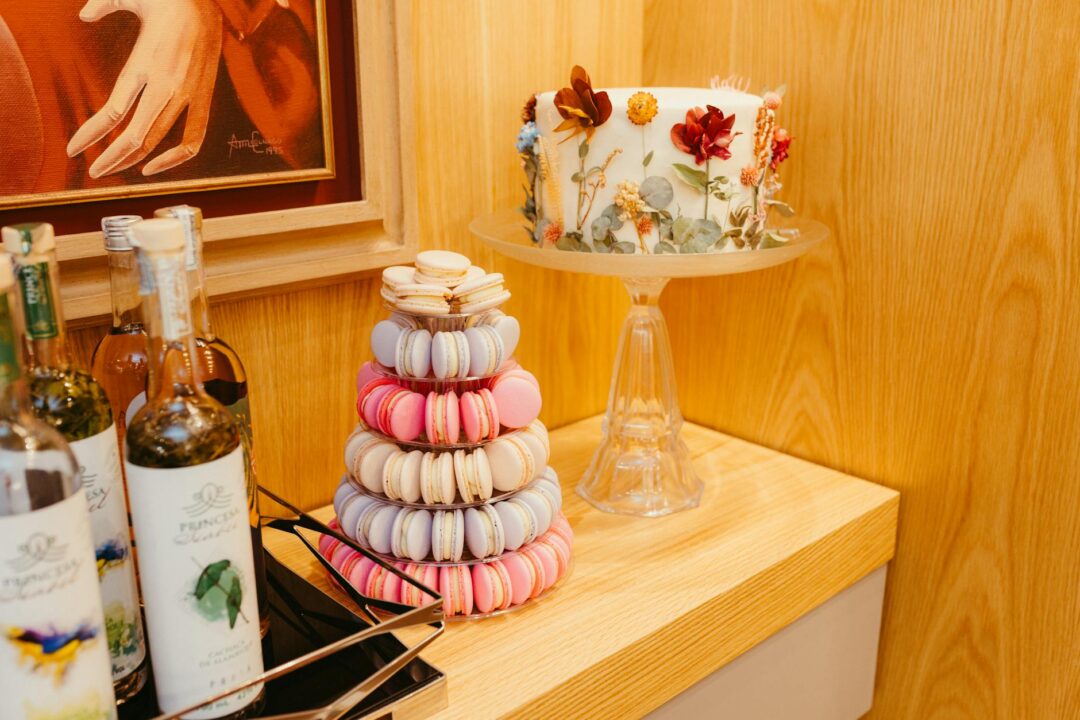
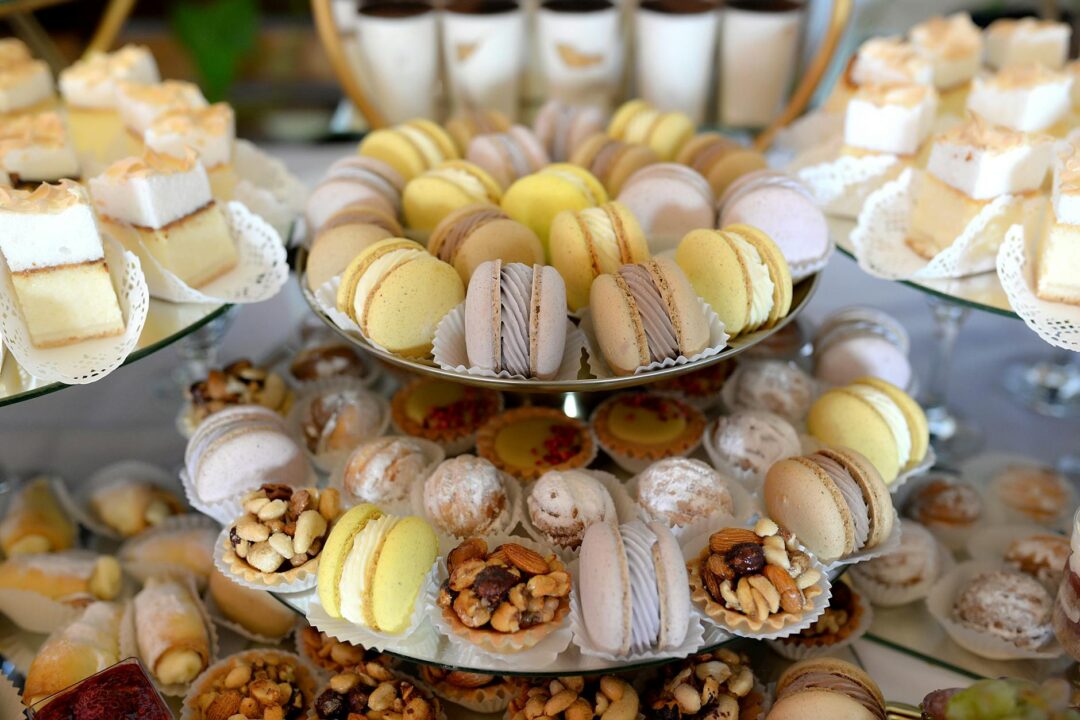

- Plan 3-5 pieces per guest when the table is the main dessert; drop to 2-3 if you’re also serving cake.
- A mid-range dessert table for 100 guests (no cake) costs $900-$1,400 all-in; DIY drops that by 30-40%.
- Stick to 4-6 dessert types max: more variety looks chaotic and inflates cost with no payoff.
- Label every item with flavor, allergen info, and a note for dietary-restricted guests so they can self-serve confidently.
- Open the table after cake cutting and announce it through your DJ so guests actually know it’s there.
- Paperlust dessert table menu cards and wedding signs make labeling easy and match your full stationery suite.
- How a Wedding Dessert Table Works (Setup, Function, Cost)
- How Much Dessert Per Guest (The 3-5 Pieces Rule)
- Dessert Table Idea 1: Mini Sweets (Cupcakes, Donuts, Macarons, Tarts)
- Dessert Table Idea 2: Bite-Size (Cake Pops, Truffles, Fudge)
- Dessert Table Idea 3: Warm Desserts (Churros, Mini Pies)
- Dessert Table Idea 4: Candy Bar (Nostalgic, Kid-Friendly)
- Dessert Table Idea 5: Donut Wall, Gelato Cart, and Regional Faves
- Late-Night Dessert Table (After Dinner Service)
- Display Essentials: Stands, Jars, Crates, Trays
- Signs, Labels, and Flavor Cards for Your Dessert Table
- Dietary Inclusion: Vegan, Gluten-Free, Nut-Free Without Stigma
- DIY vs Caterer-Provided vs Custom Dessert Vendor (Cost Breakdown)
How a Wedding Dessert Table Works (Setup, Function, Cost)
A wedding dessert table is a styled, self-serve spread of bite-size or individual-portion sweets, usually set up as a separate station from the main cake. It can replace the cutting cake entirely, complement it, or serve as a late-night station that opens after dinner. The function is threefold: it gives guests a reason to move around and mix during the reception, it serves as a photogenic decor element, and it handles the reality that 15-20% of guests won’t eat every dessert type. Multiple options means almost nobody leaves without something they like. From a setup standpoint, the table needs a few key elements:- A base table (6-8 feet is standard for 100 guests) with linen
- Height variation using cake stands, risers, or crates
- Labeled individual dessert types with flavor and allergen info
- Plates, napkins, and serving utensils at both ends
- A designated person (caterer, baker, or coordinator) for restocking
How Much Dessert Per Guest (The 3-5 Pieces Rule)
The standard planning formula is 3-5 pieces per guest. The exact number depends on whether you’re also serving a cutting cake.| Scenario | Pieces Per Guest | 50 Guests | 100 Guests | 150 Guests | 200 Guests |
|---|---|---|---|---|---|
| Dessert table only (no cutting cake) | 4-5 | 200-250 | 400-500 | 600-750 | 800-1,000 |
| Dessert table + cutting cake | 2-3 | 100-150 | 200-300 | 300-450 | 400-600 |
| Late-night only (opens 9 p.m.+) | 1-2 | 50-100 | 100-200 | 150-300 | 200-400 |
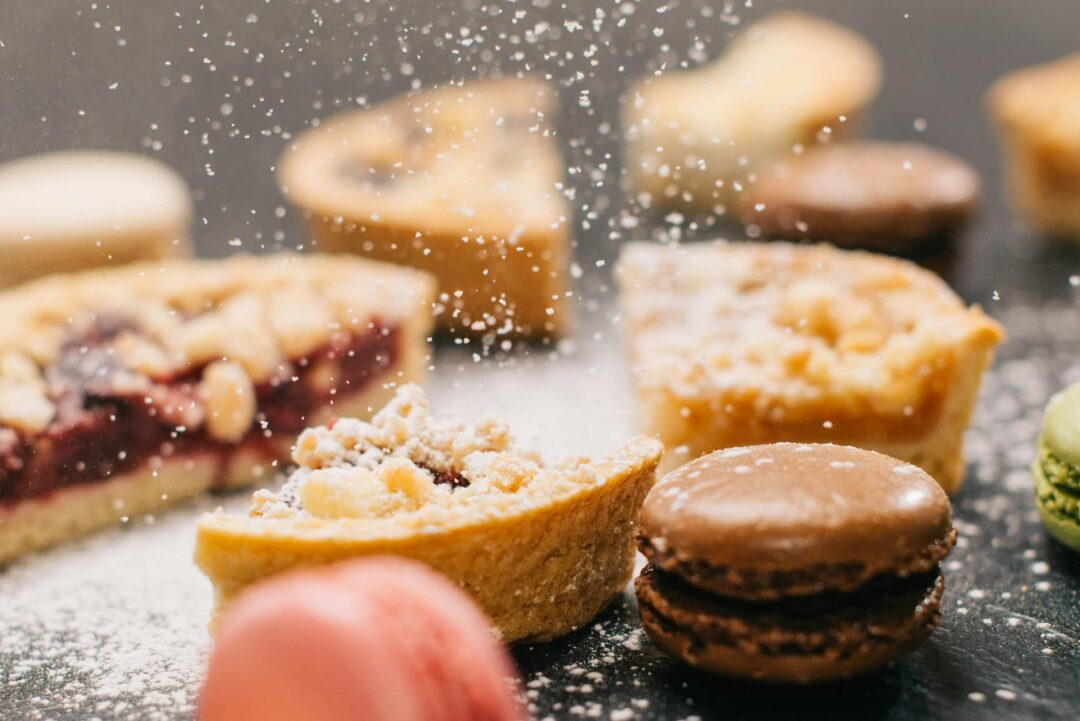
Dessert Table Idea 1: Mini Sweets (Cupcakes, Donuts, Macarons, Tarts)
Mini versions of familiar desserts are the most reliably crowd-pleasing category. They’re individually portioned so there’s no slicing required, they stack beautifully on tiered stands, and guests feel comfortable taking more than one.Mini cupcakes
The workhorse of the dessert table. Two or three flavor varieties (classic vanilla, chocolate, lemon, red velvet, carrot) covers almost every palate. Order mini not standard size: at 2-3 bites each, guests try more flavors without feeling overindulgent. Per-piece cost: $2-$3 from a bakery, $0.60-$1.20 if you’re baking.Glazed donuts and mini donut bites
Donuts have moved from novelty to staple at American weddings. A tiered stand of mixed glazes (classic, chocolate, pink strawberry, matcha) photographs extremely well and appeals to guests of all ages. Mini donut bites are an easier version if you want something more “pop-in-your-mouth.”Macarons
The most photogenic dessert on any table. French macarons in 4-6 colors that match your wedding palette add a visual focal point, and a box or tower arrangement stops people in their tracks. Cost is higher ($2.50-$4 each from a specialist), so balance macarons with lower-cost items rather than making them the dominant piece.Mini tarts and tartlets
Lemon curd, berry, salted caramel, chocolate ganache. Tartlets in 3-4 inch shells feel elegant and slightly more “dinner party” than cupcakes, which makes them a useful style upgrade if you want the table to feel more sophisticated. They do need to be kept chilled, so confirm your venue setup before committing.Dessert Table Idea 2: Bite-Size (Cake Pops, Truffles, Fudge)
Bite-size items are easy to eat standing up, require no utensils, and look great in jars or small boxes. They fill gaps between larger items and tend to be cost-efficient per piece.Cake pops
Dipped and decorated cake pops on sticks are visually striking, especially if decorated to match your theme (white and gold drizzle, floral fondant toppers). They’re easy to hold during mingling, which makes them a good fit for cocktail-hour dessert stations too. Budget around $2.50-$3.50 each from a specialty baker.Chocolate truffles
Dark chocolate truffles, ganache-filled bonbons, or flavored truffles (sea salt, raspberry, espresso) are a premium-feeling item that costs less per piece than many alternatives ($1.50-$2.50 each). Arrange in mini cupcake liners inside a box or on a small tray. They hold at room temperature better than cream-filled items.Fudge
Thick-cut fudge squares are one of the most cost-effective items on any dessert table, especially if you’re baking some elements yourself. Chocolate, peanut butter, salted caramel, and white chocolate varieties stack well and are easy to label. Fudge is particularly useful for filling out the table quantity without blowing the budget.Brownie bites
2-3 bite brownies (classic, peanut butter swirl, Oreo) are universally liked, very manageable cost-wise, and can be made or ordered in large quantities easily. A small pyramid stack or tray arrangement looks inviting without needing any special display equipment.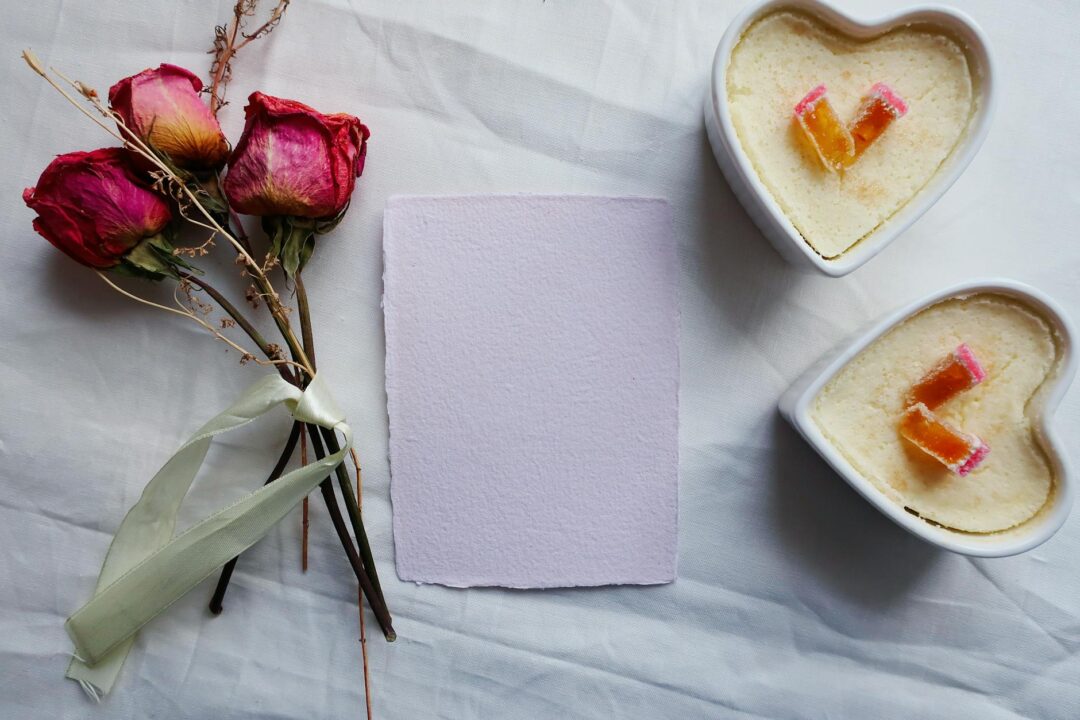
Dessert Table Idea 3: Warm Desserts (Churros, Mini Pies)
Warm desserts make a real impression because almost nobody else does them. They require more logistics but the payoff is a table that feels alive and interactive.Churro station
A churro station with dipping sauces (chocolate, caramel, dulce de leche) is one of the most talked-about reception moments couples share in post-wedding interviews. You’ll need a warming station or a vendor who comes prepared to serve freshly fried batches. This works especially well for fall and winter weddings or Mexican-influenced celebrations. Pair with small cups for the dipping sauces and plenty of napkins.Mini pies and hand pies
Individual 4-inch pies or folded hand pies (apple, cherry, peach, pecan, key lime) work beautifully for rustic barn weddings, fall receptions, or any celebration with a Southern-influenced food program. They can be served at room temperature, which simplifies logistics. From a local pie shop, expect $4-$8 each depending on filling and labor.Cinnamon rolls and sticky buns
Less common but increasingly popular for brunchy morning receptions or casual outdoor celebrations. Miniature sticky buns served warm with individual glaze cups are a genuine crowd moment. Coordinate with your caterer on timing since these need to be served within a window after baking.Dessert Table Idea 4: Candy Bar (Nostalgic, Kid-Friendly)
A candy bar is a separate concept from the main dessert table, though many couples combine them. The idea: bulk candy in glass jars, scoops available, small takeaway bags for guests to fill themselves. It adds a nostalgia element and is particularly effective at weddings with a lot of children.What to stock a candy bar
Focus on individually wrapped candies and bulk classics: gummy bears, sour worms, M&Ms (color-matched to your palette), Jordan almonds, mints, wrapped caramels, and chocolates. Avoid anything that melts easily or has strong scent (avoid yogurt-covered anything in warm venues). Presentation matters: clear apothecary jars at varying heights, small scoops at each jar, printed tent cards with flavor names, and a stack of small bags or boxes at the end. Tie bags with a ribbon or seal with a sticker in your wedding color. Cost estimate: candy bars run $3-$7 per person for a well-stocked version depending on your candy choices and whether you buy in bulk from a warehouse store.When a candy bar works best
Candy bars pair well with afternoon weddings, outdoor celebrations, and any reception that skews toward a younger guest list. They don’t work as well for formal black-tie evening events where the overall aesthetic is very minimal or luxury-focused. Read the room.Dessert Table Idea 5: Donut Wall, Gelato Cart, and Regional Faves
Some dessert table formats have become strong enough trends that they’ve earned standalone status. These aren’t just individual items but full table concepts.Donut wall
A pegboard or custom wooden panel with pegs holding individual donuts is one of the most instantly recognizable wedding dessert trends of the last five years. It doubles as a photo backdrop, works in virtually any venue, and lets you customize flavors by column. Donut wall rental props are widely available through wedding rental companies. Budget $150-$400 for the wall display plus the donuts themselves.Gelato cart
A gelato or ice cream cart is particularly effective for summer outdoor weddings. Many local gelaterias offer event hire packages: they bring the cart, the gelato in 4-6 flavors, cones or cups, and a server. Guests build their own. Per-person cost is typically $6-$12 depending on your market and the vendor.Cheese “cake” tower
For couples who don’t eat sweet, stacking rounds of aged cheese (brie, manchego, aged cheddar, gouda) like a cake tier is having a significant moment. Pair with honey, fig jam, crackers, and grapes. This works best as a centerpiece addition alongside a smaller sweet selection rather than replacing it entirely.Regional and cultural favorites
Tres leches cake cups (Mexican and Latin American receptions), baklava trays (Middle Eastern and Greek celebrations), mochi bites and matcha rice cakes (Asian-inspired weddings), pecan pralines and beignets (Southern US), and cannoli stations (Italian-American families) all offer genuine personalization that a generic macaron-and-cupcake table can’t match. If either family has a culturally significant sweet, build around it.Late-Night Dessert Table (After Dinner Service)
The late-night dessert table is a separate moment from the main dessert station. It opens after 9 p.m. or after dancing has started, serving guests who weren’t hungry at dinner but need fuel for the dance floor. Late-night tables should lean toward handheld, indulgent, and slightly savory-sweet: donuts, mini grilled cheese bites, sliders, s’mores stations, mini soft pretzels with dipping sauces, warm cookies with milk. The goal is comfort and ease of eating while standing or dancing, not elegance. Quantity for a late-night station is lower: 1-2 pieces per expected guest (many will have already left). For 100 invited guests, plan for 60-70 people still present and 80-120 late-night pieces total. Keep the display simple: one or two large platters or baskets, stack of napkins, nothing that requires a plate or fork. Announce via DJ when the table opens. Logistics are most easily handled by your caterer as part of the overall food package.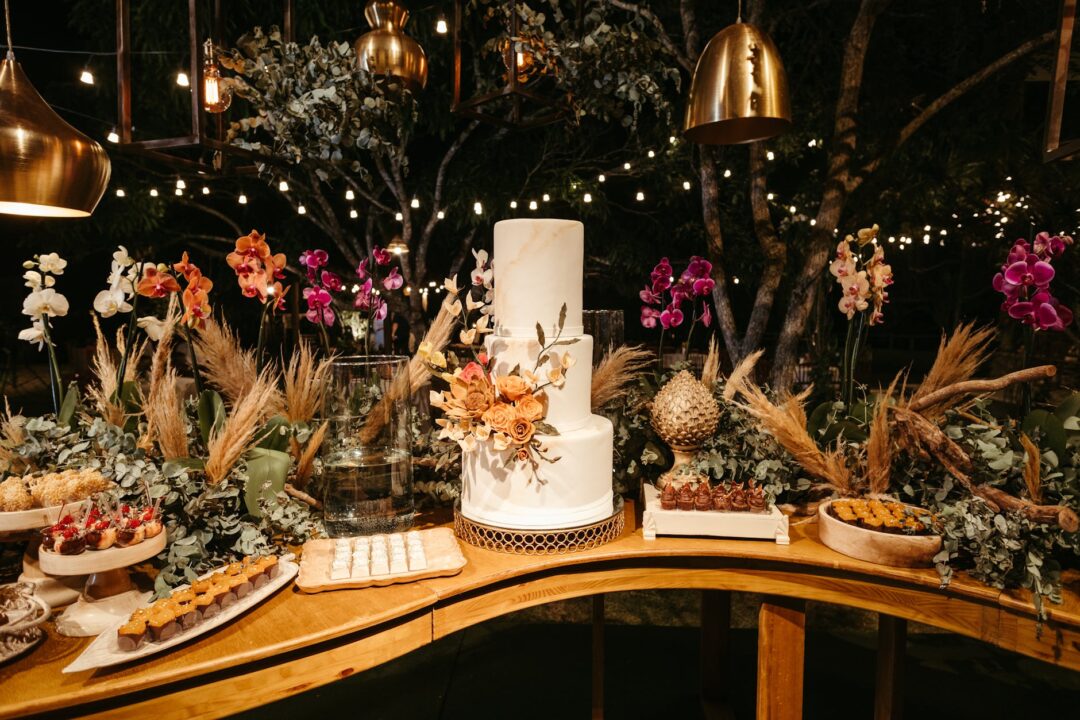
Display Essentials: Stands, Jars, Crates, Trays
How you display desserts matters as much as what’s on the table. A flat arrangement of items on a single-level table reads as afterthought. Height, texture, and layering are what make a dessert table photograph-worthy.Tiered cake stands
The single most important display item. A mix of 2-tier and 3-tier stands in coordinating finishes (marble, white ceramic, gold metal, wood) creates the height variation that makes a table look full and styled. Aim for at least 3 stands at different heights. Rental cost: $15-$40 each; purchase: $20-$60.Glass apothecary jars and cloches
Tall apothecary jars are perfect for bulk items (candy, truffle assortments, cookies). Glass cloches (dome covers) add elegance and protect items from dust at outdoor venues. Coordinate jar heights to create visual rhythm.Wood crates and box risers
Wooden crates, slated boxes, or wrapped cardboard risers placed under the tablecloth create height at no visible cost. Items placed on top appear to float at different levels. This is the most cost-effective way to add dimension to a display.Vintage trays and serving platters
Slate boards, marble slabs, and vintage silver trays work well for bite-size items like truffles, fudge, and macarons. Mix finishes for an eclectic-but-curated look. Many rental companies offer tray packages for $50-$150 for a full table’s worth.Color palette and linen
The tablecloth sets the backdrop for everything. White or ivory linen is universally versatile. Sage, dusty blue, blush, and black work for specific palettes. Avoid a busy pattern that competes with the desserts. Floral arrangements, candles, or small framed signs at the back of the table complete the look.Signs, Labels, and Flavor Cards for Your Dessert Table
Signage is non-negotiable. Unlabeled food confuses guests, especially those with dietary restrictions. A well-labeled table also photographs better because the cards add visual texture and scale.What to label
Every distinct dessert needs a card. At minimum, list the name and key allergens. Ideally, add a brief descriptor: “Lemon Tart – gluten-free pastry, lemon curd, candied zest.” Format each card the same way for visual consistency.Types of signs for a dessert table
- Tent cards or flat cards: The most versatile option. 3×4 or 4×6 inches, printed with name and allergens, folded or placed in a small stand. These can be ordered from a stationer to match your invitation suite exactly.
- “Please take one” sign: A table-level card or small framed print guiding guests on portion etiquette. Helps prevent one group emptying the table early.
- Welcome or introduction sign: An A4 or A5 card at the front of the table reading something like “Sweet Table” or your names and wedding date. Frames the station for photos.
- Allergen legend sign: A small key card explaining symbols used on all labels (GF = gluten-free, V = vegan, N = contains nuts). Saves space on individual flavor cards.
Timing for sign orders
Order flavor cards and signs at the same time as your main stationery. They’re often a small add-on to your existing order and will match perfectly if produced together. Finalize flavors with your baker 2-3 weeks before the wedding so card text is accurate.Dietary Inclusion: Vegan, Gluten-Free, Nut-Free Without Stigma
The goal of dietary inclusion at a dessert table is simple: every guest should be able to take something without feeling singled out. This requires intentional planning, not a separate “allergy table” in the corner.Build inclusion into the main table
The best approach is selecting dessert items where at least 2-3 are naturally vegan, gluten-free, or allergen-friendly, then labeling them clearly on the main table. A dark chocolate truffle is often vegan. Meringue cookies are naturally gluten-free. Fresh fruit skewers work for most dietary needs. Position these items on the main table, not on a separate setup.Labeling language that doesn’t stigmatize
Use positive descriptor language rather than restriction language. “Naturally gluten-free” reads differently from “Gluten-Free Option” in bold. “Made without dairy or eggs” is accurate and informative without calling attention. If a guest wants to know which items fit their needs, clear labeling lets them self-select without asking staff or feeling conspicuous.Cross-contamination protocols
If any guest has a severe nut allergy, discuss protocols with your baker in advance. This may mean ordering nut-free items from a separate facility, providing dedicated serving utensils for nut-free items, and placing nut-free items at one end of the table away from nut-containing options. Note this on your allergen legend sign.Communicate with your baker early
Tell your baker at booking that you want at least 2 gluten-free options and 2 vegan options on the table. Most experienced dessert vendors will suggest items naturally; some may need to be specifically asked. Waiting until 2 weeks before the wedding often limits your options significantly.DIY vs Caterer-Provided vs Custom Dessert Vendor (Cost Breakdown)
Three meaningful cost paths exist, and each suits different couples.| Path | Who It’s For | Cost for 100 Guests | Pros | Cons |
|---|---|---|---|---|
| DIY (bake + buy bulk) | Couples with time, bakers in the family | $350-$600 | Cheapest; personal touch; full control | Major time commitment; day-of logistics stress; no backup if something goes wrong |
| Caterer-provided | Couples using a full-service caterer | $600-$1,000 | Managed logistics; one vendor; easy to add to existing catering package | Less customization; caterers often prioritize volume over specialty items; display may be basic |
| Custom dessert vendor | Couples who want the full styled table experience | $900-$1,600+ | Best visual result; specialist expertise; full styling often included | Highest cost; need to book 3-6 months out in peak season |
What drives cost up
- Specialty items (macarons, eclairs, croquembouche) cost 2-3x more per piece than cookies and brownies
- Full styling packages (custom backdrop, florals, specialty rentals) add $200-$600 on top of food cost
- Venue-provided setup time (if you need to pay for additional vendor time at the venue)
- To-go packaging for guests to take treats home
How to cut cost without cutting impact
The highest-ROI move: mix 1-2 premium items (macarons, decorated cake pops, custom truffles) with lower-cost bulk items (brownies, cookies, fudge). Guests remember the visual highlight and the variety, not that the brownies came from Costco. Spend on the display (stands, florals, linen) because that’s what photographs and how guests perceive the whole table.Coordinating your dessert table with your full stationery suite
The most cohesive reception setups extend the stationery design system all the way to the dessert table: flavor cards in the same typeface as your invitations, a welcome sign in the same print style, perhaps even Wedding favor tags (Australian collection) on the to-go boxes. This is where a single print vendor for all your paper items pays off. Browse Paperlust menu cards to see how flavor card designs can be matched to your invitation suite. For more inspiration on your full reception food program, see our guides on wedding food ideas, wedding canape ideas, and wedding reception decoration ideas. If you’re still deciding between a traditional cake and a dessert table, our wedding cake ideas guide has full-format comparisons.Complete your dessert table with custom labels and signs
Flavor cards, allergen tags, and welcome signs designed to match your invitation suite exactly.
Frequently Asked Questions
How many desserts per guest at a wedding?
Plan 3-5 pieces per guest when the dessert table is the only sweet option. Drop to 2-3 pieces if you’re also serving a cutting cake. For late-night-only stations, 1-2 pieces per expected remaining guest is sufficient. Always add a 10% buffer on your headcount.
Can a dessert table replace a wedding cake?
Yes, and many couples choose to do exactly that. A dessert table replacing the cake needs to serve 4-5 pieces per guest to ensure everyone gets enough. The trade-off: you lose the cake-cutting moment as a formal reception milestone. Some couples keep a small single-tier cutting cake for the tradition, then let the dessert table cover the rest of the guest count.
How much does a wedding dessert table cost?
For 100 guests: DIY runs $350-$600, caterer-provided runs $600-$1,000, and a custom dessert vendor with full styling runs $900-$1,600 or more. Key variables are dessert type (macarons and eclairs cost 2-3x more per piece than cookies and brownies) and whether you include backdrop, florals, and styling rentals.
Can I DIY a wedding dessert table?
Yes, with caveats. DIY is the most cost-effective path, but it requires significant advance baking, reliable family or friend help for transport and setup, and backup plans if something goes wrong. Mixing baked items with bulk purchased items (Costco cookies, chocolates from a candy supplier) is a practical middle ground that looks great when well-displayed.
When should the dessert table be set out?
Set up the display (stands, linens, signage) before guests arrive. Place desserts on the table no more than 1-2 hours before service to maintain freshness. Open the table after the cake cutting and have your DJ announce it. For late-night stations, announce opening after 9 p.m. or when dancing peaks.
How do I handle dietary restrictions at the dessert table?
Select 2-3 items that are naturally gluten-free, vegan, or nut-free, and place them on the main table (not a separate station) with clear labels. Use positive descriptor language (“naturally gluten-free”) rather than restriction framing. For severe nut allergies, use dedicated serving utensils for nut-free items and keep them at one end of the table. Discuss protocols with your baker at booking, not 2 weeks before the wedding.
What’s the best color palette for a wedding dessert table?
Match the table to your wedding color palette rather than coordinating around food color. If your wedding is sage and white, use white linen, sage floral accents, and gold stands, then source desserts in neutral tones (ivory macarons, white chocolate truffles, lemon tarts). The display holds the palette; food color is secondary.
How far in advance do I need to book a dessert vendor?
Book a specialty dessert vendor 3-6 months before the wedding during peak season (May-October). Local dessert specialists often have the same seasonal demand as wedding cake bakers. Caterer-provided tables typically only need 4-8 weeks notice if the caterer already offers this as a service.