
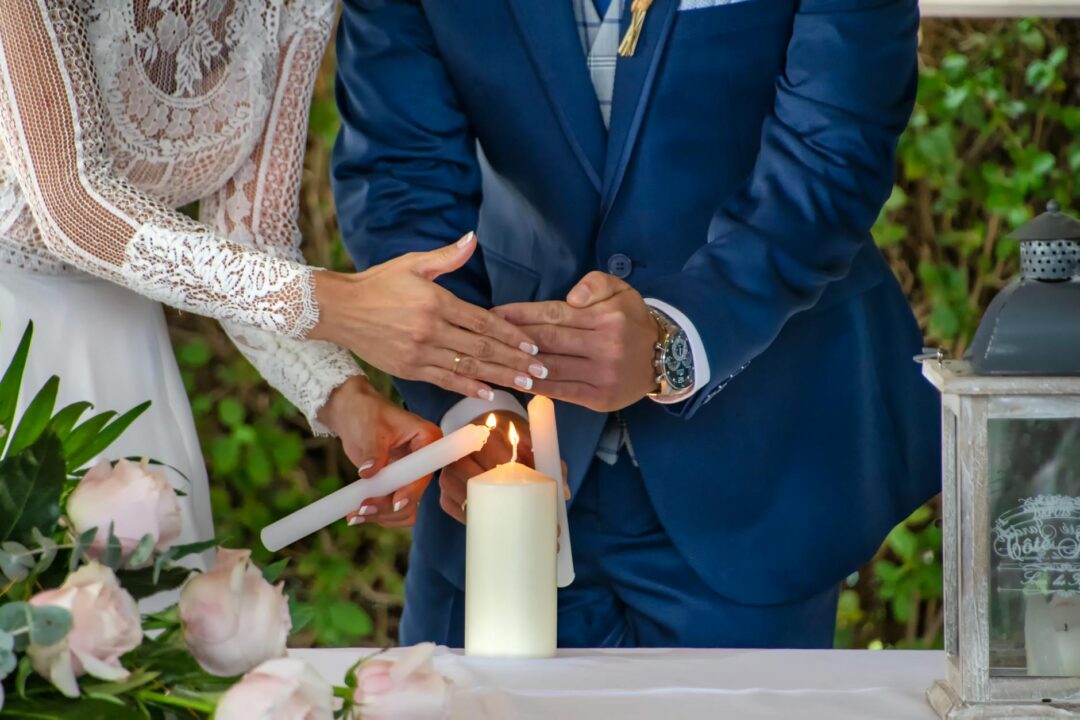
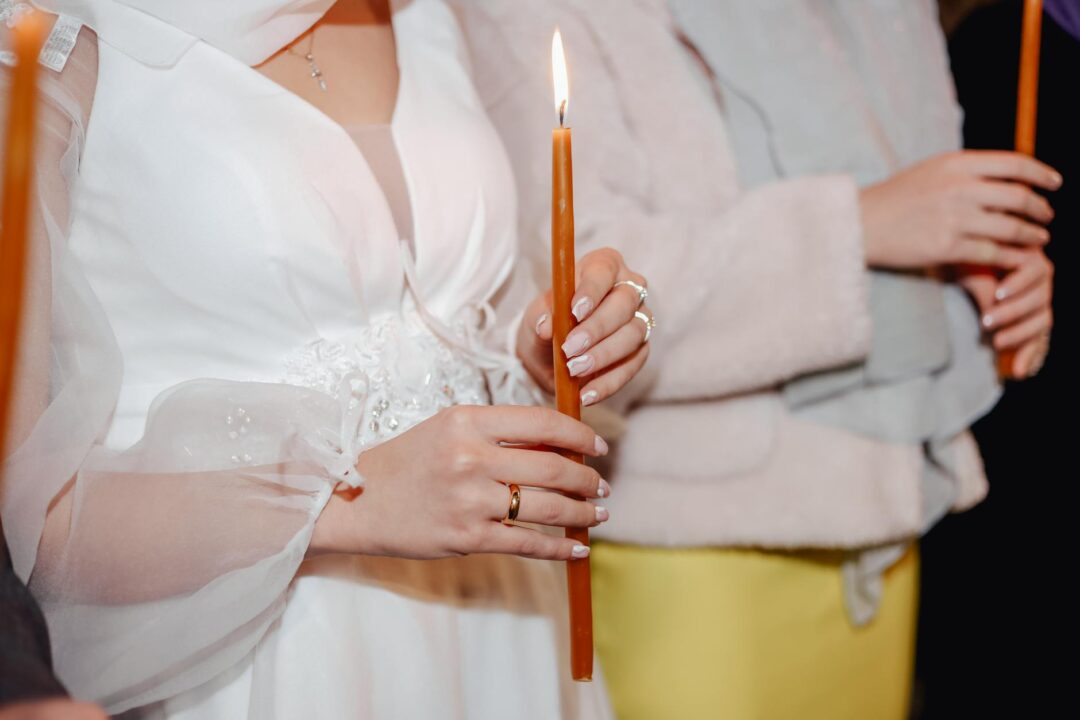

- A unity ceremony is a symbolic ritual performed during the wedding ceremony, usually between vows and the ring exchange.
- The sand ceremony and candle lighting ceremony are the most popular in the US, but there are 13+ other options for every style and tradition.
- Many rituals can be adapted for blended families by including children or parents in the gesture.
- You do not need a unity ritual to have a meaningful ceremony, but it adds a memorable visual moment guests will talk about long after the day.
In This Article
- What is a Wedding Unity Ceremony?
- Sand Ceremony
- Candle Lighting Ceremony
- Tree Planting Ceremony
- Wine Box (Love Letter Time Capsule)
- Ring Warming Ceremony
- Handfasting
- Knot Tying / Fisherman’s Knot
- Breaking the Glass (Jewish Tradition)
- Jumping the Broom (African-American Tradition)
- Salt Covenant
- Water Blending
- Oil Blending
- Painting or Canvas Ceremony
- Time Capsule Ceremony
- Family Unity Ritual (Blended Families)
- How to Pick the Right Unity Ritual for Your Ceremony
- Items Needed and Where to Buy Them
What is a Wedding Unity Ceremony? (And When in the Ceremony Does It Happen)
A wedding unity ceremony is a symbolic ritual performed during the wedding ceremony to represent two lives joining into one. It is not a legal requirement and it is not exclusive to any religion or culture. Any couple can include one, or skip one entirely.
In a typical ceremony order, the unity ritual falls after the vows and before the ring exchange, though some officiants place it between the rings and the pronouncement. Your wedding officiant will help you decide the best placement based on flow. Some unity rituals (like ring warming) actually begin before the ceremony starts, with guests passing the rings through the crowd during the processional.
A well-chosen unity ritual takes 2 to 5 minutes and adds a quiet, meaningful beat to the ceremony that is different from the spoken words. For guests, it is a moment to watch something happen rather than listen, which breaks the pacing in a good way.
The 15 rituals below are organized from the most widely known to the most distinctive. Each comes with cultural and religious notes so you can quickly judge whether it fits your ceremony style.


Sand Ceremony
Meaning
Two separate vessels of sand, each a different color, are poured together into a single container. Once mixed, the grains cannot be separated again, symbolizing two lives that have become permanently intertwined.
How to Perform It
- Each partner holds a small vessel of colored sand.
- The officiant invites both partners to pour simultaneously, or alternately, into a central glass vase.
- A final pour from both at the same time seals the top layer.
- The vase is sealed after the ceremony and displayed at home.
Items Needed
- 2 small pouring vessels (glass or ceramic) with contrasting sand colors
- 1 larger display vessel with a lid or stopper
- A table or surface at the altar (often draped to match the ceremony decor)
Officiant Script Template
Best For
Beach weddings, outdoor ceremonies, couples with children (add a third color for each child). Works for civil, non-religious, and most religious ceremonies. Not typically part of Catholic or Jewish liturgy but is allowed at most venues.

Candle Lighting Ceremony
Meaning
Each partner lights a taper candle from their own flame. Both then use their individual candles to light a single central unity candle together, and typically blow out their own tapers. The single flame represents a new shared life. Some couples choose not to extinguish the taper candles, symbolizing that individual identity is not lost in marriage.
How to Perform It
- Before the ceremony, a family member (often the mothers) lights the two taper candles.
- During the unity moment, both partners pick up their taper candles.
- Together, they tilt the flames to light the central pillar or taper candle.
- The officiant invites a moment of silence or reads a passage.
Items Needed
- 2 taper candles (one per partner)
- 1 unity pillar candle (taller, central)
- A candle holder or tray that holds all three securely
- Matches or a lighter for the initial lighting
- Wind guards for outdoor ceremonies
Officiant Script Template
Best For
Indoor ceremonies and evening weddings where the candle reads beautifully in photos. Standard in many Christian denominations. Works for interfaith and civil ceremonies. Not recommended for outdoor, windy venues without proper wind guards. Avoid at venues with no-flame fire codes.
Tree Planting Ceremony
Meaning
The couple plants a tree or seedling together, combining soil or water from their individual containers. The tree grows alongside the marriage, becoming a living symbol of the relationship.
How to Perform It
- A young tree or seedling sits in a pot at the altar, partially planted.
- Each partner has a small container of soil or water.
- Together, they add their soil and water to the pot and press the soil firmly around the roots.
- The tree is later planted in the couple’s yard or a meaningful outdoor space.
Items Needed
- A young native tree, fruit tree, or flowering plant
- A decorative pot with soil already in place
- 2 small pitchers or scoops for individual soil or water
- A small trowel
- A cloth to protect clothing from soil
Officiant Script Template
Best For
Outdoor and garden weddings. Highly popular for eco-conscious couples and those with a family home or garden. Works well for any religious or non-religious ceremony. Paperlust plants a tree with every stationery order, so this ritual pairs naturally with a sustainability-minded wedding theme.
Wine Box (Love Letter Time Capsule)
Meaning
The couple places letters written to each other, along with a bottle of wine, inside a sealed wooden box. They commit to opening it on a future anniversary (typically five years) or only in the event of a serious relationship challenge, reading the letters, and drinking the wine together.
How to Perform It
- Each partner writes a letter to the other before the wedding.
- At the unity moment, both letters and a bottle of shared wine are placed inside the box.
- The officiant invites them to seal and nail the box shut.
- The couple decides the conditions for opening it (anniversary, a difficult period, or both).
Items Needed
- A wooden keepsake box with a hinged lid
- A bottle of good wine (one you will enjoy in five years)
- 2 handwritten letters sealed in envelopes
- Small nails and a hammer, or a latch and padlock
- A printed card inside with the opening instructions
Officiant Script Template
Best For
Any style of ceremony. Particularly popular at winery or barn weddings. Works for all religious traditions. The absence of active physical ritual means it is lower-key than sand or candle ceremonies, with the emotional weight carried by the letters themselves.
Ring Warming Ceremony
Meaning
The wedding rings are passed through the hands of every guest before reaching the couple. Each person holds the rings briefly and silently offers a wish or blessing. The couple then receives rings warmed by the energy and intentions of everyone they love.
How to Perform It
- Before or during the processional, the rings are placed in a small pouch or on a pillow and passed from the first guest to the last.
- The officiant explains the meaning as the rings begin their journey.
- The best man or ring bearer collects the rings at the front when they arrive.
- The ring exchange proceeds as normal.
Items Needed
- A small drawstring pouch or ring holder (not a ring box, which is hard to pass)
- Enough time (100-150 guests means 5-8 minutes of passing)
Officiant Script Template
Best For
Small to medium weddings (fewer than 120 guests work best for pacing). Any style of ceremony. Does not work for large ceremonies or those with tight timing. Ideal for intimate gatherings where the couple knows every guest personally.
Handfasting
Meaning
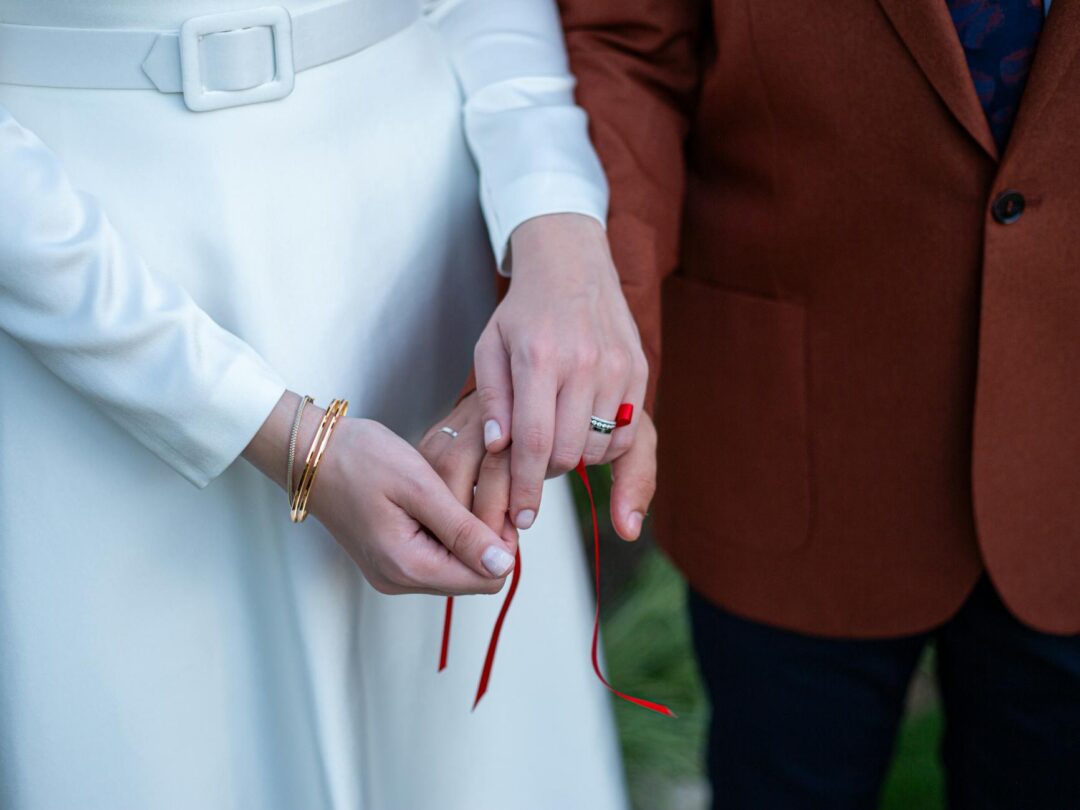
Handfasting is a Celtic tradition in which cords or ribbons are wrapped around the couple’s joined hands. The binding is both literal and symbolic: the couple is “bound” to one another. This is the origin of the phrase “tying the knot.” It is one of the oldest recorded marriage rituals in Western history.
How to Perform It
- The couple faces each other and joins their right hands over their left (a “clasped” hold).
- The officiant, or a chosen family member, winds the cord around the joined hands.
- The officiant may wrap multiple cords, each in a different color with a stated meaning (love, strength, fidelity, commitment, joy).
- The knot is tied loosely enough to slip off after the ceremony and kept as a keepsake.
Items Needed
- 1 to 5 cords or ribbons, 3-5 feet each (braided silk, velvet, or natural fiber)
- Cords in meaningful colors with meanings printed on the program
Officiant Script Template
Best For
Celtic, Pagan, Wiccan, and non-religious ceremonies. Also popular at interfaith ceremonies. Not typically used at Catholic, Orthodox Jewish, or highly traditional Protestant ceremonies. It has no inherently pagan religious requirement, so many non-religious couples use it as a historical and aesthetic choice. Religious appropriateness flag: consult your officiant if you are having a Catholic or conservative Protestant ceremony, as some clergy do not include it.
Knot Tying / Fisherman’s Knot
Meaning
Each partner ties a simple loop in the end of a rope. Those two loops are then linked together before the final knot is tightened. The resulting knot grows stronger under tension. The harder you pull, the tighter it holds. The symbolism is explicit: this marriage becomes stronger under pressure.
How to Perform It
- Each partner holds a length of natural rope.
- Each ties a loose overhand loop at one end.
- The two loops are linked, then each person pulls their own end to tighten the interlock.
- The finished knot is displayed or framed as a keepsake.
Items Needed
- 2 lengths of natural rope (cotton, jute, or nautical rope), about 18 inches each
- Optional: a shadowbox frame or display mount for after the ceremony
Officiant Script Template
Best For
Nautical, rustic, coastal, or outdoor weddings. Works for any non-religious or interfaith ceremony. Popular with couples who want something unusual. Visually interesting in photos but requires practice beforehand so both partners can tie the loops smoothly.
Breaking the Glass (Jewish Tradition)
Meaning
The groom (or both partners) stamps on a glass wrapped in cloth, breaking it. In Jewish tradition, the gesture holds multiple layers of meaning: mourning the destruction of the Temple in Jerusalem, acknowledging that even in joy there is sorrow, and marking that this moment is unrepeatable. The assembled guests shout “Mazel tov!” as the glass breaks.
How to Perform It
- A glass (often a wine glass from the ceremony) is wrapped tightly in a cloth napkin to prevent fragments from scattering.
- The cloth-wrapped glass is placed on the ground.
- The groom stamps on it firmly with one foot, or both partners stamp together.
- Guests respond with “Mazel tov!”
Items Needed
- A thin-walled wine glass (breaks easily underfoot)
- A thick cloth napkin or small bag
- A hard surface or thin board (carpet absorbs impact)
Officiant Script Template
Best For
Jewish weddings and interfaith Jewish ceremonies. Increasingly adopted by non-Jewish couples who appreciate the symbolism of irreversibility. Religious appropriateness flag: traditionalist Orthodox rabbis reserve this act for after the vows and sometimes for the groom alone. Reform and Conservative rabbis typically allow both partners to break the glass together.
Jumping the Broom (African-American Tradition)
Meaning
A decorated broom is laid on the ground and the couple jumps over it together. The tradition has roots in African and African-American history and is associated with sweeping away the past and welcoming a new home and life together. It grew particularly significant in the antebellum American South, where enslaved people were legally prohibited from marrying and adapted this ritual as a form of recognized union within their communities.
How to Perform It
- A decorated broom is placed on the ground at the end of the ceremony.
- After the pronouncement and first kiss, the couple joins hands and jumps over the broom together.
- Guests cheer.
- The broom is kept as a meaningful heirloom.
Items Needed
- A broom decorated with ribbons, flowers, or fabric in the wedding colors
- A clear path at the exit of the ceremony space
Officiant Script Template
Best For
African-American couples and couples honoring that heritage. Also used by couples of any background who are drawn to the symbolism. Most officiants can incorporate it. Works at the end of the ceremony rather than the middle, making it a transition into the recessional.
Salt Covenant
Meaning
Each partner has a small vessel of salt. They pour their salt into a single container and mix it. The covenant is sealed because the salt cannot be separated and returned to its original vessels, just like the marriage cannot be undone. The salt covenant has Biblical roots (Numbers 18:19, 2 Chronicles 13:5) and is used in Christian ceremonies, particularly in evangelical and charismatic traditions.
How to Perform It
- Each partner holds a small glass or pouch of salt (often different colors to make the mixing visible).
- The officiant explains the symbolism.
- Both partners pour their salt simultaneously into a central vessel and attempt to stir it.
- The officiant confirms that the salt cannot be separated, sealing the covenant.
Items Needed
- 2 small vessels of salt (dyed different colors with food coloring, or contrasting natural salts)
- 1 small mixing vessel with a lid for the keepsake
Officiant Script Template
Best For
Christian couples, particularly evangelical and non-denominational. Works at Catholic ceremonies with officiant approval. Less common at secular or civil ceremonies but can be used by any couple drawn to the symbolism. A quieter ritual than sand, with similar visual logic.
Water Blending
Meaning
Each partner brings water from a place that is significant to them: a childhood home, a hometown river, an ocean from a meaningful trip, or water blessed at a family event. The two waters are poured together into a single vessel, blending two histories into one shared life.
How to Perform It
- Each partner brings a small vessel of water from a chosen meaningful source.
- The officiant explains the origin of each water and its significance to each partner.
- Both waters are poured simultaneously into a central vessel.
- The combined water is used to water a plant at the ceremony or taken home as a keepsake.
Items Needed
- 2 small pitchers or glass containers of water from chosen locations
- 1 central vessel (transparent is best so the joining is visible)
Officiant Script Template
Best For
Couples with strong ties to specific places, multicultural couples, or destination wedding couples who want to bring a piece of home to the ceremony. Works for any religious or non-religious ceremony. Particularly meaningful for couples from different countries, states, or cultural backgrounds.
Oil Blending
Meaning
Two separate essential oils, each chosen to represent a partner’s qualities or values, are blended together into a single carrier oil. The blend is unique and cannot be separated. The custom oil can be used to anoint the couple, rubbed onto the wrists, or kept as a keepsake. Oil has deep symbolic significance in many religious traditions, including anointing in Christian and Jewish ceremonies.
How to Perform It
- Each partner chooses an essential oil or oil blend that reflects who they are (lavender for calm, sandalwood for rootedness, rose for love, etc.).
- The officiant explains the symbolism of each oil before mixing.
- Both oils are poured into a small bottle of carrier oil and gently blended.
- The officiant or couple anoints their wrists with the combined oil.
Items Needed
- 2 essential oils in small dropper bottles
- 1 small bottle of carrier oil (jojoba or sweet almond oil)
- A small funnel if needed
- Optional: custom labels for the keepsake bottle
Officiant Script Template
Best For
Wellness-oriented couples, yoga or meditation communities, and interfaith or spiritual-but-not-religious ceremonies. Works at Christian ceremonies (anointing has strong Biblical precedent). Not commonly used at formal Catholic or Orthodox Jewish ceremonies without specific adaptation.
Painting or Canvas Ceremony
Meaning
Each partner adds paint to a shared canvas during the ceremony, either with brushes, stamps, or their hands. The resulting artwork is a literal collaboration, unique and unrepeatable, and becomes a piece of art for their home.
How to Perform It
- A pre-primed canvas sits on an easel at the altar, with paint in the couple’s chosen colors waiting in palettes.
- Both partners add their color to the canvas at the same time or in turns.
- The art develops naturally, and is left to dry during the reception.
- The painting goes home with the couple as a permanent reminder of the day.
Items Needed
- A pre-stretched canvas (18×24 inches works well for visibility)
- Non-toxic acrylic paints in the wedding colors
- 2 brushes or stamps (or protective gloves for hand-painting)
- A smock or apron to protect wedding attire
- A small table or easel
Officiant Script Template
Best For
Creative, artistic couples and gallery or studio wedding venues. Works for any non-religious or interfaith ceremony. Great for couples who want something original that they will look at in their home for years. Requires a little more setup than other rituals but the payoff, an actual piece of art, is significant.
Time Capsule Ceremony
Meaning
Guests and the couple each contribute meaningful items or notes to a sealed container. The capsule is opened at a future date, often a milestone anniversary, and the contents become a window back to the wedding day. The ritual extends the meaning of the ceremony into the future and gives guests an active role.
How to Perform It
- Before the ceremony, guests are invited to write a note or bring a small item to contribute to the capsule.
- During the unity moment, the couple adds their own items (a pressed flower, a photo, a newspaper from the wedding date).
- The officiant seals the capsule and announces the opening date.
- One partner keeps custody of the capsule.
Items Needed
- A tin, wooden box, or archival container
- Note cards and pens at each guest seat or at a table near the entrance
- Envelopes for guests who want their contributions private
- A permanent marker to label the container with the opening date
Officiant Script Template
Best For
Any style of ceremony. Particularly meaningful at milestone birthday weddings or for older couples who want to make the ceremony interactive. Works for all religious traditions. Can be combined with the wine box ceremony for a double time-capsule variation.
Family Unity Ritual (Blended Families)
Meaning
When one or both partners bring children into the marriage, the unity ritual can be adapted to include the children as active participants. This is one of the most powerful moments in a blended family wedding: the children are not witnesses to a ceremony that is happening to them, but participants in the family they are choosing together.
How to Perform It
Any of the above rituals can be adapted for family inclusion:
- Sand ceremony: each child has their own color of sand and pours simultaneously with the parents.
- Candle ceremony: children each light a small taper, which parents use to light the unity candle.
- Medallion or coin exchange: the couple exchanges a special coin or medallion with each child as a promise of family membership.
- Family vow addition: the officiant reads a short family vow where the couple makes promises directly to the children, and the children respond.
Items Needed
Same as the base ritual, plus one vessel or candle per child in a distinct color or style.
Officiant Script Template
Best For
Any couple with children from previous relationships. Can be adapted for any ceremony style and any religious tradition. Particularly powerful when children are old enough to understand the gesture (roughly ages 4 and up). Young children can participate with a parent’s guidance.
How to Pick the Right Unity Ritual for Your Ceremony
With 15 options in front of you, narrowing down can feel difficult. Use these filters:
| If you want… | Best options |
|---|---|
| Something guests can participate in | Ring warming, time capsule |
| A physical keepsake from the ceremony | Sand, candle, wine box, painting, knot tying |
| Something rooted in cultural heritage | Breaking the glass, jumping the broom, handfasting, salt covenant |
| An outdoor or nature ceremony | Tree planting, water blending, sand ceremony |
| Something to include children | Family sand ceremony, family candle, medallion exchange |
| A Catholic-approved ritual | Candle lighting, salt covenant (with priest approval) |
| A secular or non-religious ceremony | Any of the 15; most are not religion-specific |
| Something unusual for guests to remember | Painting ceremony, knot tying, oil blending |
A word on length: most unity rituals take 2 to 5 minutes. If your ceremony is already running long, choose a simpler ritual (ring warming, knot tying, salt covenant) rather than one that requires setup time. If ceremony length is not a concern, the painting ceremony and tree planting have the most visual impact.
For help structuring the full ceremony, see the wedding ceremony script guide and wedding processional order guide.
Items Needed and Where to Buy Them
| Ritual | Key items | Where to find |
|---|---|---|
| Sand ceremony | Colored sand, vessels | Etsy, craft stores |
| Candle ceremony | Unity candle set | Wedding retailers, Etsy |
| Tree planting | Seedling, pot, soil | Local nursery |
| Wine box | Wooden box, wine, letters | Woodcraft, Etsy |
| Handfasting cords | Braided cords | Etsy, fabric stores |
| Knot tying | Natural rope | Hardware, craft stores |
| Breaking the glass | Wine glass, cloth bag | Any home goods store |
| Broom (jumping) | Decorated broom | Etsy, craft stores |
| Salt covenant | Colored salt, vessels | Craft stores, Etsy |
| Painting ceremony | Canvas, acrylic paint, brushes | Art supply stores |
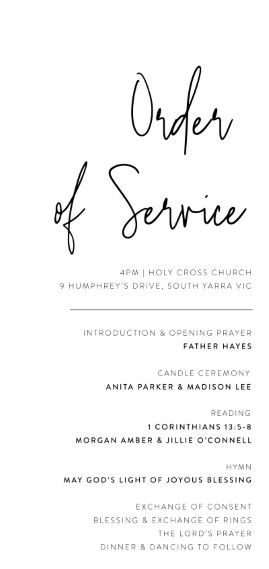
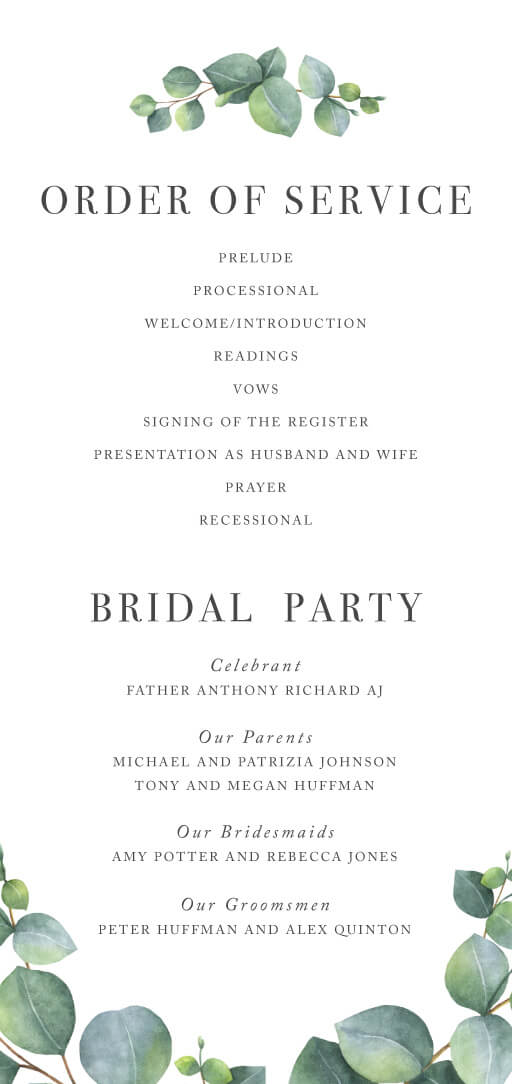
For your ceremony programs, consider printing the unity ritual explanation directly on the program so guests understand what they are watching. Browse wedding programs at Paperlust to find designs that match your ceremony aesthetic.
Your ceremony script should reference the unity ritual in three places: the officiant’s introduction of the ritual, the instructions during the ritual, and the closing line that transitions back to the vows or rings. Most of the script templates above can be lifted directly into your program or provided verbatim to your officiant.
Frequently Asked Questions
Do we have to have a unity ceremony?
No. A unity ceremony is entirely optional. It is a meaningful addition for many couples but it is not required by any religion or legal authority. If you prefer a shorter ceremony or simply do not connect with any of the available rituals, skip it. Your ceremony will be no less valid or meaningful without one.
Where in the ceremony does the unity ritual happen?
Most officiants place it after the vows and before the ring exchange. Some place it between the ring exchange and the pronouncement. The ring warming ceremony is an exception: it typically begins during the processional and finishes just before the ring exchange. Discuss timing with your officiant early in planning so the ceremony script accounts for setup time.
Can we do more than one unity ritual?
Yes, but use restraint. Two rituals can work if they are brief and serve clearly different purposes (for example, handfasting for the couple plus a family sand ceremony that includes children). Three or more rituals will make the ceremony feel long and the individual moments lose impact. If you love multiple ideas, use one as the main ritual and reference others symbolically in the vows.
Is handfasting religious or pagan?
Handfasting has historical roots in Celtic and Pagan traditions but it is not exclusively religious or spiritual today. Many non-religious and interfaith couples use it as a historical and aesthetic practice with no spiritual connotation. If you are having a Catholic, Orthodox Jewish, or conservative Protestant ceremony, check with your officiant or clergy before including it, as some may not incorporate it.
Do you need an officiant for a unity ceremony?
You need an officiant for the legal ceremony, but the unity ritual itself does not legally require one. In practice, the officiant typically narrates the unity ritual and provides its context. Some couples ask a parent, close friend, or wedding party member to speak during the unity moment while the officiant steps back. This can be a meaningful way to include family members who are not in the wedding party.
What is the most popular unity ceremony?
The sand ceremony and candle lighting ceremony are consistently the most popular unity rituals in the United States. Sand is particularly common at beach and outdoor weddings. Candle lighting remains the most widely known across religious denominations. Handfasting has grown significantly in popularity in the past decade, particularly among non-religious couples looking for something with historical weight.
When should we decide on a unity ritual?
Decide at least three months before your wedding, and inform your officiant when you do. Some rituals (wine box, painting, time capsule) require items that need to be sourced and prepared well in advance. The unity ritual also needs to appear in your ceremony program so guests know what to expect.
How do we explain the unity ritual to guests who may not recognize it?
Print a short explanation in your ceremony program. Two or three sentences describing the ritual, its origin, and what guests will watch is enough. Your officiant will also narrate during the ritual itself. For traditions that are culturally specific (breaking the glass, jumping the broom), a program explanation is especially helpful for guests who may be unfamiliar with the tradition.
Make your ceremony stationery as memorable as the ritual
Your wedding programs can introduce guests to your unity ritual before it happens, and your invitations set the tone for every ceremony moment. Browse 500+ designs at Paperlust, or order a $5 sample pack first to see the print quality in your hands.
About Paperlust
Paperlust is a Melbourne-based wedding stationery studio founded in 2014. We work with 500+ independent Australian and international designers to offer wedding programs, invitations, save the dates, menus, place cards, thank you cards, and signage in digital print, flat foil, foil stamp, letterpress, metallic, and white ink. Every order includes a designer proof within 1-2 business days, two free rounds of edits, free white envelopes, and free DHL Express shipping on orders over $350 USD. We plant a tree with every order.