
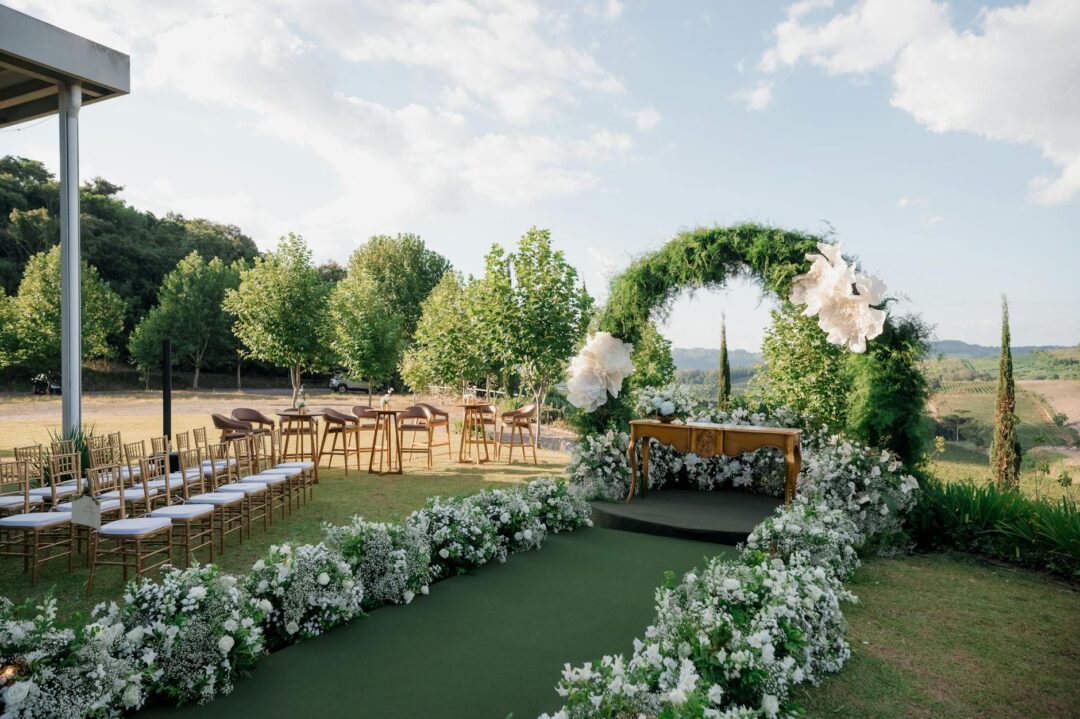
The aisle is the first frame your guests see you in. It sets the tone before a word of the ceremony is spoken. Whether you want something minimal and modern or lush and full, there are smart ways to make that walk unforgettable without blowing the florals budget.
This guide covers every decoration zone, five venue types, runner alternatives, budget tiers from $150 to $2,500, and how to reuse aisle decor at the reception.
- Three decoration zones to plan: ground-level (petals, lanterns, rugs), chair/pew level (florals, ribbon, greenery), and overhead (hanging florals, fabric draping).
- Venue type changes everything: church rules often restrict open flames and loose petals; beach settings need wind-resistant anchoring.
- Aisle runners are optional – layered rugs, scattered petals, bare grass, and poured petal paths are all valid alternatives.
- Budget range: $150-400 DIY using greenery, candles, and silk petals; $800-2,500 florist-handled with fresh blooms and structural pieces.
- Reuse strategy: chair florals move to the head table; petal runners scatter onto cocktail hour surfaces; lanterns light the reception entrance.
- Set the stationery tone before guests even reach the aisle – your wedding invitations and suite should preview the aesthetic you create on the day.
The three decoration zones
Most couples think of aisle decor as one category. In practice it breaks into three distinct zones, each with different visual impact, cost, and venue-permission requirements. Plan each zone separately before deciding where to concentrate budget.
Zone 1: Ground level
Ground-level decor – petals, lanterns, potted plants, flat runners – is the most photographed zone because it appears in every processional shot at foot height. It is also the most regulated by indoor venues (staining, fire risk, tripping hazard). Confirm permissions before committing.
- Scattered petals: Fresh petals from roses, peonies, or ranunculus; silk petals for outdoor venues with wind. Ombre gradients (deep burgundy fading to blush) photograph particularly well.
- Lanterns: Battery-operated LED candles in glass hurricanes or metal lanterns eliminate open-flame restrictions. Cluster sizes for visual interest.
- Low potted arrangements: Small urns or terracotta pots with trailing greenery anchor the aisle entrance and double as reception decor.
- Ground-level garlands: Eucalyptus or ivy laid in two parallel lines creates a living path effect without a traditional runner.
Zone 2: Chair and pew level
The workhorse zone – affordable, high-quantity, and visible from every seat. The two main approaches are chair-hung florals and ribbon or fabric ties. Mixing both without a visual plan reads as cluttered; pick one as the primary and use the other as a subtle accent.
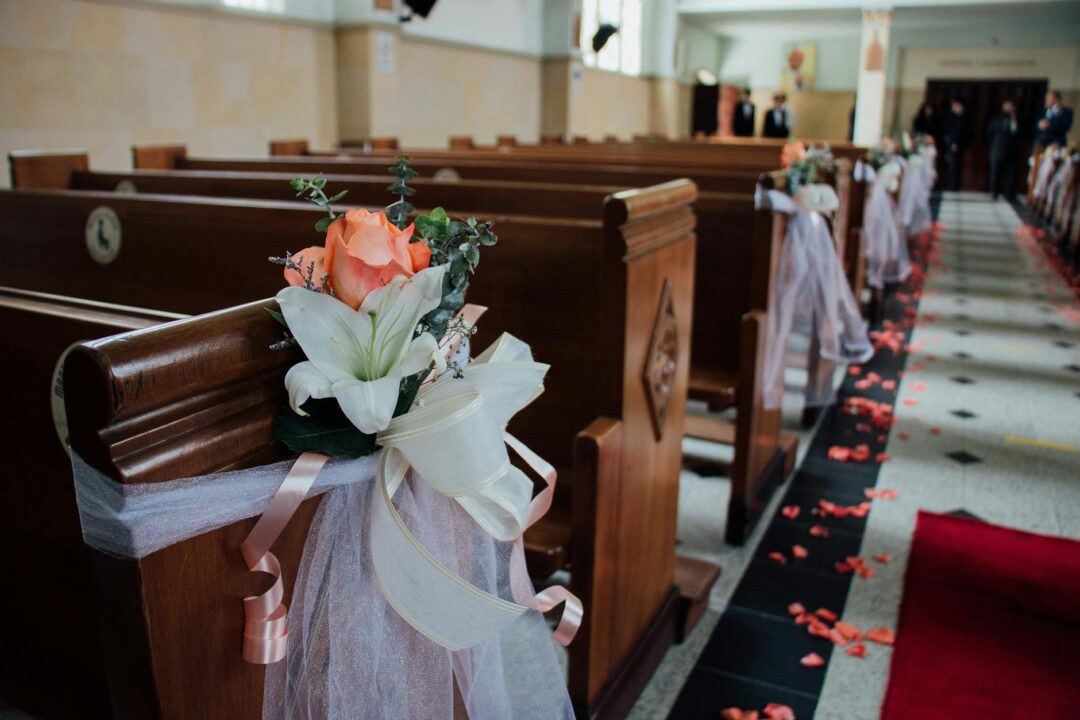
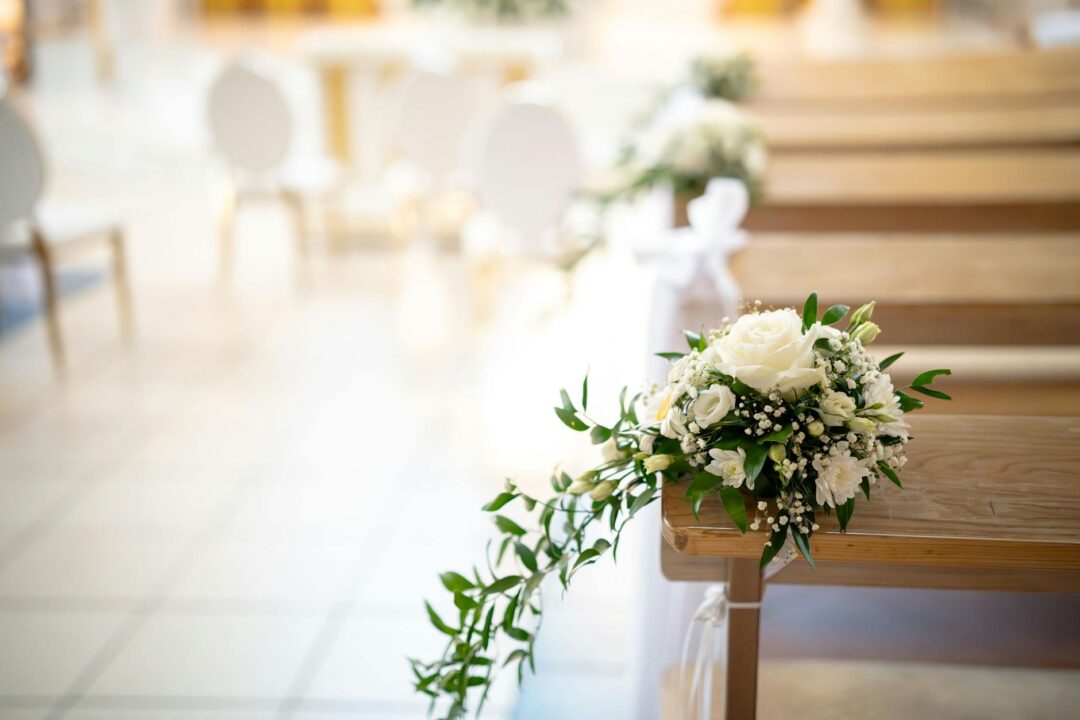
- Pew-end florals: Single stems (anemone, lisianthus, eucalyptus) tied with satin ribbon. Decorating every second pew reduces cost by 50% with minimal visual difference.
- Greenery garlands: Eucalyptus draping along chair backs has become a strong alternative to floral pew ends – lower cost, longer-lasting on the day, and easier to reuse.
- Ribbon or tulle: Tulle bows with a single stem look sharp at church weddings where pew space is narrow. Avoid heavy knots that pull the chair fabric.
- Lantern hangers: Small hooked lanterns on aisle chairs work well in barn and reception hall settings; too heavy for garden chairs without weighted bases.

Zone 3: Overhead
Overhead decor delivers the most dramatic photos and the highest price point. Hanging florals, fabric canopies, and ribbon installations require rigging and venue approval. For most budgets, a partial overhead installation at the altar end only – rather than the full aisle length – delivers the strongest visual payoff at a fraction of the cost.
- Hanging florals: Suspended orchids, pampas grass, or eucalyptus at the altar arch; photograph best framed against a window or sky.
- Fabric canopy: Sheer chiffon or organza panels between ceremony poles; anchor against wind for outdoor venues.
- Ribbon installation: Long lengths hung vertically at varying heights along the aisle sides – low cost, high impact, easily DIY.
Aisle decor by venue type
Each venue type has its own physical constraints, permission norms, and visual context. Use these as a starting filter before building your final list.
Church
Church venues typically restrict open flames, loose petals on stone or tile floors, adhesive on pews, and decor that blocks exit rows. Work from the church coordinator’s approved list. The visual context is already rich – stone, stained glass, architectural detail – so decor should complement rather than compete.
- LED candles in hurricane vases clustered at the altar entrance.
- Pew-end florals with ribbon ties (no adhesive).
- A white or ivory fabric runner if the aisle is carpeted and the pattern clashes with your color palette.
- Garlands along the front row pews where the family sits – a meaningful detail visible in all ceremony photos.
Garden
Garden ceremonies are the most flexible venue type. Grass surfaces handle petals, ground-level arrangements, and tiered floral pillars without restriction. Wind is the one variable – secure everything that can tip or blow.
- Petal-lined grass aisle using silk or fresh petals.
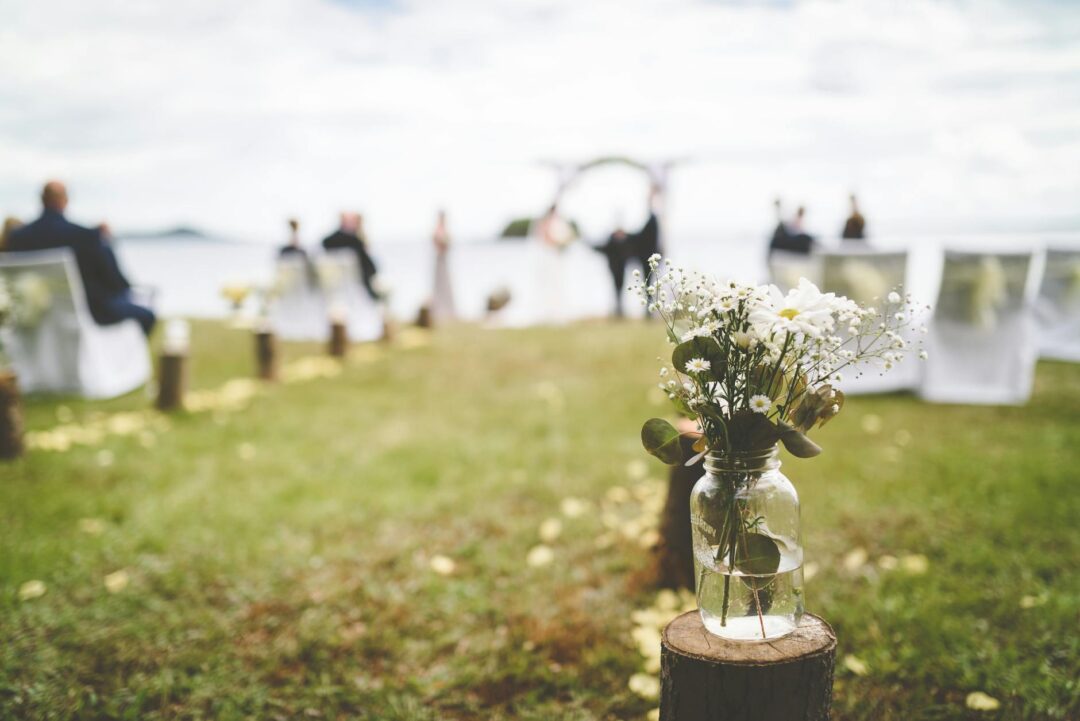
- Shepherd’s hooks with mason jars of wildflowers or single-stem arrangements at every third chair.
- A vintage rug as the aisle runner – the most photographed garden aisle trend of recent years and easily rented.
- Potted herbs (lavender, rosemary, sage) at the aisle entrance that guests can take home as favors.
Beach
Beach aisles have two hard constraints: sand-anchoring and wind resistance. Lightweight decor flies; loose petals scatter immediately. The visual backdrop (ocean, sky, sand) already does the heavy lifting, so decor can stay minimal.
- Bamboo poles or driftwood stakes with draped sheer fabric panels – stake deep into sand.
- Tropical leaves (monstera, palm fronds) in weighted baskets or buckets buried in sand at each row.
- LED lanterns in hurricane glass, pushed into the sand rather than placed on top.
- Seashells or smooth river stones lining the aisle edges – wind-proof and sand-coloured for clean contrast.
- No traditional runner: bare sand, a petal path in a sheltered spot, or a simple jute runner anchored at both ends.
Barn
Barn venues offer exposed beams and warm wood surfaces that pair naturally with organic textures. Rustic imperfection reads as intentional here, making this the most forgiving venue type for DIY.
- Burlap or lace tied to each chair with dried lavender or wheat bunches.
- String lights along the aisle – most barns have rigging points on exposed beams.
- Mason jars or vintage milk bottles on wooden stumps at the aisle edge.
- Wooden signage at the entrance: “Pick a seat, not a side” or a couple-specific quote.
- Pampas grass in large woven baskets at the altar – zero care required and reusable at the reception.
Ballroom
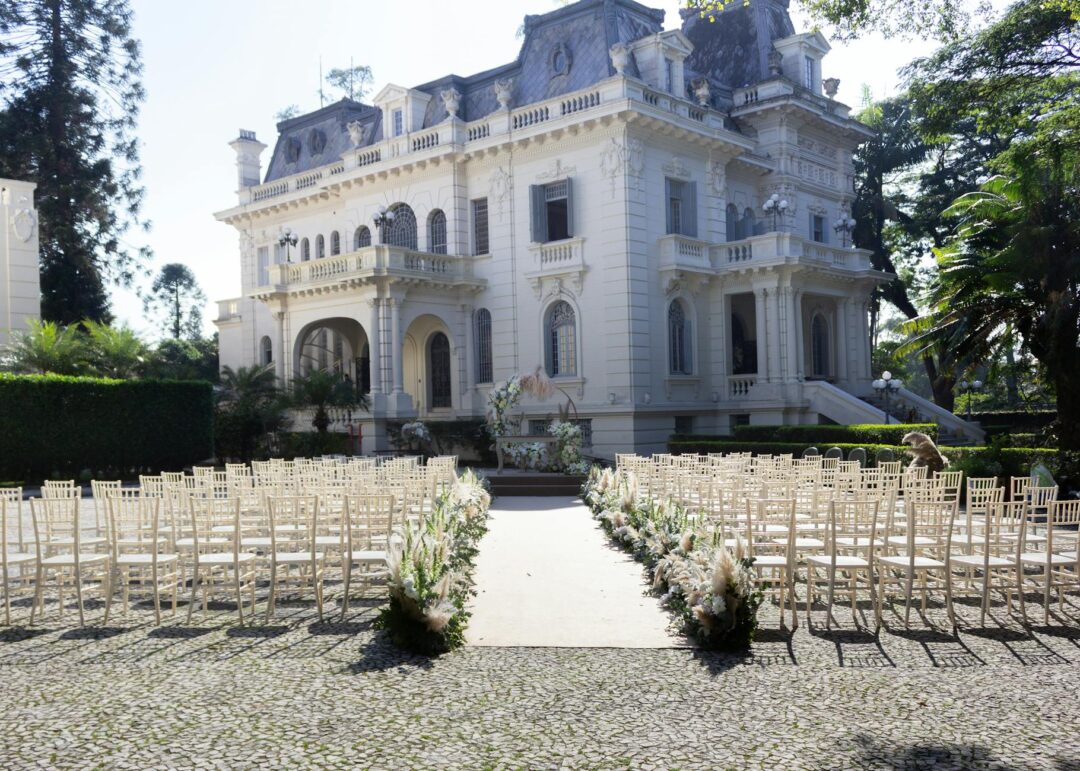
Ballroom ceremonies reward symmetry. The venue’s design is usually polished – high-gloss floors, chandeliers, drapery – so structural statement pieces perform better than scattered elements. A runner matters more here because the floor finish is already part of the visual.
- Tall pedestal arrangements in urns, anchoring every four to five rows.
- A velvet or mirrored aisle runner – both photograph cleanly against polished floors.
- Hanging floral installation at the altar end only, framed by the room’s architectural detail.
- Ribbon tied to chairs: ivory for formal weddings, blush or dusty blue for contemporary palettes.
Aisle runner alternatives
The classic white fabric runner is still widely used, but it is no longer the default. These alternatives each solve a different visual or practical problem.
| Alternative | Best venue | Cost range | Key consideration |
|---|---|---|---|
| Vintage rug (layered) | Garden, barn | $80-250 rental | Secure edges to prevent curling; remove before dancing |
| Scattered petals | Garden, outdoor | $40-150 fresh; $20-60 silk | Check venue for staining policy on paved surfaces |
| Ground garland (greenery) | Garden, barn, ballroom | $80-300 depending on length | Two parallel lines look cleaner than a single central line |
| Velvet runner | Ballroom, church | $120-400 | Heaviest option; stays flat without anchoring |
| Bare surface (no runner) | Any | $0 | Correct choice when the existing surface is part of the design (beach sand, stone church floor, polished wood) |
| Poured petal path | Garden, barn | $60-200 | Denser than scattered petals; flower girl or stylist lays it; looks best with a single color |
Budget tiers
The same visual result can be achieved with DIY silk petals or with fresh floral pedestal installations. The difference is labor and flower variety, not photograph impact at standard ceremony distances.
$150-400: DIY ground-level and chair decor
- Silk or fresh petals lining the aisle edges; LED lanterns at every third chair.
- Greenery garlands from a wholesale supplier, tied to chairs with ribbon.
- A vintage rug rented as the runner.
- Set-up by the couple, family, or wedding party 1-2 hours before the ceremony.
$400-900: Mix of DIY and partial vendor
- Florist-arranged pew-end bouquets at every other row; you handle runner and lanterns.
- A fresh-petal path inside a fabric runner border.
- Shepherd’s hook arrangements at the entrance, moved to cocktail tables after the ceremony.
$900-2,500: Full vendor install
- Fresh floral pedestal arrangements (minimum 4-6 for a standard aisle) plus full pew-end florals.
- Hanging installation at the altar end.
- Vendor handles install and strike coordinated with venue timeline; floral reuse typically included.
Reuse strategy: ceremony to reception
Aisle decor is active for roughly 30-45 minutes of ceremony time. Plan each element’s next location before the day so a designated person can move pieces during cocktail hour.
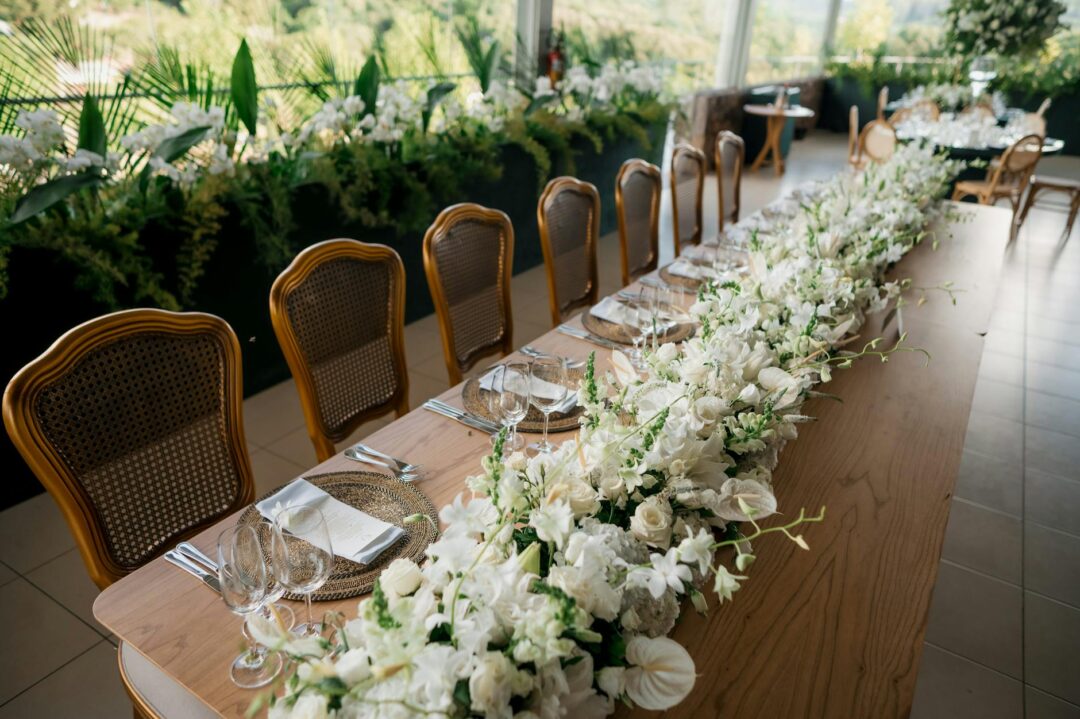
- Florals: Pew-end bouquets and pedestal arrangements move to the head table, guest tables, bar, and cake table. Coordinate with your florist in advance – it requires one person during the cocktail hour transition.
- Lanterns: Move directly to reception tables or the bar top. LED candles inside can be switched to a warm flicker setting. This often eliminates the cost of separate table candle hire.
- Greenery garlands: Drape across the head table edge, along the bar front, or as a mantle garland. Eucalyptus holds well for 8-10 hours without water.
- Runners and rugs: A fabric runner reuses as a head table runner. Vintage rugs move to the photobooth area or dance floor edge. Petal paths do not reuse well – budget them as ceremony-only.
For more on how decor connects across the full day, see our guides on wedding ceremony decoration ideas and wedding reception decoration ideas.
Tying your decor to your stationery
Your aisle sets a visual promise that your stationery should preview. Guests who receive a letterpress invitation on cotton paper expect a different ceremony environment than guests who received a bright digital design with tropical motifs. Consistency across both creates a coherent aesthetic from the first thing guests receive to the moment they walk to their seat.
Browse Paperlust wedding invitations to find designs that match your planned aisle palette, or order a full stationery suite to carry the look through every touchpoint. The wedding arch ideas guide covers how the arch and aisle work as a unified visual frame. See also wedding centerpieces and wedding bouquet ideas for how florals carry across the whole day.
Browse Paperlust’s wedding invitation collection across letterpress, foil stamp, flat foil, metallic, and digital designs. Every order includes a designer proof within 1-2 business days, free white envelopes, and free DHL Express shipping on US orders over $350.
Frequently asked questions
How much does it cost to decorate a wedding aisle?
DIY aisle decor using greenery, silk petals, LED lanterns, and a rented vintage rug typically runs $150-400 in materials. A partial florist install (pew-end bouquets plus a few pedestal arrangements) sits at $400-900. A full florist install with fresh florals throughout, hanging installation, and vendor labor ranges from $900-2,500 depending on floral variety and aisle length.
What are the most popular aisle decoration ideas?
The most popular options right now are vintage rug runners (especially for garden and barn venues), pew-end greenery garlands in eucalyptus, pampas grass in large baskets at the altar, LED lanterns at ground level, and scattered petal paths. Chair-hung bouquets with ribbon ties remain the most common starting point for any style.
Do you need an aisle runner?
No. An aisle runner is one option, not a requirement. Many of the strongest ceremony photographs skip the runner entirely and use ground-level greenery, scattered petals, or bare beach sand instead. Runners do add value in venues where the existing floor surface conflicts with the palette (e.g., red-patterned carpet in a church), or where the couple wants a specific visual line in overhead ceremony photos.
Can you do aisle decorations yourself?
Yes, with planning. DIY is most practical for ground-level decor (petals, lanterns, greenery), chair ties, and ribbon or tulle accents. Structural pieces like pedestal arrangements and hanging installations are harder without floral training and often require venue rigging permits. The safest approach: handle all chair and ground decor yourself and hire a florist for the altar focal point only.
When should aisle decorations go up?
Most aisle decor goes up 1-2 hours before ceremony start. Fresh petals go down last – within 30-45 minutes of the ceremony – to avoid wilting. Many churches restrict access to 90 minutes before the service. Structural installs like pedestal arrangements and hanging florals may need a separate vendor access window the day before.
What aisle decor works for a beach wedding?
Beach aisles need wind resistance and sand anchoring. Best options: bamboo poles with draped sheer fabric, LED lanterns pushed into the sand, weighted tropical leaf arrangements in buried buckets, and seashells or stones along the aisle edges. Skip lightweight paper decor, traditional runners, and open candles. A bare sand aisle with a minimal floral arch at the entrance is often the cleanest beach look.
About Paperlust
Paperlust has been designing wedding stationery since 2014, working from our Melbourne studio with a curated roster of 500+ independent Australian and international designers. We print every piece in-house using digital, foil stamp, flat foil, letterpress, metallic, and white-ink methods on premium stocks, with designer proofs delivered within 1-2 business days and free DHL Express shipping on US orders over $350. Every order ships with a tree planted on your behalf.