
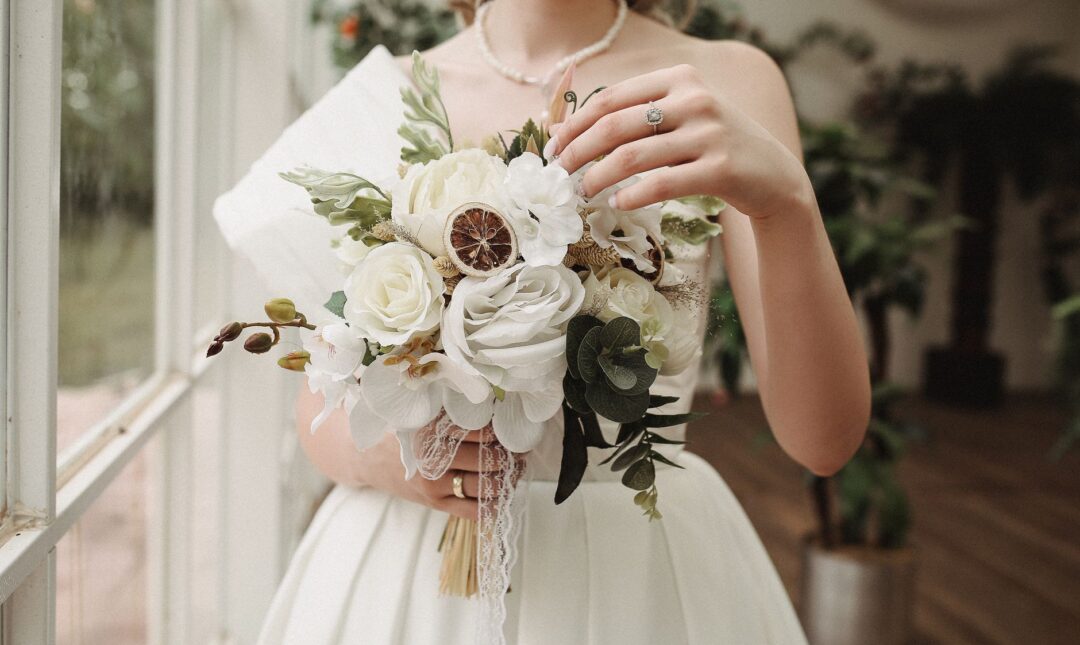
Wedding flowers cost $1,500 to $6,000 for most US couples in 2026, with the national average sitting at $2,800 according to The Knot Real Weddings Study. Couples who hire a full-service florist for both ceremony and reception florals, including an arch installation, typically land in the $4,000 to $7,500 range, while smaller, more focused budgets can stay well under $2,000.
Flowers are also one of the most common sources of budget surprise. The bridal bouquet feels like the main cost. Then you add bridesmaid bouquets, boutonnieres, centerpieces for every reception table, a ceremony arch, aisle arrangements, and delivery fees, and the total can grow quickly. The only way to avoid that surprise is to price every element separately from the start.
This guide breaks down what each floral item actually costs in 2026, what drives prices up or down, and where you can trim without the result showing in your photos.
- National average (all couples): $2,800 (The Knot Real Weddings Study)
- Full-service florist range: $5,100 to $7,600 (Zola)
- Typical spending range: $1,500 to $6,000+
- What’s usually included in a florist quote: Bridal bouquet, bridesmaid bouquets, boutonnieres, and centerpieces; delivery and setup are often separate
- Biggest cost drivers: Guest count, bloom type, ceremony installations, season, and city
- Top money-saving move: Repurpose ceremony arch flowers at the reception so you pay for them once but use them twice
How Much Do Wedding Flowers Cost?
According to The Knot Real Weddings Study, US couples spend an average of $2,800 on wedding flowers. The range, however, is wide: the lower quartile spends around $900, the median is $1,900, and the upper quartile reaches $4,800.
Couples who invest in a full-service professional florist for the entire event tend to land higher. Zola reports that full-service wedding floral budgets typically run $5,100 to $7,600, with a national average closer to $6,300 when all labor and logistics are included. The gap between the Knot’s $2,800 and Zola’s $6,300 reflects a real difference in scope: The Knot captures everyone, including couples who supplement with grocery store flowers or go partially DIY, while Zola’s figures reflect the full-professional experience across ceremony and reception.
A common rule of thumb: flowers represent roughly 8 to 12 percent of a total wedding budget. On a $35,000 wedding, that works out to $2,800 to $4,200 for florals. If you’re building a complete vendor-by-vendor budget, our wedding budget breakdown guide covers every major line item.

Wedding Flower Cost Breakdown
The table below covers each floral element separately, based on 2026 US florist pricing from The Knot, Zola, and WeddingWire.
| Floral Element | Typical Price Range | Notes |
|---|---|---|
| Bridal bouquet | $200 to $400 | $500+ for large or cascading designs with premium blooms |
| Bridesmaid bouquet (each) | $80 to $150 | Most weddings have 3 to 6 attendants |
| Boutonniere (each) | $20 to $40 | Budget one per groomsman, father, and the groom |
| Corsage (each) | $30 to $50 | Typically for mothers and grandmothers |
| Low centerpiece (each) | $100 to $250 | Compact arrangements, bud-vase clusters |
| Tall centerpiece (each) | $250 to $500+ | Statement arrangements at column height |
| Ceremony arch, partial coverage | $500 to $1,500 | Flowers concentrated on one side or corner |
| Ceremony arch, full coverage | $1,500 to $2,500+ | Blooms wrapped fully around the structure |
| Aisle arrangements (per pew or post) | $25 to $75 | Tied posies, cones, or small bunches |
| Welcome table or guest book arrangement | $75 to $200 | Smaller focal display at the venue entry |
| Delivery, setup, and breakdown | $200 to $500+ | Often 10 to 15 percent of the total floral invoice |
Budget example: A 100-guest wedding with 10 reception tables, 5 bridesmaids, 6 groomsmen, and a partial ceremony arch installation might total roughly $3,500 to $5,000 before delivery fees.
Bridal Bouquet Cost
The bridal bouquet is the most photographed floral item at any wedding. Expect to spend $200 to $400 for a professionally designed, medium-sized bouquet. A larger, cascading design built around premium blooms, such as garden roses, peonies, or ranunculus, typically runs $450 to $600 or more. If you want an oversized statement bouquet with trailing greenery or exotic flowers, price it at $600 to $800 and treat it as the splurge it is.
Bridesmaid Bouquet Cost
Bridesmaid bouquets are smaller and simpler than the bridal bouquet, which is also how florists price them: typically $80 to $150 each. Four bridesmaids carrying a tighter, hand-tied bunch on the lower end of this range puts that line item at $320 to $600. If you have six or more attendants, this adds up faster than most couples expect.
Boutonniere Cost
Boutonnieres are one of the most cost-effective floral items. Most US florists charge $20 to $40 each. Budget one for the groom, each groomsman, and the fathers of the couple. A wedding party with eight men runs roughly $160 to $320 for boutonnieres. If you want something more elaborate, such as a boutonniere built around a garden rose rather than a single spray rose, expect to pay at the higher end.
Centerpiece Cost
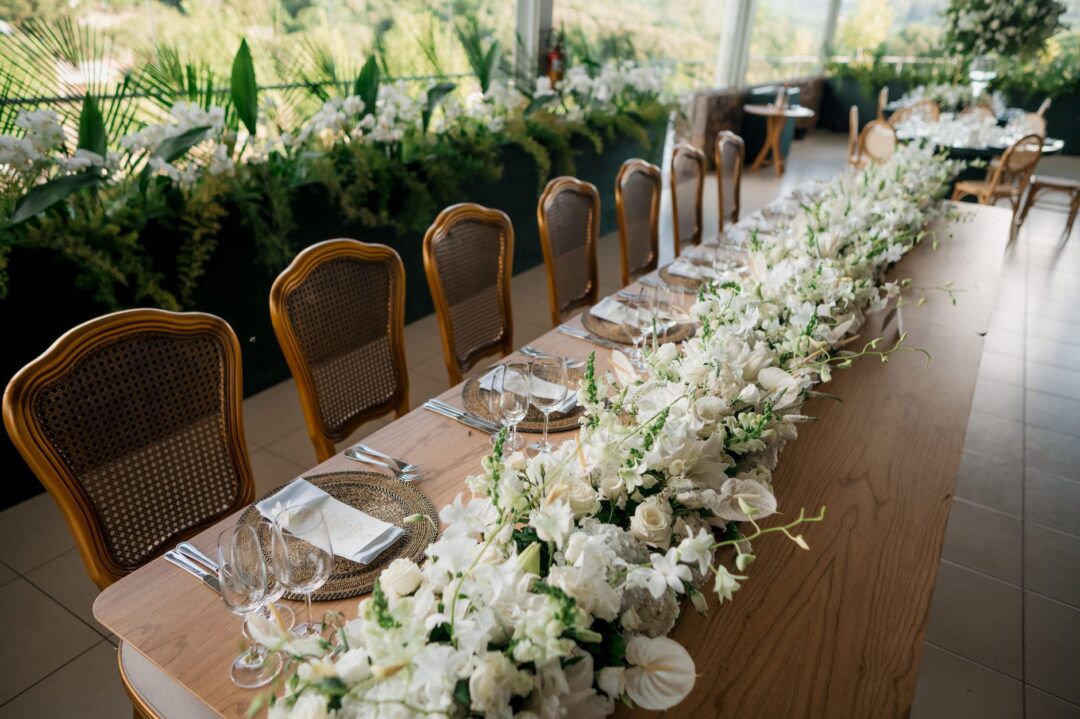
Centerpieces are usually the largest single floral expense in a reception budget, because you need one per table. Low, compact arrangements, including bud-vase clusters and garden-style groupings, run $100 to $250 per table. Tall arrangements, often built in column vases or on stands, typically cost $250 to $500 per table. With 12 reception tables split between low and tall styles, centerpieces alone can total $1,800 to $4,500 before a single boutonniere is counted.
Ceremony Arch and Installation Cost
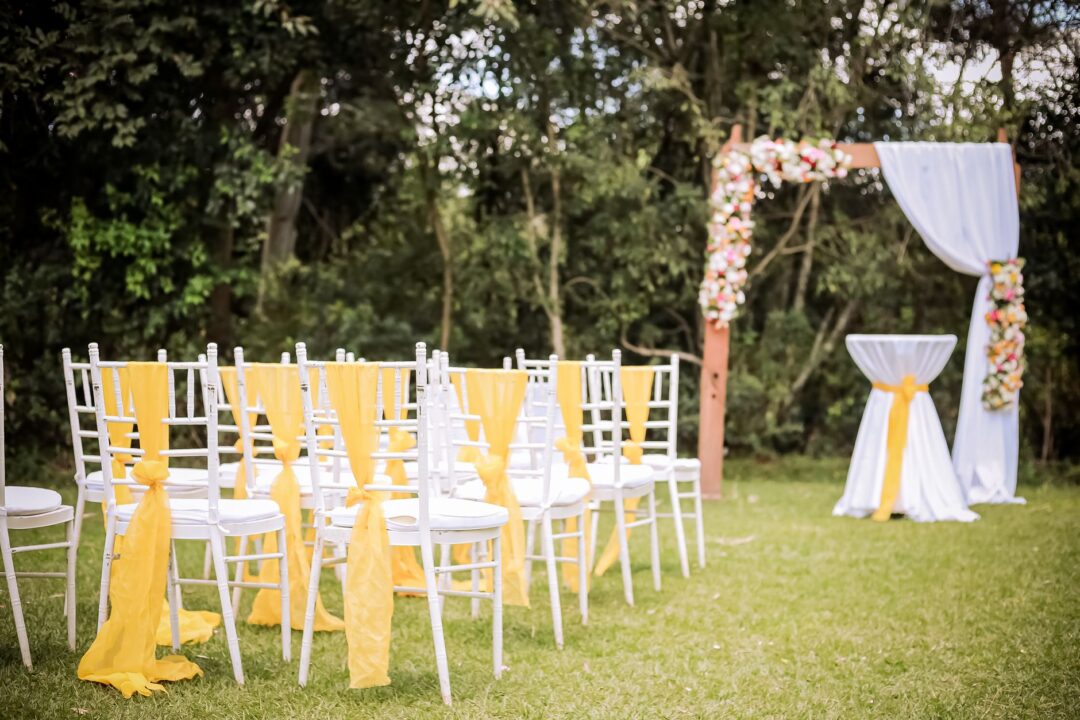
A ceremony floral installation is often the single most expensive item in the entire florist quote. A partial arch (flowers concentrated on one corner or side of the structure) costs $500 to $1,500 depending on bloom choices and scale. A fully covered arch, where flowers and greenery wrap the entire structure, runs $1,500 to $2,500 or more.
Labor is a significant factor here. A full floral arch requires more design time and more raw volume than all the handheld pieces combined. For arch style inspiration and a closer look at structural options, see our guide to wedding arch ideas for 2026.
What Drives Wedding Flower Costs
Bloom selection. Premium flowers, including peonies, garden roses, ranunculus, lisianthus, and sweet peas, cost significantly more than filler options like carnations, spray roses, and baby’s breath. A bouquet built primarily from peonies can cost twice as much as the same shape and size built from spray roses and eucalyptus.
Guest count. More guests mean more tables, which means more centerpieces. This is the most direct structural driver of total floral cost. Adding 20 more guests might mean two or three additional centerpieces at $150 to $500 each.
Ceremony installations. A full arch, a backdrop wall of flowers, or a floral chuppah can cost as much as your entire reception floral budget combined. If you love the look but need to manage spend, a half-arch or a single statement column can often achieve a comparable effect for 40 to 60 percent of the cost.
Seasonality. Flowers grown out of season must be shipped, often internationally, which drives up price. If peonies are on your must-have list and your wedding falls in October, you will pay a premium. Working with blooms that are peaking locally during your wedding month is the cleanest way to reduce material costs.
Location. Urban markets with higher overhead charge more. Florists in New York City average around $8,000 for wedding florals. In Milwaukee, the average is closer to $5,500, according to Zola’s regional data.
Labor and logistics. Design fees, setup time, delivery, and breakdown typically add 15 to 25 percent to your raw flower costs. These are less negotiable than bloom prices, so factor them in before you start comparing florist quotes.
What’s Included vs. What Costs Extra
Most florist quotes cover:
- All handheld pieces: bridal bouquet, bridesmaid bouquets, boutonnieres, and corsages
- Reception centerpieces as listed in the proposal
- Initial design consultation and sourcing
Items frequently charged separately or listed as add-ons:
- Delivery, setup, and breakdown (commonly $200 to $500+)
- Rental of arch structures, column stands, candelabras, or vases
- Ceremony-site florals when the ceremony is at a different location than the reception
- Flower girl petals, crowns, or small posies
- Aisle treatments (cone holders, pew clips, etc.) if not specified upfront
- Preservation services after the wedding
Always request an itemized quote rather than a single lump sum. Knowing the line-item cost of each element makes it much easier to adjust the scope when you need to trim.
Wedding Flower Costs by Region
The Knot’s Real Weddings Study provides regional averages that reflect all wedding sizes, so couples in major metros with larger guest lists should expect to land above these figures.
| Region | Average Floral Spend |
|---|---|
| Mid-Atlantic | $3,600 |
| Northeast | $3,300 |
| Southwest | $3,000 |
| South / Southeast | $2,800 |
| Midwest | $2,500 |
| West | $2,400 |
Guest count moves the number significantly too. The Knot’s data shows couples with 1 to 50 guests averaging $1,600 in floral spend, those with 51 to 100 guests averaging $2,400, and weddings over 100 guests averaging $3,300.
If your wedding is in New York City, Los Angeles, Boston, or San Francisco, apply a 20 to 30 percent premium above the regional average as a realistic planning assumption.
How to Save on Wedding Flowers
Choose in-season blooms. Talk to your florist about what’s peaking locally during your wedding month. In-season flowers cost less to source, arrive fresher, and carry no import markup. Ask specifically for “what’s abundant right now that works with my color palette” rather than locking in specific flower names.
Lean into greenery. Eucalyptus, olive branch, fern, magnolia leaves, and ruscus fill out arrangements beautifully and cost a fraction of focal blooms. A lush greenery-forward arch with a few focal flowers scattered through it can be visually stunning at half the cost of a fully floral design.
Repurpose ceremony pieces at the reception. Ask your florist to build in time to move your ceremony arch or aisle arrangements to the reception cocktail space or sweetheart table. You pay for the flowers once and get impact in two locations.
Concentrate spending where it photographs. Your bridal bouquet, the ceremony arch, and the head or sweetheart table appear in almost every professional photo. Simpler, lower-cost arrangements at satellite tables or the bar area are rarely the focus of any shot.
Consider dried or preserved florals. Dried pampas grass, preserved lunaria, and airdried roses are a strong aesthetic choice in 2026, not just a budget shortcut. They hold up better across a long wedding day and often cost 20 to 40 percent less than comparable fresh arrangements.
DIY the lower-stakes pieces. Welcome-table greenery, bud vases at the bar, or simple ribbon-tied bunches for the pews can be assembled by a trusted friend or family member the morning of. For a thorough look at what DIY realistically involves, see our post on DIY vs. professional florist for wedding flowers.
Questions to Ask Before You Book
Getting clear answers on the following points before you sign will prevent most of the common budget surprises:
- What does your quote include, and what is itemized separately?
- How do you handle flower substitutions if a specific bloom is unavailable at sourcing time?
- Does your quote cover delivery, setup, and breakdown, or are those billed separately?
- Do you own your arch structure and other rentals, or are those from a third-party vendor?
- Can I see photos from a previous wedding at my venue?
For a complete list covering contracts, backup plans, payment terms, and day-of logistics, see our full guide: 50 Questions to Ask Your Wedding Florist Before You Book.
FAQ
How much should I budget for wedding flowers?
Most US couples budget $1,500 to $6,000 for wedding flowers in 2026, depending on guest count, flower choices, and location. The national average is $2,800 according to The Knot Real Weddings Study. Couples who book a full-service florist for both ceremony and reception typically land in the $4,000 to $7,500 range.
What is the average cost of a bridal bouquet?
A bridal bouquet from a US professional florist typically costs $200 to $400. Larger, cascading designs built around premium flowers like peonies or garden roses often run $450 to $600 or more.
How much do wedding centerpieces cost?
Low, compact centerpieces typically run $100 to $250 each. Tall, statement arrangements cost $250 to $500 each or more. With 10 to 15 reception tables, centerpieces often end up being the single largest line item in a florist budget.
What does a wedding boutonniere cost?
Most US florists charge $20 to $40 per boutonniere. Budget one for the groom, each groomsman, and the fathers of the couple. A party of eight men runs roughly $160 to $320.
How much does a floral wedding arch cost?
A ceremony arch with partial floral coverage typically costs $500 to $1,500. A fully covered floral arch runs $1,500 to $2,500 or more, depending on bloom selection and the scale of the structure.
What percentage of my wedding budget should go to flowers?
Wedding flowers typically account for 8 to 12 percent of the total budget. On a $30,000 budget, that’s roughly $2,400 to $3,600. For a full breakdown of where every dollar goes, see our complete guide to the average cost of a wedding in 2026.
Lock In Your Date and Start the Stationery Countdown
Once you’ve signed with your florist and confirmed your wedding date, save-the-dates are typically the next item on the checklist. Most couples send them 6 to 12 months in advance, right after the venue and key vendors are secured.
Paperlust’s save-the-dates are designed to match your invitation suite, with options from digital print to letterpress and flat foil. Your wedding invitations follow 6 to 8 weeks before the date, completing the stationery picture. Both ship internationally via DHL Express on orders over $350 USD.
For a full breakdown of every vendor category and how they fit together, see our average wedding cost guide for 2026.
Sorting your wedding stationery?
Before you commit to a look, order a $5 sample pack from Paperlust and see the paper stocks, foil, and print finishes in your own hands. It is the surest way to lock in invitations you love without guessing from a screen.