
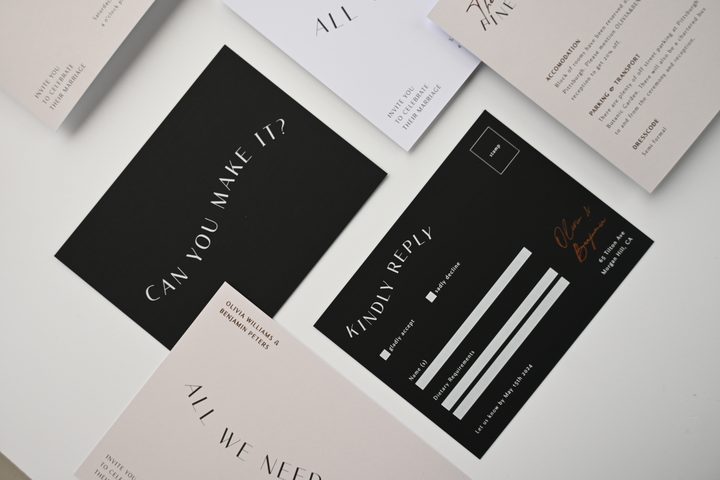
At some point in almost every wedding planning process, the question comes up: should we make our invitations ourselves or order them professionally? The internet is full of conflicting answers, often from people with strong opinions but no actual stake in your decision. This guide gives you the honest numbers, the real trade-offs, and a clear framework to decide which route actually makes sense for your situation.
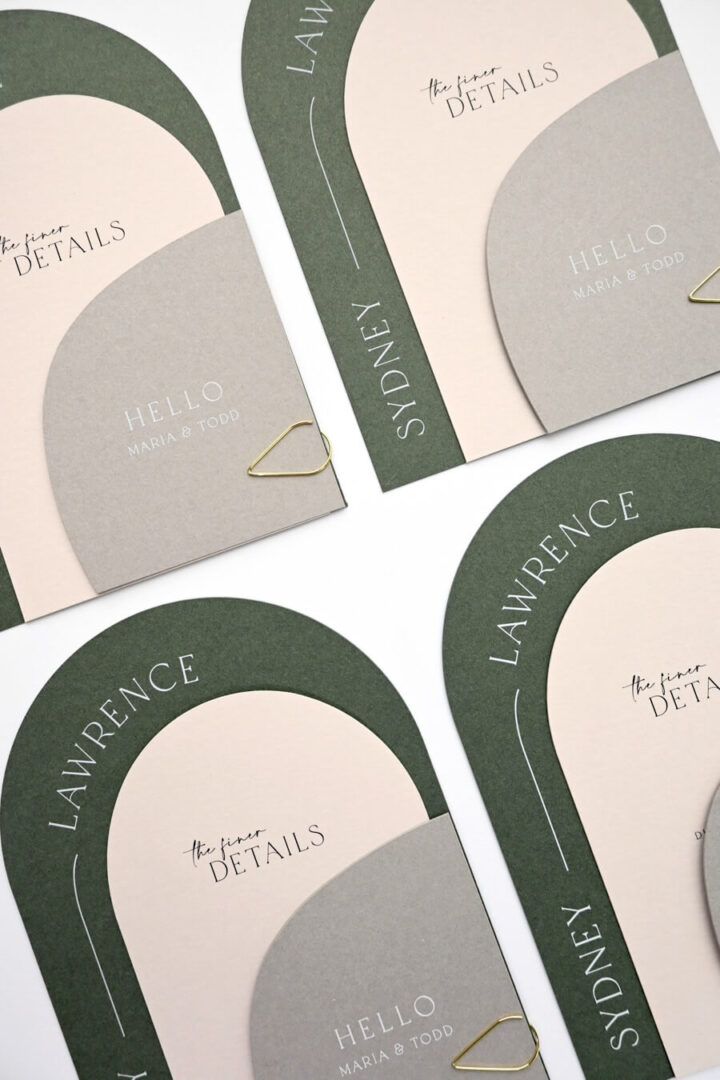

The answer is not the same for every couple. But it is usually clearer than people think once you account for all the real costs, not just the ones that appear in the first Google search result.
- DIY wins when: You are genuinely craft-skilled, have existing equipment, and have a small guest list under 50
- Professional wins when: Guest list is over 75, you want premium methods (foil/letterpress), or your time is worth more than the price difference
- Hybrid is often the smartest: Design yourself, print professionally (gives you creative control with production quality)
- Hidden DIY costs: Ink, paper waste, cutting equipment, assembly time, and reprints for errors
- Professional starting price: From $2.04 per card for digital print at Paperlust
The Real Cost of DIY Wedding Invitations
The most common mistake couples make when comparing DIY to professional is comparing professional total cost to DIY materials cost alone. That comparison ignores time, equipment, errors, and the hidden costs that accumulate during a DIY project. Here is a more accurate breakdown.
Upfront Materials Cost
To DIY 100 invitation suites at a basic level, you are looking at:
- Cardstock (100+ sheets of quality paper): $30-$80 depending on weight and finish
- Envelopes (100 outer + 100 RSVP return): $20-$40
- Printer ink (cardstock is ink-heavy): $25-$60 depending on coverage
- Cutting tools or guillotine trimmer for precise edges: $20-$80 (if not already owned)
- Design templates or software subscription: $10-$60
Total materials for a basic digital DIY run: roughly $105-$320 for 100 invitations. At first glance, this looks competitive with professional pricing.
The Hidden Cost: Time
What that calculation excludes is the time investment. For a 100-invitation suite, realistic DIY time includes:
- Design time (creating or customizing the template): 3-8 hours
- Test prints and calibration (getting colors right on home printers): 1-3 hours
- Print runs (stopping to refill paper, address jams, re-runs): 3-5 hours
- Cutting (if your cards need trimming): 2-4 hours
- Assembly (collating inserts, stuffing and sealing envelopes): 3-5 hours
- Addressing (writing or printing 100+ envelopes): 2-6 hours
A realistic DIY invite project is 14-30 hours of work. For a couple already juggling wedding planning, that is a significant commitment. At any reasonable hourly rate, the time cost changes the economics substantially.
The Error Cost
Home printers have a misprint rate. Thick cardstock feeds inconsistently, causing skewed prints. Color calibration on home screens rarely matches what comes off the printer. A 10-15% waste rate on print runs is common, which means you need to buy 110-115 sheets to end up with 100 usable cards. A single discovered typo after printing all 100 cards means restarting the entire run.
The Real Cost of Professional Wedding Invitations
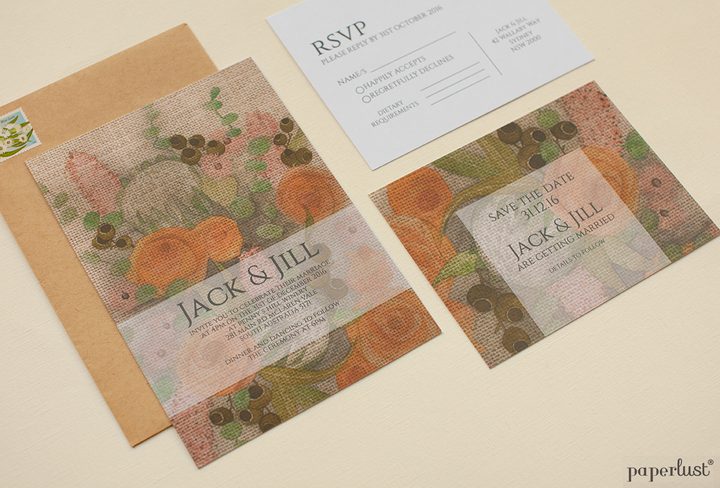
Professional wedding invitations are often priced per card, and sticker shock sets in when couples see $4-$10+ per card for premium methods. But the per-card comparison ignores what is included in that price.
What Professional Pricing Includes
- Professional design assistance and a dedicated designer assigned to your order
- A digital proof within 1-2 business days with two rounds of edits included
- Production on commercial-grade presses that cannot be replicated at home
- Quality checking before dispatch
- Free envelopes included with the order
- A 100% happiness guarantee with free reprint or refund if the product is unsatisfactory
Where Professional Gets Competitive
Digital print invitations at Paperlust start from $2.04 per card. For 100 standard invitations, that is $204. Add RSVP cards (from $1 per card) and a details card, and a full 100-guest suite may come to $350-$500 total before any method upgrades.
At this price point, professional digital printing is not dramatically more expensive than DIY when you account honestly for materials, waste, and time. And for foil stamp or letterpress, the gap between DIY and professional narrows to zero: these methods simply cannot be replicated at home.
The Hybrid Approach: Design Yourself, Print Professionally
For couples who want creative control but professional production quality, the hybrid approach is usually the best of both worlds. Paperlust’s platform allows you to upload your own design or customize existing designs extensively before placing an order. This means:
- Your creative direction, fonts, and personalization choices remain entirely yours
- Production quality, paper stocks, and print method are handled professionally
- No equipment purchases, no waste runs, no assembly time
- Access to foil, letterpress, and other techniques that are impossible to DIY
The hybrid approach is how most design-savvy couples approach invitations today. Design tools, downloadable templates, and customization platforms have made “designing your own” more accessible, while professional production remains non-negotiable for quality.
Quality Comparison: Where the Gap Actually Shows
Setting aside cost, the quality comparison between DIY and professional depends heavily on the print method and materials involved.
Digital Print: The Gap Is Real but Closable
Home inkjet printers can produce presentable results on suitable cardstock, but they fall short of commercial digital presses in several ways:
- Color accuracy: Commercial presses are calibrated precisely; home printers vary significantly from screen to print
- Edge sharpness: Professional digital print produces sharper text and finer line details
- Paper compatibility: Commercial presses can handle heavier and more textured stocks than home printers without jams or inconsistency
- Consistency across 100 cards: Home printers show variation between the first card and the last; professional production is uniform
That said, for couples who are genuinely craft-skilled, have a good printer, and invest in quality paper, DIY digital invitations can look excellent. The risk is that any inconsistency is impossible to hide once the cards are in guests’ hands.
Foil, Letterpress, Metallic: Impossible to DIY
There is no home equivalent for foil stamping, flat foil, letterpress, or metallic print. These methods require commercial equipment and, in the case of letterpress, custom plates and hand-mixed inks. Any couple who wants these techniques must go professional. That is not a knock on DIY; it is simply a statement of physical reality.
The Stress Factor
Wedding planning occupies more mental bandwidth than most couples predict. Adding a 20-30 hour DIY print project to the schedule in the 3-4 months before the wedding is a significant commitment. This is worth weighing honestly.
The couples most likely to regret choosing DIY are those who underestimated the time investment and found themselves assembling 100 invitation suites the week before their save-the-date deadline while also managing venue deposits, catering tastings, and dress fittings.
The couples most satisfied with DIY are those who explicitly blocked time for it, had prior experience with craft printing, and treated it as a genuine project rather than a quick task.
When DIY Makes Clear Sense
There are genuine scenarios where DIY is the right choice:
- Very small guest list (under 40 people): At 40 invitations, the time investment is manageable and the per-unit DIY savings are meaningful relative to professional pricing
- You are a graphic designer or print professional: If you work in design or printing professionally, you have the skills, calibration knowledge, and potentially the equipment to produce professional-quality results
- The DIY-feel is intentional and central to your wedding: For an extremely casual, handmade-aesthetic wedding where imperfect is intentional, DIY printing can be perfect
- Budget is genuinely very tight and the priority is any invitation over a good invitation: If your total stationery budget is under $80, DIY may be the only path
When Professional Is the Clear Choice
- Guest list over 75: At this scale, the DIY time investment becomes a significant burden and the per-unit savings diminish
- You want foil, letterpress, or metallic print: These methods require professional production, full stop
- Your time has significant value: If you bill $50+ per hour professionally, the economics of a 20-hour DIY project vs. $300 in professional cards are obvious
- You want a guaranteed result with no risk of reprints: The 100% happiness guarantee from professional printers eliminates the rework risk entirely
- Consistency matters: For large guest lists, professional production ensures every single card looks identical
Side-by-Side Decision Guide
| Factor | DIY | Professional | Hybrid (Design + Pro Print) |
|---|---|---|---|
| Starting cost (100 cards) | $105-$320 materials only | From $204 (digital) | From $204 + design time |
| Time cost | 14-30+ hours | 1-3 hours (ordering + proofing) | 3-8 hours design + 1-2 proofing |
| Color accuracy | Variable (depends on equipment) | Excellent (calibrated commercial presses) | Excellent |
| Foil/letterpress possible? | No | Yes | Yes |
| Consistency across 100 cards | Variable | Guaranteed | Guaranteed |
| Error recovery | Full reprint at your cost | Free reprint or refund guarantee | Free reprint or refund guarantee |
| Creative control | Full | Within template range | Full |
The Custom Design Option
For couples who want complete creative freedom with professional production, Paperlust’s custom design service offers both paths: modify an existing design extensively, or build something completely from scratch. This covers the entire spectrum from couples who have a rough brief to those who want a specific venue illustration, a hand-lettered monogram, or a fully original layout.
Custom design work is quote-based depending on scope, and provides access to every print method, paper stock, and technique in the Paperlust range.
Making the Final Call
If you are still undecided after reading this, here is the framework that resolves it for most couples:
- Set your realistic time budget. How many hours are you actually willing to spend on invitations in the next 6 weeks? If the honest answer is under 10 hours, DIY is off the table for a 100-person guest list.
- Check your print method requirements. Do you want foil, letterpress, or metallic? If yes, professional is required regardless of cost comparison.
- Get a real material quote before assuming DIY is cheaper. Price out the exact paper stock, ink, and equipment you would need for your specific design. Compare it to the professional quote including time.
- Order the $5 sample pack. If you have never held a professionally printed invitation on Wild Cotton or 380gsm premium stock, the sample pack will reset your expectations about what is achievable. The physical quality difference between home and commercial printing is easier to appreciate in person than in any description.
Browse the full wedding invitation collection to see professionally printed options across every print method and style.
Frequently Asked Questions
Is it cheaper to DIY wedding invitations or order professionally?
For large guest lists, the cost difference is often smaller than couples expect, especially when time is factored in. Materials for 100 DIY invitations typically run $105-$320, while professional digital print at Paperlust starts from $2.04 per card ($204 for 100 cards). When you add the 14-30 hours of realistic DIY time, the economics frequently favor professional printing, especially for couples whose time has significant value.
Can I design my own wedding invitations and have them professionally printed?
Yes. This hybrid approach is common and gives you the creative control of DIY design with the production quality of professional printing. Paperlust allows you to upload custom designs or extensively customize existing designs before ordering. This is particularly valuable if you want foil or letterpress techniques that cannot be replicated at home.
What print methods cannot be done at home?
Foil stamping, flat foil, letterpress, and metallic print all require commercial production equipment and cannot be replicated with home printers. If your design requires any of these techniques, professional printing is necessary regardless of budget considerations.
How long does a DIY invite project actually take?
For 100 invitation suites, a realistic time estimate is 14-30 hours including design, test prints, production runs, cutting, assembly, and envelope addressing. This is one of the most commonly underestimated aspects of DIY invitations. Couples who go in expecting a quick project and discover a multi-day commitment often regret the choice.
What happens if there is a typo in my professionally printed invitations?
Paperlust’s 100% happiness guarantee covers free reprints or refunds if the finished product does not meet expectations. The proof process (designer proof delivered in 1-2 business days with two rounds of edits included) is designed to catch errors before production begins. Reviewing your proof carefully before approving is the most important step to avoid reprint situations.
Is DIY worth it for a small wedding?
For genuinely small weddings under 40-50 guests, DIY becomes more viable. The absolute time investment is lower, the per-unit savings are more meaningful, and the consistency requirement is more manageable. Craft-skilled couples with good equipment can produce beautiful results at this scale. The calculus changes significantly once you cross 75+ guests.