

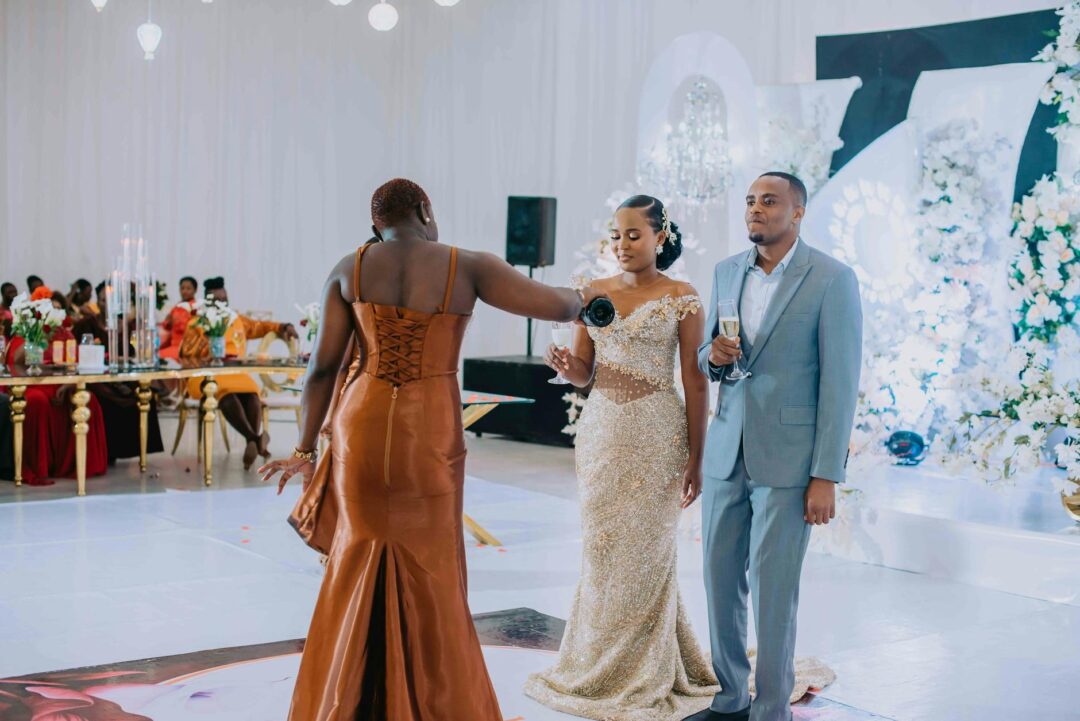


Your son is getting married, and you have been asked – or have decided – to say a few words. That moment is one of the most meaningful things you will do at a wedding, and it deserves more than a few improvised sentences. This guide gives you 20 real, ready-to-use mother of the groom speech examples, a clear 5-part formula, fill-in-the-blank templates, and the delivery advice you need to make it count.
- The ideal mother of the groom speech runs 2-4 minutes (300-500 words at a natural speaking pace).
- Speeches most often happen at the wedding reception during toasts, or at the rehearsal dinner for a more intimate setting.
- The strongest speeches follow a 5-part arc: gratitude opener, one son memory, welcoming the partner, advice or wish, and a toast.
- Use one specific story – not a montage of moments – to anchor the emotion; detail is what makes it land.
- Practice out loud at least 3-5 times; reading silently does not prepare your voice or your nerves.
- Write on a printed card, not your phone – a card does not lock, dim, or tempt you to check notifications.
What is a mother of the groom speech?
A mother of the groom speech is a formal toast given by the groom’s mother at the wedding reception or rehearsal dinner. It is her moment to welcome the new partner and their family into the fold, to honor the person she raised, and to send the couple into married life with words they will carry for the rest of their lives.
Unlike the best man speech – which leans on humor – or the maid of honor speech – which centers on the bride – the mother of the groom occupies a distinct position. She is speaking as a parent, as someone who knew this man before he was anyone else’s partner, and as the person opening a door for a new family to form. That combination of authority, love, and graciousness gives the speech its particular warmth.
Not every family includes the mother of the groom in the formal toast order, but when she does speak, it often becomes the emotional high point of the evening. If you are planning to give one, or have been asked to give one, everything below tells you exactly how to write it, what to say, and how to deliver it with confidence.
When is the mother of the groom speech given?
The most common setting is the wedding reception, during the toasts segment that typically follows dinner or runs between courses. In some families it is given at the rehearsal dinner instead, allowing the wedding day toasts to stay focused on the bridal party.
| Setting | When it works | Typical length |
|---|---|---|
| Wedding reception toasts | Most common; largest audience | 2-4 minutes |
| Rehearsal dinner | More intimate; easier to be personal | 3-5 minutes |
| Both events | Two distinct speeches; avoid repeating yourself | 2 minutes each |
Coordinate with the couple and the MC well before the day about your slot in the order. The typical wedding toast order runs: best man, maid of honor, father of the bride, then parents of the groom – but every wedding is different. Knowing your position helps you pitch the tone correctly: an early speaker sets the energy, while a later speaker can be warmer and more reflective.
The 5-part formula for a mother of the groom speech
The most effective mother of the groom speeches follow a five-part arc that takes the room on an emotional journey from arrival to toast. This is not a rigid script – it is a framework you can expand or compress based on your speaking style and the time available to you.
Part 1: Gratitude and grounding (30-45 seconds)
Open by thanking the guests for being there, briefly introducing yourself for anyone who does not know you, and settling the room with a warm, calm sentence or two. This is not the moment for your story yet – it is the moment to arrive. Keep this section under a minute and end it pointed directly at what comes next.
Part 2: The memory (45-90 seconds)
Pick one specific memory of raising your son. One story, not a montage. The more concrete the detail – his age, what he said, the look on his face – the more powerfully it will land. This section does the emotional heavy lifting. Even guests who have never met your son should feel, by the end of this section, that they have just been introduced to who he really is.
Part 3: Welcoming the partner (30-45 seconds)
Pivot to the person your son is marrying. This is the most important section for the partner and their family. Use their name. Mention a quality you genuinely admire – something you have actually observed, not something you assume. If there are parents or family on the partner’s side in the room, include a line for them too. This section should feel like an open door, not a formality.
Part 4: Advice or a wish (30-45 seconds)
Offer a single piece of marriage wisdom or a sincere wish for their life together. Keep it grounded and real, not a platitude. The best advice in a speech comes from observation: “I have watched you two choose each other every day for three years” is more powerful than “always remember to communicate.” One genuine sentence beats five borrowed ones.
Part 5: The toast (15-20 seconds)
Ask the room to raise their glasses. Address the couple by name. Close with a line that is yours – a family saying, a short quote, or something you have been holding for this moment. Then pause, raise your own glass, and let the room respond.
10 traditional mother of the groom speech examples
These examples follow the 5-part formula closely and suit formal or semi-formal weddings. Each uses American English and is written to include the whole room, not just the inner circle.
Example 1: Classic heartfelt
Good evening, everyone. For those of you I haven’t yet had the chance to meet, I’m Carol – and this remarkable man standing up there is my son.
Twenty-eight years ago, I held a six-pound baby in my arms and made him a quiet promise: that I would love him without condition, protect him when I could, and let him go when the time came. Tonight is that moment. I am discovering that letting go is the most profound act of love there is.
I want to tell you one thing about Jake. When he was nine, he found an injured bird in the backyard. He spent three days building a little shelter out of shoeboxes, reading everything he could find about how to care for it, refusing to give up until it flew. That is who he has always been: patient, determined, and quietly tender in ways most people never get to see.
Emma, you see those things in him. I have watched you watch him, and I know you do. From the moment Jake introduced you, I didn’t just like you – I trusted you with him. And that is not a small thing for a mother to say.
To the two of you: marriage is a thousand small decisions made in the same direction. May you always choose each other, especially on the days when that choice takes real effort.
Please raise your glasses. To Jake and Emma – may your life together be everything you have imagined, and more than you have dared to hope. Cheers.
Example 2: Faith-based traditional
Good evening. I’m Margaret, Michael’s mother, and I have been looking forward to this moment for a very long time.
I raised Michael with one prayer: that he would find a partner who would walk beside him not just in the good seasons, but in the hard ones too. When Michael brought Sarah home, that prayer was answered in ways I hadn’t even thought to ask for.
I remember Michael at seven years old, always asking questions I couldn’t fully answer. He has always had that gift – the courage to ask the hard question and the patience to wait for the truth. It has made him into a man of quiet faith and deep conviction.
Sarah, welcome to our family. You are not joining something already complete – you are completing it. We are better with you in it, and we are grateful for you.
There’s a verse that has guided our family for three generations: “Two are better than one, because they have a good return for their labor; if either of them falls, one can help the other up.” I can think of no better foundation for a marriage.
Please raise your glasses to Michael and Sarah. May your home always be full of light, your table always have room for one more, and your love for each other grow stronger with every year. To Michael and Sarah.
Example 3: Welcoming a partner from a different background
Good evening. I’m Linda – the proudest mother in this room tonight, and possibly the most grateful.
Daniel has been many things to me over the years: the boy who once tried to cook me breakfast and set off every smoke alarm in the house, the teenager who thought he knew better than everyone (he often did), and the young man who has grown into someone I deeply admire.
When Daniel told me he had met someone, he said, “Mom, she’s different – in the best way.” He was right. Priya is extraordinary. She brings a grace and warmth to everything she touches, and she has brought those things into our family in ways that have made my son more himself, not less.
I also want to say something to the Sharma family. You raised a daughter who leads with kindness and love. We are honored to share this table with you tonight, and I look forward to many more years of it.
To Daniel and Priya: you are building something that is uniquely yours. I am here to watch it, to cheer for it, and when needed – to pass the recipes along.
Please raise your glasses. To Daniel and Priya.
Example 4: Single mother who raised her son alone
Good evening, everyone. I’m Diane, and I have had the privilege and the challenge of raising the groom on my own for most of his life.
It was not always easy. There were years when it was very hard. But watching Connor grow from a shy, serious little boy into the man he is today – I would not change a single chapter of that story.
Connor learned early that love does not require perfection. He watched me fail and get back up. He watched me rebuild, more than once. And somewhere along the way he became someone who does not run from difficulty – he runs toward the people he loves when difficulty arrives.
Jessica, that is the man you are marrying. Hold onto that, especially on the hard days. He will show up for you.
I am so grateful you found each other. I am so grateful you love my son the way I can see that you do.
Please raise your glasses. To Connor and Jessica – may your life together be long, your love for each other be deep, and your laughter be frequent. To the happy couple.
Example 5: Acknowledging an absent parent
Good evening. I’m Patricia, and this is a day I have both dreaded and looked forward to for a long time.
Before I say anything else, I want to acknowledge that someone who should be standing here with me is not. Tom – my husband, Ryan’s father – passed away four years ago. He would have loved this day with his whole heart. He would have embarrassed Ryan terribly in this speech, and Ryan would have pretended to be annoyed and loved every second of it. Tonight I am carrying a little extra love in this room for both of us.
Ryan has carried his father’s steadiness his entire life – it is in the way he listens, the way he shows up for the people he cares about. Watching those qualities grow in him has been the great gift of my life.
Claire, I have watched you give Ryan something I wasn’t sure he would let himself have: a safe place to be exactly who he is. Thank you.
To Ryan and Claire: may the love in this room tonight stay with you for the rest of your lives. Please raise your glasses. To Ryan and Claire.
Example 6: Military family
Good evening. I’m Sandra. If anyone here has ever waited by a phone for news from overseas, you know something about what it means to love a soldier.
Marcus has served his country for eight years. Every one of those years I packed care packages, wrote letters, and counted down days. Every one of those years I watched him come back a little quieter and a little stronger. But nothing changed who he fundamentally is: someone who protects the people he loves without asking for anything in return.
Alexis, you are one of those people now – the most important one. I want you to know there is no one in this room more qualified to stand beside a man like Marcus than you. You understand him. You chose him, including all of it. That means everything to me.
Marcus, I am so proud of you. Not just for your service, though I am proud of that too. I am proud of the man you have become – and the husband I can see you will be.
Please raise your glasses. To Marcus and Alexis.
Example 7: Quiet and dignified formal tone
Good evening. I’m Catherine, and it is my great honor to say a few words this evening on behalf of the Carter family.
Benjamin has been many things in his twenty-nine years, but what I hope tonight reveals to those who have not had the privilege of knowing him well is this: he is, at his core, a man of extraordinary character. He has integrity in the moments when it would be easier not to. He is thoughtful when he could be impulsive. He is generous when he has every reason to be guarded.
I have watched Olivia bring out the best of those qualities over the past two years. She does not change him; she elevates him. And he does the same for her. That is what a great partnership looks like.
To the Thornton family: we are honored to be joined to you this evening and in the years ahead.
Ladies and gentlemen, would you please join me in raising a glass to Benjamin and Olivia. May your marriage be a source of strength, joy, and enduring love. To Benjamin and Olivia.
Example 8: Outdoors and adventure-loving family
Hi everyone. I’m Kathy – and yes, that’s my tan line from hiking last week.
I raised Tyler in the outdoors. We hiked everything within a three-hour radius, learned to kayak on a lake that was definitely colder than the forecast suggested, and got lost in the woods more times than I care to admit. What I learned about Tyler out there was this: when things get difficult, he gets calm. When the trail disappears, he looks around until he finds the next marker. He does not panic. He finds the way.
When he told me about Brooke, and then introduced us, I understood immediately: she is his next marker. The person he looks for when the path is not clear. And watching them together over these past two years, I can tell you – she finds the way, too. These two have a compass that always points toward each other.
Brooke, welcome to our family of very loud outdoors people. I promise to always pack enough granola bars for two from now on.
Please raise your glasses. To Tyler and Brooke.
Example 9: Son who has always been her person
Good evening. I’m Maureen, and I am going to do my very best to get through this without crying, which everyone here who knows me understands is already a losing battle.
James has been my person since the day he was born. Not in a possessive way – in the way that some people just see you, completely, without asking you to be anything other than what you are. From the time he could talk, James has looked at me that way. And when he found Hannah, I watched him look at her the same way.
That is when I knew she was the one. Not because she was accomplished or kind, though she is both. But because she looked back.
Hannah, you are the answer to a prayer I didn’t know I was saying. I love you already. I am so glad James found you.
Everyone, please raise your glasses. To James and Hannah – may you always see each other the way you do tonight. To the happy couple.
Example 10: Multi-generational family warmth
Good evening. I’m Elaine – mother of the groom, grandmother of the flower girl who just decided to sit down in the middle of the aisle (she has her father’s sense of timing).
Andrew is the fourth generation of our family to get married in this city. His great-grandmother was married here in 1951, and she used to say the same thing every time marriage came up: “Find someone who makes ordinary days feel like something.” Andrew, I think you have.
Watching you and Sophie together, what I see is two people who have made the ordinary extraordinary. Sunday morning breakfasts. Long drives to nowhere in particular. The way you argue about which movie to watch and then fall asleep fifteen minutes in. That is not small. That is the whole thing.
Sophie, welcome to a family with strong opinions, louder voices, and a great deal of love. You fit right in.
Please raise your glasses – all four generations of us. To Andrew and Sophie.
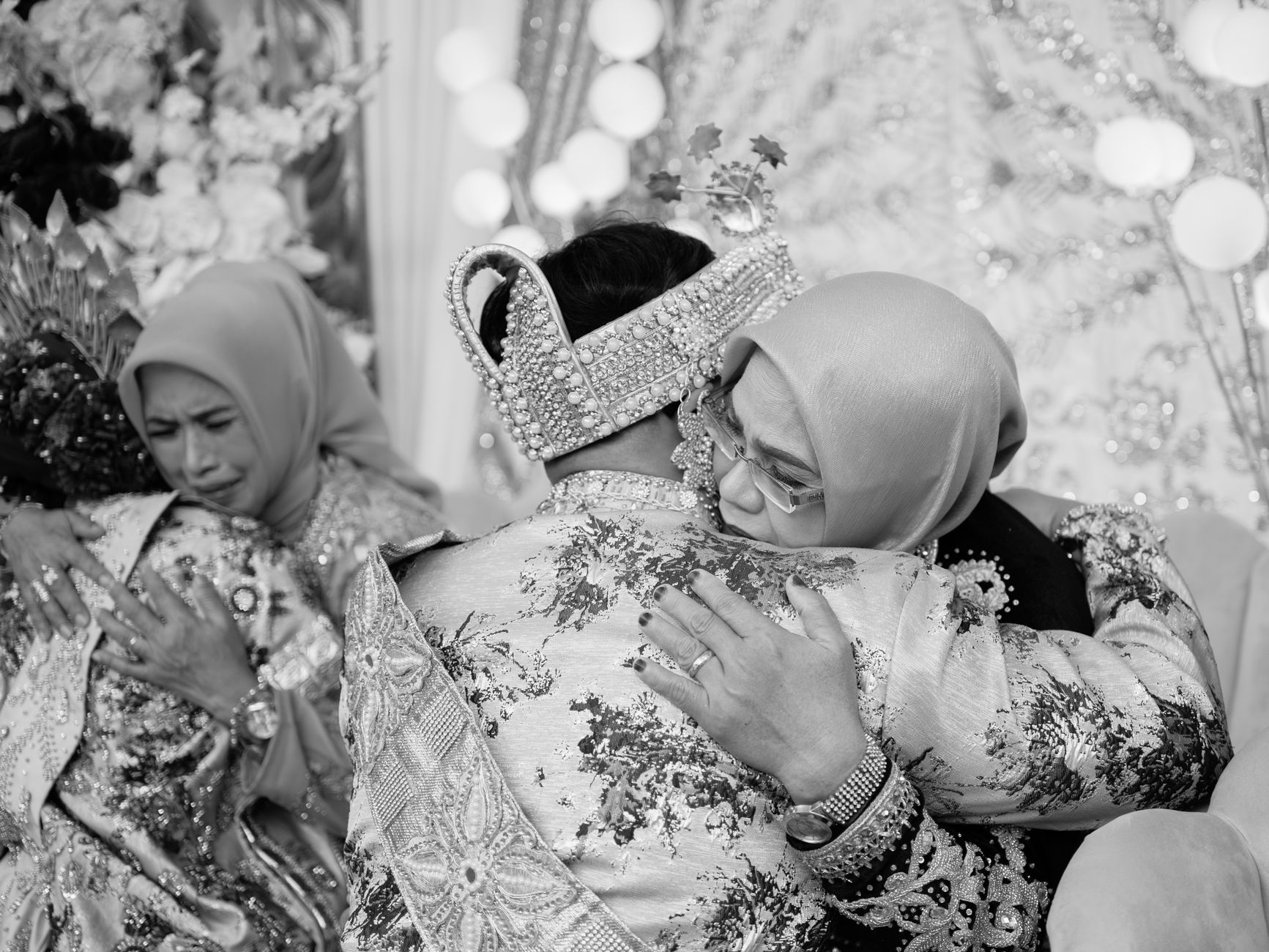
7 modern mother of the groom speech examples
These examples suit couples with a more casual or contemporary tone – a little more candid, occasionally funny, and well suited to weddings where the crowd skews younger or the family is less formal.
Example 11: Funny and heartfelt blend
Okay. I had this whole speech planned. I practiced it in the car on the way here. Three times. And then I walked in, looked at my son in that suit, and everything I planned to say just… left.
So here is what is true: Ethan once microwaved a hard-boiled egg and blew up the microwave. He lost his passport three days before an international flight and found it in the freezer. He did not learn to do his own laundry until he was twenty-one, and he will deny that in front of God and everyone present.
And yet somehow – somehow – this impossible human being is also the most loving, loyal, generous person I have ever known. I do not know how he does it. He gets away with everything on the strength of his character, and it has always driven me crazy and made me prouder than I can say.
Zoe, you are clearly a woman of exceptional taste, extraordinary patience, and incredible resilience. You are also exactly what Ethan needed, and I think you already know that.
To Ethan and Zoe: may your life together be full of laughter, and may the microwave survive. Cheers.
Example 12: Short on words, big on love
I am not a big speech person. I will get that out of the way right now.
What I am is a big Noah person. I have been since the day he arrived, and I will be until the day I leave this world.
Lily, I want to say one thing to you directly: you took a man who kept everything inside and somehow made him want to share it. I do not know what you did or how you did it, but on behalf of everyone who loves Noah – thank you. We have been waiting.
That’s my speech. I love you both. Raise your glasses. To Noah and Lily.
Example 13: Blended family, welcoming stepchildren
Good evening. I’m Helen, and tonight I get to do the thing I have been looking forward to most: welcome the whole of my son’s new family into ours.
Logan spent a long time figuring out what love actually looked like. He is not someone who rushes. He watched, he thought, he waited. And when he found Mia, he found the answer to a question he had been asking quietly for years.
But he did not just find Mia. He found Caden and Sophie, too. I have watched my son become a father figure to those two children with a gentleness and patience that did not come from nowhere. It came from something in his roots, and I am proud to have helped plant those roots.
Mia, Caden, Sophie – you are my family now. All of you. I mean that with everything I have.
Please raise your glasses. To Logan, Mia, Caden, and Sophie – to your family.
Example 14: LGBTQ+ wedding, welcoming a same-sex partner
Good evening. I’m Janet – and I could not be more in love with this night.
Sam came out to me when he was twenty. He sat at the kitchen table, hands wrapped around a coffee mug he wasn’t drinking, and told me who he was. And I said what I hope every parent says: “You are my child. I love you. Nothing changes.”
What I did not say, because I did not know yet, was: “And one day I am going to stand at a wedding and watch you marry someone extraordinary.” I know it now.
Chris, you are exactly who I wished for when I made that wish. You love my son with clarity and generosity, and you have made him more confident, more open, more everything. Thank you for that. Thank you for showing up for him every single day.
To Sam and Chris: you deserve every bit of this happiness. Every single bit.
Please raise your glasses. To Sam and Chris.
Example 15: Long-distance love story
Good evening, everyone. I’m Renee – and I want to tell you what I know about love across a long distance.
For two years, my son Marcus and Dani lived in different countries. They built a relationship through time zones, delayed flights, missed calls, and text messages at 2 a.m. They chose each other every single day without the luxury of proximity.
I used to worry about Marcus. The distance seemed to cost him a lot. But he never faltered. He told me once: “Mom, she is worth every flight.” When I finally met Dani and saw the way she looked at my son, I understood exactly what he meant.
Dani, the years of distance are over. You are here. You are home. And we are so glad to have you.
Ladies and gentlemen, to a love that defied distance, time zones, and airline baggage fees: to Marcus and Dani.
Example 16: Childhood sweethearts grown up
Good evening. I’m Barbara – and I want you all to know something: I called this.
Ben and Chloe met in fifth grade. They were assigned to the same science project. Ben came home that day and said, “Mom, I met a girl. She’s better at science than me.” That was, at eleven years old, the highest compliment Ben could give anyone.
They were friends for years before they were anything else. They drifted apart, came back, drifted apart, came back. And somewhere along the way – somewhere in their early twenties – they stopped drifting. They became each other’s home.
I have watched this happen across fifteen years. What they have was built slowly, honestly, with the kind of foundation that does not crack.
Chloe – I have loved you since you were eleven and correcting Ben’s chemistry homework. Welcome, officially, to the family you have been part of for fifteen years.
To Ben and Chloe. At last.
Example 17: Two families becoming one
Good evening. I am Maria, and I want to start by saying: this room is the most beautiful thing I have seen in a very long time. Two families, two traditions, one table. This is what the world should look like.
My son Carlos was raised with very clear ideas about love, family, and commitment – ideas passed down through our family for generations. He carries those ideas seriously. He does not love lightly.
When he told me about Wei, and then brought her home, I did not see a cultural difference. I saw a woman who loved my son with the same seriousness with which he loved her. That is the only common language that truly matters.
To the Chen family: gracias – thank you – for raising someone with such warmth and such strength. We are honored to be at this table with you.
Carlos and Wei: you are building a family that will carry the best of both your worlds forward. What a gift that is. To Carlos and Wei.
3 short mother of the groom speech examples
Sometimes a speech does not need to be long to be memorable. If you are naturally reserved, if the evening is running late, or if you simply want to say something true and sit down, these examples land in under 90 seconds.
Example 18: Short and warm (under 60 seconds)
I raised David to be honest, kind, and brave. I think I got lucky – he turned out to be all three.
Anna, he chose you because you are all three too. I can see that. This room can see that.
I love you both. To David and Anna.
Example 19: Quietly emotional (under 90 seconds)
I have been thinking about what to say for months. And then last night I watched my son help his grandmother to her seat, and I realized: everything I ever wanted to teach him, he already knows.
Grace, you are getting a man who is far better than he gives himself credit for. Hold him to that. Let him be that for you every day.
Thank you all for being here. Please raise your glasses. To Patrick and Grace.
Example 20: Funny and short (under 90 seconds)
I will keep this short because my son told me to keep it short, and for once in thirty years I am going to listen to him.
Tyler is the best thing I ever did. Amber is the best thing he ever did. That makes Amber pretty great in my book.
To Tyler and Amber – may you have a long and very happy marriage, and may Tyler always listen to Amber the way he never listened to me. Cheers.
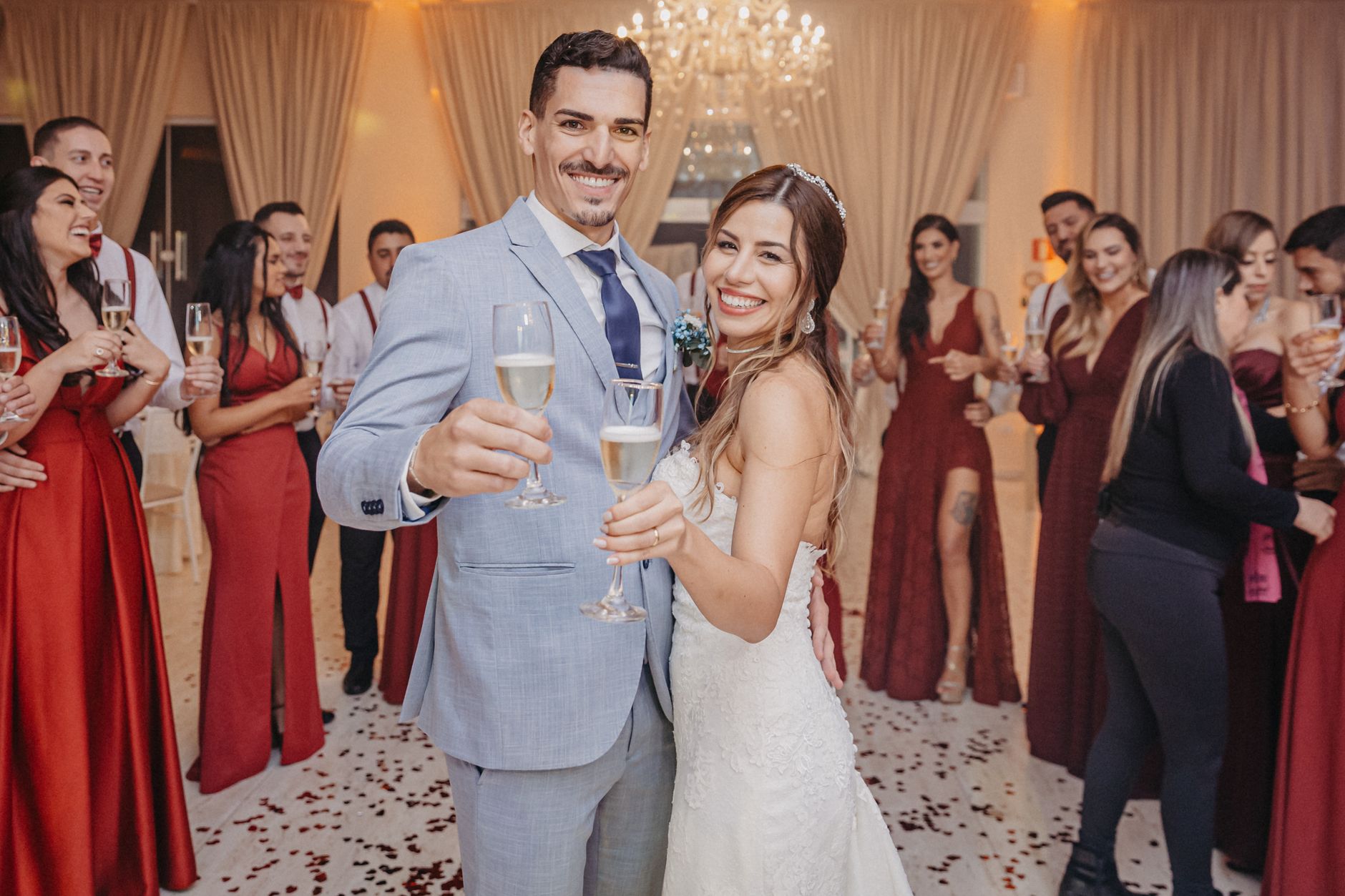
Fill-in-the-blank mother of the groom speech templates
Use these templates as a starting structure and fill in the bracketed sections with your own details. The brackets are intentionally specific – the more personal detail you add, the more the speech will feel like yours rather than a template.
Template 1: Classic (3-4 minutes)
Good evening, everyone. For those I haven’t yet met, I’m [YOUR NAME] – [GROOM’S NAME]’s mother, and the proudest person in this room.
[GROOM’S NAME] has been [A DEFINING QUALITY – e.g., “stubbornly generous” or “quietly determined”] since the day he was born. I remember when he was [AGE], he [ONE SPECIFIC MEMORY – 1-2 sentences]. That moment showed me exactly who my son was going to be.
[PARTNER’S NAME], I want to say something directly to you. When [GROOM’S NAME] introduced us, I noticed [SOMETHING SPECIFIC YOU OBSERVED]. Since then, I have watched you [A QUALITY OR BEHAVIOR YOU GENUINELY ADMIRE], and I am deeply grateful that you love my son the way that you do.
To the [PARTNER’S FAMILY NAME] family: thank you for being here, and thank you for raising someone so [GENUINE QUALITY].
My wish for both of you is simple: [YOUR PERSONAL WISH – one sentence, specific and genuine].
Please raise your glasses. To [GROOM’S NAME] and [PARTNER’S NAME].
Template 2: Short and heartfelt (under 2 minutes)
I’m [YOUR NAME], and I am not going to take long – not because I do not have things to say, but because [GROOM’S NAME] asked me to be brief, and I love him enough to try.
Here is what I know: [GROOM’S NAME] is [ONE SPECIFIC QUALITY]. He has always been [THAT QUALITY]. And [PARTNER’S NAME] is the person who [HOW THEY COMPLEMENT OR BRING OUT THAT QUALITY].
[PARTNER’S NAME], you have my son’s whole heart. Take good care of it. I know you will.
To [GROOM’S NAME] and [PARTNER’S NAME].
Template 3: Funny and warm (3 minutes)
Good evening. I’m [YOUR NAME], and I promise this speech will be [SHORT / BRIEF / MERCIFULLY PAINLESS], which is more than I can say for [SOMETHING THE GROOM IS NOTORIOUSLY BAD AT].
[GROOM’S NAME] once [FUNNY BUT AFFECTIONATE STORY – 2 sentences]. I tell this story not to embarrass him (okay, a little to embarrass him) but because it says something true about who he is: [THE QUALITY IT REVEALS].
[PARTNER’S NAME], you knew what you were signing up for, and you said yes anyway. That is either courage or love, and from where I’m standing, it looks like both.
To [GROOM’S NAME] and [PARTNER’S NAME] – may your life together be everything you deserve. Which, for the record, is everything.
Cheers.
Invitations that set the tone for the whole day
Your guests’ first impression of the wedding starts with the invitation. Explore hundreds of designs – from classic letterpress to modern flat print – all designed, printed, and assembled in-house at Paperlust.
How long should a mother of the groom speech be?
The ideal length is 2-4 minutes – roughly 300 to 500 words delivered at a comfortable, unhurried speaking pace. This is long enough to say something meaningful and short enough to keep the room fully with you from first word to last.
At 130 words per minute (a natural, clear pace for a formal setting), a 300-word speech runs about 2 minutes and 20 seconds. A 500-word speech runs about 3 minutes and 50 seconds. Both sit within the range where guests stay engaged and do not start checking their phones. If you are one of several speakers at the reception and the evening is already running long, stay under 3 minutes as a courtesy to everyone else.
| Word count | Delivery time (130 wpm) | Best setting |
|---|---|---|
| 150-200 words | Under 90 seconds | Large reception with many speakers |
| 300-400 words | 2-3 minutes | Standard wedding reception toast |
| 400-500 words | 3-4 minutes | Wedding reception or rehearsal dinner |
| 600-700 words | 4-5 minutes | Rehearsal dinner (intimate group only) |
Public speaking tips for the mother of the groom
The most important thing you can do to deliver your speech well is practice it out loud – not in your head, not reading it silently at a desk, but standing up, speaking at full volume, and timing yourself. Your voice behaves differently out loud than it does in your head, and you will find the sentences that trip you up before you are in front of 150 people.
Before the wedding day
- Practice in a room similar to the venue if possible. Even walking through the reception space the night before and standing where you will speak helps you visualize the moment and calm your nerves before the day arrives.
- Write on a card, not your phone. A card sits flat, does not lock or go dark, and does not tempt you to check notifications. Print your speech in at least 14-point font – ideally 16 – so you can read it from arm’s length without squinting.
- Practice through the emotional parts. If you know you cry at certain lines, rehearse those lines until you can pause, breathe, and continue. The pause is fine – it tells the room this moment matters. What loses the room is a long, unrecovered silence.
- Record yourself once. Play it back. Most people speak faster when nervous; knowing your rehearsal time gives you a useful buffer before you reach the actual event.
On the day
- Slow down more than feels natural. Nerves accelerate everything. If you are thinking “I am speaking slowly,” you are probably speaking at a perfectly normal pace to the audience.
- Pause at the end of important sentences. Let each line land before you move to the next one. Silence is not dead air – it is space for the room to feel what you just said.
- Look at your son and his partner when you deliver the most personal lines. That eye contact is what guests will remember – your face and theirs in the same moment.
- Hold the mic steady or let the MC manage it. Shaking hands shake microphones. If you feel your hands trembling, rest one hand flat on the podium while the other holds your card.
- It is okay to cry. Smile through it, pause, take a slow breath. The room is entirely with you.
8 mistakes to avoid in a mother of the groom speech
1. Making it about your journey as a mother
The speech is about your son and his partner – not your parenting experience. A single specific memory of raising him is perfect. A running narrative about the sacrifices of motherhood is not. Keep the focus squarely on the couple.
2. Mentioning past relationships
Never reference a previous partner, a failed engagement, or anything that implies this outcome was not the only good one. Even a well-meaning “we’ve all been waiting for the right person to come along” can land badly if guests know the history. This is not the moment for any form of subtext.
3. Embarrassing the groom without checking first
A funny story is not the same as an embarrassing one. Before you tell a story that puts your son in a less-than-flattering light, ask yourself: would this mortify him in front of his partner’s family? If the answer is yes, cut it. The story should reveal warmth, not score points.
4. Reading from your phone
A phone can lock, dim, or die. More practically, reading from a screen creates a physical barrier between you and the room. Use a printed card or small booklet. Hold it confidently and look up as often as possible.
5. Going too long
No speech has ever been criticized for being three minutes instead of five. Many are criticized for the reverse. If your draft exceeds 500 words, cut it until the best lines remain. The sibling speech guides – including the mother of the bride speech examples and father of the bride speech examples – follow the same length discipline.
6. Not using the partner’s name
The partner’s family is in the room. If you talk about your son for four minutes and refer to the person he is marrying as “the bride” or “the happy couple,” the partner’s family will notice. Use their name. Mention a specific quality. Make them feel genuinely seen.
7. Leaning on a generic quote
There is nothing wrong with a meaningful quote, but using one you found in ten minutes of searching – the same Dr. Seuss or Corinthians passage that appears in a hundred other wedding speeches – as the emotional center of your toast is a shortcut the room will recognize. If you use a quote, connect it directly to something specific about this couple.
8. Forgetting the partner’s family
A single sentence acknowledging the partner’s parents or family in the room costs you nothing and earns a great deal of goodwill. “To the [family name] family – we are so glad to be joined to you tonight” is entirely sufficient. Skipping this moment is noticeable, especially in the early gatherings of two families who are still getting to know each other.
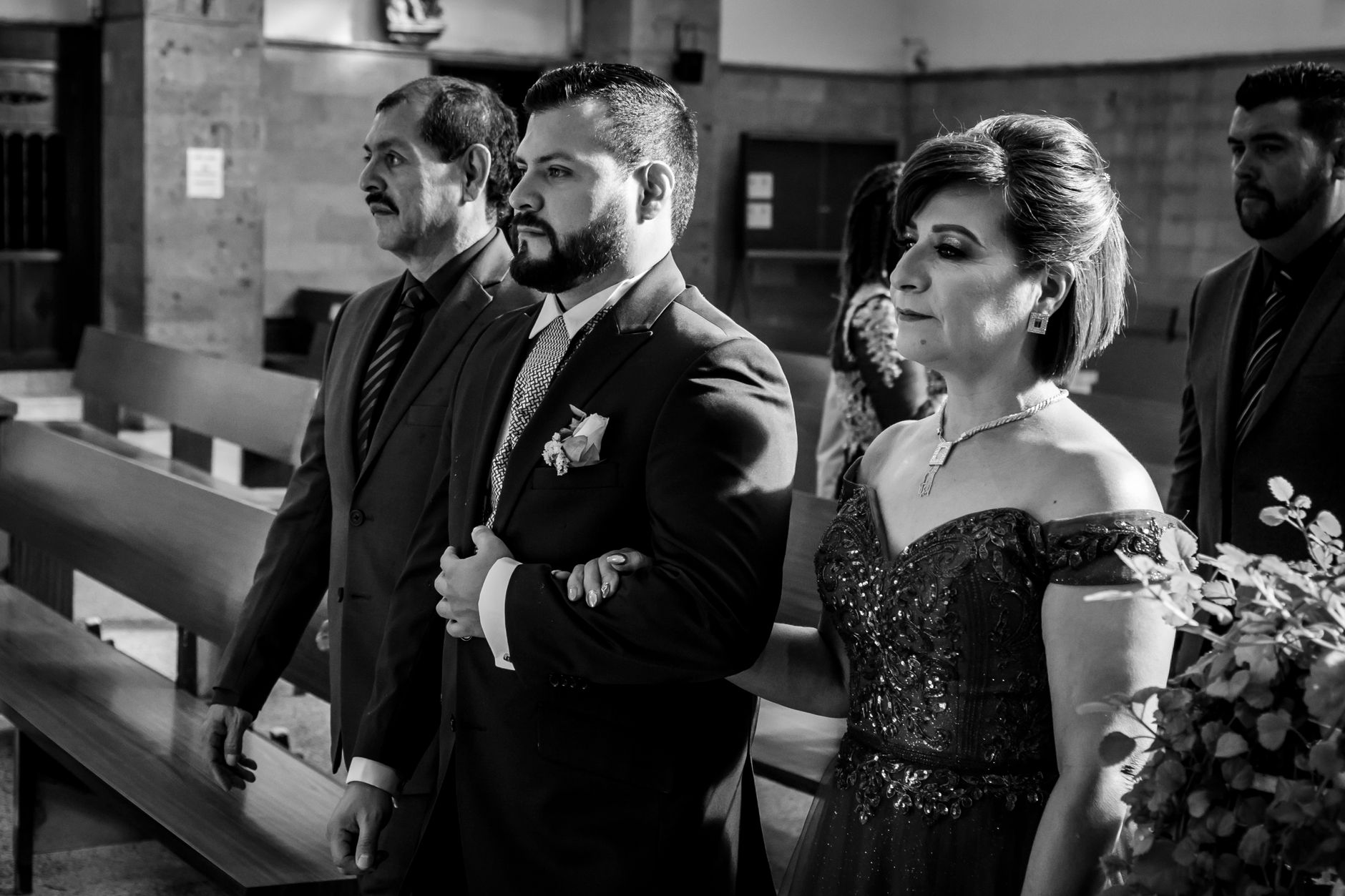
How the mother of the groom speech compares to other parent speeches
The mother of the groom speech and the mother of the bride speech share the same 5-part formula and roughly the same length. The meaningful difference is one of position: the mother of the bride speaks from the center of the day – her daughter’s wedding, her family’s primary event. The mother of the groom often speaks in a complementary role, welcoming someone else’s child into her family and celebrating a son who may feel less comfortable in the spotlight.
That position is actually a strength. The mother of the groom speech can be the warmer, more personally revealing moment of the evening precisely because it is not the formal centerpiece. The best examples in this genre feel like the room has just been let in on something true and private about a person they may not have known as well as they now do.
The father of the bride speech, the best man speech, and the maid of honor speech all use a similar arc but with different emotional centers: the best man leans on shared history and humor; the maid of honor leans on personal loyalty; the father of the bride leans on release and legacy. The mother of the groom speech leans on welcome – welcome of a new person, a new family, and a new chapter in a son’s life she has watched from the beginning.
Coordinating with other speakers
If the evening includes multiple parent speeches – at the reception or rehearsal dinner – a brief conversation with the other speakers beforehand saves you from accidental overlap. You do not need to script anything together; you just need to agree on the rough order, confirm no one is planning to tell the same story, and check whether anyone is doing a joint speech.
A joint speech from both parents of the groom can be warm and efficient, but it requires considerably more rehearsal than a solo speech. Two people reading from the same script rarely sounds as natural as one person speaking from their own material. If you are considering it, practice the handoffs at least five times before the day.
On the wedding day itself, confirm your place in the run of show with the MC or wedding coordinator. The typical toast order is: welcome from the MC, best man, maid of honor, father of the bride, then parents of the groom – but the couple may have their own preferences. Knowing your slot lets you pitch the tone correctly. If you are the last speaker before the dancing begins, you have an opportunity to leave the room feeling genuinely warm and ready to celebrate.
Save the dates and invitations for every style of celebration
From save the dates that go out 6-9 months before the big day to formal wedding invitations printed in flat foil, letterpress, or digital – explore the full range at Paperlust and find a design that fits the tone of your wedding.
Frequently asked questions about the mother of the groom speech
How long should a mother of the groom speech be?
Aim for 2-4 minutes (300-500 words at a natural speaking pace). A 2-minute speech is always appropriate at a wedding reception. Stretch to 4-5 minutes at the rehearsal dinner if the audience is smaller and the mood is more intimate.
When does the mother of the groom give her speech?
Most commonly at the wedding reception during the toasts segment, after the best man and maid of honor. Some families prefer the mother of the groom to speak at the rehearsal dinner instead, which allows for a more personal tone with a smaller, more familiar audience. Confirm the plan with the couple before the day so you can prepare the right length and tone.
What should I say in a mother of the groom speech?
Follow the 5-part formula: (1) thank the guests and briefly introduce yourself, (2) share one specific memory of raising your son, (3) welcome the partner and their family by name, (4) offer a genuine piece of advice or a heartfelt wish, and (5) close with a toast. Keep it personal, specific, and under 4 minutes.
How do I start a mother of the groom speech?
Open by introducing yourself – not everyone in the room will know who you are – and grounding the room with a warm, calm opening line. Begin with a statement of love or pride that immediately establishes the tone. Avoid opening with a self-deprecating line about public speaking: it signals nervousness before you have had a chance to show confidence.
Should I mention the partner’s family in my speech?
Yes. Even one sentence acknowledging the partner’s parents or family signals that you see the marriage as a joining of two families, not simply a new addition to yours. Something as brief as “To the [family name] family – we are so glad to have you in our lives” is entirely sufficient and earns a great deal of goodwill from that side of the room.
Is it okay to get emotional during the speech?
Absolutely. Tears during a parent’s toast are expected and welcome. The key is to practice through the emotional moments beforehand so that when the feeling arrives, you can pause, breathe, and continue without losing the thread. A brief pause while you collect yourself is fine – the room will wait. What loses the room is a long, unrecovered silence that shifts the energy from warmth to anxiety.
Should I use notes or memorize the speech?
Use notes – specifically a printed card rather than your phone. Memorizing a speech creates the risk of going completely blank under pressure, especially with the adrenaline of a room full of people watching you. A card lets you glance down, find your place, and look back up. Most guests will not notice, and the ones who do will appreciate that you prepared.
What should I definitely avoid saying?
Avoid references to past relationships, anything that could embarrass the groom in front of the partner’s family, backhanded compliments presented as warmth, advice that sounds like criticism, overly long stories that outlast the room’s patience, and speeches that exceed five minutes regardless of the material. The goal is for the couple – and the room – to feel celebrated, not subjected to a performance.
Do I need to thank the guests in my speech?
A brief acknowledgment is a nice gesture but not mandatory if the MC has already welcomed the room. If you do open with thanks, keep it to one sentence and move quickly to your personal material. Do not use the opening to list vendors, venues, or every guest by name – that is the MC’s territory, not the speech’s.
How do I end a mother of the groom speech?
Close with a toast. Ask the room to raise their glasses, address the couple by their names, deliver your final line (a wish, a quote, a family saying, or simply “I love you both”), pause briefly, raise your own glass, and say “Cheers” or “To [names].” Keep the closing line to one sentence – the shorter, the more it lands.
What if my son is getting remarried or this is a second wedding?
A second wedding does not require you to acknowledge the first. If children from a previous marriage are in the room, acknowledge them warmly by name. Focus entirely on the couple and the joy of the occasion. Avoid any language that frames this as a correction or a recovery from the past – simply celebrate what is directly in front of you.
Can I give this speech if I am the stepmother of the groom?
Yes, with coordination. Confirm with the groom and, if relevant, with his biological mother, who is speaking and in what order. A stepmother can give a heartfelt, loving speech while remaining mindful of how she frames the family. Focus on your personal relationship with the groom and your welcome of the partner, rather than on family structure or history. If both mothers are present and on good terms, a joint or back-to-back short speech can be a genuinely beautiful gesture.
What is the right tone – funny or emotional?
Both work, and the best speeches typically blend them. A single moment of specific, warm humor followed by genuine emotion is the most reliably effective structure. If you are not naturally funny, do not force it – authentic feeling lands far better than a joke that falls flat. If you are funny, use it, but make sure the speech ends on warmth rather than on a punchline.
How is this different from the mother of the bride speech?
Structurally, they follow the same 5-part formula and roughly the same length. The main difference is position: the mother of the bride speaks from the center of the event, while the mother of the groom often speaks in a complementary role focused on welcome and family unity. Both are covered with full examples in the mother of the bride speech guide.
Also in this series: The wedding invitation trends 2026 guide, the how to address wedding invitations guide, the wedding invitation wording guide, and the RSVP card wording guide cover the stationery side of the wedding in the same depth this guide covers the speeches.
As featured in: Vogue Australia, Marie Claire Australia, The Sydney Morning Herald, Harper’s Bazaar Bride. Paperlust designs and prints premium wedding stationery from our Melbourne studio, shipping worldwide.